Clippings: Collected Journalism 1994-2024 – Free sample 1!

Hey, did I tell you I made a book? But did I tell you ten times yet?

In celebration of my new collection of the so-called ‘best’ of 30 years of journalism, Clippings, each Monday throughout March I’ll spotlight one of the more than 100 essays in this hefty tome. I hope you’ll consider grabbing a copy, now available on Amazon as a paperback for a mere US$14.99, or as an e-book download for just US$2.99

It was interesting combing through piles of yellowing clippings and old computer files and trying to figure out what to include in a survey of my so-called career. But this profile from when I worked in Oregon circa 2002-2006 was a definite. As a kid, I always wanted to be a zookeeper, until one day I realised that would involve a lot of blood and animal feces. But getting to shadow an actual wildlife park vet around for a day was pretty darned cool, and one of my favourite job assignments. 

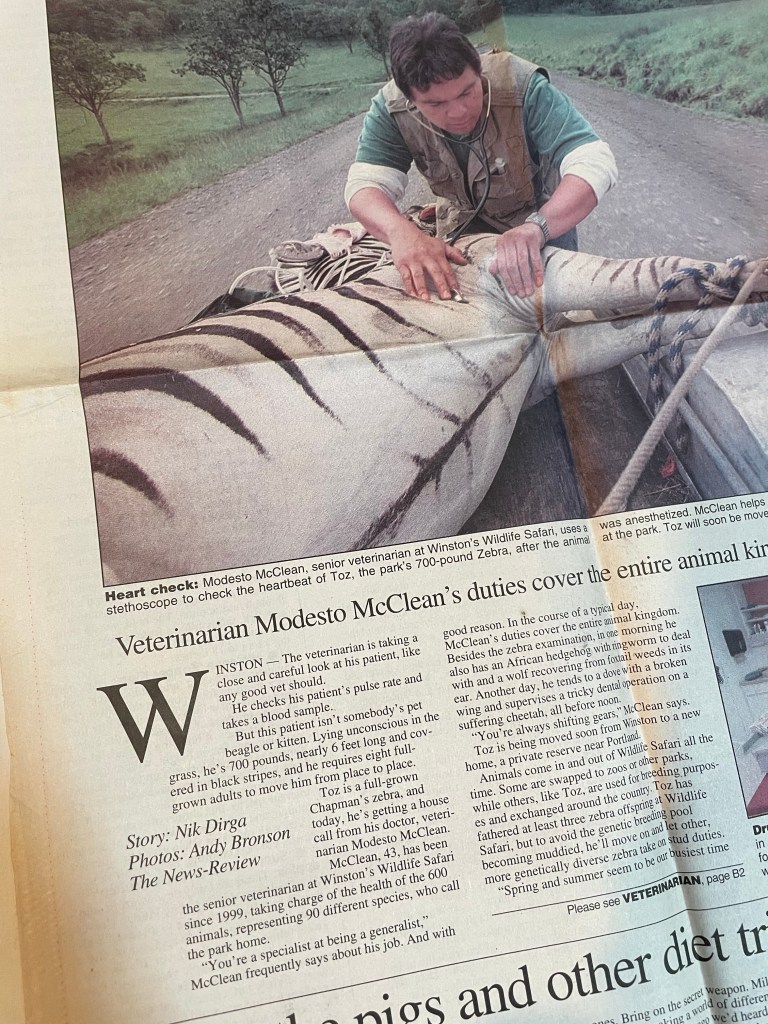
The zebra veterinarian 

The Roseburg, Oregon News-Review, May 2002 

WINSTON, Oregon — The veterinarian is taking a close and careful look at his patient, like any good vet should. 

He checks his patient’s pulse rate and takes a blood sample. 

But this patient isn’t somebody’s pet beagle or kitten. Lying unconscious in the grass, he’s 700 pounds, nearly 6 feet long and covered in black stripes, and he requires eight full-grown adults to move him from place to place. 

Toz is a full-grown Chapman’s zebra, and today, he’s getting a house call from his doctor, veterinarian Modesto McClean. 

McClean, 43, has been the senior veterinarian at Winston’s Wildlife Safari since 1999, taking charge of the health of 600 animals — representing 90 different species — who call the park home. 

“You’re a specialist at being a generalist,” McClean frequently says about his job. 

And with good reason. 

In the course of a typical day, McClean’s duties cover the entire animal kingdom. Besides the zebra examination, on this morning he also has an African hedgehog with ringworm to deal with and a wolf recovering from foxtail weeds in its ear. Another day, he tends to a dove with a broken wing and supervises a tricky dental operation on a suffering cheetah, all before noon. 

“You’re always shifting gears,” McClean says. 

Toz is being moved soon from Winston to a new home, a private reserve near Portland. 

Animals come in and out of Wildlife Safari all the time. Some are swapped to zoos or other parks, while others, like Toz, are used for breeding purposes and exchanged around the country. Toz has fathered at least three zebra offspring at Wildlife Safari, but to avoid the genetic breeding pool becoming muddied, he’ll move on and let other, more genetically diverse zebra take on stud duties. 

“Spring and summer seem to be our busiest time (for moves),” said Deb Ryan, Wildlife Safari’s assistant curator. “Within the next month we’ll probably move 10 animals out, and probably move five to eight in.” 

Toz has to be examined for his health and for a lingering lame leg prior to the move. Bringing the zebra in for an examination isn’t as simple as putting him into a pet carrier. Most wild animals must be sedated before they can be safely examined or treated. 

“The toughest part of zoo medicine is the anesthesia,” McClean said. 

“Zebras are very aggressive,” Ryan added. A variety of drugs are used as tranquilizers, some of which are highly dangerous if not handled carefully. 
“A few drops more and I’m going to kill the animal,” McClean notes as he carefully mixes the solutions together into a dart. It takes a steady hand when dealing with the drugs. They can be administered with a dart pistol, a blowgun or an air gun, depending on the size of the animal and the thickness of their hide. 

A zebra has tough skin — “I say zebras are like horses on steroids,” said McClean — so a rifle is used to administer the knockout punch today. 

Every animal must be handled differently, McClean says. Originally from Southern California, his career has taken him to treat animals he might never have imagined he would. He’s worked with dolphins and chimpanzees, and even anesthetized a towering giraffe — “probably the hardest anesthesia in all of medicine,” he says. 

McClean first came to Wildlife Safari in 1995, where he trained under the previous park veterinarian. He was educated at California Polytechnic State University in San Luis Obispo and Oklahoma State in veterinary medicine, and also served an internship in primate medicine and surgery at Yale University. 

He has also consulted in private veterinary practice for several years. McClean came back to Wildlife Safari in 1999 when he became the park’s senior veterinarian. 

Because the animals mostly roam free at Wildlife Safari, McClean and park keepers have become experts at what they call “binocular diagnosis,” where they carefully observe the animals to detect any sign of a possible medical problem. 

“I don’t have time to go every day to check every animal, so I rely on the keepers too,” McClean says. 

Toz the zebra has been moved out of the park’s general population into a small, half-acre enclosure to prepare him for his move. It also makes it easier for him to be drugged, because Wildlife Safari staff won’t have to chase him down. 

“Some people think hoof stock aren’t all that smart, but they know what a gun is,” McClean says as he watches Toz nervously gallop away from him. 

The doctor raises the rifle, takes careful aim at the retreating zebra, and fires the dart, which brings him to the ground in under five minutes. 

Once McClean is sure he’s fully unconscious, the staff gets to work, popping in an intravenous tube dispensing solution, as well as injections of atropine to keep his heart rate up. A monitor is hooked up to his tongue to check his vital functions, and an oxygen tube is placed in his nostrils. McClean checks out the zebra’s leg, which has been treated previously for weak tendons, and finds that his hoof is suffering some obstructions which he removes. 

While Toz is out, a pint of blood is also taken from him. The blood will be checked and then frozen, kept in store for possible transfusions. 

“This blood someday will save another small zebra,” McClean said. 

Any small checkups that can be done on the zebra are also taken care of. One park employee uses a tool belt set of pliers to scrape a buildup of tartar off the zebra’s large teeth, each the size of a man’s thumb. 

It takes eight park employees to transport the drugged Toz onto an open trailer for his move across the park. He is lifted onto a rubber mat, as one employee holds his IV and McClean monitors his vital signs. Toz is taken to a holding stall where he will live and be watched closely for a few weeks before his trip to Portland. 

The entire procedure, from the dart being fired to Toz waking up in his new quarters, has taken just under an hour. 

“I’m going to rate it as for a zebra, an excellent anesthesia,” McClean says. 

The rest of this delightful yarn and much more can be found in my new book Clippings: Collected Journalism 1994-2024

Hello, I wrote a book, and it’s only taken me 30 years

Greetings! I wrote a book. Well, I’ve actually been writing it for about 30 years, believe it or not. Introducing Clippings: Collected Journalism 1994-2024, a hefty compendium of my columns, essays, feature profiles and much more over the course of my so-called career!

I’ve written an awful lot of words over the years, but I wanted to put together something that was a little more permanent than a bunch of yellowing newspapers and broken website links. Clippings is, much like many journalism careers, an eclectic mix, from long features to blog posts to deeply personal essays to in-depth pop culture criticism, spanning from Mississippi to California to New York City to New Zealand. 

From interviewing governors and rock stars to climbing active volcanos and adjusting to life on the other side of the world, this book is me saying, “Hey, I was here, and this is some of what I did along the way.” Doesn’t everyone want to say that at some point about their life’s work, whatever it is? Throw it all together, and it’s probably as close to a sort of autobiography as I’ll ever get.

It’s got many of my works from long-ago newspapers and magazines, websites and even some fine pieces from this very website in a handsome curated form sure to be adored by your family for generations.

I hope you’ll consider grabbing a copy, now available on Amazon as a paperback for a mere US$14.99, or as an e-book download for just US$2.99! 

Get it here: Clippings: Collected Journalism 1994-2024 by Nik Dirga 
So, I’ve been reading a lot of Captain America comics lately

When I was a kid I always thought Captain America was a bit dorky. Batman and Spider-Man and Wolverine were hip, man. 

It took me a long while to discover the uncomplicated charms of Cap. He’s a good man in a world full of troubles, which for some peculiar reason I can’t quite put my finger on, seems really appropriate as a role model in this battered year of 2025. 

Captain America has been slinging his shield since 1939 in comics, and was probably punching Nazis before your grandparents were even born. Brought back in the 1960s as a keystone for the Avengers, he’s been the moral centre of the Marvel comics universe for decades. 

Yet I really didn’t read an awful lot of Captain America solo comics until the last few years – I never disliked the character, who soared in a lot of great Avengers comics, but he just seemed rather, well, white bread. 

But as usual, I was wrong, and slowly working my way through lots of great Cap stories from the 1960s to 2020s has shown me that you can still make a patriotic American superhero interesting. Like any character, there’s ups and downs to be had, but creators like Lee and Kirby, Steve Englehart, Ed Brubaker, the late Mark Gruenwald and Roger Stern have all done terrific stories over the years. 

The challenge for writers has been in making Cap a believer in a higher cause without being a mindless follower to it. An element of doubt is key to making Captain America great. 

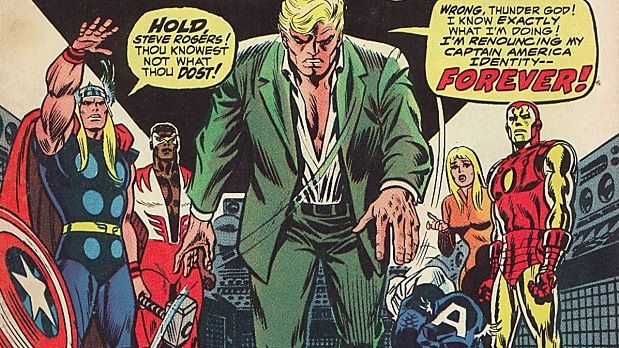
Evil Captain America has been done far too many times and isn’t that interesting, but Doubtful Captain America is a constant of the character, a man who believes in his country but is fairly often willing to question it, up to engaging in a civil war over his beliefs or even quitting the job several times.

As an example of bad Captain America, Mark Millar’s post-9/11 edgelord Captain America in The Ultimates hasn’t aged well at all, channeling Bush-era belligerence and arrogance into a character who’s the opposite of what Cap should be. And being good isn’t being weak.

There’s a fine line between making Cap frequently question his patriotism and making him a whining bore, of course. Yet I admire the writers who’ve made us realise that uncertainty and kindness isn’t a bad thing, all while telling us stories of a man dressed up in red, white and blue.

There’s nothing worse than a fanatic who thinks he can do no wrong. For some reason I’ve been thinking about that a lot lately.

The marvellous performance by Chris Evans as Steve Rogers in the MCU helped seal my Cap fondness, making square-jawed decency seem kinda hot. And of course, there can be more than one Captain America – Anthony Mackie is stepping up as the main man’s successor in a new movie being released this week. Whether or not the movie itself is great, Mackie has done a fine job in his MCU appearances tapping into that fundamental charm and battered optimism Cap needs. 

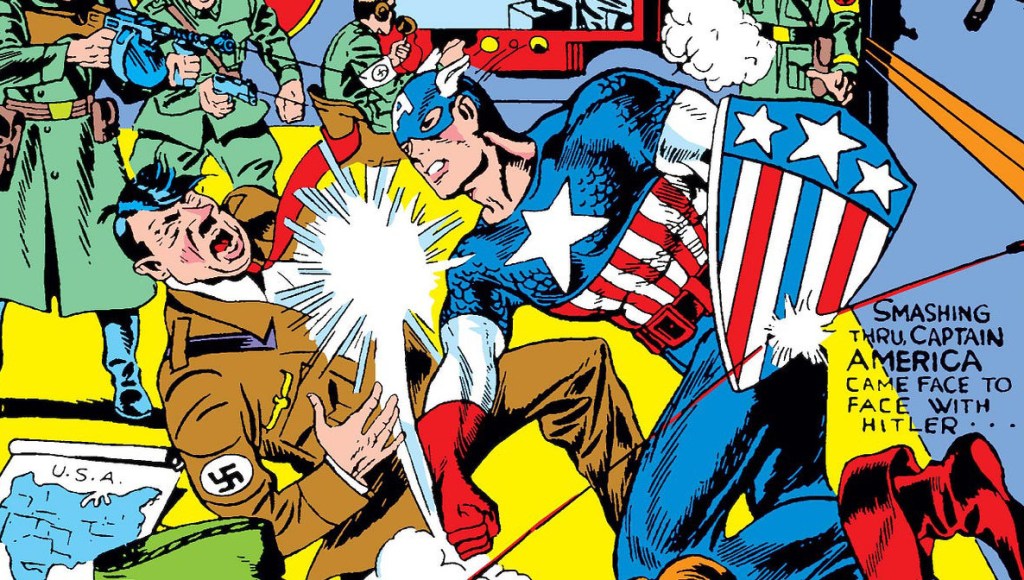
I imagine if Cap was real these days he’d be aghast at a lot of what’s going on under the colours of his flag, but then again he’d probably find it pretty familiar. He punched Hitler, after all. 

Again, maybe it’s the tenor of the times. There ain’t a lot of heroes in the real world at the moment. I’ll just keep reading my Captain America comics and hoping for better days ahead. 

RIP President Jimmy Carter

Jimmy Carter pretty much outlived all of them, didn’t he?

I published a lengthy piece back in September just before Carter turned 100, by far the longest lived US President in history. (Funnily, I actually first wrote it back in 2023 sometime, thinking it would be as a nice obituary tribute to run somewhere, but old Jimmy just kept on going!)

Anyway, it says all the things I feel about Carter, who was perhaps not the best of presidents if you measure his term, but, as his long life and endless service shows, he was one of the best of men. It’s a kind of life that seems very, very far away at the dawn of this next presidency, but it’s one that I keep hoping that someday perhaps will influence a braver, smarter generation.

Here’s my tribute to Jimmy Carter at 100.

To quote that great Blue Mountain song, which I sure hope an awful lot of people will get to hear in the coming days,

“Well he said I’d never lie to you, and what’s more he never did. Though the times grew mighty tough, he never flipped his lid. So shake the hand of the man, with a hand full of love. The one and only Jimmy Carter.”

2025 is my year of punk rock, damn it

I haven’t written much of anything about the re-election of You Know Who You Know Where, because, frankly, like an awful lot of people, I’m just (A. exhausted and (B. apathetic about the whole damned thing these days. I’ve said enough about it all the last 8-9 years or so. You do you, Yanks. 

I do know one thing for the strange brave new world of 2025, though – I’m gonna keep listening to a lot of punk. 

Loud music makes sense when the rest of the world doesn’t and while I’m an increasingly old geezer who doesn’t quite get what the youths are listening to these days, I’ve always got time for something with an echo of that Ramones/Sex Pistols/Bikini Kill vibe of reverb, snarl and rage. Nothing blocks out the crazy like a blast of guitar.

We went and saw Hüsker Dü’s legendary frontman Bob Mould perform a solo show in Auckland the other weekend, and it was a fantastic hurricane of sound – Mould, 64, put to shame kids half his age with his chaotic energy as he ripped apart Dü and his solo songs and put them back together in feedback-drenched blasts. He made a punk band’s worth of noise all by himself.

And meanwhile, I bought a ticket for an up and coming band who weren’t even born when Bob Mould put on a guitar strap, Melbourne’s terrific fun and filthy Amyl & The Sniffers. I know they’ll tear up the joint when they play Auckland in February and while I’m at least 20 years too old for the mosh pit I’ll try to get a good spot to watch the ecstatic release as they blast through their fiercely progressive, f- the Nazis and trolls tunes. Gacked on anger? Baby, we’re all gacked these days:

Punk is old and punk is young and everywhere in between, nearly 50 years after punk broke through.

What even is punk? Back in high school friends of mine wore mohawks and we chanted the chorus of Suicidal Tendencies “Institutionalized” at each other and that was already a good 10 years after punk’s first flames. These days who cares about genre taboos and what’s “proper” and what isn’t, really? “Selling out” is a gone concept in the viral age and if you like the music, good on ya. Sid Vicious is long dead and Johnny Rotten isn’t looking too hot himself. If it feels punk to you, it’s punk. 

So for me listening to the Stooges over and over is punk, but hell, so is Nine Inch Nails banging on that downward spiral. Listen to Joy Division live and they were pretty punk even if they were post-punk. I can’t say I think Taylor Swift is punk, but Chappell Roan with her give-no-fucks attitude is definitely a little bit punk.

But that’s just me. 

Everyone used to go on and on about the dangers of rock music and punk and metal and Satanists hiding in your backyard back in the day, but it turns out the ones to REALLY be afraid of are the dead-eyed compulsive liars, fascists and grifters and hustlers and un-Christian fundamentalists who just keep on coming back over and over again.

To quote someone most people don’t think of as punk, but whose whole career has been pretty punk as hell, Bob Dylan said it best: “I used to care, but things have changed.”

Stepping back from the situation for a while isn’t giving up forever. There’s still an awful lot of beauty out there away from the doomscrolling and outrage machine, no matter how bad it gets. It’s a pretty frustrating world, but god damn it, we’ll always have music. 

Hey, ho, let’s go!

Hail to the chiefs: 15 presidential movies to watch instead of doomscrolling

I get it. You’re stressed out. This is life in 2024.

But instead of doomscrolling political news all week, how about taking a break with a presidential movie?

The presidency has been the subject of countless movies, good and bad, from lofty biopics to action-packed romps. Here are 15 movies about American presidents and politics that are worth firing up to divert your brain for a few hours as Election Day approaches.

If you want to feel a little bit of optimism:

The American President (1995): A genuinely sweet romantic comedy about a widowed president finding a new love, starring a luminous Michael Douglas and Annette Bening, and written by Aaron Sorkin, who later went on to create The West Wing TV series.

Lincoln (2012): Daniel Day-Lewis’ Oscar-winning performance takes Abraham Lincoln out of the realm of cliche and makes him a complex human being again, wrestling with how to end slavery in an America torn by the Civil War and trying to do the right thing.

Mr Smith Goes To Washington (1939): Jimmy Stewart’s naive young US senator comes up against Washington corruption. The thing that makes Frank Capra’s classic still relevant today is its fierce determination to make politics better.

If you just want to wallow in political intrigue:

Frost/Nixon (2008): There have been a lot of movies about Richard Nixon, but this tightly focused film sticks to one post-presidential interview where the disgraced president tries to redeem himself. Tense dialogue and terrific acting makes the spectacle of two men mostly sitting in chairs talking seem riveting.

All The President’s Men (1976): Nixon never appears in this Oscar-winning Watergate drama, but hovers over it like a malignant ghost as journalists Robert Redford and Dustin Hoffman uncover a labyrinthine scandal that led to America’s first and only presidential resignation.

JFK (1991): Oliver Stone’s mammoth three-hour epic is a twisted knot of conspiracy theory, paranoia and grifters, so it’s a perfect vibe for Election 2024. It’s a complicated, indulgent sprawl of a movie that’s still somehow fascinating, with an all-star cast.

If you think politics is ridiculous:

Election (1999): Strictly speaking, not quite about a president, but this classic story of an American high school student election that goes horribly awry sums up how much the desire to win can eat away at a person. With a never-better Reese Witherspoon and Matthew Broderick.

Don’t Look Up (2021): The US hasn’t had a female president – yet – and they’re pretty thin on the ground in movies, too. (Television is a different story, where women presidents have been seen on Veep, Scandal, Homeland and many other shows.) This hit-or-miss satire about panic over a comet destroying Earth has its amusing moments and features Meryl Streep as the president – unfortunately, she’s a shallow, poll-obsessed fool who bungles the end of the world badly.

Mars Attacks! (1996): Love Beetlejuice? Tim Burton’s underrated comic book epic features a rogue’s gallery of oddball Americans battling Martians, and one of the funniest turns is Jack Nicholson as a vaguely sleazy, cocky and utterly unprepared president.

If you’ve given up all hope on America:

Dr. Strangelove, Or How I Learned To Stop Worrying And Love The Bomb (1964): Stanley Kubrick’s Cold War satire still stings today, with the magnificent Peter Sellers in multiple roles, none quite so indelible as the wishy-washy President Merkin Muffley, who very apologetically starts a nuclear war.

Vice (2018): Christian Bale makes an unlikely Dick Cheney in this biopic of George W. Bush’s vice president, which in a broadly comic way shows just how much ambitious power can be wielded behind the scenes.

Civil War (2024): A movie about a traumatised band of journalists travelling through an America torn by an unspecified civil war, it’s not one to watch if you want to feel cheerful about the possibilities of the USA, with Nick Offerman as a crazed, out-of-his-depth president presiding over the country’s collapse.

If you just want a president to kick butt:

Air Force One (1997): Harrison Ford lives the American dream – that is, the dream of being a take-charge military hero who also happens to be president and fights back against terrorists on his own airplane.

White House Down (2013): Mix Die Hard with Air Force One, shake, stir and settle in for explosions and gunfire at the White House as terrorists attack and only the humble everyday policeman Channing Tatum can save the day.

Abraham Lincoln: Vampire Hunter (2012): Sure, you’ve seen a president fight terrorists, but how about vampires? This very silly alternate-history horror movie takes itself far too seriously, but does provide some ridiculous, bloody laughs as Honest Abe stakes blood-suckers. Considering how bizarre the 2024 election campaign has been so far, this might just not be the strangest thing about American presidents you see this week.

This one also appears in slightly different form over at Radio New Zealand!

G’day, mate, I’ve been a New Zealander for 18 years

Auckland, October 2006.

Kia ora! We moved to New Zealand exactly 18 years ago this weekend, and suddenly my migration is practically an adult in human years. Time doesn’t just fly – sometimes, it leaps. 

When we came here in October 2006, with a 2 1/2 year old, we didn’t really know for sure how long we’d stay here. We came to be closer to my wife’s family, to have our son grow up knowing about the Kiwi side of his heritage. 

And then 18 years flew by. Our kid is in his final weeks of undergraduate university studies. We both have a lot more grey hair. Three of our four parents have left us, now, and we start talking about our own old age less hypothetically than we once did. Life is not perfect here – is it anywhere? – but this is home, now.

Remarkably, I’ve now lived in Auckland longer than I’ve lived anywhere else in my life. The place where you grew up will always stick its hooks in you the hardest, and there’s always a piece of me in the rolling hills of Northern California, but at 18 years I’ve now lived here longer than the 14-15 years I spent in the town I grew up in. I lived in Mississippi seven years, Oregon nearly five years, but I guess I am an Aucklander now, even if I’ll always feel a little foreign here. That American accent isn’t going anywhere, still.

I’ve been in Auckland long enough to watch it changing. It’s a city of 1.6 million people that sometimes feels like a small town and at other times I’m learning about whole new parts of it. A melting pot of Māori, Pasifika and Asian cultures squashed up with lingering remnants of the old British Empire, it’s not quite like anywhere else I’d lived.

October 2006.

I’ve been here long enough to have favourite places that are gone, like the old gigantic Real Groovy Records on Queen Street, the jam-packed and sweaty Kings Arms pub where I saw heaps of great bands play, the labyrinthine original home for Hard to Find Books in Onehunga. 

I regularly say “mate” and “bloody” in conversations but I still don’t understand cricket. I love fish and chips and no bloody health insurance and Parliamentary politics and Flying Nun Records and tui and kererū birds and the kiwi-pop art of Dick Frizzell and Pineapple Lumps and yes, I own a pair of gumboots. 

New Zealand is small, but not tiny, and I kind of like it that way. When we first moved here way back in 2006 I liked to tell Americans that coming to NZ was like going back in time about five years – not a radical shift but enough to notice, a place that felt slightly slower and cozier than wide-open America. 

The internet has changed a lot of that, now – when we moved here my prize tech possession was an iPod that held THOUSANDS of songs, and now I carry the entire internet in my pocket. We don’t take quite so long to follow trends or get the latest pop culture. (Back in 2006, you’d still see popular movies and TV shows premiere here months after they did in America, for instance.)

Social media has kind of destroyed polite society in a lot of ways, I think, but it’s also made the world feel smaller and communication easier. Once upon a time we posted letters to our New Zealand family and sent them across the seas. Now, I can video-call my family in the US instantly. It’s made the distance better, especially in the last couple troubled years as the thing that every expatriate dreads happened – your faraway family gets older, sicker, and they leave you. 

Some other American couples we knew who came about the same time we did ended up going back to the USA within a couple of years. But while there were ups and downs, somehow, we stuck to it. I actually found my so-called journalism career generally went better here than it did back in the US – higher pay, more variety to the work, even if I couldn’t entirely escape the periodic redundancies that plague the industry everywhere and I still sometimes conflate my British and American English (color? colour?). As my day job I help run one of the biggest news websites in the country and that’s not something I could easily do back home. 

But more than that, I found a world so much wider than America alone. These days I often look back at what’s going on in my homeland with confusion and a fair bit of disdain, I admit. I love the place I came from but I don’t really understand a lot of it now, as yet another election season is here and events just don’t make sense to me. We have the same rolling disinformation and post-Covid conspiracies here, too, but again, we’re smaller. Everything is usually a little less dramatic here, I think. 

October 2006.

This will most likely be the place I end up, in the 20, 30 or however many more years I get left. There are worse places to be, and my world is so much bigger than it once was.

An immigrant to another country – whatever their status, whatever their background – probably always feels a little uncertain of where home really is. 

The thing I’ve learned these past 18 years is, you can have more than one. 

Jimmy Carter at 100 – The President who keeps going and going

Jimmy Carter is the longest-lived American president, and as he turns 100 years old, it turns out he was also pretty much the last of his kind.

Growing up in California, I was just a kid when the former peanut farmer from Georgia became an unlikely president in 1976, aiming to wipe away some of the disillusioned taint of the Nixon years. He’s the first president I have memory of, smiling away from the tiny TV in our kitchen.

He turns 100 years old today, and despite his single term, he will never quite be the footnote of other presidential one-termers like Benjamin Harrison and Chester Arthur.

Carter is the last living American president from the 1970s and 1980s, the last World War II veteran to take that mantle, and nobody under age 50 now will have any real memories of his term in office. Yet, he was unique among recent American leaders and marked a sea change from the stern likes of Lyndon Johnson and Richard Nixon. Jimmy Carter wore blue jeans and denim shirts and cracked a disarmingly wide grin that quickly became iconic in politics.

He was the last true “dark horse” presidential candidate to win, almost unknown outside of Georgia a mere 18 months before the election. His opponents asked, “Jimmy who?”

In contrast, Barack Obama had already made the keynote speech at the national Democratic convention four years before his own election, and TV host and self-promoter Donald Trump was long a household name.

Other than Trump, there have been few other presidents who have been quite so visible a force in American history after their term ended. Carter won the Nobel Peace Prize for his efforts to forge peace agreements and awareness of human rights in 2002, long after he left office humbled by a landslide defeat to Ronald Reagan.

Compare that to, say, George W. Bush, who practically vanished from public life after 2009. Carter kept on being a voice for what he believed in, even when it ticked off the current presidents.

His post-presidency has lasted an astonishing 43+ years, the longest ever by more than a decade. That in large part accounts for his historical redemption. You outlive your enemies.

Carter’s humility is part of his brand – he continues to live in the house in Plains, Georgia he moved into in 1961, and until his health deteriorated, taught at the local Sunday School for years.

He didn’t always take on sexy causes, but work like the Carter Center’s efforts to eliminate awful parasitic Guinea worm infections in Africa improved millions and millions of lives.

Even back in the 1990s, Carter’s reputation was gradually recovering, as his work for Habitat for Humanity and diplomatic efforts became more widely known, and Reagan-mania receded into the past.

I was living then in Oxford, Mississippi, and was friends with one of the best local bands, Blue Mountain, led by Cary Hudson and Laurie Stirratt, who were delivering great alt-country rock at the local bars on a regular basis. 

One of Blue Mountain’s best barnstormers was the anthem ‘Jimmy Carter,’ a twangy country-rock romp that instantly makes you want to stomp up and down with glee. It’s hard to imagine a cheery, apolitical ode to any US President as a hit pop single in this seething era of angry hot takes, but ‘Jimmy Carter’ has a gleeful optimism that recasts the dark horse’s presidential victory in 1976 as the ultimate American small town boy makes good story. 

In the bicentennial summer of our faded glory land a bright new face appeared upon the scene. Of an honest peanut farmer by the name of Jimmy Carter. His eyes were set on every schoolboy’s dream.”

I must have heard Blue Mountain play ‘Jimmy Carter’ a hundred times in the 1990s. It always brought the house down, in the Deep South where a crowd full of Republicans and Democrats alike bounced around singing that catchy chorus saluting a Democrat – “Shake the hand of the man with a hand full of love” – and its hopeful promise of a politician who actually cared – Well he said I’d never lie to you, and what’s more he never did.” 

Bombastic myth-making? True. A great song? Also true. 

An excellent biography a few years back, His Very Best: Jimmy Carter – A Life by Jonathan Alter, makes a compelling case that Carter’s presidency mattered more than we thought. He brought the language of environmentalism into the mainstream and spoke up for human rights. He worked to end nuclear proliferation – a policy followed up by Reagan – and pushed for more diversity and equality in government positions.

Yet he was far more of a micro-manager than a leader, a quality which ultimately sealed his defeat in 1980. The fumbled attempts to solve the Iran hostage crisis ensured his fate. Carter couldn’t match Reagan’s inspiring if often insubstantial rhetoric and seemed small compared to the ex-Hollywood star’s breezy confidence.

Optimistic Reagan was memorably described by historian Rick Perlstein as an “athlete of the imagination,” while Carter is recalled by Alter as “a visionary who was not a natural leader.” While Carter, more than 10 years younger than Nixon or Gerald Ford, was arguably the first “modern” President, in the end he was replaced by the first “Hollywood” President.

Carter was hardly a perfect president – he could be abrupt and too pious and faltered dealing with some of the crises in his administration. That famous grin could drop quickly and reveal a cold, frosty side.

Yet his own ego always seemed a little less in the service of raw greed and power-mongering like certain recent presidents we could mention, and more a driving fundamental core of his character fuelled by a deep religious faith. Carter wanted a perfect world.

Did he succeed? Well, no, but Carter speaks more to the good side of much-mythologised American can-do spirit – and his unwavering dedication to seeing that better world through the next 40-plus years of his life tells us it wasn’t just an act.

Jimmy Carter was neither the best nor worst of American presidents, but he had a quality that feels rare in an America torn apart by division, outrage merchants and an entire generation of politicians that now seems to be competing to see who can be the biggest jerk.

The presidency has been full of con men, before and after Carter. There have been elements of Carter in his successors – Clinton’s boundless energetic attempts to sow his own charitable legacy; Obama’s cool intellectual approach to governing; George W. Bush’s down-home mannerism, Biden’s soft-spoken optimism.

Yet in the past century, there has never been another president quite like the unique combination of humble Southern charm and faith-filled confidence that animates all the long years of Carter’s life.

“Today almost every politician wants to be seen as an outsider,” Alter writes. “Carter was the real thing.”

Posters on the wall, the ultimate status update

Actual photo from actual college apartment circa 1991. Note awesome Elvis Costello poster and Blue Velvet poster, as well as rarely-used bicycles, mandatory beanbag, pile of Rolling Stone magazines.

Once you hit (cough cough) a certain age, you start to wonder about the things you’ve carried around with you for years.

This old mailing tube of posters has somehow made it from Mississippi to California to Oregon to New Zealand in the past 25+ years or so, carrying with it a rolled-up album of things I used to stick on my walls.

Once upon a time, I wallpapered my rooms with posters, a bright-eyed college student out on his own and determined to announce his personal style to the world, or at least anyone who visited his apartment or dorm. Status update: Look at my cool tastes, man!

But you do reach a point in life where you probably aren’t hanging posters quite so much, where thumbtacked personal statements on the wall seem a little gauche. 

Yet I still have my tube of posters, tucked away in a corner of a closet. I can’t bring myself to get rid of it, even as the cardboard tube turns slowly grey with age. 

Posters were a cheap way to advertise yourself. I still remember many of the ones I no longer own – a gigantic poster of The Beatles in their super-groovy late hippie splendour circa 1969 that hung in my high school bedroom; an extremely creepy poster advertising The Cure’s “Love Cats” single; an amazing, huge poster advertising Elvis Costello’s album Trust that I wish I still owned. 

The tube still holds some posters dating back more than 30 years now. A shiny poster advertising Peter Gabriel’s “So” as I dove deep into my Gabriel fandom for the first time.  I’ve got a Salvador Dali print that I bought my freshman year in college, consumed with how cool and ecclectic I was going to be. It hung around for years in a cheap plastic frame and somehow still endures, a bit tatty, in a corner of my office. 

Movie posters of Blue Velvet and Fear In Loathing In Las Vegas that probably date back to my late 1990s time working in a video store (remember those?). Museum exhibition posters from Melbourne and Oregon. A concert poster from Guided By Voices’ not-so “final” tour in 2004 in Portland. Battered prints from an artist friend in Mississippi, perpetually curved from years in that cardboard tube. Most of these haven’t hung on a wall for years, but I still keep them around. 

There’s a poster of Monty Python’s John Cleese as the Minister of Silly Walks that hung around my first apartment  in Oxford, Mississippi, and one day ended up on my university-age son’s own bedroom walls in New Zealand. After 30+ years it’s bent, torn and tattered and probably near retiring to a recycling bin, but somehow I just can’t let old Minister Cleese go yet. 

Long before Instagram profiles and TikToks, a cheap poster was a way to broadcast who you are, or who you wanted to be, as you assembled the pieces of your future self. These are the movies I like, these are the musicians I listen to. Appreciate me! 

I’m not a college student any more but I figure I can still give one or two of these posters a chance to air out in an inconspicuous spot in the house now and again. I’m sure I can find a corner of my office for that Blue Velvet poster, I reckon. 

Meanwhile, elsewhere on the internet in Election 2024….

…Yeah, yeah, I’ve been writing about US politics again. Here’s a few links of recent work by me elsewhere on the internet:

For Radio New Zealand:

For The New Zealand Listener, an election-adjacent book review:

More non-election content soon!