Kamala-mania and looking for a sense of optimism in America again 

Hey, remember when we all thought the 2024 presidential race would be a dire, dull rematch?

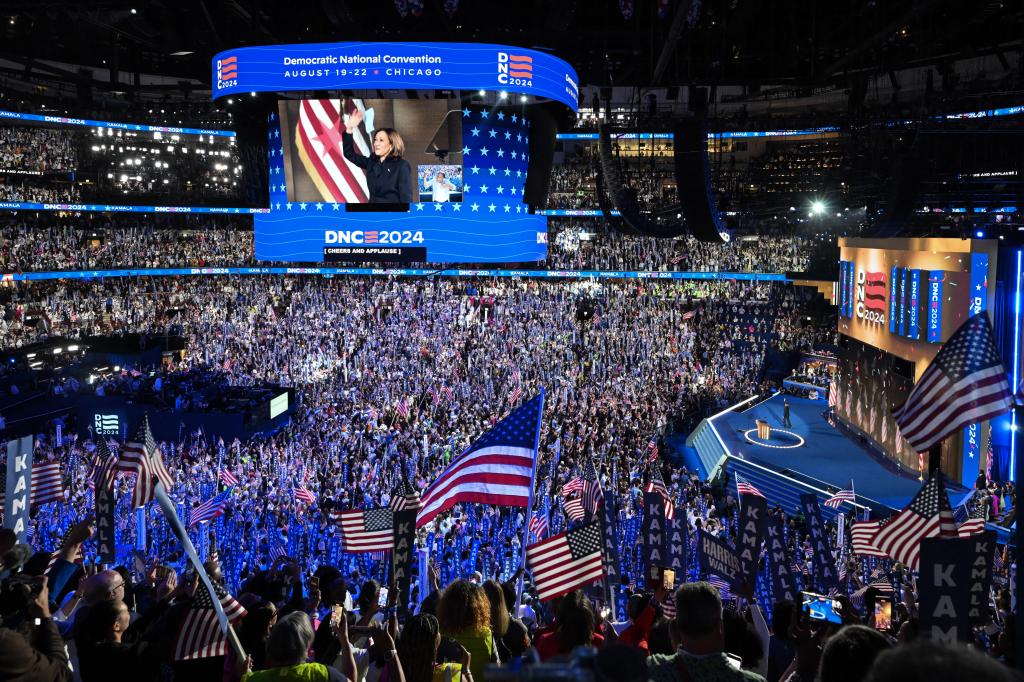
The last two months or so of US politics has been a head-spinning whirl, and watching Kamala Harris take to the stage and deliver a confident, concise acceptance of the Democratic presidential nomination this week has capped off the frenzy nicely. 

I’ve been an American political convention tragic for far too many years, dating back to the Reagan era. They’re bombastic commercials and insanely wasteful propaganda, but they also do sometimes provide unforgettable moments. They’re a snapshot of where the country stands every four years, and how it’s looking ahead. 

The Republican convention with its Hulk Hogans and the Democratic convention with its Oprah Winfreys set the stage for November’s battle between Harris and Donald Trump. They also had very different vibes. For my day job I ended up exhaustively live blogging both convention speeches, and while some years people say the candidates are all the same, you couldn’t get much different than Harris and Trump in both approach and message. 

Even the speech lengths were a contrast – about 40 minutes for Harris vs more than 92 minutes for Trump (the longest convention acceptance speech of all time, apparently).

I admit my biases: I found the Democrat convention more hopeful, and more representative of the multicoloured, freedom loving America I want to believe in. There was simply a sense of joy, a word everyone from Tim Walz to Bill Clinton has attached to the Democratic campaign this year. I’ve watched lots of those endless state roll call of delegate votes at conventions, where dull guys stand up and say things like “From the great state of Idaho, home of the nation’s finest potatoes and the world’s biggest ball of twine, we proudly cast our 27 votes for….”

But I have never, ever seen something at a convention as effortlessly silly and cool as Lil Jon introducing Georgia’s roll call at Chicago this week:

I have to admit I’ve watched this clip a good dozen times because there’s something so overblown and yet quintessentially American about it all. A bit irreverent? A bit egocentric? Sure. But also, it was fun as hell. “Fun” is a vibe that seems sorely lacking in American politics the last eight years. 

In my political lifetime, the candidate who was more optimistic and, for lack of a better word, cheerful, has typically won. It’s not even a party thing – Reagan’s sunny demeanour overwhelmed Jimmy Carter, as George W. Bush’s down home aw-shucks vibe took down Al Gore and John Kerry’s patrician sternness. Bill Clinton’s good cheer beat the first President Bush while Joe Biden’s warmth edged past Trump in 2020. Joe Biden, for all his merits, was a shaky deliverer for the joy vibe these days, while his vice president seems to have easily stepped up to the task. 

I mean, I’m in a bubble. We’re all in bubbles, really, so the world I’m seeing maybe isn’t what a Trump supporter in Mississippi is. But, it’s hard to envision the Republican nominee smiling so easily, playing baseball, petting a dog, embracing his children, all those everyday things that make up most American lives away from the echo chambers. 

I have lost a lot of faith in my home country these last few years, to be honest. Perhaps it’s being an American who’s lived abroad nearly 20 years now, but I often felt like I didn’t recognise it anymore. The whitewashing spin of what happened January 6, 2021 and the ensuing forgiveness and rehabilitation of Trump by too many people who should know better was the final straw for me. I felt baffled. 

I don’t make firm predictions about US politics anymore, because it’s too easy to get your heart broken. I know what I would like to see happen in November, but I’m very aware that it could go either way still. I don’t think America would simply die if Trump was re-elected, after everything we’ve seen, but what a big bloody wound that would be.

I saw a lot of optimism this week that I’d like to believe in myself. A sense of hope might go a long way in this election, particularly when the other side seems mired in conflicting messages and a consistent willingness to bemoan everything, blame everything on other factors and make apocalyptic prophecies. 

I sure would like to see something to chip away at the endless tension and anger infecting so much of America these days, although you might only get there by deleting the internet and the algorithm-fuelled outrage machine of social media, to be honest. 

In the end, what sways things might be this – do you want a smile or do you want a glower? I just want my country of birth to be a place again that looks forward, rather than backward, one where a sense of fair-minded kindness drowns out the endless hate. Will we get there? Stay tuned. 

Flashback 1994: Life in New York City, part two – the daily struggle 

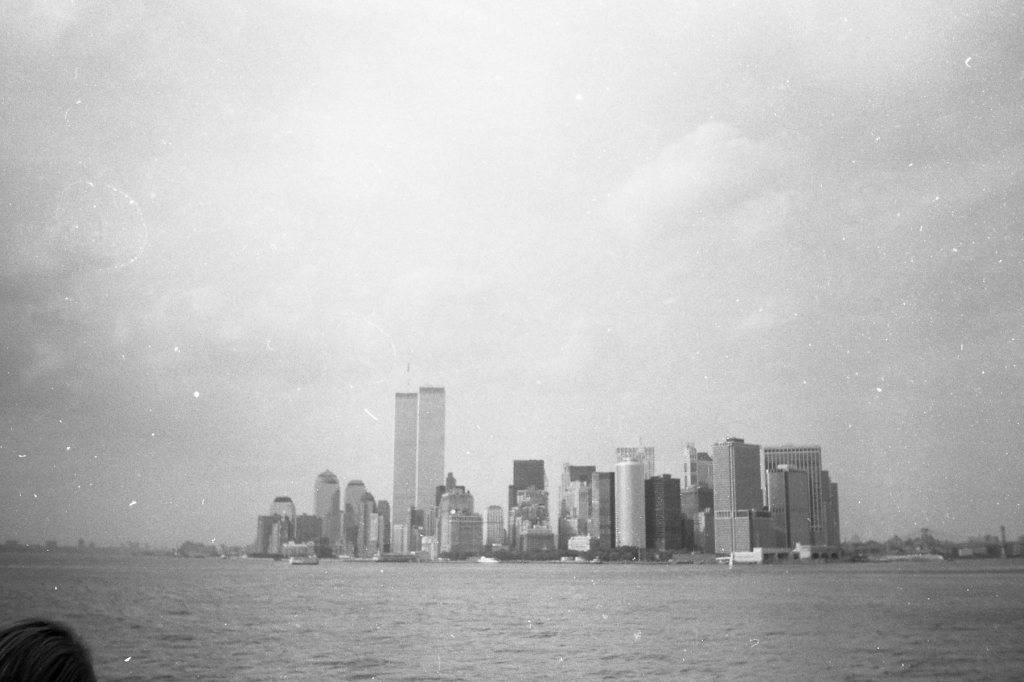
Moody black and white shot of Manhattan, 1994, by someone who had clearly seen Woody Allen’s Manhattan a few too many times.

Part one of this thrilling blog post here!

I had always wanted to live in New York City. I’d seen Woody Allen movies, I’d been addicted to Seinfeld, I’d watched Ghostbusters and King Kong and Do The Right Thing. 

But actually living in New York City was a wake-up call to a young Mississippi journalist. 

The internship at Billboard magazine was great fun, but living in New York City as a perpetually broke 22-year-old? It was a bit scary. I was put up at New York University dormitories in the East Village, as part of my internship. I was stuck in a utilitarian multi-bedroom apartment with a few other starry-eyed interns, although my actual roommate ended up being a friendly Black 40-something military veteran. I didn’t spend a lot of time in my room, really – there was too much to see and do. 

My late dad was very smart with how he taught his spendthrift son to spend money, although it took me years to realise this. He’d never let me starve to death, but neither would he give me an infinite line of credit to spend on books ’n’ CDs and delicious knishes.

So with the paltry paycheck from Billboard and a limited allowance from Dad, I got by. I ate an awful lot of Top Ramen and peanut butter some weeks, as my bank account regularly dropped to two figures. Truth be told, I couldn’t imagine how one could actually afford to live in the city without being a millionaire. 

Times Square, where I went to work each day, hadn’t been quite so gentrified then, and was a buzzing, sleazy place with wide-eyed tourists mingling with businessmen, hookers and panhandlers. Cheap trinket shops mixed with fancy Broadway theatres and bizarre shadowy tombs showing all kinds of porn. 

In those pre-digital, pre-streaming glory days, New York was a wonderful arcade of eccentric gritty book stores, record stores and junk shops. I discovered the amazing sprawling Strand Bookstore not a few blocks from my dorm room and fell in love in the intense way that only a really good used bookstore can make you feel. 

I spent a lot of time in the East Village, where a dirt-poor intern on his days off could just spend the days people-watching in Washington Square. I sat listening to a cassette of Elvis Costello’s Get Happy on my Walkman and reading a paperback of cheap Chekhov plays and imagining how cool I must be. Sitting on the edge of the fountain I’d see people of all races and colours and lifestyles washing by, a far cry from college in rural Mississippi. 

The city could be scary at times, but I was six foot two, able to fake an intimidating stare for strangers and knew enough not to take dumb chances. 

The author, far right, wearing what history would judge, poorly, as quite possibly the most incredibly 1990s bohemian outfit of all time – tie-dyed shirt, black vest and most likely cut-off jean shorts as well.

But I also had friends there – pals I’d made in the small press community I got to hang out with for the first time – jumpin’ Joe Meyer, trippy Tim Kelly, amicable Amy Frushour and several more who helped guide me around the crazy, confusing labyrinth of New York. We ate cheap Sbarro’s pizza and wandered the endlessly fascinating streets doing cheap things and visiting museums. I marvelled at the World Trade Center, not knowing it’d be gone in seven years. 

It was a summer that felt filled with weird coincidences. My oldest childhood friend happened to be touring the country post-college and we met up and climbed the Empire State Building together. On a busy random Manhattan street corner, I literally ran into an acquaintance from Mississippi. On a train heading upstate, the woman sitting next to me was a young writer I knew at Billboard.

I kick myself today over missing some things – never made it to the Statue of Liberty, never got to Harlem or Brooklyn, didn’t have the money to bounce to all the hip clubs and shows that were going on all around me. I was 22, and I didn’t know all the things I could have been doing. I’m sure I missed a lot. 

In hindsight, I wish that maybe I’d seen more and done more in my time in New York – not knowing that 30 years later, having moved to the other side of the world, I’d still never have returned there. Maybe I shouldn’t have bought so many dog-eared paperbacks at the Strand and bought so many CDs at St Mark’s Sounds. But heck, that was part of the experience, wasn’t it?

I was young and naive and the city was a playground of novelties. But it was also exhausting in a certain way, and after three months I longed for a little Mississippi calm and the sound of crickets on a humid Southern night. I didn’t become a seasoned, sarcastic Manhattanite like I’d imagined I might, but I had a taste of the city that never sleeps. That was enough, and 30 years on, unforgettable. 

Flashback 1994 – Life in New York City, part one: The internship

Somehow, 30 years ago this summer, I had my New York City adventure, a near-college graduate from Mississippi who ended up working at a major international magazine. 

In my last few months of university, I stumbled into an internship with Billboard magazine, the music industry bible. I’d been signed up for a “trade magazines” internship program and apparently the few awkward music reviews and pieces I’d slapped together as clippings was enough for me to get a three-month tour aboard one of the industry’s biggest magazines. (Later, I met other people who were part of the same trade internship who ended up at magazines with titles like Tractor Parts Weekly, and who were a bit jealous of my fumbling luck getting a “cool” internship.)

For a college boy from Mississippi, it felt like I’d dropped into another world. I had never been to New York City or even America’s East Coast, and suddenly I was tossed into a real Manhattan magazine office which was both more and less than I expected. It had the warren of cubicles like you’d see on TV and movies, the bustle of constant weekly deadlines, but while it was magical, it was also sometimes mundane and in the end, a place where people just worked. 

Each day I would put on presentable clothes (the tie and slacks, I discovered in the very first week, were a bit much) and take the subway from my dorm room at NYU up to Times Square, where I’d grab a New York Daily News and coffee and head up to the Billboard office. 

In 1994, the music industry was a very different place than it was in 2024. Sure, you still had hustlers and hopefuls all angling to make it big, but there was no Spotify, there was no social media. There was cold black ink on glossy magazine print worth its weight in gold to any musician. Billboard told the world what the number one song was, what the biggest selling album was. It mattered, in an age before media splintered into a million subsets. 

The CD was king, and it’s hard to explain now how these shiny disposable discs were valuable hard currency to music lovers for a while there. We’d get dozens of CDs a day from bands hoping for a line or two of print, and each day, dozens of them that the editors were either done with or never listened to at all would be “dumped” on a small “free” shelf right across from my cubicle. Like a dinner bell ringing, the “dump” would be accompanied by other office workers scurrying to the shelf from all over the building, scooping up the glorious free music, no matter what it was, hoping to find treasures. 

I ended up with several boxes full of CDs stamped with “promotional copy” on the front to ship back to Mississippi. That summer I discovered bands I would love for years to come – the surreal rock of Guided By Voices, the lonesome beauty of Freedy Johnston, the Britpop charms of Blur – along with dozens of other bands whose names I’d soon forget, whose CDs I’d eventually trade in for credit somewhere. 

I worked, briefly, with some music legends there who are now all gone, like the warm-hearted late Irv Lichtman, a true New Yorker to his bones, or Eric Boehlert, a genial young editor only a handful of years older than me who went on to become a fiery critic of online misinformation before his terribly early death in an accident in 2022. The Billboard editor-in-chief, Timothy White, was a bow-tied wearing blur who zipped past my desk several times a week. We exchanged maybe a dozen sentences but that was enough for a striving wanna-be journalist to soak up. He was hugely respected in the industry, but died suddenly of a heart attack at only 50 years old a few years later.

Billboard was full of kind and crusty journalists in equal measure – one of the editors never addressed me with anything more than a grunt, while another often took me out to lunch and once regaled me of tales of the interview he’d just had with Erasure’s Andy Bell that morning. One rain-soaked weekend half the staff went upstate to Woodstock ’94 and I vicariously took in all their madcap stories of this rather muddy fiasco the next week. I was an observer on the edge of it all, but it confirmed for me this weird, pressure-filled life of journalism was where I wanted to be. 

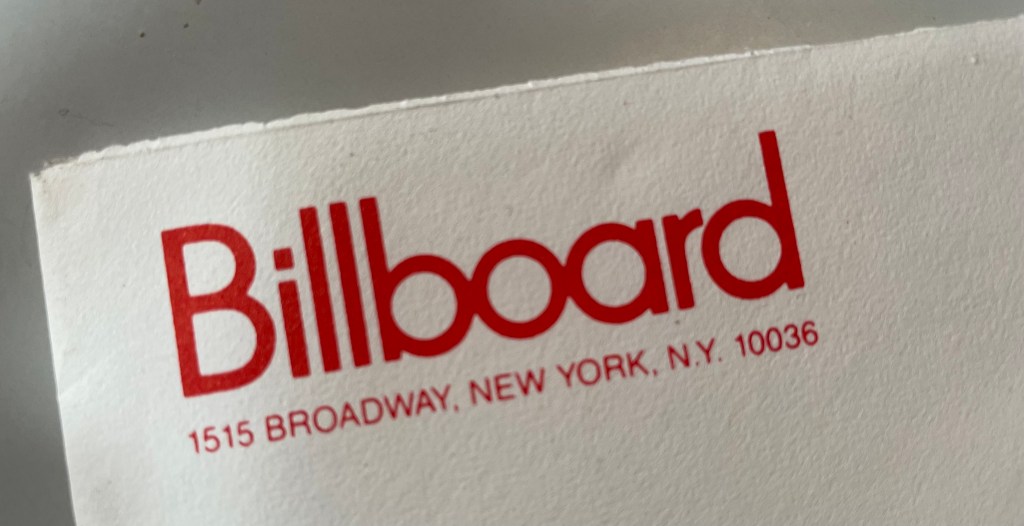
Please note my magnificently disheveled makeshift cubicle at 1515 Broadway, Times Square complete with prominent trash can and empty bag of bagels.

I lived the true intern’s life of being the office errand boy, in that pre-digital era – helping sort the massive sacks of mail of review CDs and books that were dumped out daily, answering phones, working in a tiny storeroom jammed with file cabinets to organise the horrifyingly cheesy band photos sent in by every would-be superstar in the land, and sometimes, getting to write short pieces.

I had maybe 10 bylines in Billboard that summer, each one feeling hard-won. 

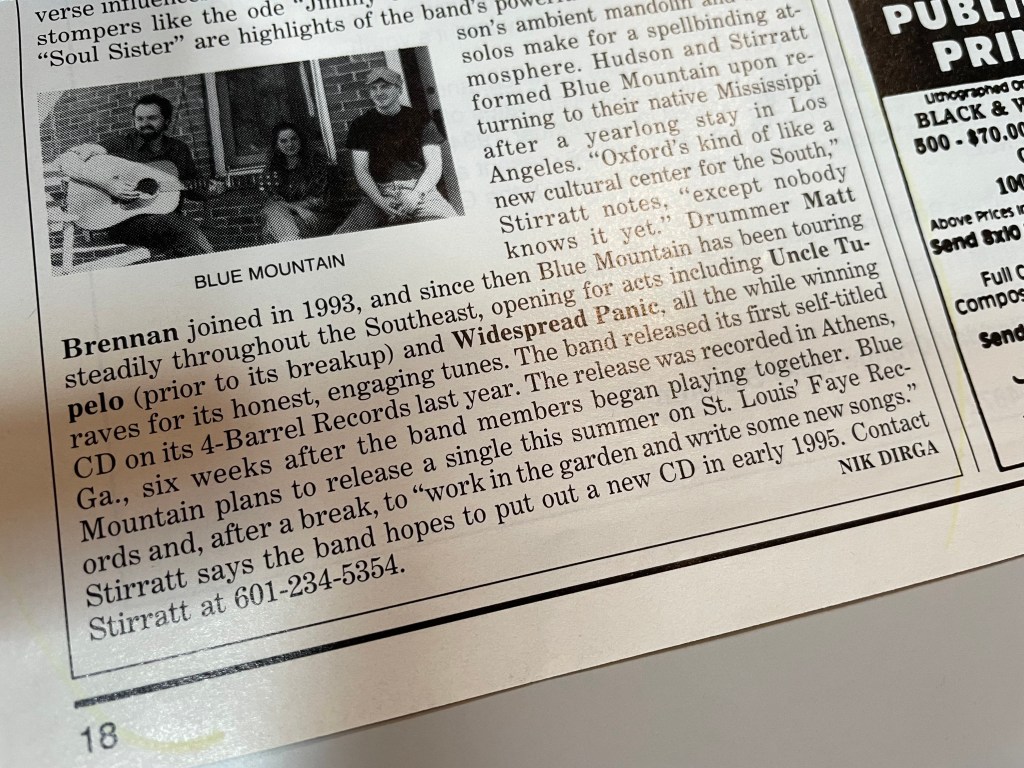
An article on Oxford, Mississippi band Blue Mountain was a Billboard highlight for me.

I was briefly, part, of a newsroom and a team, and all the years since then I’ve found myself drawn to that weird companionship of the news. It gets in you.

I never got a front-page scoop or anything. I was an accessory, a kid learning the ropes. One tangled industry piece I did ended up being rewritten so comprehensively that I think I recognised a dozen syllables as my work in the final product, but I took it all in – you were there to learn, after all, and the 22-year-old intern couldn’t afford to get angsty about credits. 

I did not end up staying and working in Manhattan – I had one semester of college to finish, and ended up getting hired by the local Mississippi paper that fall and working there for a few years before fleeing back to my native California and continuing my quixotic career.

Since the summer of ’94, I have never been back to New York City, and now live almost on the opposite side of the world. I’d like to go back, someday.

But it was enough to be there, for a summer in Manhattan, walking through Times Square every day eating a bagel and feeling like you were part of something greater. 

Next: Part two: Living in the city 

The one foe that Joe Biden couldn’t beat

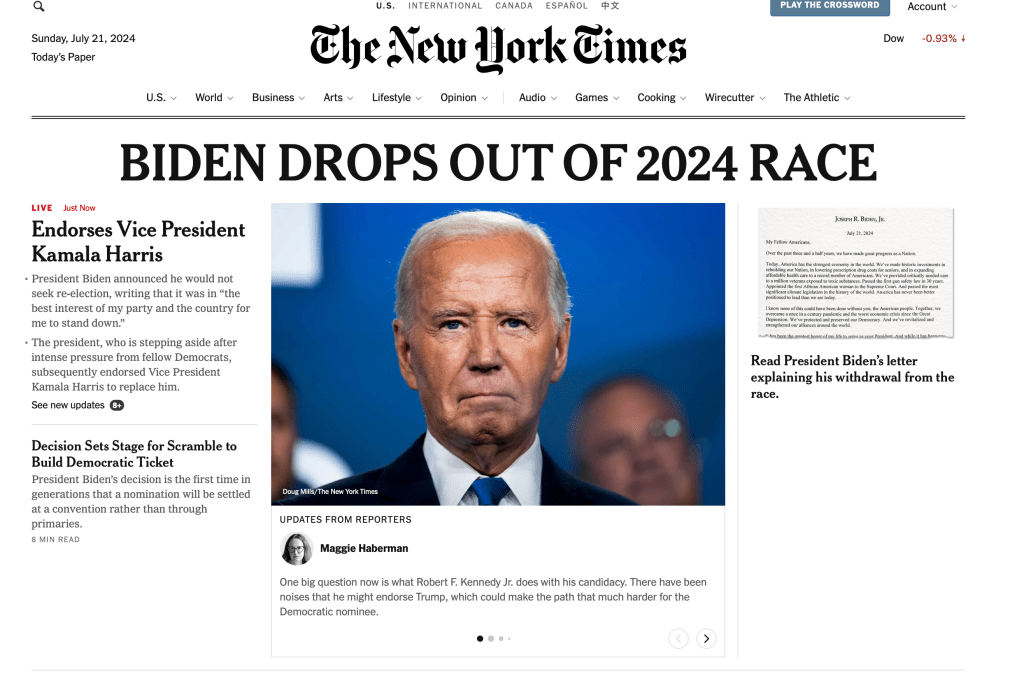
Joe Biden, who channeled perseverance and grit into a 50-year run in American politics, finally met a foe he could not beat.

His opponent in the November presidential election was technically former President Donald Trump, but it was also a much, much harder one to beat – age and perception.

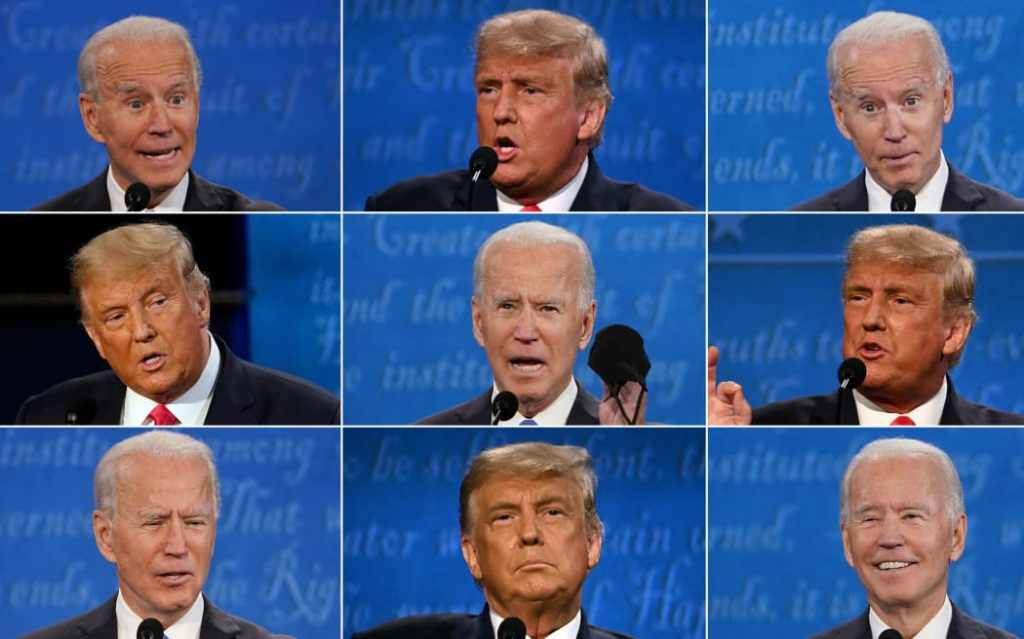
The disastrous June debate performance – the worst I’ve watched in 40 years of viewing these frustrating, fascinating American events – laid bare the harsh reality of age on America’s oldest president, and in US politics, image is everything.

At 81 years old – 82 in November – Biden finally recognised today he could not win this one.

My own father died in May at 83 years old, just a little bit older than Biden. Up into his eighties, he was a tremendously strong, vital and charismatic man, until one day, he wasn’t.

Dad did many great things in his life but as he battled pancreatic cancer, he would often repeat one of our family’s favourite sayings: “It is what it is.”

The events of the past month have taken on the feeling of a slow moving car crash, and Biden’s decision today has shaken up the 2024 race in a way that may have many Americans exhaling with relief, while others will fume with frustration.

The cascade of senators and congressional leaders from Biden’s own party stepping away from his campaign was something unprecedented in presidential races of the past 40 years. A media avalanche of calls for Biden to give up – some fair, some cruel – never ceased, despite attempts to beat it back. We saw plenty of articles with doctors doing long-distance diagnoses of Biden’s possible medical conditions.

Age is not a scandal. It’s not something you can beat back with good coms, or perky memes. (The “Dark Brandon” attempts to make Biden some sunglasses-wearing superhero were cute at first, but rapidly started to feel a bit cringe.)

Every US president has aged dramatically in office – but for Biden, already past an age most people have retired, the optics were hard to overcome.

Contrary to armchair doctors all over the internet, I have never thought that Joe Biden has dementia. I have family members with dementia, and frankly, the overwhelming tsunami of hot takes online that apparently, everyone over the age of 65 has dementia, were pretty insulting.

But Biden has slowed down, as all of us do in the end.

The biggest obstacle to his run for a second term was the realisation that Americans weren’t just being asked to vote for the Joe Biden of 2024, they were being asked to vote for the Joe Biden of late 2028 who would be 86 years old and all the Joe Bidens in between.

While Trump, 78, manages to still summon up a fierce energy at his rallies, now that he will be the oldest candidate in the race, he may face far more scrutiny than before about how Trump 2024 and Trump 2016 are different. Even Trump has to face age in the end.

Only a handful of US presidents have made the decision Joe Biden did today, and none of them so late, or quite so old as Biden is.

The obvious comparison to be made now is Biden – reluctantly, but civilly – giving up the ongoing power of the presidency, and Trump, on January 6, 2021, doing everything he could to hold on to it.

Nobody quite knows what will happen this November, but the playing field has changed forever today. For Biden, it has to be a somber, frustrating day, but in the end, age cannot be explained away easily.

As my late great dad would have said, “It is what it is.”

(This one is also up over at Radio New Zealand right here!)

If it weren’t for breaking news, would we have any news at all?

It’s been another rather turbulent week if you’re a bit of a presidential history and politics nerd, in case you’ve been hiding in a dark cave somewhere in the Andes. There’s nothing quite like getting a news alert about a presidential assassination attempt at 10.30am Sunday morning to quicken the blood.

So, haven’t had much time for my usual pop-culture meandering this week (I know, all three of my fans are sorely disappointed), but I have had a few pieces reflecting on the chaos for my day job over at Radio New Zealand:

Should Biden stay or should he go? A week in politics.

… Ever since I moved to New Zealand nearly 20 (urk!) years ago, I often get asked to explain the weird world of US politics. Here in our somewhat more inclusive parliamentary system, American politics can seem darned strange to many.

I’ve monetised that nerdy niche American history knowledge to write lots of pieces over the years, although I’ve really tried to do less of that in recent times. I wrote a piece four years ago which it turns out was far too optimistically called “The last thing I’ll ever write about Donald Trump.” Hah, we were so young and innocent then. (Getting plentiful hate emails, creepy social media stalking and the like from T**mp fans after one piece also kind of cured me of giving hot takes.)

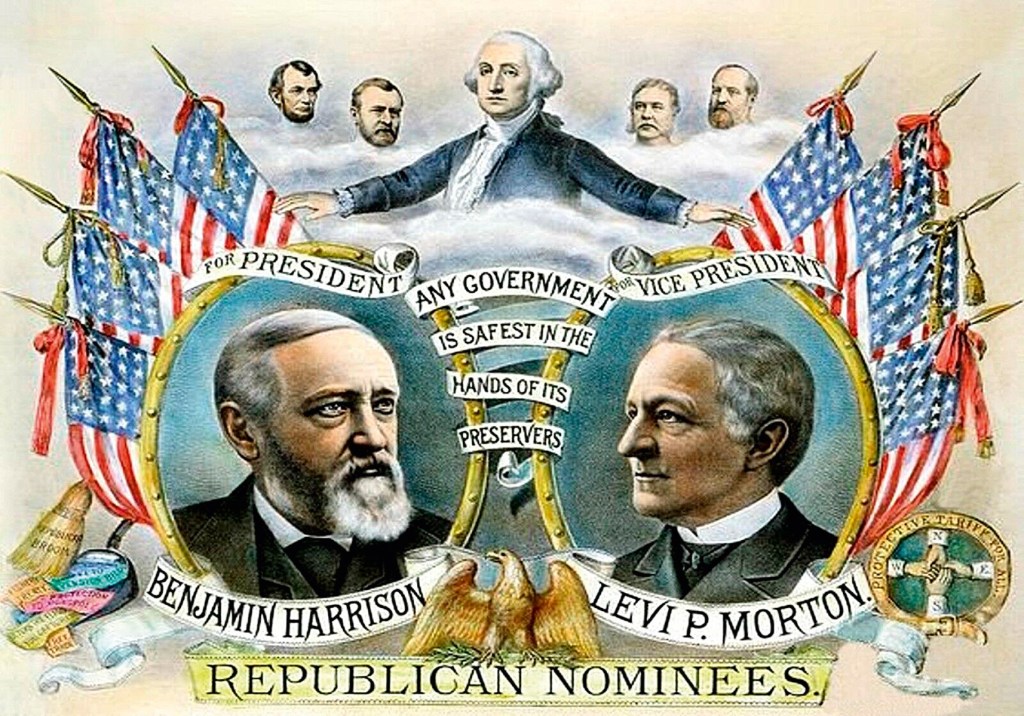
But, we live in unprecedented presidented times, don’t we? The first presidential debate of 2024 a week ago was a shocker – I wrote a preview, live-blogged the actual event and did a bit of a historical deep dive analysis afterwards all for Radio New Zealand. While live blogging it, I had the strange sinking feeling that I was watching history, rather than just another forgettable debate. Here’s what I wrote, with gratuitous arcane Benjamin Harrison and Woodrow Wilson references galore!

Biden vs Trump debate: What you need to know

Live blog: Biden/Trump 2024 first debate

Could Biden quit? It’s happened before

I’ve been watching presidential debates for 40 years now, ever since Ronald Reagan and Walter Mondale crossed swords … and I’m afraid President Biden’s performance was the worst I’ve ever seen at one of them.

Will Biden hold the course or step aside? The clock is ticking and just over the last week, while I’ve been on a lovely holiday down south, the narrative keeps changing.

I gave up on making presidential predictions after the 2016 fiasco, and am not entirely sure what the coming days will hold – but I feel 90% sure that if Biden stays in, he actually lost the election on that June evening long before the first vote. It doesn’t matter how well he’s done or not, because, I think, for far too many voters, perception is everything. As far back as last Christmas I did not think Joe Biden should have run again and this whole year has been like a slow-motion car crash, but the thing about car crashes is sometimes, they don’t go quite like you think they would.

So it is with America, shakily, here in 2024. I wonder what precedented times feel like.

Happy 30th anniversary to my comic strip ‘Jip’!

To quote that band half my pals listened to nonstop back in the day, “What a long, strange trip it’s been…”

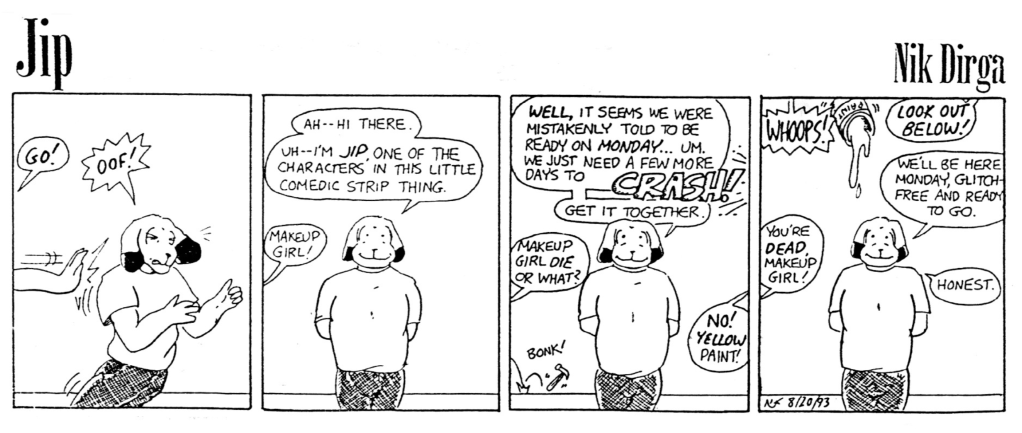
So it was 30 years ago this week that I started drawing a daily comic strip for The Daily Mississippian in my final year of university. Jip premiered on August 20, 1993 and ran for just about a year, 140 or so daily episodes of college hijinks heavily inspired by Doonesbury, Bloom County and Martin Wagner’s Hepcats.

I’ve written about my Jip days before and republished the strips as free PDF downloads a couple years back. (Advertorial: You can get Book 1 here and Book 2 here!) But, unlike my other comic Amoeba Adventures, I’ve never really returned to Jip in the years since I graduated – you can’t go back to college, after all.

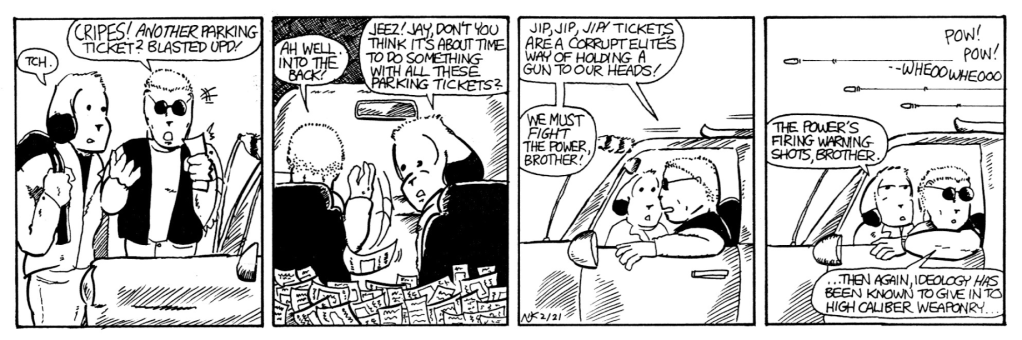
Still, when I realised this week marked a whopping three decades since it kicked off, I couldn’t help but wonder what my wide-eyed dog-faced college freshman Jip would be up to in the strange world of 2023 – so here’s a special anniversary strip! If only we knew then what the future held…

I’ve already said everything I have to say about this guy

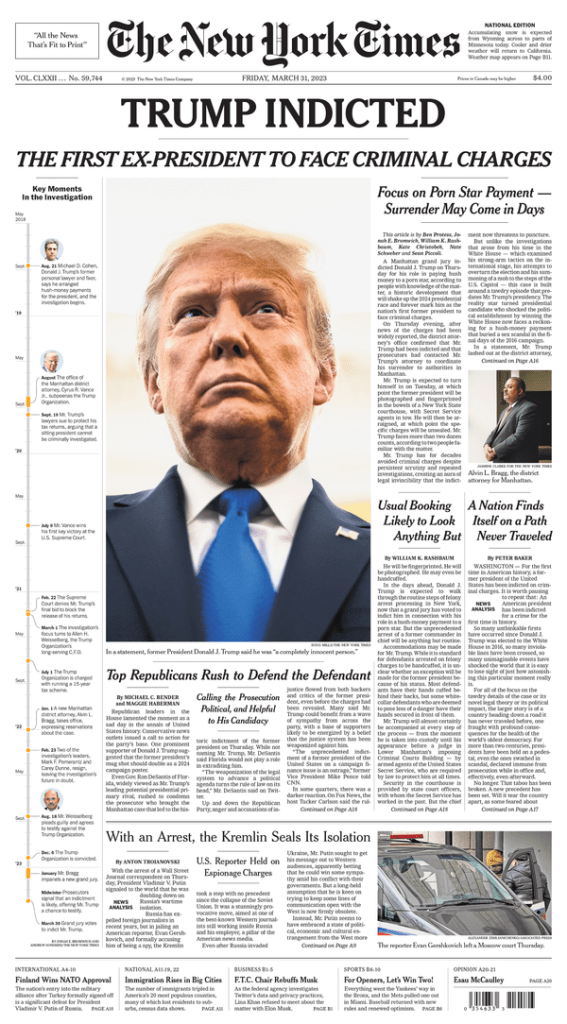
… I started to scribble a post about the first criminal indictment of an American President in history, about the seamy grifting, decades of corruption and braggart arrogance that brought everything to this point, but honestly, I’m sick to death of that idiot, and you probably are, too, and at this point I am utterly baffled, to the point of incoherence, at the notion that any sentient human being on the planet actually wants this undead ghoul, this endlessly returning shambling mass of all America’s worst and darkest instincts, this craven sack of nihilistic empty ego, to ever come anywhere near public office again.

Like, haven’t we all had enough?

I started to write something, anyway, and then realised that pretty much everything I wrote back in late 2020 is still very much true today, only perhaps more so. So read that instead:

We’re all still living in Nixonland