Val Kilmer’s very human Batman

Val Kilmer was a complicated guy, but he left behind a lot of indelible movie performances. Nobody would ever call Batman Forever a good movie, really, but despite all the missteps and terribly 1990s trappings of it all, there are moments when I do think Kilmer’s Batman is one of my favourite takes on the caped crusader.

Kilmer, I think, was the funniest Batman other than ’60s icon Adam West. That’s not exactly something that fans of none-more-dark Dark Knight takes might appreciate.

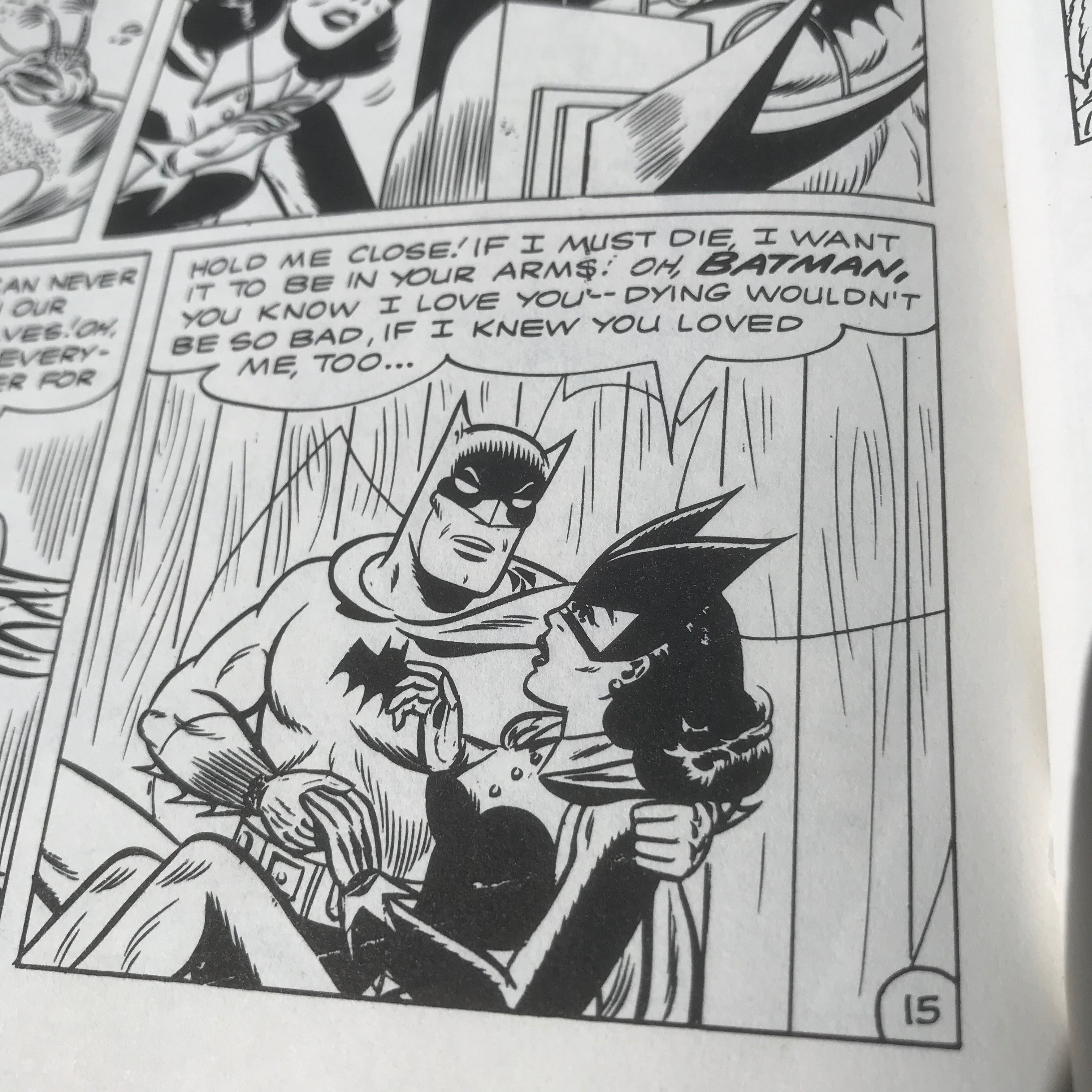
As a Bat-fan, I’ve always liked the Batman who was a little more human, the one we’d see running around in Brave and Bold comics in the 1970s tossing quips about with Green Arrow and Kamandi. A Batman who is so utterly bleak gets a bit old. 

Director Joel Schumacher took all the gothic weirdness and carnival humour of Tim Burton’s first two Bat-movies and exploded it into full-on camp and neon garishness. Batman Forever, turning 30 in 2025, was a huge hit, lest we forget, the #1 movie of the year. But it all came crashing down with 1997’s flop Batman and Robin, this time starring a far too-glib George Clooney as Bats and ramping up the colourful kitsch about 500% more. Few people look back at Schumacher’s Batman as a peak for the character now. 
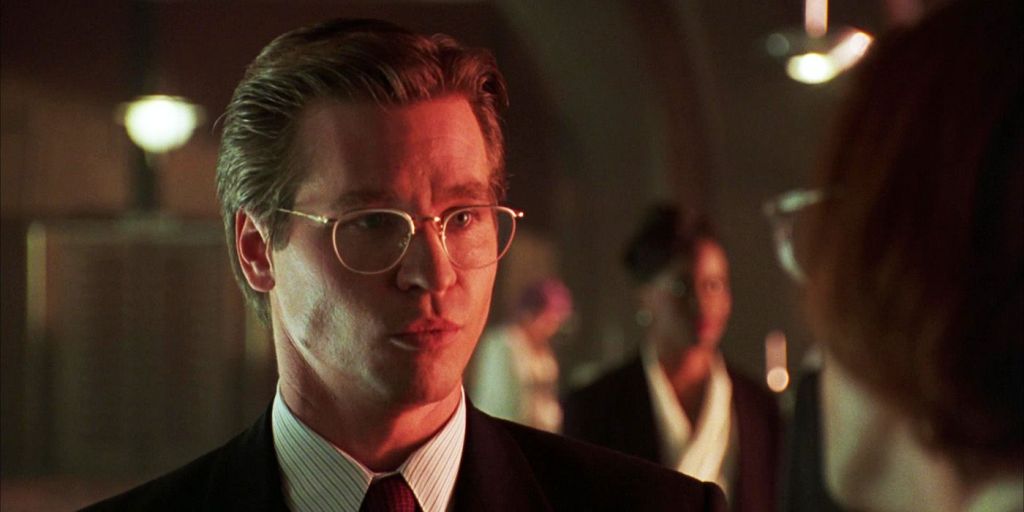
And Batman Forever is a mess, don’t get me wrong. It might just boast the two most annoying comic book movie villains of all time in Jim Carrey’s insufferably twitchy Riddler and Tommy Lee Jones’ frantic and undignified Two-Face, who spends most of the movie cackling, grunting and wahoo-ing. The movie shoehorns in an origin for Chris O’Donnell‘s totally ’90s Robin, an incredibly sexed-up Nicole Kidman as a love interest and a kind of incoherent plot about brain-stealing technology.  Whenever I watch it I have to fight the urge to slap Carrey so I can focus on the bits that do work. 

It starts off clearly stating it isn’t going to be Keaton/Burton’s Batman, with fetishistic shots of Kilmer donning the Bat-gear and the first lines of dialogue being a lame joke about Batman getting drive-through for dinner. (Cue that McDonald’s ad, of course.) 

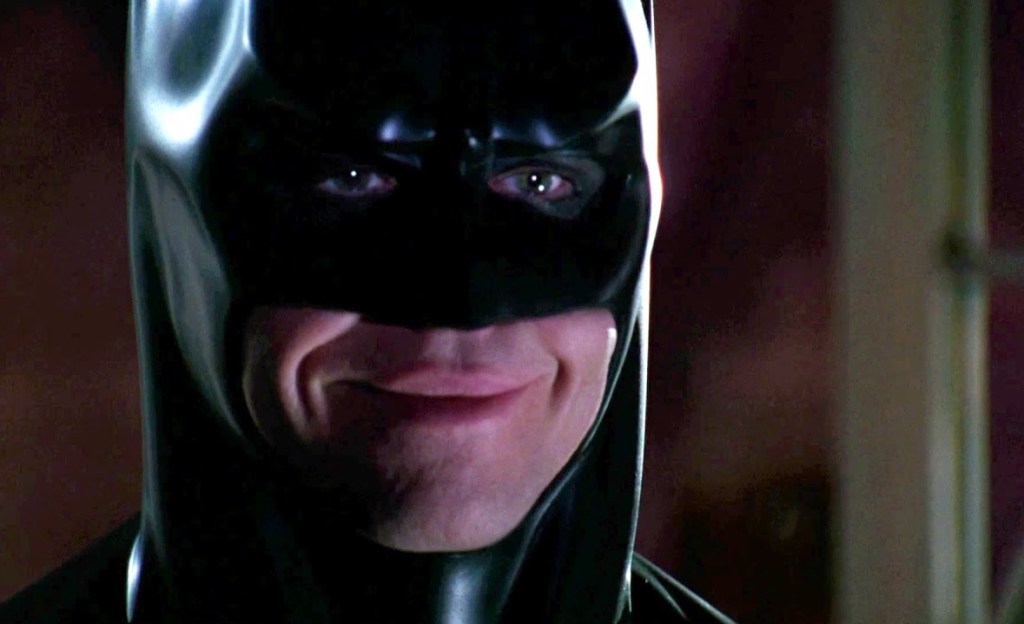
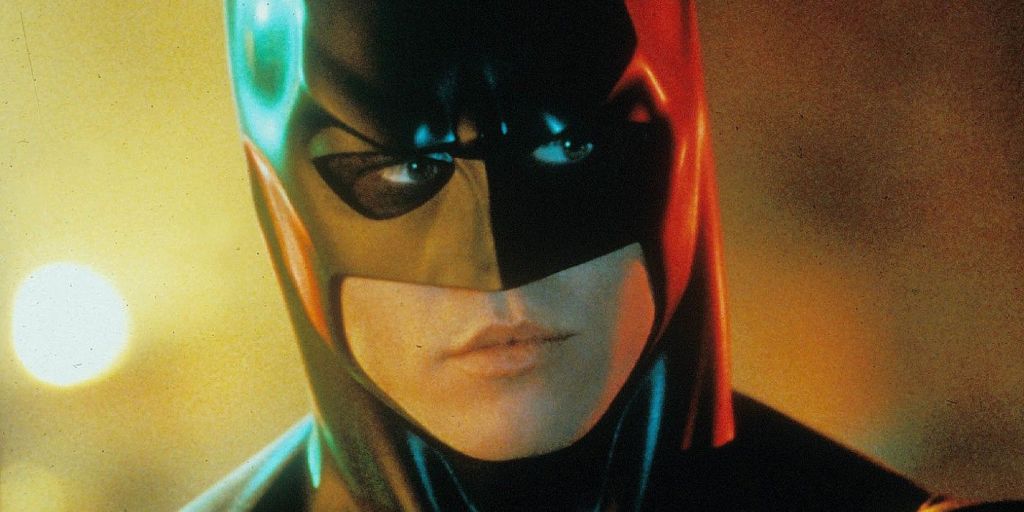
And yet, I like Kilmer as a blonde Bruce Wayne/Batman. There is a sly wit to Kilmer’s performance, which gives us a Batman with a sense of humour without being quite as lightweight as Clooney ended up. Little tics linger like his Bruce Wayne constantly fooling about with glasses (does Batman wear contacts?). His Batman smiles broadly in one memorable scene, which could be cheesy but Kilmer makes it a little, well, charming and sincere. Why can’t Batman smile, occasionally? It ain’t always dark.

His Bruce Wayne is courageous and not just a playboy – brawling with villains without a costume in several scenes, focused with a whiff of arrogance, and smart but also a little scared. 

Michael Keaton was a tense and wiry surprise as Batman (it’s easy now to forget his casting was hated by pre-internet fandom once upon a time) and Bale, Pattinson and Affleck have all given us variations on a very serious, stern Bruce Wayne/Batman. But I still think Kilmer’s Batman is the only one who seems kind of like a Batman you’d want to hang out with, really. 

Kilmer navigates Batman’s dual nature fairly well in Batman Forever – haunted by his past, but wanting to have a life of his own outside Batman. The rickety script doesn’t really serve him well – at one point Batman quits, only to unquit about 30 seconds later – but Kilmer sells story beats like his mentorship of the angry young Robin and his attraction to Kidman’s ridiculously horny psychologist character.

He cracks a few jokes, but he never makes Batman the joke. Kilmer’s movies like Tombstone and Top Secret and Kiss Kiss Bang Bang were great, but his underrated Batman manages the trick of making a mediocre movie almost worth liking. 
The Penguin review – Batman’s goofiest villain is no longer a joke

For a bloke who turns 85 years old this year, Batman is holding up pretty well.

The caped crusader has been reinvented countless times since his 1939 debut, and that’s the secret of his longevity.

You want a friendly Batman? Adam West’s day-glo 1960s TV series fits the bill. Bold and epic? There’s plenty of animated series to choose from. Dark and gritty? Pick up Frank Miller’s classic Dark Knight Returns graphic novel. Somewhere in the middle, with lots of Gothic architecture? Tim Burton’s unique 1989 Batman still holds up very well.

Those Bat-villains just keep on going, too. Batman probably has the best rogues’ gallery in comic books – a twisted collection of eccentric obsessives strongly defined enough to take the spotlight in many of their own solo comics and movies. Stars who have played the Joker have now won two Academy Awards for Best Actor. For many, battling the Bat as the Riddler, Catwoman or Clayface is still a feather in the cap.

The world of Batman has proved itself ripe for interpretation, whether it’s Robert Pattinson’s brooding emo turn in 2022’s The Batman or villainous Harley Quinn starring in her own filthily funny and irreverent animated series.

But a new HBO spin-off of that 2022 Batman movie serves up one of the darkest takes yet on Batman’s Gotham City, starring Colin Farrell reprising his role as the scheming gangster Penguin.

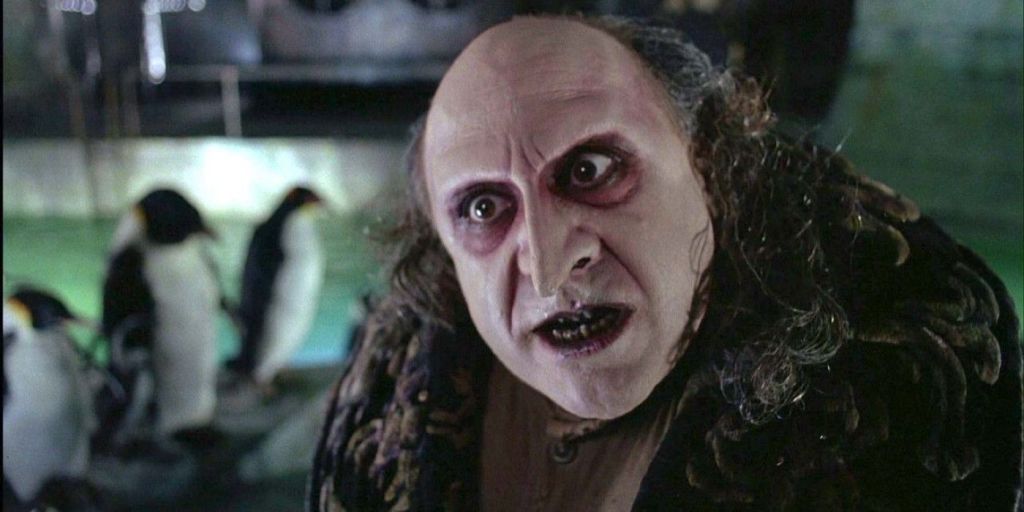
The Penguin has always kind of been the also-ran of Bat-villains, despite hanging about for decades. A pudgy, monocle-wearing bird-obsessed weirdo with trick umbrellas, he was memorably brought to life by a cacklingly campy Burgess Meredith in the 1960s TV series, while Danny DeVito in Tim Burton’s Batman Returns was a waterlogged, creepy outcast.

Wipe all that out of the memory with Farrell’s sinister “Oz” – who loathes the nickname Penguin – a scarred and crippled mobster who nearly stole the show in The Batman. There are no trick umbrellas here.

An unrecognisable Farrell, looking like an overweight Robert DeNiro run through a smudgy photocopier, played Penguin in The Batman film as a seedy Goodfellas-style criminal.

It was a magnetic performance with its visceral sleaze, and over the new eight-part miniseries Farrell’s snarling take on this most ridiculous of Bat-villains makes a good case for why you should never overlook a penguin.

In The Penguin, which picks right up after the near-destruction of Gotham City in The Batman’s climax, Farrell gets a showcase a world away from big budget MCU-style comic adventures.

Farrell feels consistently underrated as an actor, despite some excellent performances in films like After Yang or In Bruges and an Oscar nomination for The Banshees of Inisherin. He gives the oily Penguin a sense of wounded soul despite working under piles of makeup and padding to create the character’s waddling presence.

This isn’t your childhood Batman and definitely isn’t for kids – while the Bat himself is only referred to in passing, The Penguin is a deliciously nasty slice of noir, filled with F-bombs and shockingly violent deaths, far more The Sopranos than Batman Forever.

The Penguin is scrambling to take advantage of the chaos in Gotham’s criminal underworld after the events of The Batman. He’s nowhere near a “supervillain” yet, but he’s got big dreams, and ropes into his labyrinthine plans a conflicted teenager (Rhenzy Feliz) and the disturbed daughter of deceased crimelord Carmine Falcone, Sofia (Cristin Milioti).

The Penguin works best when it focuses on Farrell, but Milioti (Palm Springs, Black Mirror) is also striking channeling that good old Gotham City criminal intensity into an unpredictable performance. A rogue’s gallery of prominent actors like Mark Strong, Shohreh Aghdashloo and House of Cards’ Michael Kelly fill out the cast.

Over The Penguin’s eight episodes (the first five were viewed for review), a tangled web of double-crosses and violent heists unfolds, with Oz the Penguin scrambling over dead bodies as he hopes to make his mark on the world. While it may help set the stage for the 2026 sequel to The Batman, it also very much stands on its own even if you’re not a Bat-fan.

There’s no Batman, no Robin in sight, but you honestly don’t miss the Dark Knight too much with bad guys this watchable.

This review also published over at RNZ!

DC Challenge: The insane comics crossover everybody forgot about

Almost 40 years ago now, the DC Comics universe went through a bit of a crisis. Crisis On Infinite Earths debuted in April 1985 and was one of the first giant “shared universe” crossovers, a sprawling epic that brought together multiple worlds and changed them forever. 

Meanwhile, just about at the same time, another universe-spanning 12-issue all-star miniseries was going on – but decades later it’s nearly forgotten, even though it was kind of the last gasp of that “pre-Crisis” universe. 

DC Challenge is a 12-part miniseries that also debuted in 1985, but instead of some carefully orchestrated event, it was a loose and wacky round robin jam comic where each issue was written and drawn by a different set of creators, bringing together everyone from the big guns like Superman and Batman to the obscure like Viking Prince, Congorilla and Adam Strange. Great comics writers and artists who played a big part in the ‘pre-Crisis’ DC Comics world joined in – Mark Evanier, Gerry Conway, Len Wein, Roy Thomas, Curt Swan, Gil Kane and many more. 

Jam comics by their very nature are probably a little more fun for the creators than the reader, to be honest. They’re a creative exercise that stumbles along from player to player and resist any attempt to smooth out the bumpy transitions. But they’re also kind of fun because literally anything can happen. 

DC Challenge is still an awful lot of goofy fun, maybe because it isn’t trying to change the entire comics universe. Instead, it’s a giant sandbox paying tribute to DC’s then-50-year-old history. Set outside “continuity,” it reads now as a kind of fond farewell to the pre-Crisis DC Universe where you’d regularly have Superman turned into a blimp by red kryptonite. A little less “serious” universe. 

You get such oddities as cowboy Jonah Hex transported to the present day, Deadman teaming up with Plastic Man’s sidekick Woozy Winks, a Batman / Mr. Mxyzptlk encounter, a cameo by Humphrey Bogart, and creators pulling obscurity after obscurity from DC’s vast library of old characters, whether it’s Space Cabby or B’Wana Beast.

Is DC Challenge “good,” exactly? Not quite – it’s nowhere near as emotional or skilled a spectacle as Crisis On Infinite Earths with the late great George Perez’s stunning art, still my gold standard for everything-and-the-kitchen-sink comics storytelling. But it’s an awful lot of loose-limbed fun even when the story threatens to crumble entirely under the weight of a dozen or so authors trying to make sense of each other. 

Sometimes a writer comes along and throws out a bunch of cool bits another threw in (at one point, Albert Einstein becomes an endearing cosmic-powered character in the DC Challenge carnival, only for rollickin’ Roy Thomas to come along in the last few issues and say it was just an alien pretending to be Einstein!). One of the more enjoyable part of the comics is the lengthy afterword essays each issue where the writers critique each others’ plot twists. More so than many comics, here you see the creative process laid bare.

Thirty-nine years on, DC Challenge is really only remembered by oddball comics fans like myself – it’s never been collected, is rarely referenced, whereas Crisis has been collected multiple times, adapted to TV shows and animated films, there’ve been at least a half-dozen “Crisis”-named sequels and it is still in many ways the template for giant comics crossovers to this day where we get swirling invasions from beyond and everybody and their brother teaming up to fight it all. (There was a nifty “Kamandi Challenge” DC put out a few years ago that did homage the round-robin concept, though.) 

DC Challenge wasn’t helped by a kind of goofy catchphrase used to advertise it – “Can You Solve It Before We Do?” The thing is, DC Challenge wasn’t actually some kind of Sherlockian mystery, and the “challenge” really is each creator picking up the pieces after the cliffhangers the previous issue’s writer inserted. “Can You Follow The Insane Plot Twists?” wouldn’t be quite as good a catchphrase, however. 

There’s been about a thousand big comics-universe spanning crossover events ever since Crisis and Marvel’s 1984 Secret Wars kicked the whole modern version of the concept off. Some are still pretty good, most are forgettable, but overall, the concept has been exploited for so much and so long that there’s no real novelty anymore in dozens of heroes gathering together under darkening skies to fight an unbeatable foe. 

On the other hand, the madcap idea of just telling a fun story with your mates and seeing what weird roads it takes you on – well, it may not always be pretty, but it’s rarely ever boring. 

Keeping It Short Week, Day 2: Who’s my favourite superhero?

It’s Keeping It Short Week, 250 words or bust:

The question is fraught with peril for any comics nerd: Who’s your favourite superhero?

I’ve clearly got too much time on my hands because I think about this a lot. One of the first comics I ever remember reading was Amazing Spider-Man #200 and for years Spider-Man, web-swinging worrywart, was my choice. He was a geeky teenager and then a harried student! I identified!

For a brief while I succumbed to the bristly charms of mutant Wolverine, before overexposure and dire 1990s comics ended that affair. Then for a long time, I’d go with Batman, because pound for pound I think he’s probably had the most great stories written about him of any superhero. 

There’s others I adore, of course, like the endless duelling personalities of the Hulk, angst-ridden Daredevil, lumpy everyman The Thing

Yet, these days, when I think of the superhero I dig the most, it’s always the most basic – Superman, the Man of Steel. He may be uncool compared to edgy Punishers and Spawns but honestly, the older I get, the more I like his fundamental decency.

I love lots of superheroes, but when it comes down to it, the one I’d really like to see in our troubled old world, the role model – well, Superman was the first for a reason. He’s also still kind of the best. I’m old now, and superheroes don’t just have to be cool to me. They have to actually be kind of super, too. 

Meet Galexo, the creepy hero who finally defeated Batman

Everyone knows Batman and Robin. But did you hear the one about Batman and Robin and… Galexo?

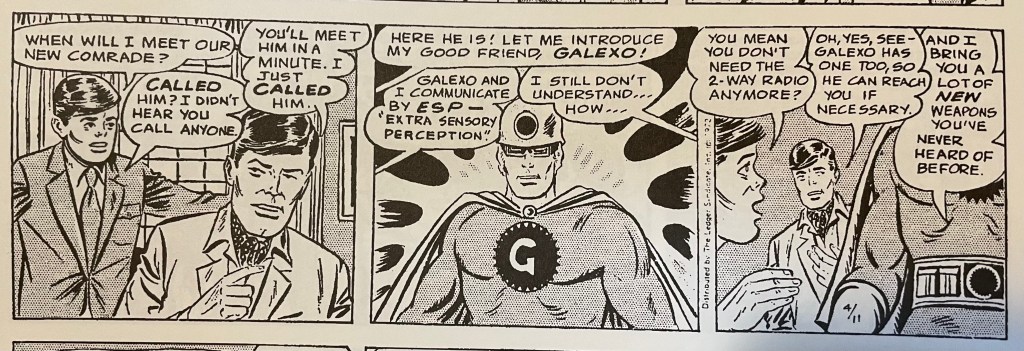
A bizarrely uncharismatic space superhero, Galexo parachuted his way into the late 1960s/early 1970s Batman syndicated newspaper strip towards the end of its lifetime, and thanks to an argument between publishers, he ended up pushing Batman out of his own comic entirely, doing something the Joker could never manage – killing Batman. 

These strange oddball strips have fascinated Batman aficionados for years but were rarely seen until reprinted in the handsome 2016 collection Batman: The Silver Age Dailies and Sundays Volume 3 1969-1973. The book is a story of Batman’s strange decline in the comic strip – while it starts out with solid artwork and stories featuring Batman’s traditional foes, by the end of 1971 the strip started to collapse upon itself. 

A weird struggle between the newspaper comics syndicate Ledger and National Periodical Publications (later DC Comics) was the reason – seasoned comics writer E. Nelson Bridwell was sacked and unknown Ledger staff brought in, and the strip declined in quality rapidly. But it was still kind of recognisable as Batman comics, until in April 1972, Galexo was clumsily introduced, and Batman announced it was time to “turn our duo into a trio” with his creepy spaceman hero pal … who apparently has ESP and other science stuff. 

Galexo is a rather horrifying figure, adorned with a greasy-looking mullet and a migraine-inducing colourful costume and wearing a weird helmet that resembles a truckers’ cap. He has no personality, and a tendency to lecture about his superiority. Nobody should lecture Batman, but the chill Bruce Wayne in these strips just hangs out and lets Galexo blather. 

These strips are objectively terrible but kind of fascinating – look at the complete lack of attempts to make the art dynamic, with endless tight cropping onto the figures’ heads, dialogue overwhelming the panels entirely, and almost abstract surrealism. Batman and Robin barely appear in costume or when they do they’re reduced to Galexo’s cheer squad. 

After several aimless weeks and awful art, Batman and Robin were apparently pushed out of the strip entirely in favour of Galexo and his friends, but the title still remained Batman’s.

It’s not every day that you found a newspaper ditching a comic strip with a public note that it’s become complete garbage, but such was the fate of Batman and Robin and Galexo as the Stars and Stripes newspaper dumped it along with many others:

The Batman-less Batman and Galexo strip apparently carried on in a few overseas newspapers in places like Singapore for another year or so. Clearly, someone at the Ledger Syndicate wanted to make Galexo the next big thing. These rare final strips collated here are a weird trip, like an adventure strip imagined by someone who’d never actually read a good comic strip. 

It’s a weird footnote in comics history – after beating The Joker, the Penguin and Riddler countless times, the caped crusader was finally laid low… by a trucker-cap wearing spaceman with an ego. 

I’m pretty sure despite almost every other C-list comics character getting a revival at some point, Galexo was never, ever seen again, the “Poochie” of Batman comics history.

Superman and Batman and the adventures of trying to be a dad

The illusion of change is one of the big things that keeps comic books going for 800, 900 issues, decades after they started. Pretty much every character in comics has died and come back at least three or four times, so excuse me if I yawn when they say Spider-Man/Batman/Wolverine is going to die, again. Show me something new. Like a superhero being a parent.  

They might die a lot, but one thing superheroes never did for the longest time was grow up, get married and have children of their own. 

That started to change in the 1990s, when they let Spider-Man get married for a while (since wiped away in one of those cosmic hand-wavings) and Superman get hitched to Lois Lane (surprisingly, still going strong years later). With wedding bells ringing, surely children aren’t far behind?

For a while there, when most superheroes had a kid, it meant they would die horribly or be revealed as imaginary or what-if stories or something. Most egregiously, Spider-Man actually had a daughter who vanished mysteriously years ago because Marvel didn’t like the idea of Spider-Man actually having a kid. 

Yet that’s changed. One of the most popular – and genuinely enjoyable – comics of 2021 turned out to be Superman: Son Of Kal-El, starring Jon Kent, the teenage son of Clark Kent, a hip, bisexual millennial who could’ve been an awful “woke” cartoon but has turned out to be a refreshing and empathetic take on the Man of Steel. A slightly different version of this story with Superman and Lois having two sons has become one of my favourite superhero TV shows in recent years. 

And a while back, Batman had a son, Damian Wayne, with his enemy’s daughter Talia al Ghul. This kid was a brutal, dark mirror to Batman, raised by his criminal foes, trained as an assassin and grown into a grim and efficient new Robin. Damian has endured since his introduction in 2006, maturing to become less violent and conceited and an actual hero of sorts. The new Superman and Robin have been an enjoyable double-act in comics too, Jon Kent’s sincerity playing well off Damian’s cynicism. 

The idea of Batman and Superman having sons was a bit of a fantastic what-if for years when they were imagined as rebellious 1970s hipsters, so it’s been surprising to see the idea emerge and stick around in canon. Jon Kent’s been around for 7 years, Damian pushing 16 years. It gives these 80-year-old superheroes a fresh direction to move in, and yet the original Batman and Superman are still allowed to exist too, mentoring and off having their own adventures. I actually find Superman more enjoyable as a character now that he’s a father.

I’m not saying they won’t decide to up and kill Jon Kent sometime soon, but comics creators seem generally content to let a hero’s kids live for now. Some, like Wolverine or Hulk, have ‘evil’ estranged children, or some like the Flash and Green Arrow have children they end up separated from for years. (Being a good parent is far less common than just being a parent in comics.) The Fantastic Four were one of the few characters allowed to have a child back in the old days, although little Franklin Richards was always under threat of death or cosmic disintegration or something. But the FF has a second kid now too, and a whole little blended “family” of assorted young folk that they’re mentoring – a sensible evolution for a comic that’s always been about the idea of family. 

As the print comics fan base ages up and more and more young people are TikTokking or whatever, comics readers maybe are a little less turned off by the idea of Batman having a Bat-spawn. They identify with a Bat-Dad a bit more than they once might have.

One thing you’ll rarely see in comics, though, are superheroes parenting babies or toddlers, or doing the boring hard yards of diapers, late nights and play-dates. In a surprisingly common comics trope, both Jon Kent and Damian Wayne were “accelerated in age” in various oddball comic-book ways so they could run around with their dads, because honestly, super-teenagers are far more interesting than super-babies would be. 

Which is probably the right call. I mean, nobody is really clamouring for the return of Super-Baby, are they? 

Trashed treasure: ‘Batman From The ’30s To The ’70s’

Some books are worth their weight in gold, even as they fall apart.

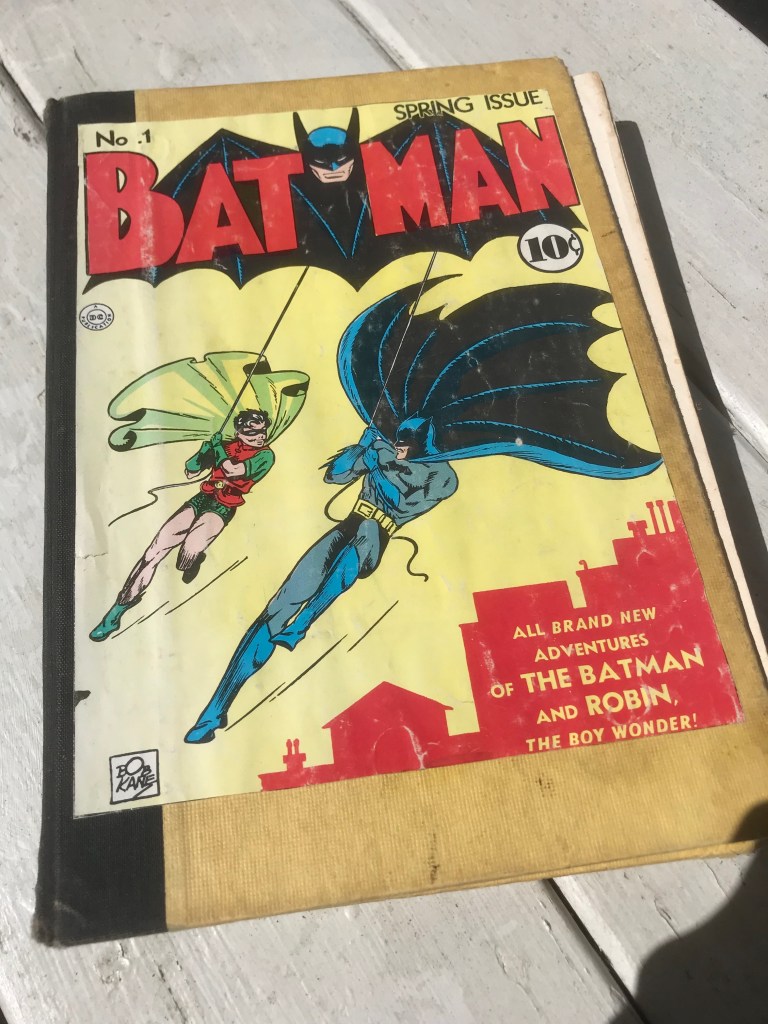
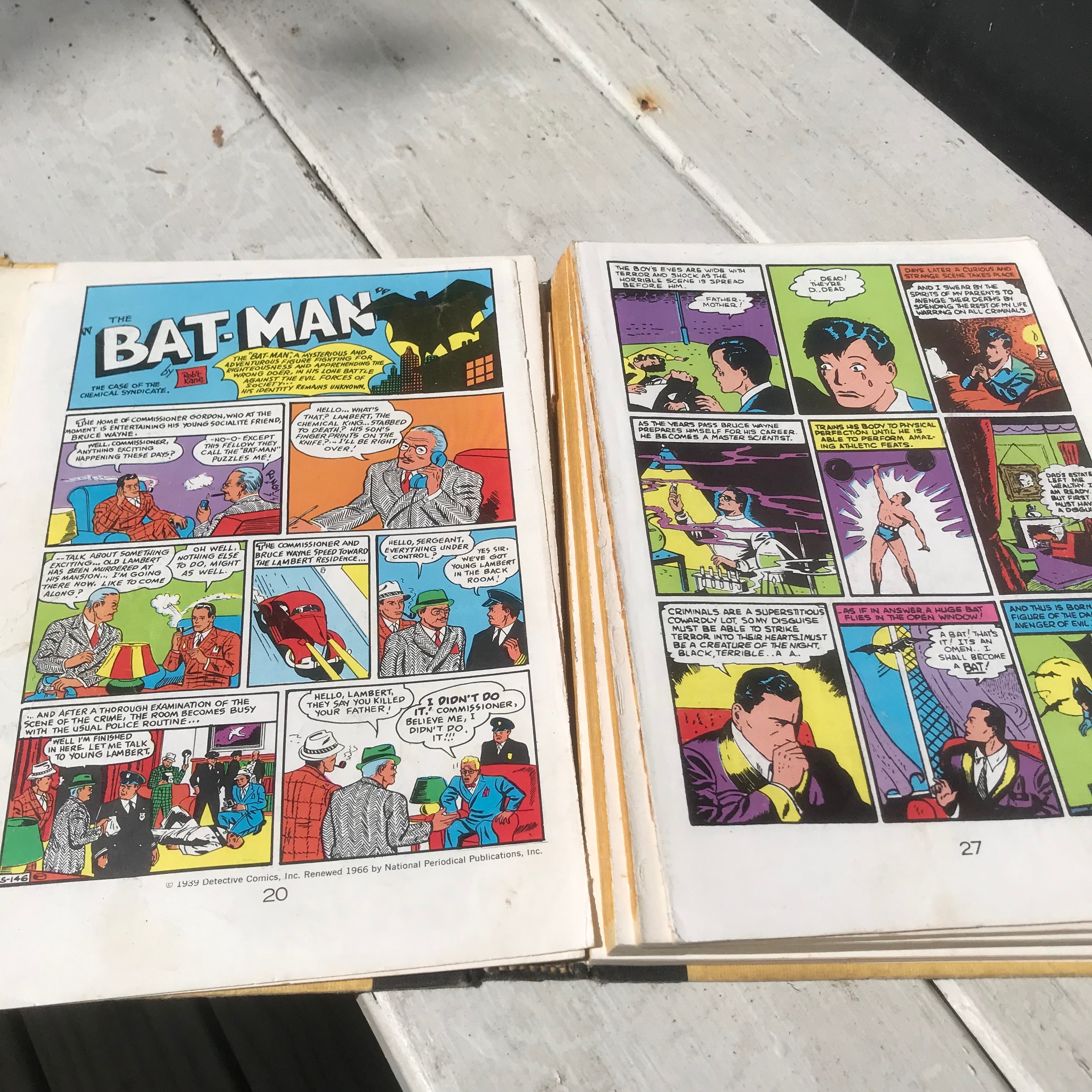
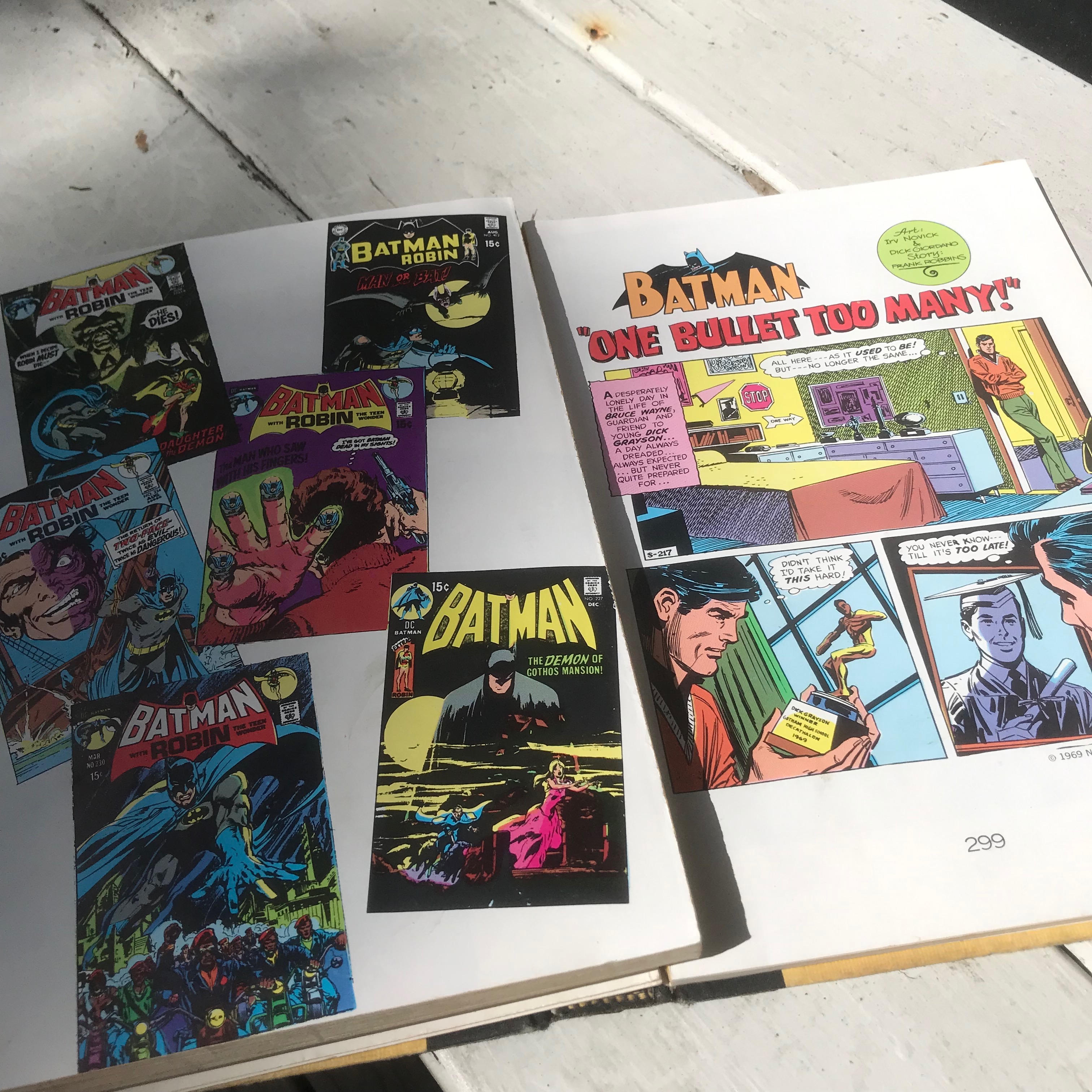
This treasured copy of “Batman: From The ‘30s to ‘70s” was given to me by my parents sometime around 1977 or so, and while it shows the wear and tear of 40+ years of avid re-reading, I’ll never part with it. The book needs regluing, there’s a few pages missing, the dust cover has been gone for decades, and for some reason I cut an interior page out and glued it on the front cover, but if there’s a single book I can blame for my lifelong comics addiction, it’s this one. 

This copy has been around the world with me, from California to Mississippi to Oregon to New Zealand. About 15 years ago or so I “loaned” it to my then-teenage nephew, and it eventually ended up on the shelf out at our family’s beach house here in New Zealand. There it sits, dusty but alive. 

Published as a “best of” collection celebrating Batman’s first 30 years or so, it’s a marvellous summing up of why Batman still works after all this time. You had the raw, primitive early Bob Kane stories – the debuts of The Joker and Doctor Death were dark, bloody stories with a high body count. Then Robin came along, and the tone started to get lighter – culminating in the great crazed sci-fi Bat of the 1950s, with Batwoman, Batgirl, Bat-Mite and Ace The Bathound all joining the crew. Batman traveled back in time and went to alien planets and yet this was the same Batman who once brooded in the shadows of Gotham, too. Over the pages of this thick tome, you could watch Batman progress from pulp hero to sci-fi star to the classic realistic Neal Adams-styled Batman who leapt off the page in the early 1970s. You could see how Batman could fit in almost anywhere and anytime.

There were several spreads of covers of various decades in Bat-history, going from the Gothic 1940s to the kitschy 60s to the lean, brooding Bat of the early 1970s. Pre-internet, pre-discovering fandom, this was the only window into the mysteries of comics history for me. It’s really hard to describe in our wired world what it felt like to discover hints of the past without being able to Google them up. At just age 8 or so, I began to understand the concept of history. All thanks to Batman.

 I long since bought another copy of the same book that’s less battered, just to be able to read it easily. I’ll still keep my original copy of “Batman From The ’30s to the ’70s” around somewhere until it disintegrates into crumbs, I imagine. It was the key to unlock a four-coloured world of heroes and villains I’ve never entirely left. 

Batman mania revisited, 30 years on

2008_CSK_05425_0129_000()Thirty years ago today, I was standing in a line. A bunch of us were all queued up for what was then the biggest comic book movie of all time, Tim Burton’s Batman. Nobody quite knew what to expect.

There’s a lot of thinkpieces lately about what an event Batman was. You couldn’t escape that symbol, on T-shirts and lunchboxes and gum wrappers. It was the first superhero movie marketing event (the original Superman movies were a lot less pimped out by industry, to be honest). We’ve grown pretty used to that in the years since, but at the time it was dazzling. Good or bad, you HAD to see this movie.

As a kid who’d already been reading comic books for years before “Batman” hit the screen, I was hopeful. I remember painstakingly clipping out newspaper articles about the casting in the months before release – Jack Nicholson as the Joker, well, everybody knew that was perfect, but Michael Keaton as Batman was a bigger question mark. If there was an internet back then, casting “Mr Mom” as Bats would’ve cracked it in half. 

s3-BatmanWaikiki3It’s hard to explain to fans of today’s slick, streamlined and gorgeous Marvel Universe movies that seeing a comic book movie in the ‘80s and ‘90s was mostly a matter of lowering expectations, of accepting flaws and looking for the bits that worked.

Sure, Superman IV was godawful, but hey, the scene where Christopher Reeve tells the UN he’s taking away the world’s nukes was cool. Yeah, Tommy Lee Jones and Jim Carrey shred the screen as the most overacting villains of all time in Batman Forever, but I kinda dug Val Kilmer. OK, Howard The Duck might not have quite worked, but… well…. the puppet was interesting….

“Batman 1989” isn’t perfect either, but seen decades on, it’s still a remarkably intense, dynamic vision, one that shaped the portrayal of Batman in the comics for years to come. The late Anton Furst’s designs of a haunted, impressionist Gotham City are still remarkable – while the Marvel movies are pretty great, they’ve rarely created as bold a sense of place as Burton’s Gotham is. It’s a WEIRD town, explored further in the sequels, where gangs dress like clowns and oppressive architecture overwhelms humanity at every turn. 

Jack Nicholson’s Joker, which received the lion’s share of press going in, has dated a lot worse than Keaton’s Batman. It’s never a bad performance, but it’s hard not to just see it as “Jack doing his Jack thing”. Recently I’ve been rewatching a few of Nicholson’s classic ‘70s films like “The Last Detail” and “Five Easy Pieces,” where you see what a fiery talent he was, and compared to those years, his “Batman” role is more reminiscent of when actors like Vincent Price would appear on the old ‘60s Batman TV show – amusing, yet not all that deep. 

84-ogBut Keaton’s Batman has only grown in strength over the years. He never quite has the classic physical profile – seen in a tuxedo in an early scene, his Bruce Wayne’s shoulders would barely fill half the Bat-suit – but acting is often concentrated in the eyes, and Keaton’s eyes hold a balance of resolve and regret. His Bruce Wayne seems closer to the edge than some – look at the scene where he takes on the Joker in his civilian clothes: “You want nuts? Let’s get nuts!” In contrast, his Batman is more of a blank, grim slate, a mask that wipes out Wayne’s humanity and focuses his mission. 

I’d argue that Christian Bale and even Val Kilmer (who I think is kinda underrated in the Bat-acting pantheon) better represent the Batman character from the comics, but Keaton’s Batman still has a mysterious haunted power that makes him unforgettable. 

Standing in that line outside the theatre 30 years ago, I never would’ve imagined as a middle-aged dude I’d still be lining up for movies featuring characters like Ant-Man, Aquaman and Dr. Strange, but I’m glad I am. There’s a lot of movies given credit as ‘ground zero’ for the current superhero explosion, from “X-Men” to “Blade,” but as a phenomenon, there’s still no touching the craziness that Batman inspired three decades ago.