The Lost World of Small Press, Part I: Bruce Chrislip makes history

Most of us learn it when we’re kids – all you really need to make a comic is a pencil and a piece of blank paper. That’s the beauty and the charm of small press comics, wonderfully explained in a brilliant, extremely niche book of comics history I read recently that I highly recommend, The Minicomix Revolution 1969-1989

Bruce Chrislip is one of the foundational members of the small press “scene” of the 1970s and ‘80s and his book is a hefty old tome that captures the beginnings of an essentially ephemeral, ever-changing world. Improved printing technology and the spirit of underground comics led to a world where basically anyone could publish their own comic, even if nobody bought a copy for the 7 cents they were asking.

The Minicomix Revolution is a sweeping, if by its very nature incomplete, history of a creative movement that still animates culture today – after all, what is internet “content” from influencers but yet another way of doing it all yourself, and taking your work directly to the people? 

There’s dozens of names in here, from the notable to the obscure, and Chrislip keeps his narrative from turning into a dry list by bringing them to life with tales of late-night jam sessions, friendships made and always, madcap invention. Chrislip also notes those who started in small press who went on to much bigger things, like Simpsons guru Matt Groening and Teenage Mutant Ninja Turtles creators Eastman and Laird. 

Chrislip’s book ends just at the time I came into the small press scene circa 1991 or so, but many of the names he covers were familiar to me as press icons such as Matt Feazell and Steve Willis, or the late great artist and “reviewzine” editor Tim Corrigan, who gave me some of my first “real” reviews of my own comic Amoeba Adventures when I started it in 1990.

Chrislip includes dozens of comics covers that capture the beautiful anarchy of small press, where a comic can be everything from a goofy superhero riff (cough cough) to highly personal autobiography or a series of self-portraits or just sheer dadaist gags. (The book is available directly from him directly, and you can look him up on Facebook, contact him via email clgbruce@cinci.rr.com or mail him a check or money order at 2113 Endovalley Dr. Cincinnati, OH 45244 – it’s $45 postpaid, beautifully produced and well worth the cash if you’re into rare comics history.) 

There are brilliant artists working in small press that few comics fans will ever hear about. That’s kind of sad to me, but it’s an artist’s life, too. A few very noble efforts to collect some classic minicomics have been published but it’s a bit like attempting to collect snow – for every mini “superstar” like a Matt Feazell there’s a dozen others who may have only sold 10 copies of their comic, but it’s still grand fun.

I wish there was a way to completely capture the vast breadth of small press – efforts like Ricko Bradford’s Poopsheet Foundation or official archives held by academic institutions help. 

The “zine” scene is still alive and well bubbling beneath our TikTok and Twittified world, and dogged folks like me are still producing unique pieces of comic art that maybe only a few dozen people will read, but hey, it’s the creating that really counts, in my mind. You feel the call to make things, and you’ll never quite stop hearing it. 

In the end, it’s just about the comics, really. My collection has whittled down a bit over the years what with moving around the world and such but I’ve still kept a hardcore pile of the minicomics that mean the most to me over the years. They’re literally irreplaceable, as some creators have vanished from the scene or even died and their comics are totally unavailable today. 

All this lengthy preamble leads up to me starting an occasional blog series here on the “Lost World of Small Press” looking at a handful of these groovy handmade gems hidden in my boxes o’ comix! Look for more rare 1990s small press comics showcased here mighty soon. 

More in this series:

The Lost World of Small Press Part II: Minicomics Maestros

The Lost World of Small Press Part III: Mysterious Minicomics

Marvel’s 70s movies and TV comics: Licensed to thrill 

The older I get, the more weirdly specific my comics-collecting fetish gets, diving into strange corners and alleyways, like weird romance comics and the gut-wrenching final issues of series
Licensed comics based on existing properties are as old as the medium (believe it or not, kids, Bob Hope and Jerry Lewis could once sustain long-running series) and I’ve always had a weird yen for Marvel Comics’ exuberant movie and TV comics franchises of the 1970s. 
Marvel has had a huge run of licensed comics that kicked off with the huge success of Conan the Barbarian although for many in my generation, their excellent Star Wars series was what hooked fans for a lifetime. (I’ve dabbled in the many, many Dark Horse and later Marvel Star Wars comics over the years, but for me, still, the only “real” Star Wars comics are the original 107-issue Marvel run.)
Beginning in the mid- to late 1970s, Marvel licensed comics were EVERYwhere – toy lines like Shogun Warriors and Micronauts and ROM, movies like Planet of the Apes and Battlestar Galactica and Godzilla

The licensed titles were often advertised in the pages of other comics I already read, and I usually hadn’t seen the source material they were based on, so things like the brief seven-issue run of Logan’s Run or the real-life stuntman The Human Fly always intrigued me. Who were these characters side-by-side with Thor and Iron Man? Why was there a comic about them?

The Marvel licensed comics of the 1970s were all over the map, quality-wise, but they also had a sense of freedom. ROM spun an entire epic cosmic war out of its cheap plastic toy inspiration, and Marvel’s Godzilla brought us the immortal image of Godzilla shrunk down to human-size and skulking around Manhattan in a trenchcoat. The licensed comics never felt like they had to be particularly faithful to their sources, so you got things like Star Wars’ immortal, somewhat controversial Jaxxon the rabbit that you can’t imagine Disney/Lucasfilm would ever permit today. 

There were a lot of strange creative chances taken by Marvel in the 1970s when it came to licensing comics – such as Stanley Kubrick’s iconic 2001: A Space Odyssey being very loosely adapted and expanded upon years after its release by Jack Kirby, (a bizarre combination that shouldn’t have worked but somehow did), or rock star Alice Cooper getting a horror-tinged one-shot comics tryout.

So anyway, this weird completism is why I ended up buying the entire brief seven-issue run of Man From Atlantis for cheap recently, because it’s one of the few ‘70s Marvel licensed series I’d never read. I don’t even LIKE the TV series, really, and honestly Marvel publishing what was always basically a bargain-bin version of their far cooler character Namor the Sub-Mariner seemed weird. But hey, the comic was written by Marvel’s go-to licensed comics guy, the underrated Bill Mantlo, and art by Frank Robbins, whose loose-limbed antic figures appeal to me more now than they once did. The comic is actually fairly fun underwater antics with a far higher budget than the TV series had – and more inventive than its source. 

Licensed comics are still very much about today – Buffy the Vampire Slayer, the indefatigable Star Wars, Transformers, Star Trek, GI Joe, Conan and much more carry on telling stories that go far beyond the source material, yet when I pick them up they always seem a bit constrained, somehow. Maybe the big difference is that when those Star Wars and Godzilla comics were on the stands 40 or so years ago, you couldn’t just hop online and watch a Star Wars movie. You had hazy memories of cinema visits, and the tie-in comics provided a valuable map back into the entertainment you dug. Licensed comics allowed you to return to these worlds, again and again, when it wasn’t quite so easy to do so. 

These days, with so much of everything everywhere all the time, a licensed comic seems somewhat less unique than it once did, and more just a part of the flood of content washing over us all. Hey, but that’s cool – I’ve still got quite a few issues of Micronauts to track down. 

It’s another Amoebargain sale and special Amoeba Adventures reprint!

It’s time for the second annual AMOEBARGAIN SALE of rare out-of-print back issues of my comic Amoeba Adventures – plus, a special reprint of one of my favourite issues of the original series, back in print for the first time in years! If you are wanting to pick up handsome physical copies of my comics, including the last few copies I have of some real rarities, now is your chance.

Just released: Amoeba Adventures #27: The 25th Anniversary Edition

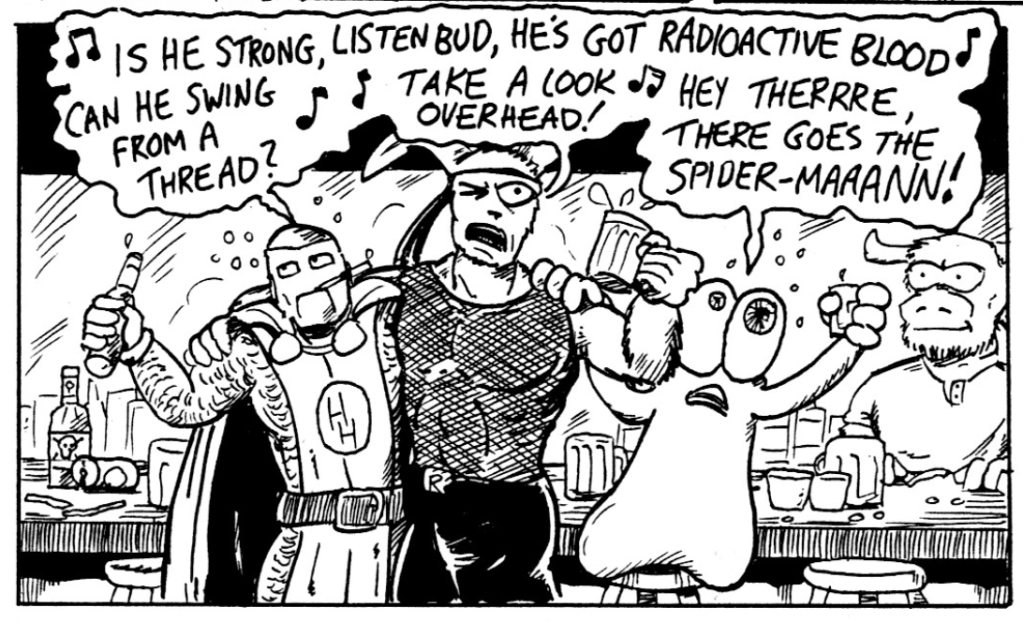
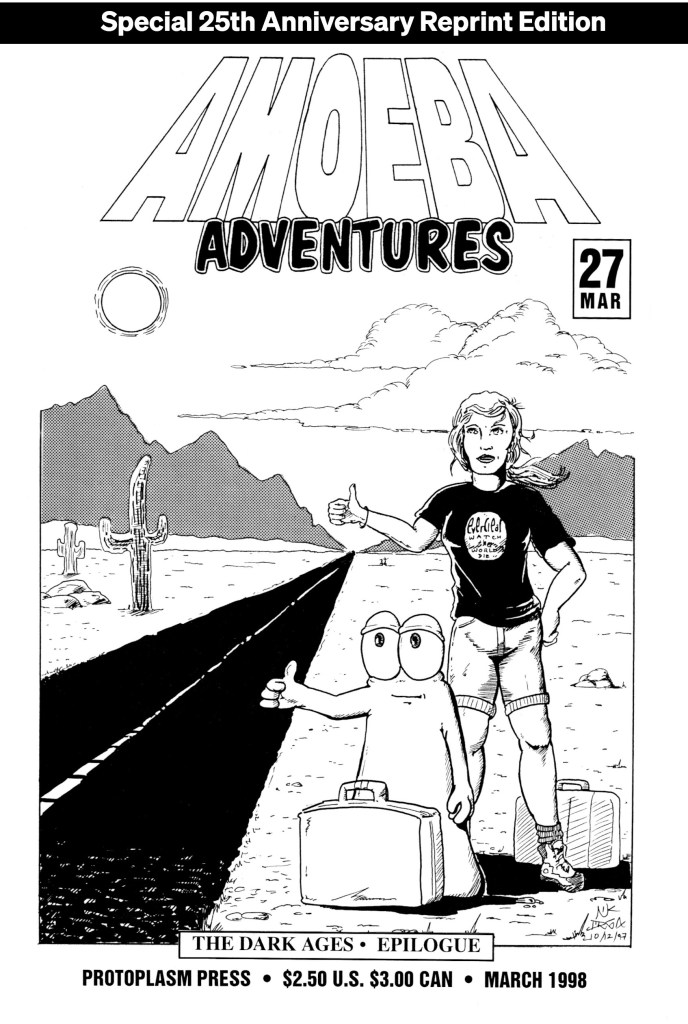
It’s the final issue of the original 1990-1998 run of Amoeba Adventures, and one of my favourite comics ever. Somehow or another, 2023 marks 25 years since this bad boy came out. Way back in 1998, I was dead broke and living in a hick town in the middle of nowhere so the original print run of AA #27 was very small and quickly gone. After the carnage of “The Dark Ages,” the All-Spongy Squadron regroups for one last hurrah. Setting up the status quo for the 2020 Amoeba Adventures revival, it features Rambunny, Spif, Ninja Ant, Prometheus and Dawn one last time – and of course, a drunken bar brawl!  This special reprint also includes EIGHT pages of rare art, interviews and behind-the-scenes commentary. A mere US$5.00 – only a small amount have been printed and when they’re gone, they’re gone. 

Plus! Vintage Amoebas! Get ‘em before they go!

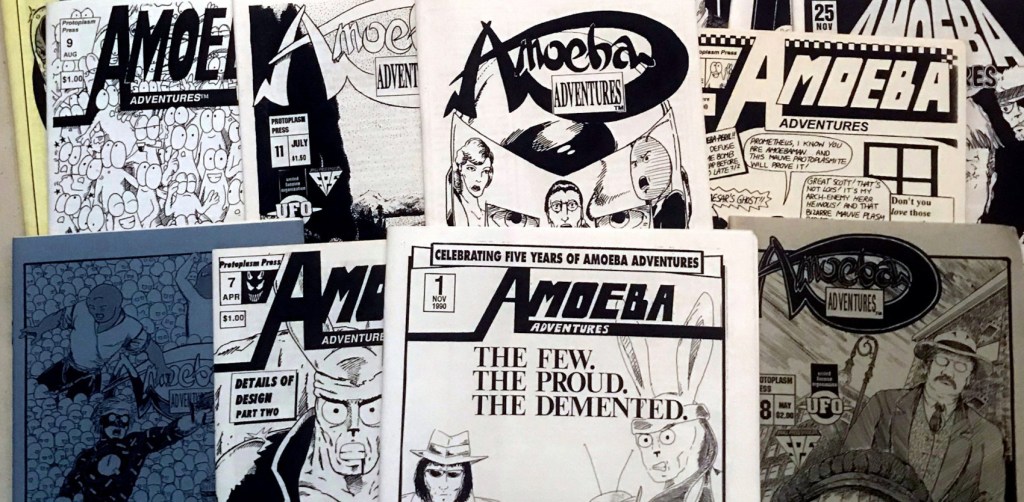
There’s still a small handful of vintage 1990s Amoeba Adventures issues I’ve got in storage that it’s time to set free – these are out of print original printings and once they’re gone, they’re gone forever and are going dirt-cheap!

Available are:

Amoeba Adventures #19, 20, 21, 22, 24 – $1.00 each!

Amoeba Adventures #11, 13, 14, 15, 18, 23 Sorry, all sold out!

Recent issues: Plus, if you’ve missed out on the super cool limited print edition of the most recent issues, there are just a few left. Everything must go!

Amoeba Adventures #28 – SOLD OUT!

Amoeba Adventures #29 – ALMOST gone!

Amoeba Adventures #30 – FIVE copies left!

Amoeba Adventures #31 – The most recent issue!

For a limited time, all now available for a mere $5.00 each! 

Finally, work is well underway on Amoeba Adventures #32, the FIFTH new issue – it won’t quite be ready until closer to Christmas, but if you want to pre-order the limited print edition of that now, it’s a mere $US7.50 shipped anywhere in the entire world to you when it’s available. 

Sale ends November 30, so don’t delay! How to order: Postage is $1 for 1-2 books, $5 for 3-6 books, $6 for 7 or more. Send funds via paypal to dirgas@gmail.com

Of course, if you’re a child of the modern age and don’t mind digital, a reminder that EVERY one of my comics is available as a free PDF download right here – all 32 issues of Amoeba Adventures, spin-offs, weird side projects, jams and much more. As always, thanks for reading!

In defence of… The Incredible Hulk (2008)

Weirdly low-profile for a giant green monster, 2008’s The Incredible Hulk is the forgotten overshadowed superhero stepchild of the same movie summer that brought us Robert Downey Jr.’s Iron Man. 

It’s flawed, for sure, and lacks the machine-tooled precision that the MCU movie-making machine has settled into. But when it works, The Incredible Hulk still feels to me like the best Hulk movie we’ve had to date. I think of all the Hulks we’ve seen on screen, it remains the closest to the “classic” Hulk – doomed scientist on the run from his curse, haunted and heroic. Ang Lee’s muddled 2003 film mixed intriguing ideas with a bizarre plot and felt like a Hulk in name only, and in a series of Avengers and Thor movies, Hulk has been more of a superheroic comic sidekick. 

Incredible Hulk opened mere weeks after Iron Man but these days is often lumped at the bottom of lists ranking the 30 or so Marvel movies. Still, nearly 15 years on, The Incredible Hulk is having a weird revival in the MCU – its villainous Abomination portrayed by Tim Roth has returned in the She-Hulk TV series, and the super-smart Hulk villain The Leader, whose heel turn by Tim Blake Nelson was only hinted at way back in 2008, is reportedly set to appear in the next Captain America movie.  Often dismissed in MCU fandom, there’s still a lot I like about Incredible Hulk.

Edward Norton’s tense, nervy turn as Bruce Banner owes a lot to Bill Bixby’s classic stressed-out Banner in the 70s Hulk TV show. The movie wisely skips over the Hulk’s origin in a quick few cuts and jumps to the status quo of Banner on the run from the government, hiding out in a colourful Brazil favela. The South American setting for the movie’s first act is already something a bit different, grittier than the typical superhero movie, and while there’s barely a Hulk to be seen for the first part of the movie, Norton’s haunted portrayal and the sense of impending doom carries the film well. 

We follow Banner from South America back to America, where he catches up with long-lost love Betty Ross (a great Liv Tyler) and the late William Hurt’s cruel and stern Thunderbolt Ross, as well as a tightly-wound soldier named Emil Blonsky (a coiled and ruthless Roth) who wants to take down the Hulk. When the Hulk does finally appear in broad daylight in a university campus battle, it’s suitably impressive. No, the Hulk doesn’t get a lot of screen time here, but when he does, he leaves his mark. The 2008 CGI is perhaps less smooth than modern motion-capture, but I like the somewhat ravaged, demonic look this Hulk has. 

Incredible Hulk captures the cat-and-mouse game that Banner played with his pursuers so often in the comics, reminding us that the Hulk at his core is a misunderstood monster, not a superhero (and really, not an Avenger despite the movies – in the original Avengers comics, he lasted to the second issue before quitting the group). 

Where Incredible Hulk goes off the rails is in a rushed and silly final act, where Roth’s Abomination becomes a CGI gumby and New York City ground zero in a battle that doesn’t feel like it has any of the stakes or tension of the preceding hour or so of the movie.

Director Louis Leterrier isn’t really A-list – movies like The Transporter or the terrible Clash of the Titans remake – yet the many deleted scenes on blu-ray show he and Norton were trying to make a different sort of movie than it turned into when it was shoehorned into a Marvel Cinematic Universe building block. Norton clashed a lot with Marvel and wasn’t invited back to play the Hulk again.

There are brief moments in Incredible Hulk that feel raw and adult compared to a lot of superhero flicks – Betty calming the enraged Hulk down when he’s frightened by a rainstorm; Bruce and Betty’s fleeting hotel room tryst, ruined when Banner realises, “I can’t get too excited,” or the keen glittering madness in Roth’s Blonsky, which has been erased for comic effect in She-Hulk.  

The Hulk has proven a remarkably protean character in the last few decades in the comics – after settling into the childlike “Hulk smash!” brute for most of the ‘60s and ‘70s, in the mid-1980s writers started experimenting with variations on the Hulk’s dual identity, pioneered by the great, tragically curtailed writer Bill Mantlo when he introduced a lengthy take on the “smart” Hulk – one with Bruce Banner’s intelligence – and perfected by Peter David in his iconic 12-year run on the character where he brought us the calculating Grey Hulk, a “merged” Professor Hulk and much more. Since then we’ve had Red Hulks and Immortal Hulks and Robot Hulks and Son Hulks and much more. There’s so many Hulks. 

Yet, I’m still a bit partial to the simple, crisp duality of the “Incredible” Hulk, a lumbering Frankenstein-ish monster who isn’t inherently evil but is treated that way, and a Bruce Banner whose life is ruined by trying to live with this unpredictable curse. 

To be fair, I like Mark Ruffalo and his charmingly dorky Banner, but too often his Hulk has never quite felt like more than a CGI strongman. His Banner seems annoyed by being the Hulk, not haunted like Norton. The “merged” Hulk introduced in Avengers: Endgame is more awkward and bumbling than the confident version introduced in Peter David’s comics. Endgame skipped past all the settling of the Hulk’s inner conflicts introduced in Infinity War, waving all that off in a time-jump. I simply feel there’s a little too much Ruffalo in the Hulk in his current MCU incarnation and not enough, well, Hulk. 

It’s a big “what if” whether Norton could’ve been good as a Hulk in an ever-expanding, ever-calculating Marvel Cinematic Universe. His portrayal is a bit too idiosyncratic, a bit too “real” to play well with others. But it’s still the screen Hulk I like the most. 

Hero worship: A simple twist of Dr. Fate

Some superheroes just grab your attention when you’re young, at the perfect age to be spellbound by flashy capes and cowls. It’s usually all about the look. Maybe you were blown away by Hawkman’s wings, or Batman’s cowl, or Wolverine’s claws. For me, it was the spell cast by Doctor Fate.

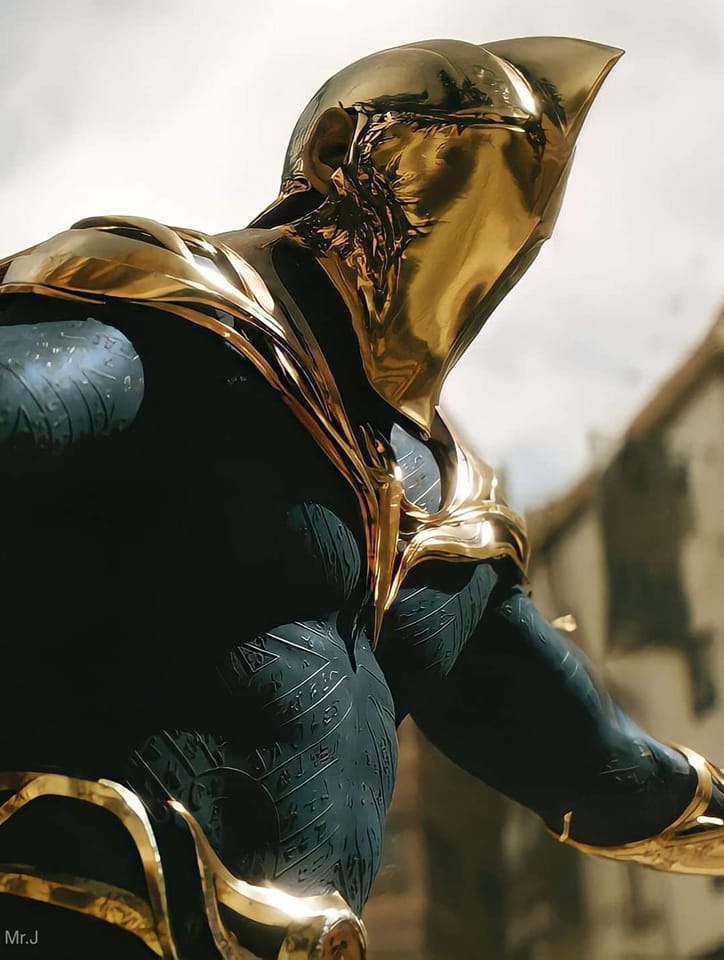
I’m cautiously interested in the upcoming Black Adam movie, although it’s not so much for Dwayne Johnson as the titular antihero. Instead, I’m psyched to see what they’ll do with one of my favourite super-teams, the Justice Society, with the spooky Dr. Fate personified by Pierce Brosnan.

My first exposure to Fate was an action figure, part of the Super Powers line of the 1980s. I still own that figure 37 years on. The catchy combination of blue and gold on his costume, perhaps, struck some primal chord for me, or maybe it was that cool helmet. I just knew I liked the way this guy looked. I still do.

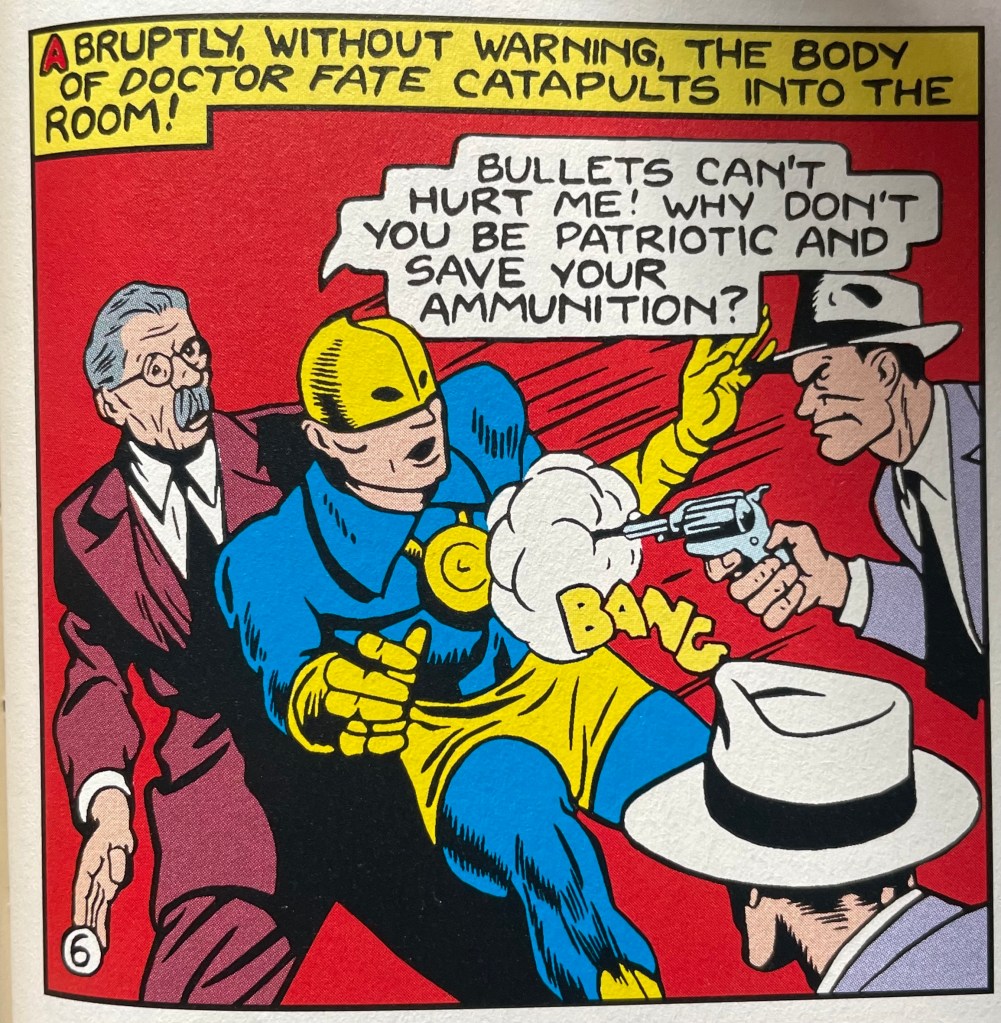
Dr. Fate has never quite been a marquee attraction – debuting in 1940 in More Fun Comics, created by Gardner Fox and artist Howard Sherman, he was an original member of the Justice Society. He’s Kent Nelson, who owns the mystic helmet of Nabu giving him immense magical powers – in later interpretations, he’s actually possessed by the spirit of Nabu as Fate. 

Fate’s original early 1940s stories are a dark delight – he’s given no real origin for some time, and is a mysterious, omnipotent figure waging war against evil in the stark, dreamlike fashion of early comics.

Like a lot of Golden Age comics characters, Fate’s hard edges got smoothed off fast – his striking helmet became a rather dorky-looking half-helm, he lost the cape and he started dropping corny quips. 

Dr. Fate is always best when he’s mysterious – popping up to great spooky effect in books like All-Star Squadron and Justice League of America. 

There have been a handful of terrific Dr. Fate solo comics – a memorably strong adventure by Walt Simonson in the 1970s, and a very abstract, emotional miniseries by J.M. DeMatteis and Keith Giffen in the late 1980s I quite liked. His only solo starring series of any real duration was a 41-issue series that started out quite well, with Fate’s identity being shared by a troubled boy and his stepmother (long story) and a welcome sense of humour, before it kind of dissolved into new-age mysticism.

Fate has seen many ups and downs – an utterly awful “extreme” ‘90s reboot, a long parade of other characters than Kent Nelson donning the golden helmet. Kent Nelson himself isn’t a terribly strong character on his own, but somehow Fate still really works best when he’s the man wearing the helmet. Black Adam isn’t even his first live action appearance – he made a cool cameo on an episode of Smallville years back. 

I don’t know if Black Adam will be any good, but what little I’ve seen of Dr. Fate in it is pretty groovy… with one exception. For some reason, they’re depicting the Helmet of Nabu without any eyeholes. It’s … striking, but also weird, like having a Superman without the “S” or Batman without the pointy ears. The all-seeing eyes of Dr. Fate have always been a critical part of his look, and it’s a curious choice. Maybe it’ll look better on screen. 

I could never really pin my Dr. Fate fandom on one particular quality to the character – there are other spooky mystical heroes like Dr. Strange and The Spectre, after all, and like I said, he’s starred in a handful of good comics over the years, but more often, he’s the man in the background, popping up to drop some magical deus ex machina. 

In the end, it all still comes back to that distinctive look by Fox and Sherman more than eight decades ago now – sometimes, that’s all you need to make a character stick in your mind. A look can imprint on you when you’re young, and you might just always be a bit of a fan. Perhaps it’s just Fate. 

The art of adaptation: Neil Gaiman’s Sandman

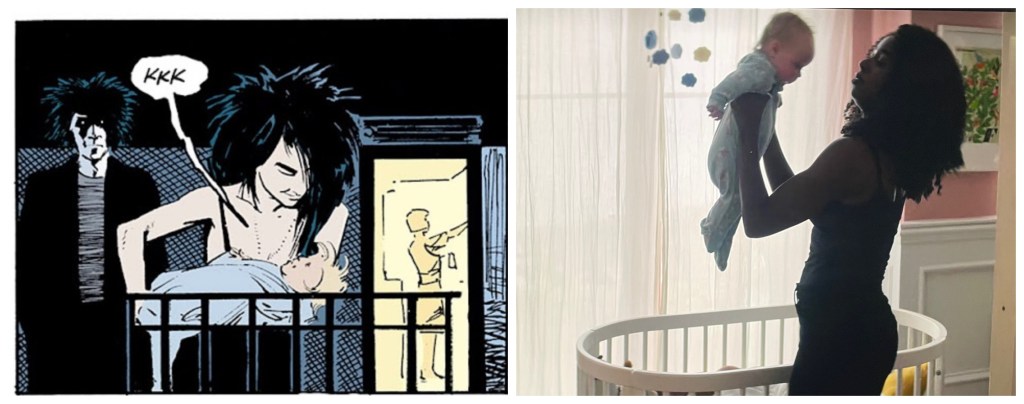
I first read Neil Gaiman’s Sandman comic beginning with #8, more than 30 years ago now. It was pitched as an introductory issue for new readers, a catching of breath after a hectic opening storyline for the series, and simply featured the godlike Dream, the lord of the night, catching up with his sister, Death, as she goes about her duties. It’s also one of the best things Gaiman’s ever written, humane and heartbreaking. 

It’s exactly the sort of story I’d worry about seeing turned into Netflix “content” in this age of comics being adapted for everything.

I shouldn’t have worried. 

Episode 6 of the new Gaiman-endorsed Sandman series, “The Sound of Her Wings,” which adapts that eighth issue and another classic story, is one of the best bits of TV this year and greatest feats of comics adaptation I’ve seen. (I’m not alone in this slightly hyperbolic verdict.)  

“The Sound of Her Wings” walks the tricky line between rote recitation and making the story come to life. Pairing it with a take on Sandman #13, a stand-alone story of a man who’s granted immortality by Death and his once-a-century meetings with Dream, is a masterstroke. “The Sound of Her Wings” episode becomes a sweeping meditation on what gives life and death meaning, even if you’re an immortal being, on the little triumphs and failures that make up the time we get. 

Even though I’ve read these two comics so many times I practically had them memorised, the gorgeous adaptations still left me a choked-up sentimental fool at the end. 

Adaptations are funny things in comics. I still remember the giddy thrill of simply seeing Batman fight the Joker on the big screen in 1989, or of watching Spider-Man swing past actual skyscrapers. Us comics nerds were famished for any recognition in those long-ago pre-extended universe times, for any hint of seeing characters come to life. (This is probably why I actually saw the Howard The Duck movie in cinemas.) These days, dozens and dozens of comics are being adapted to different mediums, and novelty alone isn’t enough. 

But not every adaptation works. The 2009 Watchmen movie felt spot-on in a few ways, yet strangely hollow in others. It felt a bit like a cover version of the graphic novel, never quite capturing what makes Alan Moore and Dave Gibbons’ story soar. 

Often you’ll get a mix-and-match of great comic book stories into film – Avengers: Infinity War takes elements from Jim Starlin’s Infinity Gauntlet miniseries, and weaves a different tale around them. The Winter Soldier took a lot from Ed Brubaker’s excellent Captain America comics, but was a fairly loose actual adaptation of them. 

We’re starting to see more and more comics movies and films going beyond superheroes – which can only be a good thing. Some of them swing and miss – that Preacher series didn’t do a thing for me – but we still get gems like Sandman, Paper Girls, Resident Alien and Sweet Tooth. 

“The Sound of Her Wings” immediately had me running back to re-read the comics for the 500th time or so. In the end, I feel like an adaptation should be a guide, a pointer towards the source, rather than seen as an attempt to improve on it. 

I’d never say Sandman the series supersedes the comics it faithfully adapts, but it certainly complements them in ways I’d never … well, dreamed. 

Four-panel biographies – A short-lived experiment

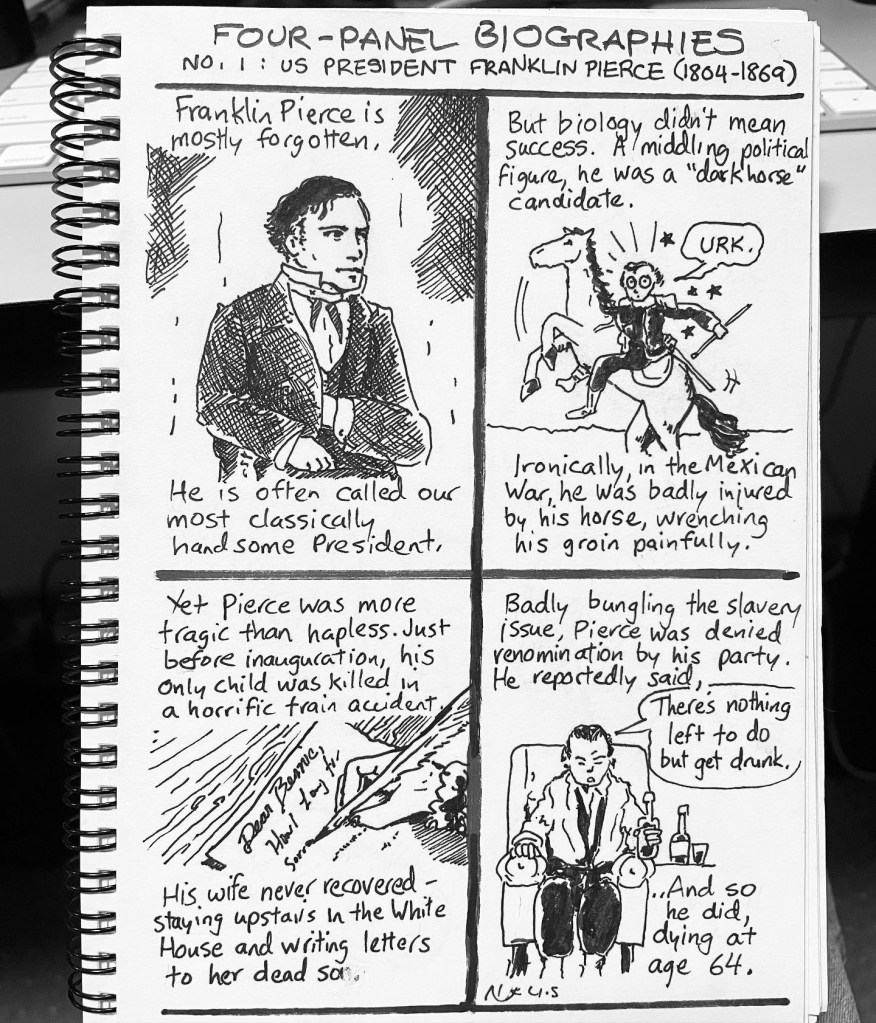
Life has been hectic of late, so in the absence of new posts, here’s a trip in the wayback machine to 2014. I attempted to get back into drawing comics by experimenting for a few months with a few eccentric sketchbook comics, including these “Four-panel biographies.” It’d take a global pandemic for me to find the passion again a few years later by returning to my comic strip Amoeba Adventures again!

Still, I do like the concept of telling a life in a mere four panels… maybe I’ll get around to doing a few more some day… For now, here’s the Four-Panel Biographies of Franklin Pierce and Roy Orbison!

Hercules, the demigod who got Thor to loosen up

Look, I’m a New Zealander and a comics geek, so you better believe I’m excited to see homegrown talent Taika Waititi’s new Thor: Love And Thunder come out this week. And it looks set to expand the Marvel pantheon to the Greek gods, with Russell Crowe’s Zeus prominent in the trailers. 

Where Zeus goes, will Hercules follow? Marvel Comics’ version of Hercules has always been simmering somewhere around the B-list, and while the demigod Hercules has been around for eons as mythology and heroic TV and movie character, the Marvel-fied version of him has yet to debut in the MCU. 

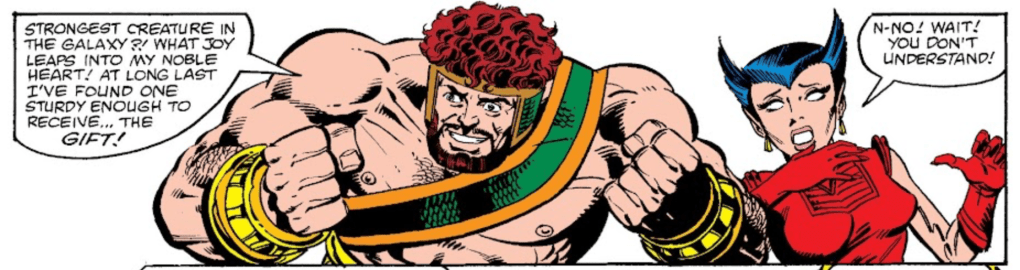
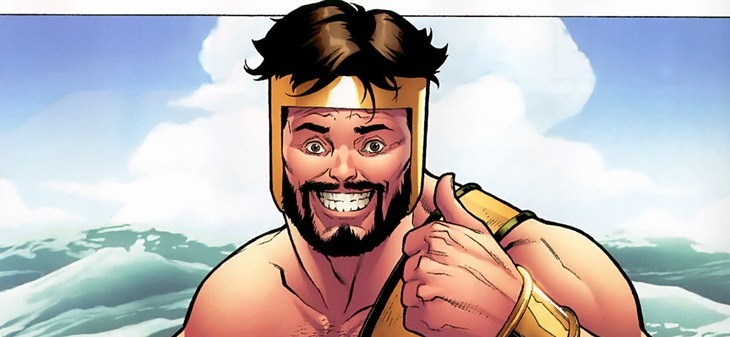
I always kind of dug Marvel’s Hercules, who was a lot more relatable than Thor in the comics. He was a hard-drinking brawler who loved to share “the gift” (of combat!) with everyone he met. 

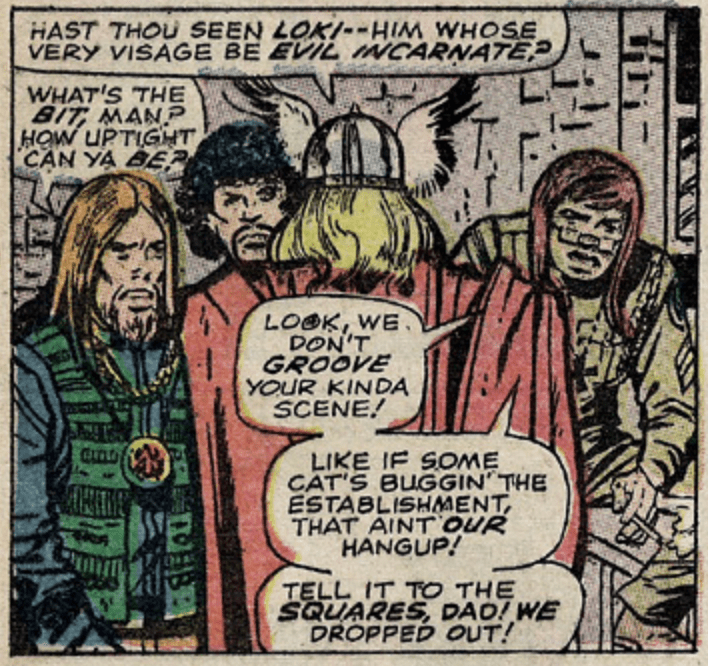
It’s easy to forget now with Chris Hemsworth’s winningly loose performance as the God of Thunder, but Thor was a lot less bro-tastic in the comics at first. When he debuted, Thor spoke a lofty, faux-Shakespearean prose, and even had a secret identity of sorts, a human named Don Blake he was cursed to transform into regularly. Thor began to loosen up in the comics after decades, but for years he was kind of a dull stiff. I’ve grown to appreciate the epic scope of those early Stan Lee/Jack Kirby Thor adventures more, but when I first came to comics, Thor often seemed a boring straight man. It took the energy of creators like Walt Simonson, Dan Jurgens and Jason Aaron to give him some much-needed life. 

To be honest, the MCU’s Thor owes a lot more of his character to Marvel’s Hercules. Thor’s stiffness was once a counterpoint to Hercules’ looseness, but if you squint now the characters are pretty similar. 

Now, Hercules – he was a slightly dopey bro-god from the start, impulsive and always with a flagon of ale nearby, right from his first appearance wrestling with Thor. But there’s only so many roles for god/superhero characters even somewhere as big as the Marvel universe, so Hercules was mostly related to supporting turns in Thor as a frenemy pal, some memorable runs in The Avengers and even the awesomely odd mix of characters in the short-lived 1970s Champions superteam. He’s had a few brief solo series of his own, including an excellent relatively recent run by Greg Pak and Fred Van Lante.

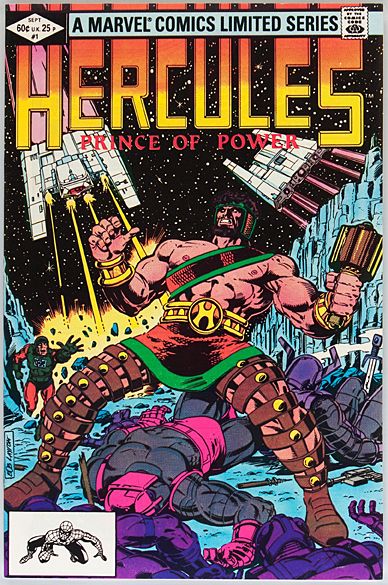
But the first exposure I ever had to Marvel’s Hercules was Bob Layton’s superb 1982 miniseries, an offbeat comic odyssey that wasn’t quite like anything else Marvel was putting out at the time. Hercules: Prince of Power took place in the distant future, where a still-carousing Hercules is once again banished from Olympus by his angry father Zeus, and ends up heading to the stars and having galactic adventures. Liberated from the bonds of regular continuity, Hercules could have universe-changing escapades and there was a goofy freedom to it all. Palling around with robots and Skrulls, Herc showed that being a god was kind of fun

Hercules: The Prince of Power was side-splittingly funny (name another comic that features Galactus getting drunk), but it also treated the demigod seriously. Perpetually immature, Hercules is still burdened by the weight of the years and his feats. In several sequel miniseries and graphic novels, Bob Layton proved one of Hercules’ finest chroniclers. At its heart the Hercules miniseries by Layton addressed the central question of godhood – what would it really be like to live forever? Would you learn anything or keep making the same mistakes over and over?

Marvel’s Hercules may or may not get a shot at wide cinematic universe fame at some point – hell, when She-Hulk, Rocket Raccoon and Ant-Man have all become household names, who knows? But I’d like to think he’s already had his impact, behind the scenes, by inspiring Thor to loosen the hell up. 

Jonah Hex and comic book covers you just can’t pass up

I’ve written before my sad laments about how boring comic book covers have become in recent years.

Overly mannered painted artwork, stiff poster poses and dull piles of spandex-clad bodies… that’s what you see these days on a rack of comics. 

Unfortunately, the days of comics on newsstands and spinner racks are pretty much gone. Back then, comics had to attract attention, with crazy set-ups, screaming speech balloons and bombastic slogans. I miss those comics. 

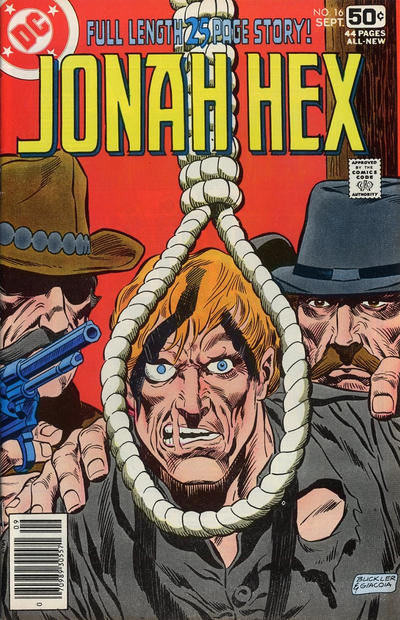
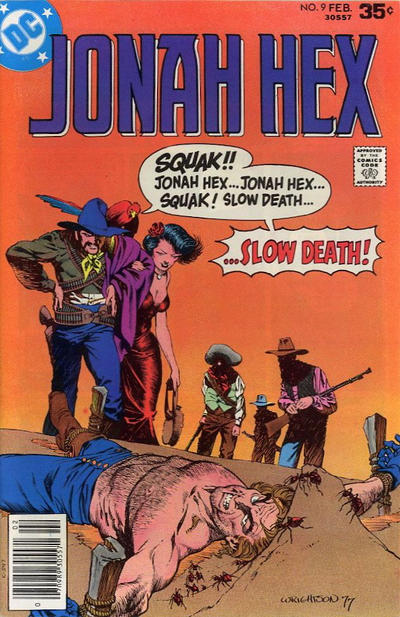
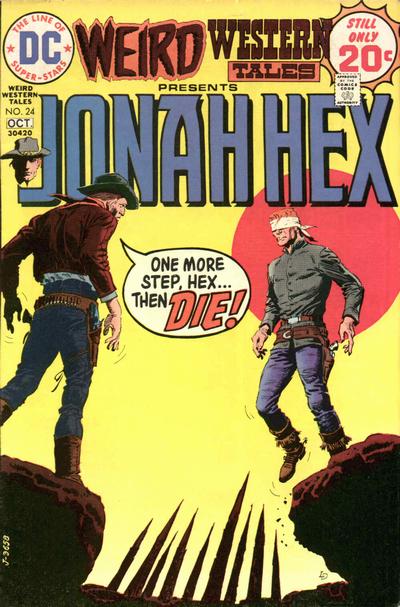
I recently scored a big pile of vintage ‘80s Jonah Hex comics for a song, and boy, did that gunslingin’ Jonah Hex know how to sell a comic book.

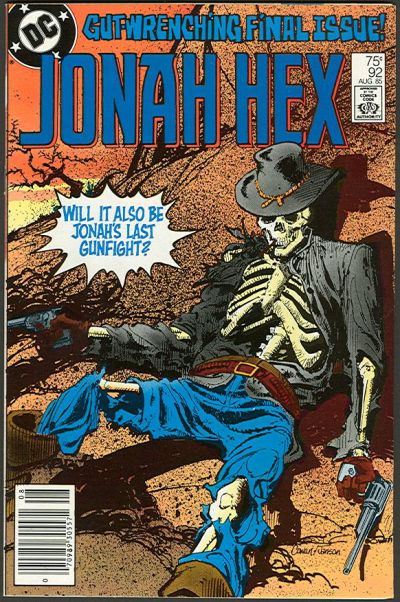
Dynamic, snarling and mean, they’re like posters for Clint Eastwood westerns that never were, and often darned edgy for their era. Hex was on his way out when some of these were published, as I wrote about recently when looking at comic final issues. But like any good gunfighter, he went down shootin’. 

Gut-wrenching final issue! When comic books are cancelled

The problem with never-ending serialised fiction is just that – it never ends. Unless a meteor finally hits the planet, you’ll probably never really see a truly final adventure of Superman, Spider-Man or Batman. Sure, there’s plenty of possible final stories and alternative histories out there – but the powers that be will never let the underlying intellectual property go truly dormant. 

Heck, even stories we once thought were over, such as Star Wars circa 1985, have been prequeled and sequeled and sidequeled and likely will until they run out of steam until the inevitable next reboot circa 2045. 

There are comics characters I love, but I no longer obsessively follow their every adventure. I’ll always have a special place in my heart for Spider-Man and Batman, but you know, you’ve seen Bats punch out the Joker once, you’ve seen it all. Sometimes, you just want a sense of closure. 

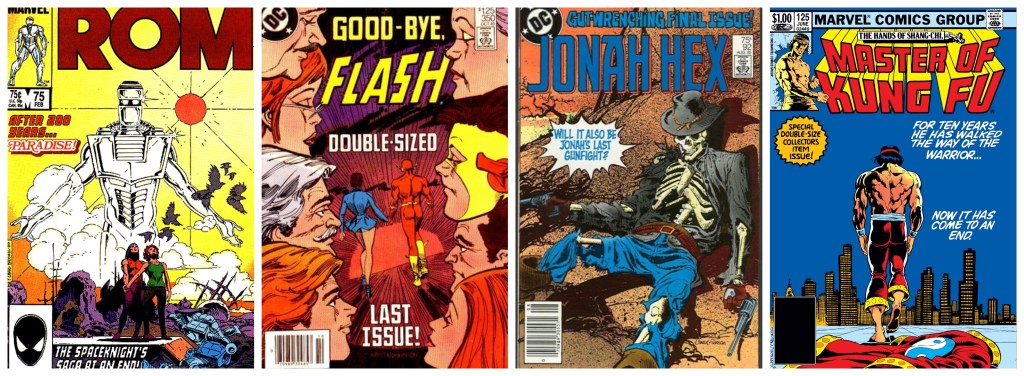
I guess that’s why I have a nerdy fascination with picking up the final issues of long-running comics series, because it feels like a definite ending to the story. It doesn’t really happen much anymore, because there’s always another reboot, but for a while in the mid-1980s, Marvel was kind of OK with wrapping up entirely the stories of characters who had reached the end of the line – Ghost Rider, Master of Kung Fu and ROM among them, while rival DC Comics cancelled almost every non-superhero comic they had in a massive genre purge in the early 1980s, as well as long-running series like Flash and Wonder Woman in favour of reboots. 

A cover trumpeting “final issue” teases the reader that this story really, truly matters, unlike the more common “stealth cancellation” tactic these days where a comic book just quietly vanishes.

The ending of these stories could be uplifting – Ghost Rider finally breaks his demonic curse to walk off into the sunset, ROM gets his humanity returned after winning the Dire Wraith war – or surprisingly bleak, when Iron Fist is shockingly murdered in the final 125th issue of Power Man And Iron Fist, ending what had been an entertaining bi-racial buddy superhero tale on a note of discordant tragedy. (Iron Fist came back from the dead, of course, but it wasn’t for several years.) 

Other final issues serve as a farewell to dying comic book genres – Jonah Hex #92 puts a capstone on the western saga’s classic years, while G.I. Combat #288 was one of the last war comics in a once-dominant subsector of comics. From the mid-’70s on, one by one the popularity of long-running horror, western, war and romance comics faded so that by 1985, from House of Mystery to Young Romance, almost none of them were left. Sometimes the endings were pretty abrupt – the saga of the bizarre “Creature Commandos” is wrapped up in an utterly slapdash one-page story in final issue Weird War Tales #124 that just shoots them off into outer space forever! 

Some got a happy ending that stuck – ROM ended his series in 1985 and while there have been a few revivals at other comics companies of the basic concept, the Marvel version of ROM has never returned – not for creative reasons, but because of tangled copyright wrangling. I do like the idea that the spaceknight got to just walk off into the sunset for good.

I know few characters stay dead when there’s valuable intellectual property to mine – pretty much all of the characters mentioned above have come back in some form or another – but the end of a series after 100, 200 or 300 issues still feels like a pretty firm full stop on a comic’s history. The modern revivals, even when they’re great, often feel like echoes of the past rather than something truly new. 

People have been predicting the death of print comic books for ages, and it’s still shocking to see how low sales figures for print comics are these days when their stars go on to headline multi-zillion-dollar movie franchises. But I’m hoping they stick around as long as I do. I do like a final issue, but I also don’t want to see the gut-wrenching collector’s item last issue of Action Comics or Amazing Spider-Man anytime soon.