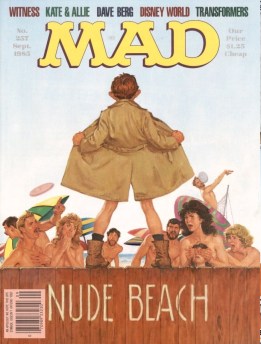
 What, me sorry? The rumours are flying fast and furious that MAD magazine, warping young minds ever since 1952, is closing up shop soon and ending its 67-year run. It’s reportedly going to switch to just reprint material to fulfil its subscription responsibilities and then end publication entirely soon.
While MAD has been past its peak for a while, it’s still truly the end of something great. MAD was once a cultural milestone that’s hard to put into context now. Pre-meme culture, pre-internet snark, hell, even pre-Seinfeld age of irony, MAD was a dissenting voice of doubt and disdain of prevailing institutions. It cracked the 1950s wide open and in some ways the world never looked back. It was never strident about it, but instead it was the voice of the wiseacre kid perched in the back of class interrupting the teacher’s lectures. Without MAD, there’d be no Bart Simpson.
I first became “aware” of MAD in the early ‘80s toward the end of its heyday. I picked it up for the classic Mort Drucker-drawn movie parodies of stuff like “Rocky III” and “Superman II,” and stayed for the crazed cartooning and wit it was packed with – Sergio Aragones’ teeny-tiny toons, Dave Berger’s exploration of the creepy suburban underbelly in “The Lighter Side Of”, the kinetic “Spy Vs. Spy,” and much more.
 Soon I also discovered “classic” MAD, the Harvey Kurtzman-edited comic book that the magazine originally began as in 1952. It remained the last gasp of EC Comics itself after the great comics-will-warp-you scare of the ‘50s shut the rest of the line down. I got a massive volume collecting #1-6 of the series, packed with Kurtzman wit, Will Elder’s insanely detailed art, Wally Wood’s gorgeous spacemen and girls, and much more. I still have that somewhat battered gorgeous big volume of MAD’s first 6 issues, along with several other volumes collecting the original series, plus scattered around the house a battered stack of issues dating back to the ‘70s, all well-read and mangled as they should properly be.
MAD carried on, and had a good run. One of the great joys of parenthood for me was my son discovering a huge stack of old MADs out at our beach house and becoming addicted to them. There’s nothing like seeing the next generation discover the pleasures of Don Martin’s FLAPPPS and THWITZZIPPTS, of Sergio Aragones’ amazing doodles, of the mysterious intricate pleasures of Al Jaffee’s fold-ins. I’d pick up the occasional “newer” MADs for the boy, too, and while I personally never found them quite as fresh or funny, I also knew that at 40-something I wasn’t quite the audience anymore. Unfortunately, people like me not buying MAD and younger folks not even knowing about it probably spelled the end a while ago.
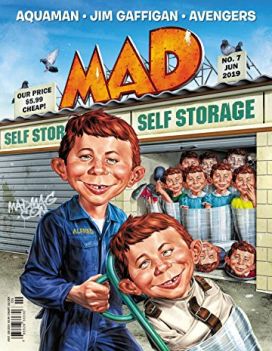 MAD ended its 550-issue run and “relaunched” like pretty much every other long-running comic book publication about a year ago, and the writing was on the wall then. But to be honest, in the age of Trump, isn’t everything feeling a little satirical? When Trump himself made fun of presidential candidate Pete Buttigieg by saying he ‘looked like Alfred E. Neuman,” nobody under 40 really seemed to get the the joke, including the candidate himself.
For its 60 years of poking fun at sacred cows, of mocking everything from Star Wars to Nixon to John Travolta to Trump with an unblinking eye, MAD deserves a salute. I’m sad about its imminent end, but I also know the spirit of mockery – all the good and bad things about it – is still alive and scattered all over the internet and today’s pop culture. Alfred E. Neuman will never die.
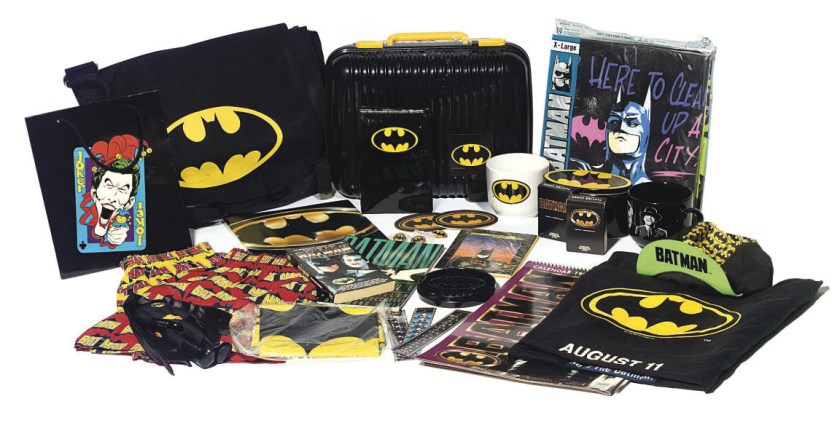 Thirty years ago today, I was standing in a line. A bunch of us were all queued up for what was then the biggest comic book movie of all time, Tim Burton’s Batman.
 It’s hard to explain to fans of today’s slick, streamlined and gorgeous Marvel Universe movies that seeing a comic book movie in the ‘80s and ‘90s was mostly a matter of lowering expectations, of accepting flaws and looking for the bits that worked.
 But Keaton’s Batman has only grown in strength over the years. He never quite has the classic physical profile – seen in a tuxedo in an early scene, his Bruce Wayne’s shoulders would barely fill half the Bat-suit – but acting is often concentrated in the eyes, and Keaton’s eyes hold a balance of resolve and regret. His Bruce Wayne seems closer to the edge than some – look at the scene where he takes on the Joker in his civilian clothes: “You want nuts? Let’s get nuts!” In contrast, his Batman is more of a blank, grim slate, a mask that wipes out Wayne’s humanity and focuses his mission.
 Doom Patrol have always been weird, a team of misfits and outcasts kind of like the X-Men, but more so. Their original 1960s comic adventures are a bizarro Silver Age blast, but “my” Doom Patrol really burst into being with Grant Morrison’s seminal late 1980s reinvention of the concept. Morrison’s twin masterpieces of Doom Patrol and Animal Man back in the day blew my teenage mind.
 One of the newer of the approximately 419 streaming services out there, DC Universe premiered last year with Titans, which was a mixed success for me – I dug seeing the “Teen Titans” come to life and there were some great parts, but the show had very scattered storytelling and a self-consciously adult tone that felt forced (Unless you really thought we needed to have a blood-soaked Robin muttering “F—- Batman” to make the character work better). Doom Patrol is more adult by nature, so the swearing and mature themes work better (I’ll never get tired of hearing Cliff Steele aka Robotman saying, “What the F—-!?!?” in response to Doom Patrol’s never-ending parade of weirdness).
 The comic book medium has had lots of highs in its nearly 100-year history. We’ve had Maus, Watchmen, Love and Rockets, Sandman, and much, much more.


 These comics are a product of their time – Lois is too often portrayed as a scheming meddler with marriage to a man (usually Superman) the only thing on her mind; but by the same token Jimmy Olsen is a gibbering goon who’s constantly getting himself into trouble as well. Yet I’d take a single Jimmy Olsen comic with their endless invention and amiable good cheer over a dozen of comic books’ latest attempts to strip-mine their past and reinvent the wheel.
 One of my favourite comics from the ‘80s into the early ‘90s was Marvel’s
  The biggest geek-appeal of What Ifs were that in retelling classic stories with a twist, characters could die – hell, everybody could die. “What if The Hulk Went Berserk?” was an issue that scarred the heck out of teenage me because I walked in expecting a typical Hulk story and then characters like Iron Man and The Thing started dropping like flies… oh, and it ended with Thor snapping the Hulk’s NECK which is pretty darned grimdark, ain’t it?
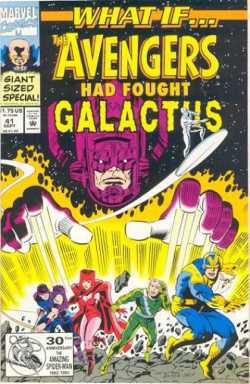 A cursory look at comics from the last few months turns up “Infinity Wars” (Marvel characters like Captain America/Dr. Strange mashed up, again!), “The Batman Who Laughs” (what if Batman was REALLY dark?), “Spider-Gwen,” “Spider-Noir” and a hundred more variations of Spider-Man. Not saying these are all terrible stories (although a lot are), but the main thing is that the novelty is gone. Whoa, you just showed me an alternative world where Superman is DEAD? I’ve seen that six times this week already, son.
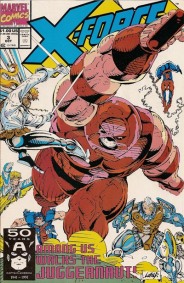 All right, it’s time to post again and stop hanging out at the beach and such. It’s 2019, oh man oh man, and that means 1999 was 20 years ago, which means the ‘90s ended 20 years ago, which means my 20s ended 20 years ago and I am officially old.
 I’ve been collecting comics for (gulp) nearly 40 years now, but the 1990s was the closest I ever came to abandoning my monthly fix. Marvel and DC’s mainstream comics hit their gaudy nadir, and I was dead broke a lot of the time anyway. But there was an awful lot of brilliance to be found in the spirit of independent comics – Hate, Eightball, Cerebus, Yummy Fur, Naughty Bits, Dirty Plotte, DC/Vertigo’s Sandman – and that kept me going.
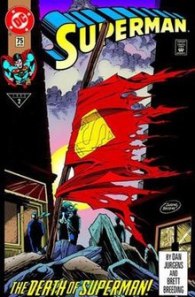 Throughout ACBC, we see the twin poles of creative independence and corporate greed battle, greed usually winning. Marvel sells 8 million comics and goes bankrupt a few years later. DC kills Superman, breaks Batman’s back, makes Green Lantern a mass murderer, chops off Aquaman’s hand (spoiler: they all get better). Image Comics is formed in 1992, and despite beginning with some pretty awful clenched-teeth superheroic angst, it’s still here in 2019 and publishing a diverse and intelligent line of books. Former Marvel editor-in-chief Jim Shooter, on the other hand, keeps popping up throughout the book starting up new companies that quickly fade away.
 I’ve always considered myself a pretty adequate comics history nerd, but there were entire publishing companies unearthed in this book I’d never heard of. Sacks and Dallas keep the constant flow of information moving in an entertaining way, and there’s tons of juicy comics-biz gossip peppered throughout.


 My first real deep dive into Stan Lee’s own writing came when Marvel Tales, a reprint mag, began running the original Lee/Steve Ditko issues of Amazing Spider-Man from the beginning in 1982. I’d never read them before, and while my pre-teen eyes took a while to get used to Ditko’s more primitive-feeling artwork, I was sucked in to the stories as Spider-Man fought Dr. Doom! Met the Lizard! Battled Doctor Octopus and the Living Brain! Reading these marvellous tales, I realised what all the fuss about “Stan Lee Presents” was really about.
 If you want to really examine the seismic effect Stan Lee had on comic book storytelling, read one of DC Comics’ musty early Justice League of America issues from around the same time the Fantastic Four launched. While they’re charming enough, the stiff, military-precise characters are interchangeable and conflict is nonexistent. They fight crime with a smile and brisk efficiency.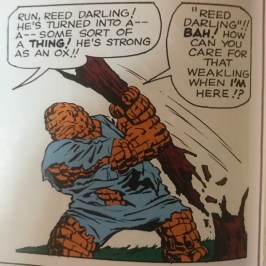

 Nik Dirga