There’s more than one edge of the world

I’ve always been fascinated by the edge of the world. 

Regrets, I’ve had a few, but one of them is that I’ve never travelled as much as I would like. In my free-wheeling 20s I was dead broke, and then marriage, parenthood, et cetera. Now, I’m teetering on the edge of old. But when I do travel, I’m always interested in those spaces that feel like the edge of the world.

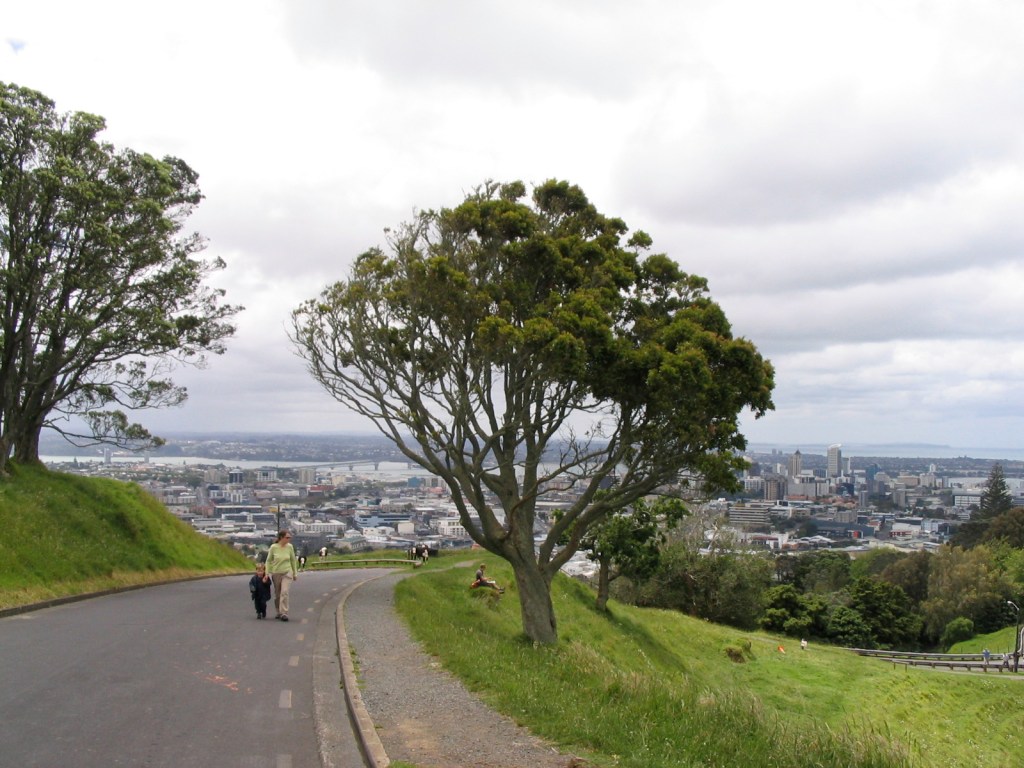
New Zealand is all edge, really, a handful of wee islands bobbing away out there on the far reaches of the South Pacific, surrounded by wide wide seas on every side. I’m always vaguely aware that hunched on the horizon below us like a yeti is Antarctica, which is a mere 2500 or so kilometres (1500 or so miles) to the south. 

We took a recent road trip around the very bottom of the South Island recently, a place I hadn’t been to in far too many years, all mountains and long empty roads and sheep, everywhere sheep. We stopped for a visit at Slope Point, a stark little bit of cliffside that happens to be the southernmost point in mainland New Zealand. You cross a sheep paddock and brave never-ending winds to stand there on the edge of all things, a lighthouse and scrubby plant growth for company. If you’re lucky like we were, you get to experience it by yourself, only the jaunty yellow directional sign pointing out you’re closer to the South Pole than the Equator.

You can’t see Antarctica, of course – it’s still very far away – but you can feel it, lurking like a Norse ice giant. That’s what I mean by edge of the world. 

I’ve been to several places I would consider edges, even if they aren’t next to the ocean. Places that feel ancient and pre-civilisation, bigger than our squabbly little day-to-day human concerns and doomfears. Uluru, perched in the Red Centre of Australia, is definitely one of them, magical and awe-inspiring even with other tourists wandering about in the hot desert emptiness. 

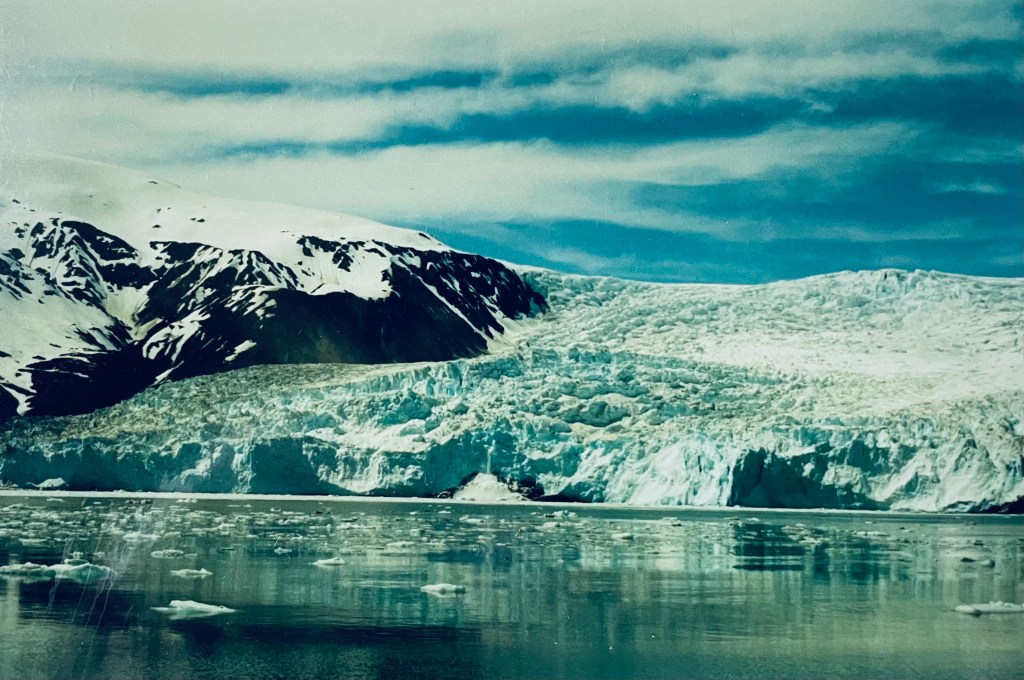
Another is Alaska, the place I was actually born half a century ago at an icebound Air Force Base. I’ve only been there once since I was a toddler, but it was enough to feel the edges that exist everywhere there in the last frontier, watching a glacier slowly rumbling into the sea, dropping chunks of ice the size of houses in the frozen ocean.

Or the Badlands in South Dakota, another spot that feels untroubled by the world of humans, rippling and strange.

Or New Zealand’s northernmost point, Cape Reinga, which is where it is said spirits of the Māori dead begin their journey to the afterlife by leaping off the edge of the shore. I like that image – on the edge, a new beginning.

The thing about an edge of the world is that it should make you feel proper small, a speck of dust floating around in a world far bigger than we can ever really comprehend.

Mucked up as life often seems these days, there’s still an awful lot of world edges out there. I hope to get to more of them and teeter happily on the abyss a few more times in this brief little life we get. 

I still miss Halloween

Of all the holidays of my wayward youth, I think I miss Halloween the most. 

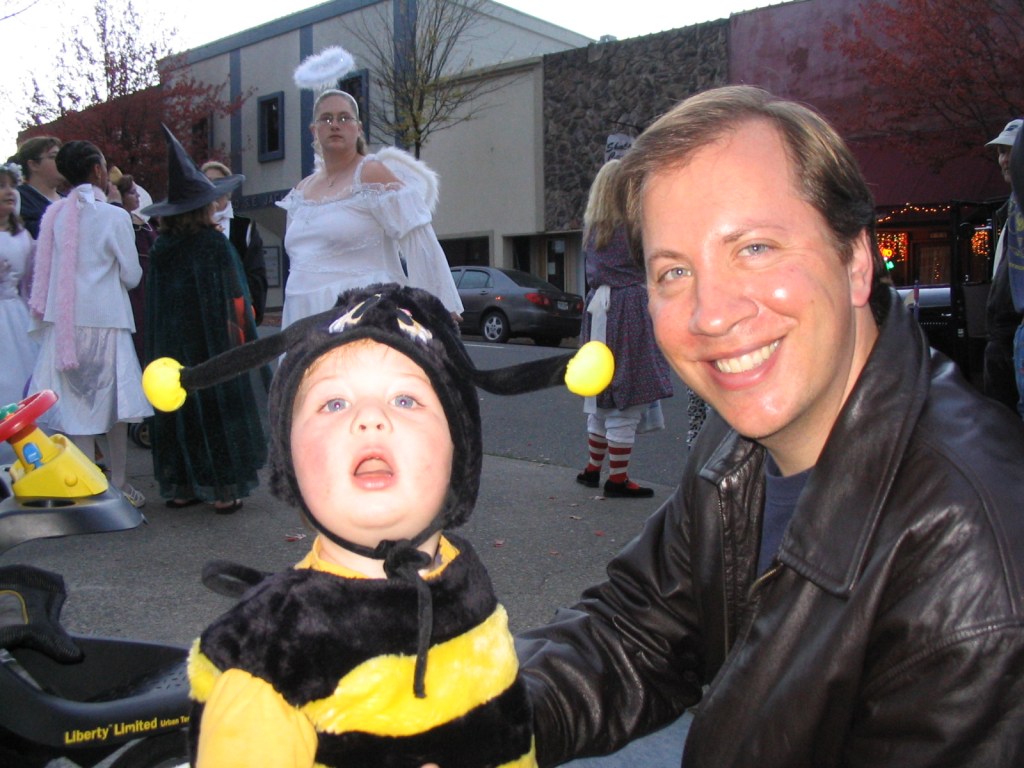
I have great memories of trick or treating on Race Street back in California as a kid, with my brother and neighbourhood pals, from when we were small enough to need a parental escort to when we were pushing teenager-hood and almost too old to pull it off.

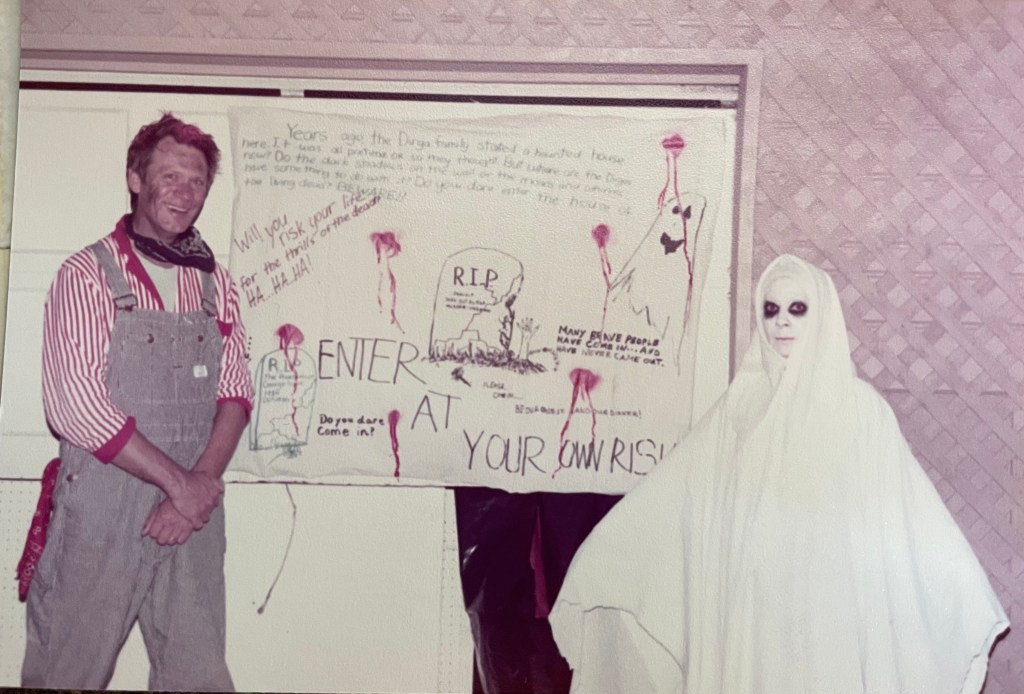
I remember the daft costumes – dressing up as a blackfaced “assassin,” a pirate, Spider-Man, one memorable year attempting to pull off a mummy costume by donning yellow pajamas and draping them in toilet paper … which unravelled after the first few blocks. One of my very first appearances in the mass media was a grainy black and white newspaper photo of me dressed up as Underdog. Another year my parents hosted a great haunted house for our church (!) turning our basement into a cobwebby labyrinth of silly scares.

I think it was the delightful otherness of Halloween that appealed to me the most, the chance to dress up as someone else entirely for one day out of the year. The people who go on about it being some kind of “Satanic” holiday never had the kind of childhood fun I did. There’s far bigger monsters out there in America these days than kids having a bit of dress-up.

You’d wander up and down the shadowy streets and most homes would have a light on and a bowl of candy from the good stuff (M&Ms! Bounty! Pop Rocks!) to the not so good (candy corn, go straight to hell!). It was the one day of the year you’d get to actually see the inside of all the houses in your neighbourhood, even if it was just a fleeting glimpse. I think I came of age at peak Halloween time, before scary threats like poisoned candy or psychos with razor blades kind of spoiled the vibe.

Halloween was innocent fun but as you aged, it could get wilder and weirder. On a drunken expedition during freshman year in college we decided to steal a lot of neighbourhood pumpkins, which worked out great until I got pelted by a dozen eggs at one house. 

Halloween is kind of a thing in New Zealand, but not entirely. It’s definitely way more visible than it was when we moved here in 2006, but there is a certain amount of resistance to it. The stores all shove it down everyone’s throats starting in August or so because money, but I also still remember my late mother-in-law dismissing it as “begging for lollies.” It’s not embraced here.

Halloween kind of requires a cultural consent to pull off and it’s only partly there in New Zealand. Certain neighbourhoods are earmarked for trick or treating but most aren’t. And an awful lot of people here see it as another arrogant bloody Americanism being pushed on New Zealand, which, considering my homeland’s reputation these days, fair point. 

It’s also not helped by it being Spring down here when Halloween falls, and the days last until 8pm or so. Halloween trick or treating should properly be done in the dark, with a faint autumnal chill in the air, rather than spring blooms and chirping birds. 

When P was younger, I got a bit sad that they weren’t experiencing the kind of Halloweens I had. We had one Halloween in the US before we moved here when P was still a toddler. Still, I got a few of them in with our child while they were young enough to get into it – there was at least one good year of neighbourhood trick-or-treating with a cousin and a fun visit to a couple of carnivals. 

Another thing about Halloween is that it’s a holiday you largely age out of. There’s an ugly awkwardness to being a teenager too old to trick or treat shoving your way in among the little ones for a handful of Snickers. You can do Halloween as a bawdy older holiday of course, and I remember some fine drunken college Halloween parties that I think I enjoyed, but honestly, it’s mainly at its best a holiday for the kids and kids at heart, I think. 

So I still get that bittersweet nostalgia every October 31 remembering the Halloweens of the past and how one day you take off all those masks and have to become a boring old grown-up. I compensate, of course – typically with a lot of Halloween themed horror movies and hey, we might also have some candy in a bowl. For us, of course, not those lolly-begging trick or treaters.

You may get wrinkled and bent and unable to pull off a sexy Superman costumer but you never, ever age out of candy, by gum. 

How I became a journalist who doesn’t drink coffee

Coffee and journalism generally go together like fish and chips. But somehow, I’m slowly becoming a journalist who doesn’t drink coffee.

Not to get all medical on you, but I’ve had irritating recurring problems with Laryngopharyngeal Reflux or LPR the past year or so, and it’s been increasingly obvious to this middle-aged git that I need to reconsider things I used to eat or drink without even thinking about it. 

Troubling things like raw tomatoes or bacon have slowly slid from my diet, but I was reluctant to give up coffee because it was a habit, and we love our habits. But back in January I made the call to give up coffee and see how I did.

It hasn’t erased the problem, which is irritatingly random at times, but it’s definitely made a little bit of a difference. 

The surprising thing for me is that I haven’t really even missed the actual drink all that much. I had expected coffee having been a regular part of this journo’s diet since about 1990 or so would be like oxygen or sunshine, something I’d wither up and die without. 

But instead, I’ve discovered that I rather enjoy green tea for a caffeine hit, or a can of my once-beloved Pepsi a couple times a week (which also isn’t great for me, admittedly). I have had mornings where the foggy whispering in my brain takes quite a while to recede, but I’ve had other mornings where I felt fairly human from the start. And it’s definitely helped my throat issues.  

I know coffee is a fetish in this problem-plagued world, but the abstinence has made me realise I didn’t really crave the coffee itself. Perhaps it’s because I’ve had more than my share of truly awful coffee – most of the newsrooms in America I worked in over the years specialised in grimy coffee machines exuding a watery brown gruel that probably led to the gradual erosion of my esophagus decades later. Newsrooms, at least in the bad old days, had horrible coffee. Despite that, I used to suck down three, four, five cups a day but for a long time now my max had been two cups, tops.

And of course, if something you’re used to starts to make you feel like garbage, it can take a while to break the habit, but in the end, I didn’t love coffee enough to put up with everything else that came with it for me. 

When I’ve had a truly good coffee, I appreciate the skill that goes into it, but in retrospect, I guess I’ve never really fallen in love with it – more than anything I just liked the caffeine jolt. (I have literally never understood the reason for the existence of decaffeinated coffee. What’s the point?)

I stopped my daily coffee in January and dipped briefly back in a few weeks ago just to see if it really was problematic for me. Both mornings my throat swelled up to the point where I started to wonder if I was actually allergic to the blessed bean now. I don’t think I am, but it was enough to make me think I’d stick to tea, like a good New Zealander, for the duration. 

I can still do journalism without coffee, it turns out – case in point the rather frantic events of Easter Monday when I was running the Radio New Zealand website and about an hour before the scheduled end of my shift, Pope Francis died. Once upon a time I would’ve grabbed a few cups or cracked open some Pepsi to get through it all, but instead I let the adrenaline breaking news buzz – still the best pick-me-up there ever was – carry me through.

We pick up lots of habits in life and then you hit the point where you have to start to give up these habits to ensure an easier go of things. I don’t think I miss my morning cup all that much, but I guess I miss the idea of it. But I’ll get used to it.

Watching Robocop with my Dad

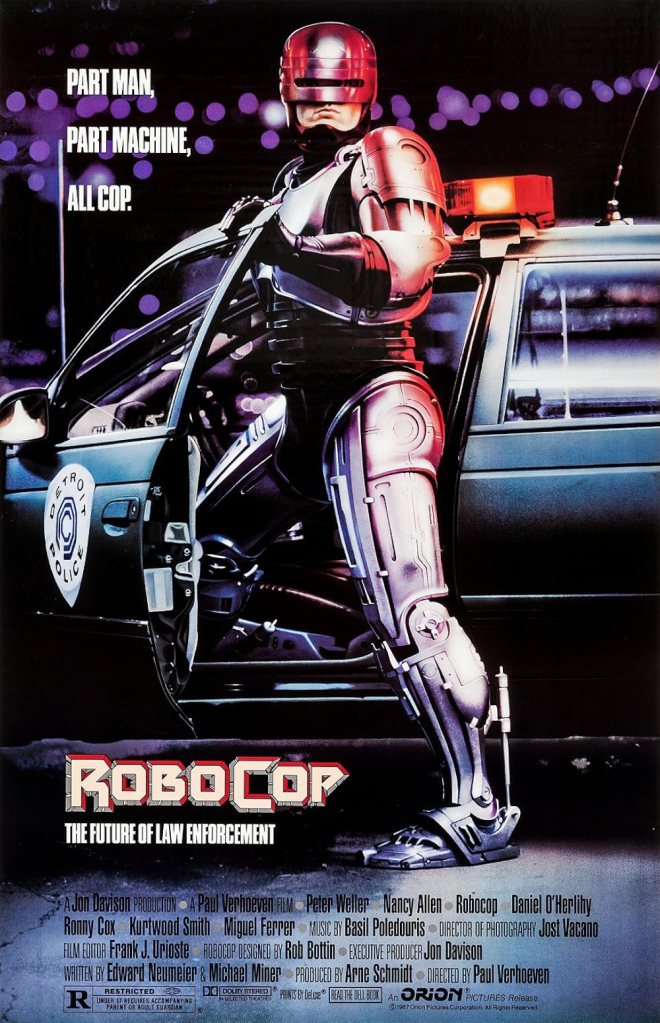
The very first R-rated movie I ever saw in a theatre was Robocop, with my Dad and a buddy. 

It was a pretty full-on choice – Robocop goes hard and never stops, but it’s also one of the most brilliant and satirical action movies of the 1980s. Of course, I didn’t have much cinematic expertise then, at the age of 15 or so. We just saw the poster and TV commercials for this heavy-metal policeman and thought, that looks awesome!

Getting into your first R-rated movie as a teenager was a moment. My pal Nate and I tried, on our own, but were embarrassingly turned down by a snarky cashier only a few years older than us when we tried to see Eddie Murphy’s Coming To America

So when it came to Robocop, we somehow talked my Dad into taking us.

Well over 35 years ago now, I can remember cringing a little over the explosion of profanity and violence that pepper Robocop with my Dad sitting next to me. The opening half hour or so, as eager cop Murphy is brutally mown down in torturous detail by cackling psychopaths, is hardcore to watch even today. 

My dad was a good-hearted, church-going and genial guy whose tastes I think ran a little more to Roger Moore James Bond and Tom Clancy books, not splattery sci-fi like Robocop, but he took me anyway. I don’t know quite what he thought as Clarence Boddicker spat invective and people died in inventively bloody ways, but I don’t think he hated it. 

Dad’s been gone nearly a year now, and of course I think about him all the time. 

I re-watched all three Robocop movies recently in a bit of a binge (The very goofy and violent Robocop 2 and the kid-friendly Robocop 3, which I’d actually never even seen, are serious steps down from the flawless polished gleam of the original, of course, but they do have their moments). 

And as memory does, it floats around in your head unasked, and I kept straining to recall that long, long ago afternoon in a movie theatre in ’80s small-town California, watching Robocop with my Dad. It was a very small moment of my time with him over more than 50 years, I know. 

I honestly can’t remember much at all other than how cool Robocop was, but I guess that’s not important. I remember my Dad was there for me, and even if he perhaps quietly thought Robocop was a bit much for his nerdy 15-year-old son, he was pretty cool, too. 

Clippings: Collected Journalism 1994-2024 – Free sample 2!

In celebration of my new collection of the so-called ‘best’ of 30 years of journalismClippings, each Monday in March I’m spotlighting one of the more than 100 pieces by me gathered up in this hefty tome. I hope you’ll consider grabbing a copy, now available on Amazon as a paperback for a mere US$14.99, or as an e-book download for just US$2.99

I randomly divided this collection up by themes – Profiles, Places, Criticism and the like, and then there was a random selection of more goofy pieces I figured I’d just file under “humour.” This recollection of my very first job in journalism written while I was working at Lake Tahoe is, as best as I can recall, almost entirely true.

Scenes from the route

North Shore Truckee ACTION, September 2, 1998

I have edited newspapers and I have written for newspapers, but my first “real” job in this world was to deliver them.

I was a squirrelly, zit-faced and longhaired 13 going on 14, and I did it for about a year, delivering the Grass Valley Union from door to door in a square mile area several blocks from my home.

The Union is an afternoon paper, and so each day after school I would return home to find a bundle of Unions in our driveway, tightly bound. After an afternoon snack I would kneel busily on our dark garage’s concrete floor, taking my fifty or so papers and wrapping them with rubber bands. If it rained, you had to put them in orange plastic bags first.

The rubber bands sometimes snap if you rush things, and they twang off about the room spastically. Once one smacked me right in the cheek, raising a really embarrassing welt.

Your fingertips become black with ink as the headlines leave a bit of themselves on your skin. The day’s happenings are compressed into a small, dense cylinder of pulp that you lift and hurl repeatedly, trying to achieve a passable imitation of grace with each throw.

It was then, likely, that I began to stumble down the career path I follow tenaciously to this day. I was immersed in the smell of the hot paper, sometimes still steaming with the heat of the press, fascinated with the way the ink can cling to you.

I would ride down my route on my battered yellow bike, the newspaper bag carefully balanced on the handlebars, getting lighter with each block.

It was my first real job, and no one forgets the way that is – the strange freedom I felt riding my bike in the late afternoon on days that always seem cloudy in hindsight, the wind rustling the newspapers in my bag. I delivered news of President Reagan and “Peanuts” cartoons and what was on sale at Lucky’s, and I felt a part of some great system that pulsed beneath my 13- year-old world, a system I was just then beginning to perceive dimly.

I delivered newspapers and took inventory of my customers, the yards with plastic toys and broken bicycles in them, the houses with immaculate hedges and shrubbery whose porches I always aimed for with care.

The most difficult part of being a Union paperboy was collection time. At the end of each month I would go door to door on my route, getting $5.50 per customer per month to ensure they kept receiving their daily dose of news.

Portrait of a young hustler, mid-1980s

It was here you begin to encounter the world beyond lifting and hurling newspapers, and these days I’d dread somewhat. Demanding money from strangers was intimidating – looking briefly inside the anonymous homes I threw papers at, the couches where they read their Union each day.

I rapidly began to learn the language of excuses and rationale used so well in the grownup world.

“I paid you last month, boy, what are you tryin’ to pull?” one beefy guy who always wore too-small t-shirts would say to me every time I came by. And every time I would explain to him that he had to pay every month, he would mutter about what a rip-off it was, and he would finally pull five greasy dollars and fifty cents out of his pocket.

I learned how people wheel and deal, and I learned how people live without luck.

There was a cat woman. Every town has the cat woman, the twisted old lady who lives in a shack with a hundred stray cats. This woman’s house was crumbling and rotten, about to slide down an embankment onto the freeway overpass below. She had no teeth and no hair, and always wore a filthy Oakland A’s baseball cap. She would never have her $5.50 at the end of the month, and would gummily offer me excuses as ten of her bedraggled cats meowed and hissed around her legs. The cat lady had only one eye.

The cat woman would occasionally leave a folded dollar bill for me in her mailbox, toward paying off her slowly rising newspaper debt. I did not know what she did with her Union each day, if she read it or merely used it to line her floors inside what was surely one giant litter box.

And then there was “the towel lady,” as she would be enshrined forever in my pubescent memory. Each and every month when I would come by to get my $5.50, this highly attractive young lady, in her mid-twenties or so I’d imagine, would answer the door wearing a pink towel.

Just a pink towel.

You can imagine the fireworks this would set off in your typical 13- year-old paperboy.

Each month this woman would come to the door wearing just her towel, and she would give me my five-fifty and smile and I would melt into a giddy puddle of goo right on her doorstep.

I never could figure it out. If the towel lady wore just a towel once, I’d understand – she just got out of the shower or something, right? But each month, November or May or August, the towel lady would answer the door in her towel, and I would mature just a little bit faster.

The towel lady probably kept me doing the paper route a few months longer than I would have done – I was entering high school soon, and paper routes seemed too grade-school for my elitist brain then.

But I labored on with the route a few months into my freshman year of high school, always looking hopefully forward to my monthly visit to the towel lady.

The odds of gravity and physics were with me, I knew. That towel had to fall off eventually.

It never did, of course, except in my dreams.

This ink-stained confession and much more can be found in my new book Clippings: Collected Journalism 1994-2024

Hello, I wrote a book, and it’s only taken me 30 years

Greetings! I wrote a book. Well, I’ve actually been writing it for about 30 years, believe it or not. Introducing Clippings: Collected Journalism 1994-2024, a hefty compendium of my columns, essays, feature profiles and much more over the course of my so-called career!

I’ve written an awful lot of words over the years, but I wanted to put together something that was a little more permanent than a bunch of yellowing newspapers and broken website links. Clippings is, much like many journalism careers, an eclectic mix, from long features to blog posts to deeply personal essays to in-depth pop culture criticism, spanning from Mississippi to California to New York City to New Zealand. 

From interviewing governors and rock stars to climbing active volcanos and adjusting to life on the other side of the world, this book is me saying, “Hey, I was here, and this is some of what I did along the way.” Doesn’t everyone want to say that at some point about their life’s work, whatever it is? Throw it all together, and it’s probably as close to a sort of autobiography as I’ll ever get.

It’s got many of my works from long-ago newspapers and magazines, websites and even some fine pieces from this very website in a handsome curated form sure to be adored by your family for generations.

I hope you’ll consider grabbing a copy, now available on Amazon as a paperback for a mere US$14.99, or as an e-book download for just US$2.99! 

Get it here: Clippings: Collected Journalism 1994-2024 by Nik Dirga 

“Now it’s dark” – All our heroes go away eventually

It’s inescapable that older one gets the more people you lose, whether it’s family or the creators and icons you look up to. I could turn this into a full-time obituary blog these days if I wanted to, I reckon, but one also has to grasp for the light sometimes. All our heroes go away eventually.

And honestly, any celebrity death, no matter who, is probably never going to strike me quite like the big loss that blots out the sky for me, my father’s passing last May. That’s the kind of shattering experience you somehow get through, but you’re never really the same, are you? Life is marked in before and after now.

The last celebrity death I think I really cried over was David Bowie, because it just seemed so utterly shocking at the time – the man just put out a new album, he wasn’t even 70, and everyone knows you don’t up and die during an album release window. That one hurt, in the sort of unsettling way that maybe leaves a person thinking you’ll never quite let yourself be that vulnerable again to a celebrity death. And so, Prince, just two months later, was awful as well, but it didn’t hit me as a hammerblow to the brain. 

We’ve lost two of my favourites in just a week – film genius David Lynch, who left us at 78, and the legendary cartoonist Jules Feiffer, whose death today at 95 was just announced. Two very different men but two whose work really shaped me and how I look at the world. 

There’s been a lot said about David Lynch this week and I don’t know much more I can add to the discourse other than to say, the man rewired your brains. I remember scrambling to watch Twin Peaks my freshman year in college, where I didn’t even own a TV, having to borrow a tiny portable model from someone in the dorm. I’d never seen anything quite like this combination of American mystery and menace. A couple years later a friend and I watched a VHS of Eraserhead and at the end sat stunned, gasping, muttering “What? What?!?” over and over again. Lynch did that for you. 

The night he died I watched Blue Velvet again for the nth time, and like any masterpiece, every time I see it, it unfolds slightly differently to me. The unmistakable brilliance of the opening credits, American beauty crashing up against the rot underneath – this week, this month, this deranged moment in American history, we all need to pay more attention to the bugs beneath the earth, chittering away. Kyle Maclachlan’s jaunty student discovering the evil underneath, and the unanswerable question – how do we get past the bad things?  

Jules Feiffer was a little more underground, perhaps, but his fingerprints were surely on something you watched or read – besides his long-running cartoon in the Village Voice, he was quite possibly the last living link to the Golden Age of comic books, blustering his way into a job with the legendary Will Eisner at just 16 or so and then ending up working on the iconic Spirit. He wrote books of comic history that broke new ground, he drew The Phantom Tollboth classic children’s book, he wrote scrappy novels, he wrote the screenplays for both Carnal Knowledge and Robert Altman’s Popeye and two more different movies you could scarcely imagine. He was drawing right up until the end at age 95.

Feiffer was never a classically great artist, but that was the point – his scribbled, sketchy lines danced with expression, his bitter wit on everything from romance to Richard Nixon stung in a way most young political cartoonists would dream of. When I was a kid, my parents had Feiffer’s Marriage Manual on a shelf in their bedroom, where the kind of adult books were kept. I snuck a look at it and his wiry, intense takes on love and romance turned out not to be full of nekkid ladies, but instead a kind of naked, barbed genius that hooked me instantly. Cartoons could be about life! Whether it was books, comics, movies, plays, Feiffer was the kind of renaissance man creator that quietly helped shape the 20th century. He sure shaped me. 


“Now it’s dark,” the vile Frank Booth whispers in Blue Velvet shortly before unspeakable acts.

I’ve accepted we will see more and more go like they did in 2024 – author Paul Auster, whose tense and vibrant books never stopped wondering at life’s mysteries; The Chills’ Martin Phillipps, whose music summed up New Zealand to me; perpetually surly character actor Dabney Coleman, whose Slap Maxwell Story is still one of the best cranky journalists performances I’ve seen; CAN’s unmistakable voice Damo Suzuki and the MC5’s scorching guitarist Wayne Kramer; Gena Rowlands, whose naked honesty scorched the silver screen; the tragic Ed Piskor, prolific, detailed and often-dazzling cartoonist gone too soon to suicide; Donald Sutherland, who said more with a raised eyebrow than many do their whole career; smiling Carl Weathers, who seemed poured out of liquid muscles in the Rocky movies that I watched endlessly; John Cassady, whose ripplingly beautiful art in Planetary, X-Men and others seemed too good to be true; Paul Fry, one of my journalism mentors and a hell of a guy; the small press comics creator Larry Blake, whose precise art deserved a wider audience; President Jimmy Carter, perhaps the last good man. And so many more. That’s just the tip of those who left in the past year or so. 

It’s a lot. No matter what we do, they all keep going, and one day we’ll go, too. But they leave the shapes behind.

But maybe it’s Dad’s death, maybe it’s just that we live in a world of constant troubles and you can’t live with hate and regrets in your heart the whole time, but I’ve been trying to accept the dark and admire the light a little more this past 8 months or so. 

It all gets muddled together, the losses we face in this life. 

I hate that it does get dark, that David Lynch will make no more films and Jules Feiffer will draw no more cartoons, but they left us so much. I will pull out my Feiffer paperbacks and smile and I will head down to the marvellous local revival cinema and see some of David Lynch’s movies on the big screen next month. 

I keep dreaming about my Dad a lot lately, the brain puttering away while I sleep, doing the strange work of processing life. I don’t mind that. He’s still here, really. They all are.

In dreams I walk with you

In dreams I talk to you

G’day, mate, I’ve been a New Zealander for 18 years

Auckland, October 2006.

Kia ora! We moved to New Zealand exactly 18 years ago this weekend, and suddenly my migration is practically an adult in human years. Time doesn’t just fly – sometimes, it leaps. 

When we came here in October 2006, with a 2 1/2 year old, we didn’t really know for sure how long we’d stay here. We came to be closer to my wife’s family, to have our son grow up knowing about the Kiwi side of his heritage. 

And then 18 years flew by. Our kid is in his final weeks of undergraduate university studies. We both have a lot more grey hair. Three of our four parents have left us, now, and we start talking about our own old age less hypothetically than we once did. Life is not perfect here – is it anywhere? – but this is home, now.

Remarkably, I’ve now lived in Auckland longer than I’ve lived anywhere else in my life. The place where you grew up will always stick its hooks in you the hardest, and there’s always a piece of me in the rolling hills of Northern California, but at 18 years I’ve now lived here longer than the 14-15 years I spent in the town I grew up in. I lived in Mississippi seven years, Oregon nearly five years, but I guess I am an Aucklander now, even if I’ll always feel a little foreign here. That American accent isn’t going anywhere, still.

I’ve been in Auckland long enough to watch it changing. It’s a city of 1.6 million people that sometimes feels like a small town and at other times I’m learning about whole new parts of it. A melting pot of Māori, Pasifika and Asian cultures squashed up with lingering remnants of the old British Empire, it’s not quite like anywhere else I’d lived.

October 2006.

I’ve been here long enough to have favourite places that are gone, like the old gigantic Real Groovy Records on Queen Street, the jam-packed and sweaty Kings Arms pub where I saw heaps of great bands play, the labyrinthine original home for Hard to Find Books in Onehunga. 

I regularly say “mate” and “bloody” in conversations but I still don’t understand cricket. I love fish and chips and no bloody health insurance and Parliamentary politics and Flying Nun Records and tui and kererū birds and the kiwi-pop art of Dick Frizzell and Pineapple Lumps and yes, I own a pair of gumboots. 

New Zealand is small, but not tiny, and I kind of like it that way. When we first moved here way back in 2006 I liked to tell Americans that coming to NZ was like going back in time about five years – not a radical shift but enough to notice, a place that felt slightly slower and cozier than wide-open America. 

The internet has changed a lot of that, now – when we moved here my prize tech possession was an iPod that held THOUSANDS of songs, and now I carry the entire internet in my pocket. We don’t take quite so long to follow trends or get the latest pop culture. (Back in 2006, you’d still see popular movies and TV shows premiere here months after they did in America, for instance.)

Social media has kind of destroyed polite society in a lot of ways, I think, but it’s also made the world feel smaller and communication easier. Once upon a time we posted letters to our New Zealand family and sent them across the seas. Now, I can video-call my family in the US instantly. It’s made the distance better, especially in the last couple troubled years as the thing that every expatriate dreads happened – your faraway family gets older, sicker, and they leave you. 

Some other American couples we knew who came about the same time we did ended up going back to the USA within a couple of years. But while there were ups and downs, somehow, we stuck to it. I actually found my so-called journalism career generally went better here than it did back in the US – higher pay, more variety to the work, even if I couldn’t entirely escape the periodic redundancies that plague the industry everywhere and I still sometimes conflate my British and American English (color? colour?). As my day job I help run one of the biggest news websites in the country and that’s not something I could easily do back home. 

But more than that, I found a world so much wider than America alone. These days I often look back at what’s going on in my homeland with confusion and a fair bit of disdain, I admit. I love the place I came from but I don’t really understand a lot of it now, as yet another election season is here and events just don’t make sense to me. We have the same rolling disinformation and post-Covid conspiracies here, too, but again, we’re smaller. Everything is usually a little less dramatic here, I think. 

October 2006.

This will most likely be the place I end up, in the 20, 30 or however many more years I get left. There are worse places to be, and my world is so much bigger than it once was.

An immigrant to another country – whatever their status, whatever their background – probably always feels a little uncertain of where home really is. 

The thing I’ve learned these past 18 years is, you can have more than one. 

Posters on the wall, the ultimate status update

Actual photo from actual college apartment circa 1991. Note awesome Elvis Costello poster and Blue Velvet poster, as well as rarely-used bicycles, mandatory beanbag, pile of Rolling Stone magazines.

Once you hit (cough cough) a certain age, you start to wonder about the things you’ve carried around with you for years.

This old mailing tube of posters has somehow made it from Mississippi to California to Oregon to New Zealand in the past 25+ years or so, carrying with it a rolled-up album of things I used to stick on my walls.

Once upon a time, I wallpapered my rooms with posters, a bright-eyed college student out on his own and determined to announce his personal style to the world, or at least anyone who visited his apartment or dorm. Status update: Look at my cool tastes, man!

But you do reach a point in life where you probably aren’t hanging posters quite so much, where thumbtacked personal statements on the wall seem a little gauche. 

Yet I still have my tube of posters, tucked away in a corner of a closet. I can’t bring myself to get rid of it, even as the cardboard tube turns slowly grey with age. 

Posters were a cheap way to advertise yourself. I still remember many of the ones I no longer own – a gigantic poster of The Beatles in their super-groovy late hippie splendour circa 1969 that hung in my high school bedroom; an extremely creepy poster advertising The Cure’s “Love Cats” single; an amazing, huge poster advertising Elvis Costello’s album Trust that I wish I still owned. 

The tube still holds some posters dating back more than 30 years now. A shiny poster advertising Peter Gabriel’s “So” as I dove deep into my Gabriel fandom for the first time.  I’ve got a Salvador Dali print that I bought my freshman year in college, consumed with how cool and ecclectic I was going to be. It hung around for years in a cheap plastic frame and somehow still endures, a bit tatty, in a corner of my office. 

Movie posters of Blue Velvet and Fear In Loathing In Las Vegas that probably date back to my late 1990s time working in a video store (remember those?). Museum exhibition posters from Melbourne and Oregon. A concert poster from Guided By Voices’ not-so “final” tour in 2004 in Portland. Battered prints from an artist friend in Mississippi, perpetually curved from years in that cardboard tube. Most of these haven’t hung on a wall for years, but I still keep them around. 

There’s a poster of Monty Python’s John Cleese as the Minister of Silly Walks that hung around my first apartment  in Oxford, Mississippi, and one day ended up on my university-age son’s own bedroom walls in New Zealand. After 30+ years it’s bent, torn and tattered and probably near retiring to a recycling bin, but somehow I just can’t let old Minister Cleese go yet. 

Long before Instagram profiles and TikToks, a cheap poster was a way to broadcast who you are, or who you wanted to be, as you assembled the pieces of your future self. These are the movies I like, these are the musicians I listen to. Appreciate me! 

I’m not a college student any more but I figure I can still give one or two of these posters a chance to air out in an inconspicuous spot in the house now and again. I’m sure I can find a corner of my office for that Blue Velvet poster, I reckon. 

Flashback 1994: Life in New York City, part two – the daily struggle 

Moody black and white shot of Manhattan, 1994, by someone who had clearly seen Woody Allen’s Manhattan a few too many times.

Part one of this thrilling blog post here!

I had always wanted to live in New York City. I’d seen Woody Allen movies, I’d been addicted to Seinfeld, I’d watched Ghostbusters and King Kong and Do The Right Thing. 

But actually living in New York City was a wake-up call to a young Mississippi journalist. 

The internship at Billboard magazine was great fun, but living in New York City as a perpetually broke 22-year-old? It was a bit scary. I was put up at New York University dormitories in the East Village, as part of my internship. I was stuck in a utilitarian multi-bedroom apartment with a few other starry-eyed interns, although my actual roommate ended up being a friendly Black 40-something military veteran. I didn’t spend a lot of time in my room, really – there was too much to see and do. 

My late dad was very smart with how he taught his spendthrift son to spend money, although it took me years to realise this. He’d never let me starve to death, but neither would he give me an infinite line of credit to spend on books ’n’ CDs and delicious knishes.

So with the paltry paycheck from Billboard and a limited allowance from Dad, I got by. I ate an awful lot of Top Ramen and peanut butter some weeks, as my bank account regularly dropped to two figures. Truth be told, I couldn’t imagine how one could actually afford to live in the city without being a millionaire. 

Times Square, where I went to work each day, hadn’t been quite so gentrified then, and was a buzzing, sleazy place with wide-eyed tourists mingling with businessmen, hookers and panhandlers. Cheap trinket shops mixed with fancy Broadway theatres and bizarre shadowy tombs showing all kinds of porn. 

In those pre-digital, pre-streaming glory days, New York was a wonderful arcade of eccentric gritty book stores, record stores and junk shops. I discovered the amazing sprawling Strand Bookstore not a few blocks from my dorm room and fell in love in the intense way that only a really good used bookstore can make you feel. 

I spent a lot of time in the East Village, where a dirt-poor intern on his days off could just spend the days people-watching in Washington Square. I sat listening to a cassette of Elvis Costello’s Get Happy on my Walkman and reading a paperback of cheap Chekhov plays and imagining how cool I must be. Sitting on the edge of the fountain I’d see people of all races and colours and lifestyles washing by, a far cry from college in rural Mississippi. 

The city could be scary at times, but I was six foot two, able to fake an intimidating stare for strangers and knew enough not to take dumb chances. 

The author, far right, wearing what history would judge, poorly, as quite possibly the most incredibly 1990s bohemian outfit of all time – tie-dyed shirt, black vest and most likely cut-off jean shorts as well.

But I also had friends there – pals I’d made in the small press community I got to hang out with for the first time – jumpin’ Joe Meyer, trippy Tim Kelly, amicable Amy Frushour and several more who helped guide me around the crazy, confusing labyrinth of New York. We ate cheap Sbarro’s pizza and wandered the endlessly fascinating streets doing cheap things and visiting museums. I marvelled at the World Trade Center, not knowing it’d be gone in seven years. 

It was a summer that felt filled with weird coincidences. My oldest childhood friend happened to be touring the country post-college and we met up and climbed the Empire State Building together. On a busy random Manhattan street corner, I literally ran into an acquaintance from Mississippi. On a train heading upstate, the woman sitting next to me was a young writer I knew at Billboard.

I kick myself today over missing some things – never made it to the Statue of Liberty, never got to Harlem or Brooklyn, didn’t have the money to bounce to all the hip clubs and shows that were going on all around me. I was 22, and I didn’t know all the things I could have been doing. I’m sure I missed a lot. 

In hindsight, I wish that maybe I’d seen more and done more in my time in New York – not knowing that 30 years later, having moved to the other side of the world, I’d still never have returned there. Maybe I shouldn’t have bought so many dog-eared paperbacks at the Strand and bought so many CDs at St Mark’s Sounds. But heck, that was part of the experience, wasn’t it?

I was young and naive and the city was a playground of novelties. But it was also exhausting in a certain way, and after three months I longed for a little Mississippi calm and the sound of crickets on a humid Southern night. I didn’t become a seasoned, sarcastic Manhattanite like I’d imagined I might, but I had a taste of the city that never sleeps. That was enough, and 30 years on, unforgettable.