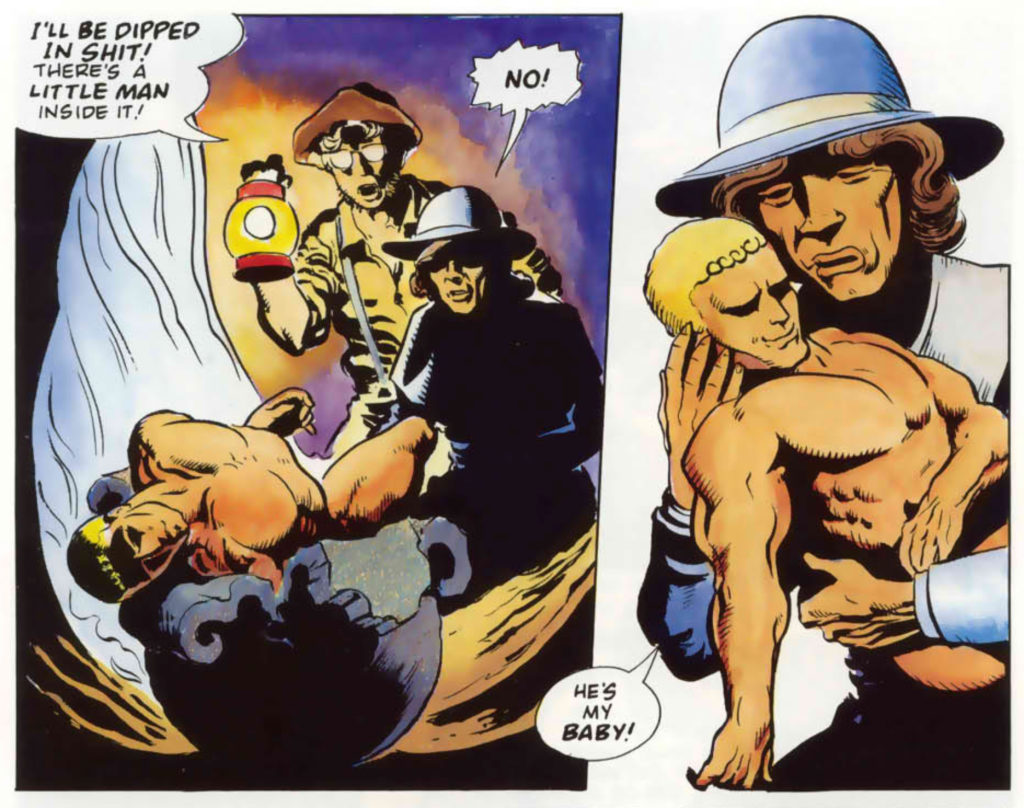
One of the wildest superhero narratives in comics is nearing its final act, after 36 years.
Comics legend Rick Veitch has been slowly unfolding his grand statement “The King Hell Heroica” in staggered instalments since 1990, starting with the dark satire Bratpack. The big overall story came to a halt back in the mid-1990s with only part of it done, but for the last few years Veitch has been picking it up and telling it exactly the way he’s always wanted to. There’s nothing else quite like it out there in superhero-land.
I’ve been a fan of Veitch’s work since his collaborations with Alan Moore and solo work on Swamp Thing (now also getting a well-earned revival of sorts). Veitch’s background was in underground comics and his demented, expressive cartooning always carried a rough-hewn, tactile presence.
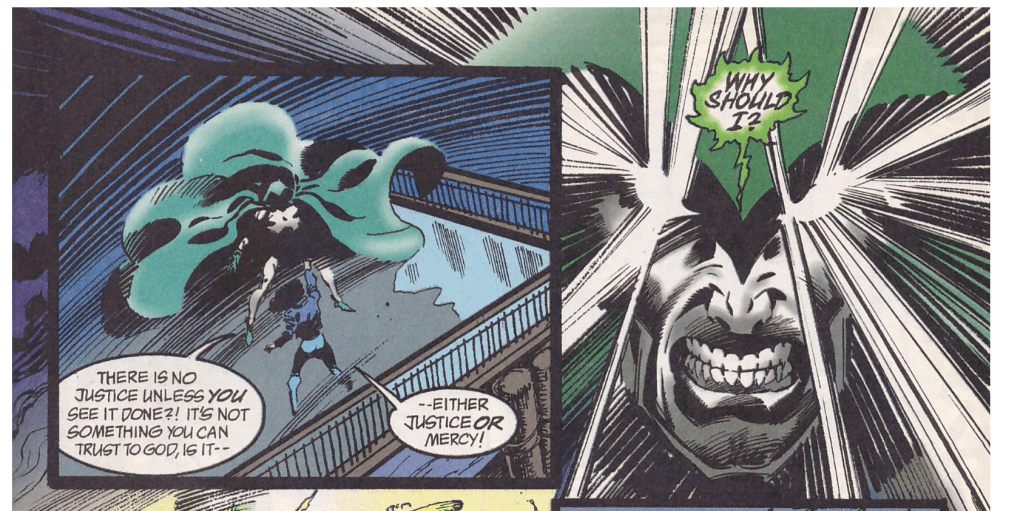
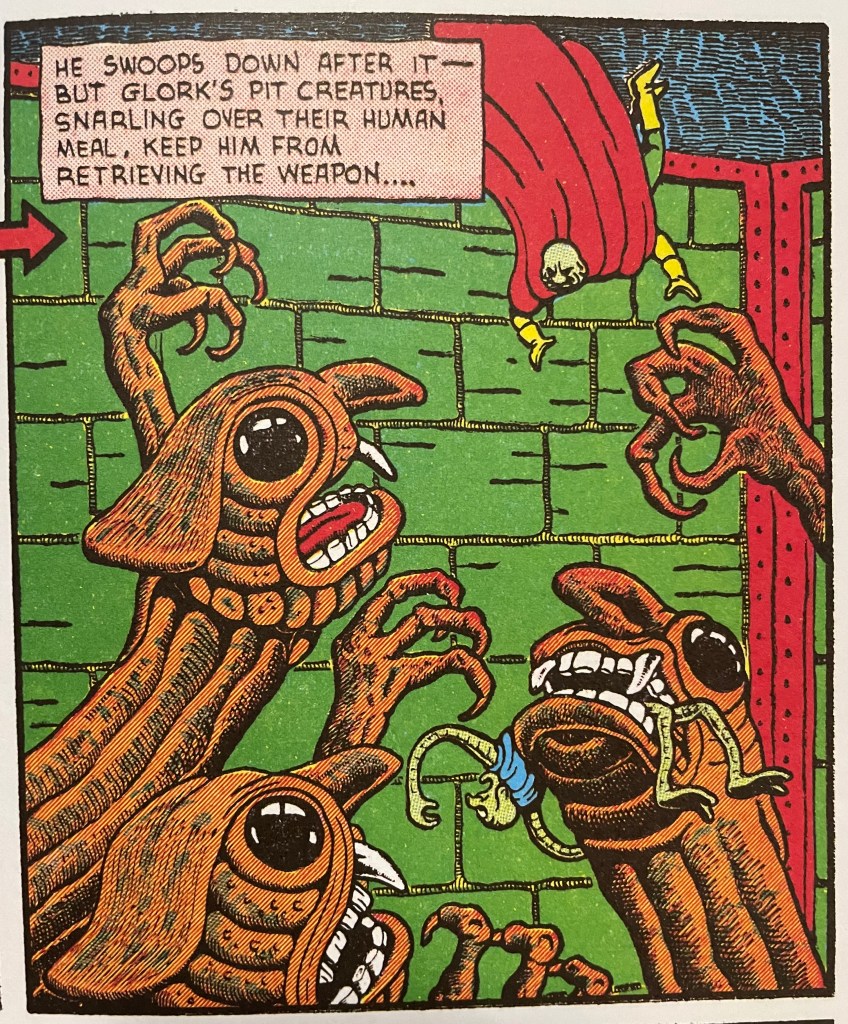
His filthy and funny Cold War superhero apocalypse The One for Marvel’s Epic Comics line blew my fragile little mind when it hit stands back in 1985. The One was a warm-up of sorts for the King Hell Heroica, which kicked off when Veitch’s still-boundary pushing miniseries Bratpack emerged in 1990. Bratpack didn’t hold back in its dark portrait of abused, wasted superhero sidekicks, and superheroes who were drug addicts, pedophiles and neo-Nazis. It’s a fantastic read that gets far sleazier and stranger than books like The Dark Knight Returns ever did.
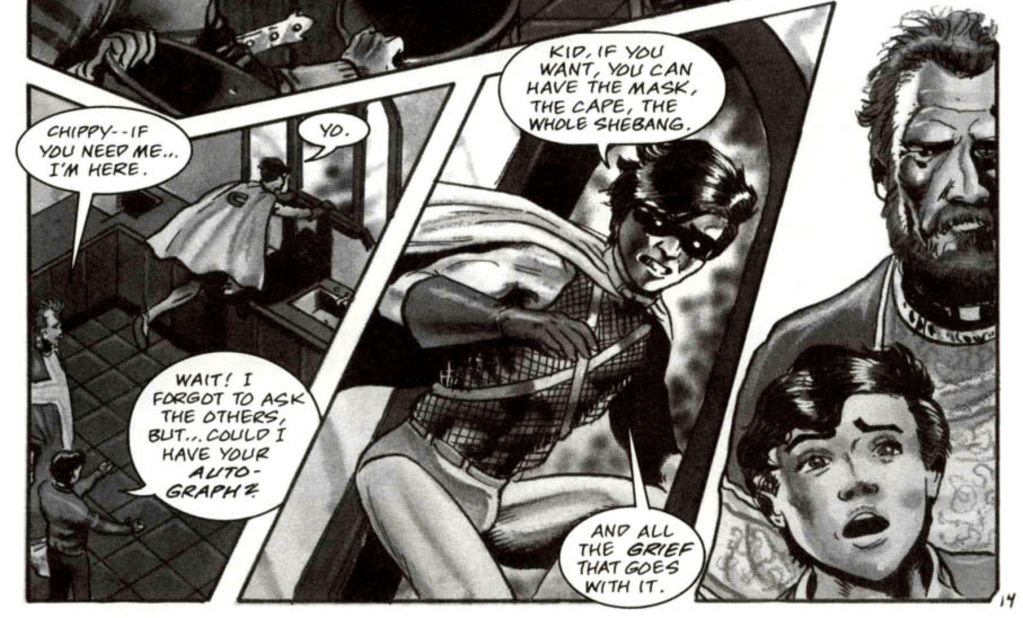
Fittingly, for this eccentric saga, it all started off with Bratpack actually being Volume 4 of 5 (shades of George Lucas!). Veitch first returned to the King Hell Heroica with 1992’s The Maximortal miniseries (which turned out to be Volume 1!), which dove into the Superman-esque mystery hero True-Man whose presence haunted Bratpack. For the first time we really started to see Veitch was doing something bigger than just naughty dark parodies of superheroes.
Unfortunately, The Maximortal miniseries then ended the story for years; even though Veitch laid out a complex 5-book plan, it seemed it would never be finished. But he brought it all back starting in 2017 or so, and it’s been remarkable watching this old narrative turn into something that’s still very relevant in our conspiracy-addled weird modern world.
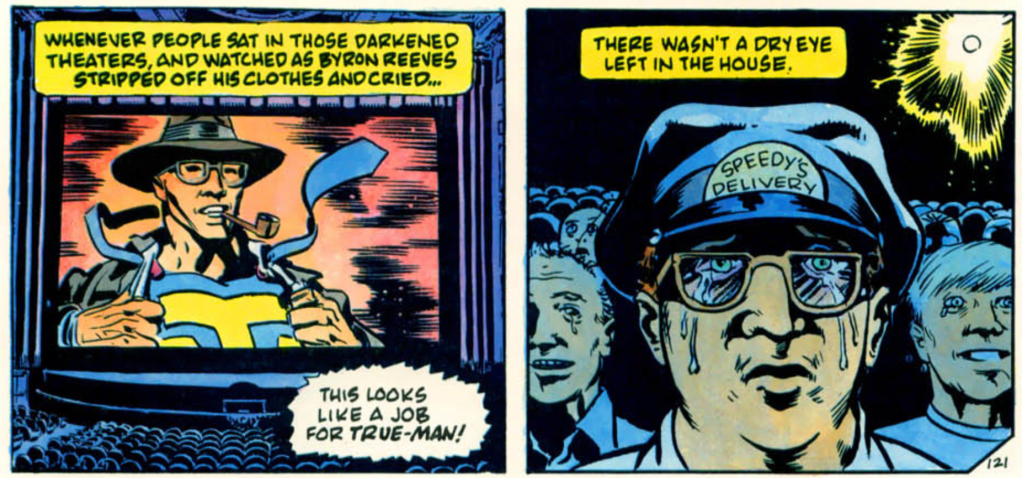
I can get behind the idea of returning to a comics narrative after a decade-long break myself, and Veitch has been hitting it out the park. He has been releasing chapters from Volumes 2 and 3 in nifty little 100-page annual print-on-demand editions, and is now just one book away from finishing them. Then there’s just the final volume of this long-gestating saga, Volume 5: Death of the Maximortal. In keeping with the timey-wimey weirdness of this tangled project, the first two chapters of Volume 5 were actually released as single comic issues as Bratpack/Maximortal Super Special way back in 1996 – BEFORE books 2 and 3 but after books 1 and 4. Lost yet?
Yeah, it’s confusing, but the cool thing is, as Veitch fills in the gaps of his magnum opus, it’s all starting to make sense – in a wonderfully shaggy-dog fashion, that is.
Veitch gladly embraces his underground roots with a bawdy, sometimes X-rated story that outdoes genre touchstones like Watchmen and The Boys in its sheer mad invention – there’s acrobatic sex with supermen, mass-murdering children and a big plotline involving mind-controlling fecal matter (!).
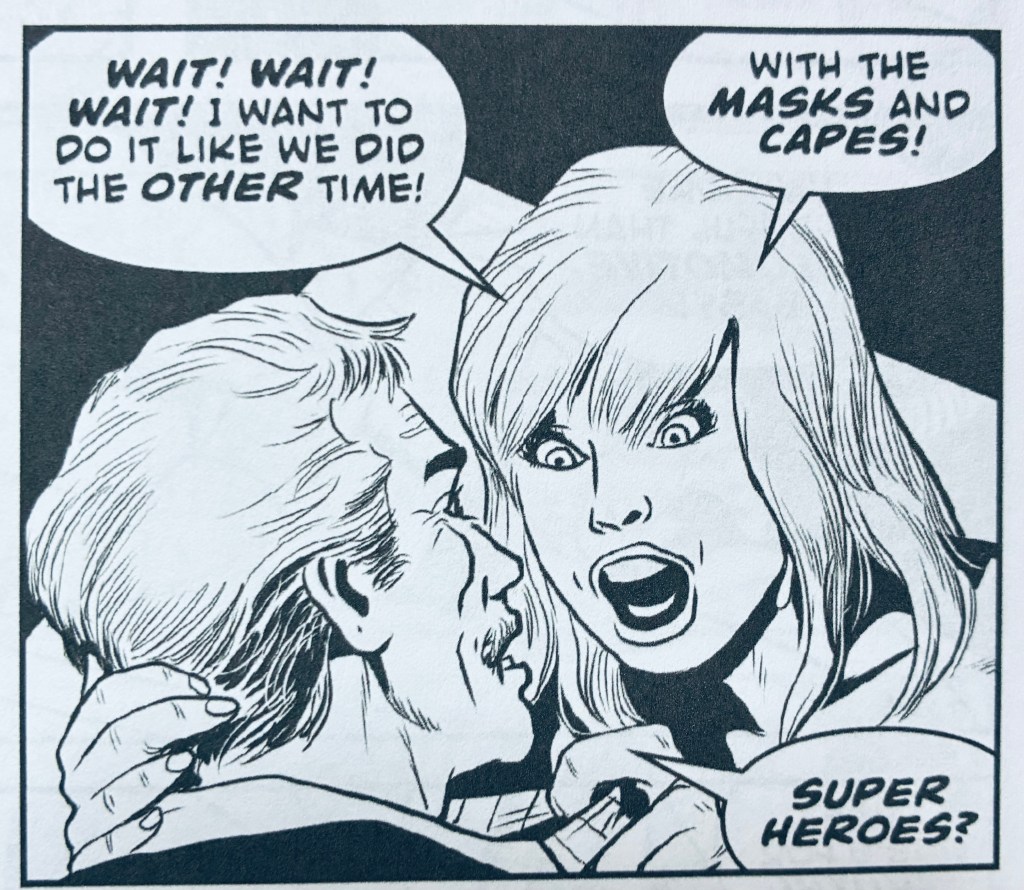
The “new” chapters Veitch has been unfolding have a different feel than Bratpack, with his art – mostly done digitally now – smoother and more polished, and the rawer, more energetic style of his earlier comics is missed a little bit. But the story has also broadened out to include dozens of cameos by actual historical and fictional figures – hello, Mad Men’s Don Draper! – and become a surreal, sustained comic romp.
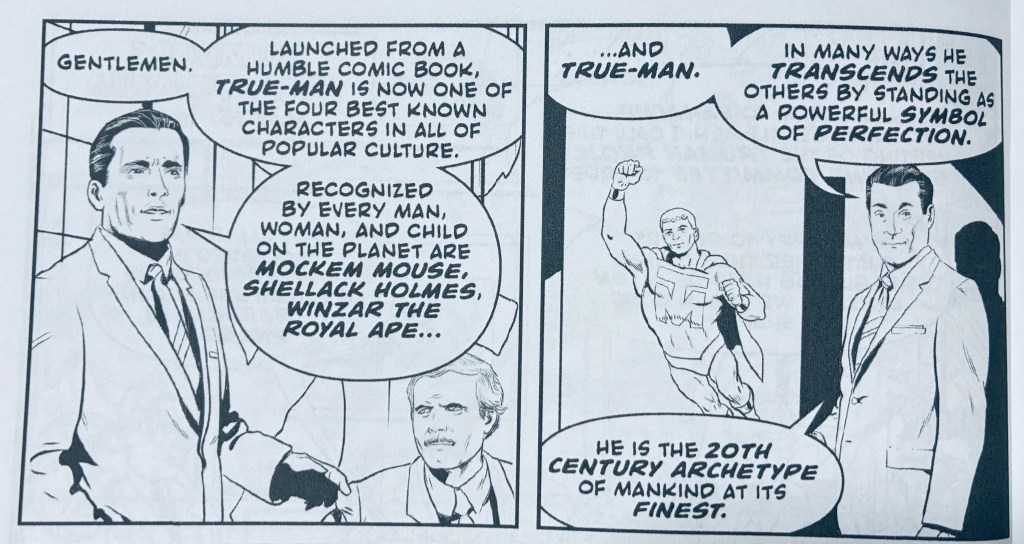
It’s become a tangled secret history conspiracy story of America’s hidden superhero cold war, and Veitch wraps in everyone from Jack Kirby to Jack Kennedy to Robert Oppenheimer to Muhammad Ali and underground comics legend S. Clay Wilson in his narrative. I’m a sucker for alternative histories and love how he’s tied all kinds of flashpoints in American history to the influence of True-Man.
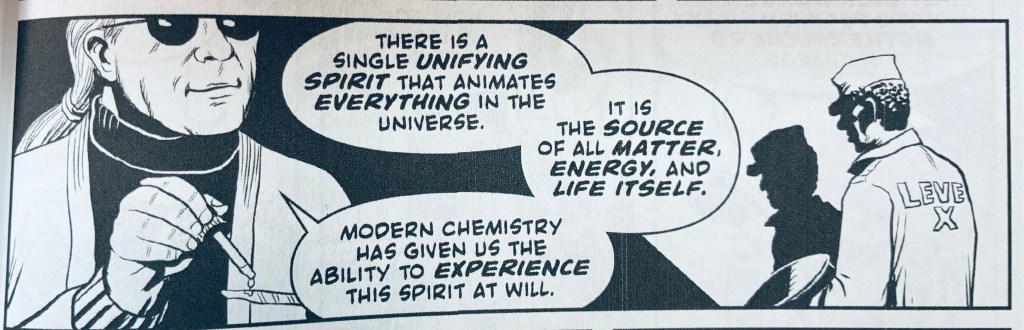
Despite hundreds of pages about him in the nearly completed first four books of the Heroica, True-Man himself remains an alien enigma – a blank slate template manipulated by us messy humans. While the King Hell Heroica narrative is full of ultraviolence and corrupt heroics, Veitch is also striving to say something profound about the spiritual nature of what a superhero might really represent for humanity.
The King Hell Heroica has been an incomplete puzzle for decades now, and I’m sure it’s changed some from what it was originally going to be way back in 1990 – Bratpack was somewhat rewritten and the ending changed after the original comics came out, for instance. “What’s great about print on demand is that it allows me to pursue my muse without having to think about any market at all,” Veitch said in an interview.
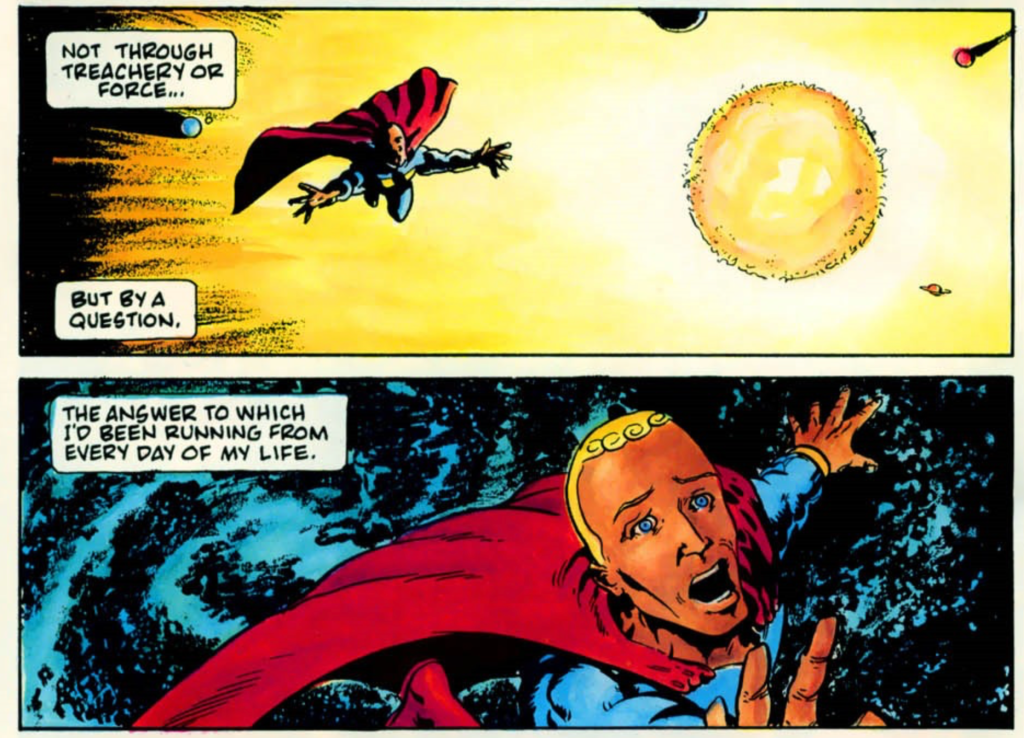
There is a risk it may all come apart in the last few hundred pages, of course – we’re just starting to see the seeds of the Bratpack cast of utterly debauched “superheroes” and their sidekicks enter the story, and the mystery of what exactly the aliens that kicked off the whole shebang are remains pretty opaque. It’s likely to get very meta, and very weird, knowing Veitch.
But to be honest, cold hard sense isn’t necessarily what I’m here for with King Hell Heroica. It’s a vibe that marries the irreverent curiosity of underground psychedelia with a thought-provoking exploration into the very idea of what superheroes mean.
Veitch is still an underground cartoonist at heart. Without a big publisher backing him or restricting him and banging away on his life’s work well into his 70s, Veitch is creating something not quite like anything else in the crowded world of edgy superhero deconstructionism.
I hope when it’s all completed and can be read straight through – maybe in the next year or two – comics critics will look back at what Rick Veitch has been trying to say these last 35+ years and give the King Hell Heroica the attention it deserves. It’s a wild, wild ride.


















 Nik Dirga