It’s been another rather turbulent week if you’re a bit of a presidential history and politics nerd, in case you’ve been hiding in a dark cave somewhere in the Andes. There’s nothing quite like getting a news alert about a presidential assassination attempt at 10.30am Sunday morning to quicken the blood.
So, haven’t had much time for my usual pop-culture meandering this week (I know, all three of my fans are sorely disappointed), but I have had a few pieces reflecting on the chaos for my day job over at Radio New Zealand:
I’ve monetised that nerdy niche American history knowledge to write lots of pieces over the years, although I’ve really tried to do less of that in recent times. I wrote a piece four years ago which it turns out was far too optimistically called “The last thing I’ll ever write about Donald Trump.” Hah, we were so young and innocent then. (Getting plentiful hate emails, creepy social media stalking and the like from T**mp fans after one piece also kind of cured me of giving hot takes.)
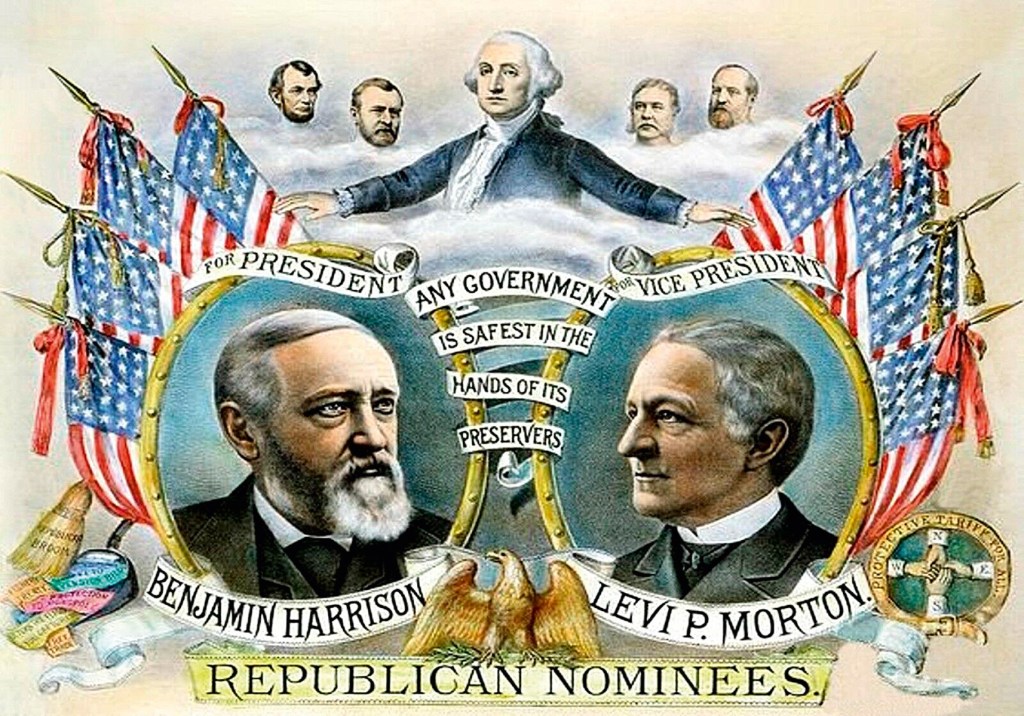
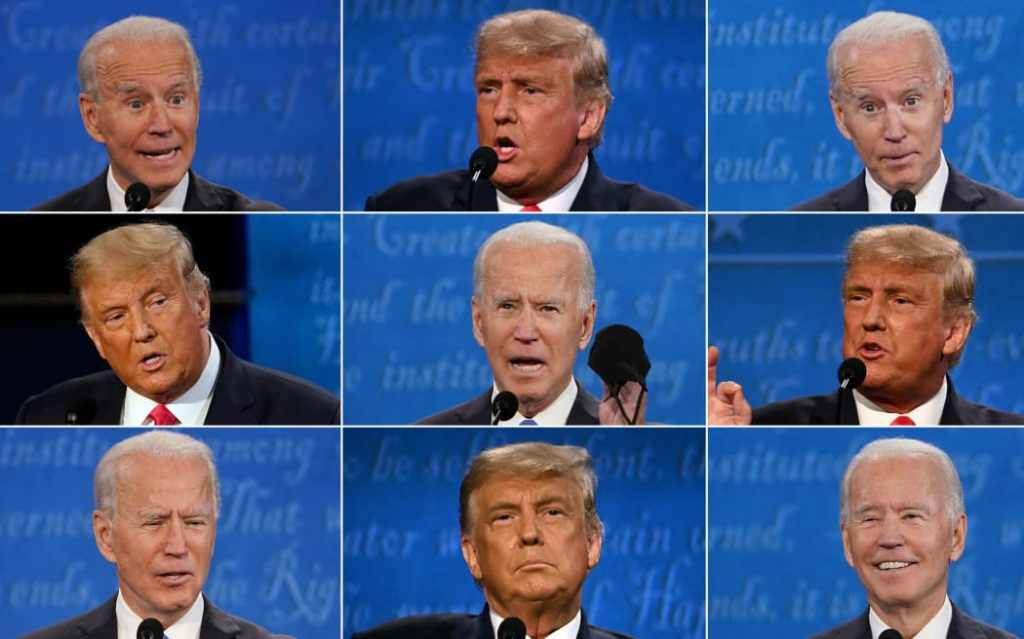
But, we live in unprecedented presidented times, don’t we? The first presidential debate of 2024 a week ago was a shocker – I wrote a preview, live-blogged the actual event and did a bit of a historical deep dive analysis afterwards all for Radio New Zealand. While live blogging it, I had the strange sinking feeling that I was watching history, rather than just another forgettable debate. Here’s what I wrote, with gratuitous arcane Benjamin Harrison and Woodrow Wilson references galore!
I’ve been watching presidential debates for 40 years now, ever since Ronald Reagan and Walter Mondale crossed swords … and I’m afraid President Biden’s performance was the worst I’ve ever seen at one of them.
Will Biden hold the course or step aside? The clock is ticking and just over the last week, while I’ve been on a lovely holiday down south, the narrative keeps changing.
I gave up on making presidential predictions after the 2016 fiasco, and am not entirely sure what the coming days will hold – but I feel 90% sure that if Biden stays in, he actually lost the election on that June evening long before the first vote. It doesn’t matter how well he’s done or not, because, I think, for far too many voters, perception is everything. As far back as last Christmas I did not think Joe Biden should have run again and this whole year has been like a slow-motion car crash, but the thing about car crashes is sometimes, they don’t go quite like you think they would.
So it is with America, shakily, here in 2024. I wonder what precedented times feel like.
…I’m bogged down in a pre-Christmas pile of actual money for my words work, so content here is a little sparse lately, but that doesn’t mean other people I know aren’t writing away!
Way back in the Paleozoic era of blogging, we used to link to each other all the time. These days, with social media becoming a bigger dumpster era fire than ever, it doesn’t seem like a bad idea to cut out the middle man again. Here’s what some friends and colleagues have been doing online lately that floats my boat:
* I’ve beavered away on the edges of music journalism for most of my career, and it’s grim times for it at the moment in New Zealand. My mate Chris Schulz has had a far bigger music writing career than I ever did, and he’s rightfully been on a bit of a crusade lately about how arts journalism is dying in Aotearoa. Case in point, when I moved here 15+ years ago there were still several magazines regularly covering NZ music and reviewing it. That’s all gone now. Can the internet save us, or something else? Schulz spoke to RNZ and others recently trying to draw attention to this problem and has been regularly banging the drum for music journalism on his own Substack – all well worth a read!
* I watched the first Doctor Who 60th Anniversary Special on the weekend and it was a delightfully silly romp, with David Tennant and Catherine Tate back for a run after an unfortunately kind of dire period for Who. Jodie Whittaker being the first female Doctor should’ve been a groundbreaking moment, but her performance was swamped by a lot of truly terrible writing, insanely convoluted plots and overacting, to the point where I only watched about half her episodes. (I also never want to hear the phrase “fam” again.) I thought about writing about why even though I didn’t grow up with the Doctor, I’ve grown to dig him ever since wonderfully eccentric Christopher Eccleston came along as Doctor Number Nine in 2005. But I realised one of my best pals is not only the biggest Doctor Who fan I know, but quite possibly the biggest Doctor fan in all of New Zealand. Let friend Bob tell you 101 reasons why Doctor Who still rules after all these years. I’m hoping that the excellent-looking Ncuti Gatwa coming up as the Fifteenth (!) Doctor leads to a bold new era for the good doctor.
* So New Zealand had an election about six weeks back, and it’s taken that long for coalition negotiations to settle on the new government, which looks to be the most conservative we’ve had in well over 20 years. You’ll find hot takes, angry takes, gloating takes all over the place about that, but I want to single out Susie Ferguson’s fantastic analysis piece at RNZ that zooms in on one Auckland electorate won by a libertarian/centre right third-party candidate, and why it actually proved that America-style bible-thumping theocratic conservatism has yet to really work in New Zealand (which, IMHO, is a very good thing). Go read: The meaning of Tāmaki – the most fascinating election race
So we’ve got an election coming up here in about 8 weeks, which will determine who will run New Zealand for the next three years. Right now, multiple polls seem to indicate it’s still quite a toss-up between the current, left-leaning Labour government seeking a third term, and the more conservative National Party which led the country from 2008 to 2017. I’d hesitate to bet on the results on October 14 at this point.
But as imperfect as it all is, as I’ve written about before, I still enjoy voting in our Mixed Member Proportional or MMP Parliamentary system much more than I ever did in the American system. There’s simply much more choice to a system where five or six parties have a good chance of making into Parliament and having a voice in government.
Here, you vote for both your local electorate candidate AND a separate party vote, meaning I could vote for a National local candidate but give my party vote to the Greens or somesuch. If a party gets 5% of the vote – a fairly high threshold to meet which rules out true fringe parties – they’ll get into Parliament, or they can also get into Parliament by winning a single electorate.
Smaller parties matter more here, and that’s something I appreciate. While National and Labour roughly remain the biggest gorillas in the jungle there’s a lot more shade on the sidelines, with the progressive Green Party, the indigenous rights Te Pāti Māori, the libertarian leaning ACT and the kinda nationalist populism of New Zealand First. Toss in a whole pile of super-minor parties – this year, an awful lot of the conspiracy / “freedom” / anti-vaccine crowd have formed conflicting tiny parties with hopes of getting in there somewhere – and you’ve got quite a stew to pick from.
Unlike in the US, where 95% of the time any vote for a candidate who’s not Democrat or Republican has zero impact, here, the smaller parties can build up enough steam to get a voice in power. The Greens and ACT, the two largest of the smaller parties, have yet to run the country but they’ve both been part of governing coalitions helping set the agenda for the nation.
I’m not saying I agree with all of these parties myself but I like the broader picture it paints. Look at America where, basically, you’re either forced to vote for a Democrat or a Republican to pick someone who’s going to win (independents do exist, here and there, but they have yet to make any kind of major impact on the national scene). On the state level, state legislatures are increasingly becoming redder or bluer. It’s a recipe for legislative overreaching, dictatorial heavy-handedness and corruption, IMHO.
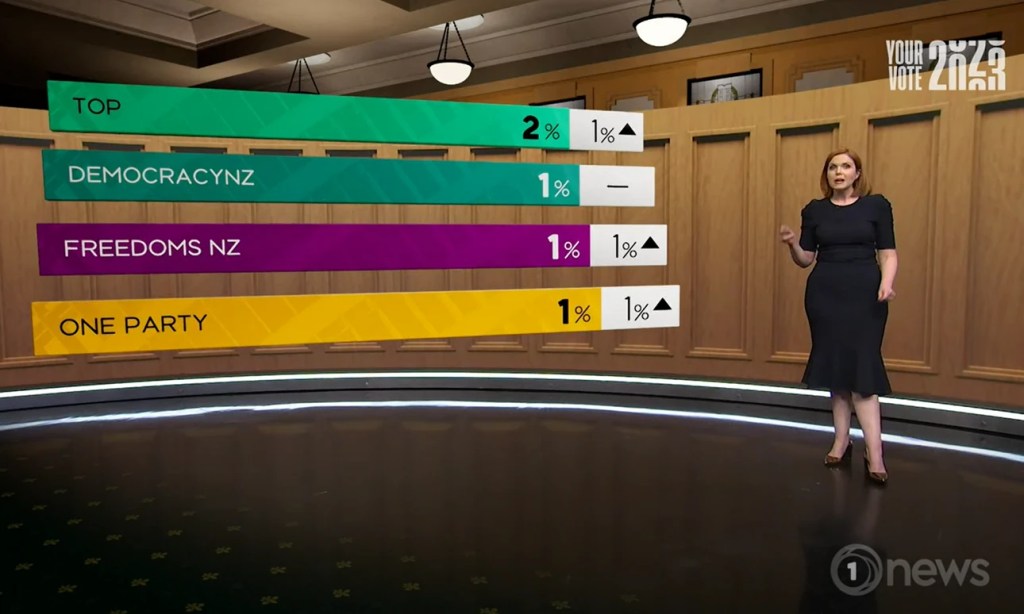
Our system is hardly perfect, and with the creeping craziness and political swerves the last few years have brought I don’t imagine a lot of people will wake up super happy in New Zealand on October 15. But I do just like seeing a lot more colours on my polling and election graphics than you ever do in the USA, because life really should be about more than just blue and red.
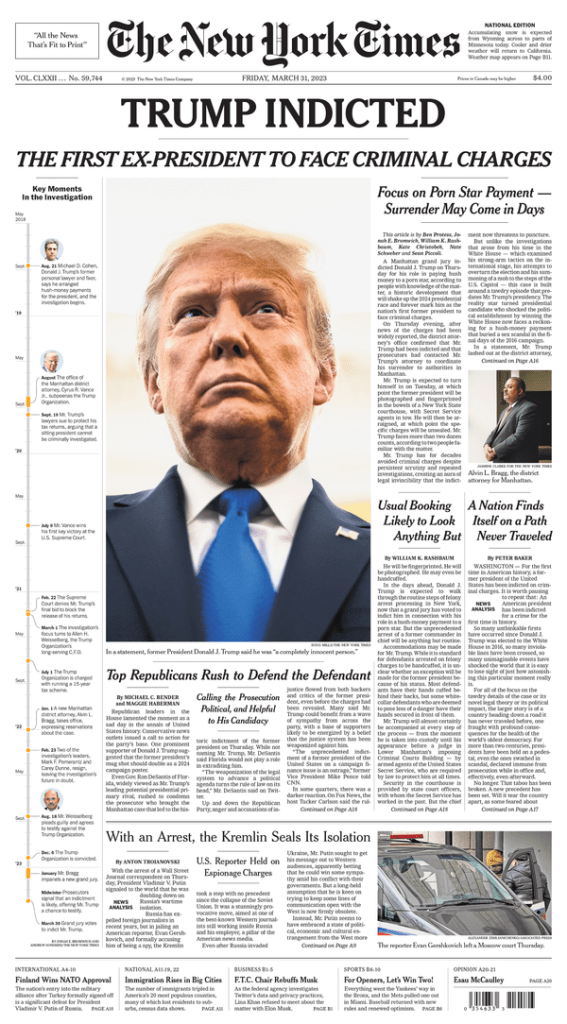
… I started to scribble a post about the first criminal indictment of an American President in history, about the seamy grifting, decades of corruption and braggart arrogance that brought everything to this point, but honestly, I’m sick to death of that idiot, and you probably are, too, and at this point I am utterly baffled, to the point of incoherence, at the notion that any sentient human being on the planet actually wants this undead ghoul, this endlessly returning shambling mass of all America’s worst and darkest instincts, this craven sack of nihilistic empty ego, to ever come anywhere near public office again.
Like, haven’t we all had enough?
I started to write something, anyway, and then realised that pretty much everything I wrote back in late 2020 is still very much true today, only perhaps more so. So read that instead:
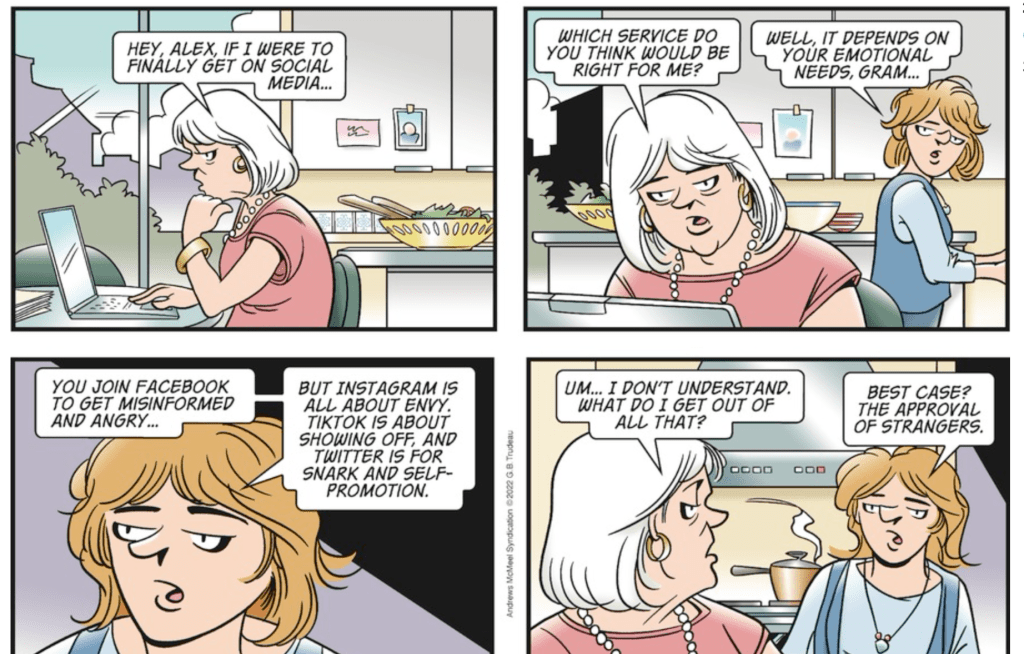
I’ve written before about how I miss when newspaper comics were a bit more central in pop culture. And few have been more topical and controversial than Garry Trudeau’s venerable daily Doonesbury, still going strong, if less frequently, after 50-plus years.
For nerdy kids like me who grew up reading the comics pages and scouring thrift shops for old paperbacks, Doonesbury was our political education. The first Doonesbury book I remember picking up was 1981’s “In Search of Reagan’s Brain,” a pointed if often mystifying to me satire of the then-new US President’s penchant for vagueness and nostalgia. I barely knew who Reagan was at my tender age, but something about the complicated, arcane world of Doonesbury made me want to get the joke.
Later, I bought classic treasury collections like “The Doonesbury Chronicles,”which awakened me to strange early ‘70s concepts like communes and Walden Pond, or to Nixon and Ford and the Watergate figures. There were the just plain funny strips, but then there were the ones that made me want to learn more to get the references.
Pre-internet, the past was a rather mysterious country, and to be honest, my history classes that I recall of primary and high school education always seemed to focus on the really distant past, on Founding Fathers and constitutional principles and occasionally something as fresh as World War II.
Little was taught about injustice, or racism, or the many wrongs and missteps in America’s long, tangled history. Doonesbury had Black, Asian and gay characters long before it was common. Through Doonesbury, I learned that America was always many things at the same time, and the obscure political and cultural figures of 1975 and 1984 it stuck in my head made me want to learn more about it all in my own time.
But Doonesbury would never have lasted if it was just a blithe satire of the news of the day, and it was the characters who kept me coming back for more – everyman Mike Doonesbury’s journey from idealistic student to ‘80s ad man to ‘00s digital hipster to today’s almost senior citizen, football player turned wounded veteran B.D., eternal hippie Zonker, Hunter Thompson stand-in Duke (who became rather tiresome through overuse), or fiery campus protester Mark’s long journey to coming out.
Doonesbury always felt kind of like the story of a family as it journeyed through five decades of America, and that human touch is what made me want to learn more about the years it spanned.
Doonesbury is still going 51 years on – longer than Schulz did Peanuts now – although it’s been new strips on Sundays only since 2014 or so which makes it feel like it’s entered a slow final victory lap around the cultural arena. Trudeau’s been viciously funny with the Tr**p years but it’s a lot harder to pay attention in the Age of Outrage. Mike and the gang are still around, and they’ve got children, and their children even have children as Doonesbury turns sweetly generational.
I guess I know more about how the US and the world works now in my own encroaching middle age, and there’s certainly no shortage of places one can pick up history and knowledge now, but I’ll always kind of long for the days when Trudeau’s characters were my newsprint guides to the follies and foibles of the wider world.
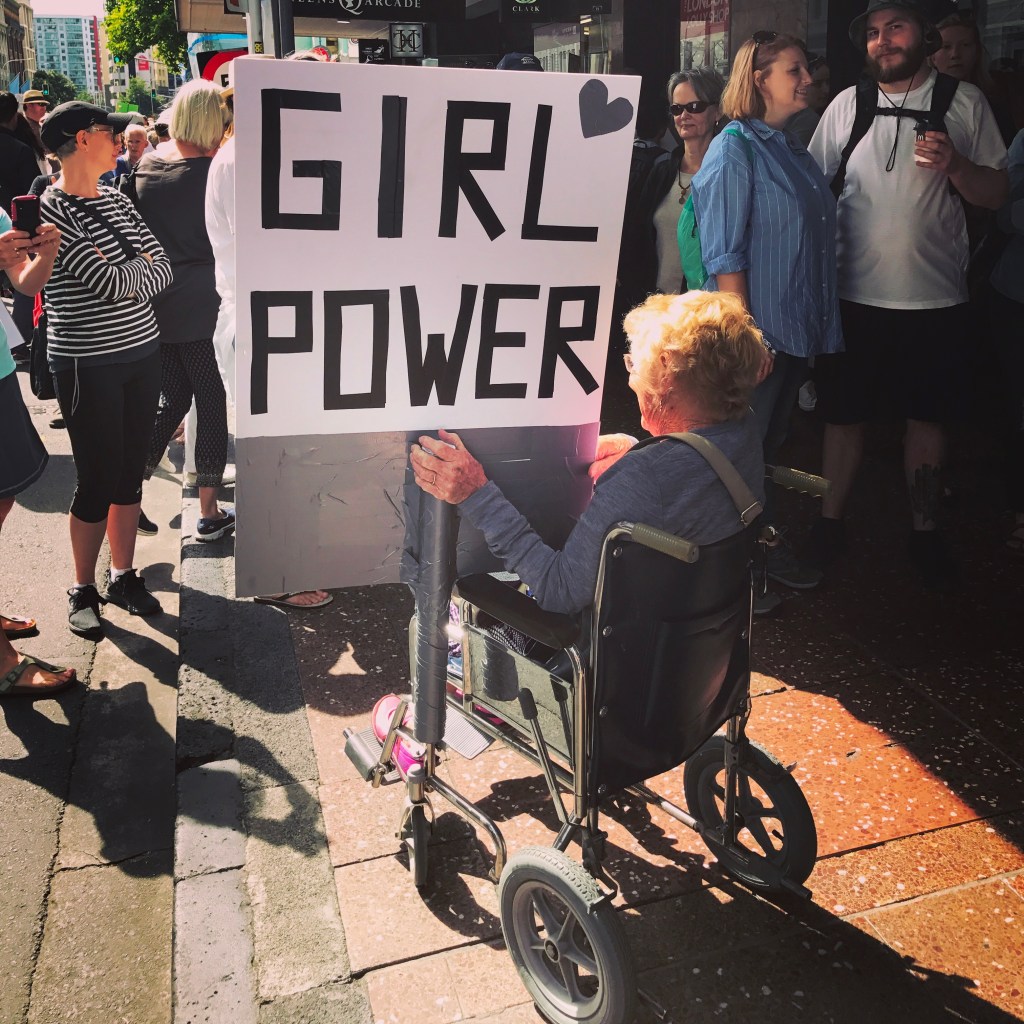
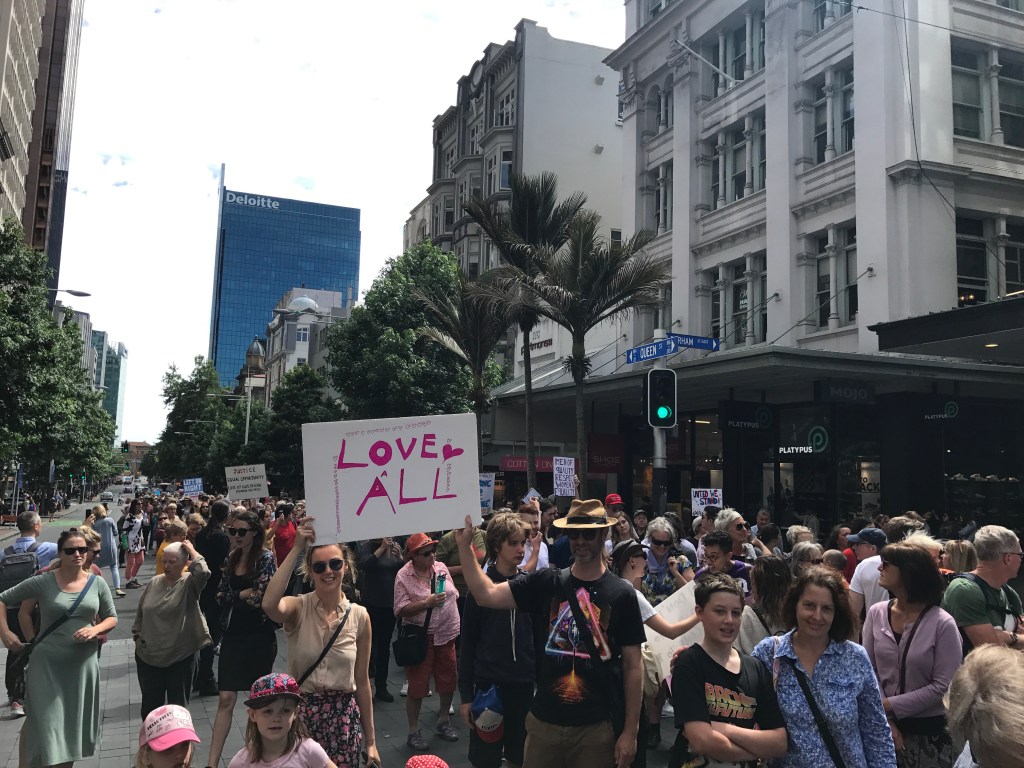
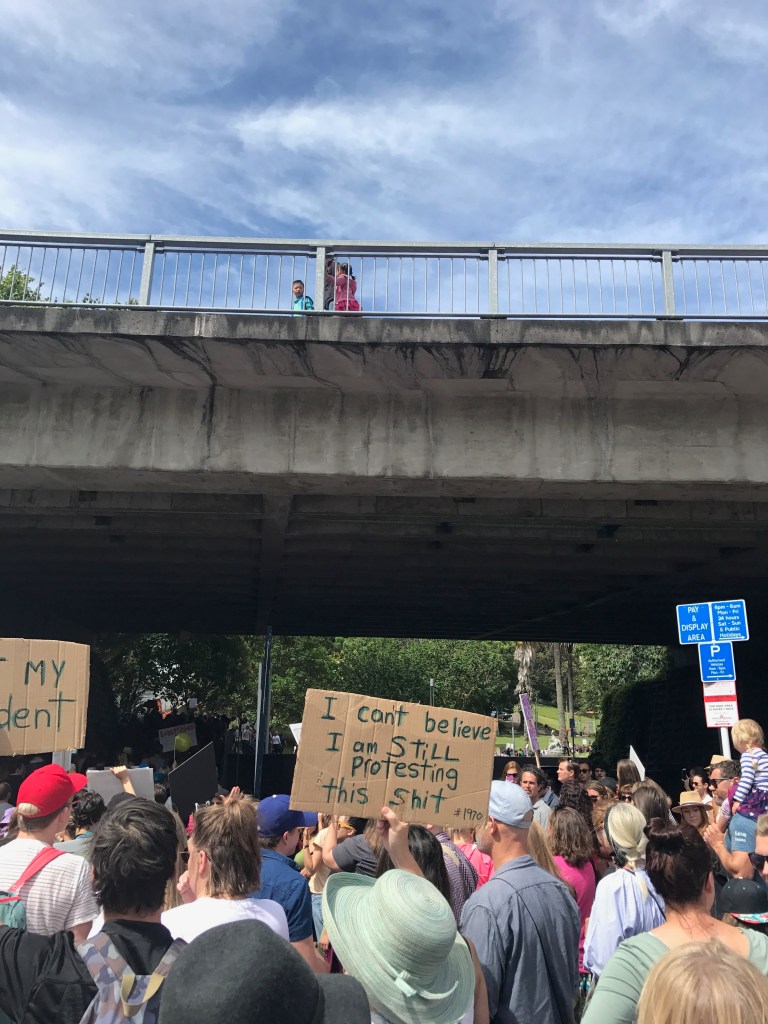
I took the picture of this woman at the right at the march in 2017. I wondered this morning where she is today, and I hope she’s OK and still around to see things have gotten better. That New Zealand’s Prime Minister who walked right along with us that day was re-elected in a landslide a few weeks back, and that America is about to welcome its first woman Vice-President.
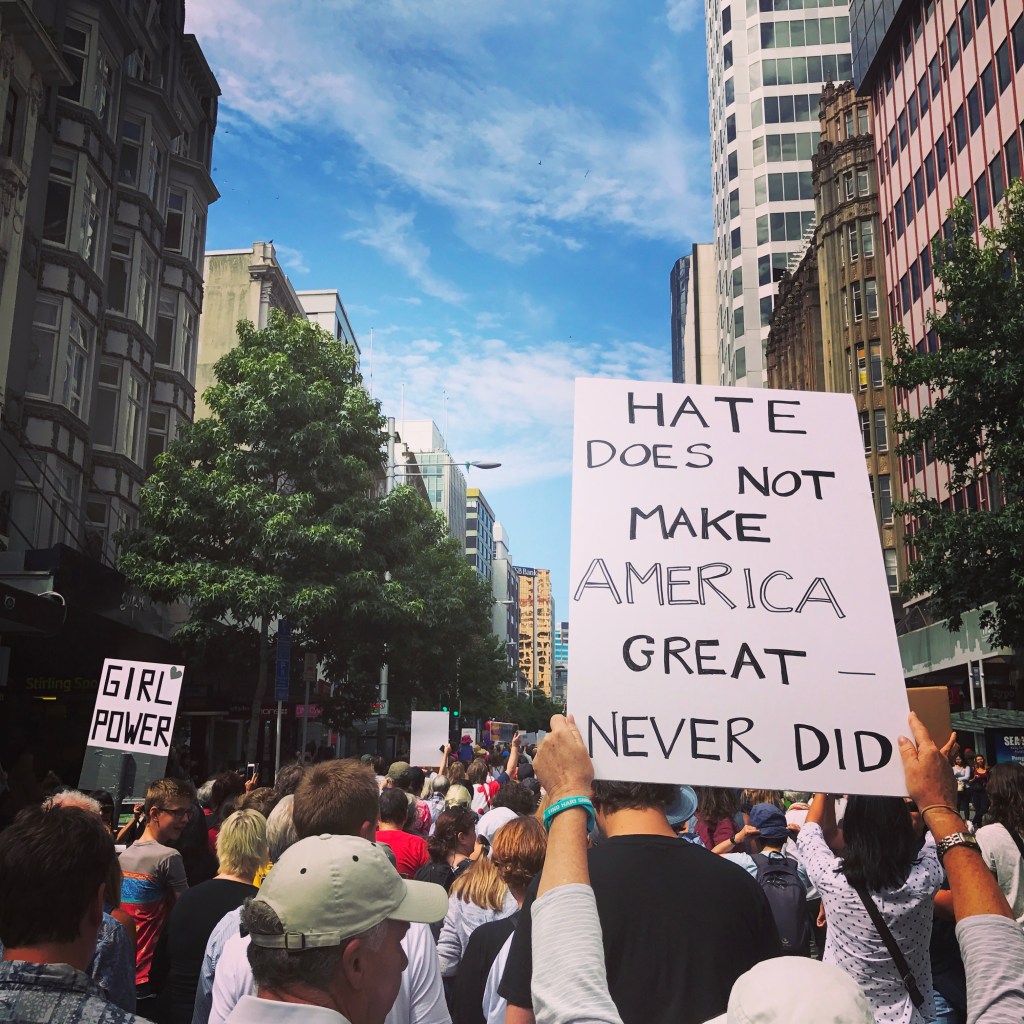
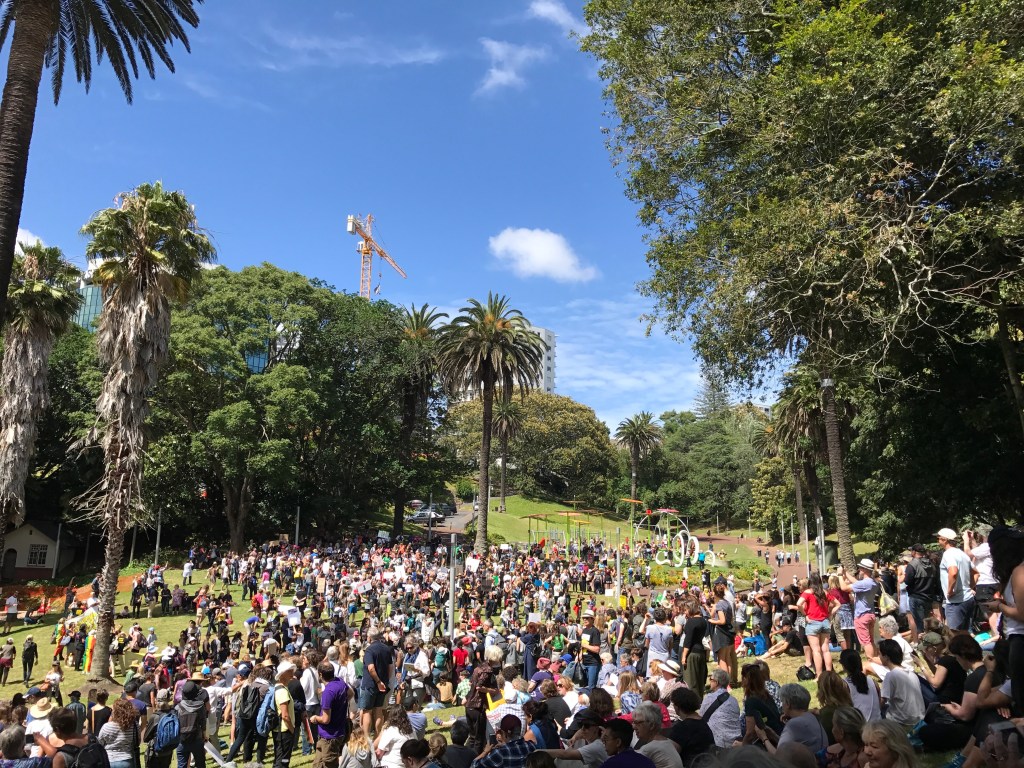
There were thousands of people that day – woman, men, children, young, old, of all races – all united in having a say over the very grim way the world seemed to be turning after Trump’s election. It felt good, damn good, to be doing something to soothe the impotent anger I felt after what happened in November 2016, even if it didn’t change the world, even if it didn’t really “matter.”
Living over here since 2006 and looking back at America has been strange. I have felt like an observer in a distant outpost looking back at my home sometimes, trying to read the smoke signals.
I lived in New Zealand through the entire Obama presidency, where I felt like America was making bold steps toward a better world, and now, I’ll have been here through the entire Trump presidency, when everything I thought about the Obama years turned out to be a bit premature. I’ve written about politics in America from my NZ perspective many times, and about Trumpism. I’m still not sure I understand it at all.
I remember marching in Auckland in January 2017 – my son, then 12, was a good foot shorter than he is now. We didn’t make a sign, which I kind of regretted. It felt good to be in a crowd – a feeling that didn’t carry any of the fear and worry it does in 2020 – and to raise our voice a bit. I hoped someone would listen to us.
America listened, or at least, enough of them to make it matter. The result of this election was wayyyyyyyy too close for my liking, and a disturbing reminder that the divide in America is about way more than the current President. I want to feel anger at people who voted for him again, but I also think about Biden’s words that they aren’t the enemy. Maybe the tone really does matter more than the clickbait, the retweets and the ratings. I don’t know how things will go under President Biden, but I do know that not having the so-called leader of the free world giving constant airtime to the worst and pettiest of our feelings will be something better than before.
At times in life, that’s all we can hope for sometimes, is the better than before.
I feel like we got it today. There’s dark days ahead and trouble to come I’m sure, but today, it’s better than before.
Hello, apparently there’s an election going on somewhere or something. I’ve been keeping busy with a few freelance think pieces this week for my friends over at Radio New Zealand:
First up, what’s it like to vote in not one but two national elections just a few weeks apart? And what can the US learn from New Zealand’s election last month? Here’s my take and what I desperately hope is the last piece I ever write involving a certain 45th President of the United States:
But wait! There’s more! The big story everybody was talking about a day or two before the latest several big stories was the nomination of Amy Coney Barrett to the US Supreme Court. Also for Radio New Zealand, I wrote about what it all means and how it’s a worrying sign of where America’s head is at these days:
I don’t know about you, but I’m having a little trouble concentrating as 2020 rumbles and trudges its way to the grim season finale. As a dual citizen of the US and New Zealand, I’ve got not one but TWO national elections I’m voting in this year, so everything feels soaked in political arguments and campaign slogans. My brain feels perpetually overstimulated and understaffed.
It’s hard to write about comics and music and movies and such when everything seems swamped by politics. This ain’t a political blog, but like everyone else, I’m sucked in by the tenor of the times. In search of answers for the current craziness, I’ve gone back in time more than 50 years, re-reading Rick Perlstein’s masterpiece “Nixonland,” a deep dive into American politics between 1965 to 1972. The groundwork for Trumpland begins here.
“Nixonland” is the second of a series of four massive tomes Perlstein has written examining the world of American conservatism from Goldwater to Reagan. Packed with detail, yet in crisp and clear prose, the books form a definitive examination of the duelling forces in American life that continue clashing to this day. Lots of talking heads bang on about how America has never been more polarised than today, but that’s not exactly true. Read about the clashes at the Democratic Convention of ’68, the riots and protests in Watts and Newark, and you see a pattern that just keeps repeating in America. Nothing is all that new, it turns out – it’s just the stage dressing that changes.
There was more than a fair bit of turbulence in the America of the late 1960s, between Vietnam, the civil rights struggle, the rise of feminism and generation gaps. You can’t point for point compare then to now – instead of a war everyone’s arguing over, we’ve got a virus that’s turned bizarrely political – but the fundamentals of a nation that’s always been torn between liberty and conformity, “freedom” and authoritarianism, are there. For most of the last 60 years, America has been a conservative nation with brief spasms of progressiveness. How it winds up in 2020, nobody knows.
“It was coming to this – insurgents and patriots paying good money to watch the other side silenced and humiliated,” reads a passage in “Nixonland.” Sound like social media, anybody? The biggest difference between 1970 and 2020 is that an entire industry of compliant, biased media and social media silos have created a perpetually self-congratulatory echo chamber that ensures you can pick your own reality. Previously a President could have his approval rating drop down into the 20s, but these days, the echo chamber ensures that even the worst of Presidents won’t drop below a certain level of approval.
What “Nixonland” shows us so inexorably is how America keeps wrestling with the same demons over and over again. This is nothing new – as F. Scott Fitzgerald wrote in “The Great Gatsby” nearly a century ago, “So we beat on, boats against the current, borne back ceaselessly into the past.”
Life is objectively better for many people than it was 100 years ago in America, of course. America inches forward – and a little too often, also stumbles backward in the same motion.
America is still living in Nixonland, 25 years after his death. Hopefully one day it can fully break free of it. It’s gonna take a lot more than one election to do that, though.







 Nik Dirga