Movie review: Superman 2025 soars

There’s an impending natural disaster. There’s two countries going to war. There’s a rich, arrogant billionaire tech bro who wants to rule the world. This sounds like a job for Superman!

Director James Gunn’s new reboot of Superman brings some much-needed compassion and good humour back to the Kryptonian superhero after director Zach Snyder’s overly grim approach to the character in The Man Of Steel and Batman V Superman

Forget the same Super-origins we’ve all already seen before – baby rocketed away from dying planet, growing up on a farm in the Kansas wheat fields, yadda yadda – Gunn drops us immediately into the middle of the action with a story that starts at full tilt and rarely lets up for two hours. This colourful, pleasantly weird epic is just unpredictable and refreshing enough to stand out from the sea of superhero content. 

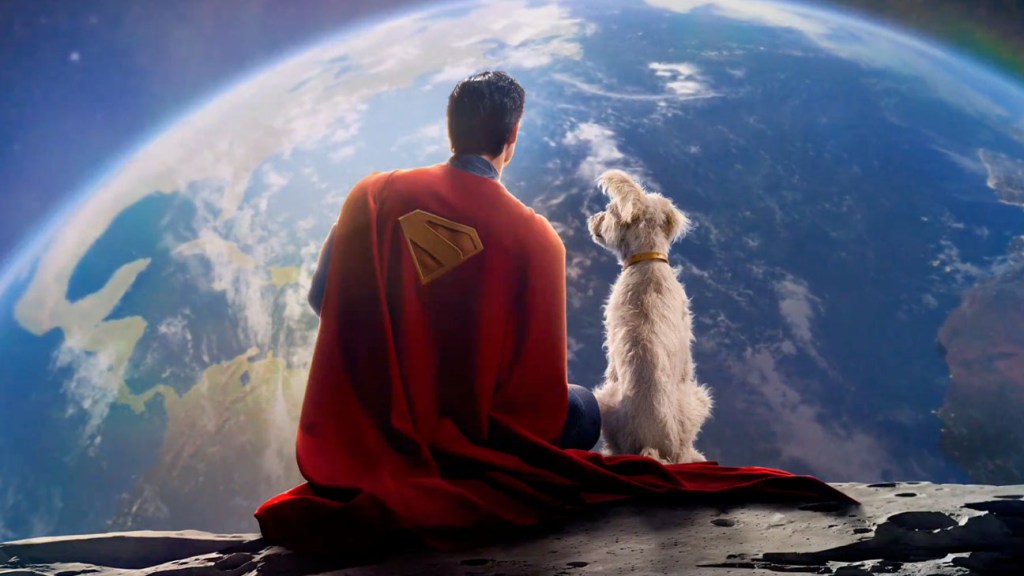
Oh, and there’s a dog – a very good boy by the name of Krypto who very nearly steals the movie right from under Superman’s cape. 

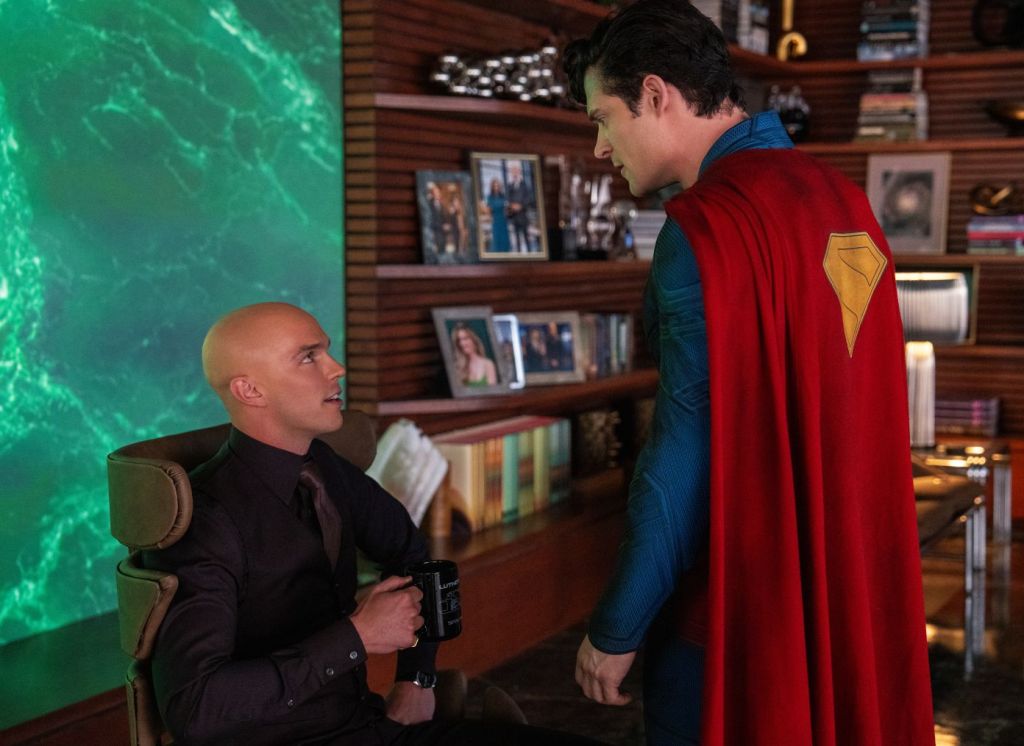
It’s a tangled plot that starts out with the aftermath of Superman (David Corenswet) attempting to stop a war and spins into a broader tale of whether this alien immigrant from another world can truly be trusted. On-and-off girlfriend Lois Lane (a fierce and funny Rachel Brosnahan) is trying to figure out their relationship, while scheming Lex Luthor (a terrific scowling Nicholas Hoult) has gathered some bad guys and sets in motion a plan that aims to defeat Superman once and for all. 

Gunn had already made a splash on the comics movie scene with his quirky Guardians Of The Galaxy trilogy for Marvel and his giddily gory and over-the-top The Suicide Squad. He impressed DC Comics so much they hired him to shepherd their whole rebooted universe of screen projects, in a course correction after movies like Justice League and The Flash underperformed. 

The 2025 Superman is a comic book movie that embraces a fundamentally goodhearted view of the world, no matter how many terrible things happen, and understands what makes Superman work. Corenswet makes a sturdy, likeable Superman, whose fundamental guiding principle is helping others. He’s all about the art of being kind, while Luthor’s preening ego only cares about envy, power and control. 
Gunn channels some of the charming energy of Christopher Reeve’s seminal 1970s and ‘80s Superman films, especially with repeated riffs on that iconic John Williams theme music – still the best superhero movie score of all time. He’s not afraid to get goofy, and embrace the colourful eccentricity of the original comic books. 

Fans who think comic movies should always be super-serious and “realistic” may be turned off by Superman, but a plot that features robot sidekicks, shapeshifting element men and shimmering cosmic scenery feels truer to the wild world of the original Superman comics. A few years ago having that super-dog Krypto in a movie would’ve been seen as campy. These days, it feels like a welcome relief. Why can’t a dog be a superhero, anyway? 

Superman sets up yet another cinematic universe, but there’s a deft touch to the way Gunn introduces a pile of other characters from ratbag Green Lantern Guy Gardner (a hilarious Nathan Fillion) to steely Mr Terrific. By avoiding the well-worn origin stories here this universe feels a bit more lived in. Comics fanboys will be delighted to see even characters like reporter Jimmy Olsen (a fun Skyler Gisondo) get a moment to shine.  

Still, Superman is, intentionally, rather overstuffed. Sometimes Gunn threatens to lose control of the narrative, and a few characters get short shrift – I would’ve loved to see a little more depth to Corenswet’s Clark Kent or some of his Daily Planet co-workers. Yet most of the dangling pieces come together nicely in an action-packed conclusion that features plenty of city-smashing chaos without the nihilistic undertones to it all that 2013’s Man Of Steel had. 

Most importantly, the “man” in Superman is key here. Too many Superman movies starting with 2006’s misfire Superman Returns have focused on the melancholy godlike figure soaring above it all, forever apart from the rest of us. Corenswet’s relaxed, genial Superman bleeds a lot and makes mistakes, while never losing his cheery optimism for long. 

This is the first Superman movie since 1981’s Superman II I haven’t felt a vague sense of disappointment with over compromises or inept plot decisions.

Of course, the usual outrage merchants online are already banging on about how Superman has apparently gone “woke,” as if he hasn’t been fighting bullies and haters for the past 80-plus years. Sincerity is a much better superpower than cynicism, isn’t it? 
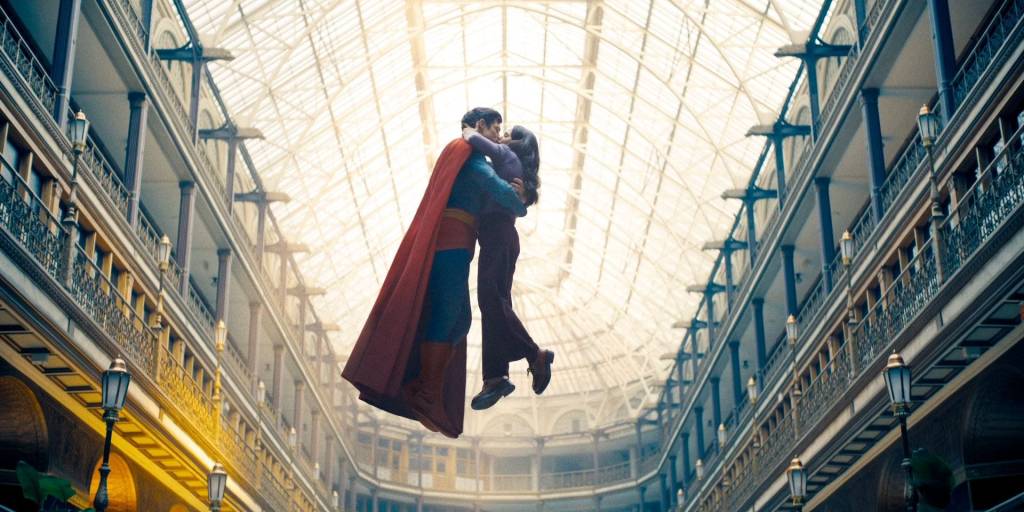
For a while, Superman’s reputation has suffered in comparison to edgy heroes like Wolverine, Deadpool or Batman. Is Superman still cool? Sure, he may be a little corny, a little idealistic, but he also refuses to back down and hangs out with an awesome dog. 

I know which hero I’d rather have in the real world any day of the week. 

*This review appears in a slightly different form over at my day job at Radio New Zealand!

Meanwhile, elsewhere on the internet…

Golly, but I’ve been busy writing everywhere but this blog lately.

I’ve been doing a lot more assorted fact-checking and explaining work for cash money so it’s time for another roundup of stuff what I wrote:

Just in time for the hopefully good new movie opening this week, I did a recap for Radio New Zealand on Superman’s best (and not so best) moments on screen to date and some comics recommendations!

Everything you need to know about Superman before his latest movie

Over at AAP FactCheck, I did a deep dive into the disturbing and increasingly surreal world of bizarre AI slop infesting your social media feeds. The “conjoined twins celebrity scam” posts are the ones that finally broke my brain for good, I reckon:

Junk accounts serve up fantasy tennis tales

For RNZ, I’ve also done a few long explainer pieces lately:

Did you know US Customs can legally search your phone? Here’s what you need to know about it

And finally pivoting back again to the murky world of AI and how it’s slowly eroding all that is fair and decent on social media, here’s another explainer:

How to tell if an image or video has been created by AI – and if we still can

Featuring my very own test AI-generated slop image that I was particularly proud of:

Don’t always believe your eyes, is the moral of the story.

Unless it’s something on this website, which in that case is totally 100 percent legit and doesn’t need factchecking.

Now if you’ll excuse me, I need to go and assist in the emergency conjoined twin surgery for my good friend, celebrity Taylor Swift.

Why I’ll miss Superman and Lois, the best comics adaptation going 

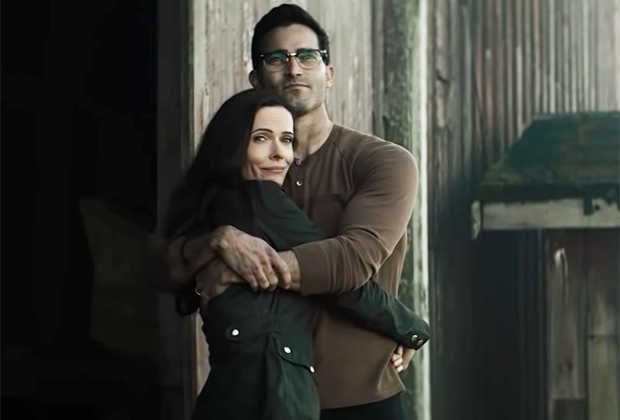
The best superhero on screens lately hasn’t been anywhere near movie theatres – for me, it’s been Tyler Hoechlin’s firmly joyful, human portrayal of Clark Kent in Superman and Lois, which ended its four-season run this week. (Some mild spoilers ahead!)

I’ve been a big fan of this series since it kicked off and if anything, in its final days it got even better. Unlike the cluttered, overstuffed recent Marvel Cinematic Universe productions, where everything has to lead to the next thing, Superman and Lois has kept its focus relatively intimate, leveraging a smaller budget as best it could to deliver superhero action with a lot of heart. Unlike The Boys or other edgy shows, it’s not about taking apart the superhero idea – it’s about revelling in its simple possibilities. 

The show has been deliberately small in scale, with the Man of Steel and his family moving back to his childhood home of Smallville in order to give his sons a normal life. Previous Superman TV series like the very ’80s Lois and Clark and Smallville never quite worked for me – they were either cheesy or overly padded. Superman and Lois has combined life’s brutal truths with heartfelt optimism, and while your mileage may vary, for me it’s one of the most emotional Superman stories yet. 

This final, fourth season has delivered the one thing earlier seasons lacked – a stunning villain in Michael Cudlitz’s psychotic, jacked-up Lex Luthor, who’s been released from prison after years and consumed with vengeance. For the final 10 episodes, Superman and Lois stuck to the tightening Luthor-Superman feud as it built up, right on up to doing a pretty decent (if slightly too speedy) take on the famous “Death of Superman” comics run. 

Lex Luthor is the yin to Superman’s yang, the over-achieving human who is filled with greedy contempt and the powerful alien who lives his life with humility. 

A real strength of Superman and Lois is it feels like the story has moved forward, rather than circling around and around the same tired plot beats. It’s given us things we’ve never seen in a Superman live action project before – a married Superman with children with their own powers, a Superman whose identity is eventually revealed to the world, a Lex Luthor wearing that groovy ‘80s battle armor and actually throwing down in a fistfight with Superman … and most importantly, it’s given us an ending. 

Superhero stories rarely ever really end, but in its masterful final episode, Superman and Lois firmly draws an ending to this particular story of Superman. Maybe it’s just because 2024 has been kind of a shit year, but it got me all weepy-eyed like a superhero film/TV show hasn’t in a long while. 

I’m quite looking forward to James Gunn’s own Superman movie next year, which promises to also capture some of the hope and awe vibe sorely missing from Zach Snyder’s Superman, but it’s a bit of a shame that Hoechlin’s TV portrayal has never quite broken through to the mainstream. He’s the best Superman in my mind since Christopher Reeve – powerful yet fair, caring yet resolved. 

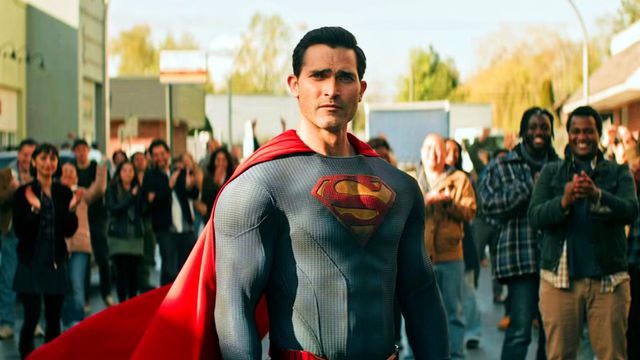
The moment in one of the final episodes where Superman is forced to reveal his identity in public after years of denial is pitch-perfect, and sums up the quiet power that the best episodes of the show have managed: 

Now, it hasn’t all been perfect – a little too much soap opera with the teenagers, a little too much emphasis on the dull as dishwater Lana Lang’s family – but whenever Hoechlin and Tulloch were on screen, the show felt refreshingly sincere. This Superman radiates hope, no matter the odds.  

It’s easy for something to get lost in the avalanche of superhero content these days but Superman and Lois was a quiet gem of inspiration reminding us why we like superheroes in the first place. 

At its heart, Clark and Lois are decent people trying to live decent lives. Some may call that corny. To me, that’s not the worst thing to look up to, these days. 

Great Caesar’s ghost! Eight of my favourite journalism editors in fiction

Somehow, I’ve ended up working in journalism an awfully long time. And in that time, I have had many good editors, a great editor or two, and couple of terrible editors. I’ve also been an editor myself many times (I’ll leave it to others to judge where I fell on the scale myself). 

An editor isn’t as glamorous as the headline-chasing feisty street-level reporter, perhaps. But in this age where journalism seems to be constantly under siege from all sides, editors do matter. They guide, they teach, they question, they correct, they set the tone and they can make or break a media outlet. My industry has changed a hell of a lot in the years since I started, but no matter how many apps, algorithms and pivots you throw at it, you need an editor in the mix to make quality journalism. 

So here’s a tribute to the bleary-eyed, coffee-fuelled, rage-filled and yet quietly inspirational editors, with a look at eight editors portrayed in fiction who have always inspired me in my own wayward journalism journey, for good or bad. 

Lou Grant, The Mary Tyler Moore Show (1970-1977) played by Ed Asner. When I think of a newsroom editor, the rumpled face of Ed Asner leaps to mind. No-nonsense, idealistic and gruff but with a heart of gold, Asner’s Lou Grant was the comic anchor of the still-classic Mary Tyler Moore Show. “Spunk? I hate spunk!” he growls at Mary in the very first episode. Asner played a sitcom character who was still a believable editor, and after the delightfully wacky Mary Tyler Moore Show ended its run he went on to play the exact same character in a very different drama that lasted for five seasons. Now that’s adapting your skill set to changing times. 

Perry White, Superman comics: The greatest editor in comic books, even when his newspaper staff appeared to only consist of Clark Kent, Jimmy Olsen and Lois Lane in the glorious Silver Age days.  White is old-school journalism to the max, firmly pushing for truth, justice and the American way, just like the Daily Planet’s office mascot Superman. White is constantly shoving his reporters out the door on wacky circulation-boosting assignments, hunting for that story that will make him shout “Great Caesar’s ghost!” In a world filled with kryptonite, Bizarros, giant alien gorillas, fifth-dimensional imps and more, Perry White is a glorious constant. I would work for Perry White any day of the week. 

Jane Craig, Broadcast News (1987) played by Holly Hunter: I can’t pretend I know what it’s like to be a woman in a newsroom, but in this classic ‘80s romantic comedy, we watch Hunter’s intense and driven Jane Craig rise through the ranks and juggle relationships with two good but flawed journalists (the amazing Albert Brooks and William Hurt) while never giving up on her own goals. Hurt’s vapid pretty face and Brooks’ charisma-challenged newsman represent the two sides of journalism that never quite come together, while Hunter – trying to keep her principles in a constantly changing industry – is the one who really succeeds in the business.

Charles Foster Kane, Citizen Kane (1941) played by Orson Welles: Is he a good editor-publisher? After all, Welles’ masterpiece is about the rise and fall of Charles Foster Kane. Yet while he’s an egotistical, perpetually unsatisfied tyrant, what we see of Kane’s managerial skills in Citizen Kane also shows us that he’s a darned good newspaperman, hustling for scoops, scandals and attention. Yeah, he bends ethical lines a fair bit, but I’m willing to cut him a little slack as he dates back to the peak era of yellow journalism led by Hearst, Pulitzer and the like. I don’t imagine I’d like to work for Kane, but I’d sure as hell read any newspaper he put out. 

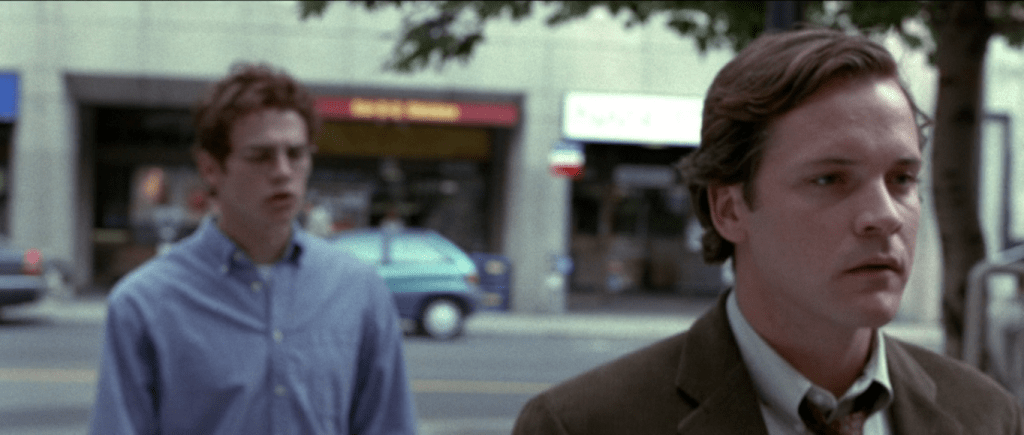
Charles Lane, Shattered Glass (2003) played by Peter Sarsgaard: Shattered Glass remains one of my favourite, still rather underrated journalism movies, about the plagiarist liar journalist Stephen Glass and his unravelling. Sarsgaard is fantastic as the unassuming editor who begins to smell a rat in Glass’ fabulist copy, and doggedly purses the loose ends to discover what the real truth is. Calm but determined and intensely offended by Glass’s stream of lies, Sarsgaard’s Lane makes the dull business of factchecking seem like a spy thriller. 

Ben Bradlee, All The President’s Men (1976) played by Jason Robards. Robards is the only one on this list who won an Academy Award for playing an editor, and rightfully so – his inscrutable, steel-eyed Bradlee is the axis around which Dustin Hoffman and Robert Redford’s Watergate investigation revolves in All The President’s Men. Without Bradlee’s guiding hand and consent, the story wouldn’t be told. Like the best editors, he’s kind of terrifying, too. 

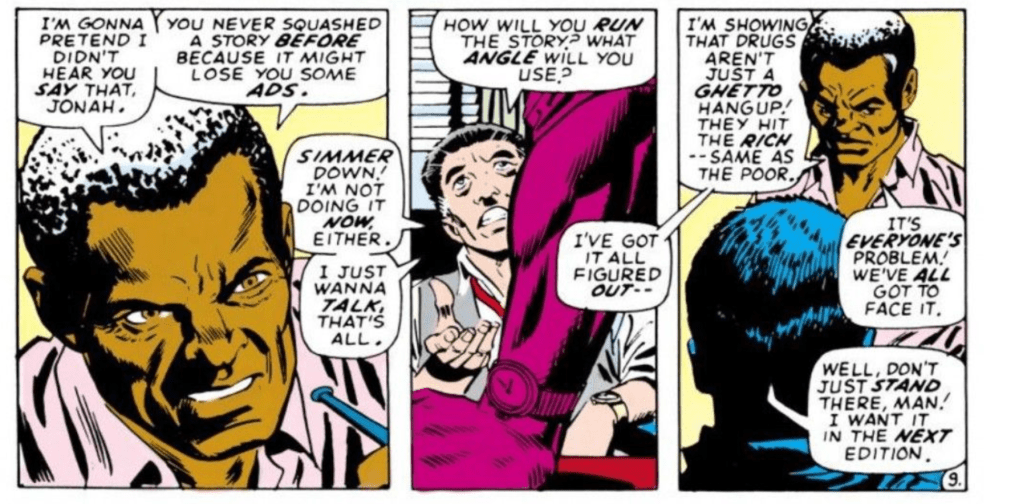
Robbie Robertson, Spider-Man comics: Look, Spider-Man’s nemesis J. Jonah Jameson is undeniably entertaining, but firmly belongs on the worst editor list. How worst? He fires Peter Parker about twice a week, lied repeatedly about Spider-Man in print, hired supervillains to kill him, and on several occasions personally piloted giant robots to beat up Spider-Man. That’s a bad editor. But shift your gaze slightly to the side to consider Jameson’s managing editor at The Daily Bugle, Robbie Robertson, who for decades has been a calm, firm but steady presence in the newsroom, frequently dealing with his impulsive boss’s rants and focused far more on truth than agendas. Jameson makes all the noise; Robertson gets the damn paper out. 

Dave Nelson, NewsRadio (1995-1999) played by Dave Foley: As the news director of WNYX, perky Dave Nelson is a sweet-faced rube thrown into a lion’s den of ego, eccentrics and mania. Surrounded by blowhards like Phil Hartman’s anchor Bill McNeal and a variety of other kooks including Stephen Root, Andy Dick and Maura Tierney, Foley as an editor spends almost the entire run of this classic sitcom putting out fires. And you know, that’s often what an editor’s job is – dealing with your staff and juggling all the balls at once. While he occasionally snaps, Dave Nelson simply being able to survive in a radio newsroom bubbling over with complicated personalities is an accomplishment all by itself. 

Keeping It Short Week, Day 2: Who’s my favourite superhero?

It’s Keeping It Short Week, 250 words or bust:

The question is fraught with peril for any comics nerd: Who’s your favourite superhero?

I’ve clearly got too much time on my hands because I think about this a lot. One of the first comics I ever remember reading was Amazing Spider-Man #200 and for years Spider-Man, web-swinging worrywart, was my choice. He was a geeky teenager and then a harried student! I identified!

For a brief while I succumbed to the bristly charms of mutant Wolverine, before overexposure and dire 1990s comics ended that affair. Then for a long time, I’d go with Batman, because pound for pound I think he’s probably had the most great stories written about him of any superhero. 

There’s others I adore, of course, like the endless duelling personalities of the Hulk, angst-ridden Daredevil, lumpy everyman The Thing

Yet, these days, when I think of the superhero I dig the most, it’s always the most basic – Superman, the Man of Steel. He may be uncool compared to edgy Punishers and Spawns but honestly, the older I get, the more I like his fundamental decency.

I love lots of superheroes, but when it comes down to it, the one I’d really like to see in our troubled old world, the role model – well, Superman was the first for a reason. He’s also still kind of the best. I’m old now, and superheroes don’t just have to be cool to me. They have to actually be kind of super, too. 

The two minutes that almost make Superman IV: The Quest For Peace work

Superman IV: The Quest For Peace is not, objectively, a good movie. In fact, it’s pretty terrible. 

The 1987 finale to Christopher Reeve’s run as the Man of the Steel was plagued by huge budget cuts, a ham-fisted script and a clear lack of energy by everyone involved. It was such a big bomb it pretty much killed the franchise for years to come. 

What was a simple, not bad idea – Superman decides to rid the world of nuclear weapons after an annoying school kid writes a letter to him – became an awkward, choppy mess. 

I actually saw Superman IV: The Quest For Peace in the theatre with a buddy back in 1987 and I clearly remember we were about the only two people in there. We left there with that deflating sense of disappointment one often got with comic-book movies in the pre-Marvel Cinematic Universe days, where you’d watch stuff like Howard The Duck or the George Clooney Batman and Robin and wonder how, how did this happen

And yet, despite this movie being such a fiasco, I still end up going back to watch it every once in a while out of a morbid fixation, because you can just see a hint or two of the movie it could have been – a serious meditation on a Superman’s place on Earth, and the responsibility of caring for humanity without taking over the world. 

In particular, there’s about two minutes of footage where that movie clearly emerges, when Superman takes to the stage at the United Nations to tell them of his plans:

Unfortunately, even then you see the impact of the budget cuts (judging from the Superman flying scenes immediately after, about $1.99 was spent on special effects). 

And that script – hoo-boy. It ratchets up the campier elements of the first three Superman movies to unbearable levels, with little of the wit and sincerity that Superman and Superman II had. You’ve got a lame cliched evil businessman and his hot daughter (an embarrassed Mariel Hemingway) taking over the Daily Planet newspaper, Jon Cryer doing an appallingly unfunny doofus hipster teenager impression, and Margot Kidder looking very, very bored. Only Gene Hackman, whose genial scoundrel take on Lex Luthor was always worth watching, emerges unscathed.

And let’s not forget the all-time worst Superman villain ever seen on screen, the mulleted “Nuclear Man” clone that Luthor creates because he’s angry Superman eliminated the black market for nukes, I guess. Nuclear Man is howlingly cheesy, so bad the actor involved never did another movie. 

(As a side note, for an even more in-depth look at what a mess this movie was, on the DVD you’ll find more than a half hour of deleted scenes including an utterly horrifying slapstick fight with a “first” prototype Nuclear Man character who looks like he wandered out of a Benny Hill TV show. Some hopeful optimists out there on the internet still claim adding those scenes back to the barely 90-minute Superman IV could make an improved “director’s cut” but honestly, these scenes are generally even worse than the movie itself.) 

The whole idea that kick-started the plot – Superman makes the world safe from nuclear war! – kind of gets bounced around a bit and then abruptly discarded by the end. 

And still, I do love that scene when Reeve arrives at the United Nations, the good cheer and optimism that pervaded his portrayal of Superman just about selling the idea that the governments of the world would be happy with him throwing all our nukes into the sun. “As of today, I’m not a visitor any more,” Superman says, and gosh darn it, it just makes you wish such a person really was out there, somewhere. 

I don’t know why I watch 86 minutes of a pretty bad movie just to get that little moment, but somewhere out there in the multiverse, I like to imagine there’s a far, far better version of Superman IV directed by Steven Spielberg or someone that ran the table at the Oscars that year and gave that wee moment the kind of superhero movie it deserves. 

Superman and Batman and the adventures of trying to be a dad

The illusion of change is one of the big things that keeps comic books going for 800, 900 issues, decades after they started. Pretty much every character in comics has died and come back at least three or four times, so excuse me if I yawn when they say Spider-Man/Batman/Wolverine is going to die, again. Show me something new. Like a superhero being a parent.  

They might die a lot, but one thing superheroes never did for the longest time was grow up, get married and have children of their own. 

That started to change in the 1990s, when they let Spider-Man get married for a while (since wiped away in one of those cosmic hand-wavings) and Superman get hitched to Lois Lane (surprisingly, still going strong years later). With wedding bells ringing, surely children aren’t far behind?

For a while there, when most superheroes had a kid, it meant they would die horribly or be revealed as imaginary or what-if stories or something. Most egregiously, Spider-Man actually had a daughter who vanished mysteriously years ago because Marvel didn’t like the idea of Spider-Man actually having a kid. 

Yet that’s changed. One of the most popular – and genuinely enjoyable – comics of 2021 turned out to be Superman: Son Of Kal-El, starring Jon Kent, the teenage son of Clark Kent, a hip, bisexual millennial who could’ve been an awful “woke” cartoon but has turned out to be a refreshing and empathetic take on the Man of Steel. A slightly different version of this story with Superman and Lois having two sons has become one of my favourite superhero TV shows in recent years. 

And a while back, Batman had a son, Damian Wayne, with his enemy’s daughter Talia al Ghul. This kid was a brutal, dark mirror to Batman, raised by his criminal foes, trained as an assassin and grown into a grim and efficient new Robin. Damian has endured since his introduction in 2006, maturing to become less violent and conceited and an actual hero of sorts. The new Superman and Robin have been an enjoyable double-act in comics too, Jon Kent’s sincerity playing well off Damian’s cynicism. 

The idea of Batman and Superman having sons was a bit of a fantastic what-if for years when they were imagined as rebellious 1970s hipsters, so it’s been surprising to see the idea emerge and stick around in canon. Jon Kent’s been around for 7 years, Damian pushing 16 years. It gives these 80-year-old superheroes a fresh direction to move in, and yet the original Batman and Superman are still allowed to exist too, mentoring and off having their own adventures. I actually find Superman more enjoyable as a character now that he’s a father.

I’m not saying they won’t decide to up and kill Jon Kent sometime soon, but comics creators seem generally content to let a hero’s kids live for now. Some, like Wolverine or Hulk, have ‘evil’ estranged children, or some like the Flash and Green Arrow have children they end up separated from for years. (Being a good parent is far less common than just being a parent in comics.) The Fantastic Four were one of the few characters allowed to have a child back in the old days, although little Franklin Richards was always under threat of death or cosmic disintegration or something. But the FF has a second kid now too, and a whole little blended “family” of assorted young folk that they’re mentoring – a sensible evolution for a comic that’s always been about the idea of family. 

As the print comics fan base ages up and more and more young people are TikTokking or whatever, comics readers maybe are a little less turned off by the idea of Batman having a Bat-spawn. They identify with a Bat-Dad a bit more than they once might have.

One thing you’ll rarely see in comics, though, are superheroes parenting babies or toddlers, or doing the boring hard yards of diapers, late nights and play-dates. In a surprisingly common comics trope, both Jon Kent and Damian Wayne were “accelerated in age” in various oddball comic-book ways so they could run around with their dads, because honestly, super-teenagers are far more interesting than super-babies would be. 

Which is probably the right call. I mean, nobody is really clamouring for the return of Super-Baby, are they? 

Superman and Lois: The hero the world needs now

I’m the first to admit that even a die-hard comics fan like me can’t keep up with the endless movies and TV shows based on spandex-clad superheroes these days. When a new Superman series from the “Arrowverse” stable of shows was announced, I was interested, but not exactly dazzled. But it’s turned out that Superman and Lois might just be the best take on the Man of Steel since the glory days of Christopher Reeve.

The secret? A Superman who smiles. A Superman who isn’t fraught with lonely alien tension or the burden of god-like powers all of the time. A Superman who’s got problems, sure, but who still is a beacon of hope. That’s not an easy character to get right – Batman or Wolverine will always seem cooler, but Superman was the first and is still in my mind the greatest of superheroes. And at his best, his adventures should make us feel good. It’s harder than it looks – but the best Superman stories, whether it’s Alan Moore’s “For The Man Who Has Everything” or Gene Luen Yang’s Superman Smashes The Klan, make it work. 

Look at this brief scene from the latest episode, and it sums up why Superman and Lois is becoming my favourite comics-based show on TV these days. 

“My mom made it for me” = Superman’s character in a nutshell.

A square-jawed mom-loving good guy can be boring, but all it takes is a good actor and decent storylines and Superman soars. (Look at Chris Evans, whose definitive take gave new life to Captain America, a character I always considered kind of boring.) There’s things I do like quite a lot about Henry Cavill’s Superman in the Snyderverse – he’s got the look down pat – but he’s ill-served by grim-dark storytelling that positions Superman as the haunted eternal outsider, instead of what he really is – the ultimate successful immigration story. 

Tyler Hoechlin’s Superman debuted as a guest-star on the Supergirl TV series and was striking but a bit unformed – he seemed a bit too thin at first, with a perpetual five-o’clock shadow – but in his own solo series with an excellent Elizabeth Tulloch as the best Lois Lane since Margot Kidder, Hoechlin’s portrayal of Superman is getting better every week. Unmoored from the increasingly complicated antics of the Arrowverse, this is an older, more settled Man of Steel. Superman and Lois comfortably breaks the old paradigms by showing a comfortably married Clark and Lois, with two teenage sons, moved back to Clark’s old hometown of Smallville from the big city. There’s plenty of super-action, but also the drama of Clark and Lois’s teen sons Jonathan and Jordan – one of whom is developing super powers of his own.

Superman and Lois may have started a little slow – the first few episodes were heavy on the teen angst which all felt a bit 90210, but gradually the show began to give Clark and Lois equal time. There’s been some excellent plot twists in recent weeks as a dire threat against Superman and Earth itself becomes apparent, but the biggest focus for Superman and Lois is family. It’s a show that’s unafraid to care about its characters, and instead of seeing Clark Kent as an aloof alien, he’s unabashedly human. He’s a father who sometimes stumbles but his love for his sons is uncomplicated and unwavering, which is nice to see. 

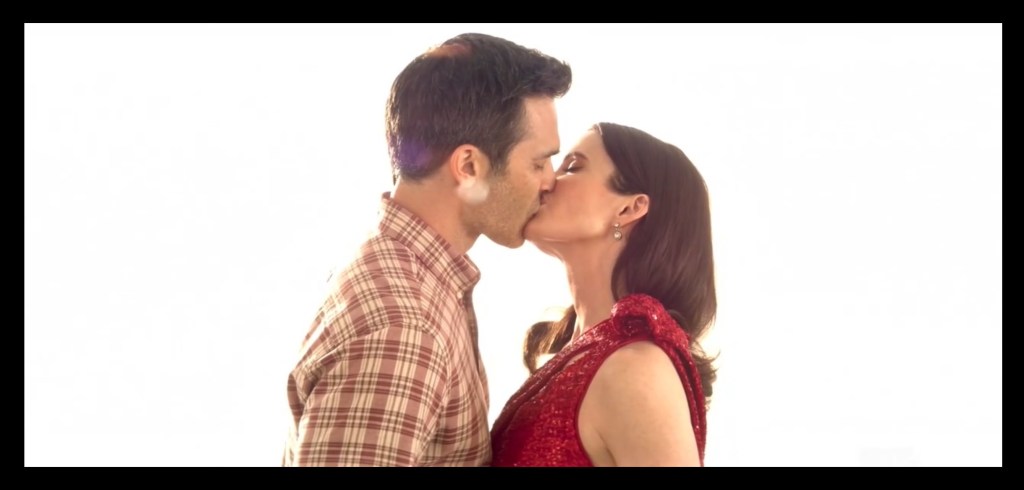
A recent flashback episode dove into Clark and Lois’ courtship, and was a beautiful love letter to the Superman mythos that also felt kind of fresh and daring. Instead of the whole rather played-out “spineless milksop” Clark Kent pining after a Lois Lane who only has eyes for Superman, this Lois Lane actually falls for Clark Kent first. Yeah, you still have to buy into the notion that a pair of glasses and a mild hairstyle change can keep people from realising Clark = Superman, but hey, that’s comics. Tulloch’s Lois is also terrific, with her go-getter independence and reporting tenacity intact and her mom energy strong. Superman and Lois could easily turn into a goopy family drama but the actors have a confidence and sincerity that makes the show stand out from the increasingly repetitive feeling of the surviving Arrowverse shows like Flash

Superman here feels more joyous than he has on screen in ages – between Bryan Singer’s misguidedly overwrought Superman Returns, which wallowed in the drama of the Christopher Reeve Superman movies without ever finding their heart and humour, or Zach Snyder’s increasingly militaristic and stern Superman, it feels like we’ve gone years without seeing a Superman who simply enjoys his life and his family. Reeve became an iconic Superman because of his elegant charm, and light touch. Hoechlin gets that. 

The Superman of Superman and Lois is certainly facing challenges – there’s a dark threat of his turning against humanity as one of the plot threads – but I like to think it’s still a show that will keep the optimism and hope of its titular hero at centre stage. After all, there’s nothing wrong with a Superman who likes his job, is there? 

Meet Vartox, the most inappropriately costumed superhero of all time

When it’s midsummer and it’s hot and the news is all politics and doom, I turn to old Superman comics, the balm for many an ache. 

I love the ‘pre-Crisis’ era of Superman comics prior to 1986, when Superman could basically do anything and the stories were often batshit crazy. Often drawn by the terrific trusty Curt Swan, these stories juggled planets and killer robots and cosmic coincidences. The Superman stories of the 1970s and early ‘80s are overlooked (you can usually buy issues dirt-cheap), but they’re great fun comics. 

Which brings me to Vartox. Vartox appeared in a dozen or two stories between 1975 and 1986, a superhero from another world who was often Superman’s frenemy. An older man, Vartox could be an interesting counterpoint to the younger Superman. But nobody remembers Vartox because of that. 

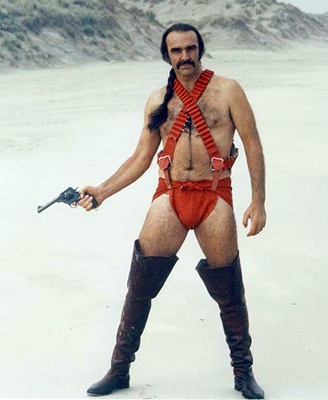
They remember what he wore. For some reason writer Cary Bates and Swan decided to make Vartox an EXACT ripoff of Sean Connery’s unflattering nearly nude space cowboy character in the oddball 1974 sci-fi movie Zardoz. Clad in a bizarre orange space diaper, ammo belt, thigh-high boots and a man pony-tail, this was not Connery’s finest hour. 

Why Vartox was designed to so clearly mimic Zardoz is weird and never more so than when this half-naked, excessively hairy character shares panel space with the more modest Superman.

I felt vaguely embarrassed for Superman, having to spend so much time staring at another man’s hairy legs and chest. And dude, you’re flying through space, why the heck wouldn’t you wear something a bit more practical than a vest and thigh-high boots?

All that said, the Vartox stories are often good fun – I like the idea of a balding, older, slightly more melancholy superhero being a mentor to Superman and his “hyper powers” are completely wonderful comic-book gibberish – he apparently can do just about anything, including hyper-future reading, hyper-teleportation, hyper-energy blasts, et cetera. It’s a good drinking game just seeing how many times the phrase “hyper” is used in Vartox tales. 

Vartox has apparently occasionally appeared since his ‘70s-‘80s heyday, but never quite broke out of the C-list. I lift a glass to Vartox, a contender hobbled by perhaps the least flattering costume in comic-book history. 

The greatest comic books of all time. Seriously.

The comic book medium has had lots of highs in its nearly 100-year history. We’ve had Maus, Watchmen, Love and Rockets, Sandman, and much, much more. 
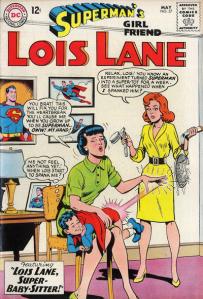
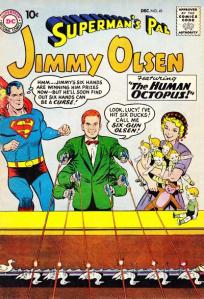
But if I had to choose one comic book to send to Mars as the true pinnacle of the comic art form, I’d pick the adventures of Jimmy Olsen and Lois Lane. 

Superman was so darned popular in the 1950s and 1960s that even second-bananas got their spin-off titles. Hence we have Superman’s Pal Jimmy Olsen and Superman’s Girl Friend Lois Lane, which both managed respectable 100+ issue runs up into the 1970s.

For me, these comics are the pure crack cocaine all other comics aspire to. They’re the pop-art manic energy of Jack Kirby wrapped in suburban clothing, they’re everything Grant Morrison has homaged throughout his career. 

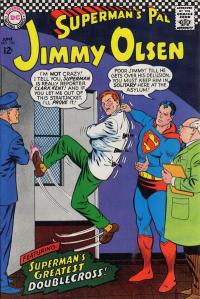
The insanely goofy adventures of Lois and Jimmy typically follow one pattern – hapless Jimmy and Lois get into far-out trouble, and their pal Superman has to rescue them. But in this simple pattern a world of utter insanity is kept. Jimmy Olsen becomes a werewolf, a giant Turtle-Man, a human flamethrower, a Bizarro version of himself. Lois Lane becomes a witch, a mermaid, even a black woman in a misguided attempt at relevance in the early 1970s. 


I’d argue these lowly spin-off comics in some ways serve Superman even better than his own solo adventures did – there’s rarely a fistfight or a cosmic clash, and instead the world’s most powerful superhero is often pictured as a kind of benign goofball god constantly at the beck and call of his irritating friends. 

There’s something very primal about these adventures, which all take place in a Daily Planet newspaper that seems to have about five staff, where human bodies are twisted like putty and genies, aliens and magic potions are around every corner, but everything will be back to normal by the end of the story. 

These comics are a product of their time – Lois is too often portrayed as a scheming meddler with marriage to a man (usually Superman) the only thing on her mind; but by the same token Jimmy Olsen is a gibbering goon who’s constantly getting himself into trouble as well. Yet I’d take a single Jimmy Olsen comic with their endless invention and amiable good cheer over a dozen of comic books’ latest attempts to strip-mine their past and reinvent the wheel. 

You’ll never, ever see a Jimmy Olsen movie that captures a tenth of the insanity and colour of these comics. And that’s why they’re quite possibly the peak of the comic book form.