Rik Mayall, the patron saint of confident self-loathing

Nobody made being a total bastard quite as funny as Rik Mayall. 

When I first stumbled on The Young Ones in the late ‘80s during its inexplicable MTV late-night airing in America, I felt like I’d seen into a different universe. The anarchic gang of college misfits were all hilarious, but to me, Mayall’s Rick was on another level of twitchy, ego-free energy, willing to make himself look as sweaty and horrible as possible for the gag. He bounced perfectly off Ade Edmondson’s ultraviolent punk parody Vyvyan. 

Rik Mayall’s been gone 10 years now, a fact I still find kind of baffling. His comedy was so insanely energetic it seems impossible it should ever be stilled. 

Mayall was the patron saint of comedy that combined ego and humiliation in equal measures. 

Rick on The Young Ones was everyone’s worst nightmare of a pretentious, oblivious student, adopting pet causes left and right, constantly sure of his own righteousness and yet constantly trembling with his own self-hatred. You felt sorry for him but you also probably wanted to kick him right in his stupid face, too.

Nothing ever worked out for Rick, who hated everyone but hated himself the most. Mayall managed the extremely tricky wrangle of making this hilariously funny, a character who’s all twitchy id whether he’s trying to pick up “birds” at a party or insulting his roommates. Nobody ever spat out “Bastard!” quite as caustically as Mayall. 

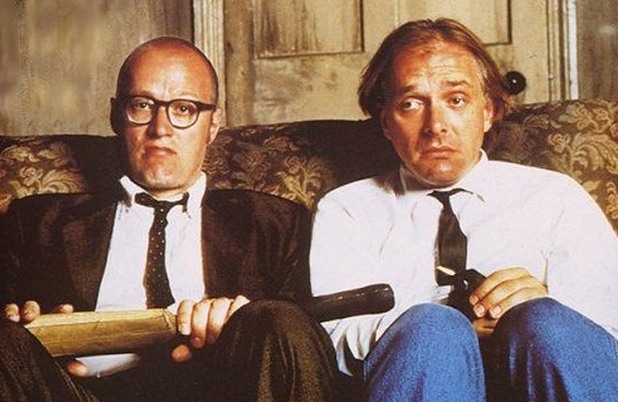
Later on, in their follow-up show Bottom, Mayall and Edmondson refined the Young Ones formula by narrowing in on losers Rick and Eddie, two gormless young men hurtling towards pathetic middle age. Bottom, as good mate Bob recently recalled in his own blog, is a masterpiece of over-the-top comedy, where every gag is pushed as far as it will go and then some.

Mayall and Edmondson smack each other around like a Looney Tunes cartoon, are consumed with unrequited lust for the opposite sex and their own sleazy poverty. I like to pretend that Bottom’s “Richard Richard” and Eddie are of course The Young Ones’ Rick and Vyvyan about 10 years on, youthful idealism and identities ground away and living lives of quiet desperation. 

Later on, Mayall played the world’s most corrupt politician Alan B’stard in the witty satire New Statesman, and was great as blustery fool Lord Flashheart in Black Adder. He tried to break through in the US with the loud, antic cult comedy Drop Dead Fred, but it didn’t quite work – Mayall’s frantic man-child routine got grating quickly when stretched out to an entire movie. 

At his best, Mayall played insecure, hateful guys who can never quite figure out that they’re their own worst enemy. It’s a marker of his talent that the creeps and bastards he played still felt ever so slightly loveable. When Bottom’s Richard Richard gets a well-deserved ass-kicking and then sits there ugly-weeping, who doesn’t feel a twinge? Maybe it’s just me. Losers are inevitable more entertaining than winners. 

Rik was carried off by a heart attack in June 2014 at just 56. It’s probably the blackest of comedy to say so, but sometimes I wonder if that’s the way the Young Ones’ Rick, Bottom’s Richie and New Statesman’s B’stard all wouldn’t have gone as well, pushing their self-loathing energy until it burst. 

I can still watch those episodes of The Young Ones and Bottom over and over no matter how many times I’ve seen them, and Mayall’s comic skill, working himself up into a sweaty red-faced mess to get a laugh, gets me every time. I only wish we’d gotten a little bit more of him. 

The Penguin review – Batman’s goofiest villain is no longer a joke

For a bloke who turns 85 years old this year, Batman is holding up pretty well.

The caped crusader has been reinvented countless times since his 1939 debut, and that’s the secret of his longevity.

You want a friendly Batman? Adam West’s day-glo 1960s TV series fits the bill. Bold and epic? There’s plenty of animated series to choose from. Dark and gritty? Pick up Frank Miller’s classic Dark Knight Returns graphic novel. Somewhere in the middle, with lots of Gothic architecture? Tim Burton’s unique 1989 Batman still holds up very well.

Those Bat-villains just keep on going, too. Batman probably has the best rogues’ gallery in comic books – a twisted collection of eccentric obsessives strongly defined enough to take the spotlight in many of their own solo comics and movies. Stars who have played the Joker have now won two Academy Awards for Best Actor. For many, battling the Bat as the Riddler, Catwoman or Clayface is still a feather in the cap.

The world of Batman has proved itself ripe for interpretation, whether it’s Robert Pattinson’s brooding emo turn in 2022’s The Batman or villainous Harley Quinn starring in her own filthily funny and irreverent animated series.

But a new HBO spin-off of that 2022 Batman movie serves up one of the darkest takes yet on Batman’s Gotham City, starring Colin Farrell reprising his role as the scheming gangster Penguin.

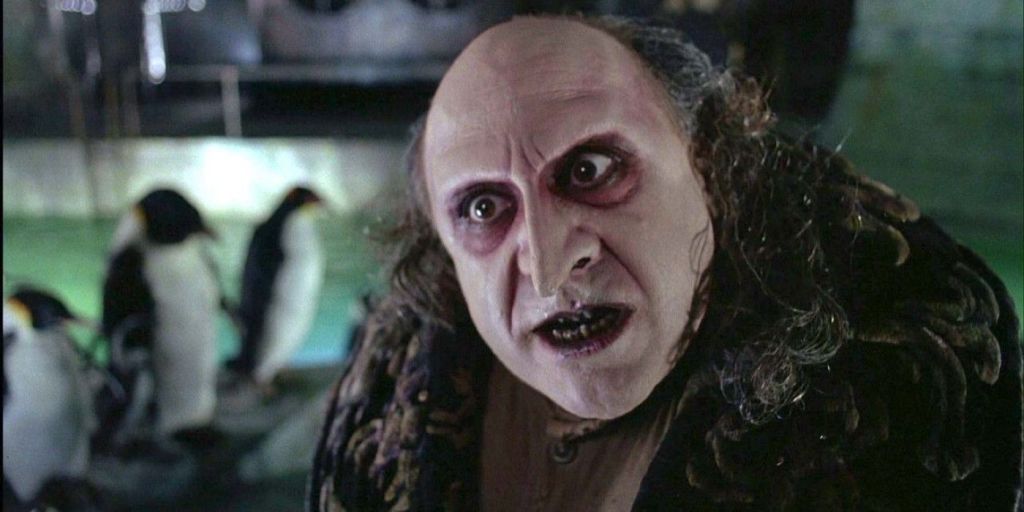
The Penguin has always kind of been the also-ran of Bat-villains, despite hanging about for decades. A pudgy, monocle-wearing bird-obsessed weirdo with trick umbrellas, he was memorably brought to life by a cacklingly campy Burgess Meredith in the 1960s TV series, while Danny DeVito in Tim Burton’s Batman Returns was a waterlogged, creepy outcast.

Wipe all that out of the memory with Farrell’s sinister “Oz” – who loathes the nickname Penguin – a scarred and crippled mobster who nearly stole the show in The Batman. There are no trick umbrellas here.

An unrecognisable Farrell, looking like an overweight Robert DeNiro run through a smudgy photocopier, played Penguin in The Batman film as a seedy Goodfellas-style criminal.

It was a magnetic performance with its visceral sleaze, and over the new eight-part miniseries Farrell’s snarling take on this most ridiculous of Bat-villains makes a good case for why you should never overlook a penguin.

In The Penguin, which picks right up after the near-destruction of Gotham City in The Batman’s climax, Farrell gets a showcase a world away from big budget MCU-style comic adventures.

Farrell feels consistently underrated as an actor, despite some excellent performances in films like After Yang or In Bruges and an Oscar nomination for The Banshees of Inisherin. He gives the oily Penguin a sense of wounded soul despite working under piles of makeup and padding to create the character’s waddling presence.

This isn’t your childhood Batman and definitely isn’t for kids – while the Bat himself is only referred to in passing, The Penguin is a deliciously nasty slice of noir, filled with F-bombs and shockingly violent deaths, far more The Sopranos than Batman Forever.

The Penguin is scrambling to take advantage of the chaos in Gotham’s criminal underworld after the events of The Batman. He’s nowhere near a “supervillain” yet, but he’s got big dreams, and ropes into his labyrinthine plans a conflicted teenager (Rhenzy Feliz) and the disturbed daughter of deceased crimelord Carmine Falcone, Sofia (Cristin Milioti).

The Penguin works best when it focuses on Farrell, but Milioti (Palm Springs, Black Mirror) is also striking channeling that good old Gotham City criminal intensity into an unpredictable performance. A rogue’s gallery of prominent actors like Mark Strong, Shohreh Aghdashloo and House of Cards’ Michael Kelly fill out the cast.

Over The Penguin’s eight episodes (the first five were viewed for review), a tangled web of double-crosses and violent heists unfolds, with Oz the Penguin scrambling over dead bodies as he hopes to make his mark on the world. While it may help set the stage for the 2026 sequel to The Batman, it also very much stands on its own even if you’re not a Bat-fan.

There’s no Batman, no Robin in sight, but you honestly don’t miss the Dark Knight too much with bad guys this watchable.

This review also published over at RNZ!

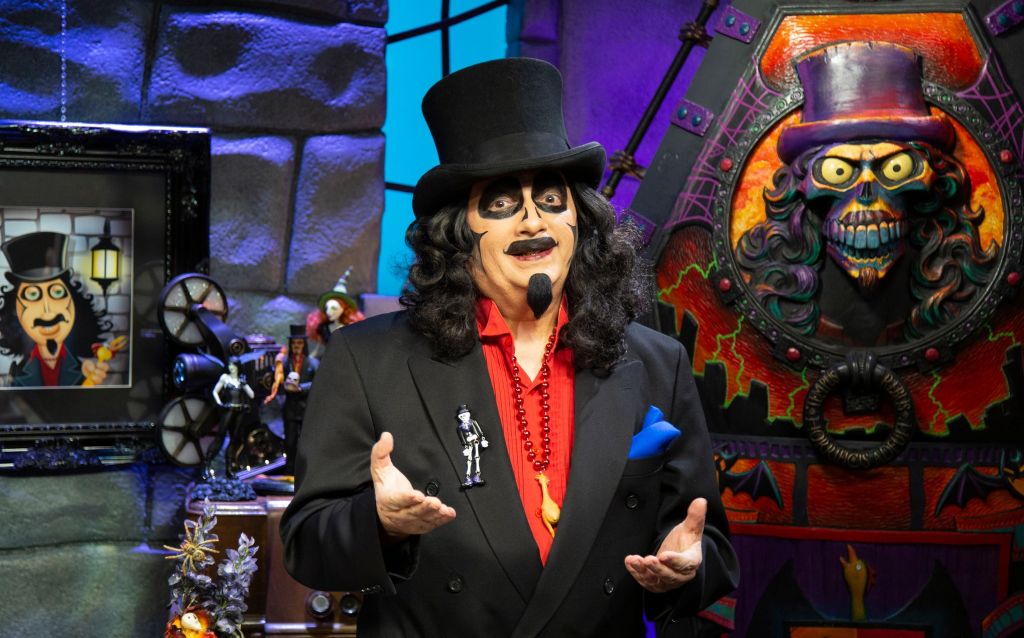
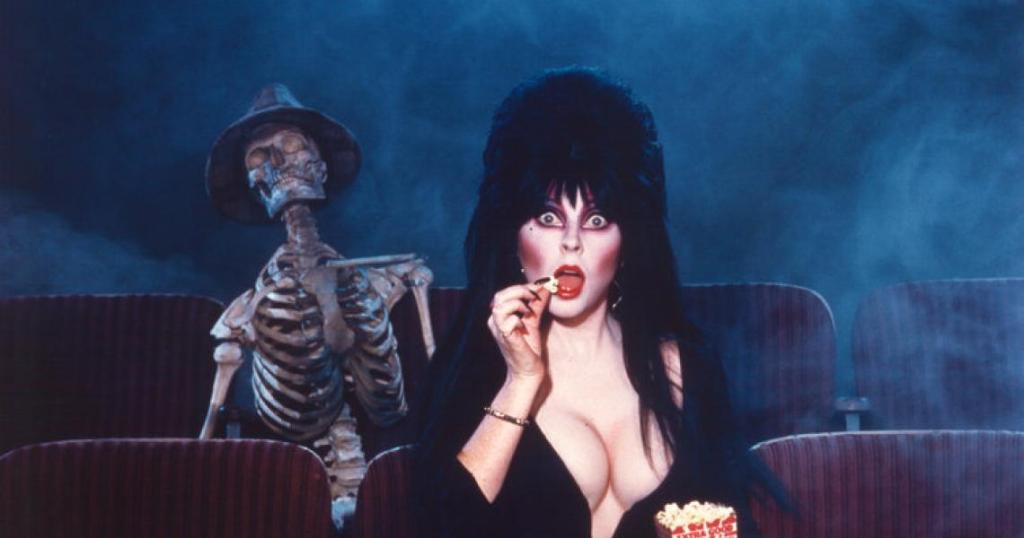
From Vampira to Svengoolie – The undying world of the horror host

A vintage horror movie, a vaguely spooky host and lots of lame jokes – what’s not to love?

On my recent travels to the US, I got to experience a lot more of the cluttered joys of infinite American cable TV than I usually do, and one thing I particularly enjoyed was catching up with long-running horror movie host Svengoolie’s Saturday night movie of the week on MeTV.

Svengoolie’s schtick is a grand throwback to the pre-internet world, where you couldn’t just find movies like Scream, Blacula, Scream! or House of Frankenstein through a few clicks. On stations throughout America, horror hosts would showcase dusty old vintage movies with plenty of jokes, skits and commentary.

Svengoolie (aka Dave Koz) has been doing this since 1979, believe it or not, and syndicated throughout America for the last decade or so. His campy, corny host act leans into the cheese and groan-worthy puns. But it’s also great fun because it feels like a secret club of fandom run the way it should ideally be. There’s no toxicity here, just silly in-jokes, rubber chickens, and an unending adoration for things like wolf men, Roger Corman flicks and giant ant invasions. 

There’s something kind of charmingly low-fi and comforting to me about a grown adult dressed up in Halloween gear introducing schlocky old movies. The horror host first emerged at the dawn of television in the ‘50s, and has shambled along semi-underground in some form or another to this day, with a new generation even taking the format to streaming.

I generally missed out on the peak horror hosts era from the 1960s to the 1980s, although I have hazy memories of old Universal Monster movies being shown on Saturday morning TV in the early ’80s with some goofy small-time local hosts kicking off the show.

I also honed my bad-movie love back in high school watching the USA Network’s “Up All Night” panorama of abominable flicks like Night Of The Lepus and Attack Of The Killer Tomatoes, sneeringly hosted by the late Gilbert Gottfried, and the classic riffing hosts of Mystery Science Theater 3000. These snark-fests all share a little DNA with the horror hosts idea. 

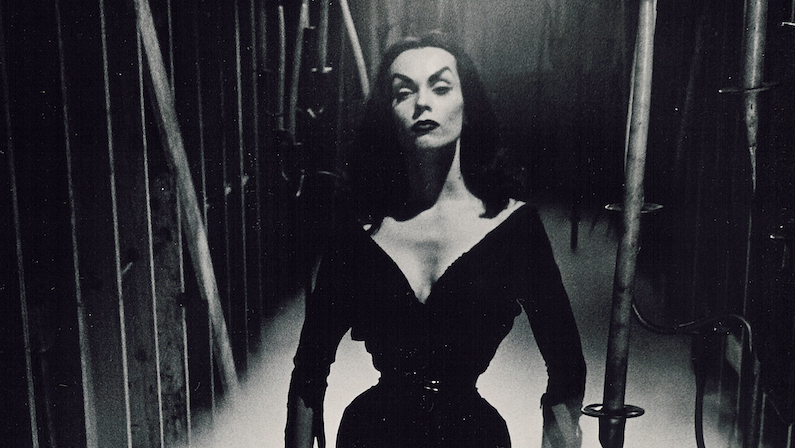
The horror host was pioneered by the iconic wasp-waisted charms of the still-eerie Vampira, whose 1954 show didn’t even last a year but who paved the way for many others.

Vampira, alias Maila Nurmi, lived a complex life trying to recapture her brief stardom with things like an appearance in Ed Wood’s legendarily bad Plan Nine From Outer Space. Very little footage of her show survives now, but even brief clips show how this primordial queen of goths scared stiff the buttoned-up world of ’50s TV, and forged generations of successors: 

There were many more – Zacherle, who chilled spirits on the East Coast for decades, or the famed Elvira, who successfully homaged/ripped off Vampira’s sexy bad girl act in a later, far more relaxed cultural era to become one of the most recognisable horror hosts of all time. 

Svengoolie, who has been doing his own thing for 45 years and is easing in a cast of possible replacement ghouls, is pretty much the biggest name left on the scene, but the success of his show on MeTV gives hope that the horror host idea isn’t dead just yet. 

In a world of TikToks and YouTubers, everyone is a host now if they want to be. Still, I’m pretty turned off by the influencer aesthetic of random strangers shouting and hustling at me from their phones while sitting in cars.

But give me a guy dressed up like a corpse or a shapely vampire woman in a bargain basement crypt setting, a few Boris Karloff and Christopher Lee flicks and a bucket of popcorn, crank up the groan-worthy jokes, and I’m happy to be scared silly in their company. 

Meanwhile, elsewhere on the internet…

Monty Python voice: I’m not dead!

Regular posting will resume soon after the difficulties of the past six weeks or so. In the meantime, here’s a few things to catch up with by or about me that have been circulating out there elsewhere on the internet:

As part of RNZ‘s occasional “What To Watch” series highlighting the quirky and obscure corners of the streaming cinematic universe, I wrote up a little review of the extremely weird offbeat Korean comedy Chicken Nugget: What To Watch – Chicken Nugget

Over at the New Zealand Listener magazine, I did a review of Everest, Inc., a fascinating new book by Will Cockrell that looks at how the world of daring mountain summiteers has changed since Sir Edmund Hillary and Sherpa Tenzing Norgay first conquered Everest. You can read it over here (paywall).

And elsewhere, friend Bob had a very kind post the other day about my long-running obscure small press comic Amoeba Adventures, in which he compared my timid scribbling to Scott McCloud’s awesome Zot! which is high praise indeed. (And by the way, if you’re one of those folks who haven’t gotten around to ordering my hefty compendium of classic Amoeba comics over on Amazon, go grab yourself The Best Of Amoeba Adventures right now!)

Back with more pop culture rambles soon!

Great Caesar’s ghost! Eight of my favourite journalism editors in fiction

Somehow, I’ve ended up working in journalism an awfully long time. And in that time, I have had many good editors, a great editor or two, and couple of terrible editors. I’ve also been an editor myself many times (I’ll leave it to others to judge where I fell on the scale myself). 

An editor isn’t as glamorous as the headline-chasing feisty street-level reporter, perhaps. But in this age where journalism seems to be constantly under siege from all sides, editors do matter. They guide, they teach, they question, they correct, they set the tone and they can make or break a media outlet. My industry has changed a hell of a lot in the years since I started, but no matter how many apps, algorithms and pivots you throw at it, you need an editor in the mix to make quality journalism. 

So here’s a tribute to the bleary-eyed, coffee-fuelled, rage-filled and yet quietly inspirational editors, with a look at eight editors portrayed in fiction who have always inspired me in my own wayward journalism journey, for good or bad. 

Lou Grant, The Mary Tyler Moore Show (1970-1977) played by Ed Asner. When I think of a newsroom editor, the rumpled face of Ed Asner leaps to mind. No-nonsense, idealistic and gruff but with a heart of gold, Asner’s Lou Grant was the comic anchor of the still-classic Mary Tyler Moore Show. “Spunk? I hate spunk!” he growls at Mary in the very first episode. Asner played a sitcom character who was still a believable editor, and after the delightfully wacky Mary Tyler Moore Show ended its run he went on to play the exact same character in a very different drama that lasted for five seasons. Now that’s adapting your skill set to changing times. 

Perry White, Superman comics: The greatest editor in comic books, even when his newspaper staff appeared to only consist of Clark Kent, Jimmy Olsen and Lois Lane in the glorious Silver Age days.  White is old-school journalism to the max, firmly pushing for truth, justice and the American way, just like the Daily Planet’s office mascot Superman. White is constantly shoving his reporters out the door on wacky circulation-boosting assignments, hunting for that story that will make him shout “Great Caesar’s ghost!” In a world filled with kryptonite, Bizarros, giant alien gorillas, fifth-dimensional imps and more, Perry White is a glorious constant. I would work for Perry White any day of the week. 

Jane Craig, Broadcast News (1987) played by Holly Hunter: I can’t pretend I know what it’s like to be a woman in a newsroom, but in this classic ‘80s romantic comedy, we watch Hunter’s intense and driven Jane Craig rise through the ranks and juggle relationships with two good but flawed journalists (the amazing Albert Brooks and William Hurt) while never giving up on her own goals. Hurt’s vapid pretty face and Brooks’ charisma-challenged newsman represent the two sides of journalism that never quite come together, while Hunter – trying to keep her principles in a constantly changing industry – is the one who really succeeds in the business.

Charles Foster Kane, Citizen Kane (1941) played by Orson Welles: Is he a good editor-publisher? After all, Welles’ masterpiece is about the rise and fall of Charles Foster Kane. Yet while he’s an egotistical, perpetually unsatisfied tyrant, what we see of Kane’s managerial skills in Citizen Kane also shows us that he’s a darned good newspaperman, hustling for scoops, scandals and attention. Yeah, he bends ethical lines a fair bit, but I’m willing to cut him a little slack as he dates back to the peak era of yellow journalism led by Hearst, Pulitzer and the like. I don’t imagine I’d like to work for Kane, but I’d sure as hell read any newspaper he put out. 

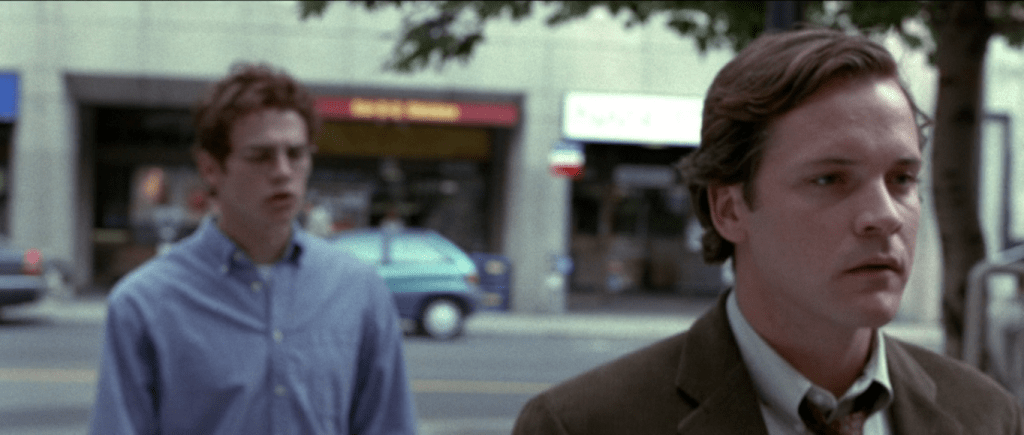
Charles Lane, Shattered Glass (2003) played by Peter Sarsgaard: Shattered Glass remains one of my favourite, still rather underrated journalism movies, about the plagiarist liar journalist Stephen Glass and his unravelling. Sarsgaard is fantastic as the unassuming editor who begins to smell a rat in Glass’ fabulist copy, and doggedly purses the loose ends to discover what the real truth is. Calm but determined and intensely offended by Glass’s stream of lies, Sarsgaard’s Lane makes the dull business of factchecking seem like a spy thriller. 

Ben Bradlee, All The President’s Men (1976) played by Jason Robards. Robards is the only one on this list who won an Academy Award for playing an editor, and rightfully so – his inscrutable, steel-eyed Bradlee is the axis around which Dustin Hoffman and Robert Redford’s Watergate investigation revolves in All The President’s Men. Without Bradlee’s guiding hand and consent, the story wouldn’t be told. Like the best editors, he’s kind of terrifying, too. 

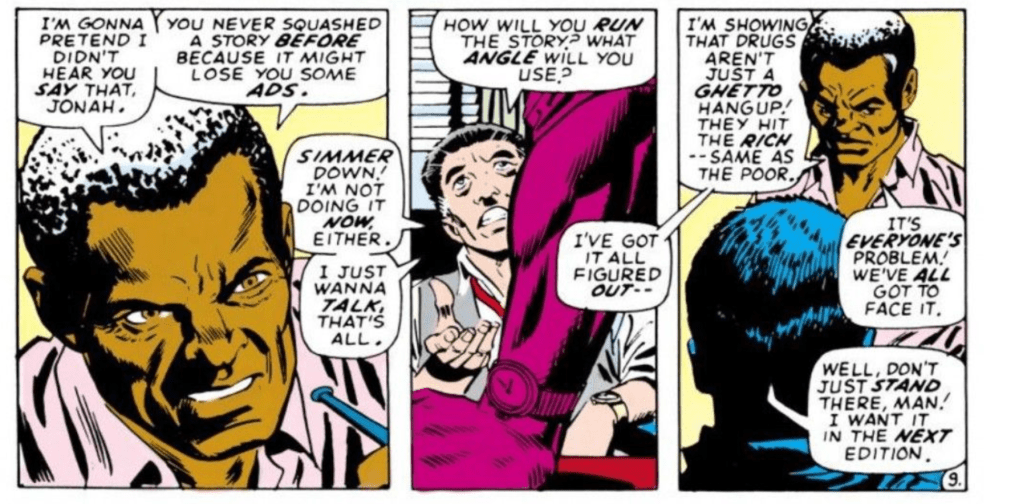
Robbie Robertson, Spider-Man comics: Look, Spider-Man’s nemesis J. Jonah Jameson is undeniably entertaining, but firmly belongs on the worst editor list. How worst? He fires Peter Parker about twice a week, lied repeatedly about Spider-Man in print, hired supervillains to kill him, and on several occasions personally piloted giant robots to beat up Spider-Man. That’s a bad editor. But shift your gaze slightly to the side to consider Jameson’s managing editor at The Daily Bugle, Robbie Robertson, who for decades has been a calm, firm but steady presence in the newsroom, frequently dealing with his impulsive boss’s rants and focused far more on truth than agendas. Jameson makes all the noise; Robertson gets the damn paper out. 

Dave Nelson, NewsRadio (1995-1999) played by Dave Foley: As the news director of WNYX, perky Dave Nelson is a sweet-faced rube thrown into a lion’s den of ego, eccentrics and mania. Surrounded by blowhards like Phil Hartman’s anchor Bill McNeal and a variety of other kooks including Stephen Root, Andy Dick and Maura Tierney, Foley as an editor spends almost the entire run of this classic sitcom putting out fires. And you know, that’s often what an editor’s job is – dealing with your staff and juggling all the balls at once. While he occasionally snaps, Dave Nelson simply being able to survive in a radio newsroom bubbling over with complicated personalities is an accomplishment all by itself. 

There’s a Tom Ripley for every generation

Everyone loves a good psychopath, and although she’s been dead for nearly 30 years now, Patricia Highsmith’s elegantly amoral creation Tom Ripley is having a moment.

Thanks to a shiny new Netflix series and continuing interest in Highsmith’s prickly, propulsive novels, Ripley is still everywhere. After all, we’re in an age of con men, grifters and people who consistently refuse to apologise or show remorse… really, it’s like 2024 was a time made for Ripley.

There have been many different Ripleys on screen over the years, with Andrew Scott’s tense performance in the Netflix miniseries just the tip of the murderous iceberg.

Still, for my money, you can’t go past Highsmith’s taut original five novels, which still hold up terrifically well as the story of a man without a conscience.

The first, The Talented Mr Ripley, is the one that has been adapted multiple times. Tom Ripley is a small-time criminal who ends up recruited by a rich businessman to persuade his dilettante son Dickie Greenleaf to return to America from Italy. But once in Italy, Ripley finds himself consumed with envy over Dickie’s easy life and thus begins a series of events that leads to the birth of one of fiction’s most memorable murderers. 

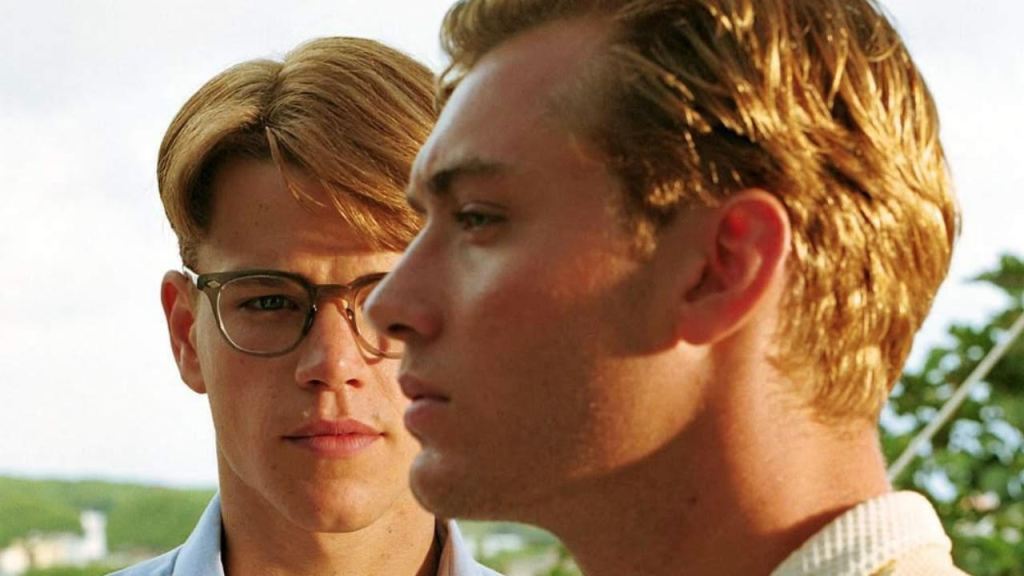
Anthony Minghella’s 1999 movie of The Talented Mr. Ripley is the gold standard of Ripley on screen – with honestly one of the best casts of the past 30 years – Matt Damon as Ripley, bronzed Jude Law as Dickie Greenleaf, Gwyneth Paltrow, Cate Blanchett and Philip Seymour Hoffman all basking under the sun-drenched Italian skies. It’s a gorgeous movie which makes its violence all the more harrowing and Damon’s subtle, yearning performance remains one of his best. 

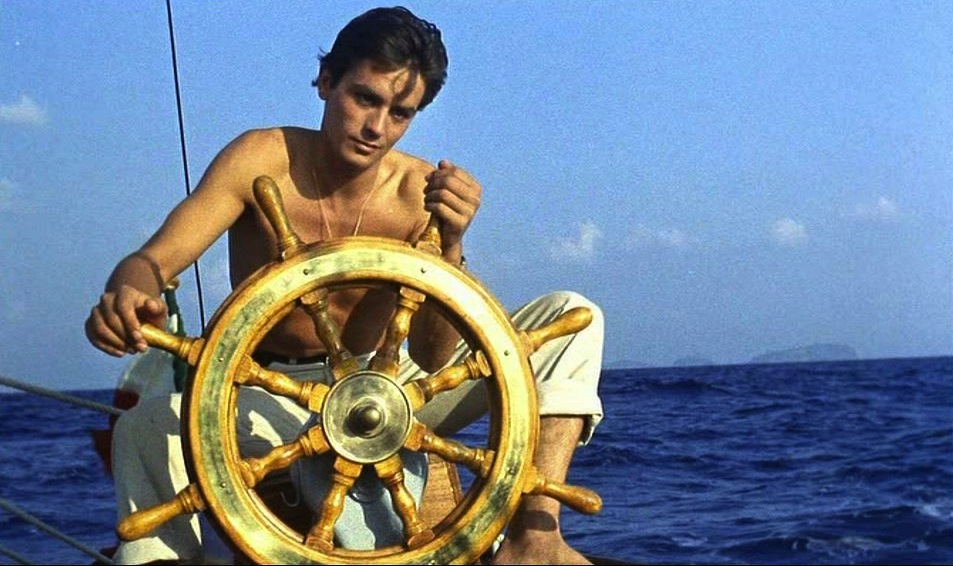
But while Minghella’s Oscar-nominated hit is Ripley’s biggest cinematic moment, the character actually made his film debut way back in 1960 in René Clément’s French adaptation Purple Noon. It shares much of the same colourful excess and elegance of Minghella’s take. Many people think Alain Delon was the most handsome actor of all time, and how could one argue? More controlled and less human than Damon’s Ripley, he’s a living work of art. While it deviates a fair bit from the book, Purple Noon in my mind stands close to Minghella in depicting Ripley’s first, most awful crime.

The new Netflix series Ripley eschews colour for a glittering black and white look. Like most Talented Mr Ripley adaptations it’s beautiful to look at, and full of sharp little details as it unfolds over a leisurely eight hours, which gives the story room to breathe (although it can be a bit too slow-moving at times). Andrew Scott of Sherlock and Fleabag fame has a nice haunted charisma about him as his Ripley slides into murder, although at 47 he’s a little on the old side to play young Ripley. 

Yet, I have to admit, while I quite like The Talented Mr Ripley in all his film incarnations, I really enjoy the other four novels in the series, where a slightly older Ripley has settled down with a gorgeous, enigmatic cipher of a rich wife at an estate in France, living the life of leisure he so adored in Dickie Greenleaf’s day. The “origin of Ripley” in the earlier books is a great yarn, but there’s something even more alluring to me about a Ripley who’s settled into luxury and yet still has dark urges he has to give in to. Much of the ‘charm’ of the Ripley novels is seeing how this sociopath lures you into rooting for him as he attempts to get away with his various crimes. 

Highsmith’s second book, Ripley Under Ground, a twisty narrative revolving around art forgery, suicide and deception, introduced the adult Ripley, juggling his comfortable life and his homicidal habits, and is a fine introduction to his changed circumstances. It received a pretty obscure adaptation in 2005 starring a rather awkward Saving Private Ryan’s Barry Pepper – and I have seen it, but so long ago that I barely recall it. 

Ripley’s Game, the third novel, has gotten two high-profile adaptations over the years, both departing a bit from Highsmith’s original but nicely capturing the sick morality game Ripley plays with a victim after an unintentional slight. It’s a great example of how Ripley plays the ordinary man, but conceals a beast within.  

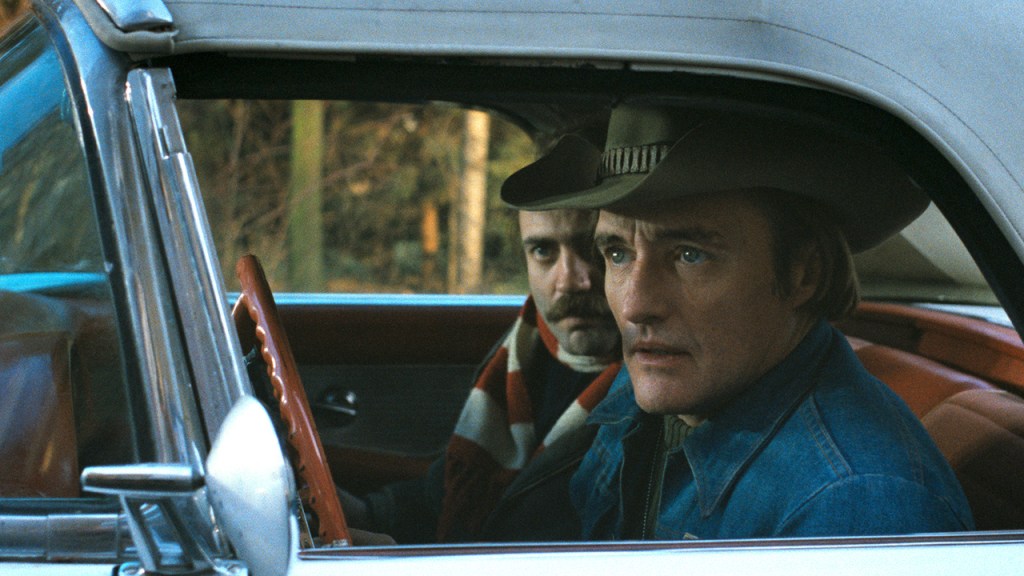
As a very offbeat take on Ripley’s Game, Wim Wenders’ 1977 The American Friend is quite a good movie, but casting Dennis Hopper as Ripley – in a cowboy hat! – turns it into something rather different than the source material. Hopper’s Ripley is twitchy and eccentric, and it feels like there’s far more Hopper than Ripley in the mix. 

The 2002 version of Ripley’s Game was not a huge success, but has held up fairly well – its main charm and detriment is the casting of sinister John Malkovich as Ripley. His Ripley is blatantly malign, pushing the story a bit harder in the direction of making Ripley a supervillain rather than a man without a conscience. But Malkovich is, as always, great fun to watch as the sneering Ripley, and unlike Hopper, he doesn’t feel miscast – just a bit on the unsubtle side. 

Meanwhile, the final two books in Highsmith’s series are ripe for the plucking – The Boy Who Followed Ripley features a twisted young ‘fan’ of Ripley, while Ripley Under Water closes out the series by having all of Ripley’s past ghosts come back to haunt him in a solid thriller. They’re all great quick reads that linger in your mind. 

I’ll always lean towards Highsmith’s tightly controlled novels over all the Ripley adaptations, I reckon, but Ripley has still proven remarkably endurable over the decades for film. None of the adaptations have been terrible and some, like the glossy Minghella epic, Alain Delon’s peerless sculpted beauty and Malkovich’s sneering elder statesman, have been great. 

There’s a little Tom Ripley in most of us, I believe, and sometimes, there’s nothing quite like watching a murderer get away with it, and pondering the strange charms one can find in the evil that men do. 

Meanwhile, elsewhere on the internet…

Here’s a brief look at a few other things I’ve been working on recently!

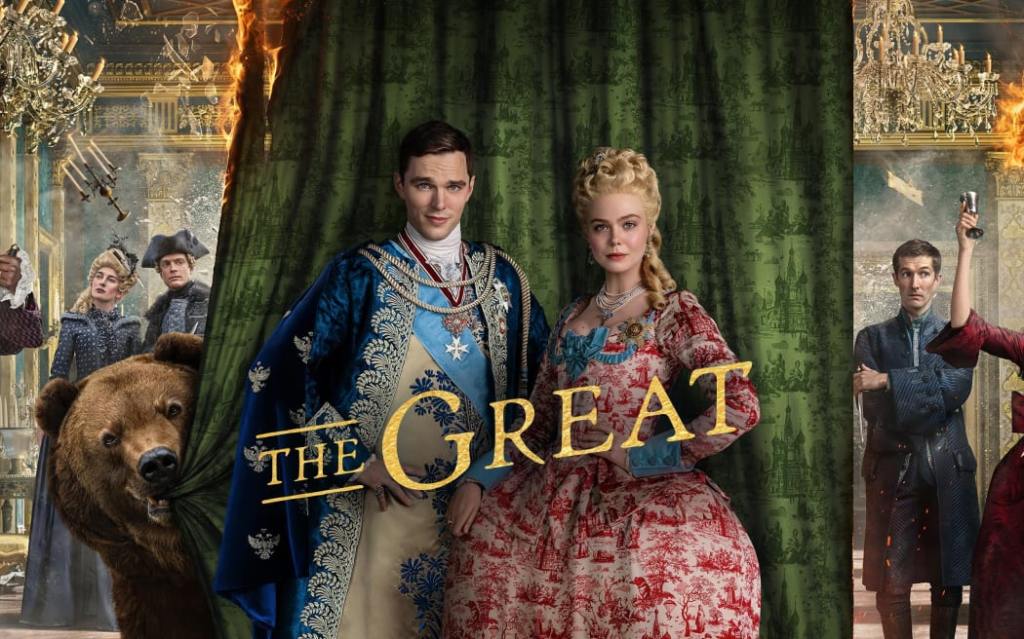
One of my favourite, somewhat underrated TV/streaming shows of the last couple years is the hilarious, bawdy and rude semi-historical comedy The Great. (It’s by the writer behind Poor Things and The Favourite and if you haven’t seen it, it’s highly recommended!) I wrote about my love for this gorgeous and filthy series looking at the corruption of power over for Radio New Zealand‘s occasional series of shows to watch in this age of peak content – read it here:

What We’re Watching: The Great

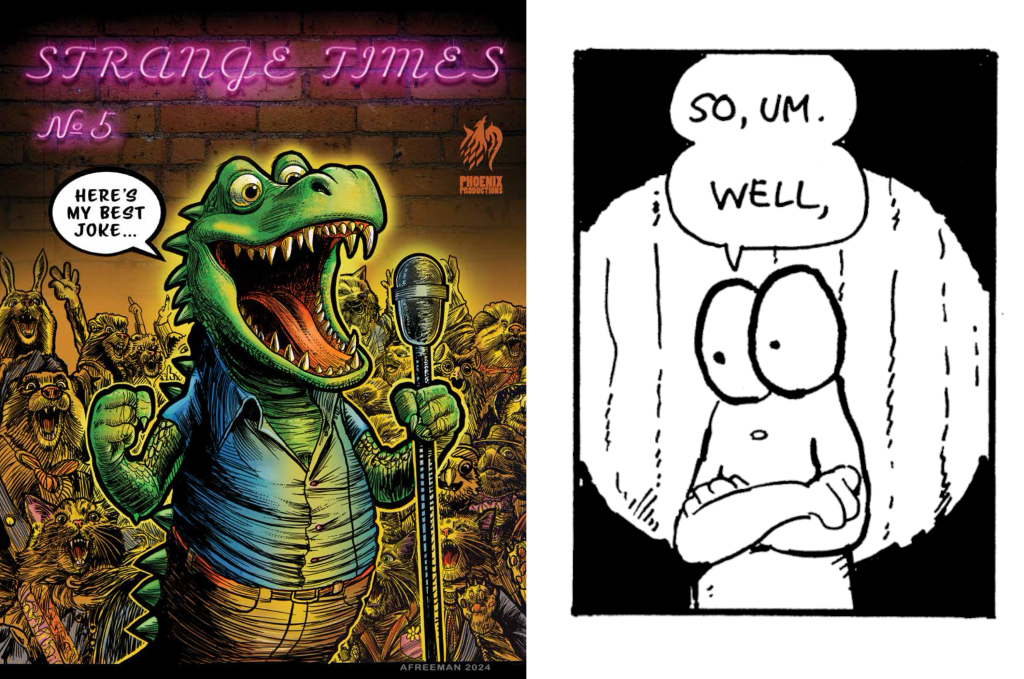
Meanwhile, while I’m slowly working away on the next issue of Amoeba Adventures – more to announce soon! – you can find an all-new one-page Prometheus the Protoplasm strip in the latest issue of Phoenix Productions’ Strange Times anthology magazine!

This issue’s theme is “My Best Joke” and well, I’ve never been shy about telling a joke, so I’m pleased to take part in a crew of small-press all-stars that includes Teri S. Wood, Matt Feazell, Alan Groening and many more! You can order the print copy right now on Amazon or you can get a PDF version downloaded from Phoenix’s website!

A gay old time: Revisiting Three’s Company in a changing world

Come and knock on our door. We’ve been waiting for you. Where the kisses are hers and hers and his, three’s company too.

Could there be a more swingin’ 1970s TV theme song? Come on, you know the words. We all do.

So while on holiday recently I was feeling a bit under the weather and, as you do, one evening I ended up watching four or five episodes in a row of ‘70s-‘80s camp sitcom Three’s Company in a row.

It was the first time in years I’d actually watched the show, but I admit that like most kids growing up in the ‘80s, I watched Three’s Company all the time. We watched everything, from classics like M*A*S*H and The Brady Bunch to also-rans like What’s Happening! and Manimal. That’s what we did in the olden days, before the eruption of a sprawling multiverse of entertainment options 24-7, when you simply watched ‘whatever was on’.

Watching a slew of Three’s Company in my vaguely sick bed recently was bizarre – I have trouble remembering what I ate for lunch yesterday, but as these goofy sitcoms unfolded I nodded in recognition – ah yes, here’s the one where they went to the farm; here’s the one where Jack makes a mob boss linguini. How the hell do I remember a sitcom episode I last watched in 1983? The inanity of childhood sitcoms, the quintessential comfort food, imprinted itself on my brain. 

The 1977-1984 run of Three’s Company seems a strange relic now, nearly 50 years (!!) since it debuted, a broad bawdy farce perched between the groovy ‘70s and a more uptight ‘80s Reaganland. The premise is pretty much the definition of problematic by modern standards  – hep cat Jack Tripper (the late, great John Ritter) pretends to be gay so he can live in an affordable apartment with two attractive young single women (Suzanne Somers and Joyce DeWitt) without offending their prudish landlord Mr Roper (Norman Fell). Hijinks ensue, somehow for eight entire seasons! 

Loose-limbed and amiable Ritter was a national treasure, of course, and like John Cleese in Fawlty Towers he carries the show on his shoulders. The women of Three’s Company fared less well; I know we were all supposed to like the late Suzanne Somers but I found her blonde ditz irritating and Joyce DeWitt’s Janet was often just a straight woman. I rather liked Priscilla Barnes’ Terri, who replaced Somers in the later years, and seemed a bit more sly and unpredictable. 

The central homophobia that drives Three’s Company is incredibly dated, but the show, mostly, was lewd and campy rather than hateful, even though there’s plenty of cringe-worthy farce humour revolving around gay misunderstandings and affairs.

Unfortunately, a lot of the ‘humour’ relies on the premise that the worst possible thing would be for Jack to actually be gay.

I grew up in a world where “fag” was the number one insult of choice by and for teenage boys. I got called one an awful lot for a few years and I’m ashamed to admit I probably called other kids it too a few times. It was stupid. 

Jack’s homophobic landlords, despite usually being the butt of the joke for their overwrought gay panic, do leave a bit of a sour aftertaste. Even watching the show as a kid, Stanley Roper and Mr Furley’s limp-wristed gay-bashing jibes seemed forced and unfunny to me.  Norman Fell’s oily Mr Roper always struck me as a little too nasty and sinister. You felt he meant it. Knotts’ goofy Furley, on the other hand, definitely felt like a closet case, and the show eased off a lot on the gay panic as it ambled along. The series ended with Jack Tripper, of course, marrying off to a nice girl. 

Did gay characters actually ever appear on Three’s Company as more than a punchline? I don’t have enough of an encyclopaedic memory to recall if they did, but the show was far more about the idea of being gay as some strange unknown rather than any kind of cultural exploration of what that meant in 1978. 

While there’s a lot of things about the modern world that are pretty terrible and backwards still, the gentle wave of gay acceptance just during my adult life makes me feel a glimmer of optimism sometimes. A good half-dozen or so of the friends I grew up with in high school later came out as gay, and I was overjoyed to see how happy and complete they seemed. I can’t imagine what it must have been like trying to keep that quiet in the ‘80s, which feels now the last real gasp of generally accepted wider cultural homophobia. 

Still, there’s plenty of people out there who still see nothing wrong with calling someone a “fag.” It’s nowhere near good enough today, of course, and a lot of people want to roll the clock back or worse. 

Three’s Company was a flimsy, unsubtle and silly show that didn’t intend to change the world like so much of today’s “prestige, event TV” – honestly, spending 800 words or so going on about it seems wildly overegging it – but at the same time, gazing back from what seems the impossibly futuristic date of 2024, it kind of shows how the world has changed, slowly, ever since Jack Tripper first knocked on that door. 

Year in Review: My top 10 pop culture moments of 2023

It’s a new year, a fresh start, a hope this year is maybe a bit less suck than the last one! I’ve complained enough about the year that was, so instead let me dive back to look at ten musical, cinematic or literary experiences that rocked my world in ’23: 

Go back to those Gold Soundz: I didn’t check out a lot of live music last year, but what I did was superb, led by the old guard showing they can still blast with the best of them. Indie icons Pavement put on a superb reunion show that left me humming the chorus to “Gold Soundz” for weeks, while I finally saw punk/post-punk legends The Damned for the first time on the back of their excellent Darkadelic album, and they melted my face. And my ears. I don’t quite know if my hearing has ever been the same.

Tonight, a blind woman and a monster came to town: I’ve been getting fewer ongoing monthly comic series these days, but one that’s on my must list is Ryan North’s brainy, witty take on Marvel Comics’ Fantastic Four, which is inventive science-bro action combined with the family heart that is key to the FF. It’s just darned fun, good comics that (so far) don’t have to be part of some sprawling pointless multi-comic company crossover to feel epic. It’s the best the Fantastic Four has been in ages. 

A long long time ago, when I was a little chick: I wrote a whole story recently asking local book lovers for their favourite New Zealand books they read and it reminded me of what an excellent year it was for NZ fiction, led by Eleanor Catton’s wickedly fun satire Birnam Wood and a two-fer by Catherine ChidgeyThe Axeman’s Carnival, an amazing novel about a bird who becomes a social media celebrity, and the nearly as good teenage angst thriller Pet. Go team NZ!

You don’t know the first thing about piracy, do you?: There was a lot of great TV in ’23 – Reservation Dogs, that banger final Succession run, Poker Face, and I’m only just now discovering how fantastic The Bear is – but the one that sticks with me the most is Taika Waititi’s unexpected gay pirate comedy Our Flag Means Death, which in its NZ-filmed second season truly transformed into a delightfully sweet romance mixed with swashbuckling pirate fun. A gem. 

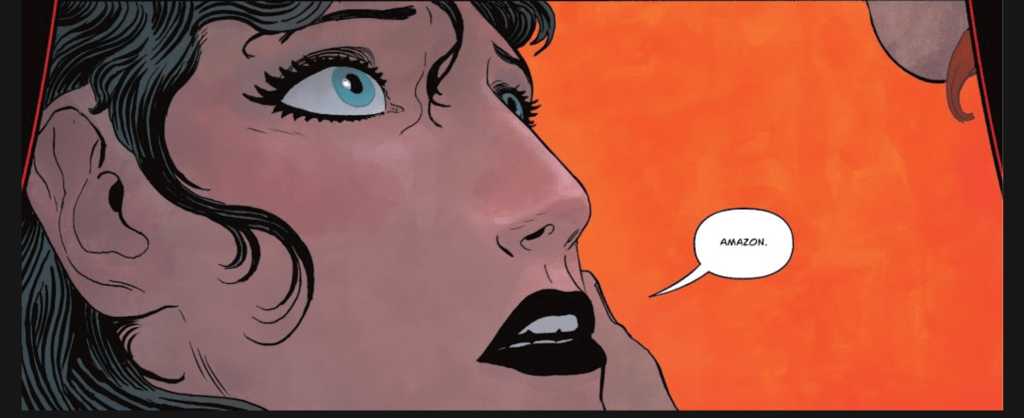
And in an instant, I know I’ve made a terrible mistake: Daniel Clowes has been blowing my mind since long ago when I first stumbled on an issue of Eightball. His comics are less prolific than they once were but they’re worth the wait, with this year’s graphic novel Monica (art at top of post) quite possibly his masterpiece. A sweeping story of one woman’s exploration of her own mysterious past, it’s a technically dazzling (those colours!), assured and layered work that you’ll keep churning over in your head for days afterwards. It’s not a speed-read like many modern comics, but an experience that might just leave you feeling like the world is a slightly different place when you’re done. 

All my life I’m looking for the magic: Yeah, I know, physical media is dying, bla bla blah, but while I’m definitely a bit more choosy about what I buy in the age of internet abundance, I can’t pass up a good mix, and UK record label Cherry Red constantly is putting out fantastic CD box sets of eclectic punk rock from 1977-1982, power pop from the UK and US and ’80 synthpop that spans my mid-1970s to late-80s sweet spot. Sure, you can find a Spotify playlist, but I enjoy the curated, elegant physicality of these great boxes and the buried treasure they contain. Each set is hours and hours of gems waiting to be rediscovered and if I close my eyes I can almost pretend it’s coming from a cassette mix tape as I drive my old Volkswagen Rabbit around town. 

That monster … will never forgive us: This was the year comic-book movies stumbled and became just as cliched as the Will Smith and Tom Cruise action movies they replaced. But look across the seas to Japan and some of the year’s best blockbusters came from there, with kaiju instead of capes in the terrifically oddball Shin Ultraman and the bizarre Shin Kamen Rider and best of all, the monumental reimagining of the biggest beast of all with Godzilla: Minus One. There were decent superhero moments this year, but not one of them compared to the kinetic thrill of watching Ultraman or Godzilla stomp on buildings with fresh energy. 

Dear Allen, thanks for your letters. I was glad to hear from you: William S. Burroughs was not a decent man. A drug addict, the accidental murderer of his first wife, homosexual in a repressed era, his twisted, tormented writings are decidedly not for everyone. And yet, and yet. This year I found myself once again reading Burroughs’ books like The Soft Machine and turning to his nonfiction writings, particularly his collected letters, because the nonfiction shows so well what went into his far-out fiction. The Letters of William S. Burroughs 1945-1959 fascinated me because it revealed the real person behind the sneering, sinister king of debauchery Burroughs became. It’s extraordinary to read how human and lonely Burroughs is in these letters, wrestling with unrequited love, addiction and ‘normal’ society, and his determination to find new shadowlands behind the world we live in. A stoic mask soon settled over his public face, but here we learn how he got there.

To be honest, when I found out the patriarchy wasn’t just about horses, I lost interest: “Barbenheimer” might have been a marketing technique gone viral, but it was a heck of a lot of fun and rewarding to see two very good movies leading the summer box office and showing up the latest dusty, unnecessary franchise-extender Indiana Jones sequels and the like. Barbie was a huge hit, but it was also just subversive enough to charm all but the most cynical, while Oppenheimer was Christopher Nolan’s best movie yet led by a dazzling Cillian Murphy and sequences on the iMAX screen downtown that melted my face nearly as much as a Damned concert. 

The meat goes into the oven: This one’s a bit self-indulgent, but I had a very good year stretching my feature writing muscles this year in my paying gigs, between several book reviews for the NZ Listener magazine and writing for Radio New Zealand about stuff I love like barbecue restaurants, fans of weird movies, used book fairs, film festivals and more. Turn your passions into words, folks, and let’s all have a fine 2024!

Detective Kenneth Branagh is here to solve all of life’s mysteries

Every actor has a face that fits certain roles better than others. 

Kenneth Branagh is lots of things – an acclaimed Shakespearean whose film Henry V helped seal my lifelong love for the bard, a director of Marvel movies and action franchises, an Oscar-winning writer, an actor who slots nicely into big-budget productions from Oppenheimer to Harry Potter films to give them a touch of class. 

But my favourite Branagh as an actor (or Sir Kenneth, if you like) is when he’s solving a mystery or two. He’s an actor who feels born to mull over and solve crimes, to be the bloke at the end of the picture who tells the cast of characters who done it and why. 

He’s played two pretty iconic detectives – Agatha Christie’s Hercule Poirot in three movies, and the late Henning Mankell’s Scandi-noir police investigator Kurt Wallander in a series of excellent English-language TV adaptations. 

Heck, at the very start of his career 30+ years ago a baby-faced Branagh also served up a fine Hitchcockian noir homage with the twisty Dead Again, where he plays a detective who’s not quite what he seems. 

I enjoy watching him in all of them, for even when the material itself is a bit tatty, Branagh remains a cool, elegant centre, whether he’s the magnificently mustached Belgian Poirot or the tense, stressed Swede Wallander. Sir Kenneth excels at showing the mind at work solving whatever cases life throws at him. 

Branagh’s Agatha Christie adaptations of Murder On The Orient Express, Death on the Nile and A Haunting In Venice became a bit of an unlikely low-key franchise the past few years. The star-studded let’s-solve-a-murder thrillers throw back to similar movies of the 1970s. They are more popcorn diversions than timeless classics, really, but I have fun watching every one of them. (Death On The Nile, hampered by very obvious pandemic shooting restrictions and a miscast Gal Gadot proving she really can only play Wonder Woman, is the weakest, while moody quasi-horror movie Haunting In Venice, which quietly slipped into release earlier this year, is quite solid.) Poirot is a classic character that Branagh brings a nice bit of haunted depth to, traumatised by his World War I experiences but animated by a firm sense of justice. 

The Wallander series introduced me to Mankell’s compulsively readable, dour novels, and the Swedish TV productions of them too. Set in an endlessly windswept, grim small-town Sweden, they’re dark but addictive like the best crime fiction. Branagh’s performance as the jittery Wallander, who never quite seems to get enough sleep, always holds my attention as he works his way to a haggard justice for crime’s victims. There’s a mood of exhaustion that hangs over Wallander which could be depressing, but somehow, it works for me, anchored by Branagh. 

However, for a man who’s tackled many British icons from Shakespeare on down, there’s one role I’d still love to see Sir Kenneth step into – give us a Sherlock Holmes, with, say, Alfred Molina as an excellent choice for his Watson. It doesn’t need to be some meta reinvention like Benedict Cumberbatch’s fine series.

Plonk us in Victorian England, give us a mystery or two to solve, and watch Sir Kenneth’s face go to work. As a filmmaking triple-threat, surely Sir Kenneth could write, direct and star in a Sherlock Holmes movie to add to his detective’s kit. 

Life is full of mysteries, after all, and we still need great detectives to solve it.