 “I yearn to rely on a higher will. I fear what I am capable of in its absence.” – E.B. Farnum
Yeah, yeah, everyone’s been talking about that show with the dragons and thrones this week, but I’ve been far more engaged by a mud-soaked, profane and utterly human deep dive into the mire of history.
I’ve been rewatching the definitive western saga “Deadwood” in preparation for the long-awaited movie conclusion coming later this month, and while I generally enjoy that “Thrones” stuff, I’ll take the gin and grit of creator David Milch’s unblinking author’s eye in “Deadwood” every time.
The show’s incredibly dense writing and plotting make it one you have to pay close attention to – every scene is packed with allusions and the bustling, chaotic energy of a gold rush town slowly being pulled into the American expansion west. “Deadwood” populated its South Dakota town with a Noah’s ark of battered, eccentric characters during its three-season run from 2004-2006, including Ian McShane’s indelible Al Swearingen and Timothy Olyphant’s flinty-eyed Sheriff Bullock. I could list a dozen terrific characters from the show and have a dozen more left to spare.
But yet, the one I keep coming back to, captivated, on my recent rewatch of the series is perhaps its most vile – William Sanderson’s oily, unctuous and verbose E.B. Farnum, Deadwood’s powerless “Mayor” and hotel owner. Farnum is the grand fool of Milch’s Shakespearean tapestry in “Deadwood,” always cringing and yet calculating at the same time, a grandiloquent sleazebag of a man.
Sanderson’s terrific, underrated performance of this Wild West Uriah Heep is hilarious and sad, as Farnum is constantly humbled and deserves every bit of it. There are times when you might feel a twinge of pity for his bluster, but then he spouts more racist rhetoric or conniving kiss-assery and you’re back to despising him again. He’s a grifter whose poetic, meandering soliloquies are often breathtakingly beautiful, yet they’ll never be appreciated because of the toadying weasel they’re being uttered by.
“Deadwood” is a show about man’s pull between civilisation and freedom, ambitions and realities. America’s history is full of a rich tapestry of big-mouthed, oblivious dreamers who puff themselves up full of vanities and talk their way to success. As many of them fail as succeed, but the point is in the striving.
E.B. Farnum, in his hapless, malicious way, is perhaps the greatest American in TV history.
 The best science fiction holds up a mirror to the world we live in. “Alien Nation” was never quite a household name, but the brief cult sci-fi franchise of the late ‘80s still holds up today.
 Fortunately, that wasn’t the end for “Alien Nation,” which debuted as a series on Fox TV in September 1989. It’s in the short-lived TV series where “Alien Nation” really blossomed, spearheaded by Kenneth Johnson, creator of another great ’80s cult sci-fi series, “V.”
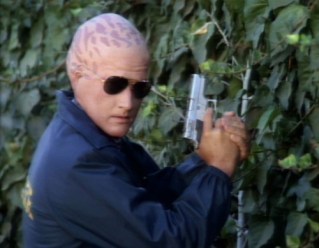 The story carries on with the same odd-couple detective duo from the movie, but recast and given more satisfying depth. Gary Graham’s Detective Sikes is all ’80s mullet and brash trigger-happy cop cliches at first, but the character becomes convincingly more sympathetic and layered as the series progresses. Eric Pierpoint is excellent as Francisco, who balances personal courage with frequent frustrations over the racism he encounters and the culture he’s left behind. The story of his family trying to fit in – his wife, teenage son and daughter – is often more fascinating than the TV show’s cop mystery of the week storyline.
 Doom Patrol have always been weird, a team of misfits and outcasts kind of like the X-Men, but more so. Their original 1960s comic adventures are a bizarro Silver Age blast, but “my” Doom Patrol really burst into being with Grant Morrison’s seminal late 1980s reinvention of the concept. Morrison’s twin masterpieces of Doom Patrol and Animal Man back in the day blew my teenage mind.
 One of the newer of the approximately 419 streaming services out there, DC Universe premiered last year with Titans, which was a mixed success for me – I dug seeing the “Teen Titans” come to life and there were some great parts, but the show had very scattered storytelling and a self-consciously adult tone that felt forced (Unless you really thought we needed to have a blood-soaked Robin muttering “F—- Batman” to make the character work better). Doom Patrol is more adult by nature, so the swearing and mature themes work better (I’ll never get tired of hearing Cliff Steele aka Robotman saying, “What the F—-!?!?” in response to Doom Patrol’s never-ending parade of weirdness).
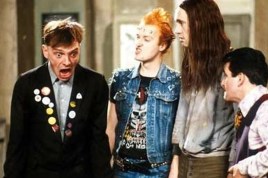 Rik, Vyvyan, Neil and even comparatively dull Mike were my Beatles of comedy. Like the best British shows, it knew when to quit – 12 episodes and that’s it, and with the late, great Rik Mayall leaving us way too soon in 2014, there’ll never be another.
 Several times, episodes build up with plots involving things like axe murderers or vampires or marauding medieval peasants only to abruptly draw curtain on the episode. Nothing really matters, the ‘madcap adventures’ can be waved off and the show will restart as normal the next episode. There’s something very existential about these damned housemates, trapped in their greasy grey pigsty and never changing, being squashed by a giant eclair in one episode and back for more in the next.
 But “Frasier.” Ah, “Frasier.” For me, “Frasier” is the warm witty blanket of ‘90s TV, perfectly constructed one-act farces that I can watch over and over again without tiring. If asked, I’d have to say that I think “Frasier” is the peak of the traditional sit-com form – one that’s been deconstructed and reconstructed often since, but rarely bettered.
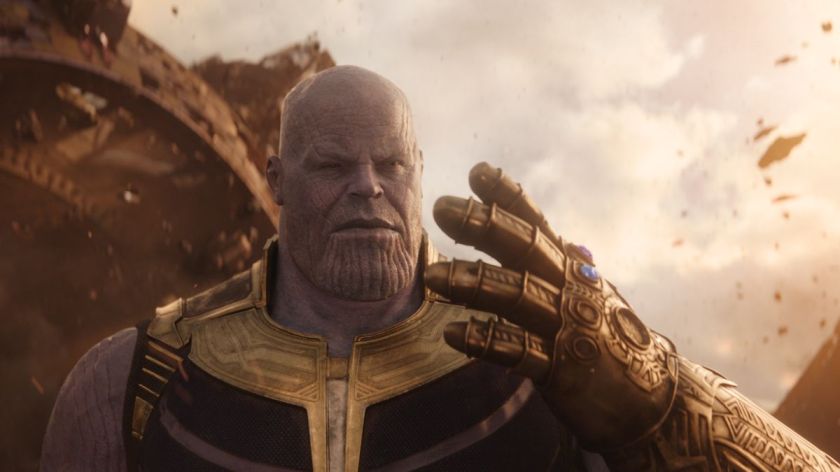 Superheroic golden age: Every once in a while I think how 13-year-old me would’ve reeled at the idea of a new big-budget superhero movie or TV show every few months. I pretty much dug them all in various ways and all the comic book moments they brought to life — Avengers: Infinity War somehow magically capturing Jim Starlin’s complicated villain Thanos without him seeming absurd; Black Panther’s Shakespearean grandeur, as the king returns to take his crown; the gleefully over-the-top Aquaman, with a pitch-perfect Black Manta/Aquaman battle that had me grinning like a loon; the fantastic third season of Daredevil bringing Matt Murdock and Wilson Fisk’s battle to a climax; Ant-Man and the Wasp turning San Francisco’s Fisherman’s Wharf into a size-changing playground. (And I’m still waiting for Into The Spider-Verse to open in New Zealand!)
 “Robin” by Dave Itzkoff: Robin Williams was a remarkable talent who battled addiction and tragedy much of his life. Schlock like Patch Adams made us forget how amazing he could be; this definitive biography brings him back to life and reminds us of what we lost.
 Black entertainment: They’ve all got ‘black’ in the name and they all provided strong, uplifting portrayals of the African-American experience – Black Panther, which broke a zillion box office records along the way; Black Lightning, which took a lesser-known DC superhero and gave us one of the realest portrayals of a strong black family on TV in ages; BlacKkKlansman, which was Spike Lee’s strongest movie in years, as feisty, creative and witty as “Do The Right Thing.”
  Doctor Who: First off, I love the idea of a female Doctor. I think Jodie Whittaker was an excellent casting choice and did a fine job this season. But she was let down by trite and sloppy writing and a general lack of invention and passion in a pretty disappointing first season. I actually would’ve liked to have seen more done with the ramifications of the Doctor’s first reincarnation as a woman after 12 men and 1000 or so years, but the show barely dealt with it. The show stepped too far away from acknowledging the Doctor’s vast lifespan and history, and too often the Doctor came off as an uncertain novice. I was getting sick of the Daleks, too, but few of this year’s antagonists were memorable and the self-contained episodes often lacked real drama. Three companions is far too many, and the stories generally were bland sci-fi 101. The best of the episodes were ones like the Rosa Parks episode or the Indian partition story which felt like they had something to say. The worst were generic “monster of the week” tales like “Arachnids in the UK” with a completely unsubtle Trump stand-in. With the usual keyboard warrior suspects ranting and raving how a woman Doctor might give everybody cooties, I was hoping the show would shut them up with an utterly amazing year, instead of one that was just sort of OK. Let’s hope the next season brings back some of the mystery, invention and drama the best of the David Tennant years had.
 The First Man: I really wanted to like this Neil Armstrong biopic starring Ryan Gosling, but I walked out massively disappointed by its turgid tone, seasick-inducing attempts to realistically replicate the experience of space flying, and disappointed by Gosling’s stone-faced portrayal of a man
  Death, devourer of all: This year was pretty rough on my cultural heroes. I know, a lot of them were in their 80s and 90s, but it still sucks. Stan Lee and Steve Ditko, creators of millions of comic-book dreams. Harlan Ellison, writer with a voice like lightning and a creator who shaped my worldview more than most. Philip Roth, the last of a generation of great American writers like Updike and Vonnegut. Mark E. Smith, tattered, debauched voice of the clattering UK band The Fall. Legendary voice Aretha Franklin. Endlessly curious mind Anthony Bourdain. “Frasier’s” grand, underrated John Mahoney. The Lois Lane of my childhood dreams, Margot Kidder. Way too many others. Time is cruel, ain’t it?

 Nik Dirga