Here’s a brief look at a few other things I’ve been working on recently!
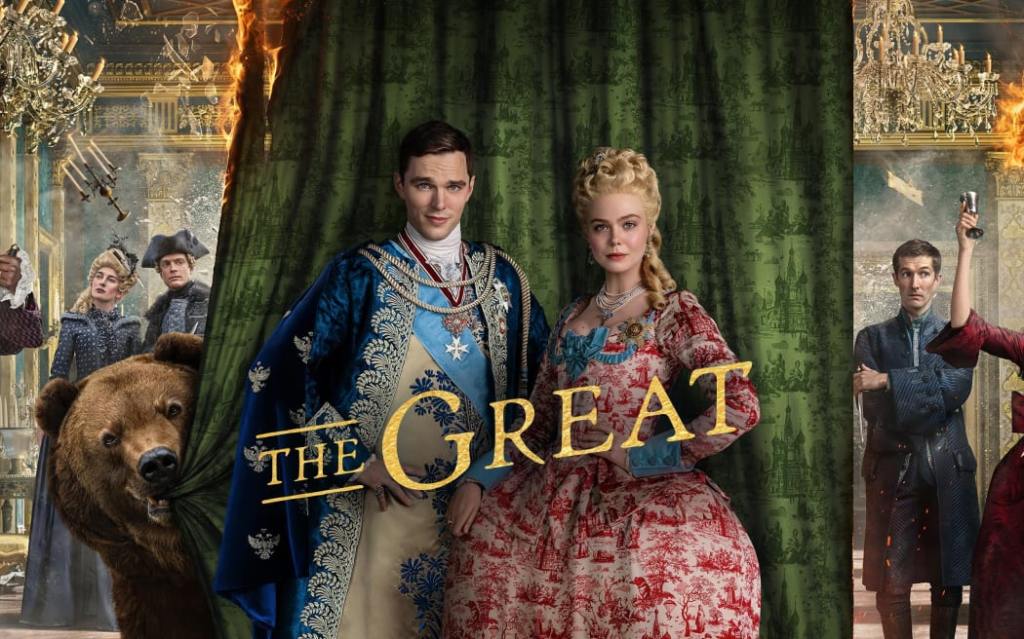
One of my favourite, somewhat underrated TV/streaming shows of the last couple years is the hilarious, bawdy and rude semi-historical comedy The Great. (It’s by the writer behind Poor Things and The Favourite and if you haven’t seen it, it’s highly recommended!) I wrote about my love for this gorgeous and filthy series looking at the corruption of power over for Radio New Zealand‘s occasional series of shows to watch in this age of peak content – read it here:
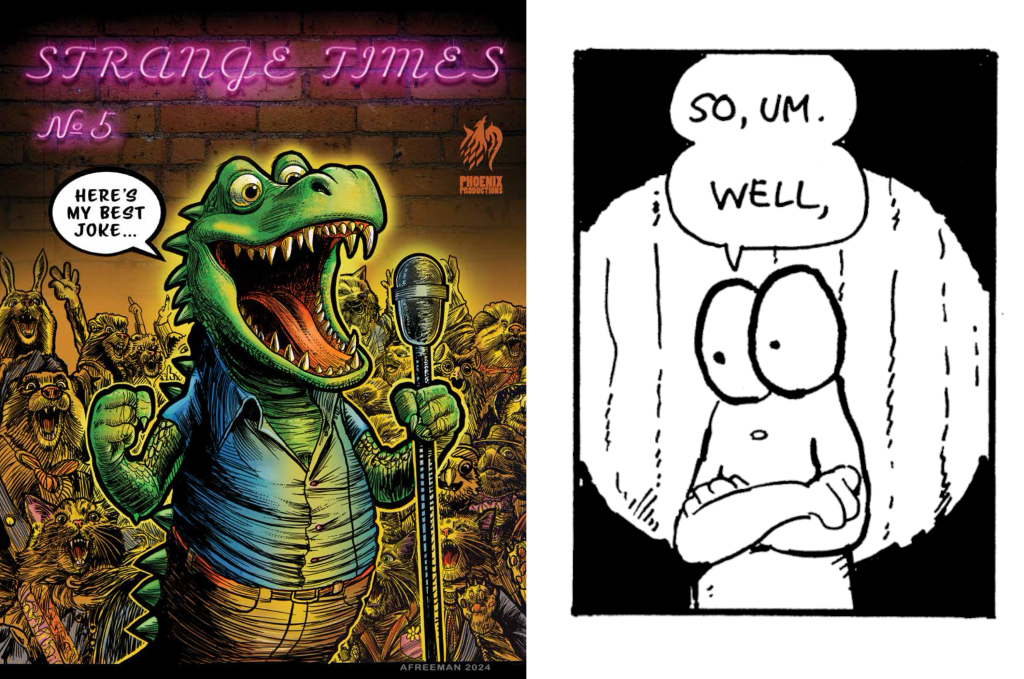
Meanwhile, while I’m slowly working away on the next issue of Amoeba Adventures – more to announce soon! – you can find an all-new one-page Prometheus the Protoplasm strip in the latest issue of Phoenix Productions’ Strange Timesanthology magazine!
This issue’s theme is “My Best Joke” and well, I’ve never been shy about telling a joke, so I’m pleased to take part in a crew of small-press all-stars that includes Teri S. Wood, Matt Feazell, Alan Groening and many more! You can order the print copy right now on Amazon or you can get a PDF version downloaded from Phoenix’s website!
…I’m a bit consumed by work and life at the moment, but let’s take this moment to remind all three of my faithful readers that my life’s work, my magnum opus, THE BEST OF AMOEBA ADVENTURES, is still available over on Amazon! If you haven’t bought this fine collection of nearly 350 pages of my long, long-running Amoeba Adventures comics, why the heck not?
“One of the best small press comics of the 1990s!” – Tony Isabella, creator of Black Lightning and writer for Ghost Rider, Hawkman, Daredevil, Iron Fist and a heck of a lot more!
“This book is awesome! I’ve been a fan and reader of AA since issue #4 and I’ve seen the growth in both story and art over the years by Nik.” – Tony Lorenz, creator of Futuro Tierra
“My all-time favourite small press book!” – Terry Flippo, creator of Marbles, Axel and Alex and much more!
The official blurb:
Nik Dirga’s Amoeba Adventures was one of the most critically praised small press comics of the 1990s. Now, for the first time, the best of long out-of-print stories by Nik with additional art by Max Ink are collected along with bonus rarities and more, including guest pin-ups by Dave Sim, Sergio Aragones, Matt Feazell and Stan Sakai. Dive on into the story of Prometheus the Protoplasm, Rambunny, Spif, Ninja Ant and Karate Kactus, and meet some of the strangest heroes and villains of all time as they battle toxic mushrooms, gorilla gangsters, time travel to the dinosaur age and even appear on David Letterman!
Collecting material from Amoeba Adventures #1, 4, 5, 8, 9, 11-13, 16, 17, 21, 22, 27, Prometheus The Protoplasm #4, Prometheus: Silent Storm; Prometheus Saves The Earth and Amoeba Adventures Fifth Anniversary Special.
Thanks as always for your support and to those who’ve already grabbed a copy!
Once upon a time a million years ago, your worth as a journalist was measured by your “clippings file.” It was your best interviews, your sharpest breaking news, your most erudite commentary, all painstakingly clipped from whatever newspaper/magazine you were published in, kept in a file, photocopied and sent off whenever you applied for a new gig.
That’s all jurassic-era stuff now, to be honest, and these days my “clips” are 90% composed of bits and bytes. My “clippings file” of recent work is basically just a link on this webpage, really.
But, because I’m an old hand in the business, I’ve got a hefty box of clippings that still, for some reason, I’ve carried around the world with me and which I periodically pull out once a decade or so to tidy up – some of the clippings now nudging past their 30th birthday.
When I first moved to New Zealand 18 (urk!) years ago many of these clippings seemed a bit more current, to be fair, and we were still moderately in a print-favourable environment for journalists then. You never know, a feature profile I wrote back in America might’ve been just the thing to impress a new boss.
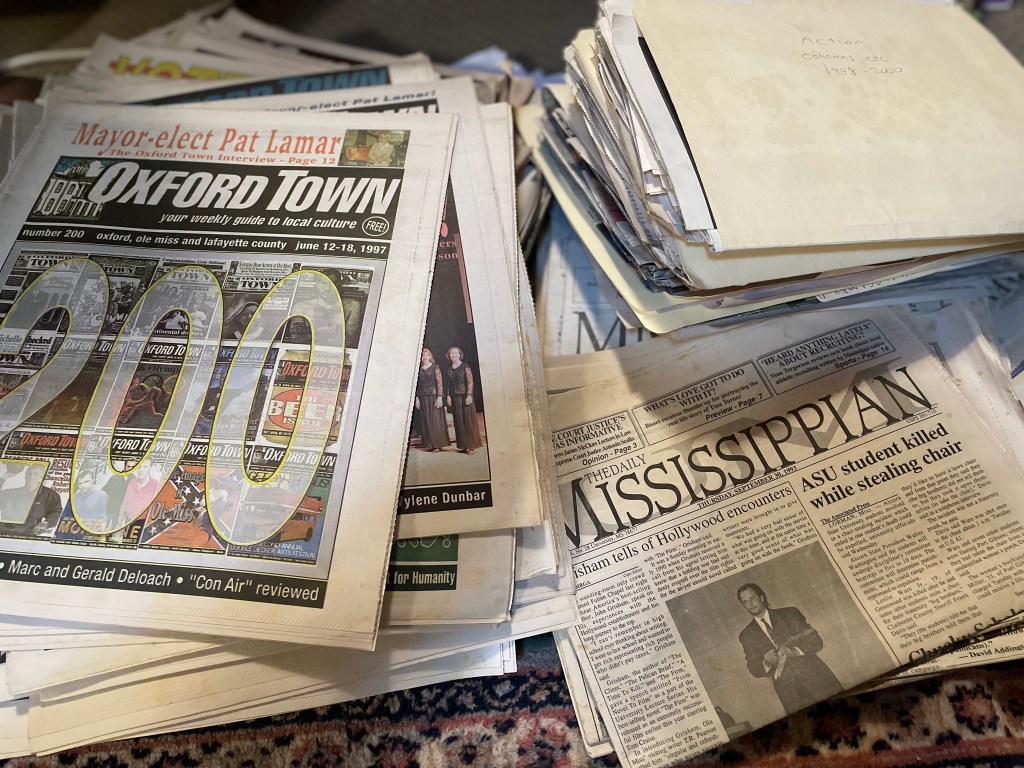
The box contains the very first paid journalism I did for TheDaily Mississippian college paper 30 years ago now, like the time I interviewed California Gov. Jerry Brown (and accidentally stepped on his foot) or that time I had a daily newspaper strip. It contains more than 100 issues of the local “free alternative weekly” newspaper I worked at and then became editor of, Oxford Town. I kept all the issues I edited, because I still, 25 years on, remember every silly story, every goofy design choice, every snarky pun I tried to sneak past the publishers. You never love and hate a job quite like the very first job you feel truly good at, you know.
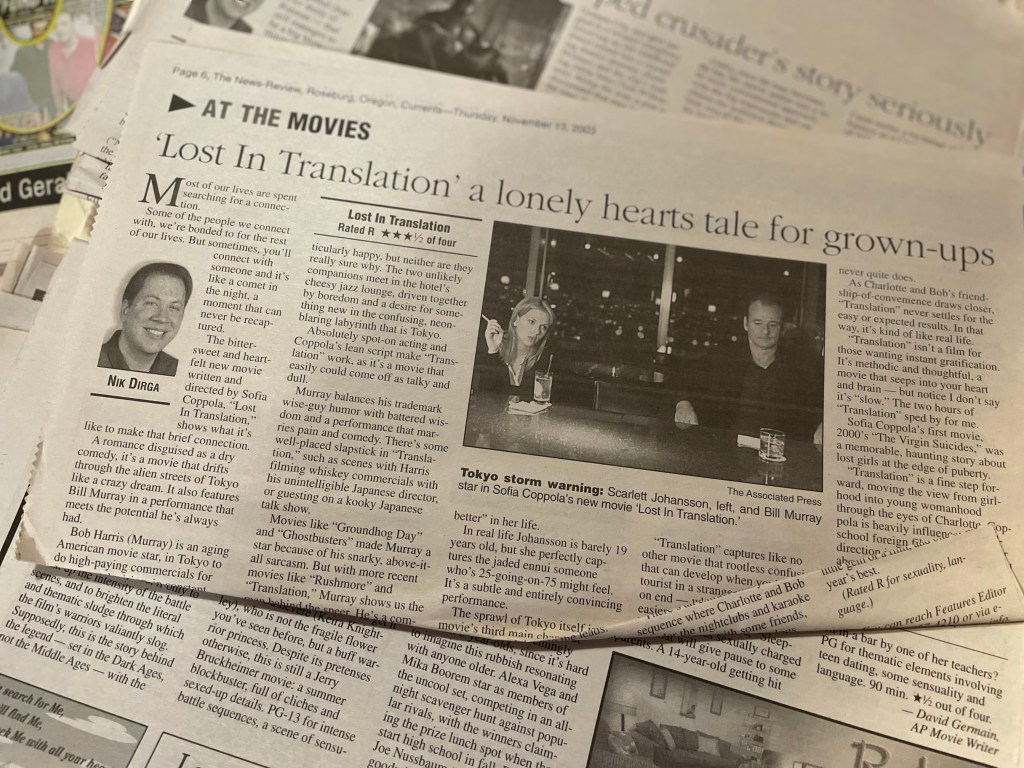
The box endures, newsprint archaeology of a so-called career through my college days in the 1990s and into the early 2000s, to a tiny newspaper in Oakdale, California where I lasted an anaemic 8 months, to the newspapers in Lake Tahoe I edited for years, to the great little paper in Oregon I worked at just after I got married and had a kid.
There’s feature interviews I wrote about Pulitzer-prize winning authors and Russian painters and zoo veterinarians and chocolate makers. There’s endlessly navel-gazing columns spanning my optimistic 20s and early 30s that I’m both kind of proud of and embarrassed by these days, lots of random music commentary, a long run of video review columns (hey! remember video stores?) and more. If you want to know what I thought of Terminator 3: The Rise of the Machines, the box is the place to go! Hell, there’s even a couple of journalism awards I won!
None of this is remotely useful to me in my alleged career these days, working as a digital journalist and factchecker and freelance writer and whatever the heck else it is I do in an industry that’s changed an awful lot in the 30 years I’ve been doing it. A lot of my writing was very of-the-moment stuff that matters little today. So I could just toss all of this stuff that’s gone from Mississippi to California to New Zealand with me.
But, still. If I throw out a newspaper I edited 25 years ago, that’s it. It’s essentially erased. There’s no website carrying most of its contents, no scanned repository of most small-town newspapers. Heck, even most newspapers unless they’re The New York Times barely have any kind of online archive past the last decade or so. Contrary to what sometimes feels to be the case, all of life isn’t online.
I can pare it down. I have no earthly reason to keep three copies of an issue of a newspaper I edited in 1997 that I was particularly proud of at the time, really.
The box is hefty and awkward and old-school, but even long after the ink has dried on those pages, it feels like it still means something, somehow. Journalists live by their words.
I’ll whittle the box down a little bit more again in this go-round, but will end up keeping most of it still, where it’ll end up in the back of a closet for another several years, a silent testament to the stories I once told and the deadlines I once met. Heck, maybe one day my son will inherit it and either treasure or trash it all.
You can just throw out the stories of your life, but why would you?
Almost 40 years ago now, the DC Comics universe went through a bit of a crisis. Crisis On Infinite Earths debuted in April 1985 and was one of the first giant “shared universe” crossovers, a sprawling epic that brought together multiple worlds and changed them forever.
Meanwhile, just about at the same time, another universe-spanning 12-issue all-star miniseries was going on – but decades later it’s nearly forgotten, even though it was kind of the last gasp of that “pre-Crisis” universe.
DC Challengeis a 12-part miniseries that also debuted in 1985, but instead of some carefully orchestrated event, it was a loose and wacky round robin jam comic where each issue was written and drawn by a different set of creators, bringing together everyone from the big guns like Superman and Batman to the obscure like Viking Prince, Congorilla and Adam Strange. Great comics writers and artists who played a big part in the ‘pre-Crisis’ DC Comics world joined in – Mark Evanier, Gerry Conway, Len Wein, Roy Thomas, Curt Swan, Gil Kane and many more.
Jam comics by their very nature are probably a little more fun for the creators than the reader, to be honest. They’re a creative exercise that stumbles along from player to player and resist any attempt to smooth out the bumpy transitions. But they’re also kind of fun because literally anything can happen.
DC Challenge is still an awful lot of goofy fun, maybe because it isn’t trying to change the entire comics universe. Instead, it’s a giant sandbox paying tribute to DC’s then-50-year-old history. Set outside “continuity,” it reads now as a kind of fond farewell to the pre-Crisis DC Universe where you’d regularly have Superman turned into a blimp by red kryptonite. A little less “serious” universe.
You get such oddities as cowboy Jonah Hex transported to the present day, Deadman teaming up with Plastic Man’s sidekick Woozy Winks, a Batman / Mr. Mxyzptlk encounter, a cameo by Humphrey Bogart, and creators pulling obscurity after obscurity from DC’s vast library of old characters, whether it’s Space Cabby or B’Wana Beast.
Is DC Challenge “good,” exactly? Not quite – it’s nowhere near as emotional or skilled a spectacle as Crisis On Infinite Earths with the late great George Perez’s stunning art, still my gold standard for everything-and-the-kitchen-sink comics storytelling. But it’s an awful lot of loose-limbed fun even when the story threatens to crumble entirely under the weight of a dozen or so authors trying to make sense of each other.
Sometimes a writer comes along and throws out a bunch of cool bits another threw in (at one point, Albert Einstein becomes an endearing cosmic-powered character in the DC Challenge carnival, only for rollickin’ Roy Thomas to come along in the last few issues and say it was just an alien pretending to be Einstein!). One of the more enjoyable part of the comics is the lengthy afterword essays each issue where the writers critique each others’ plot twists. More so than many comics, here you see the creative process laid bare.
Thirty-nine years on, DC Challenge is really only remembered by oddball comics fans like myself – it’s never been collected, is rarely referenced, whereas Crisis has been collected multiple times, adapted to TV shows and animated films, there’ve been at least a half-dozen “Crisis”-named sequels and it is still in many ways the template for giant comics crossovers to this day where we get swirling invasions from beyond and everybody and their brother teaming up to fight it all. (There was a nifty “Kamandi Challenge” DC put out a few years ago that did homage the round-robin concept, though.)
DC Challenge wasn’t helped by a kind of goofy catchphrase used to advertise it – “Can You Solve It Before We Do?” The thing is, DC Challenge wasn’t actually some kind of Sherlockian mystery, and the “challenge” really is each creator picking up the pieces after the cliffhangers the previous issue’s writer inserted. “Can You Follow The Insane Plot Twists?” wouldn’t be quite as good a catchphrase, however.
There’s been about a thousand big comics-universe spanning crossover events ever since Crisis and Marvel’s 1984 Secret Warskicked the whole modern version of the concept off. Some are still pretty good, most are forgettable, but overall, the concept has been exploited for so much and so long that there’s no real novelty anymore in dozens of heroes gathering together under darkening skies to fight an unbeatable foe.
On the other hand, the madcap idea of just telling a fun story with your mates and seeing what weird roads it takes you on – well, it may not always be pretty, but it’s rarely ever boring.
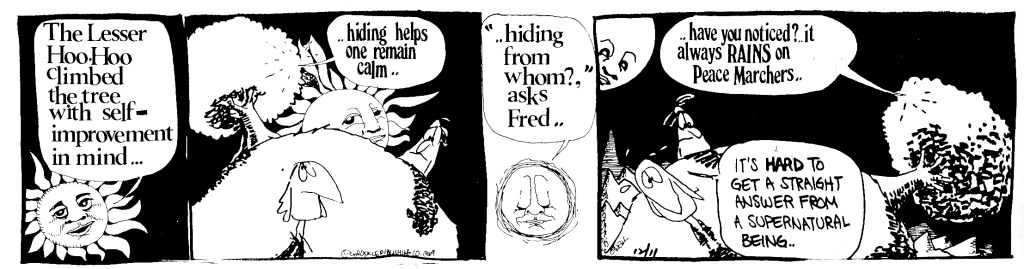
I was a comic strip-reading kid addicted to the funny pages when I stumbled across a peculiar yellow book – more of a pamphlet, really – at a friend’s house, called Buy This Book Of Odd Bodkins by a guy called Dan O’Neill.
A curious little strip that ran in the San Francisco Chronicle from 1964 until he was fired (apparently for the final time) in 1970, Odd Bodkins began as the quixotic adventures of anthropomorphic birds Hugh and Fred, having wry discussions about current affairs and encounters with oddballs like the Batwinged Hamburger Snatcher, Smokey the Bear and the ghost of Abraham Lincoln. The early comics in that yellow book were slightly edgy, although in a kind of Doonesbury-esque subtle way, casting an askew eye at a topsy-turvy world.
A few years later I found another book of Odd Bodkins, a big ol’ tome called The Collective Unconscience of Odd Bodkins, and man, that’s where things got weird. The same characters of Fred and Hugh were there but instead of gag strips they ambled along on an odyssey into the 1970s, and the comics got stranger and stranger, journeying to Mars and beyond. The backgrounds, nearly nonexistent in earlier strips, became swirling psychedelic landscapes, the lettering became baroque and extravagant, and the story, such as it was, became an extended walkabout in search for enlightenment in what felt like a world suspended at the end of time. The comics became far less about a punchline and more about a quest for meaning.
I didn’t quite get it all – a lot of the references were already ancient history by the time I read the comics – but I got it, you know? That was it. I was trippin’ on strips.
Once upon a time, iconoclasts didn’t mean crazed internet-addled sovereign citizen conspiracy theorists. O’Neill was one of the great independent thinkers and has never been afraid to stir the pot, or to, in the best editorial cartoonists’ tradition, cause good trouble.
Because he was publishing work in ‘mainstream’ media like the Chronicle, O’Neill couldn’t get quite as risque there as folks like R. Crumb, S. Clay Wilson and Gilbert Shelton did in underground comics. Yet that actually proved a strength, because forcing himself to draw ‘toons for the “straights” made O’Neill work harder to create bold, thoughtful strips without piling on the sex and drugs. He was the perfect gentle guide to more alternative viewpoints for me.
Of course, he could go “adult,” too. O’Neill is more widely famous forAir Pirates Funnies, a very adult X-rated parody of Disney’s Mickey Mouse that ended up in a copyright lawsuit that went all the way to the Supreme Court during the 1970s. Those are hilarious too in their own naughty way, if you’ve ever wondered what Mickey Mouse’s bits looked like. And the battle against Disney over these strips and the boundaries of what parody was and is is one of the great stories of creative freedom, wonderfully chronicled by Bob Levin in his exhaustive bookThe Pirates And The Mouse: Disney’s War Against The Underground.
This great little short documentary recaps the Air Pirates saga and is a fine introduction to O’Neill’s fierce individualism. “You can’t have more fun than drawing pictures and pissing people off,” he notes right at the start.
Air Pirates is very smutty and funny stuff, but it’s still Odd Bodkins that made me a fan of O’Neill for life.
Odd Bodkins was a great intermediate step between “kids” comic strips like Peanuts to the wild weird world of the underground. The handful of old ‘60s and ‘70s collections have been reprinted by O’Neill and can be found on Amazon, although I think a huge chunk of his work has never been collected, which is a bit of a crime for underground comics history.
Weirdly, Dan O’Neill moved to the same town that I grew up in up in the Sierra Nevada foothills, although I’ve never met the man – alive and well and drawing scathing cartoons about Trump well into his 80s. It’s fitting he ended up in Nevada County, which as I’ve written is kind of a weird, wonderful place.
When I turned to drawing my own comics, O’Neill’s scratchy, anarchic spirit was definitely one of the many ingredients in the cosmic gumbo that made up my work. He showed me you didn’t need to be a master artist to make a difference, and that a unique point of view and a sense of humour went a hell of a long way towards making great art.
O’Neill has always pushed at the system, and found the funny in the chaos of the world. He blew my mind at a very young age and part of me has never quite been the same since.
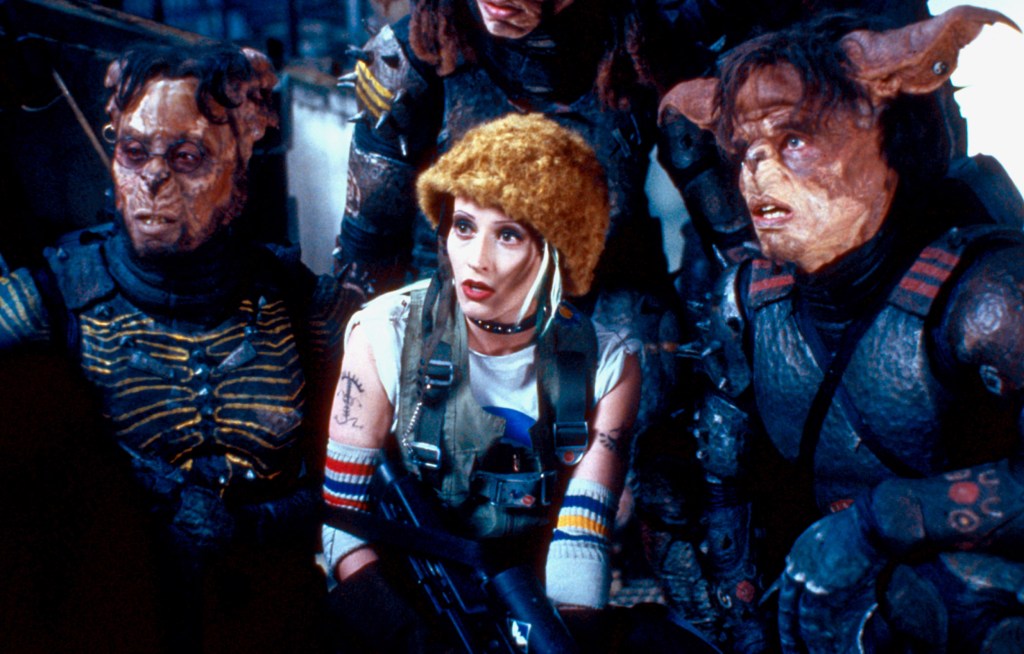
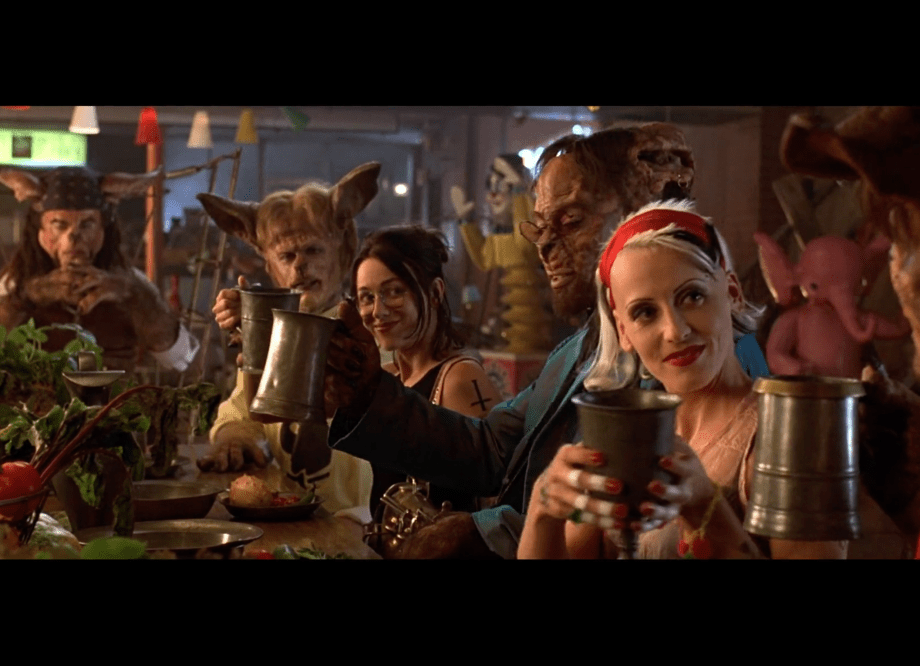
What is it? A famous bomb that slowly has inched its way back towards being a cult classic in some circles, Tank Girl is one of those comic book movies that came out before comic book movies were everywhere. It’s based on some freewheeling British comics by Alan Martin and Jamie Hewlett (who’d go on to co-create the band Gorillaz). Lori Petty stars as Tank Girl, a spunky punk-rock survivor in a vaguely post-apocalyptic Australian Outback world (in the far, far future of… gulp … 2033) where water is a commodity, ruled over by the corporation of the dictatorial Kesslee (Malcolm McDowell). Tank Girl becomes dragged into an uprising against corporate power, and joins forces with other outcasts and mutant kangaroos to fight evil in a very riot grrll way. While it’s remembered as a flop, it turns out Tank Girl is a gleefully oddball and slightly ahead-of-its-time feminist curio of a world before every comic book movie was envisioned as part of a cinematic universe.
Why I never saw it: In a sign of increasing senility, I always lumped Tank Girl into the list of movies I had seen at one point and forgot about (I did work for a video store a little back in the 1990s, after all). The back shelves of defunct video stores were littered with movies like The Phantom, Mystery Men, Barb Wire and Spawn that were clunky, low-budget attempts to turn comic books into gold. Most of them were awful, plagued by terrible scripts, dodgy special effects, or both, but at the same time they were often kind of interesting movies. Tank Girl failed at the box office, mystified most critics, and mostly went on to be known as that movie that featured rapper Ice-T under a lot of latex as a mutant kangaroo.
Does it measure up to its rep? Tank Girl is just original enough to become bizarrely enjoyable as Petty trash-talks her way through a dried-up world. The chaotic production was directed by Rachel Talalay, in an era where a woman directing a big blockbuster attempt was even rarer than it is now. Tank Girl has attitude and style mixed in with gritty practical effects and a little amateurism (those mutant kangaroos won’t win any make-up Oscars, mate). Iggy Pop pops up for about 30 seconds as a pedophile Tank Girl beats down, because why not? There’s also the ever-enjoyable scenery chewing of McDowell and a very young Naomi Watts as Tank Girl’s shy sidekick. The movie combines a smashing ‘90s soundtrack with cool colourful animated sequences styled after the comic strips. The movie isn’t anywhere near as raunchy or anarchic as the more free-wheeling comics, giving Tank Girl a more traditional heroic arc and a family, but it’s got enough of their basic spirit to feel rather fresh even now.
Worth seeing? Set aside your expectations for machine-tooled perfection and the kind of glossy anonymity too many recent superhero movies have settled for. Still, Tank Girl is a clear forerunner of recent superhero movie starlet Harley Quinn, a kick ass, anarchic female antihero who isn’t afraid to mix it up with any foe. I won’t claim Tank Girl is some lost masterpiece but at its heart, it’s kind of daft fun, with just enough of the punky frenzy of the British comics to make it still feel quietly a little revolutionary. They don’t make ’em like this any more.
Sometimes I like to listen to depressing songs. Sometimes I like to listen to happy songs.
I’ve got my Cure, my Joy Division, my Depeche Mode and Leonard Cohen. And they’re great when I’m in the mood for it.
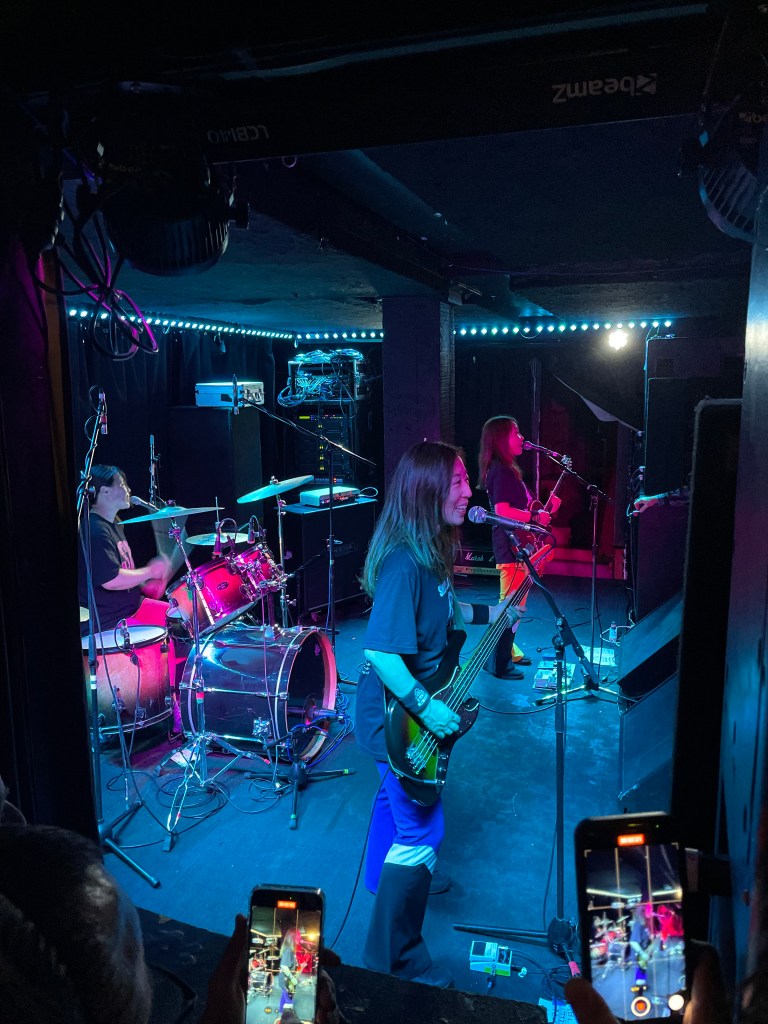
But other times I just want a happy sound – and there’s few more unabashedly happy bands out there in the world than Japan’s Shonen Knife. An all-girl band who marry Ramones thrash-pop with Beach Boys-style wistful harmonies all twisted together with a healthy dose of colourful Osaka charm, they’re a delight to see live.
Heartbreak? Depression? Shonen Knife don’t do that. They sing about their favourite foods, cute animals, and the silly happy things that, in the end, kind of make this life worth living. And they do it while kicking out some thrashing power chords and rocking with incredible style, dressed in often matching colour-coordinated outfits that seem retro and futuristic at the same time.
For a band that’s been going for more than 40 years, since the women were all teenagers, Shonen Knife still make a tremendous racket, headbanging hair and all. I’ve been a fan since they broke through a bit in the US in the alternative music-ruled 1990s with celebrity fans like Nirvana and Sonic Youth. They’ve carried on for a pile of albums, rarely altering their sunny, hook-filled sonic approach, and they’re all the better for that.
Sisters Naoko and Atsuko Yamano have been the core of the band for most of its long run, with excellent drummer Risa Kawano on sticks these days. I’m old and creaky and so I’m kind of out of it with the hip pop music the youth listen to these days, but the appeal of a good cheery song is universal.
The packed gig at Auckland’s underground Whammy Bar was probably the first time I’d been in a crowded basement club environment since the pre-pandemic era, and it was kind of invigorating to feel that sweaty, borderline uncomfortable shared experience, for a little while.
Song titles like “Sweet Candy Power,” “Afternoon Tea” and “Banana Chips” give you the overall vibe of a Shonen Knife show. I can’t think of too many rock gigs I’ve been to where the audience is led in an energetic singalong chant of “Candy! Candy!”
In a fun interview over at my day job RNZ, Naoko said, “I like to make people happy through music and if our audience or listeners get happy through our music, it’s my happiness too.”
Perhaps it’s just my mood in the very stressful vibe the 2020s have proven to have, but sharing a little happiness no longer seems as corny as it might have once to me.
In a world as askew as this there’s something blissful about celebrating the little things, whether it’s a funny-looking jellyfish, wasabi being hot or one Shonen Knife song whose chorus is simply, “it’s a nice day!”
Yes, the Academy Awards are self-indulgent, pointless arbiters of artistic excellent, a vapid popularity contest, constantly make the wrong calls, et cetera. But still, for nearly every year of the last 40 or so Oscars, I watch them.
For the third year in a row, I’ll be live-blogging the action over at Radio New Zealand on Monday our time, and I’ll admit I look forward to it – it’s a welcome break from political chaos, climate apocalypse and general creeping internet-induced psychosis and hate.
I’ve watched the Oscars since I was a fidgety pre-teen, and still remember my first, the 1982 Oscars. It was the year of Best Picture winner Chariots of Fire – a movie I’ve still never seen – and that plinky inspirational piano theme felt like it was played every five minutes.
It was so long ago the host was Johnny Carson! The ceremony, 40+ years ago, seems weirdly low-tech now – dig the grainy still photos to introduce the Best Picture nominees – and how is it that Raiders of the Lost Ark received the least applause of the five?
I watched early Oscars celebrating what seemed like, to me, boring adult movies like Gandhi and Terms of Endearment, and liked the novelty of seeing, in a pre-internet age, movie stars outside of their day job. It wasn’t until 1988 or so and Rain Man that movies I had actually seen started winning the top gong. For a kid who was just getting interested in movies, the Oscars felt like a Cliff’s Notes course introducing me to a wider world, and how movies were put together. (You could win an award for sound? For costumes?)
A lot of folks whose film takes I respect still loathe the Oscars, but I don’t know – it’s the kid in me who was mesmerised watching actors in tuxedos and fancy frocks all those years ago, I suppose, but I just find it a fun moment to pause and celebrate the existence of movies.
Yes, yes, there are far more important things in the news universe, but a bit of levity doesn’t take away the gravity of other events. Stories keep us sane. During the freaky otherness of the pandemic, one of the happiest moments for me was when we finally got to go to the movies again.
Now, I’ll argue about the actual winners, losers and snubs at the Oscars till the cows come home, but I don’t get mad about it. We’re all too mad in general these days, aren’t we?
Forrest Gump’s Oscar doesn’t really take away a thing from Pulp Fiction being the infinitely better, more memorable film, does it? CODA was an amiable optimistic film, but Jane Campion’s The Power Of The Dog was tougher, smarter and visually unforgettable. Martin Scorsese should have a dozen Oscars by now, not just one for The Departed. The great directors who never won a Best Director Oscar is a list of the greats – Hitchcock, Kurosawa, Lynch, Kubrick. Meanwhile, Kevin Costner has a Best Director Oscar? Et cetera, et cetera, you get the point.
The Oscars get it “wrong” more than they get it right, I admit. Yet there’s been plenty of times I’ve cheered to see a film or a performance that grabbed me recognised, from Kathryn Bigelow becoming the first woman to take Best Director for The Hurt Locker to foreign film Parasite’s plucky Best Picture win to the beautiful good cheer of Ke Huay Quan going from that kid in The Goonies to an Oscar winner last year.
I am trying to gripe and be mean less in an age of meanness, but I’ll admit one thing that always gets my goat is the arbiters of “what matters.” Multiple things can matter in this world. The Oscars are not the final word on anything in the world of film. But I’ve had a blast watching them most years, even at their most tedious, pandering and predictable.
There’s a lot of self-indulgent talk about the “magic” of movies this time of year, which makes it sound like movies cure cancer and balance the national debt all at the same time.
But you know, you take a blank screen and add some moving pictures, sound and a few sprinkles of humour, horror or heartbreak, and it makes a story, can draw a portrait of a life. When you really think about it, if that ain’t a little magic, I don’t know what is.
“Come and knock on our door. We’ve been waiting for you. Where the kisses are hers and hers and his, three’s company too.“
Could there be a more swingin’ 1970s TV theme song? Come on, you know the words. We all do.
So while on holiday recently I was feeling a bit under the weather and, as you do, one evening I ended up watching four or five episodes in a row of ‘70s-‘80s camp sitcom Three’s Company in a row.
It was the first time in years I’d actually watched the show, but I admit that like most kids growing up in the ‘80s, I watched Three’s Company all the time. We watched everything, from classics like M*A*S*H and The Brady Bunch to also-rans like What’s Happening! and Manimal. That’s what we did in the olden days, before the eruption of a sprawling multiverse of entertainment options 24-7, when you simply watched ‘whatever was on’.
Watching a slew of Three’s Company in my vaguely sick bed recently was bizarre – I have trouble remembering what I ate for lunch yesterday, but as these goofy sitcoms unfolded I nodded in recognition – ah yes, here’s the one where they went to the farm; here’s the one where Jack makes a mob boss linguini. How the hell do I remember a sitcom episode I last watched in 1983? The inanity of childhood sitcoms, the quintessential comfort food, imprinted itself on my brain.
The 1977-1984 run of Three’s Company seems a strange relic now, nearly 50 years (!!) since it debuted, a broad bawdy farce perched between the groovy ‘70s and a more uptight ‘80s Reaganland. The premise is pretty much the definition of problematic by modern standards – hep cat Jack Tripper (the late, great John Ritter) pretends to be gay so he can live in an affordable apartment with two attractive young single women (Suzanne Somers and Joyce DeWitt) without offending their prudish landlord Mr Roper (Norman Fell). Hijinks ensue, somehow for eight entire seasons!
Loose-limbed and amiable Ritter was a national treasure, of course, and like John Cleese in Fawlty Towers he carries the show on his shoulders. The women of Three’s Company fared less well; I know we were all supposed to like the late Suzanne Somers but I found her blonde ditz irritating and Joyce DeWitt’s Janet was often just a straight woman. I rather liked Priscilla Barnes’ Terri, who replaced Somers in the later years, and seemed a bit more sly and unpredictable.
The central homophobia that drives Three’s Company is incredibly dated, but the show, mostly, was lewd and campy rather than hateful, even though there’s plenty of cringe-worthy farce humour revolving around gay misunderstandings and affairs.
Unfortunately, a lot of the ‘humour’ relies on the premise that the worst possible thing would be for Jack to actually be gay.
I grew up in a world where “fag” was the number one insult of choice by and for teenage boys. I got called one an awful lot for a few years and I’m ashamed to admit I probably called other kids it too a few times. It was stupid.
Jack’s homophobic landlords, despite usually being the butt of the joke for their overwrought gay panic, do leave a bit of a sour aftertaste. Even watching the show as a kid, Stanley Roper and Mr Furley’s limp-wristed gay-bashing jibes seemed forced and unfunny to me. Norman Fell’s oily Mr Roper always struck me as a little too nasty and sinister. You felt he meant it. Knotts’ goofy Furley, on the other hand, definitely felt like a closet case, and the show eased off a lot on the gay panic as it ambled along. The series ended with Jack Tripper, of course, marrying off to a nice girl.
Did gay characters actually ever appear on Three’s Company as more than a punchline? I don’t have enough of an encyclopaedic memory to recall if they did, but the show was far more about the idea of being gay as some strange unknown rather than any kind of cultural exploration of what that meant in 1978.
While there’s a lot of things about the modern world that are pretty terrible and backwards still, the gentle wave of gay acceptance just during my adult life makes me feel a glimmer of optimism sometimes. A good half-dozen or so of the friends I grew up with in high school later came out as gay, and I was overjoyed to see how happy and complete they seemed. I can’t imagine what it must have been like trying to keep that quiet in the ‘80s, which feels now the last real gasp of generally accepted wider cultural homophobia.
Still, there’s plenty of people out there who still see nothing wrong with calling someone a “fag.” It’s nowhere near good enough today, of course, and a lot of people want to roll the clock back or worse.
Three’s Company was a flimsy, unsubtle and silly show that didn’t intend to change the world like so much of today’s “prestige, event TV” – honestly, spending 800 words or so going on about it seems wildly overegging it – but at the same time, gazing back from what seems the impossibly futuristic date of 2024, it kind of shows how the world has changed, slowly, ever since Jack Tripper first knocked on that door.
Technically, I’m on holiday! But here’s an update on a few miscellaneous projects I’ve been involved with to share so I can keep my Social Influencer TM status:
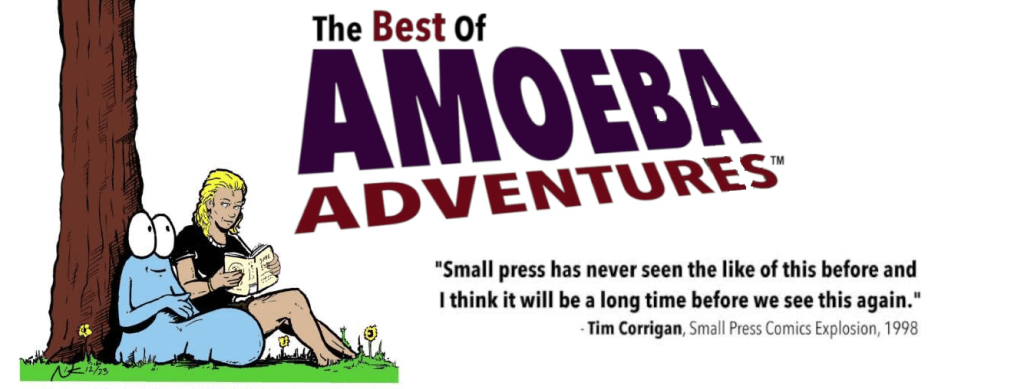
Thanks to everyone so far who has ordered the amazing, spectacular Best Of Amoeba Adventures Book which is now available on Amazon worldwide as a dirt-cheap shiny paperback or a deluxe fancy-pants hardcover! In case you missed my shilling for it before, it’s 350 pages, more than a dozen stories from my 1990s small press comics and a great introduction to the Prometheus the Protoplasm comics I’ve somehow spent almost 38 years (ugh) dabbling in. If you haven’t ordered it yet, give it a shot and help me support my expensive habits. It’s tax deductible!* (*Might not actually be tax deductible.) If you have ordered it, please leave a review or star rating on Amazon to keep the algorithm overlords happy!
Meanwhile, over at the hip website Bored Panda that all the kids are into, I was interviewed for a little piece this week on the aesthetic of one of my fave filmmakers, Wes Anderson – go read it here!
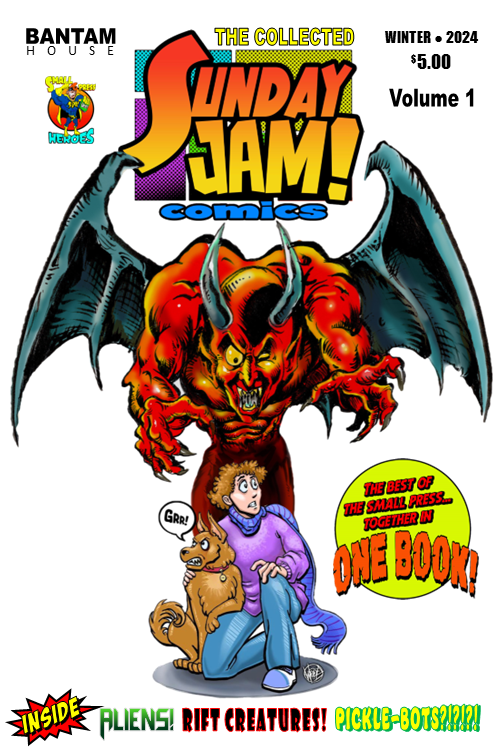
Back to comics, perpetual motion machine Jason DeGroot has been organising a massive jam comic featuring dozens of small press creators, The Sunday Jam! A lot of these projects fizzle out but this one has been barrelling along all year with a new page each week, and I was pleased to take part with a page back around Christmas. Coincidentally mine is the last page in the new Collected Sunday Jam Volume 1 gathering up the first 28 pages of this epic, oddball and sometimes totally insane adventure! You can order the collected Jam for a mere $5 right here, and enjoy a mad sampler of small press talent, or give the project so far a read if you’re jam-curious. Do it!












 Nik Dirga