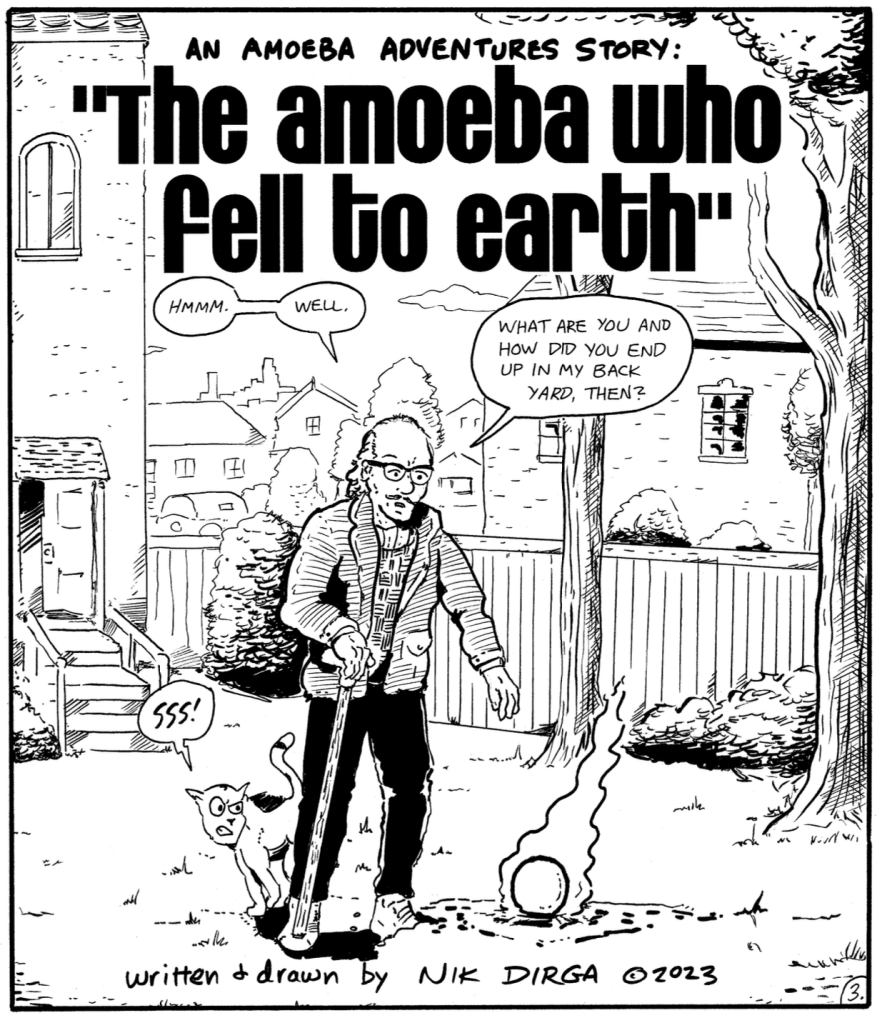
It’s time for my newest comic book, Amoeba Adventures #33!
Get ready for the most offbeat Amoeba Adventures story of all time! It’s “The Amoeba Who Fell To Earth.” One day, years ago, Prometheus arrived on Earth-Spongy from the stars. But what happened next? It’s not what you expect.
You can download the PDF of the comic right here completely FREE as always – enjoy and let me know what you think!
• GET IT IN PRINT! Plus, as always there’ll be a special limited print edition of this issue coming out soon – it’s a mere US$7.50 shipped anywhere in the world from little old New Zealand. Strictly limited quantities, so if you want one don’t delay, and send cash via Paypal to dirgas@gmail.com.
• BUY OLD COMICS CHEAP! Also, it’s time for a special back issue sale! I have a few surplus copies of recent limited print editions of Amoeba taking up space in the butler’s quarters, so here’s a deal: If you order the print edition of Amoeba Adventures #33, I’ll throw in anotherAmoeba comic for a mere $3.50 US! Still available are the print edition of Amoeba Adventures #30, #31 and 32, and the special 25th anniversary reprint of Amoeba Adventures #27, now with eight pages of bonus art and interviews! When these are gone, these are gone, so if you want a copy grab one – Amoeba Adventures #28 and 29 are all now SOLD OUT and others are not far off!
• JUST READ IT ALL FOR FREE! Lastly, don’t forget you can download and read every single issue of Amoeba Adventures and other comics going back (urgh) more than 35 years now all right here on this website – go browse and see!
Was 2003 the end of rock and roll? The genre has been killed and resurrected so many times it makes Dracula look like an amateur, but still, for me, somehow 2003 feels like the last year that I was personally invested in new rock and roll.
Part of that is simple age – entering my mid-30s, with a kid on the way, I was about to enter the demographic of Bob The Builder and Wallace and Gromit. I was following then-new music blogs and enjoying the dodgy thrills of downloading MP3s galore and burning them on oh-so-fancy mix CDs that are still in a closet somewhere, but soon I’d stop doing all that.
Rock began receding as a pop culture monolith as grunge died out, but it was in the early 2000s that it felt like it rallied for one last blast with a flurry of terrific albums from bands like The Strokes, White Stripes, TV On The Radio and more. Since then, to be honest, rock music feels like it’s less a part of the pop culture conversation.
Rock is still out there, but for me, 2003 is about when I started to sort of check out from obsessively following all the latest music. I do try to keep my hand in and listen to new stuff much as possible, but, I recognise that the best pop music now is mostly for the youth, not me, and if I happen to dig some of it, well, that’s just a bonus.
It’s hard to believe 20 years have passed since these albums came out, but I also tend to think of Taylor Swift as “new” music so I’m really well past it, I guess.
Nevertheless, two decades on, in no particular order here’s my 10 favourite albums of 2003, the year that rock died (OK, maybe just the year that rock got a nasty head cold that it’s still shaking off):
Blur, Think Tank – The Britpop stars delivered a woozy, tense album that feels like a loose response to the tension of the Iraq War (boy, we only thought we knew what global tension was in those halcyon pre-Trump, climate apocalypse and pandemic days, didn’t we?). The more optimistic groove of albums like Parklife is far behind but what emerges is a kind of gorgeous weary reverie hanging for dear life onto Damon Albarn’s achy croon in tunes like “Out Of Time” and “Battery In Your Leg.”
The Shins, Chutes Too Narrow – For about five minutes there, The Shins felt like the future of indie rock. Their second album is fragile and filled with grand harmonies, enigmatic lyrics and made for long lonesome road trips. It’s all very gentle and mannered and on the verge of being too twee for its own good, but there’s plenty here to remind you why Natalie Portman said “The Shins will change your life” the very next year in 2004’s hipster poster child of a movie Garden State.
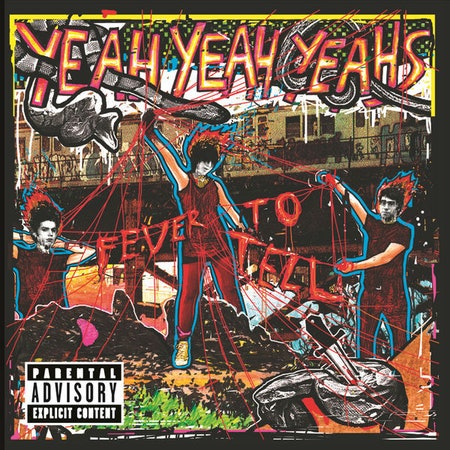
Yeah Yeah Yeahs, Fever To Tell – A great blast of grrrl power as Karen O and company blew the roof off with this snappy debut album. Weirdly, the album’s most sedate tune, the ballad “Maps,” became its biggest hit, but the heart of this album is a boiling punk-rock hurricane led by howlingly good romps like “Black Tongue.” After this album the band’s output was middling, more “Maps” than punk, and they never quite recaptured the ferociousness Karen O blasts forth here.
Fountains of Wayne, Welcome Interstate Managers – Radio hit “Stacy’s Mom” alone is a gorgeous sexy/silly hunk of power pop, but the rest of the album by this late, lamented band is full of wry, jangly gems like “Hackensack” and “Hey Julie.” A good power pop album never gets old.
White Stripes, Elephant – And here we hit peak Jack White. I know he’s put out a lot of good stuff since then, but the raw, raggedy side of the Stripes sound collided with stadium rock here and face-melting anthems like “Seven Nation Army” to make it the best thing he (and the sorely missed Meg White) ever did. This one might just mark the end of rock ’n’ roll’s evolution, perhaps?
David Bowie, Reality– Reality is a fascinating time capsule – Bowie’s final release at age 56 before an unthinkably long 10-year hiatus, and his untimely death – and while it isn’t quite as original and path-breaking as his best work, it’s still a comfortable rock god doing what he did best in an album that feels playful and masterful. Highlights includes a bombastic cover of Jonathan Richman’s “Pablo Picasso” and the darkly gorgeous epic “Bring Me The Disco King”. Shame about that horrific cover art, though.
Outkast, Speakerboxx/The Love Below– Sweet and sour, sultry and silly, this double-album delight of André 3000 and Big Boi’s duelling soul, funk and rap is a treasure box that keeps giving. Yes, it was inescapable, but “Hey Ya” is one of those massive pop hit earworms that still delivers years on, and if you don’t like it I can’t help you, while the smooth groove of tunes like “The Way You Move” and askew hip-hop of “Roses” also are terrific.
Nick Cave and the Bad Seeds, Nocturama– Not usually considered one of Cave’s top albums, but there’s something lovelorn and haunting to me about this set, which continued Cave’s move from rowdy rock demon to spooky apocalyptic preacher of songs. The brooding beauty of “Wonderful Life” or the wounded grace of “Bring It On” are near-top Cave, and I can’t get enough of the clattering 14-minute rambling album-closing jam of “Babe, I’m On Fire.”
Calexico, Feast of Wire– Calexico are the fuzzy warm blanket of Americana to me, fusing together elements of Tex-Mex, jazz, blues and country into music that all sounds like the soundtrack to some great lost spaghetti western. Feast of Wire is their finest, most expansive album, drifting along in a gorgeously restless haze. It’s an album I constantly return to for the journeys it takes your brain on.
Ryan Adams, Rock n Roll– Yeah, OK, I went through a big Ryan Adams phase in the mid-2000s, before his contrarian personality and troubling allegations kind of derailed his career and he put out a few too many meandering mediocre albums. Still, I’ll die on a hill for a couple of his albums of the early 2000s like Heartbreaker and Gold. Even though it got a middling reception, I still quite dig 2003’s Rock n Roll, where moody Ryan puts away the pedal steel and unleashes a pile of hooky, guitar-filled rock anthems with a heavy Replacements/U2 vibe. It’s just rock ’n’ roll, as it says on the tin, but I like it.
To quote that band half my pals listened to nonstop back in the day, “What a long, strange trip it’s been…”
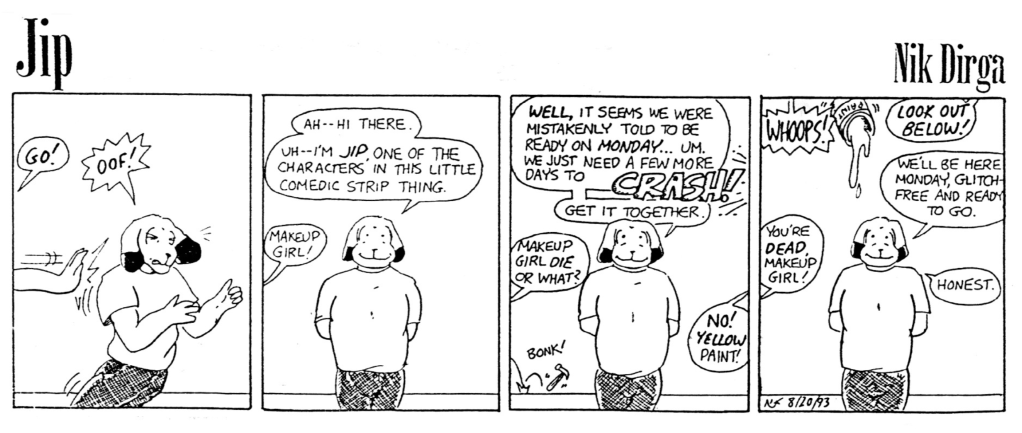
So it was 30 years ago this week that I started drawing a daily comic strip for The Daily Mississippian in my final year of university. Jip premiered on August 20, 1993 and ran for just about a year, 140 or so daily episodes of college hijinks heavily inspired by Doonesbury, Bloom County and Martin Wagner’s Hepcats.
I’ve written about my Jip days before and republished the strips as free PDF downloads a couple years back. (Advertorial: You can get Book 1 here and Book 2 here!) But, unlike my other comic Amoeba Adventures, I’ve never really returned to Jip in the years since I graduated – you can’t go back to college, after all.
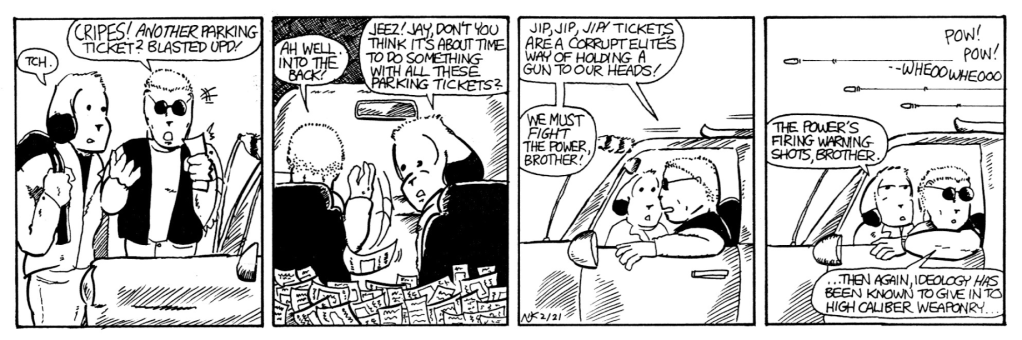
Still, when I realised this week marked a whopping three decades since it kicked off, I couldn’t help but wonder what my wide-eyed dog-faced college freshman Jip would be up to in the strange world of 2023 – so here’s a special anniversary strip! If only we knew then what the future held…
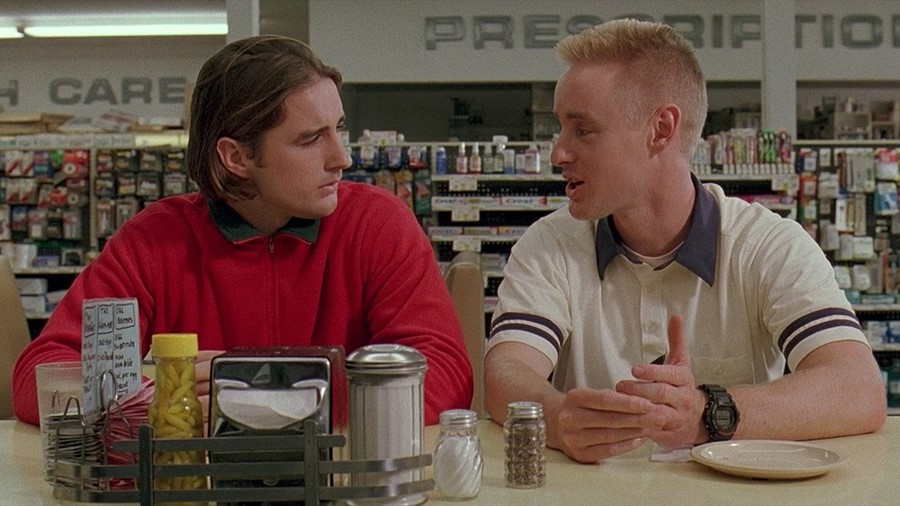
I vividly remember watching Wes Anderson’s first movie Bottle Rocket on a rented videotape (!) sometime around 1997. This quirky heist comedy starred James Caan and a bunch of unknowns (who was this Owen Wilson oddball?) but something about it really grabbed me. Maybe it was the goofy way it subverted expectations, with its cast of dreamy losers and the way it swerved from the story of an inept heist into a weirdly sweet romance as Luke Wilson’s amiable thief fell for a hotel maid.
Whatever it was, for me, Wes Anderson was on my map. And I’ve been a fan ever since then, from the cult indie days of Rushmore through the big-budget all-star epics of Grand Budapest Hotel and his latest, Asteroid City. Anderson’s offbeat, precise style and humour combined with sadness has always felt tailor-made for my sensibilities.
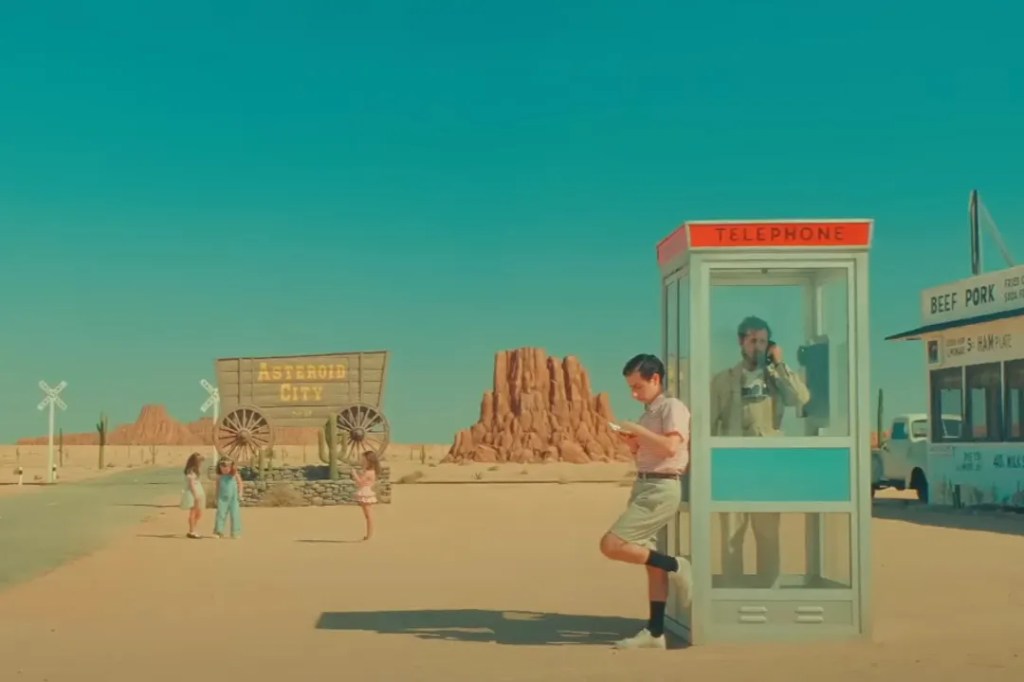
Some people really HATE Wes Anderson. I don’t get it, but I can see why – they find him smug or pretentious, overly mannered and obsessed with set design over story. But I don’t agree at all. Wes Anderson makes his own worlds in his films, true, from the elaborate family home of The Royal Tenenbaums to the day-glo Western desert village of Asteroid City.
But what director doesn’t craft their own world, whether it’s Stanley Kubrick or Zach Snyder? At their core these are all still stories about real humans with real feelings, as deliberately told as they may be.
Somewhere in the last few years, though, Wes Anderson went from a film fan’s fetish to a cultural meme, as the internet latched onto his meticulous sense of order and design and “Wes Anderson style” became a thing. The long shots, the staring at the camera close-ups, the yellow serif fonts, the colour coordination and deadpan acting approach launched a thousand viral hot takes and merchandise, from the clever to the obvious and stupid.
Wes Anderson is a style, yeah, but it’s the movies and the marvellous characters like Max Rushmore, Royal Tenenbaum, M. Gustave or Midge Campbell that stick in my mind. The layered design is a setting for the characters, but to me it never overwhelms them.
Sure, some people don’t like it. The reviews for Asteroid City out there are starkly polarised to a weird degree but it ranks right up there with Oppenheimer as the best movie I’ve seen in cinemas this year, carrying his obsessions with form and function to a stylised peak.
Asteroid City continues the recent Anderson trend of story deconstruction and pushing design to its frantic limits, where at times it almost seems a live action cartoon. Once again, it’s an all-star cast, and stars like Scarlett Johansson and Tom Hanks mostly slot well within the group of Anderson returning players like Edward Norton and a terrific Jason Schwartzman, leading one of his movies for the first time since The Darjeeling Limited.
The story, like several of his recent works, is layers within layers – it’s a movie of a TV show of a play – and yet, it never quite spins out of control. Anderson has pushed hard at the very idea of straightforward storytelling since the flashback-within-flashback structure of Grand Budapest Hotel, a decision which either heightens the artificiality of stories themselves or adds a layer of chewy meta-context to mull over, depending on how you want to swallow it. Movies are constructs, he seems to be reminding us with a curio like Asteroid City, but that doesn’t mean they can’t mean something.
I don’t bow down at the altar of everything Anderson creates – The French Dispatch proved a little too cold and stoic for me and the anthology format muddled, and I didn’t think Isle Of Dogs was quite as delightfully screwy as his stop-motion adaptation of The Fantastic Mr. Fox. But even his less heralded films offer me something, like The Darjeeling Limited’s heartfelt take on grief starring fumbling Americans in a chaotic foreign country.
A lot of critics claim Anderson’s style is too cool and laconic, that the characters never show real emotion. But man, look at scenes like Steve Zissou’s haunting deep-sea encounter with the jaguar shark in The Life Aquatic, the aged bellhop Zero remembering his martyred mentor in Grand Budapest Hotel, Luke Wilson’s suicidal young man in Royal Tenenbaums, the pitch-perfect young love affair of Moonrise Kingdom or Jason Schwartzman’s shattered dad breaking the news of his wife’s death to his children in Asteroid City. Tell me they don’t have heart. Yes, it’s a repressed, wounded heart – Anderson doesn’t tend to do big shouty epiphanies for his characters – but you know, that’s how some folks process things.
The characters in Anderson’s films are full of submerged trauma, stacked with tales of dead parents, lost children and thwarted dreams, but there’s also always a self-aware wit and dry gallows humour to them. Funny tangled up in sad is my favourite kind of vibe – but it’s not for everyone, I know.
I get it if you don’t like Wes Anderson, of course. But for me, pretty much every film he carefully crafts and puts out there is a glorious little eccentric gift I enjoy opening again and again. Weird and wonderful, Asteroid City is another gem in a career that’s fussy and mannered … and still, years on from my renting that videotape of Bottle Rocket, it’s a style that feels like it was made just for me.
Here’s a new feature by me over at Radio New Zealand up this weekend – a look at how American style ‘low and slow’ barbecue cooking is making a splash way down in this part of the world, and a talk to several leading NZ barbecue pit masters! Go read:
Like many folks, I’ve been a bit over-saturated by superhero movies the last few years.
I’m not declaring the superhero boom “over” like a lot of pundits are, but it’s all started to feel a bit rote. The Marvel Cinematic Universe in particular has fallen into the quicksand of “what-next-itis,” where watching the movies feel like homework as bread crumb credit-scenes stack up endlessly teasing the next adventures. The movies are mostly “fine,” but I’m not getting the same epic kick I once did of watching Captain America, Iron Man and Thor share the screen for the first time or Black Panther leaping onto the screen. To be honest, it’s hard to imagine they’ll ever top the lead-up to Avengers: Endgame no matter how hard the studio execs sweat.
But there’s far more out there than just one cinematic universe. So far, the best superhero-style times I’ve had at the movies this year have been Japanese tokusatsu films in the “Shin” heroes universe led by director Hideaki Anno. I’m very much a tourist in this world, but I like it.
The Shin series has taken old Japanese favourites like Godzilla and Ultraman and reimagined them in bold big-budget films that combine Hollywood bombast with a distinctly tokusatsu* vision. (*Japanese “special effects” movies/TV shows) It’s included Shin Godzilla, Shin Ultraman and Shin Kamen Rider movies.
The Shin universe – “Shin” roughly translates to “New,” “True” or “God” in the title – is a wonderfully strange one where all the somewhat cheesy energy of ‘60s Godzilla flicks and Ultraman TV shows are done up with modern special effects and a true reverence for the material that makes it all feel epic and magical. Sure, a 40-metre tall silver humanoid hero like Ultraman is kinda silly, but his first appearance in Shin Ultraman evokes a real sense of awe.
The Shin universe kicked off with 2016’s remarkable Shin Godzilla. From the start, it undermines your expectations, like having Godzilla first materialise as a kind of google-eyed reptilian slinky who evolves rapidly throughout the film. While at first it may seem off-putting to not get to the Big G right away, it actually makes Shin Godzilla’s dangerous kaiju all that more impressive when he takes centre stage. The movie actually won the Japanese equivalent of the Academy Award for Picture of the Year!
The Big G of Shin Godzilla is one of the venerable franchise’s finest and freakiest ‘Zillas, a truly sinister predator with no kindness in his eyes, no “helping” humanity against other monsters, and it boasts some of the most dazzling destruction sequences of the more than 30 Godzilla movies. It was a solid reminder that after more than 60 years Godzilla still has the capacity to blow us away, and Anno turned his live-action skills to two other famed Japanese franchises, with 2022’s Shin Ultraman and this year’s Shin Kamen Rider.
I had a wide grin on my face the entire time I watched Shin Ultraman a few weeks back in the theatre. Ultraman is the Superman of tokusatsu heroes, an alien visitor fused with a human host who fights giant rubbery monsters and aliens galore. There’s been an insane amount of Ultraman series and movies over the years but, like Shin Godzilla, Shin Ultraman starts everything over from the beginning with a zippy tale of alien invasions, giant monster attacks and secret government agencies. It’s a giddy, unpredictable blast and unlike too many American superhero movies lately, you don’t feel they’re endlessly seeding the story with teases for a flurry of sequels. Instead, the Shin movies draw backwards on the franchises’ long history to create a world that feels deeply imagined yet new.
I’ve been a Godzilla nut for years and a more casual fan of Ultraman, but when it came to watching Shin Kamen Rider, the decades of source material is something I was utterly unfamiliar with. It’s the intricate tale of insect-human hybrid “augs” battling for supremacy in a world full of zippy motorbike chases, cool helmets and bizarre villains.
Unfortunately Kamen Rider (or Masked Rider in English) was probably the least successful of the three Shin films for me, thanks to some dodgy CGI and a sense they’re REALLY trying to jam all 50 years of fan lore into one two-hour movie. While Shin Ultraman also packs a lot of legacy story in, it feels slightly less rushed. But while it’s a bit of a chaotic jumble and overwhelming at times, there’s still more energy and originality in Shin Kamen Rider than I ever felt watching recent US hero snoozefests like The Eternals.
The Shin movies have been full of surprises, instead of following the rather predictable path of recent superhero movies with that mandatory everybody-running-around-things-falling-from-sky-in-a-hail-of-CGI climax. They’re deeply Japanese – Shin Godzilla has a dizzily rapid-fire satirical take on Japanese bureaucracy, for instance – and don’t feel like they’re catering to a Hollywood audience.
I grew up reading Marvel and DC Comics and so all the inside references and teases and foreshadowings make sense to me and I know my Dr. Strange from my Dr. Fate, but it also kind of means that after 30-something MCU movies, it all starts to feel like something you’ve seen before. The fun part of the Shin universe is how it’s a doorway to another pop-culture world entirely, one I freely admit to only having the barest knowledge of.
It’s a big old multiverse out there, and I kind of love feeling like an utter newcomer to some of it.
So we’ve got an election coming up here in about 8 weeks, which will determine who will run New Zealand for the next three years. Right now, multiple polls seem to indicate it’s still quite a toss-up between the current, left-leaning Labour government seeking a third term, and the more conservative National Party which led the country from 2008 to 2017. I’d hesitate to bet on the results on October 14 at this point.
But as imperfect as it all is, as I’ve written about before, I still enjoy voting in our Mixed Member Proportional or MMP Parliamentary system much more than I ever did in the American system. There’s simply much more choice to a system where five or six parties have a good chance of making into Parliament and having a voice in government.
Here, you vote for both your local electorate candidate AND a separate party vote, meaning I could vote for a National local candidate but give my party vote to the Greens or somesuch. If a party gets 5% of the vote – a fairly high threshold to meet which rules out true fringe parties – they’ll get into Parliament, or they can also get into Parliament by winning a single electorate.
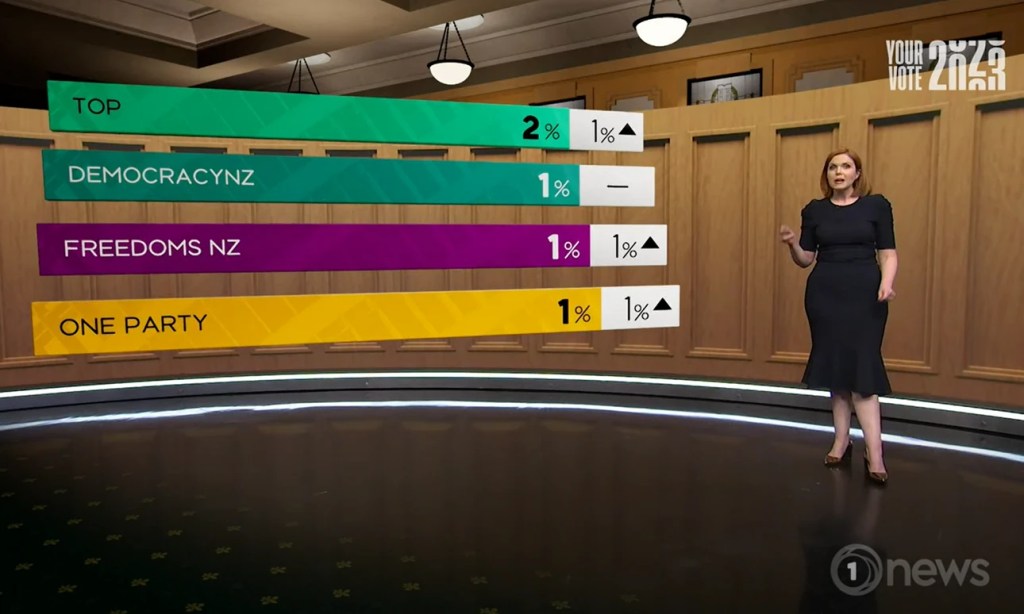
Smaller parties matter more here, and that’s something I appreciate. While National and Labour roughly remain the biggest gorillas in the jungle there’s a lot more shade on the sidelines, with the progressive Green Party, the indigenous rights Te Pāti Māori, the libertarian leaning ACT and the kinda nationalist populism of New Zealand First. Toss in a whole pile of super-minor parties – this year, an awful lot of the conspiracy / “freedom” / anti-vaccine crowd have formed conflicting tiny parties with hopes of getting in there somewhere – and you’ve got quite a stew to pick from.
Unlike in the US, where 95% of the time any vote for a candidate who’s not Democrat or Republican has zero impact, here, the smaller parties can build up enough steam to get a voice in power. The Greens and ACT, the two largest of the smaller parties, have yet to run the country but they’ve both been part of governing coalitions helping set the agenda for the nation.
I’m not saying I agree with all of these parties myself but I like the broader picture it paints. Look at America where, basically, you’re either forced to vote for a Democrat or a Republican to pick someone who’s going to win (independents do exist, here and there, but they have yet to make any kind of major impact on the national scene). On the state level, state legislatures are increasingly becoming redder or bluer. It’s a recipe for legislative overreaching, dictatorial heavy-handedness and corruption, IMHO.
Our system is hardly perfect, and with the creeping craziness and political swerves the last few years have brought I don’t imagine a lot of people will wake up super happy in New Zealand on October 15. But I do just like seeing a lot more colours on my polling and election graphics than you ever do in the USA, because life really should be about more than just blue and red.
Superman IV: The Quest For Peace is not, objectively, a good movie. In fact, it’s pretty terrible.
The 1987 finale to Christopher Reeve’s run as the Man of the Steel was plagued by huge budget cuts, a ham-fisted script and a clear lack of energy by everyone involved. It was such a big bomb it pretty much killed the franchise for years to come.
What was a simple, not bad idea – Superman decides to rid the world of nuclear weapons after an annoying school kid writes a letter to him – became an awkward, choppy mess.
I actually saw Superman IV: The Quest For Peace in the theatre with a buddy back in 1987 and I clearly remember we were about the only two people in there. We left there with that deflating sense of disappointment one often got with comic-book movies in the pre-Marvel Cinematic Universe days, where you’d watch stuff like Howard The Duck or the George Clooney Batman and Robin and wonder how, how did this happen?
And yet, despite this movie being such a fiasco, I still end up going back to watch it every once in a while out of a morbid fixation, because you can just see a hint or two of the movie it could have been – a serious meditation on a Superman’s place on Earth, and the responsibility of caring for humanity without taking over the world.
In particular, there’s about two minutes of footage where that movie clearly emerges, when Superman takes to the stage at the United Nations to tell them of his plans:
Unfortunately, even then you see the impact of the budget cuts (judging from the Superman flying scenes immediately after, about $1.99 was spent on special effects).
And that script – hoo-boy. It ratchets up the campier elements of the first three Superman movies to unbearable levels, with little of the wit and sincerity that Superman and Superman II had. You’ve got a lame cliched evil businessman and his hot daughter (an embarrassed Mariel Hemingway) taking over the Daily Planet newspaper, Jon Cryer doing an appallingly unfunny doofus hipster teenager impression, and Margot Kidder looking very, very bored. Only Gene Hackman, whose genial scoundrel take on Lex Luthor was always worth watching, emerges unscathed.
And let’s not forget the all-time worst Superman villain ever seen on screen, the mulleted “Nuclear Man” clone that Luthor creates because he’s angry Superman eliminated the black market for nukes, I guess. Nuclear Man is howlingly cheesy, so bad the actor involved never did another movie.
(As a side note, for an even more in-depth look at what a mess this movie was, on the DVD you’ll find more than a half hour of deleted scenes including an utterly horrifying slapstick fight with a “first” prototype Nuclear Man character who looks like he wandered out of a Benny Hill TV show. Some hopeful optimists out there on the internet still claim adding those scenes back to the barely 90-minute Superman IV could make an improved “director’s cut” but honestly, these scenes are generally even worse than the movie itself.)
The whole idea that kick-started the plot – Superman makes the world safe from nuclear war! – kind of gets bounced around a bit and then abruptly discarded by the end.
And still, I do love that scene when Reeve arrives at the United Nations, the good cheer and optimism that pervaded his portrayal of Superman just about selling the idea that the governments of the world would be happy with him throwing all our nukes into the sun. “As of today, I’m not a visitor any more,” Superman says, and gosh darn it, it just makes you wish such a person really was out there, somewhere.
I don’t know why I watch 86 minutes of a pretty bad movie just to get that little moment, but somewhere out there in the multiverse, I like to imagine there’s a far, far better version of Superman IV directed by Steven Spielberg or someone that ran the table at the Oscars that year and gave that wee moment the kind of superhero movie it deserves.
I don’t know no shame / I feel no pain / I can’t see the flame – “Mandinka,” Sinéad O’Connor
We spend most of our lives chasing the music we loved when we were 17.
Sinéad O’Connor came into my sheltered little musical world like a thunderbolt, and she blazed hard and bright through her trouble-plagued, too-short life before dying this week at only 56.
It’s an embarrassing kind of revelation to make, but I think she was the first female singer-songwriter I ever truly listened to and adored, as I emerged from my adolescent male-dominated world of Guns ’N Roses and Billy Joel music.
She was a pathway for me to discover her influences like Patti Smith and Joni Mitchell and her peers like PJ Harvey and Fiona Apple. I could not fully understand her life – how could I, a small-town California dude? – but I listened to her.
Her first two albums will always be part of the soundtrack of teenage love to me, of the jittery combination of urgency and anxiety your entire life seems made of at that age.
For a few months in 1990, the girl from Ireland was inescapable with the striking video for “Nothing Compares 2 U.” There were no women like her then at the top of the pop charts that year. She stared at you in that remarkable video with candour and a sincerity that was startling in a year when MC Hammer, Vanilla Ice and Paula Abdul ruled the airwaves. With that extraordinary voice, she could channel a world of emotions, from bliss to defiance. Unlike far too many pop singers, you never felt her showing off. She simply let out what was inside her.
I love I Do Not Want What I Haven’t Got, but it’s her debut The Lion And The Cobra I play the most, her rawest and most punk-rock moment. Barely out of her teens, Sinéad blew like a hurricane through an otherworldly mix of anthems, anguish and adoration. She would never sound so carefree as she did on “Mandinka,” or as ominious as she did on “Jackie,” but if I had to take one song by her with me, it would be the triumphant epic “Troy,” which howls and builds with energy. It’s a song that blows me away every time I listen to it, and while it was “Nothing Compares 2 U” used in all the headlines and tributes, it is “Troy” that sums up Sinéad O’Connor’sessence.
Number-one album I Do Not Want and that unstoppable hit Prince cover song were both her making and unmaking as a hit singer. She followed it up with a criminally underrated album of torch song covers, Am I Not Your Girl, and she bent those songs into her sphere marvellously.
I always considered myself a fan but realised I had only dipped a little bit into most of Sinéad’s music after 1994’s mellow and contemplative Universal Mother. I kept meaning to catch up because I always had a soft spot for her. I had drifted away from paying attention to her music, and I wish I hadn’t.
I wish I could say her death was surprising.
I knew she had a background of terrible abuse and repeated mental health issues, which were surely escalated by the suicide of her teenage son last year. I knew she sometimes said things that were off the wall or offensive and never quite seemed the same after being so rudely scorched by the public eye in the 1990s. She dared to speak out angrily about child abuse by priests and her mainstream career as a musician never really recovered, even though history has proven her defiantly right. She was a woman with opinions, and some people never forgave that. She was not your internet content.
It’s been bittersweet to see so many people talking about how much Sinéad’s music meant to them in the last day or so. This complicated woman, despite all the troubles and obstacles in her life, touched the lives of many.
I’ve seen some in the aftermath of her death saying the many controversies of her life never drowned out her music. I’m sorry, it’s a noble thought, but I think unfortunately, and terribly, for the vast majority of the mainstream world that just wasn’t true, and the tabloid clamour over her life swamped coverage of her musical career.
I wish it hadn’t. I wish she’d found a little more peace in this life. She changed me, just a little bit, by the very act of listening to her, and I wish somehow all of us who felt that way could have helped this beautiful woman make a different way in this hard old world.
I am not like I was before / I thought that nothing would change me / I was not listening anymore / Still you continued to affect me – “Feel So Different”, Sinéad O’Connor
It’s probably been literal decades since I played Dungeons and Dragons, but I’ll never forget the monsters.
I grew up during the mid-1980s pre-internet heyday of the Advanced Dungeons and Dragons first edition, before multiple revisions, digital versions and blockbuster movies and the like, when the primary sources were only a Player’s Handbook, a Dungeonmaster’s Manual and, best of all, the Monster Manual.
I’d play D&D with a handful of fellow pre-teen travellers back then, and for an awkward, gangly kid trying to figure out his place in the world, those silly, strange adventures were a great escape from the real world.
I was never a dungeonmaster, always a player, throwing around all those great multi-faceted dice (the 20-sided die remains a favourite, although I also love the pyramidal solidity of the 4-sided die). With our rustic pencils and graph paper to map our way, plucky dice and a heaping helping of imagination, my friends and I would storm castles, kill trolls and hunt for treasure, as all good D&D players should.
Eventually I wandered away to other diversions, and while I’ve always had a certain fondness for D&D in the years since, I’ve never really played again.
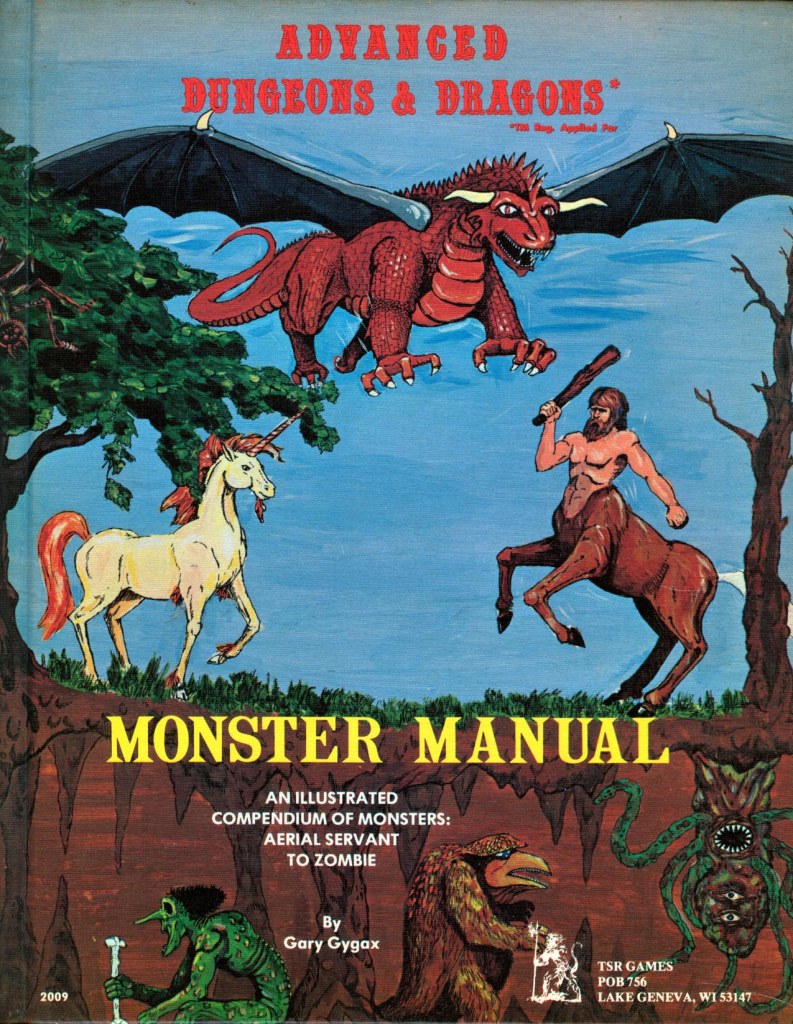
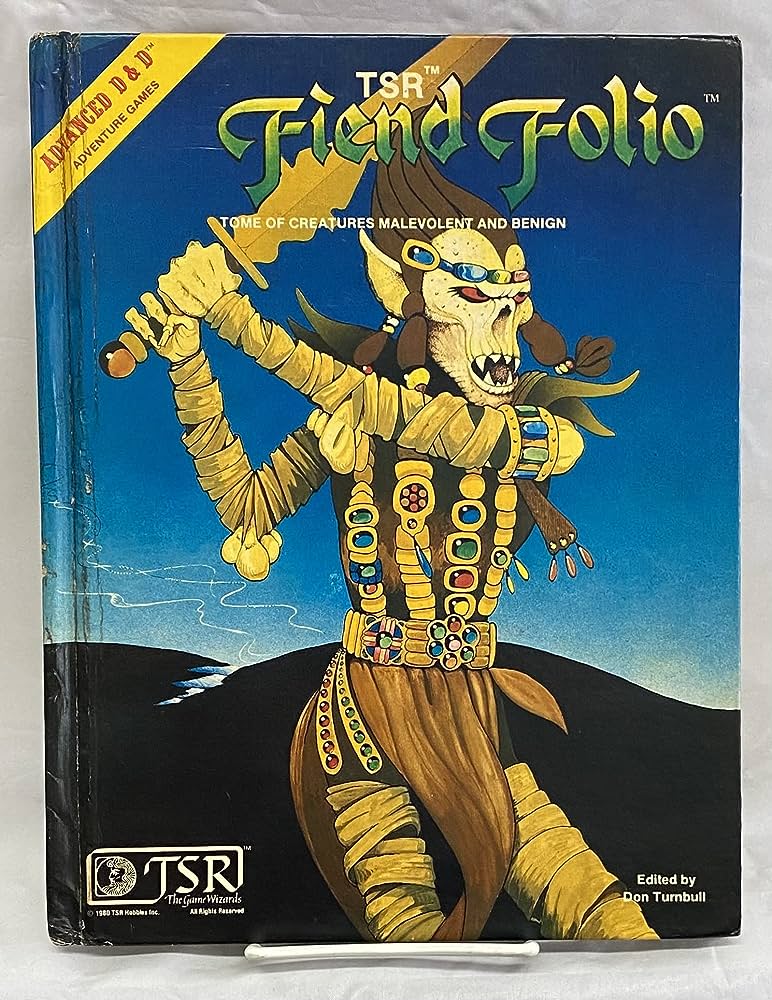
But one thing has stuck with me, over the years – all those lovely monsters. The original Monster Manual from 1977 was a charmingly low-fi bestiary of all kinds of imaginary and mythical creatures one might encounter in a campaign, from the Aerial Servant to the Zombie. I love a good guidebook, and many years on I still own a copy of the Monster Manual, and its grittier British-generated sequel, 1981’s Fiend Folio.
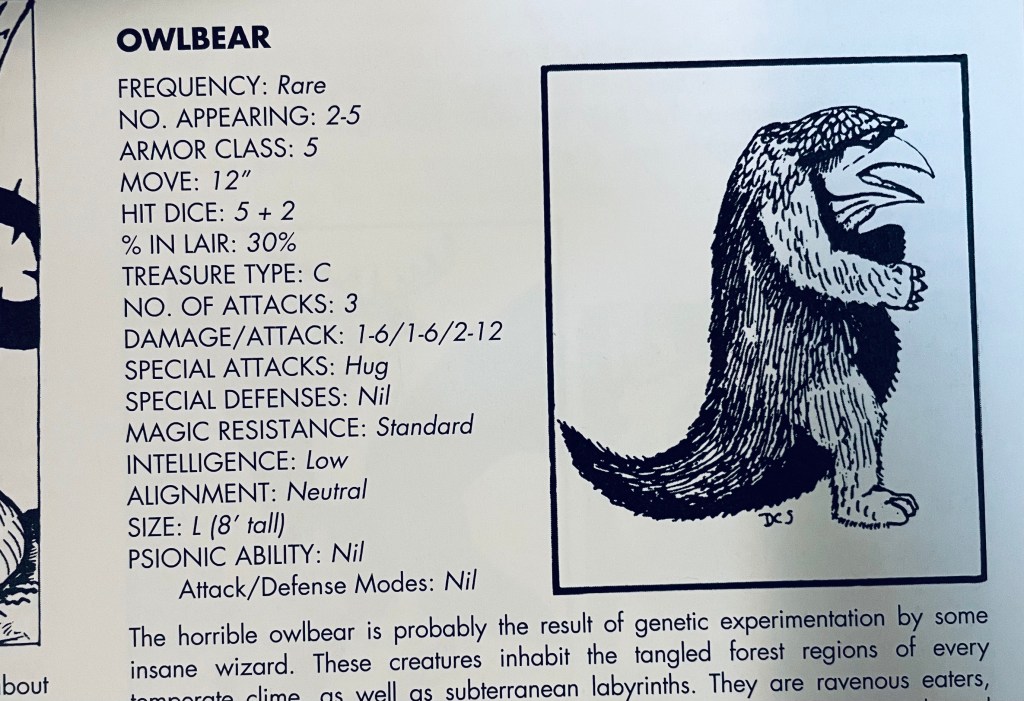
Both books remain enjoyably retro yet overflowing with ideas – each monster is gridded up with nerdy game statistics (what armor class is the Owlbear? What’s the difference between a Werewolf and Weretiger?) and kind of amateurish but passionate artwork.
In later year, D&D art materials would all get that polished, airbrushed and vaguely soulless quality of some heavy metal album cover, but for the ’77 Monster Manual, you got the feeling some of these critters were dashed off on scrap paper, and all the better for it. These weren’t monsters slapped out as part of some corporate committee, but raw material from D&D’s early, fan-driven days.
The huge variety of creatures sourced mythology and legend and ranged from the incredibly mundane (yes, there’s an entry for Mules, and one for the humble Badger) to the gloriously weird and creative like the many-eyed Beholder, the slippery Gelatinous Cube or the bizarre Owlbear. There were hints of nudity amongst some of the female monsters, which I’m sure attracted many a young fan.
In Fiend Folio, the art took on a raw, gorier quality and some of the creatures in there are truly terrifying to me still, like the Penanggallan, basically a flying decapitated female vampire head with a sack of guts hanging off it – ew!
What attracted me – and so many others, I’m sure – to D&D was the epic world-building involved, huge thick manuals covering every permutation of your fantasy world and characters. The Monster Manual felt like it might’ve been a real guide, somehow, with its genial authority. I loved that you had not one but several kinds of dragons and giants explained (Red Dragon or Green or perhaps, the regal Bronze? Why is a Stone Giant so much scarier looking than a Hill Giant?).
I know there’s been dozens of other manuals and guides and handbooks for D&D in the years since my playing days, and hey, that’s cool, I’m glad the game still endures.
But for me, the original handful of books are where it’s at.
Everything tends to get too complicated in fandom after a while, but in those early days for the great game, it was pretty simple. Here’s a book of monsters. Which one will you fight?
I guess that’s why I’ve kept copies of these monster manuals about, long after I rolled my last 20-sided dice – they’re guidebooks to a world that never was but one I mightily enjoyed visiting. I’ll never see an Owlbear or the Beholder in real life, I’m sure, but as long as they’re in a guidebook, they’re real somewhere, right?




















 Nik Dirga
#/media/File:David_Bowie_-_Reality.jpg)