 The best science fiction holds up a mirror to the world we live in. “Alien Nation” was never quite a household name, but the brief cult sci-fi franchise of the late ‘80s still holds up today.
The story is simple – a spaceship crashes into the Mojave desert, with a cargo of half a million alien slaves, ‘bred to adapt and labour in any environment,’ left stranded on Earth. These alien “Newcomers” aren’t quite like us – they have spots on their skulls, drink sour milk to get drunk, and prefer their food alive – but they’re close enough to awkwardly begin to integrate into human society, which is where “Alien Nation” picks up the story, five years after they landed.
The saga began with the 1988 film Alien Nation, a moderate hit with James Caan and Mandy Patinkin. George Francisco is the first Newcomer detective on the LAPD, paired with bigoted human partner Matt Sikes. Let the culture-clash hijinks ensue! It’s gifted with a great premise, but the movie doesn’t really deliver on its potential, turning into a generic “Lethal Weapon” cop buddy picture by the end and never really exploring what an entirely alien race blending into Los Angeles would be like.
 Fortunately, that wasn’t the end for “Alien Nation,” which debuted as a series on Fox TV in September 1989. It’s in the short-lived TV series where “Alien Nation” really blossomed, spearheaded by Kenneth Johnson, creator of another great ’80s cult sci-fi series, “V.”
“Alien Nation,” the series, is a perfect mix of cheesy late-80s cop show and progressive science fiction ideas, and as long as you don’t mind big hair, pastels and synth-heavy soundtracks, it’s great viewing. The series features a wide cast of Newcomer wives, children, professionals and criminals, priests and prostitutes and the Newcomers (or Tenctonese as they call themselves) are as plausibly drawn as the Klingons or Vulcans.
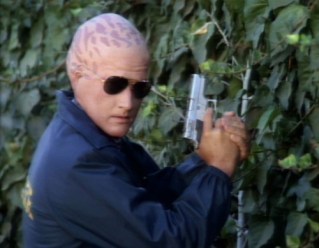 The story carries on with the same odd-couple detective duo from the movie, but recast and given more satisfying depth. Gary Graham’s Detective Sikes is all ’80s mullet and brash trigger-happy cop cliches at first, but the character becomes convincingly more sympathetic and layered as the series progresses. Eric Pierpoint is excellent as Francisco, who balances personal courage with frequent frustrations over the racism he encounters and the culture he’s left behind. The story of his family trying to fit in – his wife, teenage son and daughter – is often more fascinating than the TV show’s cop mystery of the week storyline. The cop stuff is goofily fun, but it’s the examinations of the human and alien condition that linger.
The series gets deeper and deeper into the fascinating Newcomer culture as it goes. An episode, “Three To Tango,” which goes deep into Newcomer mating rituals (it involves two males and one female) is surprisingly explicit and thought-provoking for 1980s broadcast TV. The show also delves deep into the Newcomers’ origins as a slave society and who they were slaves to.
Unfortunately, “Alien Nation” was a bit too ahead of its time (it’d go great today on a streaming network) and only lasted one season, but it did get five sequel TV movies which nicely expanded and wrapped up the saga. You can see its inspiration clearly in a movie like 2009’s District 9, which for my money was a lot less subtle and thoughtful.
It’d be nice to say that 30 years on we could all view “Alien Nation” and say how far we’ve all come from prejudice and hatred of the other in our lives, but unfortunately that’d only be science fiction.
 It all started with a few mixtapes.
 My first exposure to
  I’m a sucker for a good presidential biography, even as I loathe the orange troll currently occupying the White House. There’s something about the life sagas of America’s leaders that fascinates me, from the legends like Lincoln or Roosevelt to the sad sacks like James Buchanan.
 As a researcher and a journalist, Caro has few peers. The man is a human vacuum cleaner, sucking up every single factoid possible to craft fully rounded tales – he famously moved to the Hill Country of Texas with his wife to research LBJ’s boyhood years, and The Path To Power shows the painstaking time he took in its vibrant invocation of a long-gone era of hardened farmers and struggling families in a hostile land.
 Caro takes the time to get it right, and while 5 volumes and 5000 or so pages about one man’s life may seem excessive, other, shorter biographies I’ve read about LBJ seem like Cliff’s notes skimming over the surface compared to the richness of this work.
 So when soul legend Mavis Staples came to town, I made sure to be there because I didn’t want to miss what might be my only chance to see her way down here in NZ.
 Today, Mavis Staples is a few months away from 80 years old, she’s barely five feet tall, and she was obviously nursing a sore throat, but she still tore the roof off the Civic Theatre in Auckland with her soaring voice and inspirational message.
 Opening for Mavis was the wonderful
  I’ve written
  But her biggest claim to glory today is that she designed the epic look of the Creature From The Black Lagoon. The Creature is, I’d argue, the second-best monster design of all time (sorry, but Karloff’s Frankenstein’s monster has to take the top crown). It’s alien, yet human; terrifying, yet captivating.
 In “Lagoon,” O’Meara also shows the hard work that goes into the biography of a somewhat obscure person, hunting down leads and tracing dusty steps in the past. The story is as much about her and her experiences as a young woman in Hollywood as it is about Milicent Patrick. Some of the anecdotes O’Meara tells of her own treatment are truly dismaying, especially because they are all too common. The real monsters are still out there in Hollywood, hiding in broad daylight.
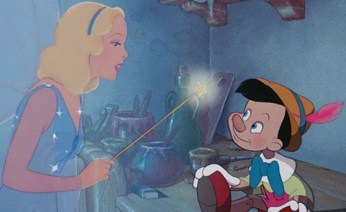 So the first autumn cold of the season hit the household, and I spent most of a day prone on the couch undertaking a surefire cure for the blues: Cartoons.
 I’d forgotten how bloody DARK “Dumbo” and “Pinocchio” are. There’s runaway children sold into slavery, a mother placed in chains, cruelty from the cartooniest of funny animals. (And we won’t even talk about “Bambi.”)
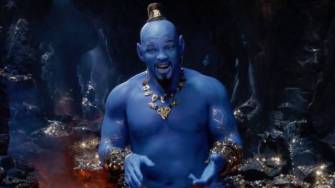 I watched the upcoming “Lion King” trailer and I just felt bored. I don’t hate these remakes, but they seem pointless, just more grist for Scrooge McDuck’s vaults. They’re stretched out (1941 “Dumbo” 64 minutes; 2019 “Dumbo” 112) and excessive elaborations of the gorgeous simple lines of the originals. What’s cute becomes creepy rendered in vivid CGI — blue Will Smith in the also upcoming “Aladdin” remake is something I never really needed to see, and it’s kind of freaking me out.
 There’s nothing I’ve seen yet in a CGI cartoon remake that approaches the stunning surrealism of the original “Pink Elephants on parade” sequence of “Dumbo” or the explosion of colour and passion of “Fantasia.” There have been lots of great original CGI cartoons from Pixar and the like of course, but Disney’s flood of redundant remakes is like a gift nobody really asked for.
 Therefore, since brevity is the soul of wit, And tediousness the limbs and outward flourishes, I will be brief. — Polonious
 As I’ve said before, I find Shakespeare bottomless – an infinity of meanings can be found in his works, and new twists reveal themselves in every new look. Hamlet is perhaps his crowning jewel as an artist, a play about a young man who asks the question every single one of us asks at some point in our lives: To be? Or not to be?
 What does it all mean? After hours and hours of Hamlet this season, I’m still not quite sure.
 Doom Patrol have always been weird, a team of misfits and outcasts kind of like the X-Men, but more so. Their original 1960s comic adventures are a bizarro Silver Age blast, but “my” Doom Patrol really burst into being with Grant Morrison’s seminal late 1980s reinvention of the concept. Morrison’s twin masterpieces of Doom Patrol and Animal Man back in the day blew my teenage mind.
 One of the newer of the approximately 419 streaming services out there, DC Universe premiered last year with Titans, which was a mixed success for me – I dug seeing the “Teen Titans” come to life and there were some great parts, but the show had very scattered storytelling and a self-consciously adult tone that felt forced (Unless you really thought we needed to have a blood-soaked Robin muttering “F—- Batman” to make the character work better). Doom Patrol is more adult by nature, so the swearing and mature themes work better (I’ll never get tired of hearing Cliff Steele aka Robotman saying, “What the F—-!?!?” in response to Doom Patrol’s never-ending parade of weirdness).
 The artists I admire the most are the chameleons, the mutators and innovators, the ones who never stand still. That’s why the Beatles will always trump the Rolling Stones, David Bowie will always beat Elton John to me.
 By 2006’s The Drift, Walker had exploded into full-on experimental surrealism, with terrifying drones and waves of sound and a voice that now sounded like the heavens shaking themselves awake. There were no pop anthems here. Legendarily, he hunted for just the right percussion sound on “The Drift”


 Nik Dirga