 I love Godzilla, because when I’m in the mood, you just want to watch a giant lizard smash the hell out of everything around you. Another big-budget Godzilla movie opened this weekend, and it’s gotten the usual mixed reviews from people who don’t really get the point of a Godzilla movie.
I never heard the word ‘kaiju’ until I was in my early 30s and every hipster with a DVD collection was spouting it, but it does trip off the tongue better than “giant monster movies.” I love all kinds of monsters and aliens, but Godzilla kaiju movies are the pure biscuits and gravy of the casino buffet of cinema. For more than 60 years now, they’ve been stomping along to the same general formula – Godzilla returns, stomps around a lot, fights another monster or two, sometimes Godzilla’s the good guy and sometimes the bad, and there’s always an annoying human-focused side plot or three.
 My first Godzilla movie was a battered VHS tape of 1963’s “King Kong Vs. Godzilla”, and to this day it’s one of my desert island flicks. It’s absurd – this Kong looks more like a squashed and mangy grizzly bear than a gorilla, really – but so much damned fun as this duo wrestle and tumble around Japan.
Did you know there’s been an insane thirty-five Godzilla movies since 1954’s original? They range from the Saturday morning-matinee cheese of the “Showa” era to the steroid-infused bombast of the “Heisei” films in the 1980s and 1990s to the flashy, crazed “Millennium” period of the early 2000s. Some of the movies are worse than others, but usually they’re at least worth a watch (except for 1998’s misbegotten “igunazilla” Hollywood bomb, of which we won’t speak again).
 For those who think the current Godzilla: King of the Monsters is wacky, check out 1991’s utterly unhinged “Godzilla Vs. King Ghidorah,” which features time-travel, a ridiculous “Terminator” riff and the spectacle of Mecha-Ghidorah. For those who want something a little deeper, 2016’s “Shin Godzilla” is a strange satire of Japanese bureaucracy mixed up with some of the most awe-inspiring Godzilla scenes ever. For those who just remember Godzilla wrestling other rubber-suited goofballs on sound stages, 1972’s “Godzilla Vs Gigan” is the kaiju-fest you’ve been hunting for, and Gigan, with his chicken beak, massive talons and inexplicable buzzsaw blade sticking out of the middle of his chest, is peak kaiju craziness. Meanwhile, 1971’s eco-thriller “Godzilla Vs Hedorah” (aka “Godzilla Vs The Smog Monster”) features hippies and the goopiest Godzilla nemesis of all. It also features this anecdote courtesy of Wikipedia that’s too crazy not to mention: Kenpachiro Satsuma, the actor who played Hedorah, was struck with appendicitis during the production. Doctors were forced to perform the appendectomy while he was still wearing the Hedorah suit, due to the length of time it took to take off. Let me repeat that: A man dressed as a kaiju had his appendix taken out.
“Godzilla: King of the Monsters,” aka Godzilla II, has all the horsepower of a million CGI-producing gigabytes behind it to produce images the original Toho team could’ve only dreamt of, but at its core it’s just as silly and funky as the guy in a rubber suit movies of the ‘60s despite its Hollywood cast. Thankfully, it takes itself much less seriously than 2014’s too-ponderous Godzilla reboot, and delivers images of almost painterly beauty amongst the mayhem. You get a four-way monster-mash throw down reducing downtown Boston to shreds at one point, and honestly, that’s all I want out of a Godzilla movie. If you disregard the fact that every single human character in Godzilla II should’ve died 17 times over, it’s a lot of fun.
Godzilla movies are an acquired taste. They’ll never achieve the crossover success of, say, Marvel movies or Star Wars, but like I said, sometimes all you want out of a movie is watching one monster shove another one’s head through a skyscraper. And next year, they’re releasing a remake of Godzilla’s championship title bout with King Kong. I’ll be there opening day.
 “I yearn to rely on a higher will. I fear what I am capable of in its absence.” – E.B. Farnum
 It wasn’t for nothing that one of his best albums is called A Man Called Destruction. He was the spirit of punk rock incarnated in a teen crooner’s body.
 The best science fiction holds up a mirror to the world we live in. “Alien Nation” was never quite a household name, but the brief cult sci-fi franchise of the late ‘80s still holds up today.
 Fortunately, that wasn’t the end for “Alien Nation,” which debuted as a series on Fox TV in September 1989. It’s in the short-lived TV series where “Alien Nation” really blossomed, spearheaded by Kenneth Johnson, creator of another great ’80s cult sci-fi series, “V.”
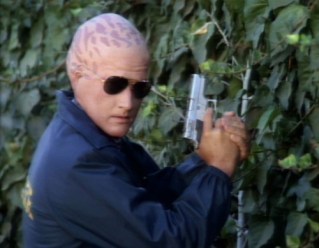 The story carries on with the same odd-couple detective duo from the movie, but recast and given more satisfying depth. Gary Graham’s Detective Sikes is all ’80s mullet and brash trigger-happy cop cliches at first, but the character becomes convincingly more sympathetic and layered as the series progresses. Eric Pierpoint is excellent as Francisco, who balances personal courage with frequent frustrations over the racism he encounters and the culture he’s left behind. The story of his family trying to fit in – his wife, teenage son and daughter – is often more fascinating than the TV show’s cop mystery of the week storyline.
 It all started with a few mixtapes.
 My first exposure to
  I’m a sucker for a good presidential biography, even as I loathe the orange troll currently occupying the White House. There’s something about the life sagas of America’s leaders that fascinates me, from the legends like Lincoln or Roosevelt to the sad sacks like James Buchanan.
 As a researcher and a journalist, Caro has few peers. The man is a human vacuum cleaner, sucking up every single factoid possible to craft fully rounded tales – he famously moved to the Hill Country of Texas with his wife to research LBJ’s boyhood years, and The Path To Power shows the painstaking time he took in its vibrant invocation of a long-gone era of hardened farmers and struggling families in a hostile land.
 Caro takes the time to get it right, and while 5 volumes and 5000 or so pages about one man’s life may seem excessive, other, shorter biographies I’ve read about LBJ seem like Cliff’s notes skimming over the surface compared to the richness of this work.
 So when soul legend Mavis Staples came to town, I made sure to be there because I didn’t want to miss what might be my only chance to see her way down here in NZ.
 Today, Mavis Staples is a few months away from 80 years old, she’s barely five feet tall, and she was obviously nursing a sore throat, but she still tore the roof off the Civic Theatre in Auckland with her soaring voice and inspirational message.
 Opening for Mavis was the wonderful
  I’ve written
  But her biggest claim to glory today is that she designed the epic look of the Creature From The Black Lagoon. The Creature is, I’d argue, the second-best monster design of all time (sorry, but Karloff’s Frankenstein’s monster has to take the top crown). It’s alien, yet human; terrifying, yet captivating.
 In “Lagoon,” O’Meara also shows the hard work that goes into the biography of a somewhat obscure person, hunting down leads and tracing dusty steps in the past. The story is as much about her and her experiences as a young woman in Hollywood as it is about Milicent Patrick. Some of the anecdotes O’Meara tells of her own treatment are truly dismaying, especially because they are all too common. The real monsters are still out there in Hollywood, hiding in broad daylight.
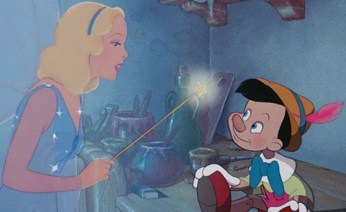 So the first autumn cold of the season hit the household, and I spent most of a day prone on the couch undertaking a surefire cure for the blues: Cartoons.
 I’d forgotten how bloody DARK “Dumbo” and “Pinocchio” are. There’s runaway children sold into slavery, a mother placed in chains, cruelty from the cartooniest of funny animals. (And we won’t even talk about “Bambi.”)
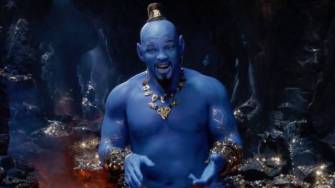 I watched the upcoming “Lion King” trailer and I just felt bored. I don’t hate these remakes, but they seem pointless, just more grist for Scrooge McDuck’s vaults. They’re stretched out (1941 “Dumbo” 64 minutes; 2019 “Dumbo” 112) and excessive elaborations of the gorgeous simple lines of the originals. What’s cute becomes creepy rendered in vivid CGI — blue Will Smith in the also upcoming “Aladdin” remake is something I never really needed to see, and it’s kind of freaking me out.
 There’s nothing I’ve seen yet in a CGI cartoon remake that approaches the stunning surrealism of the original “Pink Elephants on parade” sequence of “Dumbo” or the explosion of colour and passion of “Fantasia.” There have been lots of great original CGI cartoons from Pixar and the like of course, but Disney’s flood of redundant remakes is like a gift nobody really asked for.
 Therefore, since brevity is the soul of wit, And tediousness the limbs and outward flourishes, I will be brief. — Polonious
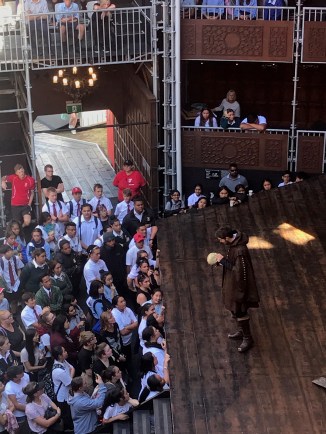 As I’ve said before, I find Shakespeare bottomless – an infinity of meanings can be found in his works, and new twists reveal themselves in every new look. Hamlet is perhaps his crowning jewel as an artist, a play about a young man who asks the question every single one of us asks at some point in our lives: To be? Or not to be?
 What does it all mean? After hours and hours of Hamlet this season, I’m still not quite sure.
 Nik Dirga