 The artists I admire the most are the chameleons, the mutators and innovators, the ones who never stand still. That’s why the Beatles will always trump the Rolling Stones, David Bowie will always beat Elton John to me.
And the king of chameleons was the late Scott Walker, who flew so far ahead of the farthest stars in his strange career.
Walker died this week at 76, and it’s been heartening to see this cult artist’s cult artist applauded and recognised from so many corners. The twists of his career outstripped almost every other pop star. “Imagine Andy Williams reinventing himself as Stockhausen,” wrote a Guardian writer a while back, and that sums it up nicely.
Born in Ohio, Walker began as a swinging ‘60s teen pop icon with the Walker Brothers (who weren’t actually brothers), belting out classics like “The Sun Ain’t Gonna Shine Anymore”, Scott’s uniquely evocative baritone frequently rising above the banality of their early material.
But it’s with Walker’s solo career that he really began to find his own voice, moving to the UK and creating increasingly baroque, lonesome pop anthems in a run of four amazing albums from Scott to Scott 4. Then after a few disappointing albums, he sort of vanished. He resurfaced briefly in the late 1970s with Bowie-esque, broody gems like “The Electrician” and then vanished again, releasing only two proper albums between 1978 and 2006. Each time he came back, it was as a different being.
 By 2006’s The Drift, Walker had exploded into full-on experimental surrealism, with terrifying drones and waves of sound and a voice that now sounded like the heavens shaking themselves awake. There were no pop anthems here. Legendarily, he hunted for just the right percussion sound on “The Drift” by punching hunks of raw meat. It wasn’t for everyone – indeed, you’ve really got to be in the proper frame of mind for late Scott Walker – but it was a gloriously creative twilight zone he was exploring in. His lyrics became twisted and strange Joycean rambles, his songs willfully avoiding traditional structures.
Imagine William S. Burroughs if he’d been a composer to fully get the clattering, obscure and layered effect of works like The Drift or 2012’s Bish Bosch. Yet there was always a hint of the yearning heartbroken pop singer of his earliest work there in the shadows too, the through line of a career so wilfully independent that a novice would be hard pressed to recognise the work of 1967 Scott Walker and 2016 Scott Walker as being by the same creative, haunting voice.
Here are four songs to remember him by, each showing a different facet of his yearning sound: (1. The Sun Ain’t Gonna Shine Anymore, orchestral pop given a strange, epic sheen by his young yet ancient voice:
(2. His debauched and ecstatic cover of Jacques Brel’s Jacky, as subversive as all get out. Glam rock starts here.
(3. Nite Flights, sinuous Bowie-esque glamour incarnate from the 1978 Walker Brothers reunion:
(4. Finally, Epizootics!, to give you a taste of just how out-there late-period Walker circa 2012’s Bish Bosch had gotten – stick with it, it’s got a groove that hypnotizes you and this video is like David Lynch’s nightmares unfolding. It’ll either grab you right in the spleen or repulse you deep in places you might not even know you had. How could these four songs be by the same man? It’s a fitting coda to Walker’s career for me – taking you places nobody else could.


 The comic book medium has had lots of highs in its nearly 100-year history. We’ve had Maus, Watchmen, Love and Rockets, Sandman, and much, much more.


 These comics are a product of their time – Lois is too often portrayed as a scheming meddler with marriage to a man (usually Superman) the only thing on her mind; but by the same token Jimmy Olsen is a gibbering goon who’s constantly getting himself into trouble as well. Yet I’d take a single Jimmy Olsen comic with their endless invention and amiable good cheer over a dozen of comic books’ latest attempts to strip-mine their past and reinvent the wheel.
 What do we do when the worst happens?
 A few thousand of us came together in Aotea Square in downtown Auckland today to mourn in the hot sun, to show these racist white supremacist shitheads out there that we are better than them.
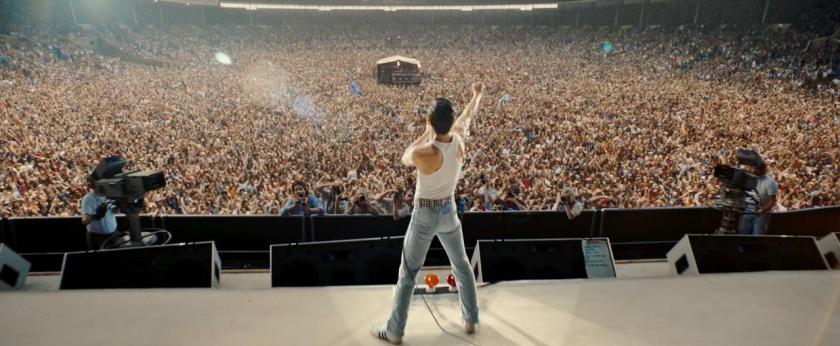 Real talk: I liked Bohemian Rhapsody quite a lot.
 Queen are a band critics loved to hate. “Lyrically, Queen’s songs manage to be pretentious and irrelevant,” The New York Times wrote in 1978. Rolling Stone’s Dave Marsh
  It’s a very simple story of a band that came from nothing and made it big, which has its DNA all over every single reality TV show millions watch every single week. Rhapsody works for many because it speaks to the weirdos and the oddballs, to that dream of getting famous. Everybody wants to be something.
 It’s not an insult to say that New Zealand is literally for the birds.
 Other species lasted longer. Another long-gone beauty is the
  Little battlers like the wren – which was apparently flightless – didn’t stand much of a chance when settlers came knocking with their cats and rats and the like.
 One of my favourite comics from the ‘80s into the early ‘90s was Marvel’s
  The biggest geek-appeal of What Ifs were that in retelling classic stories with a twist, characters could die – hell, everybody could die. “What if The Hulk Went Berserk?” was an issue that scarred the heck out of teenage me because I walked in expecting a typical Hulk story and then characters like Iron Man and The Thing started dropping like flies… oh, and it ended with Thor snapping the Hulk’s NECK which is pretty darned grimdark, ain’t it?
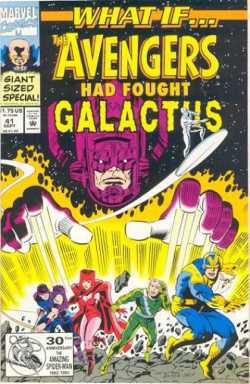 A cursory look at comics from the last few months turns up “Infinity Wars” (Marvel characters like Captain America/Dr. Strange mashed up, again!), “The Batman Who Laughs” (what if Batman was REALLY dark?), “Spider-Gwen,” “Spider-Noir” and a hundred more variations of Spider-Man. Not saying these are all terrible stories (although a lot are), but the main thing is that the novelty is gone. Whoa, you just showed me an alternative world where Superman is DEAD? I’ve seen that six times this week already, son.
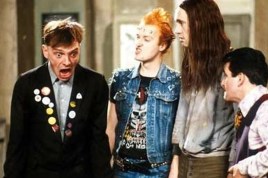 Rik, Vyvyan, Neil and even comparatively dull Mike were my Beatles of comedy. Like the best British shows, it knew when to quit – 12 episodes and that’s it, and with the late, great Rik Mayall leaving us way too soon in 2014, there’ll never be another.
 Several times, episodes build up with plots involving things like axe murderers or vampires or marauding medieval peasants only to abruptly draw curtain on the episode. Nothing really matters, the ‘madcap adventures’ can be waved off and the show will restart as normal the next episode. There’s something very existential about these damned housemates, trapped in their greasy grey pigsty and never changing, being squashed by a giant eclair in one episode and back for more in the next.
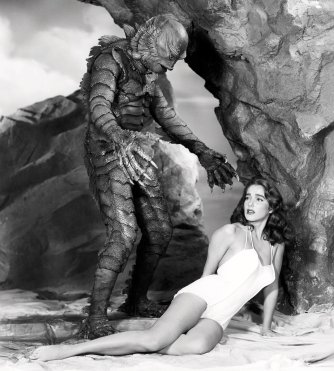 Julie Adams wasn’t a household name, but she was legendary in her own way as one of the last surviving “scream queens” of the classic Universal Monster movies of the 1930s-1950s.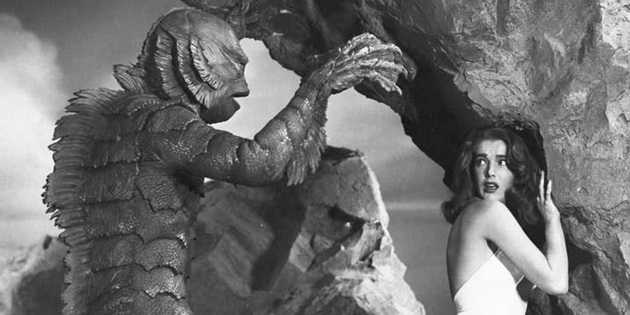
 One of my highlights of the last three summers has been working at the remarkable
  I’ve loved Shakespeare since a superb high school teacher (thanks, Mr. Lehman) showed us how the Bard wasn’t all dusty words and impenetrable verse, but a living, breathing body of work that contains some of the greatest stories ever told. Shakespeare is meant to be seen, not merely read aloud in a halting adolescent voice in a dry classroom.
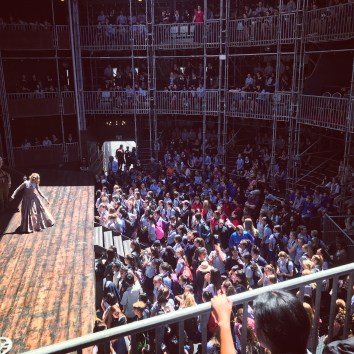 A joy for me is seeing how into the plays the audience still are in 2019. This isn’t boring Shakespeare – trust me, when the stage blood starts gushing into the audience during the bloody close of Richard III, you wouldn’t call this stuffy. There’s a witty, relaxed vibe that’s perfect for a New Zealand summer. We get all kinds of crowds – young, old, repeat customers and those who’ve never seen a Shakespeare play in their life.
 Nik Dirga