Look, I’m sorry to harsh the pre-Christmas buzz, but 2023 was pretty lame, right?
My wife went through breast cancer surgery and treatment (she’s doing a lot better, thankfully). Other family members have been battling ill health and the upheaval of change. We lost our family beach house in a cyclone as the climate crisis hit NZ hard. Hell, even our beloved old cat friend Bowie died, and the world seemed to continue its headlong lurch into fascism, internet-fuelled conspiracy-land, ignorance, pointless culture wars and hate. Get in the bin, 2023, I’m done with you.
So, what do you do? For the last several pandemic-tainted years I’ve done up a playlist of songs to survive, because art helps. Music helps, good books help, great movies help. Drawing two issues of my comic book Amoeba Adventures helped. I don’t think I could survive in a world without some kind of art.
Back in the days of ornate mixtapes, you could sweat over the proper order of songs for ages, crafting the perfect vibe. This year, I just kind of threw it all in a blender, from Kiwi pop to thrash to old favourites to new artists I literally discovered a week ago. It’s all music. It’s all good, you know?
Here’s nearly 3 hours, 40+ songs that helped me survive 2023. Shuffle away and listen to it in any order, or let it flow as it is.
Wherever you are, have an excellent Christmas, and whoever or whatever you believe in, let’s all hope for a little more peace on earth and goodwill to all in the days to come.
What is it? …So, what makes a bad movie? Is it ineptitude, or arrogance, or both? Marvel’s Fantastic Four comics have now been adapted disappointingly into movies four times – a very, very low-budget never-officially-released 1994 Roger Corman schlock-fest, two mildly successful family-friendly 2000s movies by Tim Story, and an outright bomb in the dark, dreary 2015 Josh Trank film. It shouldn’t be this hard to adapt one of the great superhero comics to cinema, but somehow, it keeps missing the mark.
The Fantastic Four are a family – Reed Richards and his (eventually) wife Sue Storm, fiery Johnny Storm and tragic Ben Grimm, the Thing. They’re adventurers and explorers and Stan Lee, Jack Kirby, John Byrne, Jonathan Hickman, Mark Waid and others have written countless great comics starring them.
Yet Fantastic Four 2015is a joyless slog, in love with its own seriousness in a story that should be about wonder and adventure, more Indiana Jones than X-Men. The movie spends far too much of its runtime setting up young genius Reed Richards (an uncertain Miles Teller) and childhood pal Ben Grimm (woefully miscast Jamie Bell) getting involved in a secret cosmic teleportation experiment with scientist Sue Storm (Kate Mara, serious and dull), her daredevil brother Johnny Storm (Michael B. Jordan, showing little of the charisma he brought to Creed and Black Panther) and Victor Von Doom as a spoiled, egotistical scientist (forgettably generic Toby Kebbell). The experiment changes them all, giving them strange powers in a movie that seems determined to play that as Cronebergian body horror, they end up fighting Victor Von Doom who’s gone evil for… reasons, and then it’s the end.
Like far too many superhero movies it’s all about setting up for imaginary sequels, and Trank plays it all stonefaced straight. Tim Story’s 2005 and 2007 Fantastic Four movies were kinda clumsy and cheap, but one thing they got right was the essential light touch a FF story needs, the banter and the camaraderie. Not a single character in Fantastic Four 2015 is really that likeable.
A fifth Fantastic Four movie, finally meant to be part of the Marvel Cinematic Universe proper, is set to arrive in 2025. Will it break the curse?
Why I never saw it. Look, as a wee young boy superhero movies were few and far between, and I gamely saw flops like Howard The Duck and Superman IV: The Quest for Peace in theatres. But in the last 20 years we’ve been deluged with comic content and when a movie bombs as hard as FF15 did, you know, you tend to skip it until you get bored enough one night. Bad movies have their own twisted charm, and I figured it was time to see if this was as bad as everyone said it was. (Should I do Morbius next, or can my heart take it?)
Does it measure up to its rep? An anemic 9% positive reviews on Rotten Tomatoes. A 1.3 star rating out of 5 on Letterboxd. A (rather too generous) 4.3/10 on IMDB. Yep, I’d say it measures up to those. It is indeed as bad as everyone said it was.
What depresses most about Fantastic Four 2015, besides the utter miscasting of pretty much everybody involved and its relentless dour tone, is how so many wrong choices by Trank show he fails to get what has made the Fantastic Four work for 60 years. The first misstep was relying on the 2000s “reboot” comic Ultimate Fantastic Four as your source material. It’s one of those peak “edgy” decompressed reimagining of beloved characters with then-hip lingo that ages like cheese left out in the sun, and far inferior to the energetic original Lee & Kirby Marvel Comics.
What makes a bad movie is the sense the filmmakers don’t care about their story or their characters. Trank has the team as brooding teenagers, manipulated by the sinister government and missing the spirit of plucky individualism that drove Lee and Kirby’s original comics. Make Ben Grimm’s mutated Thing, famous for his gritty wit and gruff everyman charm in the comics, into a sullen government assassin? Also make the Thing disturbingly naked instead of wearing his trademark blue trunks? Check. Have Sue Storm be an adopted orphan from Kosovo for no particular reason? Check! And once again mangle the character of Doctor Doom, one of comics’ most revered villains, turning him into a whiny loser mutated by cosmic energy and quite possibly the most visually ugly interpretation of a comics villain on film outside of Zach Snyder’s Justice League? Double check! (Doom has now fallen short in FOUR movies, which has to be some kind of record in a world where people playing the Joker have won two Oscars.)
Worth seeing? We live in an age where third-tier comic book characters like Groot, Blue Beetle, She-Hulk and Agatha Harkness are all well-known. Yet, somehow, film still hasn’t quite cracked the secret of how to adapt one of the greatest comics of all time to film. It’s no wonder it took me eight years to get around to this one. By far the worst of four cinematic attempts at the quartet, Josh Trank’s Fantastic Four is exactly as misguided and depressing as the reviews back in 2015 made it sound. If you’re a fan of the comic, like I am, Fantastic Four 2015 feels like an intentional insult. At least we’ll always have the comics, eh? Flame on!
Every actor has a face that fits certain roles better than others.
Kenneth Branagh is lots of things – an acclaimed Shakespearean whose film Henry V helped seal my lifelong love for the bard, a director of Marvel movies and action franchises, an Oscar-winning writer, an actor who slots nicely into big-budget productions from Oppenheimer to Harry Potter films to give them a touch of class.
But my favourite Branagh as an actor (or Sir Kenneth, if you like) is when he’s solving a mystery or two. He’s an actor who feels born to mull over and solve crimes, to be the bloke at the end of the picture who tells the cast of characters who done it and why.
He’s played two pretty iconic detectives – Agatha Christie’s Hercule Poirot in three movies, and the late Henning Mankell’s Scandi-noir police investigator Kurt Wallander in a series of excellent English-language TV adaptations.
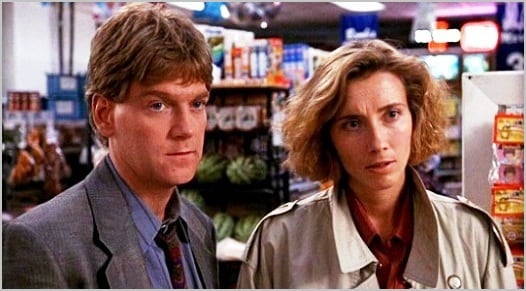
Heck, at the very start of his career 30+ years ago a baby-faced Branagh also served up a fine Hitchcockian noir homage with the twisty Dead Again, where he plays a detective who’s not quite what he seems.
I enjoy watching him in all of them, for even when the material itself is a bit tatty, Branagh remains a cool, elegant centre, whether he’s the magnificently mustached Belgian Poirot or the tense, stressed Swede Wallander. Sir Kenneth excels at showing the mind at work solving whatever cases life throws at him.
Branagh’s Agatha Christie adaptations of Murder On The Orient Express, Death on the Nile and A Haunting In Venice became a bit of an unlikely low-key franchise the past few years. The star-studded let’s-solve-a-murder thrillers throw back to similar movies of the 1970s. They are more popcorn diversions than timeless classics, really, but I have fun watching every one of them. (Death On The Nile, hampered by very obvious pandemic shooting restrictions and a miscast Gal Gadot proving she really can only play Wonder Woman, is the weakest, while moody quasi-horror movie Haunting In Venice, which quietly slipped into release earlier this year, is quite solid.) Poirot is a classic character that Branagh brings a nice bit of haunted depth to, traumatised by his World War I experiences but animated by a firm sense of justice.
The Wallander series introduced me to Mankell’s compulsively readable, dour novels, and the Swedish TV productions of them too. Set in an endlessly windswept, grim small-town Sweden, they’re dark but addictive like the best crime fiction. Branagh’s performance as the jittery Wallander, who never quite seems to get enough sleep, always holds my attention as he works his way to a haggard justice for crime’s victims. There’s a mood of exhaustion that hangs over Wallander which could be depressing, but somehow, it works for me, anchored by Branagh.
However, for a man who’s tackled many British icons from Shakespeare on down, there’s one role I’d still love to see Sir Kenneth step into – give us a Sherlock Holmes, with, say, Alfred Molina as an excellent choice for his Watson. It doesn’t need to be some meta reinvention like Benedict Cumberbatch’s fine series.
Plonk us in Victorian England, give us a mystery or two to solve, and watch Sir Kenneth’s face go to work. As a filmmaking triple-threat, surely Sir Kenneth could write, direct and star in a Sherlock Holmes movie to add to his detective’s kit.
Life is full of mysteries, after all, and we still need great detectives to solve it.
It turns out Toho’s newGodzilla Minus One is an astonishingly good movie, let alone a Godzilla movie, the latest in a series of endless reinventions of the king of monsters since his debut in 1954. Set just after World War II, it tackles the weighty subjects of Japan’s post-war trauma and rebuilding and mashes it together with some of the most stunningly visceral kaiju rampages ever filmed.
It’s the rare Godzilla movie where the human characters are fully realised. It’s the story of a disgraced kamikaze pilot attempting to recover from his war experience, with Godzilla cleverly interlaced as both potent metaphor and big-ass destructive force constantly upending one man’s little life. Godzilla is terrifying in this movie, in a way he’s only occasionally been in the last 70 years. It’s instantly rocketed into my top 3 Godzilla movies of all time.
But it’s also a very serious Godzilla movie – which is totally cool. The thing is, Godzilla has turned out to be very flexible for such a big fellow, so the very same day my son and I were floored by G-1 in the theatre, we also saw the trailer for next year’s American “Monsterverse” instalment Godzilla X Kong: The New Empire, which swerves 180 degrees back towards the silly side of Godzilla again. Godzilla and King Kong are set for a good ol’ fashioned monster team-up adventure, and I can’t wait.
Yes, the trailer is kind of wacky, but I loved 2021’s Godzilla Vs Kong for its same combination of bombastic old-school kaiju action with modern special effects, too. Look, any movie with a giant gorilla and reptile having a punching match on the deck of an aircraft carrier can’t be all bad.
That’s what’s great about Godzilla. He can be a horrifying embodiment of nuclear fears as in his very first movie, he can be a quasi-superhero, he can be a big galoot who wrestles other giant critters, he can be a hero or a villain or an implacable alien force of nature. In recent years, the American series of Godzilla films have gone for the popcorn craziness, while the Japanese ones have tried for a little more depth such as 2016’s fascinating Shin Godzilla which was a dense satire of the country’s bureaucracy mixed with a shapeshifting take on the titular creature.
I watched Godzilla Minus One in the afternoon and then in the evening for a whiplash-inducing change of pace I watched 2004’s Godzilla: Final Wars again, which was made to mark the 50th anniversary of the big guy and a temporary “last” movie in a franchise that never truly ends.
It is an insane overstuffed piece of cinema that juggles alien invasions, mutants, martial arts, rap-metal, terrible early 2000s CGI and cameos from pretty much every kaiju from the vintage Showa era on up. It’s like someone decided to mix a 1970s Godzilla movie with a Matrix ripoff and it’s technically sometimes awful but also amazingly entertaining in its go-for-broke fashion.
Final Wars is in tone and execution about as far away from the layered, emotional Minus One as you can get, but somehow Godzilla works in both of them. That’s the beauty of Godzilla. After 70 years, he’s still got plenty of new tricks up his scaly sleeve.
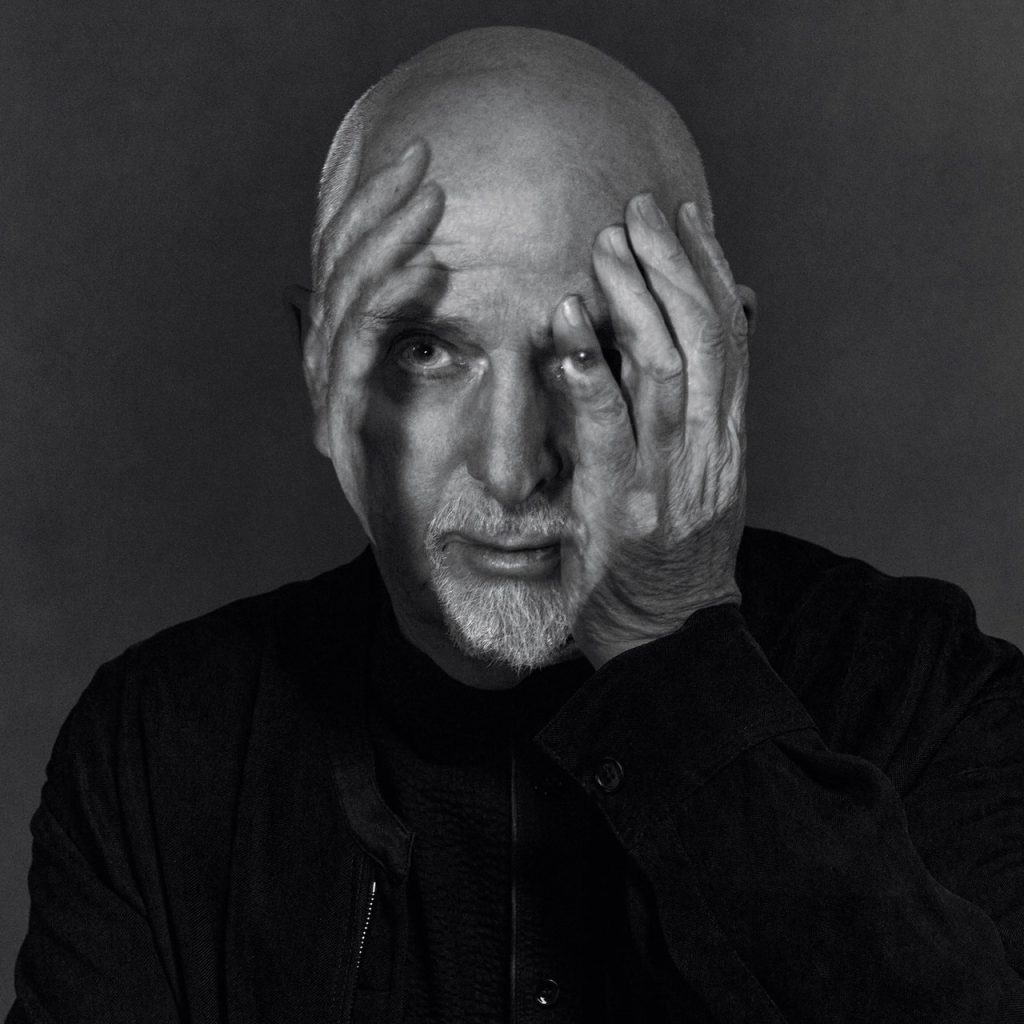
I’m a big Peter Gabriel fan – in fact, I’m not sure there’s an artist I’ve ever been quite so obsessed with. From the dusky grandeur of his voice to his rhythmic explorations of world music, I dig him.
So why was it that I felt so neutral over the promise of his releasing his new album i/o this year – his first proper solo album in a staggering 21 years? I imagined i/o would never live up to that wait.
Gabriel has been releasing tracks from i/o all year long on social media and, weirdly, I had barely listened to them. It was very un-fanboy-ish. I wanted an album, not a drip-feed of social media content, and I figured I’d just wait for the far-off day that it actually came out and experience it as one big gulp.
And yeah, I guess I felt a little miffed over him taking two decades to put out a new album of original material – fanboys are proprietary, after all.
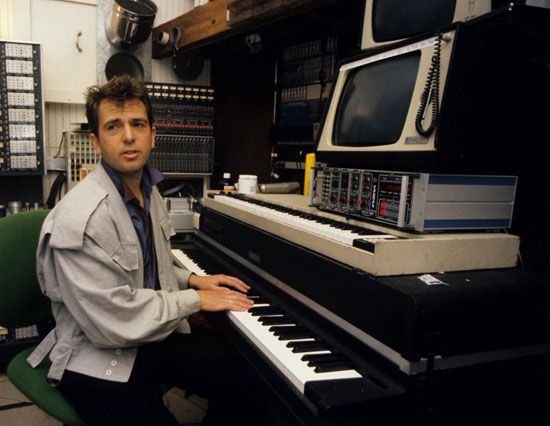
In my younger days, I fell in love with his breakthrough smash So, and then dove into the wonders of his solo discography. I listened to So, Security and his several self-titled albums so many times I knew every drum crack, every soaring keyboard line.
I dug Gabriel so much that I once proposed writing an entire 33 1/3 book about him (yeah, that didn’t happen) and I got interviewed on Radio New Zealand about my nerdy fandom a couple years back. But I also wrote a couple years back in Peter Gabriel, the man who disappeared about his mysterious, sometimes irritating silence on the pop music scene.
He certainly wasn’t a reclusive hermit and did produce a variety of other projects, but still, the last “real” solo album he did was Up, released in September 2002 … 21+ years ago.
I mark my life by my Gabriel fandom. I picked up So in high school. I bought Us in 1992 as a college student. I got Up just a year or so before my son, who’s now in university, was born. I bought a copy of i/o on its release day (determinedly old-school with a CD, to slot in amongst my other Gabriel albums) and somehow, I’m in my early 50s listening to new music by the same man I’ve dug well over half my life.
When Gabriel did the cliche of re-recording his old songs and cover tunes with a full orchestra a few years back, I quavered in my devotion. I found the cover albums lifeless and bland and worried i/o would end up equally exhausted-sounding.
So after all that, I put i/o on, popped on my Bose headphones and settled in for the first new Peter Gabriel album since I was in my early 30s.
Is it actually any good?
Fortunately, I have to say, now that it’s finally here, i/o is a dense, rewarding listen, slotting comfortably in the sparse discography of post-So Gabriel. It’s less melancholy than those dreary orchestral albums were, although it’s still the contemplative music of a man who’s now 73 – there’s no ‘Sledgehammer Part 2’ here.
Yet his voice is in remarkably good form, rich and full, still able to easily hit those high notes he could early in his career almost 50 (!) years ago. It threads the line between light and dark, yet a thread of optimism pulses throughout. That perfectionist Gabriel has even released it in multiple mixes so I’ll spend a while getting to to know it all.
I will give i/o plenty of my time in the coming weeks – already I love the grand sweep of “Playing For Time,” the slightly spooky thundery “Pantopticom,” the gloriously upbeat title track, the bouncy good cheer of “Olive Tree.”
And in the end i/o is shaping up as an album about time, its startlingly quick pace as you get older. Since Gabriel’s last album a lot of my other obsessions and music loves have left. Bowie, Leonard Cohen, Prince, Sinead, The Fall’s Mark E. Smith, The Pogues’ Shane MacGowan just this week. I have to wonder if Gabriel didn’t mean for i/o to take nearly two decades to come out. But time gets away from you, doesn’t it?
I give Gabriel time. A lot of time. But I’m already basking in that old long dormant fandom, digging the rise and fall of the sounds that make up i/o. I’m listening. It’s good to hear that voice again.
…I’m bogged down in a pre-Christmas pile of actual money for my words work, so content here is a little sparse lately, but that doesn’t mean other people I know aren’t writing away!
Way back in the Paleozoic era of blogging, we used to link to each other all the time. These days, with social media becoming a bigger dumpster era fire than ever, it doesn’t seem like a bad idea to cut out the middle man again. Here’s what some friends and colleagues have been doing online lately that floats my boat:
* I’ve beavered away on the edges of music journalism for most of my career, and it’s grim times for it at the moment in New Zealand. My mate Chris Schulz has had a far bigger music writing career than I ever did, and he’s rightfully been on a bit of a crusade lately about how arts journalism is dying in Aotearoa. Case in point, when I moved here 15+ years ago there were still several magazines regularly covering NZ music and reviewing it. That’s all gone now. Can the internet save us, or something else? Schulz spoke to RNZ and others recently trying to draw attention to this problem and has been regularly banging the drum for music journalism on his own Substack – all well worth a read!
* I watched the first Doctor Who 60th Anniversary Special on the weekend and it was a delightfully silly romp, with David Tennant and Catherine Tate back for a run after an unfortunately kind of dire period for Who. Jodie Whittaker being the first female Doctor should’ve been a groundbreaking moment, but her performance was swamped by a lot of truly terrible writing, insanely convoluted plots and overacting, to the point where I only watched about half her episodes. (I also never want to hear the phrase “fam” again.) I thought about writing about why even though I didn’t grow up with the Doctor, I’ve grown to dig him ever since wonderfully eccentric Christopher Eccleston came along as Doctor Number Nine in 2005. But I realised one of my best pals is not only the biggest Doctor Who fan I know, but quite possibly the biggest Doctor fan in all of New Zealand. Let friend Bob tell you 101 reasons why Doctor Who still rules after all these years. I’m hoping that the excellent-looking Ncuti Gatwa coming up as the Fifteenth (!) Doctor leads to a bold new era for the good doctor.
* So New Zealand had an election about six weeks back, and it’s taken that long for coalition negotiations to settle on the new government, which looks to be the most conservative we’ve had in well over 20 years. You’ll find hot takes, angry takes, gloating takes all over the place about that, but I want to single out Susie Ferguson’s fantastic analysis piece at RNZ that zooms in on one Auckland electorate won by a libertarian/centre right third-party candidate, and why it actually proved that America-style bible-thumping theocratic conservatism has yet to really work in New Zealand (which, IMHO, is a very good thing). Go read: The meaning of Tāmaki – the most fascinating election race
Well, after 17 years in this country I finally got asked to write about Thanksgiving, specifically, what we Americans down here do to mark this very American holiday on the other side of the globe.
Growing up, I would never have called myself a metal fan, but I was surrounded by it, and it turns out years later it seeped into my bloodstream, lurking, coated in hair spray and spandex.
I’m no metalhead, but music of my youth I once dismissed as crude and tacky I frequently find myself head-banging away to, here in the distant future where what’s cool and uncool seems to matter a lot less than it once did.
I liked either the most amiable of ‘80s pop – Men At Work, Billy Joel, Howard Jones – or proto-goth cool like Depeche Mode, The Cure and Peter Murphy. But you could not grow up in a high school in the 1980s and not be constantly exposed to the metal* – whether it was MTV, the radio, or all the “stoner” kids with Metallica logos sewn on the back of their jean jackets.
(*Yeah, there’s a million subsets of “heavy metal” from the opaque drone of sunn O))) to the cheery pop of Van Halen, but when I say “metal” here I’m mostly talking about the mainstream hair metal that dominated the day-glo mid-80s.)
There was no internet, so the world was smaller and a million skittering sub-subcultures didn’t yet exist. Much of the same culture washed over us all. You knew who Bon Jovi was unless you lived in Amish country. So I knew “Pour Some Sugar On Me,” “Welcome To The Jungle,” “Here I Go Again,” because who didn’t? And yeah, the sexist, ridiculous video for Mötley Crüe’s “Girls Girls Girls” in constant rotation on MTV did kind of make me feel funny inside.
Yet I imagined myself a broody intellectual and I’d never lose face by saying I was a fan of Guns ’N’ Roses or anything like that. I would pretend that I didn’t actually think that first chugging guitar line in Bon Jovi’s “You Give Love A Bad Name” was kind of cool.
Metal scared me, slightly, because I was told it was scary. Twisted Sister’s Dee Snider, hulking and slathered in makeup, smashing down the door and yelling “We’re Not Gonna Take It”; Quiet Riot showing a man wrapped in a straitjacket and horrifying mask on the cover of the .45 single for “Cum On Feel The Noize.”
I remember someone smuggling a copy of Ozzy Osbourne’s Bark At The Moon album into a church youth group, of all places, and woo boy it was terrifying looking, Ozzy all kitted out like an Oliver Reed werewolf and demonic light surrounding him.
The kids who really, really liked Def Leppard and Poison and Anthrax were the jocks or the stoners, the outcasts or the bullies, and I was somewhere in-between hiding in the shadows with the theatre kids.
Fast-forward 30+ years or so, though, and I appreciate the glittery excess of all that uncool ‘80s metal more than I ever thought I would. It’s comic-book soundtrack music, with zero self-consciousness. In the recent strange years of pandemics and fascism and the internet imploding, a guy with a bit of makeup and poofy hair yelling about Satan is actually kind of comforting, a familiar old frenemy rather than the apocalypse in leather boots. It’s a chance to exhale and escape, from a real world that’s way madder than any satanic panic.
So I sometimes crank up Ozzy’s “Crazy Train,” GnR’s “Paradise City,” the Scorpions’ “Rock You Like A Hurricane,” Europe’s “The Final Countdown,” and I feel the years slip away and get what all the fuss was about. It’s not deep – it doesn’t get the same woozy feelings in me that the same era’s New Order’s “Age Of Consent” or Erasure’s “Victim Of Love” do, but it slices into some little primal part of my ears and makes me smile, a little. I was afraid of these guys? They’re just having a laugh with their guitars and their poses, eh?
While I’ll always love my Depeche and Coltrane and Bob Dylan and Flying Nun and all the other music I’ve fallen in love with over the years, I get now why you might wear a Metallica logo on your jean jacket.
The other day I woke up, fell out of bed, and listened to a new Beatles song.
“Now And Then” is being billed as the “last Beatles song,” and with Paul McCartney and Ringo Starr now well into their 80s, it probably is the final time we can say that. Resurrected from John Lennon’s demos circa 1977 and mixed with some George Harrison 1990s guitar thanks to some very fancy technology, here we have all four Beatles, two long gone, together again in a Frankenstein miracle of technology and persistence.
But is it any good? We live in a world of boundless hype and unnecessary reboots, constantly perched on the edge of expected disappointment, and yet, “Now And Then” is a beautiful, fragile thing that I can’t quite get out of my head.
Of course, it’s the Beatles, so the song has been swamped with an avalanche of merchandise, fiery hot takes and analyses just like this one. All the to-do threatens to overwhelm what is at its heart a delicate, sweet little song.
Like two other Lennon demos “Free As A Bird” and “Real Love” that were revived for the 1995 Beatles Anthology series, it’s Lennon during his domestic hiatus, writing simple, basic lyrics about home and happiness with none of the surrealist whimsy or angry edge that marked his top Beatles works. So it’s flimsy, sure.
And yet, and yet, I can’t listen to it without feeling a swell of emotion. The Beatles ultimately have always made me happy whether it’s the spunky energy of “Love Me Do” or the psychedelic swirl of “I Am The Walrus.” A Beatles song makes me glad to be here in this world, whether it’s a pop song, a sad song or an awfully sappy song (sorry, “Let It Be.”)
The lonesome piano chords that kick off “Now And Then” give the song an elegiac feel, and Lennon’s ghostly voice is mournfully hushed. It could be a dirge, and I’m sure some folks see it that way, but I look at it as a fond farewell.
To hear Paul’s 81-year-old voice kicking in to harmonise with Lennon, dead now for more years than he was alive, is to feel the endless pull of time itself.
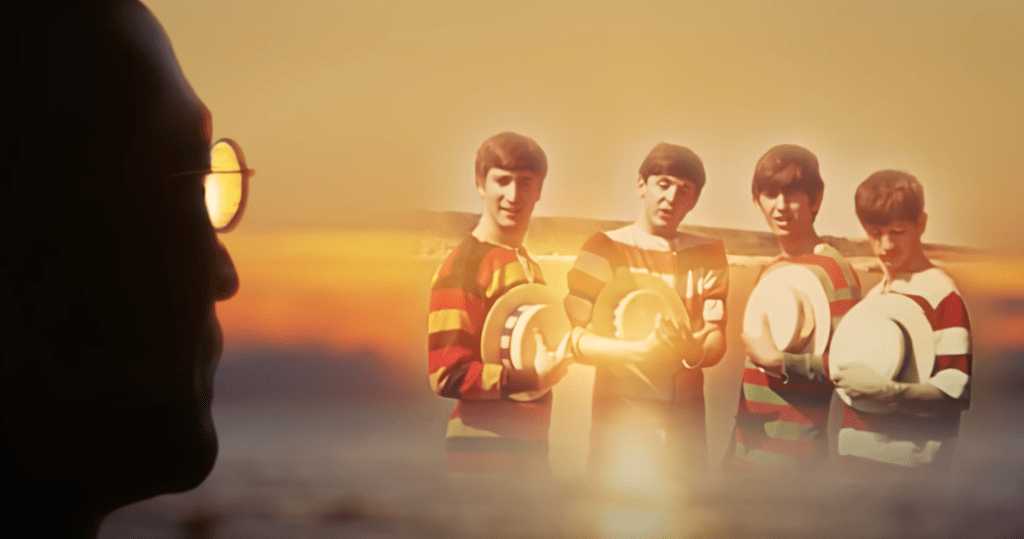
Sir Peter Jackson’s video for the song is faintly ridiculous at first, with macabre mixing of young John and George into footage of aged Paul and Ringo, old and young Beatles capering about, but it’s also a little charming and silly, as Beatlemania always was.
“And if I make it through,” John sings, and you know, in the end, we all hope for that, don’t we? We keep the people that leave us with us, as long as we’re here. Paul has made a love letter to the past, out of the fragments of his dead friends’ leavings, and sure, it’s big business and all, but it’s also the Beatles. I cannot surrender my love of the Beatles to the binary “like/dislike” button and algorithm. I’m simply grateful for whatever we get.
At the end of Jackson’s video we see those young, gorgeous Beatles on stage taking a bow, then slowly fading from the scene. You’ve got to have a hard heart not to feel something then. One day far too soon for any of us, there will be no more Beatles.
“Now And Then” is raw sentiment and lacking the mad fire of invention that made the Beatles change the world, true, but I kind of love it all the same. Yeah, yeah, yeah.
Over in the bustling world of freelance journalism, I’ve got two new pieces out there this week!
At Radio New Zealand, I dug into the hip world of used book fairs like this past week’s GABBS 24 Hour Fair, where hundreds of folks pack stadiums in search of everything from Lee Child to Shakespeare at bargain prices. Finally, I have weaponised my own addiction to buying books into freelance material!
Meanwhile, over at the New Zealand Listener magazine, my latest book review published there in this week’s Nov. 11-17 issue is a scary thing indeed – a look at a fascinating study of fear, Fear: An Alternate History of the World by Robert Peckham.








 Nik Dirga