It’s the grand conclusion of Keeping It Short Week, 250 words per post no matter what!
Melodrama is fundamentally uncool. When you think of the word, you think of overwrought tears, exaggerated gesture, implausible goings-on and a story that attempts to throttle your feelings.
Yet sometimes, we all want to get swept away a bit. Sometimes we just want to feel. And when I crave a bit of melodrama, I’ll skip your soap operas and Jane Austen and go right for the straight stuff – the Sirk.
Douglas Sirk is here to wring your emotions out like a wet dishcloth. His handful of shimmering colour movies are glittering gems of 1950s restraint, heartbreak and bombast. If you can overlook their more dated aspects, you’ll find some smart, subtle criticisms of privilege, power and wealth that don’t seem all that out of place in 2023.
Watching gems like All That Heaven Allows or Written On The Wind is like viewing a lush painting coming to life. His frequent star and muse Rock Hudson, a closeted gay man, brings a lot of hefty subtext to his presence in Sirkland. It’s impossible to say how this much colours our impression of him in these movies, but in them he combines the chiseled handsomeness of a Cary Grant with a slightly fragile, insecure veneer. In Sirkland, his characters are all taut with suppressed emotion, and through their fumblings, we learn a little something about our own.
Oh, and Sirk apparently liked to call his movies “dramas of swollen emotion”, which is way better than melodramas.
Thanks for reading along this “short” week of posts, I hope we’ve all had life changing lessons as a result. Normal long-winded posting will resume next week!
Hey, groovy cats, we’re still in Keeping it Short Week, each post 250 words or your money back:
Everyone has bands they love, but what about the ones you kind of love and don’t love? The Doors and Jim Morrison hold a very singular place in my tastes.
I’ve owned their albums and CDs multiple times and then gone through a phase of being so over the Doors that they went… well, out the door. I felt sometimes like being a Doors fan over the age of 21 was embarrassing. The anguished “Mother/Father” oedipal stuff in “The End” is a prime example of how the Doors could swing from ominous to awful in the space of a few lines.
Morrison was, by all reports, a fairly reprehensible human being in a lot of ways, and his sexist stoned messiah complex wears thin fast. How we feel about an artist as a person can affect how you view their work, and that’s not cancel culture, it’s just being a human.
And yet, I still find myself humming along to the Doors. They were pompous, overwrought, exciting and ridiculous all at the same time. A broody epic like “Riders on the Storm” still gets me, while trippy psych-rock like “Light My Fire” and “People Are Strange” are both timeless and time capsules of what we think the ‘60s meant.
Maybe I overthink The Doors, and in the end they were just a solid rock band with a tendency towards bad poetry. But for a band I sometimes hate, I sure end up going back to them an awful lot.
I took years to actually see horror movie anthology Creepshow when it came out in 1982. I first saw the graphic novel adaptation by the late great Bernie Wrightson in a shop, but as a wee pre-teen I was too scared to buy it, so I’d end up flipping through the pages every time I went to that store, scared stiff.
Creepshow is a great little mix of gore and cheese, filtered through the sensibility of ‘50s horror comics like EC’s Tales From The Crypt. Throw together a few segments, toss in a cackling host to link them together, and off you go. The beauty of an anthology format is, if you don’t like the current bit, wait a few minutes for the next.
Horror seems to lend itself to an anthology format more than any genre, really. Much of my favourite horror is short and (not so) sweet – those EC comics, TV series like Black Mirror and The Twilight Zone, Stephen King’s deliciously nasty short stories.
My favourite Universal Horror movies from the 1930s-1940s rarely hit more than an hour’s length, a lesson to those who think you always need three hours-plus to tell a story. Bride of Frankenstein is a mere 75 minutes long!
Horror can be longer format, of course, such as many of King’s hefty doorstop books like It. But for me, the best horror hits you hard and quick, leaving you gasping for breath before you even quite clock that it’s over.
I wouldn’t say I was a huge Friends fan … and yet, I watched nearly all of its 236 episodes.
It was in the air in the 1990s, a candy-coloured fantasy of twentysomething life. It began in 1994 just a few weeks after I spent a pinched, impoverished summer living in New York City, and its sitcom world of waitresses and unemployed actors living in luxurious lofts was not reality to me.
Still, Friends was diverting and served up an image of life as breezy comic fun, and honestly, the main reason I ended up watching as much as I did was always Matthew Perry’s sarcastic Chandler Bing, the prickly joker in the deck of shiny gorgeous faces. When Perry died this weekend at just 54, it stung. He was my favourite Friend, the one I could most imagine having a beer with, in many ways the most human of the lot.
The wisecracking guy was already a well-worn sitcom trope when Perry came along, but he added a bit of Gen-X irreverence to Chandler. Sure, he had the same romantic misadventures as the rest of the Friends, but Perry added a slight wink to the role. “Could this be any more cliched,” you could almost hear him saying.
In real life Perry was battling addiction for years and maybe, just maybe, those inner turmoils gave him a little more weight in the role of Chandler. The joker jokes to keep the tears from coming, you see.
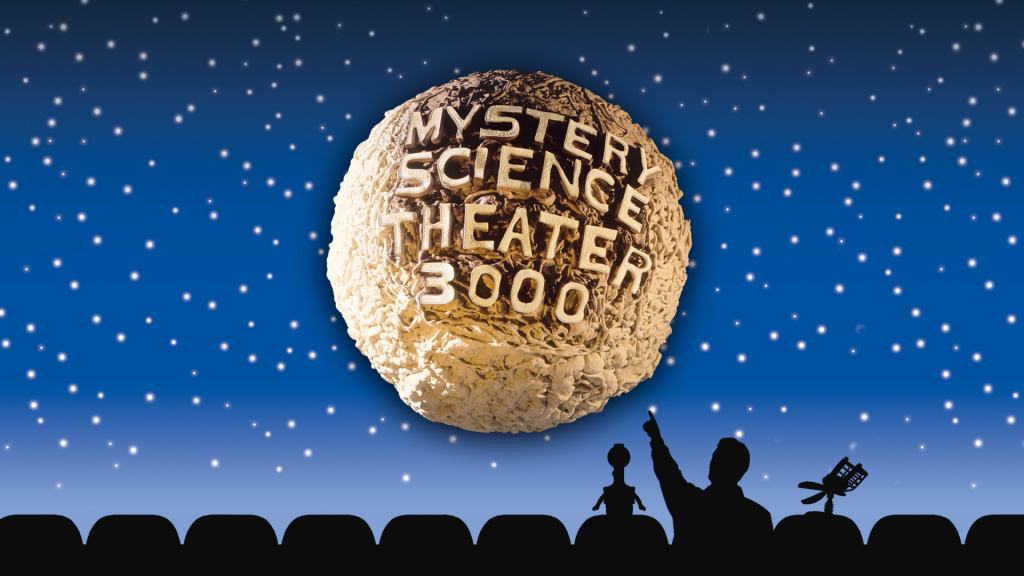
I heard of Mystery Science Theater 3000 long before I saw it, this obscure cable TV show that screened old terrible movies with robots making fun of them.
I finally saw it in, of all places, a hotel room in Florida. I clearly remember one movie was the Soviet fantasy Jack Frost. It was the damn weirdest, funniest thing I’d ever seen.
But boy, was it hard to actually watch more. It aired on cable channels I didn’t have money to watch, or weren’t carried locally. I finally found a few VHS tapes, and then DVDs, but even then, they were hard to find or crazy expensive. They were like buried treasure for quip-happy trash film fans. MST3K made me realise just how many awful, hilarious obscure movies there are in the universe.
It’s all much easier now to watch MTS3K, thanks to the internet. A couple of times a year I get into a real MST3K mood and binge away. For days, I keep imagining myself as Tom Servo or Crow, yelling stupid stuff as life goes by me. Before hateful trolls took over pop culture, MST3K was good-hearted snark.
I do miss the hunt. Kids today have no idea how hard it once was to find things you’d heard about that sounded cool. I can watch any episode of MST3K I want with a few clicks now, and I love them, but part of me misses the mystery part of that theater.
The question is fraught with peril for any comics nerd: Who’s your favourite superhero?
I’ve clearly got too much time on my hands because I think about this a lot. One of the first comics I ever remember reading was Amazing Spider-Man #200 and for years Spider-Man, web-swinging worrywart, was my choice. He was a geeky teenager and then a harried student! I identified!
For a brief while I succumbed to the bristly charms of mutant Wolverine, before overexposure and dire 1990s comics ended that affair. Then for a long time, I’d go with Batman, because pound for pound I think he’s probably had the most great stories written about him of any superhero.
There’s others I adore, of course, like the endless duelling personalities of the Hulk, angst-ridden Daredevil, lumpy everyman The Thing.
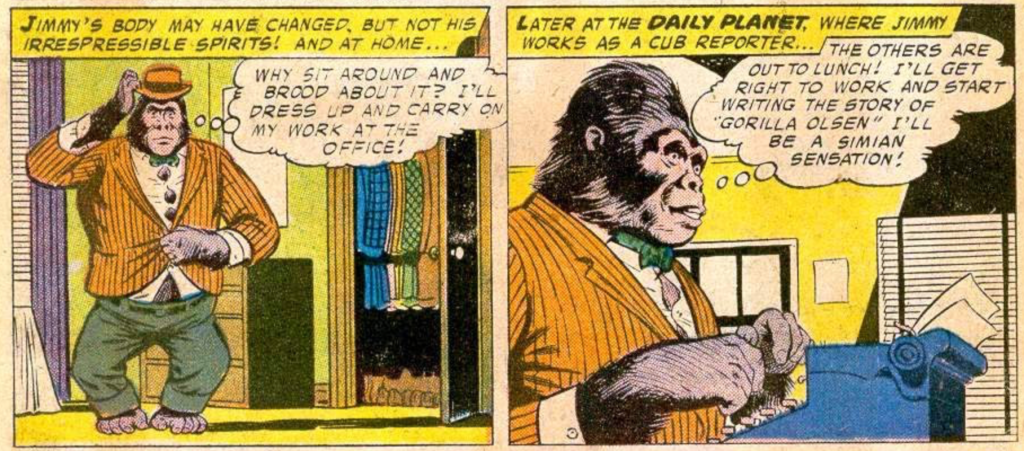
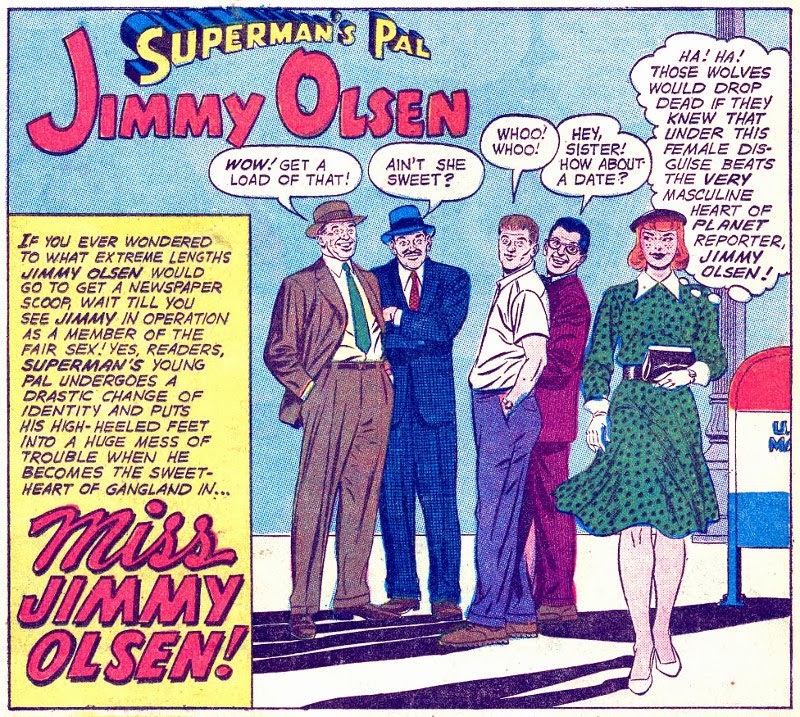
Yet, these days, when I think of the superhero I dig the most, it’s always the most basic – Superman, the Man of Steel. He may be uncool compared to edgy Punishers and Spawns but honestly, the older I get, the more I like his fundamental decency.
I love lots of superheroes, but when it comes down to it, the one I’d really like to see in our troubled old world, the role model – well, Superman was the first for a reason. He’s also still kind of the best. I’m old now, and superheroes don’t just have to be cool to me. They have to actually be kind of super, too.
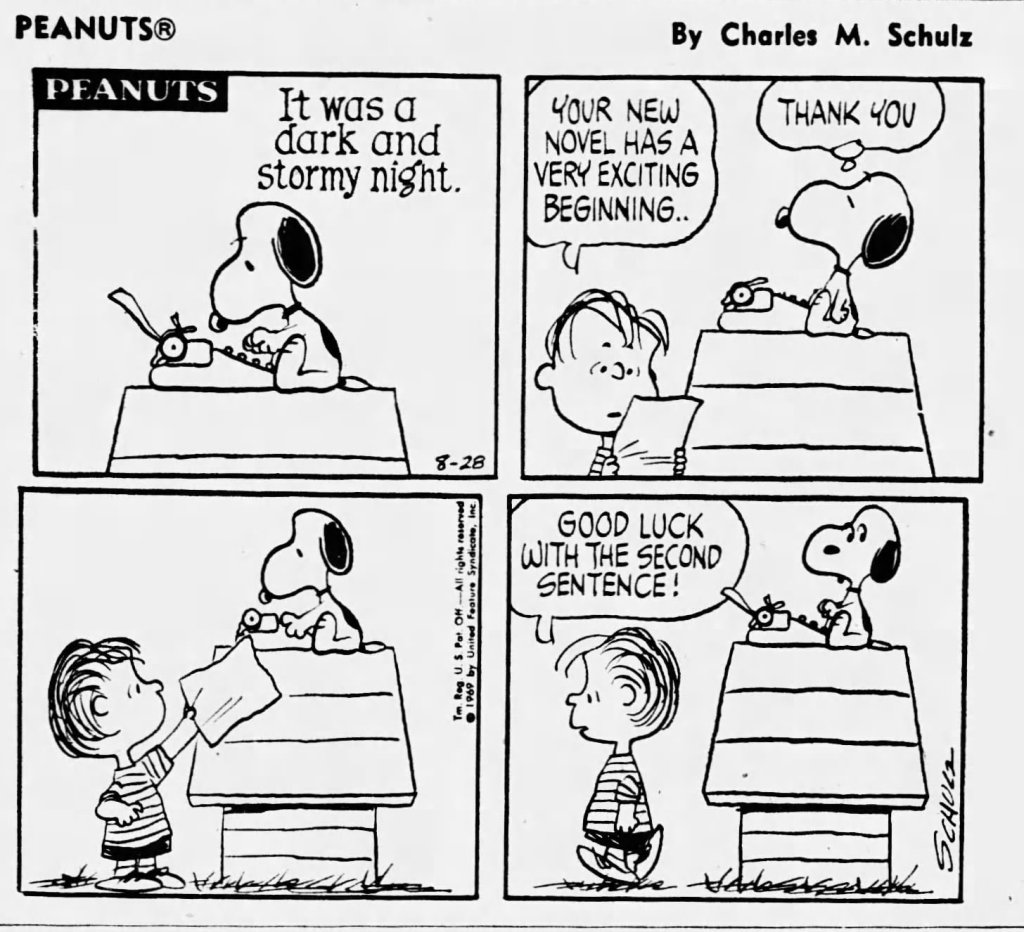
If there’s one problem the internet gives writers, it’s the lack of the end of a page. I constantly have a problem with keeping my blog posts short. Thus, as an experiment, it’s time for Keeping It Short Week, where I attempt to make my point without banging on for 1500 words.
Yessir, 250 words or less, that’s my motto for the next seven days. It’s also a clever attempt to clear out my “blog drafts” folder which has stacked up a bit with half-assembled fragments of hot takes over the five years I’ve been doing this website.
I left the hellsite that was once Twitter a year or so ago and have few regrets about it, except for one thing – sometimes it’s fun to write something concise and witty and then move on, and the endless trolling and hate speech kind of obscured that.
Writing short is good training for the brains, too, and something I generally manage in my paying journalism work. The freedom of the internet is great, but sometimes, a little discipline is good too.
So, onwards, for a week of brief surveys of topics that are of interest to me! And if I happen to go past 250 words well then I’ll just
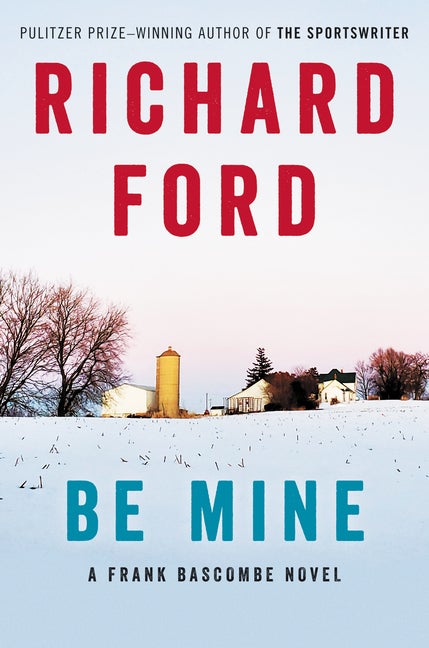
Over four novels and one collection of short stories, for nearly 40 years Richard Ford has spun out the life story of Frank Bascombe, New Jersey deep thinker father and husband.
Starting in 1986 with The Sportswriter and carrying on over the decades with Independence Day (which won him the 1996 Pulitzer Prize), The Lay Of The Land and the collection Let Me Be Frank With You, he now wraps up the series with this year’s splendid Be Mine.
It’s kind of the last gasp of a genre that feels rooted to the 20th century – multi-novel sagas about fairly well-off white men and their disenchantment in the American century, as pioneered by John Updike, Philip Roth and others. It’s kind of soap-opera literary fiction, really – the ups and downs of a life chronicled over several books, waiting to see what became of this supporting character or that one, to see how your everyman character views life’s latest changes and outrages.
Frank Bascombe begins the series as a man in his late thirties, recently divorced and mourning his firstborn son, dead of a rare disease at age 9. We follow him through career changes, battling cancer, his feuds and fancies, and like Updike’s soaring Rabbit Angstrom series, by the end of hundreds and hundreds of pages of one man’s life you feel like a little part of it includes you.
We mark the years in pages – early on the series finds Frank, a lifelong Democrat, pushing for quixotic Mike Dukakis and ends with him observing with disdain Trump’s “swollen, eyes-bulging face”, “looking in all directions at once, seeking approval but not finding enough.”
I recently re-read all four Bascombe books before the heartbreakingly good new Be Mine, and the experience leaves you “dreamy,” to use one of Ford’s favourite self-descriptions of Frank, lost in the confusing world of being human.
They’re worth revisiting – a tour of the last 35 years of American ennui, as Bascombe meanders from a sleepy sportswriting career to a real estate agent, fumbles through a second marriage and his uncertain ties with his ex-wife, surviving son and daughter and various friends, neighbours and enemies. Not a lot “happens” in the Bascombe books, with their series of errands, job tasks and family check-ins, always linked to some holiday such as Thanksgiving, Christmas or the Fourth of July – but Ford’s patient, precise writing slowly settles us into Frank’s world view, as he navigates from a nearly 40-year-old to a senior citizen.
Bascombe is an overthinker, a ponderer, and while this often makes for some lovely thought-provoking prose, Ford is smart enough to also recognise this is a weakness in Frank. Again and again, we find Frank thrown into situations where he loses his temper or acts impulsively and foolishly, like all of us do at times, and this has the effect of reminding us that much of Frank’s musing is just that – words to cover up the fact that often most of us never quite know what we’re doing. That makes him far more relatable as a character.
Yes, the books are all very much told from the eye of the “privileged” – Frank’s encounters with those of different races or poorer backgrounds are often awkward, occasionally a bit condescending, even if he ultimately means well. Yet Frank’s voice counts too, in the ultimate arithmetic of things. Much of the series is taken up with his fumbling attempts to define and find happiness in his life, like it is for us all.
The books can be imperfect – sometimes suffer from a sense of bloat, with too many long rambling passages describing New Jersey landscapes, yet Ford often manages a kind of hypnotic effect. Some of it ages badly, like Ford having Frank use the phrase “Negro” a lot to describe Black characters in earlier books – already painfully outdated language in 1986. While most of the books end with a bit of “action” and forward motion, a jarringly inexplicable scene of violence that closes The Lay Of The Land sticks out like a sore thumb in this otherwise meticulously crafted series.
For me, the relationship between Frank and his awkward, cranky surviving son Paul is the highlight of the books, and their unpredictable energy gives the series a welcome jolt of tension – as ruminative as Frank is about life, he’s always being thrown off his game by his irreverent, cynical and odd son. It’s perhaps telling that the two best books, to me, Independence Day and Be Mine, foreground Frank and Paul’s dynamic.
And that’s what makes Be Mine hit me so hard, as it’s the story of a quixotic final road trip to Mount Rushmore Frank Bascombe takes with Paul, 47, who has been diagnosed with ALS and is fading fast. Far closer to the end of his life and at the end of his son’s, Frank is still the same overthinking, dreamy fellow he’s always been, but there is a taut new sadness to his circumstances, and a gorgeous melancholy that makes Be Mine sting a little. We started the series with Frank mourning one son, and finish it with another about to go.
“Just exactly what that good life was – the one I expected – I cannot tell you now exactly, though I wouldn’t say it has not come to pass, only that much has come in between,” Frank says in the very first page of The Sportswriter, and almost 40 years later at the conclusion of Be Mine, the same man notes, “I have discovered that my narrative, to my surprise, is not a sad man’s narrative, not resigned, in spite of events.”
This, perhaps, is the best we can hope for, Ford tells us, in his brilliant series of novels.
One of the best kinds of voyage is one where you never quite know where you’re going to end up.
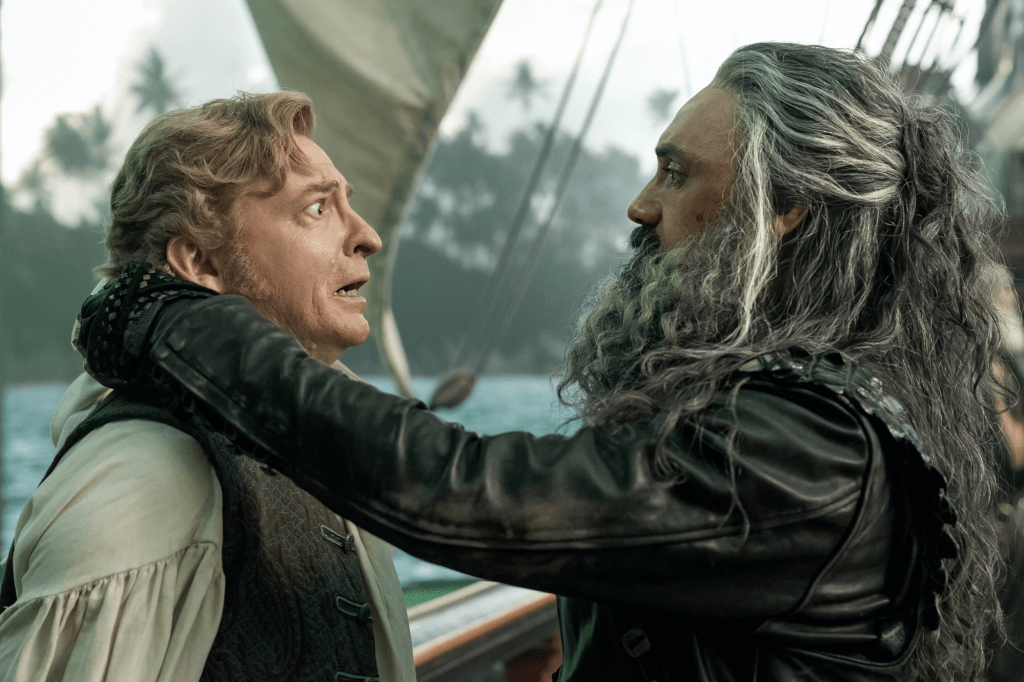
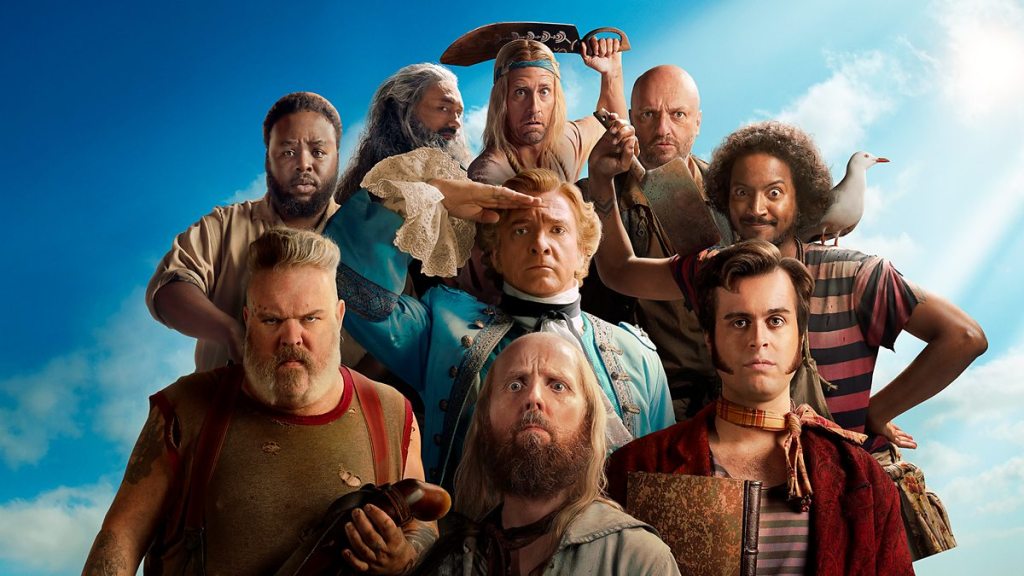
So it is with Our Flag Means Death, which kicked off last year as what seemed to be a goofy send-up of pirate adventures starring NZ comedian Rhys Darby as a foppish “gentleman pirate” and a cast of oddball crew members.
Yet Flag quickly changed course, developing into, of all things, a sweetly understated and respectful gay romance between Darby’s Stede Bonnet and show producer Taika Waititi as a sultry take on the legendary pirate Blackbeard.
In its second season now, it’s become one of the most LGBTQ-friendly mainstream shows out there and while often hilariously funny, it’s also turned out to have a heart as deep as the Sargasso Sea.
Flagmoved to New Zealand to film season two, and it’s great to see the local creative influence, from familiar faces and crew to showcasing gorgeous locations I’ve been to many a time.
In its dense, witty second season, Flag has come into its own once it wrapped up the will-they-or-won’t-they arc of Stede and Blackbeard and let them settle into their own distinct kind of couplehood. Stede’s a wildly optimistic, extroverted and yet insecure pirate while Blackbeard is a tangled mess of rage, regret and self-destructive tendencies. Somehow, Darby and Waititi make it all work.
In its second season, a lot of the focus on Our Flag Means Death is coping with trauma – not the lightest of topics for a pirate comedy, but nobody ever said pirating was a gentle life. Everyone, from Stede to Blackbeard to the crew members, seem to be, bluntly, working out their shit this season, dealing with mutinies, injuries and painful memories. Despite all this, Flag has kept a mostly light touch. I mean, it’s got Rhys Darby as a mermaid in one memorable dream sequence.
Darby’s been great fun ever since he made it into the public eye with Flight of the Concords, but Stede is by far his best performance, still keeping his eager-to-please hangdog charm while adding welcome soul to his character’s coming out. And while yes, we all felt like things got a bit too peak Taika for a while there and some of his recent projects have been a bit mixed, he’s terrific as Blackbeard. It’s his best performance since his cad of a deadbeat Dad in his own movie Boy, and perhaps that’s because both roles come from a slightly wounded place, instead of the more flippant kiwi joker he often plays. The sweet-and-sour, dark-and-light pairing of Blackbeard and Stede makes for a terrific comic team you can’t help but root for.
But the rest of the cast, who include several New Zealand actors like the awesome Dave Fane, Rachel House and Madeline Sami, have all also stretched out to fill in their own sketchy parody characters as Flag has gone on. What was a kind of stock crew of madcap weirdos has turned into a group of distinct individuals, many of whom have their own queer romance stories brewing in the background.
Yet the show never goes for lame stereotyped punchlines, or treats its queer characters as jokes, no matter how silly everything around them.
It’s a voyage all about love, and when you get down to it, that’s the only treasure in the world really worth sailing the seven seas for, isn’t it? Our Flag Means Death certainly isn’t the show it seemed to be when it started to set sail, but somehow, it’s all the better for that. It’s worth dropping an anchor for.
More importantly, my return to blogging in 2018 kicked off a real renewed interest on my part in the writing end of journalism. I’ve been a working journalist for a long time now, but for many years I found myself focusing more on editing, design and (ugh) management.
Finally I remembered how much I love the act of writing, of reporting and digging for odd facts and talking to interesting strangers. Diving back into blogging in 2018 after a hiatus of several years jumpstarted that part of my brain.
I began to write more and make a concerted effort to build a kind of freelance career down here in New Zealand, in addition to other journalism work.
I’m happy to say I’ve submitted more than 170 invoices for paid writing since 2019, written articles for websites, newspapers and magazines all around the country and at least a hundred or so other non-bylined pieces for Radio New Zealand, where I’ve been working since 2021 and a place I deeply respect for providing quality, diverse and important journalism down in this part of the world.
This website also helped me bring back my long, long-dormant comic book Amoeba Adventures, when we were all stuck in those dreary, uncertain early days of the pandemic a few years back. The Covid hiatus seemed like a really good time for me to pull out all my ancient comic strips and scan and throw them on the internet as I’d been meaning to do for ages. I put nearly 50 of my 1990s small press comics up to download (for FREE! hurray!) and looking at all my old goofy Prometheus comics finally inspired me to pick up a pencil again for the first time since 1998 and write and draw six brand new issues of Amoeba Adventures to date.
In other words, blogging here reminded me why words matter, why art matters when everything else is annoying as hell in this increasingly fractured, fractious world.
More than ever, the past year or so has convinced me that blogging feels more like a natural home for my writing than the endless bickering and hot-takes and rage-scrolling of social media. I left Twitter (I refuse to call it “X”) about a year ago, before it all really went to shit, and haven’t regretted it once, watching it spiral down into a miasma of hate, conspiracy and misinformation. I’ll link to my stuff on Facebook and Instagram, but this site is where I want to commit most of my “spare” writing time rather than arguing with strangers on the internet or whatever.
These days the blog is kind of my writing workshop where I babble about things that maybe don’t quite meet the standard of paying work, or are a little too esoteric, plus linking back to my other projects.
Somehow I’ve bashed out 319 posts on here the last five years – I try to get one up a week, and these days focus mostly on quirky pop culture writing rather than sharing every detail of my life, because that all got pretty old pretty quickly on the internet, didn’t it?
Writing here, generally, makes me feel good about myself, even I’m just tossing words about in a random mix to see what sticks. I write for myself, first and foremost, but I am hugely appreciative of those who’ve followed my website, or my comics, the past few years as Writer Nik attempted to come out of his musty old shell.
All you folk who leave a comment or click a link or download a comic are tops in my book! Cheers and here’s to more words to come!








 Nik Dirga