The two minutes that almost make Superman IV: The Quest For Peace work

Superman IV: The Quest For Peace is not, objectively, a good movie. In fact, it’s pretty terrible. 

The 1987 finale to Christopher Reeve’s run as the Man of the Steel was plagued by huge budget cuts, a ham-fisted script and a clear lack of energy by everyone involved. It was such a big bomb it pretty much killed the franchise for years to come. 

What was a simple, not bad idea – Superman decides to rid the world of nuclear weapons after an annoying school kid writes a letter to him – became an awkward, choppy mess. 

I actually saw Superman IV: The Quest For Peace in the theatre with a buddy back in 1987 and I clearly remember we were about the only two people in there. We left there with that deflating sense of disappointment one often got with comic-book movies in the pre-Marvel Cinematic Universe days, where you’d watch stuff like Howard The Duck or the George Clooney Batman and Robin and wonder how, how did this happen

And yet, despite this movie being such a fiasco, I still end up going back to watch it every once in a while out of a morbid fixation, because you can just see a hint or two of the movie it could have been – a serious meditation on a Superman’s place on Earth, and the responsibility of caring for humanity without taking over the world. 

In particular, there’s about two minutes of footage where that movie clearly emerges, when Superman takes to the stage at the United Nations to tell them of his plans:

Unfortunately, even then you see the impact of the budget cuts (judging from the Superman flying scenes immediately after, about $1.99 was spent on special effects). 

And that script – hoo-boy. It ratchets up the campier elements of the first three Superman movies to unbearable levels, with little of the wit and sincerity that Superman and Superman II had. You’ve got a lame cliched evil businessman and his hot daughter (an embarrassed Mariel Hemingway) taking over the Daily Planet newspaper, Jon Cryer doing an appallingly unfunny doofus hipster teenager impression, and Margot Kidder looking very, very bored. Only Gene Hackman, whose genial scoundrel take on Lex Luthor was always worth watching, emerges unscathed.

And let’s not forget the all-time worst Superman villain ever seen on screen, the mulleted “Nuclear Man” clone that Luthor creates because he’s angry Superman eliminated the black market for nukes, I guess. Nuclear Man is howlingly cheesy, so bad the actor involved never did another movie. 

(As a side note, for an even more in-depth look at what a mess this movie was, on the DVD you’ll find more than a half hour of deleted scenes including an utterly horrifying slapstick fight with a “first” prototype Nuclear Man character who looks like he wandered out of a Benny Hill TV show. Some hopeful optimists out there on the internet still claim adding those scenes back to the barely 90-minute Superman IV could make an improved “director’s cut” but honestly, these scenes are generally even worse than the movie itself.) 

The whole idea that kick-started the plot – Superman makes the world safe from nuclear war! – kind of gets bounced around a bit and then abruptly discarded by the end. 

And still, I do love that scene when Reeve arrives at the United Nations, the good cheer and optimism that pervaded his portrayal of Superman just about selling the idea that the governments of the world would be happy with him throwing all our nukes into the sun. “As of today, I’m not a visitor any more,” Superman says, and gosh darn it, it just makes you wish such a person really was out there, somewhere. 

I don’t know why I watch 86 minutes of a pretty bad movie just to get that little moment, but somewhere out there in the multiverse, I like to imagine there’s a far, far better version of Superman IV directed by Steven Spielberg or someone that ran the table at the Oscars that year and gave that wee moment the kind of superhero movie it deserves. 

Sinéad O’Connor, and the voice that could not be ignored

I don’t know no shame / I feel no pain / I can’t see the flame – “Mandinka,” Sinéad O’Connor

We spend most of our lives chasing the music we loved when we were 17.

Sinéad O’Connor came into my sheltered little musical world like a thunderbolt, and she blazed hard and bright through her trouble-plagued, too-short life before dying this week at only 56. 

It’s an embarrassing kind of revelation to make, but I think she was the first female singer-songwriter I ever truly listened to and adored, as I emerged from my adolescent male-dominated world of Guns ’N Roses and Billy Joel music.

She was a pathway for me to discover her influences like Patti Smith and Joni Mitchell and her peers like PJ Harvey and Fiona Apple. I could not fully understand her life – how could I, a small-town California dude? – but I listened to her. 

Her first two albums will always be part of the soundtrack of teenage love to me, of the jittery combination of urgency and anxiety your entire life seems made of at that age. 

For a few months in 1990, the girl from Ireland was inescapable with the striking video for “Nothing Compares 2 U.” There were no women like her then at the top of the pop charts that year. She stared at you in that remarkable video with candour and a sincerity that was startling in a year when MC Hammer, Vanilla Ice and Paula Abdul ruled the airwaves. With that extraordinary voice, she could channel a world of emotions, from bliss to defiance. Unlike far too many pop singers, you never felt her showing off. She simply let out what was inside her. 

I love I Do Not Want What I Haven’t Got, but it’s her debut The Lion And The Cobra I play the most, her rawest and most punk-rock moment. Barely out of her teens, Sinéad blew like a hurricane through an otherworldly mix of anthems, anguish and adoration. She would never sound so carefree as she did on “Mandinka,” or as ominious as she did on “Jackie,” but if I had to take one song by her with me, it would be the triumphant epic “Troy,” which howls and builds with energy. It’s a song that blows me away every time I listen to it, and while it was “Nothing Compares 2 U” used in all the headlines and tributes, it is “Troy” that sums up Sinéad O’Connor’s essence. 

Number-one album I Do Not Want and that unstoppable hit Prince cover song were both her making and unmaking as a hit singer. She followed it up with a criminally underrated album of torch song covers, Am I Not Your Girl, and she bent those songs into her sphere marvellously. 

I always considered myself a fan but realised I had only dipped a little bit into most of Sinéad’s music after 1994’s mellow and contemplative Universal Mother. I kept meaning to catch up because I always had a soft spot for her. I had drifted away from paying attention to her music, and I wish I hadn’t. 

I wish I could say her death was surprising. 

I knew she had a background of terrible abuse and repeated mental health issues, which were surely escalated by the suicide of her teenage son last year. I knew she sometimes said things that were off the wall or offensive and never quite seemed the same after being so rudely scorched by the public eye in the 1990s. She dared to speak out angrily about child abuse by priests and her mainstream career as a musician never really recovered, even though history has proven her defiantly right. She was a woman with opinions, and some people never forgave that. She was not your internet content. 

It’s been bittersweet to see so many people talking about how much Sinéad’s music meant to them in the last day or so. This complicated woman, despite all the troubles and obstacles in her life, touched the lives of many. 

I’ve seen some in the aftermath of her death saying the many controversies of her life never drowned out her music. I’m sorry, it’s a noble thought, but I think unfortunately, and terribly, for the vast majority of the mainstream world that just wasn’t true, and the tabloid clamour over her life swamped coverage of her musical career. 

I wish it hadn’t. I wish she’d found a little more peace in this life. She changed me, just a little bit, by the very act of listening to her, and I wish somehow all of us who felt that way could have helped this beautiful woman make a different way in this hard old world. 

I am not like I was before / I thought that nothing would change me / I was not listening anymore / Still you continued to affect me – “Feel So Different”, Sinéad O’Connor

Where to get help:

Lifeline New Zealand

(United States) Crisis Helpline

Dungeons and Dragons: The Monster Manual is all I’ve ever needed

It’s probably been literal decades since I played Dungeons and Dragons, but I’ll never forget the monsters. 

I grew up during the mid-1980s pre-internet heyday of the Advanced Dungeons and Dragons first edition, before multiple revisions, digital versions and blockbuster movies and the like, when the primary sources were only a Player’s Handbook, a Dungeonmaster’s Manual and, best of all, the Monster Manual.

I’d play D&D with a handful of fellow pre-teen travellers back then, and for an awkward, gangly kid trying to figure out his place in the world, those silly, strange adventures were a great escape from the real world.

I was never a dungeonmaster, always a player, throwing around all those great multi-faceted dice (the 20-sided die remains a favourite, although I also love the pyramidal solidity of the 4-sided die). With our rustic pencils and graph paper to map our way, plucky dice and a heaping helping of imagination, my friends and I would storm castles, kill trolls and hunt for treasure, as all good D&D players should.

Eventually I wandered away to other diversions, and while I’ve always had a certain fondness for D&D in the years since, I’ve never really played again.

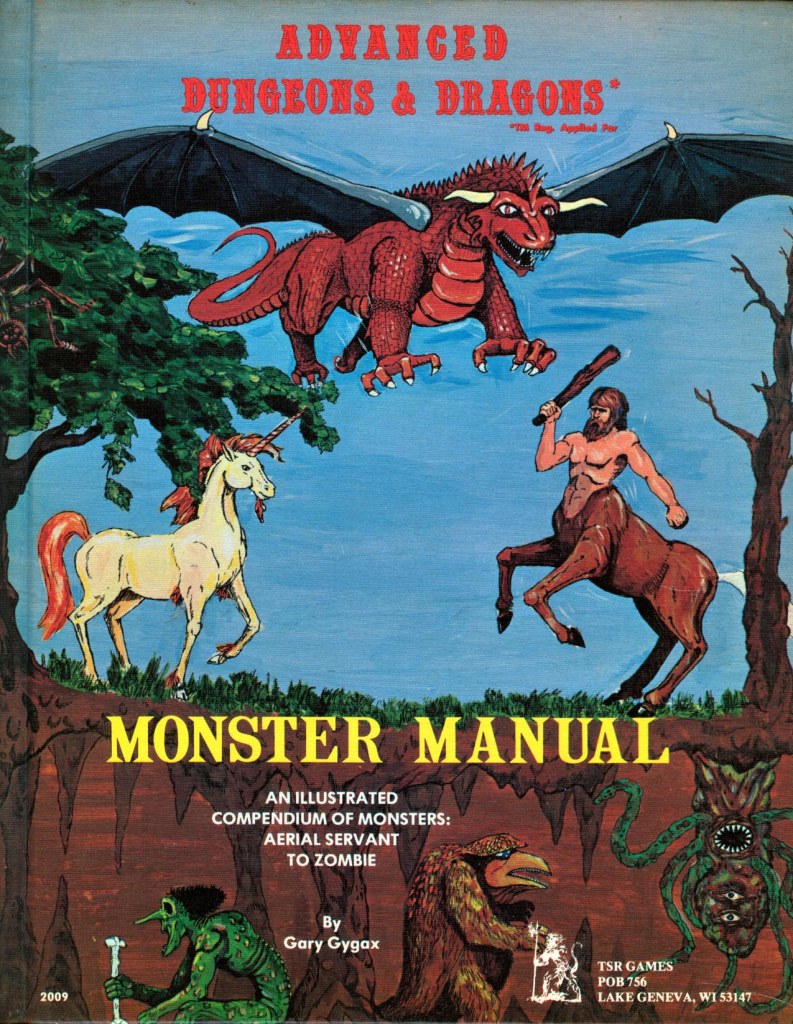
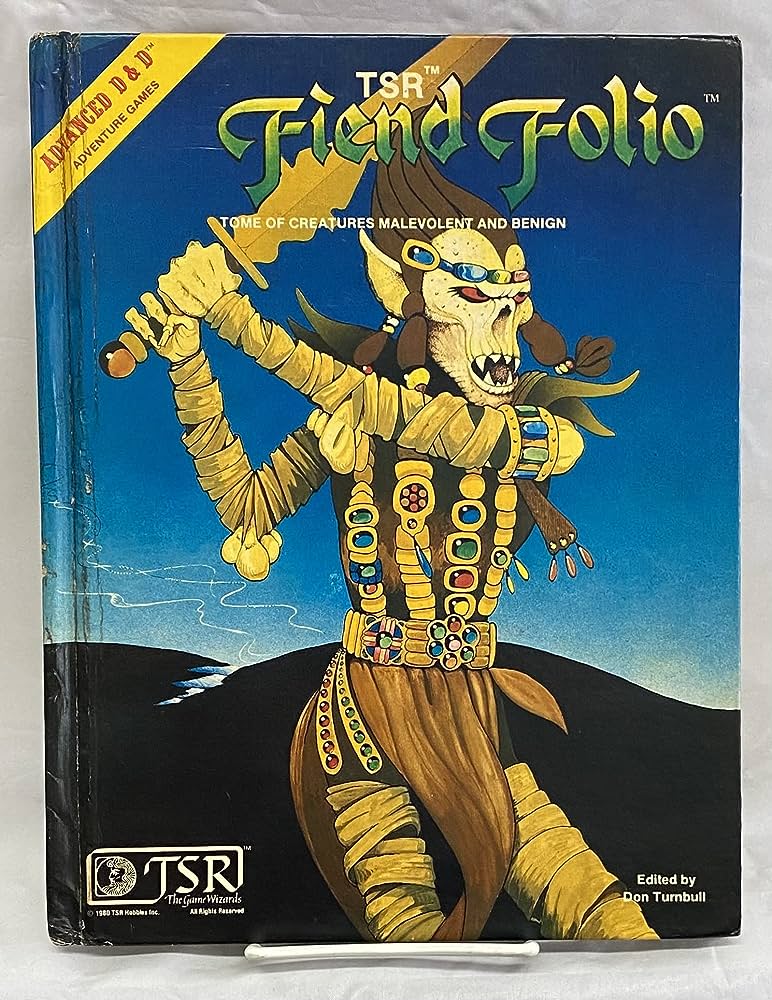
But one thing has stuck with me, over the years – all those lovely monsters. The original Monster Manual from 1977 was a charmingly low-fi bestiary of all kinds of imaginary and mythical creatures one might encounter in a campaign, from the Aerial Servant to the Zombie. I love a good guidebook, and many years on I still own a copy of the Monster Manual, and its grittier British-generated sequel, 1981’s Fiend Folio.

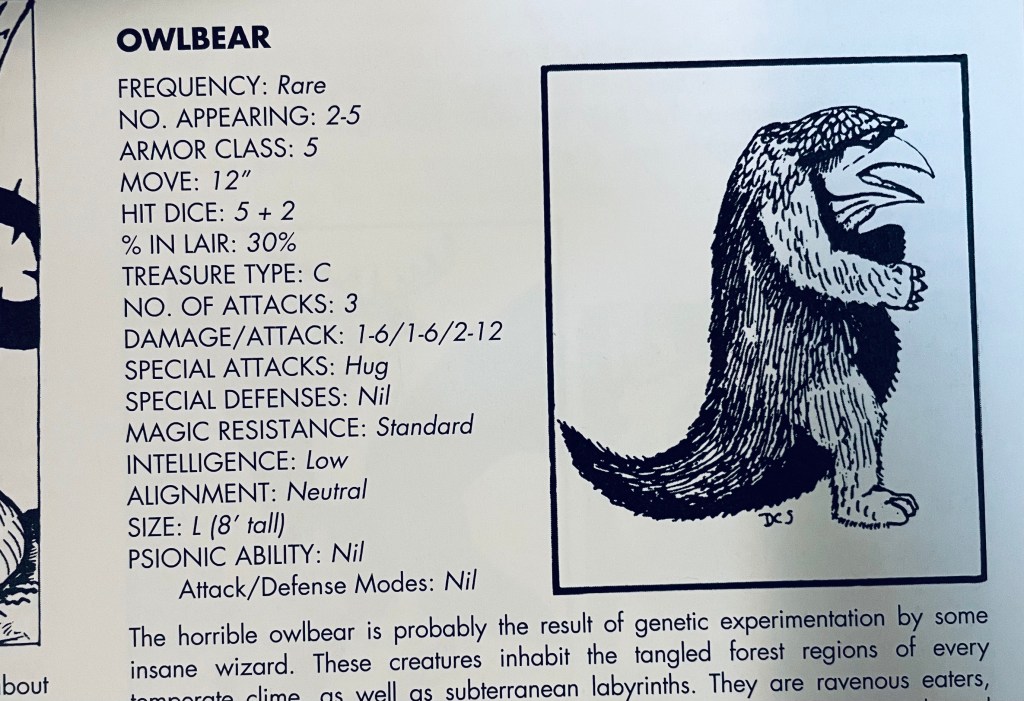
Both books remain enjoyably retro yet overflowing with ideas – each monster is gridded up with nerdy game statistics (what armor class is the Owlbear? What’s the difference between a Werewolf and Weretiger?) and kind of amateurish but passionate artwork.

In later year, D&D art materials would all get that polished, airbrushed and vaguely soulless quality of some heavy metal album cover, but for the ’77 Monster Manual, you got the feeling some of these critters were dashed off on scrap paper, and all the better for it. These weren’t monsters slapped out as part of some corporate committee, but raw material from D&D’s early, fan-driven days. 

The huge variety of creatures sourced mythology and legend and ranged from the incredibly mundane (yes, there’s an entry for Mules, and one for the humble Badger) to the gloriously weird and creative like the many-eyed Beholder, the slippery Gelatinous Cube or the bizarre Owlbear. There were hints of nudity amongst some of the female monsters, which I’m sure attracted many a young fan.

In Fiend Folio, the art took on a raw, gorier quality and some of the creatures in there are truly terrifying to me still, like the Penanggallan, basically a flying decapitated female vampire head with a sack of guts hanging off it – ew!

What attracted me – and so many others, I’m sure – to D&D was the epic world-building involved, huge thick manuals covering every permutation of your fantasy world and characters. The Monster Manual felt like it might’ve been a real guide, somehow, with its genial authority. I loved that you had not one but several kinds of dragons and giants explained (Red Dragon or Green or perhaps, the regal Bronze? Why is a Stone Giant so much scarier looking than a Hill Giant?). 

I know there’s been dozens of other manuals and guides and handbooks for D&D in the years since my playing days, and hey, that’s cool, I’m glad the game still endures.

But for me, the original handful of books are where it’s at.

Everything tends to get too complicated in fandom after a while, but in those early days for the great game, it was pretty simple. Here’s a book of monsters. Which one will you fight?

I guess that’s why I’ve kept copies of these monster manuals about, long after I rolled my last 20-sided dice – they’re guidebooks to a world that never was but one I mightily enjoyed visiting. I’ll never see an Owlbear or the Beholder in real life, I’m sure, but as long as they’re in a guidebook, they’re real somewhere, right? 

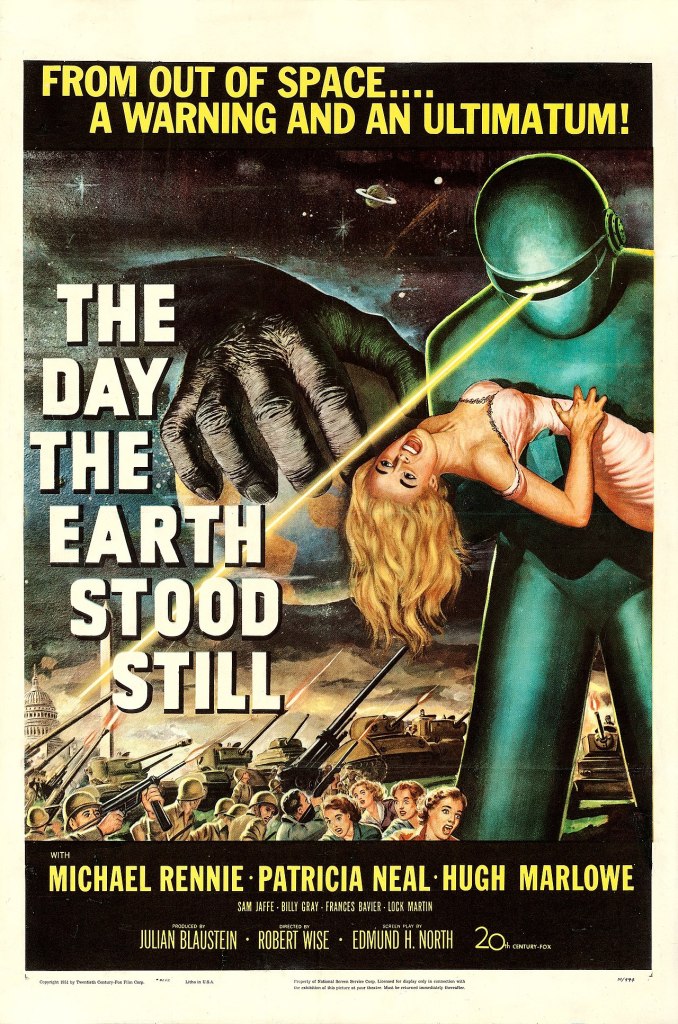
Movies I Have Never Seen #24: The Day The Earth Stood Still (1951)

What is it? The plot is simple: A peaceful alien arrives on Earth to deliver an important message, but is immediately met by fear and hatred. It’s an idea that’s been revisited countless times everywhere from E.T. to Starman to Arrival, but seldom with quite as much cool style as in 1951’s The Day The Earth Stood Still. Michael Rennie plays Klaatu, a seemingly human alien who arrives on Earth with an ominous robot sidekick, Gort, and who attempts to understand humanity. Klaatu grows close to an Earth boy and his mother, but fears that Earth’s warring nuclear powers threaten the rest of the universe’s stability. 

Why I never saw it: Some movies seep into the collective unconsciousness so much, you think you have seen them. Any somewhat movie-literate person recognises the image of Gort emerging from Klaatu’s spaceship. Yet when I was a teenager discovering all those old ‘50s sci-fi classics, this one wasn’t on the afternoon TV movie rotations. Somehow, the movie itself had slipped through my watchlist over the years but because it is so familiar, watching it felt a bit like rediscovering an old book you read and loved long ago. 

Does it measure up to its rep?  From the creepy theremin soundtrack to the bold and simple iconic designs of Klaatu’s flying saucer and Gort’s lurking menace, Day The Earth Stood Still is a template for what we think of when we think of smart science fiction. Don’t overlook Rennie’s quietly charismatic performance as Klaatu, one of the first of many cinematic “strangers in a strange land” to ponder the mysteries of us earthlings. Rennie anchors the movie when it threatens to dissolve into kitsch or sentiment (Keanu Reeves played the role in a widely ignored 2008 remake, which I haven’t seen). Sure, Klaatu’s relationship with naive little Earth child Bobby is a plot device that is a bit saccharine, but Patricia Neal’s thoroughly humane performance as his mother works very well, especially as she comes into her own in the final act. 

The 1950s were an absolute golden age for science fiction movies. Sure, they had existed before that and SF’s roots date back at least to the Victorian work of Jules Verne, but in the devastated aftermath of World War II, SF became a way for us to work out our feelings about the brave new world of atomic energy, mass death and the cosmic unknown.

Anyone who calls themselves a science fiction fan has at least a few ‘50s movies they love, from the original Godzilla to the creepy creatures of The Blob, The Thing and Them to the more thoughtful, contemplative vibe of classics like Forbidden Planet, The Incredible Shrinking Man and War Of The Worlds. The Day The Earth Stood Still stands firmly in that company, as science fiction that asks questions and makes us question our own beliefs. It’s ahead of its time and thoroughly of its time all at once. 

Worth seeing? Absolutely, because while the cold war paranoia that coursed through the bloodstream of so much 1950s science fiction has eased a bit, the movie’s message hasn’t lost relevance. We humans are still self-destructive, often brutish creatures determined to sabotage our world’s possibilities, as the last few years have so thoroughly reminded us. When Klaatu says at the end, “the decision rests with you,” that’s a message that resounds still 70 years on. Hopefully eventually we’ll listen.

Meanwhile, elsewhere on the internet…

I’m running around getting ready for a holiday and juggling deadlines like they were howler monkeys escaped from the zoo, but here’s a quick look at some other things by me elsewhere on the internets:

It’s just about time for Whānau Mārama New Zealand International Film Festival, the bestest time of the year if you love movies, and I have already bought far too many tickets. You can read my preview of all the film fest action right here at Radio New Zealand, and it also doubles as a bit of a tribute to film festivals in general, which we all know are the best-ivals.

How To Live Your Best Life at the New Zealand International Film Festival

Meanwhile, I’m also keeping up an occasional book reviewing side hustle over at NZ’s best weekly current affairs magazine, The Listener, which after a few pandemic-plagued years without a web presence has recently launched a bigger digital footprint.

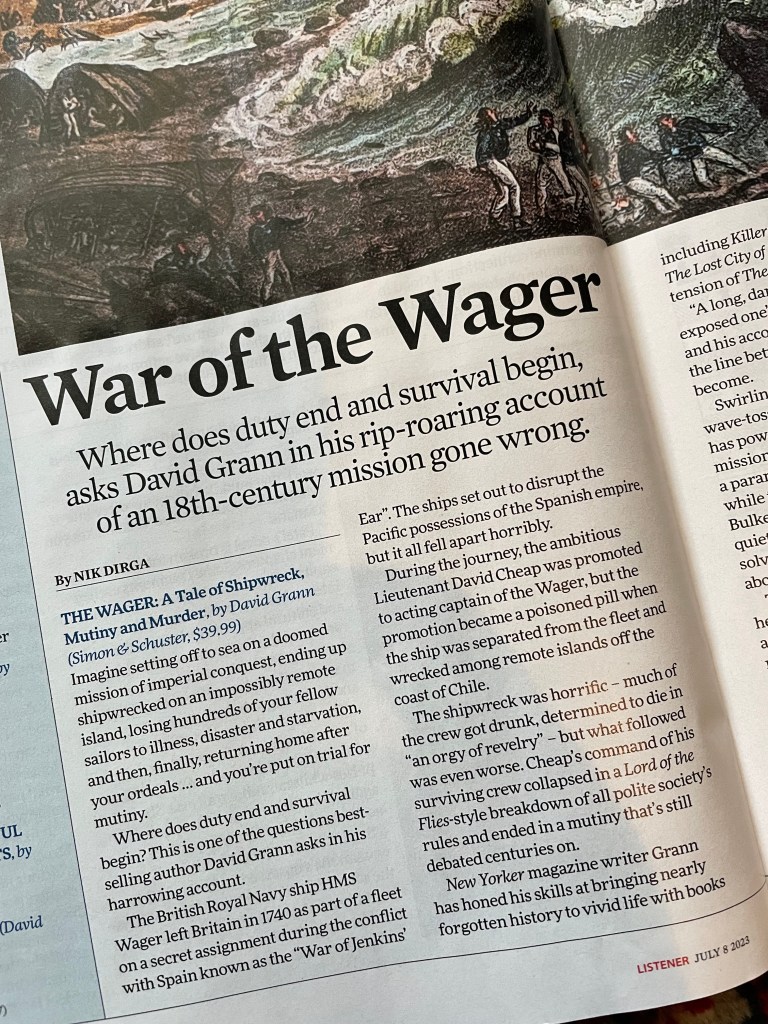
You can read my latest book review of David Grann’s excellent historical page-turner The Wager: A Tale of Shipwreck, Mutiny and Murder right now in the latest issue at good newsstands everywhere in New Zealand, and the review is also online right here (paywalled):

David Grann’s rip-roaring account of an 18th century mission gone wrong

The triumph of Stephen Root, or, The Raven spreads his wings

I love a good character actor, and one of the best in the business is Stephen Root, who’s been kicking around for ages but really took his work to the next level with the recently completed pitch-black comedy Barry

For a glorious episode or two, the supporting character actually became more interesting than the show’s star. 

Root is a key “hey, I know that guy!” actor. In his career he’s racked up nearly 300 acting credits, and in many of them, he’s outright stolen the show from bigger stars. 

I first became a Root fanboy with his hilarious work on the classic ‘90s sitcom NewsRadio as arrogant, distracted millionaire station owner Jimmy James. Root was surrounded by terrific talent like Dave Foley and the late, sorely missed Phil Hartman (and another guy who obnoxiously became the most famous member of the show’s cast by hosting reactionary podcasts, but forget about him). 

Root’s James was a great comic creation, a kind of easy caricature of rich bluster animated by quirky little moments, and provided many of NewsRadio’s best scenes. I can never quite make it without laughing through the bit where Jimmy James hosts a reading from his memoirs, which were accidentally translated into Japanese and then back into English again, somewhat mangling the text:

Just listen to the perfect cadence Root gives lines like, “But Jimmy has fancy plans – and pants to match!”  

In the 1999 cult classic comedy Office Space, Root plays the opposite of Jimmy, the mumbling office drone Milton, obsessed with his red stapler, turning a pathetic geek into something indelible. 

Root has the knack for standing out even in the smallest roles, whether he’s popping up as a creepy blind predator in Get Out, on TV on Succession, Justified, The Book of Boba Fett or in one of his many Coen brothers movie roles. 

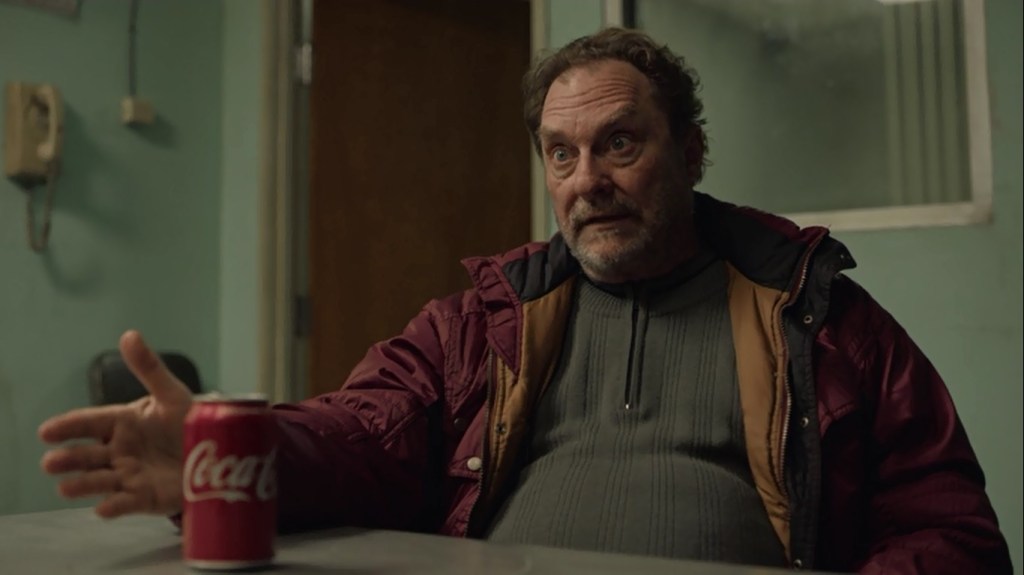
But he’s never quite been the star of the show, like most character actors. That’s why I loved so much what we saw in the final few episodes of Barry, where he played the shady mentor and handler of Bill Hader’s disturbed assassin Barry Berkman. 

In the series, Fuches is another one of Root’s great cowardly losers, always looking like he just rolled out of bed and constantly nearly getting killed. He’s a boastful manipulator who never quite rises out of the gutter, until toward the end of the series when he’s jailed and the series jumps forward in time several years.

When Fuches is thrown in prison, he demands other prisoners call him the “Raven,” another one of his bombastic fantasy projections of himself. He’s promptly beaten nearly to death, and that’s the last we see of him until the story picks up years on. 

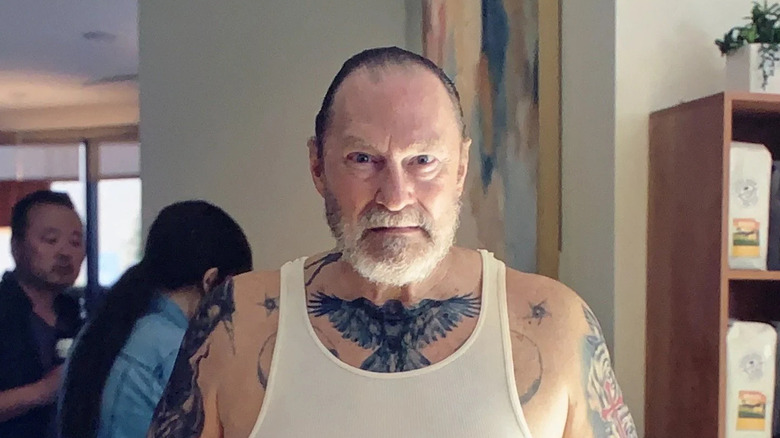
In that time, Fuches has actually transformed himself into The Raven, a tattooed mob boss terror with his own gang of cutthroats. Released into the world, The Raven is suddenly a real threat instead of the bumbling poser Fuches was. The small, dumpy guy everyone has underestimated is now the most dangerous man in the room.

Barry was a fascinating series – sometimes its reach exceeded its grasp, I felt – but the few episodes where Root flies as the Raven are among the series’ peaks. Everything about The Raven is different from Fuches – his body language, his swaggering self-assurance, the murderous glint in his eye. 

After years of side roles and small parts, it’s a damned pleasure to see Stephen Root suddenly take the centre stage. It’s kind of like watching a wallflower turn into the life of the party, to see the skill he’s built up as a character actor over the years turned outwards. 

The Raven felt like the apotheosis of Stephen Root to date, a high point in a career filled with vivid sketches and gags. Take a moment to appreciate the little guy, the battler who in the end takes control of his own story. You never know when they might spread their wings … or stick a knife in your back. 

All the world’s a stage: Trying to see all the Shakespeare

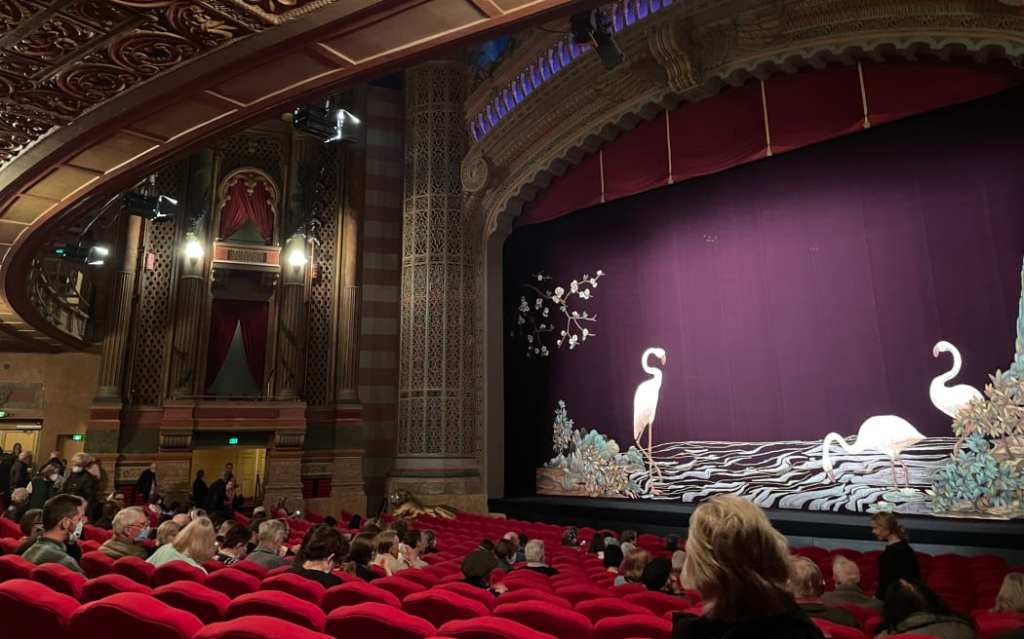
I’ve been a Shakespeare fan ever since high school, and even volunteered regularly for several seasons at Auckland’s wonderful Pop-Up Globe revival. I’ve seen quite a lot of Shakespeare on stage over the years… or, until recently, so I thought. 

When I start to actually think about it, I’ve realised I’ve only seen about half of Shakespeare’s 37 (more or less) plays actually performed live on a stage, which makes me feel like a lot less of a Shakespeare fanboy than I thought I was. (There’s even a name for doing it – “completing the canon.”)

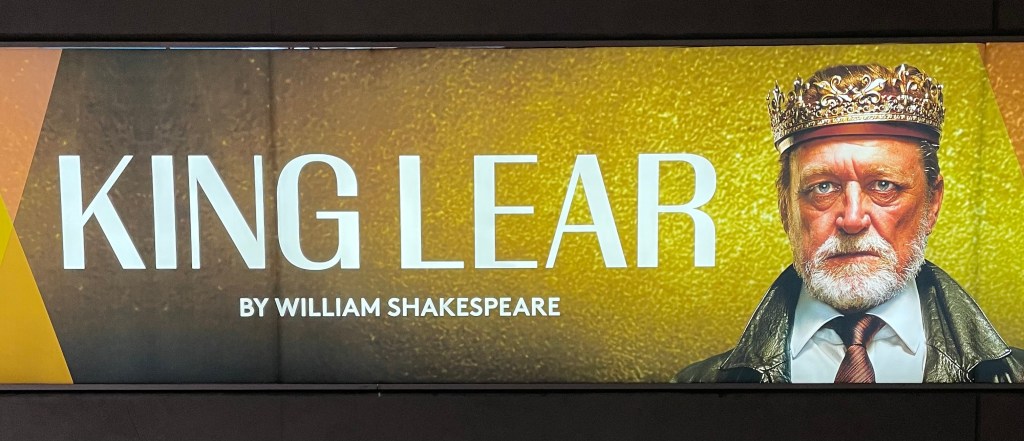
I finally filled one of my most notable gaps this week by seeing Auckland Theatre Company’s fierce, excellent production of King Lear starring and directed by Michael Hurst, a brutal escalating powerhouse of a tragedy which – although I’ve seen several filmed productions – I’d somehow never managed to see performed live in all my mumblety-mumble years. (Lear is still on for a few more weeks and it is most highly recommended if you’re in Auckland!)

Lear was by far the best-known Shakespeare play I had missed out on, and added to the tally earlier this year was another one I’ve inexplicably missed seeing performed live, a highly enjoyable outdoor lakeside theatre version of Antony and Cleopatra at Auckland’s Shakespeare in the Park. 

Some people idolise pro wrestlers, or rugby stars, or pop singers. But honestly, for me, among my top cultural heroes, the ones whose achievements I both appreciate and yet cannot quite imagine doing myself, are the stage actors.

Imagine getting up and speaking hundreds of Shakespeare’s verses and monologues before a crowd, and imagine doing that nearly every night, while wearing a bulky costume, possibly having a stage fight or three, and also managing to put some life into your role. It’s a herculean accomplishment that I sometimes think we don’t quite appreciate as much in the age of ever-streaming content. 

Michael Hurst, one of New Zealand’s great actors, wrung himself out over the course of nearly three hours in King Lear the other night, delivering a tense, nervy and unhinged performance of what’s often been called the greatest role an actor can hope to perform. I was sweaty and overwrought myself just watching him and couldn’t imagine what it’s like to be asked to deliver that kind of all-in acting, again and again. 

It’s easy to love Shakespeare without seeing it performed, of course, and there have been a lot of magnificent movie and television versions of the plays. But the stage is the crowning way to appreciate Shakespeare, and the beauty of it all is, you’ll never quite see the same play twice.

Several plays I’ve seen quite a few times live, like Richard III at Oregon’s famed Ashland Shakespeare Festival and at the late great Pop-Up Globe. I saw Hamlet, Henry V and Othello so many times at the Globe that I grew to appreciate the tiny, almost indistinguishable differences in line readings each time, the slight changes in gesture that altered an entire scene.

But there’s an awful lot that still, decades into being a Bard-idolator, I’ve never managed to see performed live. The list has shrunk, but it’s still a lot longer than I imagined – and I hope to gradually seek out the missing plays in coming years. 

It’ll be tricky, because a lot of the ones that are left are ones you rarely ever see performed. Everyone has seen some version of Romeo and Juliet, I’d wager. How many of us have watched Troilus and Cressida on a stage? 

A particular blind spot is an awful lot of the histories, all those Henry VI Part 2 and 3s and such, and a heap of the more rarely-performed plays like Pericles, Cymbeline and Timon of Athens. (Has anyone even seen Timon of Athens? Come on!) 

Many of the rarer works I have seen superbly translated to film, like Ralph Fiennes’ astoundingly intense translation of Coriolanus to the war-torn Balkans or Julie Taymor’s vivid and grotesque slasher-horror of Titus Andronicus with Sir Anthony Hopkins. (It’s hard to imagine most local theatre companies putting on Titus, what with the cannibalism and mutilation and murder and all.)

One’s goals become a little less ambitious as you get older. Trying to tick off all 37 or so of Shakespeare’s plays on stage is a small one in the big picture, but heck, I’ll give it a go. I don’t know if I’ll ever “complete the canon,” given how little New Zealand is and how rarely some of the plays are put on. At the very least, I’ll see some wonderful plays, and that’s the experience to remember.

To quote one of those ones I haven’t seen yet, here’s a line from Troilus and Cressida that seems apt: 

“Things won are done, joy’s soul lies in the doing.”

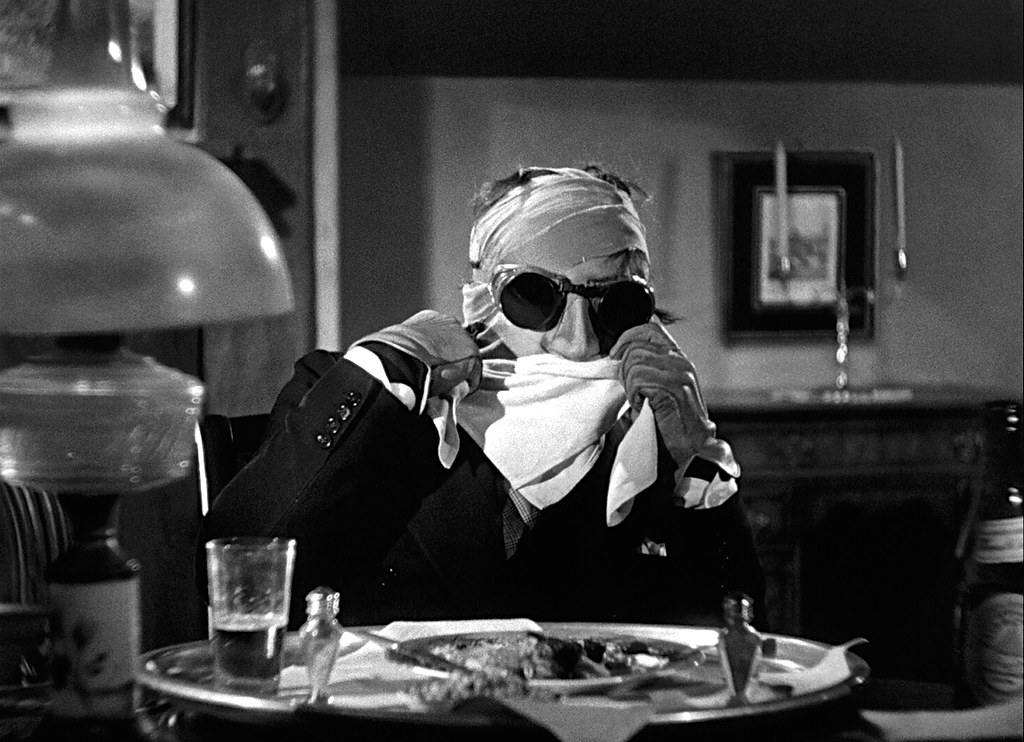
‘The Invisible Man’ at 90 – still a sight to behold

Sure, a monster bursting into your bedroom in the middle of night is scary, but a simple mysterious creak from a shadowy corner? A sense that someone is there, watching you, unseen? Ghouls and vampires are bad news, but an invisible man? Well, that’s terrifying.

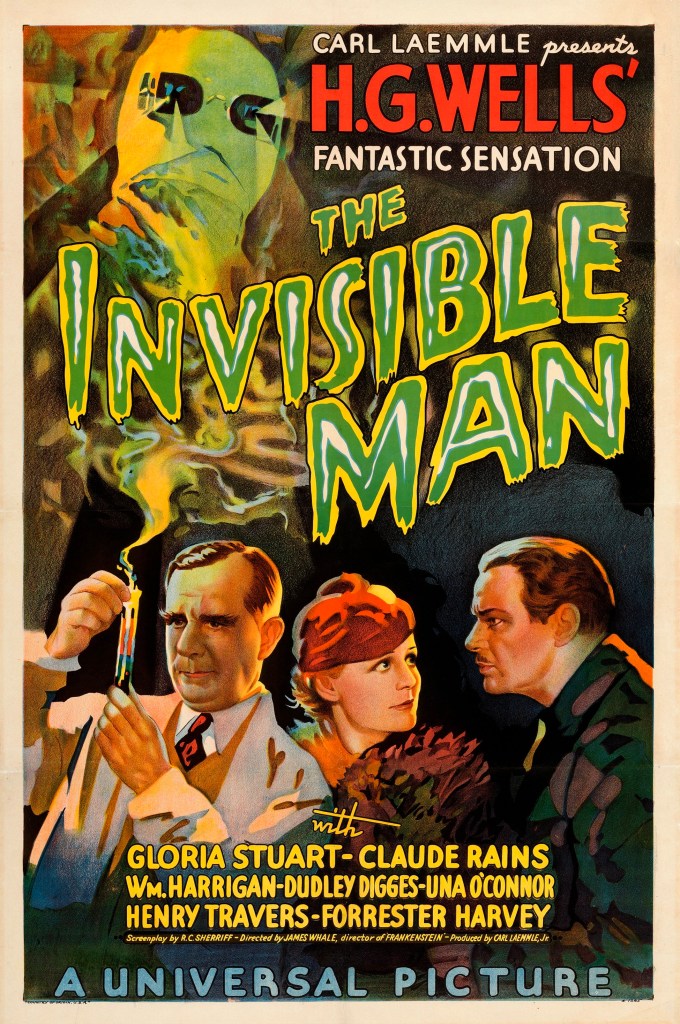
James Whale’s 1933 film The Invisible Man turns 90 years old later this year, and remains a quick-witted, vivid early science-fiction thriller. 

I sat down with the 19-year-old to watch it again recently, and at the end, he turned to me and said with a note of surprise, “That was really good!” Not all of those sometimes antiquated black-and-white horrors would get that kind of reaction, but The Invisible Man remains a model of slick, efficient filmmaking, in and out in just over an hour’s run time.

The story is simple – a man turns himself invisible, and is trying to find a cure. But the experimental formula he tampered with is also slowly driving him insane. 

The Invisible Man is one I watch every few years and clustered right up there in the top 3 Universal Horror movies for me (jostling with, of course, my beloved Creature from the Black Lagoon and depending on my mood that day, either James Whale’s Frankenstein or Bride of Frankenstein). 

Whale was the best of the classic horror directors, lending a keen visual eye and a wry sense of camp to his scare-fests. Pairing him with the stage actor Claude Rains here was a masterstroke, because for huge sections of the picture the Invisible Man has to carry the film with his voice alone, and Rains’ purring, manic mad scientist is a gleeful delight, pinballing between vicious cruelty and tragic victim. (Originally Frankenstein’s Boris Karloff was tipped for the role, and while I love Karloff, it’s hard to imagine his sinister invisible growl having quite the same impact.)  

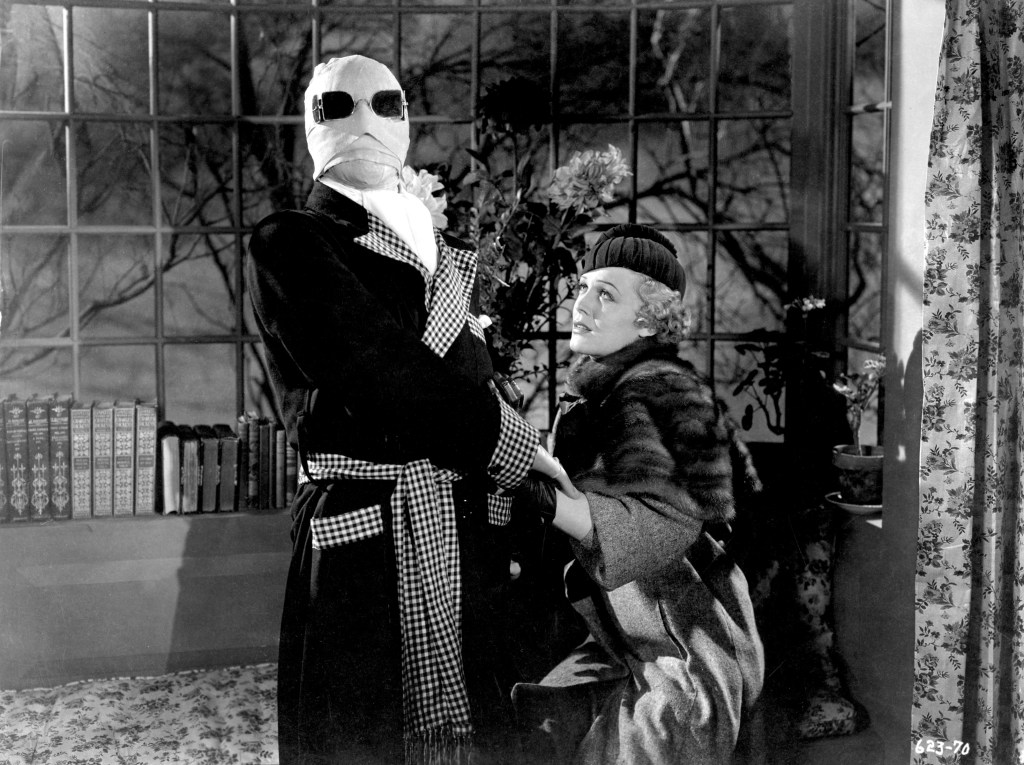
Based on H.G. Wells’ thrilling novella, Jack Griffith, the Invisible Man, is instantly a striking figure from his first moment on screen, wrapped in bandages and dark glasses, a simple but brilliantly effective way of rendering the character visible when he needs to be. The special effects are remarkably good for 1933, a few wires and puppetry seamlessly creating the illusion of a man who isn’t there. 

The Invisible Man also unique in the classic Universal Horror menagerie because Griffith is very much an ordinary man who did this to himself, not some mythical creature like Dracula or the Mummy or a victim of others’ meddling or evil like Frankenstein’s monster or the Wolf Man. He is human, which makes his crimes that much more brutal. 

Griffith: “An invisible man can rule the world. Nobody will see him come, nobody will see him go. He can hear every secret. He can rob, rape and kill!”

And hang on to your hats – with more than 100 people murdered during his reign of terror, the Invisible Man actually had the highest body count on screen of any Universal monster – more than Frankenstein’s creation, more than Dracula. Sure, most of that is the terrifying train derailment he causes near the movie’s climax, but Griffith still strangles, assaults and terrorises with gleeful abandon. 

Coming as The Invisible Man did in that delicate global tension between the devastation of World War I and the genocide of World War II, it’s hard not to see many a would-be dictator’s fantasies in Griffith’s speeches. 

Invisibility is a curious dual curse and blessing in the world of horror – you could go anywhere, in theory, do anything, but if you can’t turn it on and off, you’re also forever separate from the human race, a witness without an audience. 

The concept has been revisited many times, in a series of gradually less effective sequels in the ‘40s, none of which starred Rains, and a goofy Invisible Woman movie in 1940 that made the concept into a laboured comedy with a lot of teasing innuendo, but generally invisibility seen on screen is a man’s world.

More modern movies like Kevin Bacon’s 2000 slasher flick The Hollow Man and the excellent 2020 Invisible Man starring Elisabeth Moss leaned into the Invisible Man’s toxic masculinity with mixed results but there’s something to that – an Invisible Man also implies sex (generally in these films, you’ve got to be naked to be truly invisible, after all) and stalking and predation, factors most of the Invisible Man movies dip into. To be honest, to be invisible is generally to be up to no good, isn’t it? 

And looming over all those spectres is the inimitable Claude Rains, who 90 years on has yet to be truly bettered in the niche world of invisible horror movie villains. From that unforgettable bandage-clad visage to the cackling madness echoing through his voice, Rains still shows us that there’s nothing quite as scary as what you can’t see at all. 

RIP John Romita Sr, the man who drew Marvel Comics

Was he the best Spider-Man artist of all time? I think so. Was he quite possibly the greatest Marvel Comics artist of all time? Maybe so.

John Romita, Sr. has left us at the age of 93, with a career that spanned all the way from the golden age of the late 1940s well into the 2000s. Boy, he was good.

I wrote just last year about how for me, Romita and his immensely talented son John Romita Jr. have defined Spider-Man. His art was crisp, bold and clear. Yes, there have been many other great Spider-Man artists, from the inimitable co-creator Steve Ditko to the wiry revolutionary Todd McFarlane.

But here’s the thing. If I close my eyes and just think, “Spider-Man,” I see a John Romita Sr. drawing. Maybe I see Amazing Spider-Man #66 from 1967 starring the evil Mysterio – I picked up a beater copy back in the 1980s and for years and years it was the “oldest” comic I ever owned, filled with that timeless Romita cool style. Maybe I see his gorgeous Mary Jane, or his sneering Green Goblin.

And to be honest, if I close my eyes and just summon up the words “Marvel Comics,” I tend to think of a Romita Sr drawing too. He was the public face of the company for years thanks to becoming Marvel’s art director and doing countless merchandising and house ad illos. More than Spider-Man, he co-created or summoned up dynamic classic looks for characters like Wolverine, The Kingpin, The Punisher and Luke Cage who have all gone on to become movie and TV series stars. To me, his art kind of was Marvel Comics.

Thanks for the art, John.

Meet Galexo, the creepy hero who finally defeated Batman

Everyone knows Batman and Robin. But did you hear the one about Batman and Robin and… Galexo?

A bizarrely uncharismatic space superhero, Galexo parachuted his way into the late 1960s/early 1970s Batman syndicated newspaper strip towards the end of its lifetime, and thanks to an argument between publishers, he ended up pushing Batman out of his own comic entirely, doing something the Joker could never manage – killing Batman. 

These strange oddball strips have fascinated Batman aficionados for years but were rarely seen until reprinted in the handsome 2016 collection Batman: The Silver Age Dailies and Sundays Volume 3 1969-1973. The book is a story of Batman’s strange decline in the comic strip – while it starts out with solid artwork and stories featuring Batman’s traditional foes, by the end of 1971 the strip started to collapse upon itself. 

A weird struggle between the newspaper comics syndicate Ledger and National Periodical Publications (later DC Comics) was the reason – seasoned comics writer E. Nelson Bridwell was sacked and unknown Ledger staff brought in, and the strip declined in quality rapidly. But it was still kind of recognisable as Batman comics, until in April 1972, Galexo was clumsily introduced, and Batman announced it was time to “turn our duo into a trio” with his creepy spaceman hero pal … who apparently has ESP and other science stuff. 

Galexo is a rather horrifying figure, adorned with a greasy-looking mullet and a migraine-inducing colourful costume and wearing a weird helmet that resembles a truckers’ cap. He has no personality, and a tendency to lecture about his superiority. Nobody should lecture Batman, but the chill Bruce Wayne in these strips just hangs out and lets Galexo blather. 

These strips are objectively terrible but kind of fascinating – look at the complete lack of attempts to make the art dynamic, with endless tight cropping onto the figures’ heads, dialogue overwhelming the panels entirely, and almost abstract surrealism. Batman and Robin barely appear in costume or when they do they’re reduced to Galexo’s cheer squad. 

After several aimless weeks and awful art, Batman and Robin were apparently pushed out of the strip entirely in favour of Galexo and his friends, but the title still remained Batman’s.

It’s not every day that you found a newspaper ditching a comic strip with a public note that it’s become complete garbage, but such was the fate of Batman and Robin and Galexo as the Stars and Stripes newspaper dumped it along with many others:

The Batman-less Batman and Galexo strip apparently carried on in a few overseas newspapers in places like Singapore for another year or so. Clearly, someone at the Ledger Syndicate wanted to make Galexo the next big thing. These rare final strips collated here are a weird trip, like an adventure strip imagined by someone who’d never actually read a good comic strip. 

It’s a weird footnote in comics history – after beating The Joker, the Penguin and Riddler countless times, the caped crusader was finally laid low… by a trucker-cap wearing spaceman with an ego. 

I’m pretty sure despite almost every other C-list comics character getting a revival at some point, Galexo was never, ever seen again, the “Poochie” of Batman comics history.