Remembering Anne Rice, who brought death to life

If you could live forever, would you want to? And what would it be like?

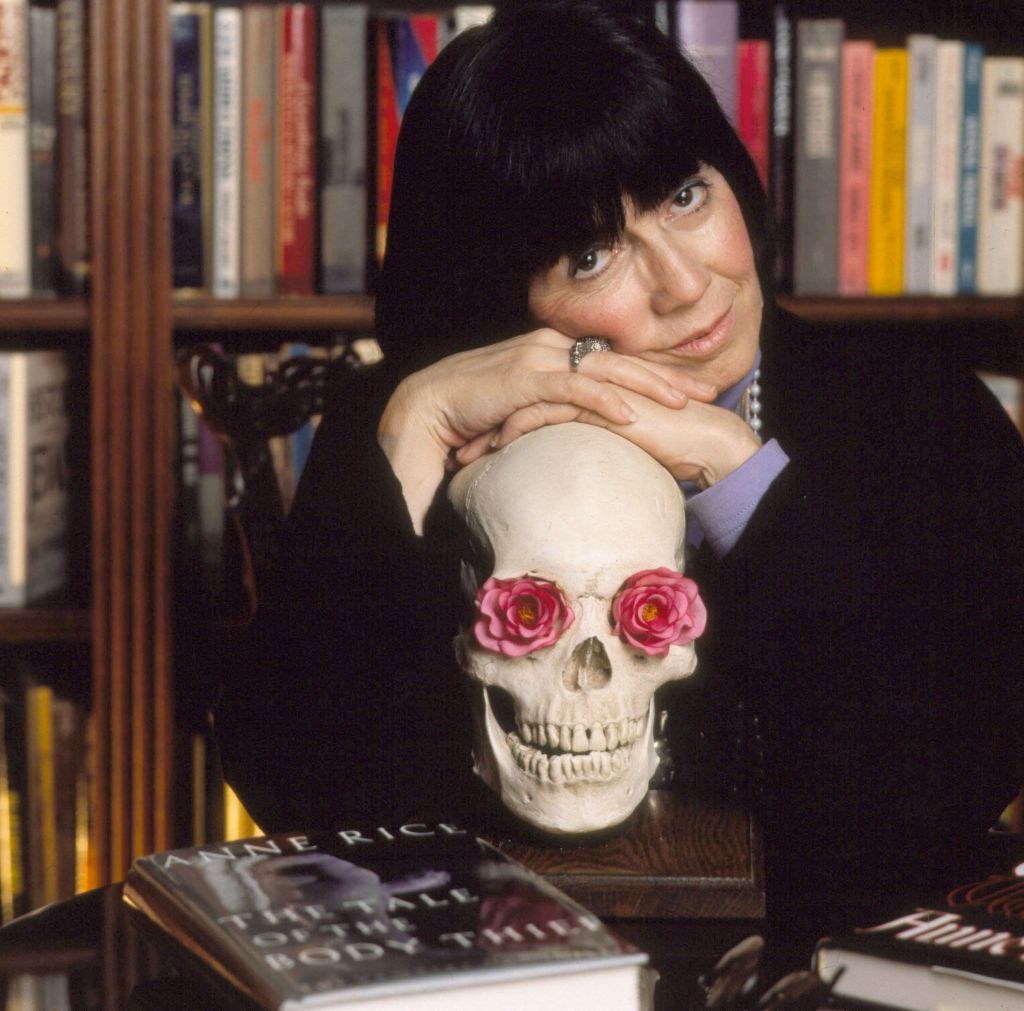
That question is at the heart of the legacy of Anne Rice, who died at 80 last month. I grew up reading many of her Vampire Chronicles, and — a bit belatedly due to Christmas and weather chaos — I wanted to think about why her work meant so much to young Nik.

Nobody was more influential in vampire fiction since Bram Stoker dragged Dracula out of the coffin back in the 1890s. Rice’s vision of blood-suckers can be seen in the DNA of everything from The Vampire Diaries to True Blood to Buffy to Twilight — some good, some not.

When we think of vampires today, you’re likely thinking of them less as Bela Lugosi and more as passionate, creepy and eternally conflicted lovers, a template Anne Rice built up more than anyone.

Anne Rice’s Interview With A Vampire and The Vampire Lestat were passed-around, beloved talismans of my wayward youth. The glittering paperbacks with their gothic lettering were read, and re-read.

It was The Vampire Lestat that particularly grabbed me, with Lestat narrating the centuries of his life in first person. He was bratty, impetuous, cruel and, sometimes, kind. He may have been hundreds of years old, but Lestat kind of felt like a teenager.

Evocative and passionate, gothy as any Cure song, filled with blood and lust and long lonely meditations on what it’s all about, they were perfect reading for confused teenagers trying to figure out the world. She quietly was a progressive voice for gay equality in the ’80s, and later depicted trans characters and gender fluidity in a way that seemed groundbreaking and yet completely unforced. In her world, love is love.

Rice created a sprawling narrative filled with rich characters, many of whom went on to star in their own books after debuting in the original trilogy, and she was deft at bringing her historic settings to life. Her strength was not so much in plot or her almost Victorian prose, but in character. She made you feel the weight of immortality and what that might actually be like. Her vampires – dour Louis, insecure Armand, bold Marius or terrifying Akasha – were far more complex than the spooky boogeymen of Stoker’s Dracula. Dead, they still carried with them all the baggage of their living lives. Her vampires talked, and talked, and talked, sometimes to the point of self-parody, but in their lengthy soliloquies were all about digging into what makes us human – or inhuman.

The Vampire Chronicles did become a case of diminishing returns as it sprawled on to more than a dozen books, and Rice’s later work never quite surpassed the original books, but I’d argue everything up until Memnoch the Devil is pretty golden. As the series goes along, Lestat becomes a bit too powerful and loses some of the charming rogue vibe he has in the earlier books, and the constant adoration other characters always seem to have for him gets a bit much.

Yet there’s still a lot to like in later volumes if you’re not turned off by Rice’s endless expansion of her shared universe to include witches, Atlantis, demons and more. But in the end, the stories always circle back to Lestat, her greatest character and always, always the centre of attention.

In Lestat, Rice created a monster who constantly tries not to be one, often failing. Rice wrote other books, of course – erotic fiction, meditations on the life of Christ and more – but ultimately, it’s the vampires that make her immortal.

My top pop-culture moments of 2021

And so, the curtain drops on 2021, a sequel that somehow managed to perform even worse than the blockbuster year 2020 did. Still, despite the grimness on personal fronts and the continuing stupidity of life in general, there were a few halfway decent moments. So, in the spirit of looking on the bright side, here’s my top pop-culture moments of 2021, with links back to some of the original posts about them.

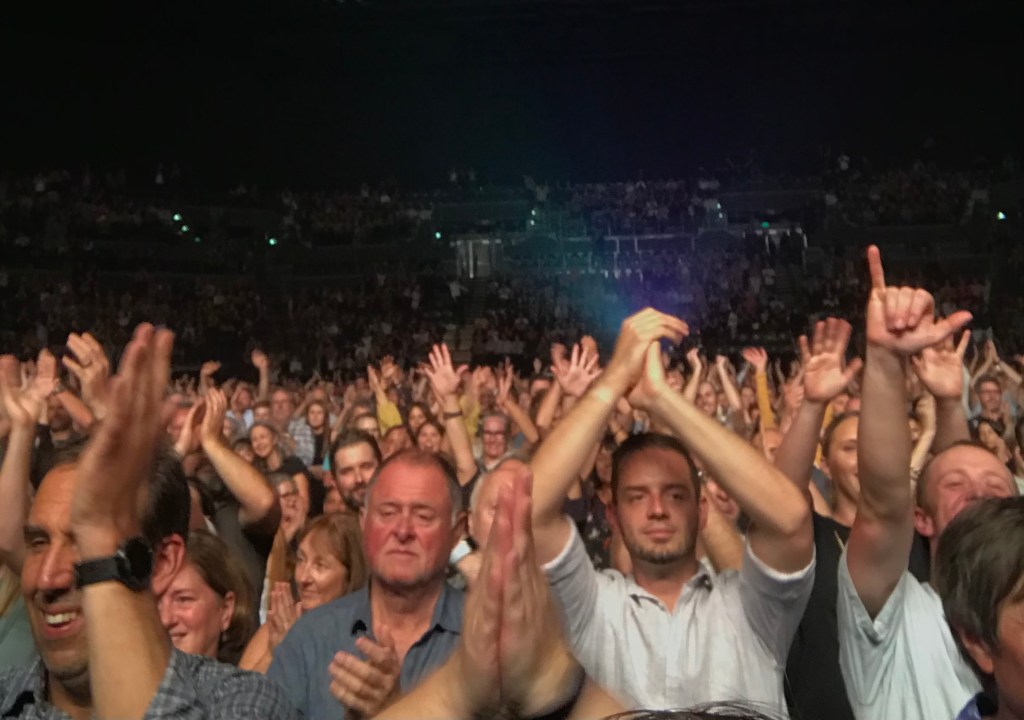
Filling a Crowded House, in a brief pandemic oasisMy experience seeing Crowded House playing a packed Auckland arena back in March happened in New Zealand’s several blissful months of Covid-free life, before the Delta outbreak in August. It also was a life-affirming blast of a show, with Neil Finn and company delivering a celebratory concert of hits and new songs that just made you feel glad to still be here, alive and appreciative of all the things we took for granted pre-2020. There’s been a lot of times I’ve lost faith in humans the past two years, but at that one concert, a big crowd of us all singing and smiling felt kinda sorta all right. Here’s hoping going to big concerts again becomes normal soon.

The open-throated passion of John Cassavetes – A ‘discovery’ for me this year was the work of the late filmmaker John Cassavetes, who I’ve long been meaning to delve into. His work dating back from the late 1950s sparked much of independent film, and Cassavetes was determined to present life in its messy, often unexplainable complexity. In movies like Faces, A Woman Under The Influence and Husbands, people behave madly, inconsistently, and irrationally – like they often do in real life. His movies are a challenge, to be sure – the loose-limbed Husbands at times feels like a drunken TikTok video starring Peter Falk might – but even while they push and prod you, you find yourself thinking of them constantly the next day.

When big franchises take a few chances – I’m a fanboy, but I’ve admittedly burned out a bit on the assembly line of superhero movies and childhood classics being regurgitated over and over (did anyone really want another Ghostbusters?). So I was pleasantly surprised by two venerable franchises that didn’t play it entirely safe – James Bond in the long-delayed No Time To Die, and Spider-Man: No Way Home. Without spoiling either, they took risks – ones that might not have satisfied every fan. James Bond faces challenges he never had before in No Time To Die and the ending was a disturbing but effective shocker. And the idea of a multiverse-straddling take on Spider-Man could easily have gotten overstuffed and absurd (I’ve ranted about the overuse of multiverses before), but instead, we got a story that embraces the idea of the shared cinematic history of franchises and characters who just keep coming back in a heartfelt, dignified way. There’s a reason it’s smashing box office records.

The Magicians by Lev Grossman – I had been meaning to read this series of books by Grossman for a while now, which could be broadly described as “Narnia/Harry Potter, but for grownups.” They tell a somewhat familiar story of a young magician, Quentin Coldwater, and his ups and downs learning magic and having brilliant, frightening adventures in fantastic lands. The Magicians books were perfect escapist reading during the dregs of Auckland’s lengthy lockdown, brisk and darkly enjoyable, with the imaginative flair of C.S. Lewis’ Narnia and the solid characters of Harry Potter, but aimed at a slightly older audience who might like a bit of drinking and sex to spice things up. I read better books objectively this year, but these ones were among the most fun.

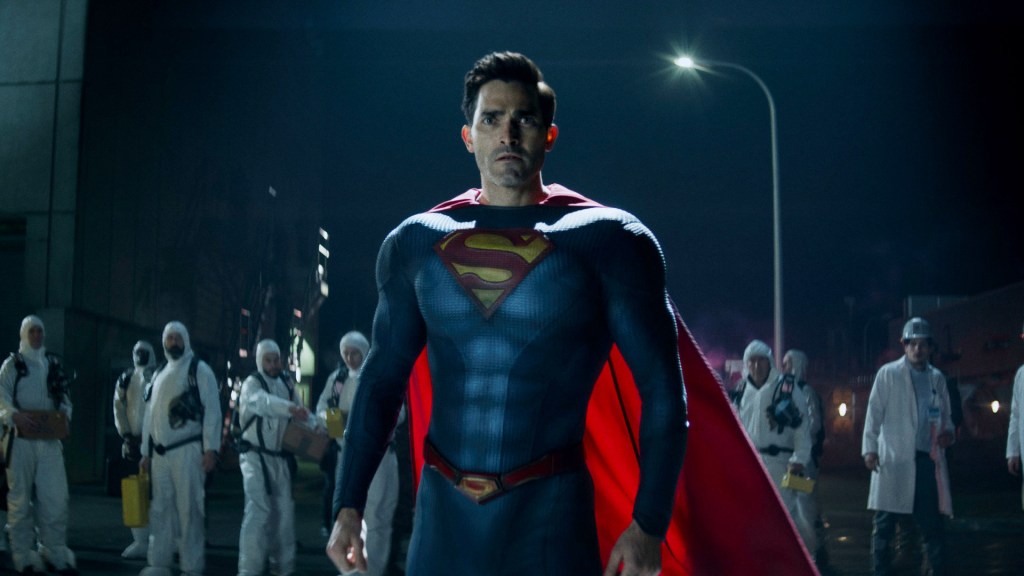
Superman, still the best superhero – It’s been a good time to be a fan of the man of steel. One of the best decisions the corporate overlords made a few years back is to let Superman finally marry Lois Lane, and to let them have a kid together. It’s allowed Superman to mature as a character into everybody’s ideal dad, and unlike some big changes to the status quo for comics characters, for now, this one seems to stick. On TV, I praised the superbly entertaining Superman and Lois, which combines spot-on casting with great Super-action and a show that’s not afraid to get emotional. In the comics, writer Brian Bendis finished up a suprisingly cool run that felt modern and daring yet true to the character, while the anthology series Superman: Red And Blue was an ideal summation of the character’s appeal with a variety of mostly excellent short stories starring Kal-El. Superman’s son, Jonathan Kent, who’s now a young adult, got his own title and it’s turned out to be one of the best new superhero comics of the year – a young, progressive and caring superhero (who’s also bisexual, which has gotten the usual suspects outraged). All in all, from the perspective of a rather troubled real world, Superman and his son seem more relevant than ever.

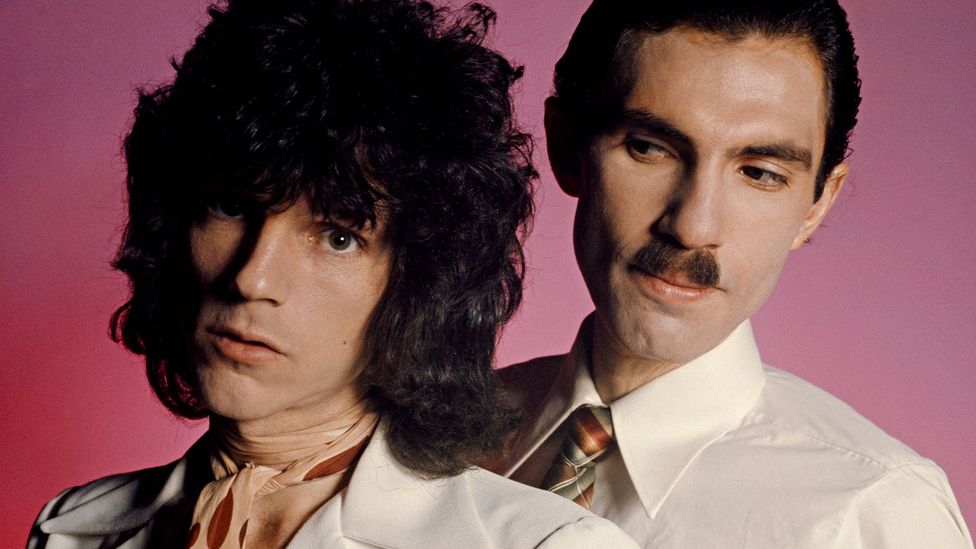
Lighting a Sparks – I admit I’m losing my touch with current pop culture as I settle into extreme middle age, but part of that is because there’s so darned much OLD pop culture to still enjoy. I was aware of Sparks and liked some of their work, but Edgar Wright‘s excellent documentary The Sparks Brothers triggered one of my famed full-fledged obsessive binges, as it spurred me to dig into the art-pop band’s hefty 50-year discography. It’s a delight to find a band you like and then find out that they’ve got literal mountains of material for you to enjoy.

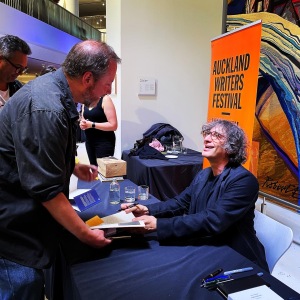
Meeting Neil Gaiman, in strange days – I’ve always loved the Auckland Writers Festival, and like many things I loved it’s had rocky days during the Covid era. Fortunately, this year’s festival went off just fine in May, and a big highlight was getting a chance to meet one of the world’s biggest writers, Neil Gaiman, who’s been a bit of a New Zealand resident himself with his wife Amanda Palmer during the pandemic. I waited an hour or so to briefly meet Neil and have him sign a few of my favourite books after listening to some excellent talks he gave, but that was nothing compared to some who waited up to six hours. Neil was apparently as much a gentleman with the last person in line as he was with the first. They say never meet your idols, but getting a chance to tell them how much their work means to you is sometimes worth the wait.

Godzilla smashes up King Kong – Look, I know, it’s a big dumb old monster movie. But Godzilla Vs. Kong was, in my deep critical analysis, very, very good at being a big dumb old monster movie. Maybe it’s because I grew up with a well-played VHS tape of the 1962 King Kong Vs Godzilla that I unironically love. Maybe it’s because I saw it on a booming IMAX screen, just at the start of NZ’s pandemic-free idyll mentioned above, and because I could watch King Kong and Godzilla wrestle on aircraft carriers nearly life-size. I’m not saying it will win any Oscars. I’m not saying that it always makes sense or that most of the human characters are memorable. But you know, most of the classic Toho Godzilla movies are pretty wacky, too. With magnificent modern special effects and plenty of monster action, this heavyweight bout was worth the wait. Sometimes, you just want to see Godzilla punch through a building. Indeed, after a year like this one, who doesn’t want to do that themselves sometimes?

The life and times of a newspaper columnist

Once upon a time, I was a columnist. 

I’ve written thousands and thousands of words for work and pleasure, and drawn hundred and hundreds of pages of comics. I’ve written music reviews, breaking news, feature profiles, police reports, posted tweets and edited more stories and wrote more headlines than I can bear to count in my 25+ years in the industry across several countries.

But I have to admit, my columnist days are still close to my heart. I was a newspaper columnist in the fading days of when such things mattered, in the glittering early days of the internet and long before social media was a gleam in pre-pubescent Zuckerberg’s eye. I admired the great columnists who were big in the 1990s – Leonard Pitts, Lewis Grizzard, Jon Carroll, Molly Ivins – or the ancients like Herb Caen, Mike Royko or H.L. Mencken

I wrote a newspaper column under various dire titles in various sometimes dire places for more than 10 years across several states, starting in my university newspaper in Mississippi and carrying on across California and Oregon newspapers too, until one day around 2005, I just kind of stopped. I sometimes wrote about the issues of the day, but more often, I just kind of wrote about me.

Back in 2006 I put together a little book of what I thought was the best of my column years for friends and family. I’m glad it exists, as a kind of hefty memorial to one part of my life. And hey, you can view and download the PDF of said book for free right here: (Note: This offer has now expired, sorry folks, but you can now purchase my all new for 2025 ‘best of’ book of collected journalism on Amazon.)

Some of these pieces are among the best writing I’ve ever done, I think, and some of these pieces are kind of embarrassing to read now – but also, I’m glad they’re there. They are a time capsule of friends and feelings I had, of people I’ve lost touch with and people I’m still very good friends with. Your twenties are like no other time in your life, and boy, they go by fast. They’re artifacts of a time when every moment in my life seemed filled with drama and I sure wouldn’t have imagined what the world of 2021 turned out like. 

I wrote with my heart on my sleeve a lot more than I’d ever do these days – the struggles and egos of a twenty-something trying to figure out the world, slowly morphing into a thirty-something married and with a kid on the way. I admit, sadly, I think I was less angry and the world less angry then. 

Young idealistic journalist, pasting up actual pages for actual newspapers on an actual composing desk that must’ve been 200 years old.

There aren’t lot of real columnists left now. There’s a lot of what I call “outrage merchants,” who spout off political opinions aimed to get the clicks or terrible pieces complaining about sausage rolls, but the art of crafting a kind of gentle, thoughtful essay printed on an actual newspaper or its website is kind of vanished. 

The great writing has migrated online to other places, magazines and websites, and unlike when I started scribbling thoughts about old friends and familiar places almost 30 years ago, there are plenty of outlets for it. There is still a lot of wonderful writing out there, but the column as it once was is pretty much a dying art form. Hey, things change. It’s the never-ending story.

I started blogging regularly in like 2004, stopped that in 2010 or so and then picked it up again a few years back. I never stopped writing, but I started writing about different things, some for money, some for pleasure. 

Writing columns also is a finite thing for most. In previous lives, I’d hire columnists myself for various newspapers, and often people would come in with one great idea, maybe two. “And what will you write for the third column?” I’d say. I wrote a few hundred columns myself over a decade and then I knew that the well was kind of dry. 

I gave it up when I realised I didn’t have much more to say in that candid columnist’s fashion about my life and times, and I had little new to add to the debates of the day, and went on to write other things in other ways. These days, everyone shares their feelings all the time in a never-ending fashion on the internet and social media in real time, and I have to admit, like many people, I’ve kind of gone from being eager and excited by social media to loathing a great deal of it and its effect on the world. 

I’d write a column about that, but honestly, do we really need another outraged column these days, at all? 

Still, I’ll be back with more bloggery in 2022. Have yourself an excellent holidays.

The Beatles Get Back, and why it’s worth slowing down sometimes

Who knew that watching nearly 8 hours of the Beatles noodling around in a studio could be so addictive?

Yes, Peter Jackson’s Get Back documentary is long. It’s rambling and has very little “plot” to speak of. But as a window into the creative process of one of the greatest bands of all time, it’s absolutely amazing to watch hours and hours of footage unearthed during the making of the Let It Be album

Watching the crystal-clear footage of the Fab Four and their friends unspool, I felt like I was watching a time machine portal open up in front of me. It’s immersive and both poignant and celebratory for Beatle-maniacs – which, to be clear, is an awful lot of us. 

Let It Be isn’t even my favourite Beatles album by a long shot – I find it too polished with Phil Spector’s later orchestral additions, Paul McCartney’s sappy side a little too prevalent and John Lennon’s surreal wit and bite mostly missing in action. Eight hours on the making of Sgt. Pepper, good god, yes, but Let It Be? The album that took so long to put together that it came out after the band’s actual final album, Abbey Road?

I’ve still never seen the original Let It Be movie, a mere 80 minutes long, but I’ve seen enough segments from it to get the idea it’s viewed as a dour portrait of a band’s dissolution, the end of a dream. Jackson dove into the 60 hours or so of video taken at the time and crafted an entirely new take on the sessions. Contrary to some of the hype, Get Back doesn’t rewrite history – but it expands our view of it. 

It’s being hyped hard by the Disney Corporate EmpireTM as entertainment for all, but Jackson has rather sneakily made what almost is a Beatles art film. Like one of Andy Warhol’s endless panoramas of the Empire State Building or people sleeping, Jackson’s slow, relaxed pace with Get Back forces us into its own rhythm, the world of jobbing musicians trying to find the right chord or lyric. For a society used to quick fixes and instantly accessible content, that might seem too plodding. Others of us welcome the chance to unplug a bit. 

The problem with the making of the album Let It Be is clear from the start – the Beatles are wiped out, exhausted and grumpy, except for Paul, whose incessant cheerleading in the first episode never stops. The Beatles had already conquered the world a few times over. Lennon’s zoned out with Yoko, my favourite Beatle George is clearly filled with his own quiet anger, and Ringo is… well, he’s Ringo. Get Back starts with a dark time for the Beatles, but as it unfolds and the group starts to come together, you appreciate their rich history – these kids, still not even 30, had been through so much together already. 

Get Back encourages us to slow down, to zone out like Yoko Ono reading magazines, to get lost in the minutiae of Paul and John working out lyrics, or Ringo smoking cigarettes. To take in fully the glorious fashions of Glyn Johns, the slow creep of George’s facial hair over the weeks it chronicles, the endless cups of tea and toast. Nobody is staring at their phone during the lulls in Get Back, obviously, which now more than ever makes it seem like a portal into a very different world. A musician’s life isn’t all drugs and parties and live gigs, and the leisurely stroll through a few weeks in the life of the Beatles demystifies them a bit. It rescues them from that gold-plated celebrity icon status a bit to see them reading the morning papers, having morning chit-chat about what they watched on the telly the night before.

And many times over Get Back‘s languorous eight hours, you have sudden moments of sheer magic, like watching a song you’ve known for practically your whole life come into the world for the very first time: 

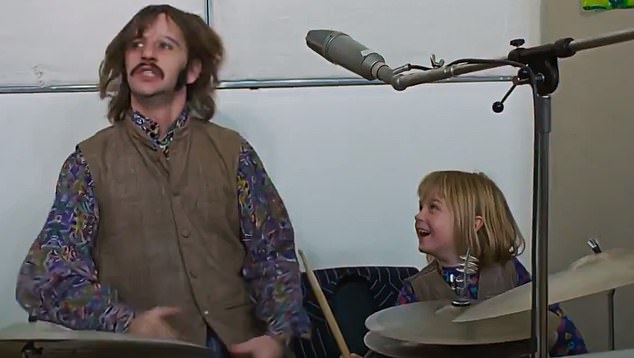
For Beatlemaniacs – and yea, we are legion – it’s akin to watching the holy grail be forged to see songs like “Get Back” or Lennon’s “Jealous Guy” slowly take shape out of a few strummed chords. Perhaps for me the most beautiful moment was watching Ringo shyly debut his goofy little “Octopus’ Garden” to George, and the two of them amicably noodling away, shaping it. They were mates, having a go at making some art. Or a scene where Paul’s adopted daughter Heather joins in with the band jamming, playing like any little kid would, but with THE BEATLES. Or any scene when Billy Preston bops into the room, bringing a welcome energy and fanboy’s good cheer. Or any one of the dozens of song fragments, covers and unfinished works that Get Back reveals. 

Time haunts Get Back, right from the earworm title song’s chorus – “Get back to where you once belonged.”  There is a wistfulness to it all, watching these vividly alive people and knowing how many of them died too young – Lennon and Mal Evans by gunfire, Harrison and Linda McCartney to cancer.  The documentary is so immersive that when you lift your head out of it, you feel like you’ve lost something and some time that’s irreplaceable. 

Get Back is long, maybe too long for many, but I could also have watched it forever from the vantage point of weird old 2021, hoping that somehow, from 50 years in the past, the Beatles might help everyone in the whole world get back to where they once belonged. 

Hey, it’s the Amoebargain end-of-year back issue sale

Hello good people! It’s time for the AMOEBARGAIN year-end sale – if you’ve been after some of my rare 1990s Amoeba Adventures issues or waiting for a chance to pick up the newer issues, now is the time to step forward for a holiday deal.

So many, many years ago I moved to New Zealand, long enough now that I say “petrol” instead of “gas” and I call everybody “mate.” Anyway, mates, when I moved a small box of my vintage Amoeba Adventures comics and other zines from the 1990s languished, forgotten, in my parents’ basement. More than 20 years after they were published, it’s time to set some of them free into the world to new homes, so here’s your chance to grab some long, long out-of-print Amoeba Adventures print issues by myself, Max Ink and others! 

There are only three to five copies left available to sell for most of these issues. Once these are gone, they are GONE. They’re going pretty darned cheap, and I am doing very small print runs these days as it’s easier to predominantly publish digitally. 

By December 31, the sale is OVER forever and ever so don’t sleep on it! 

Amoeba Adventures Starter Pack #28-30 – US$15  SOLD OUT!

Amoeba Adventures #29, #30 – Just a few copies left, $6.50 US each.

Here’s what is available right now of vintage Protoplasm Press issues – will be updated if items sell out: 

Here’s what is available right now of vintage issues – UPDATED – Some issues are starting to sell out, folks, so don’t sleep on this!

Amoeba Adventures #11 – Great jumping-on point and the first issue with Max Ink as artist. $3

Amoeba Adventures #13 – It’s the return of Herr Heinous and a night out to remember. $3

Amoeba Adventures #14 – Max Ink goes solo. $3 ONE COPY LEFT!

Amoeba Adventures #15 – The debut of Mindmaster and more. $3 TWO COPIES LEFT!

Amoeba Adventures #18- A two-part tale featuring the Asbestos Mushroom and the Period! $2

Amoeba Adventures #19 – Part two, featuring a jailbreak and Prometheus’s transformation! $2

Amoeba Adventures #20 – “The Dark Ages” begins with Rambunny’s worst day ever. $2

Amoeba Adventures #21 – A guest-star filled party, and the Dark One makes his move. $2

Amoeba Adventures #22 – At last – the real origin of Prometheus. $2

Amoeba Adventures #23 – The final battle for one of the All-Spongy Squadron. $3 TWO COPIES LEFT!

Amoeba Adventures #24 – The endgame of “The Dark Ages” as secrets are revealed. – $2

Amoeba Adventures #25 – The Dark One’s origin as the final battle begins. – $3 TWO COPIES LEFT!

Son Of Spatula Forum – A massive 90-page collections of my non-comics writing and columns from 1997-2000, $4 each

Rambunny #1 – The big rabbit’s action-packed solo debut! – $2 each SOLD OUT

Prometheus: Silent Storm – A rare guest-artist packed 1992 AIDS benefit story of the All-Spongy Squadron. $3 – ONE COPY LEFT!

Chiaroscuro #1 – An offbeat collection of incredibly strange comics I did for alternative newspapers in the 1990s – $3 SOLD OUT

You can pay direct to my Paypal account right here:


Postage via media mail anywhere in the US $4.00 for 3-4 books, $5.00 for 5-8 books. Any orders over $20 get FREE postage. Non-US orders inquire first. Books will ship starting mid-December. Contact me if questions!

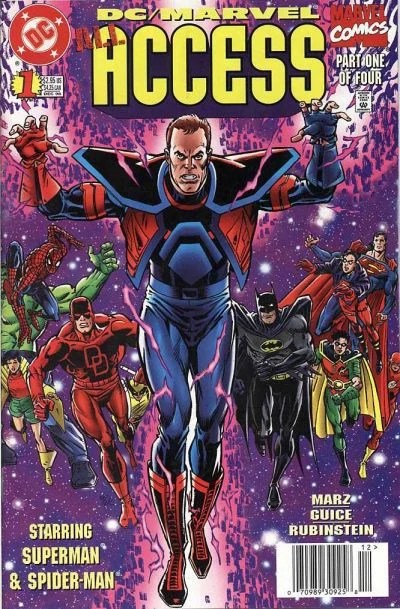
Access, or how to ruin a cool idea with a terrible superhero

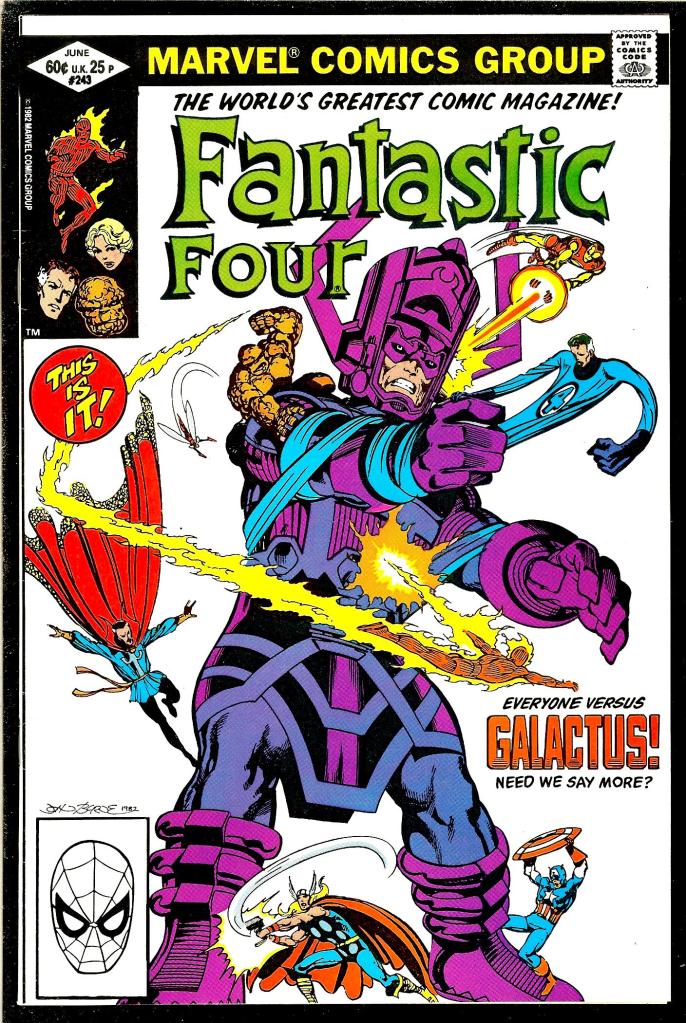
Back in the misty 1990s, what seemed rare and fanciful suddenly started happening all the time – crossovers between the comics characters of the Marvel and DC Universe

There had been crossovers for a while, starting with 1976’s gold standard of a super-meet-up, Superman Vs. The Amazing Spider-Man. There’s still few things better than the goofy charms of this comic, watching the Man of Steel and webhead meet, fight and team up, originally told in a massive tabloid-size edition. 

It was a hit, so others followed – Batman and the Hulk, the Teen Titans and the X-Men, and they were pretty good, too. Then there was a long lull, until in the 1990s we started getting crossovers all the time – Batman/Spawn, Batman/Punisher, Batman/Daredevil, and probably some that didn’t have Batman. They were less inspired than the first few, lacking the thrill of the new, and mired in that same generic gritted-teeth stoicism that marred many 1990s superhero comics. Some were good – John Byrne’s Batman/Captain America totally rules – but nobody was dying for Spider-Man/Gen 13

And then in 1996, the fanboy’s dream happened – an entire miniseries devoted to comic culture clashes, DC Vs. Marvel Comics! This would be great! Wouldn’t it?

But no, DC Vs. Marvel (or, Marvel Vs. DC) was … adequate. It’s not a complete failure, but it’s unsatisfying and never lives up to the potential dreamed up by a legion of teenage fanboys. It was a case of trying to do too much, in too little space. Instead of the room to breathe that the original Superman/Spider-Man meeting had, you had every character from two universes jammed together fighting for a couple of panels, tied together with some balderdash about cosmic “brothers” who were avatars of each universe… and then there was Access. 

Meet Access, the superhero whose power is equivalent to that of your standard-issue functioning doorknob. A blandly generic kid named Axel Asher (owch), he gets named the “keeper” between the two universes. Access is meant to provide the balance between worlds, you see. If he doesn’t crazy, cosmic things will happen. 

Of course, Access screws up, and the two universes merge, providing the somewhat cool spectacle of a line of “Amalgam” comics featuring mashup characters like Spider-Boy, Super Soldier and Dr. Strangefate who were the 1990s equivalent of the endless ‘multiverse’ stories we see today. They were fanboy service as comic characters, featured in a series of one-shots ranging from good to terrible before the whole underwhelming DC/Marvel crossover wrapped up.

There were lots of brief fun moments in the DC/Marvel mess – who wouldn’t want to see Superman fight the Hulk? And Dr. Strangefate is pretty cool. But generally, everything is rushed, rushed, rushed, and as a result it’s just a blur of capes and colours. Having a Silver Surfer/Green Lantern matchup dispatched in two pages or an Aquaman/Namor fight treated as a joke is just lazy. And honestly, you could ditch the entire Access/cosmic gateway stuff and just say “the universes crossed over because of a space-time anomaly” to streamline everything.

Access has to be just about the most boring character ever given the spotlight, a generic collection of ordinary-guy tics (he worries about his girlfriend!). So of course the publishers gave us not one but TWO forgettable miniseries focused on Mr. Doorknob and a never-ending parade of DC and Marvel guest stars, All Access and Unlimited Access. (Unfortunately, Access was never seen again after about 1997, sparing us Backstage Access.)

It’s hard not to yawn every time Access steps into a panel. He’s the superhero as plot device – at one point he’s explicitly described as having the power to “create crossovers” by staying in one place too long. His comics simply exist to throw Marvel and DC characters together in a variety of underwritten, overcrowded adventures. Reading the adventures of Access over several miniseries is like a hit of Pop-Rocks in Pepsi – it may give you a momentary buzz, but you’ll pay for it later. There hasn’t been another official DC/Marvel crossover in decades, and probably won’t be anytime soon.

I guess Access might’ve been ahead of his time as we seem rather overwhelmed by combinations and alternate versions of superheroes across the multiverses at the moment. Every fanboy likes to play “what if,” but when there’s no follow-up questions, you have to wonder what the point is. 

That, or maybe Access was a harbinger of how starting in the 1990s superhero comics, in the end, started to eat themselves. No doorway needed. 

Frankenstein at 90: The genius of Boris Karloff

One of the greatest horror movies of all time debuted 90 years ago today. In its honour, here’s a post I originally wrote in 2010 about the enduring power of Frankenstein:

It’s a little late for Halloween, but I’ve been in a monster movie frame of mind. The classic monster movies, that is, which to me have always been the Universal Pictures horror of the 1930s to 1950s — Frankenstein, Dracula, The Wolf Man, et cetera. I loved ’em as a kid in the 1980s and lately have been on a jag watching some of these classic black and white flicks for the first time in 25 years or so. What’s amazing is how well many of them still hold up, particularly those starring the man who I’d say was the king of monster movies — the original and best Frankenstein’s Monster, Boris Karloff.

Bela Lugosi‘s immortal Dracula seems to get more ink today, and Lon Chaney Jr‘s tragic self-loathing Wolf Man was also great, but Boris Karloff created a monster who defines horror. Try not to imagine Frankenstein’s Monster as the cliched star of everything from breakfast cereals to video games to really bad Hugh Jackman movies. Instead picture the Monster as he first appeared in 1931, looming from the darkened screens. An abomination against life, a morality tale about man’s desire to play god, a creature cursed for the way he looks.

The very first scene when we see the Monster in “Frankenstein” is remarkable. The Monster walks eerily backwards into a dark and gloomy room, almost unnoticed for a fraction of a second — then the camera abruptly quick-cuts inward, two beats, to an extreme, silent close-up of Karloff’s heavy-lidded, haunting eyes. It’s still chilling 80 years after it was filmed.

Karloff’s portrayal is a marvel of economic emotion, terror and innocence all bundled together. The physicality Karloff brought to the Monster defines it; the locked-kneed, lurching walk, flailing hand movements, the monosyllabic grunts and groans. 

The famous “monster meets the blind hermit” sequence in “Bride of Frankenstein” is a bit hard to watch without bias today because Mel Brooks’ “Young Frankenstein” did such a glorious job of sending it up, but try to picture it as it seemed in 1933. It’s an amazing little character arc, as the Monster learns and grows an astounding amount in just a short time, from guttural grunts to emotion-packed short sentences. Treated with brief kindness, we see his potential, which makes what happens next that much more stinging.

The naked emotional need of the blind man and the Monster is startling. But what we’re seeing here is a real attempt at human connection between two utter outcasts, a connection that is of course shattered by the outside world’s cruelty. “Alone: bad. Friend: good.” That line could have sounded awful done wrong, but Karloff puts just the right spin of hope and sadness on it. The genius of Karloff is in full flight in this scene, as he’s alternately savage, needy and rocked with childlike glee. He helped form the whole “monster you feel kind of sorry for” motif we’ve seen everywhere from “King Kong” to “Twilight.”

Karloff’s skill is more notable when you compare his portrayal to that of other actors who’ve played the Monster — in the many sequels to the 1931 movie we saw actors like Glenn Strange and Lon Chaney Jr. take on the role, but they lacked that almost-sweet innocence Karloff brought. What was a character of real tragic depth became the more familiar lumbering monster we now know, still cool, but not quite as shocking and strange as the half-human Monster Karloff created in the first three films. And Frankenstein’s Monster on film since has never quite managed the power of the Karloff years.

All the world’s a page: The best books about Shakespeare’s world

Shakespeare tends to draw you in. If you get hooked, it’s hard to back away. I’ve been hooked for years, starting with an excellent class in high school all the way up to my experiences volunteering for several seasons  at the late, great Pop-Up Globe here in Auckland. And lord knows, seeing plays in person has been difficult the last year or two. 

Fortunately, that doesn’t stop Shakespeare fans. Enough books have been written about Shakespeare to fill up a Pop-Up Globe, and despite the fact that what we actually know about his life could probably fit in a few greeting cards, that doesn’t stop mountains of speculation, linguistics, analysis, fiction, parody, explanation, conjecture and discourse. Here are a handful of my favourite go-to books on Shakespeare’s world for when you’re seeking a fix of the Stratford sage.

There are an awful, awful lot of Shakespeare biographies out there, which confounds when you think about how little true biographical information we’ve got. I quite enjoyed Stephen Greenblatt’s Will In The World: How Shakespeare Became Shakespeare for a general primer, and the always amusing Bill Bryson’s pithy, brief Shakespeare is a good overall introduction to the vast world of Bard studies. For a general guide to the plays I actually really like DK’s Essential Shakespeare Handbook, which I picked up at the famed Oregon Shakespeare Festival in Ashland years ago – it’s compact enough to haul along to a play for summaries if you want to be that nerd in the theatre. As a photographic tour through Shakespearean history, Shakespeare’s Restless World by A History of the world in 100 Objects author Neil MacGregor is excellent. 

For my money, the most consistently entertaining explicator of Shakespearian life these days is James Shapiro, who’s written several great books on the Elizabethan theatre. He’s written what I consider the definitive debunking of the whole “Shakespeare didn’t actually exist” business, Contested Will, and two very thorough examinations of specific years in Shakespeare’s life, 1599 and The Year of Lear: Shakespeare in 1606. Those two tomes do a fascinating job of looking at the world around Shakespeare and how the politics and society of the time led to plays like King Lear. Shapiro then delivered a truly great combination of Shakespeare and the modern world, Shakespeare In A Divided America, which is a history of how this most British of writers found a home in America over two centuries, with Presidents and poets and rioters swept up in his wake. From the assassination of Abraham Lincoln to a very Trumpy take on Julius Caesar in 2017, it’s an excellent look at how the past isn’t even past when it comes to Shakespeare’s relevance. 

Another recent book was written by an old work colleague of mine, Paul Chapman. Secret Will: How People, Events and a Dancing Horse Inspired Shakespeare   is a bit in the vein of Shapiro’s work by investigating the world the Bard lived in and how it affected his writing. It’s a great bit of detective work which explores the violent, unsettled world Shakespeare lived in and how it informed him. I’m a mere amateur Bard buff compared to Paul, who packs his book with fascinating anecdotal side trips down all sorts of historical roads spinning out from the plays, from hidden disses on well known Elizabethan actors to the peculiar fad of the “dancing horse” to the man who inspired the real Shylock. These kinds of forensic investigations can be dry, but Paul gives Secret Will a relaxed, entertaining tone throughout. I learned a lot from it and it’s well worth seeking out. 

Becoming Shakespeare by Jack Lynch is billed as a “post-mortem” biography and it starts with Shakespeare’s death at just 52, and looks at how he nearly fell into obscurity when theatres themselves were banned during the English Civil War. Lynch also takes close looks at how the performance of Shakespeare’s plays have changed over the years, how their language has been bowdlerised and mutated by would-be improvers over the centuries, and the curious phenomenon of “rediscovered” Shakespeare plays that actually turned out to be forgeries. It’s a good primer to explain why this long dead dude still obsesses people.

The late Harold Bloom was almost a living caricature of the windy, self-important academic, but his many writings on Shakespeare gave him the right to brag, culminating in his massive doorstop of a book, Shakespeare and the Invention of the Human. My edition of it even thicker than Shakespeare’s own complete works, but it’s a towering work that analyses every play he wrote with the sweeping overall thesis that the Bard’s writing is a milestone in human development and self-image, “creating” much of what we think of today as being human. Dipping in and out of it is like a master class in criticism. Bloom also did several shorter books focusing on characters like Falstaff and Hamlet that are well worth seeking out. I don’t always agree with Bloom and he could definitely be a bit pretentious, but he also almost always leaves me thinking – the sign of an excellent teacher. 

Speaking of obsessions, you can’t go wrong with The Millionaire and the Bard by Andrea Mays for a hit of literary sleuthing that delves deep into the legacy of the First Folio – the only real way that any of us even know who Shakespeare is, and how the surviving Folios from his time have become insanely high-priced fetish objects for collectors. It looks at Henry Folger, an American businessman who became utterly obsessed with obtaining copies of the Folio, and where they are today. Having had a rare chance to actually see one in Auckland a few years back,  I admit I can see the appeal of coveting some of these ancient texts and Mays’ book is thrilling reading even for non-Bardophiles. 

Whether you’re obsessed with the words, the history or the cultural impact, there’s literally libraries of Shakespeare to take the centre stage while we wait for a more normal world. Or as Prospero puts it in The Tempest, Me, poor man, my library/Was dukedom large enough.”

So, this is 50

It’s not quite the 50th birthday I once planned – from pre-COVID plotting of having an epic holiday in Japan, to maybe going over for a weekend in Sydney. Then as countries locked down it became possibly a jaunt to Wellington or maybe just stay in Auckland for a nice restaurant dinner, to today, under ongoing Delta lockdowns that hopefully will be a thing of the past by my next birthday.

So, for my gala celebration, it’s takeaways with family, Skype with parents and maybe a quick ocean swim to shake off the cobwebs.

That’s good enough, really.

Kurt Vonnegut, 1990, by Yousuf Karsh

There’s a quote by another guy who was born on the same day as me, Kurt Vonnegut, that kind of sums up the vibe of being here, alive and at a half-century in a world not quite like I imagined it would be when I turned 20, or 30, or 40:  “I was a victim of a series of accidents, as are we all.”

I’m 50 today, and Kurt would be 99 years old.

It’s a kind of happy accident that I’m here at all, that any of us are, and in the end, you get what you get.

Again, to quote my birthday buddy Kurt:

“That’s one thing Earthlings might learn to do, if they tried hard enough: Ignore the awful times and concentrate on the good ones.”