 What is it: It’s not exactly a household name, but in certain circles, it’s the holy bible of cheesy kung-fu schlock. Master of the Flying Guillotine is a 1976 Taiwanese film written by, directed by and starring Jimmy Wang Yu, a sequel to his One-Armed Boxer (about… you guessed it). It’s one of the wackiest kung fu movies of the ‘70s, featuring an insane blind assassin and his fearsome “flying guillotine” (a bizarre weapon which resembles a bladed cap attached to a chain. You throw it and boom, instant haircut). The guillotine master has a mad-on for the famed one-armed boxer who killed his students, and the entire movie is basically an excuse for inventive, crazed kung fu revenge ultraviolence, leading to a fantastic showdown between a one-armed fighter and a blind guillotine wielder.
Why I never saw it: Hell, I’d never even heard of it until recently, when I’ve been going on an extended martial arts movie binge, from the classic moves of Bruce Lee to the slapstick antics of Jackie Chan to the cool charms of Donnie Yen.
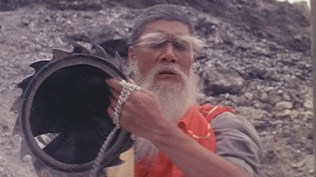 Does it measure up to its rep? This is one of Quentin Tarantino’s favourite movies and a clear influence on his “Kill Bill” series. It’s not slick, but its clunky moves (the ‘one-armed boxer’ moves about as smooth as I do on a Saturday morning), crazy krautrock-influenced soundtrack and bizarre characters make it unforgettable in a genre filled with wacky kung-fu killers. While Wang Yu is a kinda stiff leading man, Lung Kun Lee as the guillotine killer is fascinatingly over-the-top – with facial hair that makes him resemble a rabid woodchuck, a snarling theme song that announces his entrance, and a penchant for throwing explosives around every building he enters, he’s amazing. The entire movie stops dead at one point for a half-hour of so of a bloody, murder-filled martial arts tournament featuring crazily baroque fighters, which basically plays like “Mortal Kombat” invented 20 years earlier. There’s sheer energy to the way this revenge tale is framed that gives it a kick. Perhaps the best way to watch is it like I did, on a low-rent dubbed video which inexplicably switches back to Chinese 5-6 times during the middle of the movie for a few lines here and there. It’s like I was there in the grindhouse drive-in movie theatre parking lot of 1976 this movie was made for.
 How’s it different than I thought: Unlike the other “flying guillotine” movies out there in this sub-sub genre, this is pretty bloodless. In fact, a couple of the marquee decapitations in this flick are like watching an abandoned puppet go down, made funnier because in one scene you can clearly see the “headless man” is a man with his still-attached head stuffed into an extra-large shirt. And we won’t even talk about how the “one-armed boxer” is clearly hiding his arm in his tunic in almost every scene.
Worth seeing? Absolutely. It’s the kind of kung-fu insanity I dreamed about as a lad, and a hidden gem if you haven’t discovered its sloppy charms yet.
 Sometime in the next few months, Elvis Presley will have been dead longer than he’s been alive.
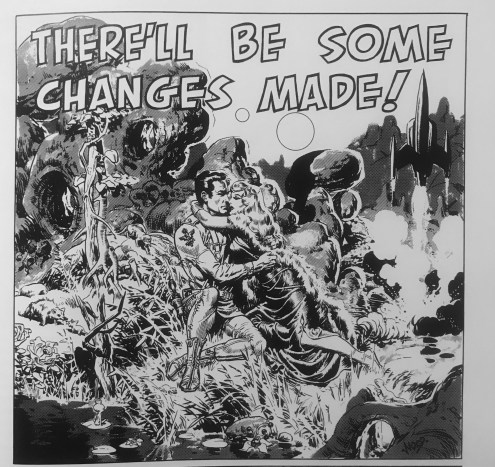
 Who’s my favourite comic book artist of all time?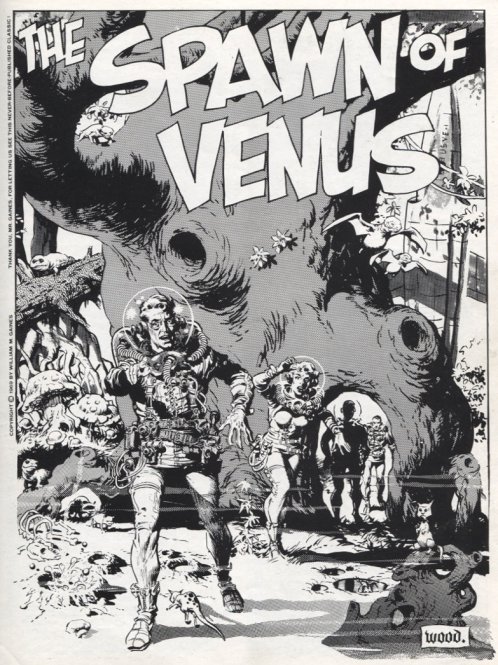

 A good film festival is like a church for its acolytes – a place to find solace and enlightenment, to forget your troubles and to imagine exciting new possibilities in life.
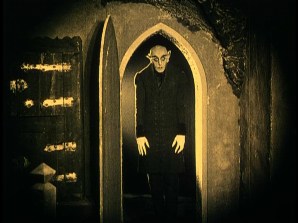 No wonder I can’t stop thinking about movies. It’s a kaleidoscope of cinema every year – in past years I’ve seen grand revivals of Sergio Leone movies, silent classics like “Nosferatu” and Andrei Tarkovsky’s epic, enigmatic Russian epics which demand to be seen on a gaping big screen.
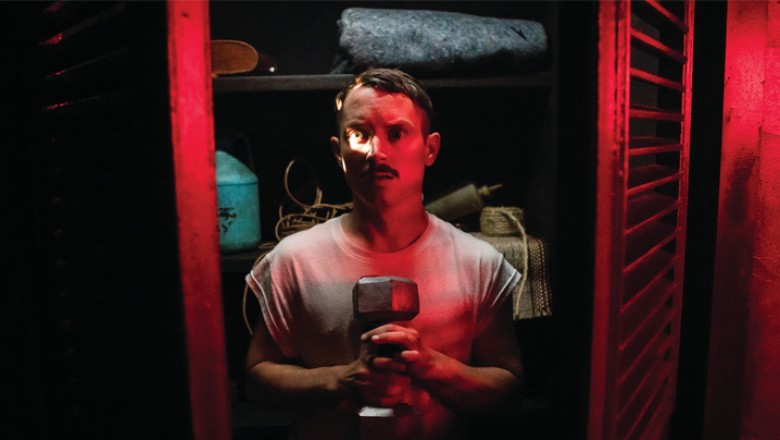 I joined a crowd of hundreds to cringe, scream and laugh last night at the premiere of NZ filmmaker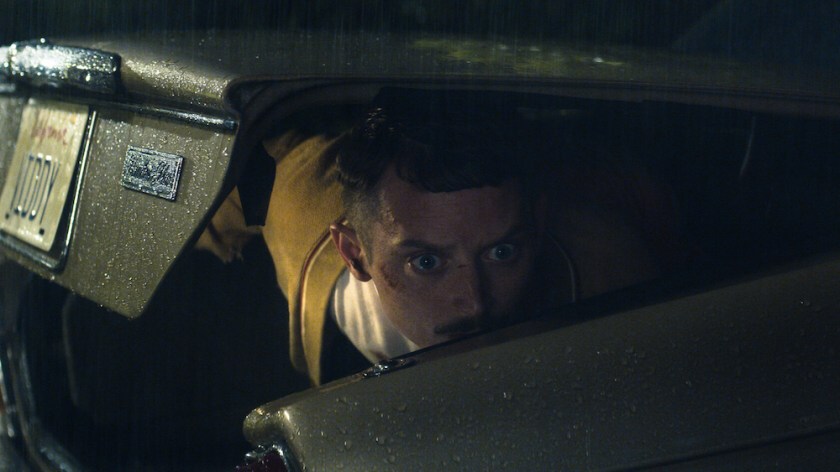
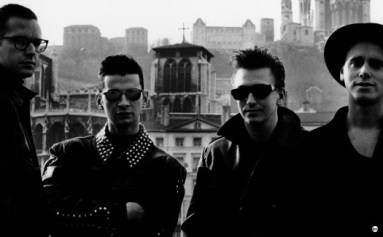 If I ever was to bottle the essence of my late teenage angst circa ages 16-20, it would smell a lot like Depeche Mode.
 Depeche Mode can roughly be broken up into three periods – their lighter “synth pop” phase of the first couple albums, when Erasure’s Vince Clarke was in the band, the “imperial phase” running from roughly “Construction Time Again” to “Ultra” when they pretty much ruled the proto-emo world, and the more muted, less omnipresent latter Mode, after Alan Wilder left the band, which continues pretty much to this day.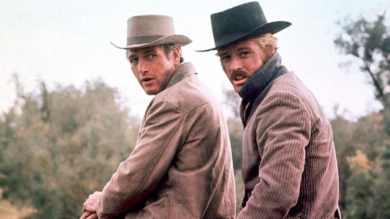
 The movie begins and ends with sepia tones, homaging an imagined western past that America has fetishised for decades. But in between “Butch Cassidy” is a determinedly modern movie, with Joss Whedon-worthy jokes being cracked left and right by Cassidy and the Sundance Kid. Rather than the stoic masculine glares of an Eastwood or John Wayne, you’ve got Paul Newman’s motormouth Butch, whose first act of violence in the film isn’t a grim showdown – it’s kicking someone in the nuts. Meanwhile, Robert Redford’s Sundance Kid is the more traditional hero of the two, but he still shows cracks in his western hero facade.
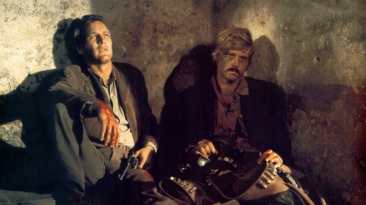 “Butch Cassidy” is one of those pivotal movies of the ‘60s and ‘70s that forever cracked the old of the traditional heroic figure. The reason it still seems so relaxed today is that we’ve been surrounded by Butch and his offspring for years. Long may they ride.
 I hadn’t been to Christchurch in 10 years, and I’m not quite sure how that happened.
 The signs of the 2011 earthquakes are everywhere, far more prevalent than I’d imagined they’d be almost a decade on. Downtown is dotted with vacant lots, cranes constructing new buildings, and the cracked and battered abandoned remains of those structures that haven’t been torn down yet. For every building that seems fine, there’s another that’s a dust-covered shell that looks like something from Chernobyl. The gorgeous old Christchurch Cathedral is a broken and gaping maw, like a dollhouse cross-section where you can see inside a building. Dozens of pigeons still nest in the rafters, visible to all.
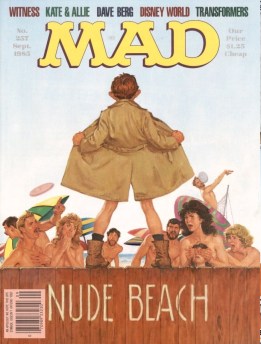 What, me sorry? The rumours are flying fast and furious that
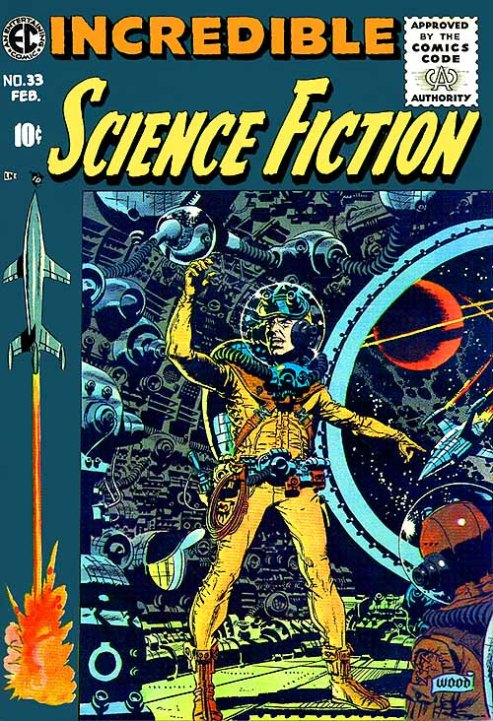
  Soon I also discovered “classic” MAD, the Harvey Kurtzman-edited comic book that the magazine originally began as in 1952. It remained the last gasp of EC Comics itself after the great comics-will-warp-you scare of the ‘50s shut the rest of the line down. I got a massive volume collecting #1-6 of the series, packed with Kurtzman wit, Will Elder’s insanely detailed art, Wally Wood’s gorgeous spacemen and girls, and much more. I still have that somewhat battered gorgeous big volume of MAD’s first 6 issues, along with several other volumes collecting the original series, plus scattered around the house a battered stack of issues dating back to the ‘70s, all well-read and mangled as they should properly be.
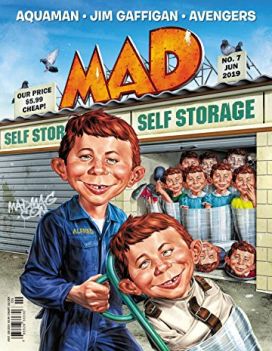 MAD ended its 550-issue run and “relaunched” like pretty much every other long-running comic book publication about a year ago, and the writing was on the wall then. But to be honest, in the age of Trump, isn’t everything feeling a little satirical? When Trump himself made fun of presidential candidate Pete Buttigieg by saying he ‘looked like Alfred E. Neuman,” nobody under 40 really seemed to get the the joke, including the candidate himself.
 Nik Dirga