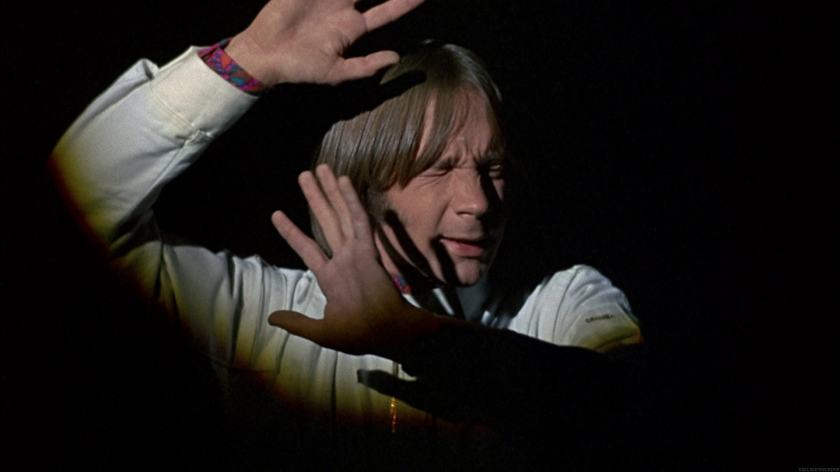
It took me a little while to warm up to The Monkees.
They were the pre-fab, ‘reality TV’ Beatles, or so I thought. But eventually, I cottoned on to their easygoing talents, the goofy charms of the TV show, and some of the most ingratiating pop nuggets of all time.
I’ve seen what’s left of The Monkees twice in the past few years – in 2016, Micky Dolenz and Peter Tork did a terrific Monkees revue here in Auckland, and last weekend, Dolenz and the only other surviving Monkee Mike Nesmith took one last turn through town for another nostalgic blast. (Peter Tork died this past February, sadly.) The 2019 show was good fun, although hampered by muddy sound and the ageing limitations of the surviving band (the 2016 show was a lot more energetic, to be honest). I was still really glad to see Nesmith, 76, who’s been in ailing health, because he’s one of the great unsung songwriters of our time.
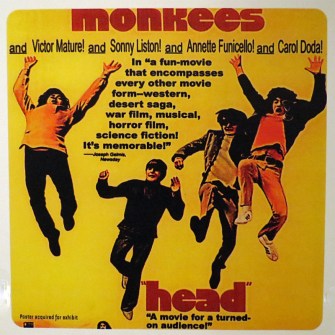 I’ve seen three of the Monkees live now, and I’m happy to have done so. But there was one last Monkee fan hurdle for me to cross: Their mysterious, controversial 1968 movie “Head,” which is either their finest moment or their nadir, depending on who you ask.
I’d never seen it until this week. I expected a dated hippie mess. I had no idea it was a dazzling comic horror movie that would fill me with existential dread.
“Head” is a strange, groundbreaking film that assumes you know who the madcap Monkees are, and then proceeds to tear the ground out from under you. There’s not much of a plot – the movie apes the surreal skit humour of the TV series, but with a jarringly nasty edge. You know you’re not in kiddieville anymore when a song featuring shots of screaming female fans cross-cuts into the infamous images from the execution of a Viet Cong officer – it’s like a Backstreet Boys video suddenly morphing into a Marilyn Manson joint.
I’ve generally a low tolerance for psychedelic storytelling, which tends to really only work if you’re stoned yourself, but the Jack Nicholson script (yes – THAT Jack Nicholson) to “Head” never gets too completely up its own navel to become incoherent. Despite its scattershot approach, “Head” is about a fictional famous band who are trapped on a treadmill of fame in a world they can’t escape. “Head” frequently breaks the fourth wall to show the sets and cameras the Monkees are forced to perform on, but it never gives us the possibility of escape. It’s “meta” before anyone really even knew what that meant. The movie even rewrites the famous theme song:
 Hey, hey, we are The Monkees / You know we love to please / A manufactured image / With no philosophies.
In a world where “Love Island,” “Married At First Sight” and their ilk have overwhelmed commercial TV, it’s still a cutting little blade of a film. It’s a movie that begins with Micky Dolenz’s apparent suicide and ends with the screaming Monkees being stuffed into a featureless black box and driving away into unknown horrors, forced to perform endlessly in a never-ending hell, a scene that is as dark as any ending from a David Lynch film. (Twin Peaks, meet The Monkees!) I can’t imagine how a teenybopper fan of the band would’ve reacted to it in 1968.
“Head” is weird, funny and fragmented, but it’s also a stunning little rebuttal to the goofy hijinks of the Monkees TV series and a warped meditation on the fame machine. It’s a miracle it ever got made, and it’s no surprise it sank like a stone at the box office, who expected “A Hard Day’s Night” and got something like a Monkees Apocalypse Now. More than 50 years on, it’s a stone cold trip.
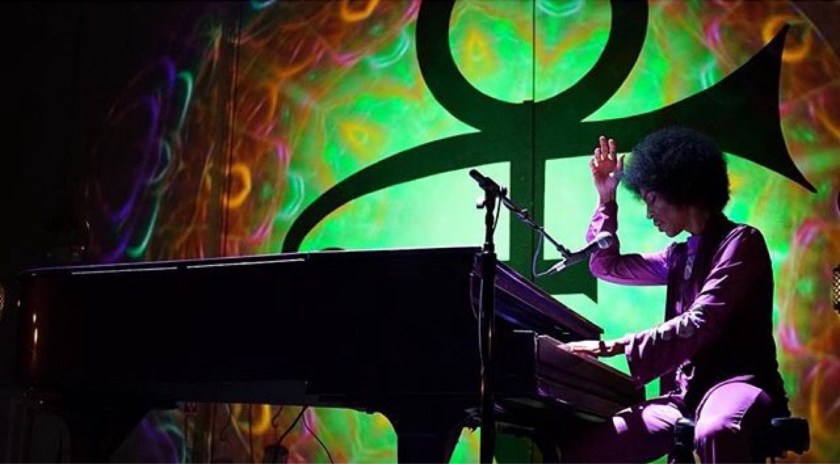 Prince would’ve turned 61 today. I saw him for the first and only time just two months before he died in 2016. I wrote this back then, the morning Prince died, mostly for myself:
 When I heard the Auckland show was Prince solo with a piano and a microphone I was a bit worried – none of those screeching, thunderous guitar solos, no dynamic interplay with the backing band. An “unplugged” Prince conjured up worrying images of a Las Vegas-style revue with the Purple One sipping on sparkling water and turning every song into a Liberace number.
 The Prince on stage at Aotea Centre was at the top of his game, a master at playing the crowd. But he was having FUN as well, something that’s hard to find at that lofty level of fame. He threw a dash of “Charlie Brown” theme music into “Little Red Corvette,” and it was like watching a master painter at work, scribbling tiny doodles in the margins. He recast all the classics, turning “Purple Rain” into a gospel revival, “Kiss” into a funky dance party. More than 30 years into his career, it felt like a victory lap.
 I have a bizarre fascination with the bad movies of
 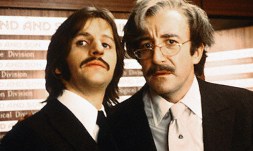 I’ve been making my way as a kind of punishing completist chore through the most obscure of Sellers’ oeuvre, movies that are barely remembered today. Sellers was a difficult, demon-haunted man, whose talent was crippled by bad health and serious psychological issues (there’s the famous quote “There is no me. I do not exist. There used to be a me, but I had it surgically removed,” which more than anything sums up the man).
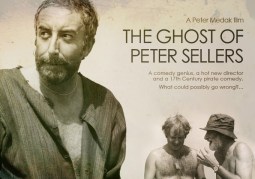 And I am absolutely dying to see the new documentary
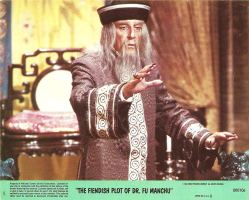 There’s a kernel of something golden in even his worst movies. His Fu Manchu is objectively a racist joke played far too long, but there’s a strange sadness Sellers summons up between the lame puns in his portrayal of an immortal villain.
 I love Godzilla, because when I’m in the mood, you just want to watch a giant lizard smash the hell out of everything around you. Another big-budget Godzilla movie opened this weekend, and it’s gotten the usual mixed reviews from people who don’t really get the point of a Godzilla movie.
 My first Godzilla movie was a battered VHS tape of 1963’s “King Kong Vs. Godzilla”, and to this day it’s one of my desert island flicks. It’s absurd – this Kong looks more like a squashed and mangy grizzly bear than a gorilla, really – but so much damned fun as this duo wrestle and tumble around Japan.
 For those who think the current Godzilla: King of the Monsters is wacky, check out 1991’s utterly unhinged “Godzilla Vs. King Ghidorah,” which features time-travel, a ridiculous “Terminator” riff and the spectacle of Mecha-Ghidorah. For those who want something a little deeper, 2016’s “Shin Godzilla” is a strange satire of Japanese bureaucracy mixed up with some of the most awe-inspiring Godzilla scenes ever. For those who just remember Godzilla wrestling other rubber-suited goofballs on sound stages, 1972’s “Godzilla Vs Gigan” is the kaiju-fest you’ve been hunting for, and Gigan, with his chicken beak, massive talons and inexplicable buzzsaw blade sticking out of the middle of his chest, is peak kaiju craziness.
 “I yearn to rely on a higher will. I fear what I am capable of in its absence.” – E.B. Farnum
 It wasn’t for nothing that one of his best albums is called A Man Called Destruction. He was the spirit of punk rock incarnated in a teen crooner’s body.
 The best science fiction holds up a mirror to the world we live in. “Alien Nation” was never quite a household name, but the brief cult sci-fi franchise of the late ‘80s still holds up today.
 Fortunately, that wasn’t the end for “Alien Nation,” which debuted as a series on Fox TV in September 1989. It’s in the short-lived TV series where “Alien Nation” really blossomed, spearheaded by Kenneth Johnson, creator of another great ’80s cult sci-fi series, “V.”
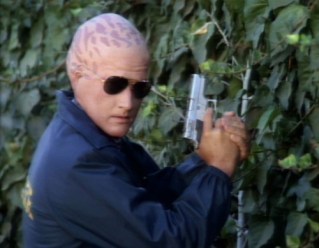 The story carries on with the same odd-couple detective duo from the movie, but recast and given more satisfying depth. Gary Graham’s Detective Sikes is all ’80s mullet and brash trigger-happy cop cliches at first, but the character becomes convincingly more sympathetic and layered as the series progresses. Eric Pierpoint is excellent as Francisco, who balances personal courage with frequent frustrations over the racism he encounters and the culture he’s left behind. The story of his family trying to fit in – his wife, teenage son and daughter – is often more fascinating than the TV show’s cop mystery of the week storyline.
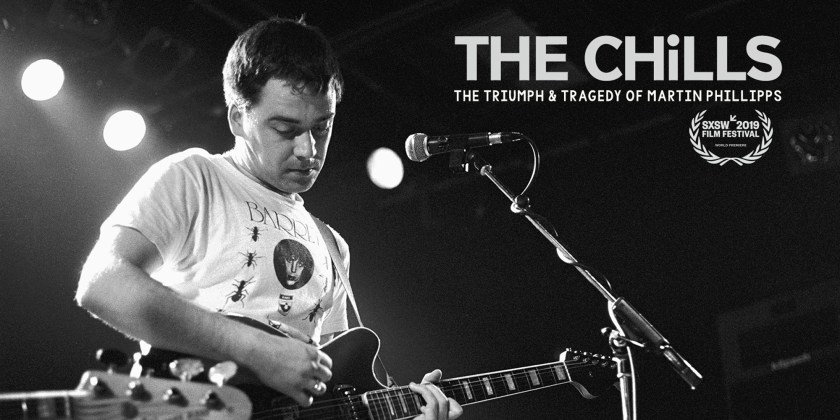 It all started with a few mixtapes.
 My first exposure to
  I’m a sucker for a good presidential biography, even as I loathe the orange troll currently occupying the White House. There’s something about the life sagas of America’s leaders that fascinates me, from the legends like Lincoln or Roosevelt to the sad sacks like James Buchanan.
 As a researcher and a journalist, Caro has few peers. The man is a human vacuum cleaner, sucking up every single factoid possible to craft fully rounded tales – he famously moved to the Hill Country of Texas with his wife to research LBJ’s boyhood years, and The Path To Power shows the painstaking time he took in its vibrant invocation of a long-gone era of hardened farmers and struggling families in a hostile land.
 Caro takes the time to get it right, and while 5 volumes and 5000 or so pages about one man’s life may seem excessive, other, shorter biographies I’ve read about LBJ seem like Cliff’s notes skimming over the surface compared to the richness of this work.
 So when soul legend Mavis Staples came to town, I made sure to be there because I didn’t want to miss what might be my only chance to see her way down here in NZ.
 Today, Mavis Staples is a few months away from 80 years old, she’s barely five feet tall, and she was obviously nursing a sore throat, but she still tore the roof off the Civic Theatre in Auckland with her soaring voice and inspirational message.
 Opening for Mavis was the wonderful
  Nik Dirga