“You’re afraid to dive into the plasma pool, aren’t you? You’re afraid to be destroyed and recreated, aren’t you?” – Seth Brundle
It’s gory, grotesque and disturbing, yet in my personal time capsule of favourite movies of all time, Jeff Goldblum and David Cronenberg’s “The Fly” sticks with me.
Despite having watched it more than a dozen times since 1986, I’d never seen it on the big screen until the other night, when I caught a gorgeous 35mm screening. There’s nothing quite like seeing “The Fly” on a big screen, with an audience screaming along in synchronicity.
Like most of Cronenberg’s movies, “The Fly” hasn’t dated at its core, except for Goldblum and Geena Davis’ big ‘80s hair. The gore is still horrifying, the emotions still tight, and the movie’s fundamental core of a man grasping for knowledge and being burned by its power is as old as Icarus.
It’s a horror movie, with some of the most intensely disturbing mutations and goop of Cronenberg’s visceral career, but it’s also a doomed love story, brought to life by Goldblum and Davis’ immense chemistry (they were a couple at the time).
When I first saw “The Fly,” it was on a battered VHS dub tape someone made for me back in high school. I watched that tape so many times that whenever I see the movie now I expect to see the same tracking glitches the tape had. It was my first Cronenberg, which will screw you up for life.

“I’m saying I’m an insect… who dreamt he was a man… and loved it. But now the insect is awake.” – Seth Brundle
There’s a speech Goldblum gives towards the end, covered in latex and deformed, about insect politics. It and the movie as a whole are Goldblum’s finest hour as an actor.
Everybody loves Jeff Goldblum these days, and heck, I do too, but he’s become kind of a cartoony eccentric version of himself. “The Fly” shows what happens when Goldblum actually acts instead of quirks, and it’s still revelatory to watch Seth Brundle’s horrible transformation and mutations.
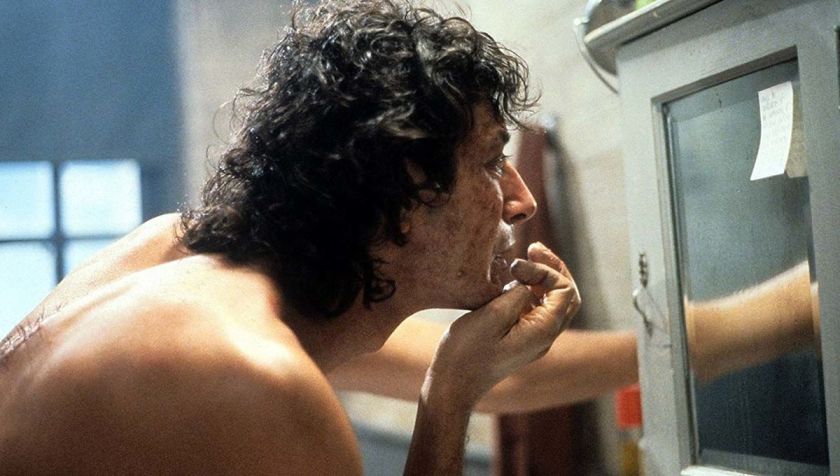
As a teenager, I saw a lot of myself in Seth Brundle’s horrific transformation into a human/fly hybrid. Golbum’s face breaks out, his body changes, he doesn’t recognise himself when he looks in the mirror. That’s every teenager in the world for you.
I see it now, I see darker metaphors – as a middle-aged dude, your body continues changing, not always in great ways. At one point in the movie Goldblum worries that he’s developed some hideous form of cancer (spoiler: it’s way worse than that). Now I see “The Fly” as a parable about anyone who’s ever felt trapped in a body that’s a stranger to them.
“I’ll bet you think that you woke me up about the flesh, don’t you? But you only know society’s straight line about the flesh. You can’t penetrate beyond society’s sick, gray, fear of the flesh.” – Seth Brundle

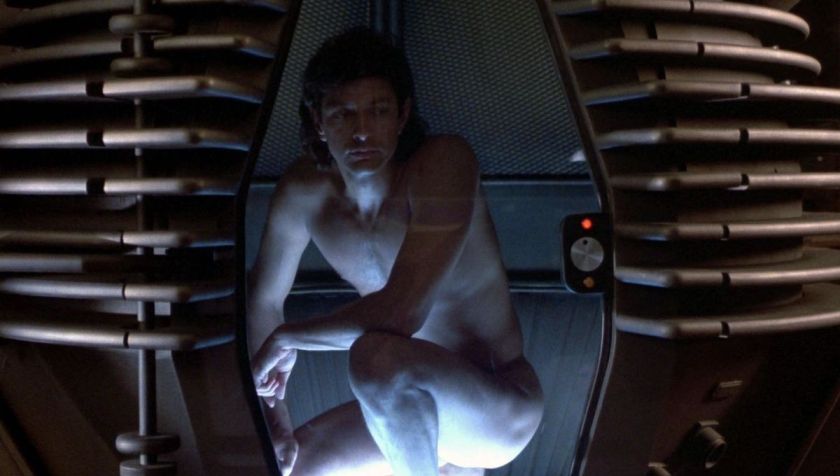
I’ve had my share of health woes the last few years and I have to admit that watching Goldblum go from a dazzling shirtless golden god to a deteriorating, disintegrating wreck of a man hits home hard. We are all transforming, every day, in ways big and small. Sometimes it’s wonderful. Sometimes it’s horrible. The question is how we endure it.
“The Fly” is still a movie I return to every few years, and each time I see something a little different in it. It’s dark and down, sure, but yet I also feel a weird glimmer of optimism in parts of it too. We never stop wanting to better ourselves, no matter the cost. We are all swimming in the plasma pool.
“It wants to… turn me into something else. That’s not too terrible is it? Most people would give anything to be turned into something else.” – Seth Brundle
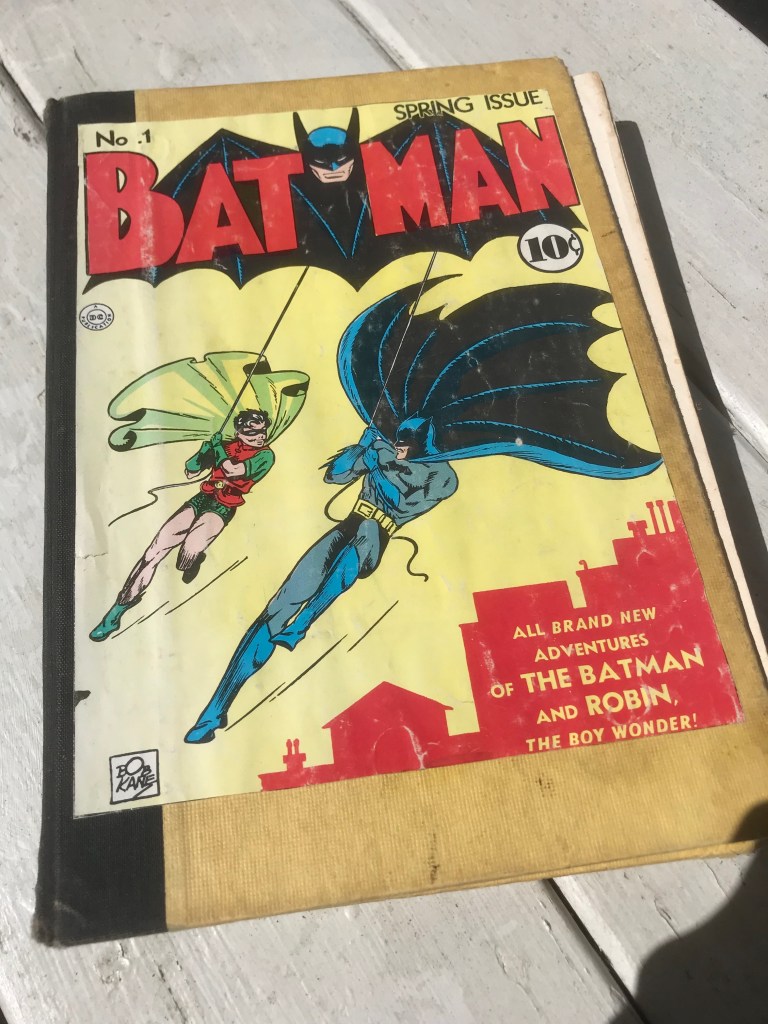
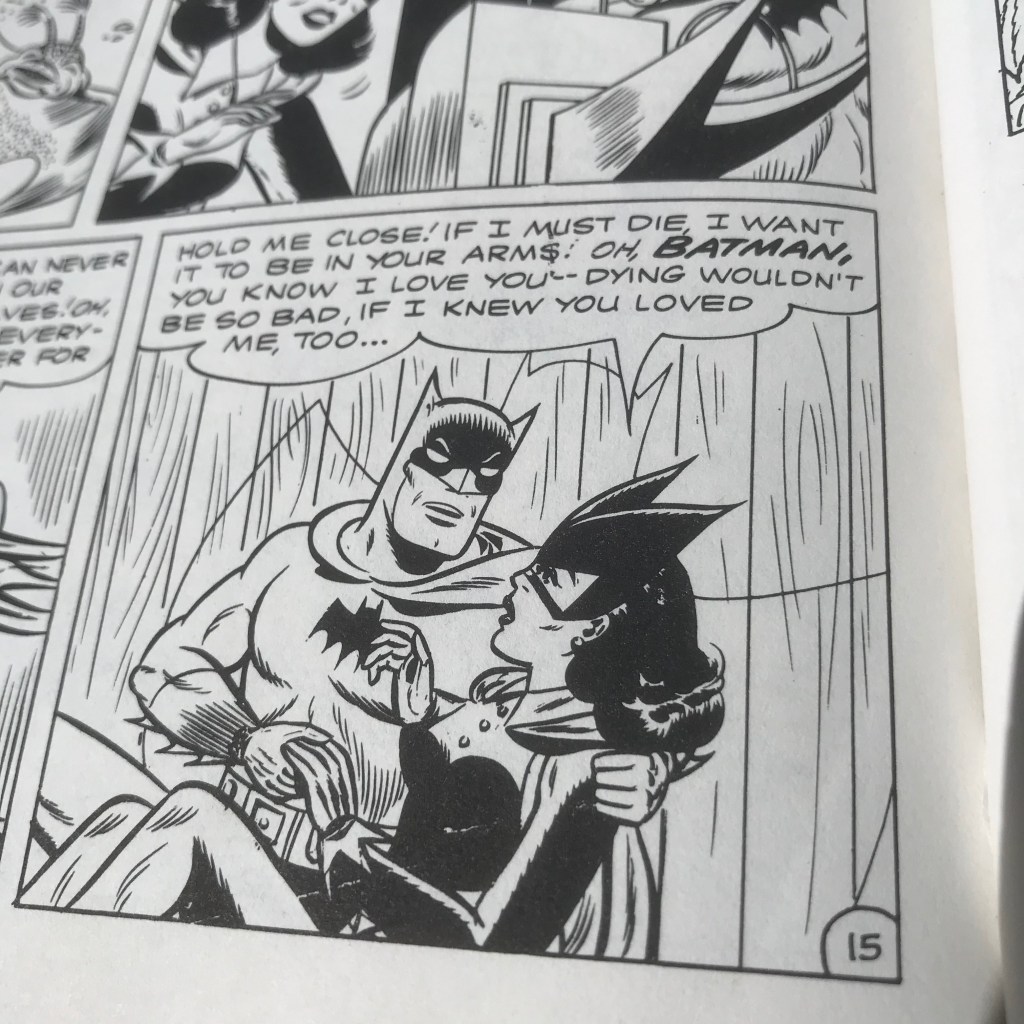
I’ve been hunting for the Batman issue above for a long time. It’s perhaps one of the best comic book covers ever – how can you NOT want to read the story inside? (Spoiler: It’s not actually all that great, but how could it measure up to that cover?) As a comic book cover alone, it’s a work of art.
We live in weird times, when comic books dominate pop culture and box office receipts, yet the humble printed item itself still struggles for sales. They’re still out there, and I hope they’ll be out there a long time, but we’re a long way from when an X-Men comic sold 8 million issues in the ‘90s. But great comic book covers have pretty much died as an art form, despite their still being a lot of very good comic books published. It’s like everyone stopped caring about the covers. Maybe I’m just a design nut, but to me the cover is an integral part of the whole comics package.
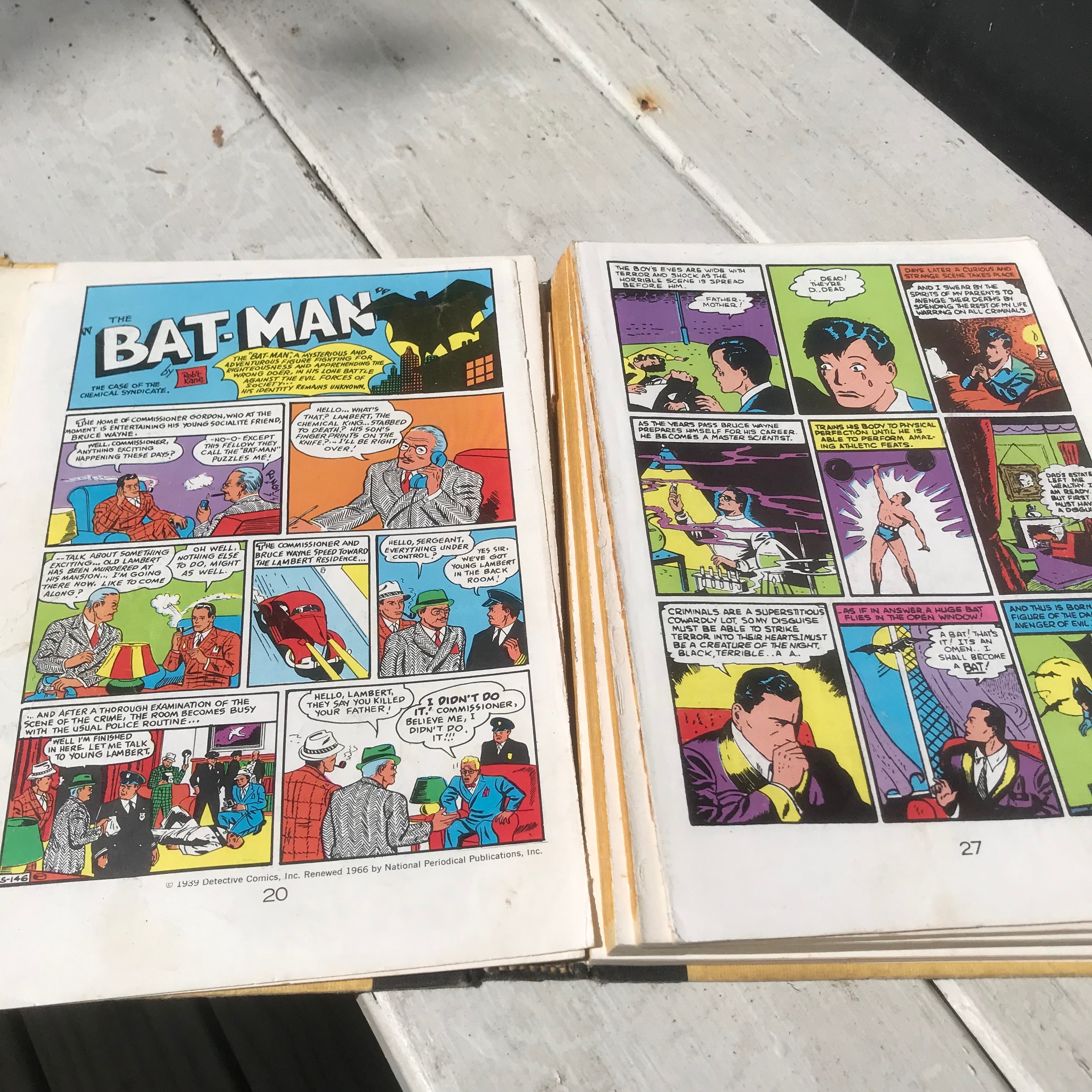
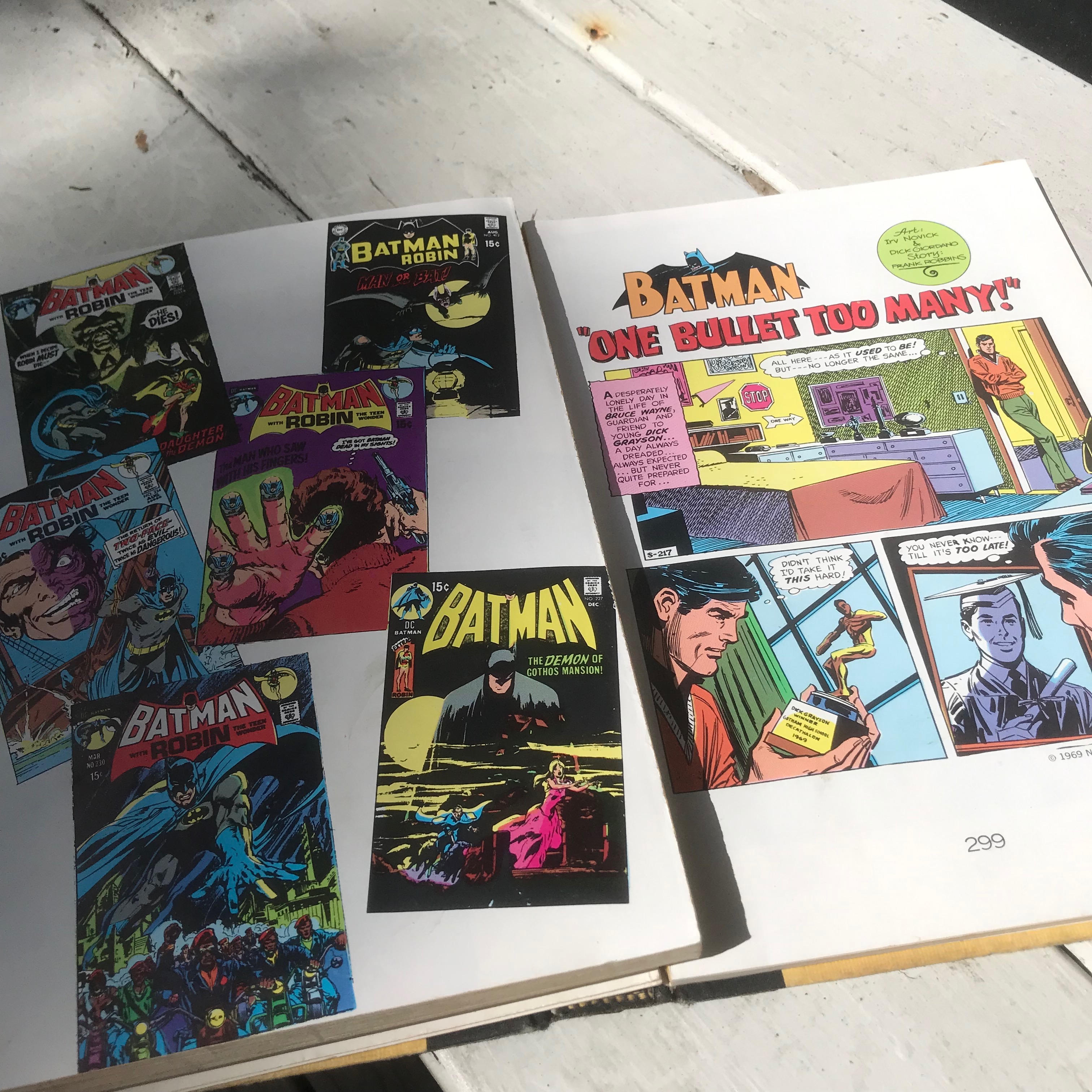
I don’t know why comic book covers have gotten so boring, really, but Christ almighty they sure have. Instead the kind of dazzling images you see here from the 1960s-1980s, sometime around 1999 comic book companies settled into publishing bland generic pin-up shots and chaotic battle scenes which vanish from your mind soon as you see them.
Comic books are at their heart a unique form of storytelling that combines words and pictures and have created some of the greatest fiction of the last century. There’s a reason Avengers movies and Aquaman movies rake in the big bucks, because there’s an iconic, mythological heft to these characters.
It takes a lot to shush up an Auckland Saturday night crowd with a single look. But
I’ve been to shows at the Powerstation before for similarly stark, intimate shows and left annoyed by the singer being overwhelmed by the crash of beer bottles and the yammering of the audience. That wasn’t a problem tonight. On a cold August night, Harding felt like the hottest thing in town, something new and old at the same time blooming with an energy all its own. She closed with a magnificent, aching cover of Gerry Rafferty’s “Right Down The Line” and terrific new song, “Old Peel,” that left me with no doubt about her future.
I’m a fan of a lot of things. But “Star Wars” is complicated for me.
I watched “The Last Jedi” again recently, and it’s the rare post-1983 “Star Wars” movie that actually gets better on each viewing. It goes in hard, unexpected places and objectively speaking is the most beautiful movie of the entire series to date, with director Rian Johnson composing painterly, stunning vistas that remind me of why I fell in love with the alien skies of Tatooine and Bespin in the first place. The cast is great (sorry, keyboard warriors) and it’s honestly the most surprising “Star Wars” movie since “Empire Strikes Back.”

What is it: It’s not exactly a household name, but in certain circles, it’s the holy bible of cheesy kung-fu schlock.
Does it measure up to its rep? This is
How’s it different than I thought: Unlike the
Sometime in the next few months, Elvis Presley will have been dead longer than he’s been alive.
Who’s my favourite comic book artist of all time?


A good film festival is like a church for its acolytes – a place to find solace and enlightenment, to forget your troubles and to imagine exciting new possibilities in life.
No wonder I can’t stop thinking about movies. It’s a kaleidoscope of cinema every year – in past years I’ve seen grand revivals of Sergio Leone movies, silent classics like “Nosferatu” and Andrei Tarkovsky’s epic, enigmatic Russian epics which demand to be seen on a gaping big screen.
I joined a crowd of hundreds to cringe, scream and laugh last night at the premiere of NZ filmmaker 
If I ever was to bottle the essence of my late teenage angst circa ages 16-20, it would smell a lot like Depeche Mode.
Depeche Mode can roughly be broken up into three periods – their lighter “synth pop” phase of the first couple albums, when Erasure’s Vince Clarke was in the band, the “imperial phase” running from roughly “Construction Time Again” to “Ultra” when they pretty much ruled the proto-emo world, and the more muted, less omnipresent latter Mode, after Alan Wilder left the band, which continues pretty much to this day.