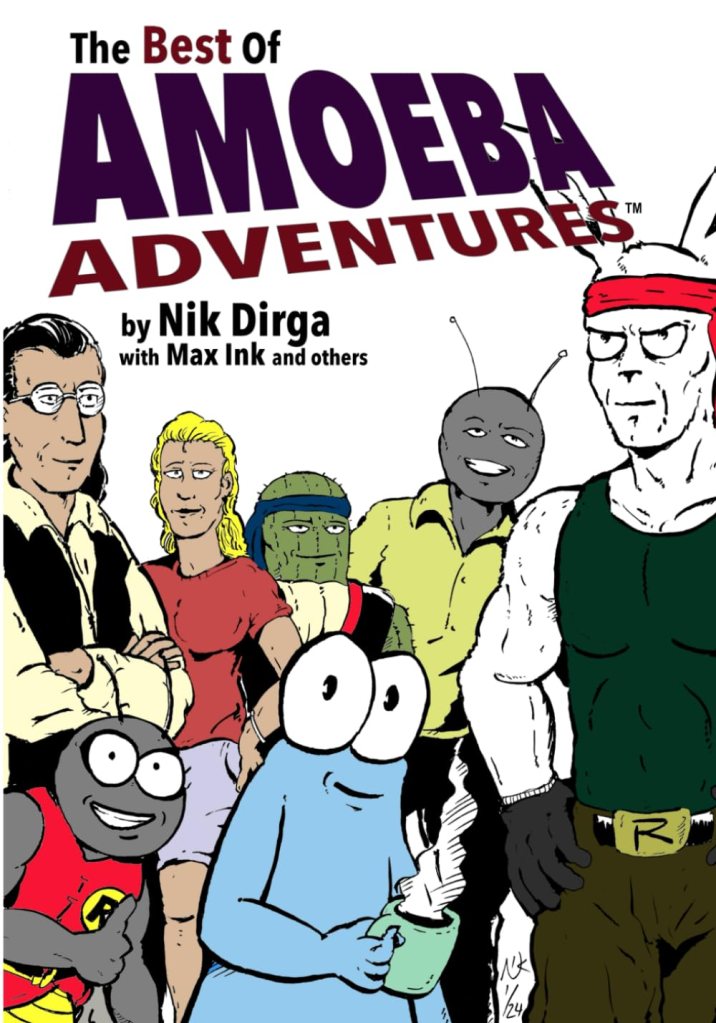
Here’s what I did over my Christmas vacation: I’m happy to announce the release of a new book containing nearly 350 pages of classic Prometheus the Protoplasm stories from the 1990s, THE BEST OF AMOEBA ADVENTURES!
Back in print for the first time in decades, it’s my curated pick of more than a dozen of the greatest Amoeba Adventures stories dating from comics I did in high school all the way up to the award-winning small press era!
It’s available right NOW worldwide over on Amazon in a gorgeous paperback for a mere US$19.99, and for the fancier folks there’s a hardcover variant for US$29.99. An e-book will be available soon.
Nik Dirga’s Amoeba Adventures was one of the most critically praised small press comics of the 1990s. Now, for the first time, the best of long out-of-print stories by Nik with additional art by Max Ink are collected along with bonus rarities and more, including guest pin-ups by Dave Sim, Sergio Aragones, Matt Feazell and Stan Sakai. Dive on into the story of Prometheus the Protoplasm, Rambunny, Spif, Ninja Ant and Karate Kactus, and meet some of the strangest heroes and villains of all time as they battle toxic mushrooms, gorilla gangsters, time travel to the dinosaur age and even appear on David Letterman! Collecting material from Amoeba Adventures #1, 4, 5, 8, 9, 11-13, 16, 17, 21, 22, 27, Prometheus The Protoplasm #4, Prometheus: Silent Storm; Prometheus Saves The Earth and Amoeba Adventures Fifth Anniversary Special.
Buy it now, buy two and invest in the future, buy three and pay for my mortgage!
It’s a new year, a fresh start, a hope this year is maybe a bit less suck than the last one! I’ve complained enough about the year that was, so instead let me dive back to look at ten musical, cinematic or literary experiences that rocked my world in ’23:
Go back to those Gold Soundz: I didn’t check out a lot of live music last year, but what I did was superb, led by the old guard showing they can still blast with the best of them. Indie icons Pavement put on a superb reunion show that left me humming the chorus to “Gold Soundz” for weeks, while I finally saw punk/post-punk legends The Damned for the first time on the back of their excellent Darkadelic album, and they melted my face. And my ears. I don’t quite know if my hearing has ever been the same.
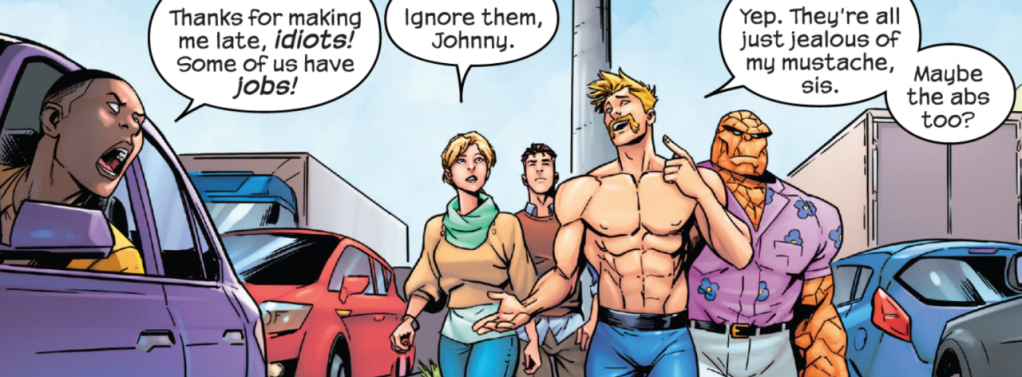
Tonight, a blind woman and a monster came to town: I’ve been getting fewer ongoing monthly comic series these days, but one that’s on my must list is Ryan North’s brainy, witty take on Marvel Comics’ Fantastic Four, which is inventive science-bro action combined with the family heart that is key to the FF. It’s just darned fun, good comics that (so far) don’t have to be part of some sprawling pointless multi-comic company crossover to feel epic. It’s the best the Fantastic Four has been in ages.
A long long time ago, when I was a little chick: I wrote a whole story recently asking local book lovers for their favourite New Zealand books they read and it reminded me of what an excellent year it was for NZ fiction, led by Eleanor Catton’s wickedly fun satire Birnam Wood and a two-fer by Catherine Chidgey – The Axeman’s Carnival, an amazing novel about a bird who becomes a social media celebrity, and the nearly as good teenage angst thriller Pet. Go team NZ!
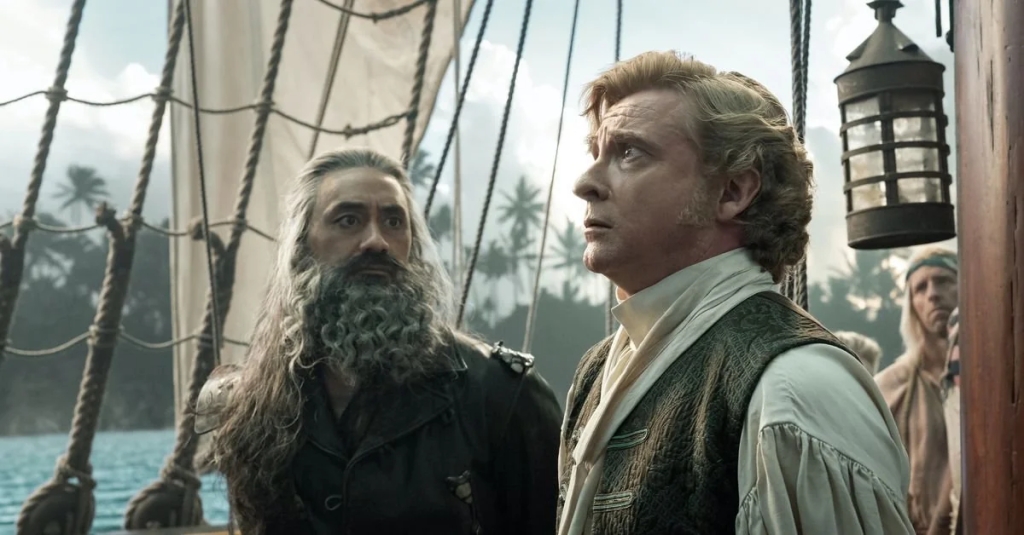
You don’t know the first thing about piracy, do you?: There was a lot of great TV in ’23 – Reservation Dogs, that banger final Succession run, Poker Face, and I’m only just now discovering how fantastic The Bear is – but the one that sticks with me the most is Taika Waititi’s unexpected gay pirate comedy Our Flag Means Death, which in its NZ-filmed second season truly transformed into a delightfully sweet romance mixed with swashbuckling pirate fun. A gem.
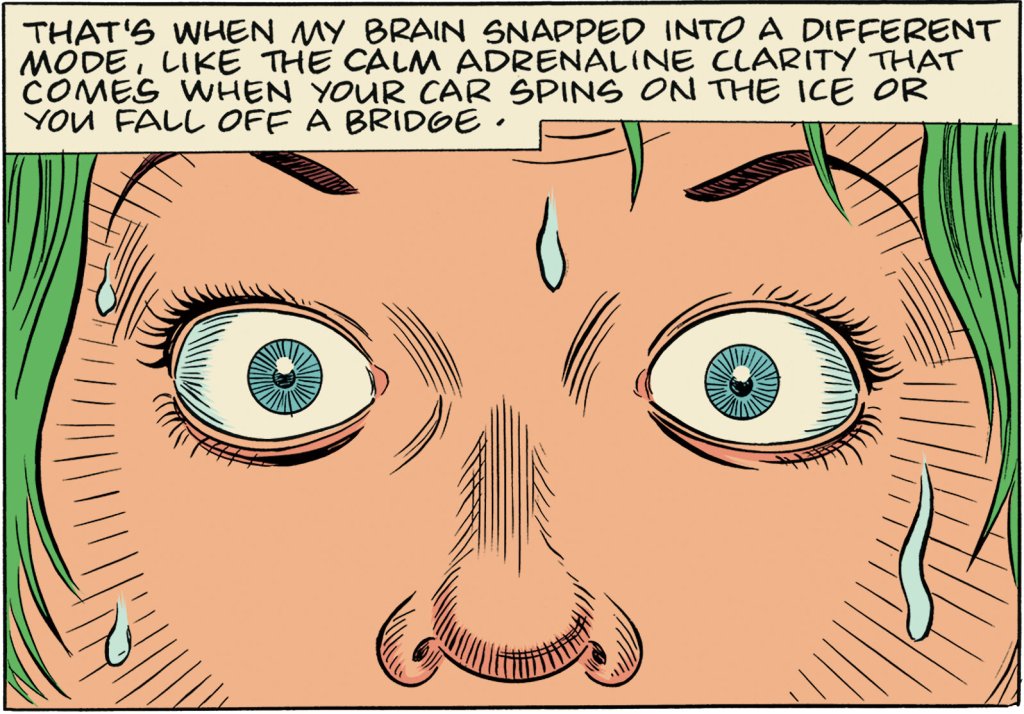
And in an instant, I know I’ve made a terrible mistake: Daniel Clowes has been blowing my mind since long ago when I first stumbled on an issue of Eightball. His comics are less prolific than they once were but they’re worth the wait, with this year’s graphic novel Monica (art at top of post) quite possibly his masterpiece. A sweeping story of one woman’s exploration of her own mysterious past, it’s a technically dazzling (those colours!), assured and layered work that you’ll keep churning over in your head for days afterwards. It’s not a speed-read like many modern comics, but an experience that might just leave you feeling like the world is a slightly different place when you’re done.
All my life I’m looking for the magic: Yeah, I know, physical media is dying, bla bla blah, but while I’m definitely a bit more choosy about what I buy in the age of internet abundance, I can’t pass up a good mix, and UK record label Cherry Red constantly is putting out fantastic CD box sets of eclectic punk rock from 1977-1982, power pop from the UK and US and ’80 synthpop that spans my mid-1970s to late-80s sweet spot. Sure, you can find a Spotify playlist, but I enjoy the curated, elegant physicality of these great boxes and the buried treasure they contain. Each set is hours and hours of gems waiting to be rediscovered and if I close my eyes I can almost pretend it’s coming from a cassette mix tape as I drive my old Volkswagen Rabbit around town.
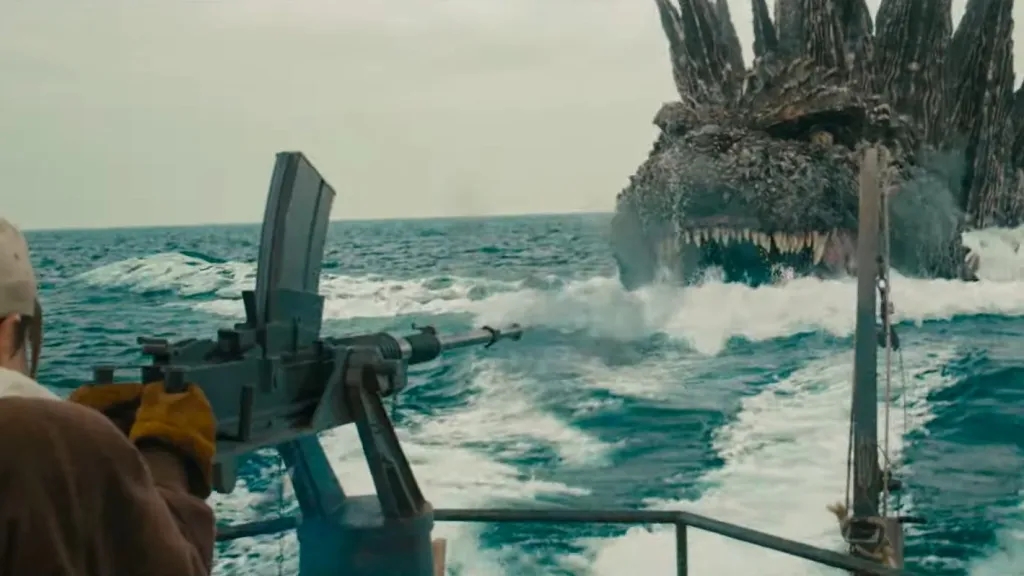
That monster … will never forgive us: This was the year comic-book movies stumbled and became just as cliched as the Will Smith and Tom Cruise action movies they replaced. But look across the seas to Japan and some of the year’s best blockbusters came from there, with kaiju instead of capes in the terrifically oddball Shin Ultraman and the bizarre Shin Kamen Rider and best of all, the monumental reimagining of the biggest beast of all with Godzilla: Minus One. There were decent superhero moments this year, but not one of them compared to the kinetic thrill of watching Ultraman or Godzilla stomp on buildings with fresh energy.
Dear Allen, thanks for your letters. I was glad to hear from you: William S. Burroughs was not a decent man. A drug addict, the accidental murderer of his first wife, homosexual in a repressed era, his twisted, tormented writings are decidedly not for everyone. And yet, and yet. This year I found myself once again reading Burroughs’ books like The Soft Machine and turning to his nonfiction writings, particularly his collected letters, because the nonfiction shows so well what went into his far-out fiction. The Letters of William S. Burroughs 1945-1959 fascinated me because it revealed the real person behind the sneering, sinister king of debauchery Burroughs became. It’s extraordinary to read how human and lonely Burroughs is in these letters, wrestling with unrequited love, addiction and ‘normal’ society, and his determination to find new shadowlands behind the world we live in. A stoic mask soon settled over his public face, but here we learn how he got there.
To be honest, when I found out the patriarchy wasn’t just about horses, I lost interest: “Barbenheimer” might have been a marketing technique gone viral, but it was a heck of a lot of fun and rewarding to see two very good movies leading the summer box office and showing up the latest dusty, unnecessary franchise-extender Indiana Jones sequels and the like. Barbie was a huge hit, but it was also just subversive enough to charm all but the most cynical, while Oppenheimer was Christopher Nolan’s best movie yet led by a dazzling Cillian Murphy and sequences on the iMAX screen downtown that melted my face nearly as much as a Damned concert.
The meat goes into the oven: This one’s a bit self-indulgent, but I had a very good year stretching my feature writing muscles this year in my paying gigs, between several book reviews for the NZ Listener magazine and writing for Radio New Zealand about stuff I love like barbecue restaurants,fans of weird movies, used book fairs, film festivals and more. Turn your passions into words, folks, and let’s all have a fine 2024!
What is it? …So, what makes a bad movie? Is it ineptitude, or arrogance, or both? Marvel’s Fantastic Four comics have now been adapted disappointingly into movies four times – a very, very low-budget never-officially-released 1994 Roger Corman schlock-fest, two mildly successful family-friendly 2000s movies by Tim Story, and an outright bomb in the dark, dreary 2015 Josh Trank film. It shouldn’t be this hard to adapt one of the great superhero comics to cinema, but somehow, it keeps missing the mark.
The Fantastic Four are a family – Reed Richards and his (eventually) wife Sue Storm, fiery Johnny Storm and tragic Ben Grimm, the Thing. They’re adventurers and explorers and Stan Lee, Jack Kirby, John Byrne, Jonathan Hickman, Mark Waid and others have written countless great comics starring them.
Yet Fantastic Four 2015is a joyless slog, in love with its own seriousness in a story that should be about wonder and adventure, more Indiana Jones than X-Men. The movie spends far too much of its runtime setting up young genius Reed Richards (an uncertain Miles Teller) and childhood pal Ben Grimm (woefully miscast Jamie Bell) getting involved in a secret cosmic teleportation experiment with scientist Sue Storm (Kate Mara, serious and dull), her daredevil brother Johnny Storm (Michael B. Jordan, showing little of the charisma he brought to Creed and Black Panther) and Victor Von Doom as a spoiled, egotistical scientist (forgettably generic Toby Kebbell). The experiment changes them all, giving them strange powers in a movie that seems determined to play that as Cronebergian body horror, they end up fighting Victor Von Doom who’s gone evil for… reasons, and then it’s the end.
Like far too many superhero movies it’s all about setting up for imaginary sequels, and Trank plays it all stonefaced straight. Tim Story’s 2005 and 2007 Fantastic Four movies were kinda clumsy and cheap, but one thing they got right was the essential light touch a FF story needs, the banter and the camaraderie. Not a single character in Fantastic Four 2015 is really that likeable.
A fifth Fantastic Four movie, finally meant to be part of the Marvel Cinematic Universe proper, is set to arrive in 2025. Will it break the curse?
Why I never saw it. Look, as a wee young boy superhero movies were few and far between, and I gamely saw flops like Howard The Duck and Superman IV: The Quest for Peace in theatres. But in the last 20 years we’ve been deluged with comic content and when a movie bombs as hard as FF15 did, you know, you tend to skip it until you get bored enough one night. Bad movies have their own twisted charm, and I figured it was time to see if this was as bad as everyone said it was. (Should I do Morbius next, or can my heart take it?)
Does it measure up to its rep? An anemic 9% positive reviews on Rotten Tomatoes. A 1.3 star rating out of 5 on Letterboxd. A (rather too generous) 4.3/10 on IMDB. Yep, I’d say it measures up to those. It is indeed as bad as everyone said it was.
What depresses most about Fantastic Four 2015, besides the utter miscasting of pretty much everybody involved and its relentless dour tone, is how so many wrong choices by Trank show he fails to get what has made the Fantastic Four work for 60 years. The first misstep was relying on the 2000s “reboot” comic Ultimate Fantastic Four as your source material. It’s one of those peak “edgy” decompressed reimagining of beloved characters with then-hip lingo that ages like cheese left out in the sun, and far inferior to the energetic original Lee & Kirby Marvel Comics.
What makes a bad movie is the sense the filmmakers don’t care about their story or their characters. Trank has the team as brooding teenagers, manipulated by the sinister government and missing the spirit of plucky individualism that drove Lee and Kirby’s original comics. Make Ben Grimm’s mutated Thing, famous for his gritty wit and gruff everyman charm in the comics, into a sullen government assassin? Also make the Thing disturbingly naked instead of wearing his trademark blue trunks? Check. Have Sue Storm be an adopted orphan from Kosovo for no particular reason? Check! And once again mangle the character of Doctor Doom, one of comics’ most revered villains, turning him into a whiny loser mutated by cosmic energy and quite possibly the most visually ugly interpretation of a comics villain on film outside of Zach Snyder’s Justice League? Double check! (Doom has now fallen short in FOUR movies, which has to be some kind of record in a world where people playing the Joker have won two Oscars.)
Worth seeing? We live in an age where third-tier comic book characters like Groot, Blue Beetle, She-Hulk and Agatha Harkness are all well-known. Yet, somehow, film still hasn’t quite cracked the secret of how to adapt one of the greatest comics of all time to film. It’s no wonder it took me eight years to get around to this one. By far the worst of four cinematic attempts at the quartet, Josh Trank’s Fantastic Four is exactly as misguided and depressing as the reviews back in 2015 made it sound. If you’re a fan of the comic, like I am, Fantastic Four 2015 feels like an intentional insult. At least we’ll always have the comics, eh? Flame on!
The question is fraught with peril for any comics nerd: Who’s your favourite superhero?
I’ve clearly got too much time on my hands because I think about this a lot. One of the first comics I ever remember reading was Amazing Spider-Man #200 and for years Spider-Man, web-swinging worrywart, was my choice. He was a geeky teenager and then a harried student! I identified!
For a brief while I succumbed to the bristly charms of mutant Wolverine, before overexposure and dire 1990s comics ended that affair. Then for a long time, I’d go with Batman, because pound for pound I think he’s probably had the most great stories written about him of any superhero.
There’s others I adore, of course, like the endless duelling personalities of the Hulk, angst-ridden Daredevil, lumpy everyman The Thing.
Yet, these days, when I think of the superhero I dig the most, it’s always the most basic – Superman, the Man of Steel. He may be uncool compared to edgy Punishers and Spawns but honestly, the older I get, the more I like his fundamental decency.
I love lots of superheroes, but when it comes down to it, the one I’d really like to see in our troubled old world, the role model – well, Superman was the first for a reason. He’s also still kind of the best. I’m old now, and superheroes don’t just have to be cool to me. They have to actually be kind of super, too.
Joe Matt died this week, and he was one of the most fearless and hilarious autobiographical cartoonists of my lifetime.
He was the first of what I think of as the great indie comics creator class of the 1990s to leave us, a group that included the rubbery Gen-X angst of Peter Bagge, the precise skill of Daniel Clowes, the intense surrealism of Chester Brown, the unblinking female gaze of Roberta Gregory and Julie Doucet, the spiralling weirdness and immense talent of Dave Sim and many more.
Joe Matt was unafraid to make himself look like an utter asshole, to show all his selfishness and cruelty and self-loathing in his immaculately drawn comics. He wrote himself – or “cartoon Joe” – as a porn addict, hopeless miser and misanthrope, yet his clean, crisp cartooning and willingness to mock himself made it all go down smoothly.
I’ve dabbled in a handful of autobiographical comics and quite a few essays over the years and it’s bloody hard work, to be truly honest, to put that much of yourself on a page.
There were a hundred inferior imitators putting out autobiographical comics in the 1990s and beyond, but Matt, with his bold cartoon lines and comic timing, always stood out.
But then, Joe stopped.
He debuted in the late 1980s with a prolific collection of candid diary comics that showed his rapid improvement in style, but there were just 14 issues of his solo comic Peepshow from 1991 to 2006. Since then, other than sketches and brief strips printed elsewhere, nothing. He wasn’t a recluse by any means, but he just kind of receded from the scene.
That last issue, Peepshow #14, seems hermetic, squalid and a little anguished now. If you zip through all Matt’s unfortunately thin oeuvre, though, it’s a stark change from the friendly but eccentric Joe in his early diary comics to the cranky yet social animal of the early issues to the isolated, obsessed and lonely Joe the final few issues of Peepshow give us, frantically re-editing old pornography tapes into his idea of perfection, obsessing about the girlfriend he broke up with years before, withdrawing more and more into a self-contained shell.
In the weirdly moving final issues, later collected in the graphic novel Spent, Joe Matt seems to show us how much within oneself a man can shrink. Long before Covid, here’s a man undergoing self-isolation. The final few panels of #14 show Joe Matt caked in cat shit (long story), locking himself into a bathroom. And that was it for Peepshow.
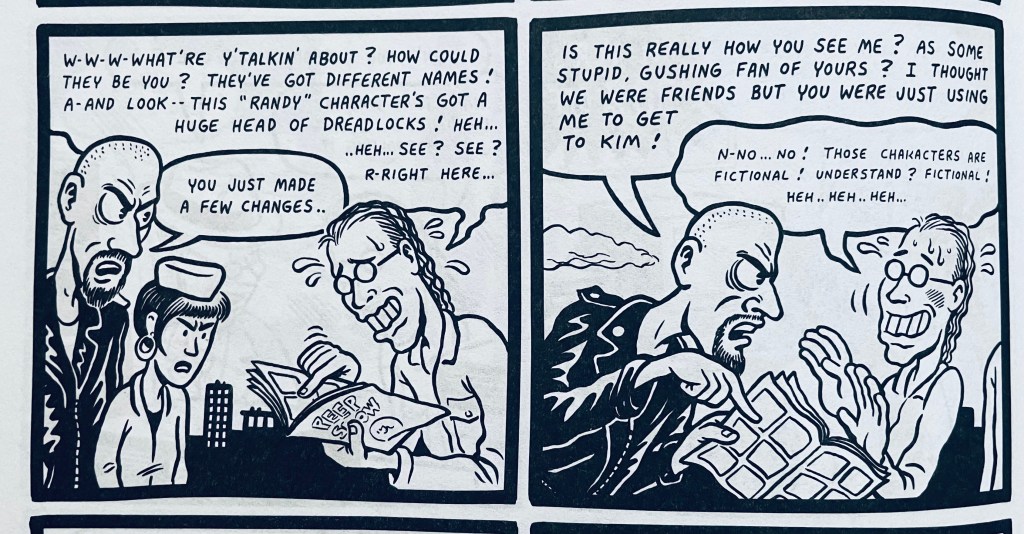
Of course, no autobiography can ever be truly faithful, as they’re bent and twisted in the very shaping. Us fans like to think “Cartoon Joe” was “Real Joe” – but we can never really know. Matt pokes fun at this himself with a scene in Peepshow #6 where an angry boyfriend and girlfriend confront Joe about being put into his comics. Is “real Joe” “cartoon Joe” at all? We will never quite know, now.
In that final issue, Matt flicks back over the previous 13 issues of Peepshow, admitting that a rather fanciful threesome sex scene in one issue was entirely made up, or that the childhood memories in other issues don’t tell the whole story. We invent our autographies.
Yet, Joe Matt did carry on, like many of us, on social media, where he seemed actually, kind of happy whenever I checked in on him, with his beloved cats and spot cartoon panels. I don’t know if he was really the same freaky weirdo he portrayed himself as in Spent, or if he’d regrouped. He apparently had perfected his life to a narrow point of his interests, like we all tend to at a certain age, and while I’d have liked to see Peepshow #15, and #25, and #50, I can’t begrudge him whatever made him happy in the end. Maybe “Cartoon Joe” was just a cartoon after all.
In a fascinating interview from 2013, Matt says of comics, “Consider this: You have 300 pages to work with, and on those pages you can literally depict ANYTHING. You can depict standing in line for a coffee for those entire 300 pages, or you can cover the fictional lives of generations of a small town.” That interview also goes a long way toward explaining why he hadn’t put out anything new in years with his increasing perfectionism.
Supposedly, for years he’d been working on a graphic novel that told the story of his moving from Canada to California, where he spent his final years. I really hope it’s in a shape where someday, we can see it. For a guy who stripped himself literally naked in his work, I think he would’ve wanted it that way.
For all his comic-strip lust, nastiness and obsessions, I still want to know more of Joe Matt’s story, and 60 was just too damn soon to leave us.
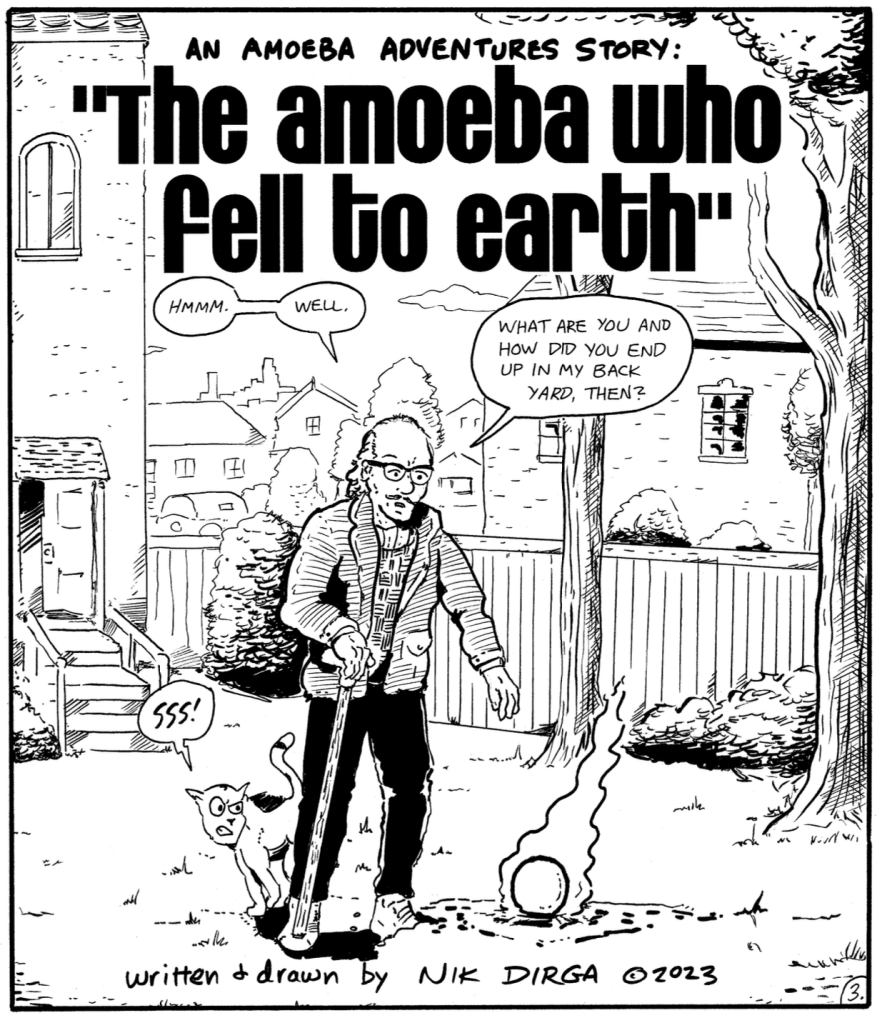
It’s time for my newest comic book, Amoeba Adventures #33!
Get ready for the most offbeat Amoeba Adventures story of all time! It’s “The Amoeba Who Fell To Earth.” One day, years ago, Prometheus arrived on Earth-Spongy from the stars. But what happened next? It’s not what you expect.
You can download the PDF of the comic right here completely FREE as always – enjoy and let me know what you think!
• GET IT IN PRINT! Plus, as always there’ll be a special limited print edition of this issue coming out soon – it’s a mere US$7.50 shipped anywhere in the world from little old New Zealand. Strictly limited quantities, so if you want one don’t delay, and send cash via Paypal to dirgas@gmail.com.
• BUY OLD COMICS CHEAP! Also, it’s time for a special back issue sale! I have a few surplus copies of recent limited print editions of Amoeba taking up space in the butler’s quarters, so here’s a deal: If you order the print edition of Amoeba Adventures #33, I’ll throw in anotherAmoeba comic for a mere $3.50 US! Still available are the print edition of Amoeba Adventures #30, #31 and 32, and the special 25th anniversary reprint of Amoeba Adventures #27, now with eight pages of bonus art and interviews! When these are gone, these are gone, so if you want a copy grab one – Amoeba Adventures #28 and 29 are all now SOLD OUT and others are not far off!
• JUST READ IT ALL FOR FREE! Lastly, don’t forget you can download and read every single issue of Amoeba Adventures and other comics going back (urgh) more than 35 years now all right here on this website – go browse and see!
Superman IV: The Quest For Peace is not, objectively, a good movie. In fact, it’s pretty terrible.
The 1987 finale to Christopher Reeve’s run as the Man of the Steel was plagued by huge budget cuts, a ham-fisted script and a clear lack of energy by everyone involved. It was such a big bomb it pretty much killed the franchise for years to come.
What was a simple, not bad idea – Superman decides to rid the world of nuclear weapons after an annoying school kid writes a letter to him – became an awkward, choppy mess.
I actually saw Superman IV: The Quest For Peace in the theatre with a buddy back in 1987 and I clearly remember we were about the only two people in there. We left there with that deflating sense of disappointment one often got with comic-book movies in the pre-Marvel Cinematic Universe days, where you’d watch stuff like Howard The Duck or the George Clooney Batman and Robin and wonder how, how did this happen?
And yet, despite this movie being such a fiasco, I still end up going back to watch it every once in a while out of a morbid fixation, because you can just see a hint or two of the movie it could have been – a serious meditation on a Superman’s place on Earth, and the responsibility of caring for humanity without taking over the world.
In particular, there’s about two minutes of footage where that movie clearly emerges, when Superman takes to the stage at the United Nations to tell them of his plans:
Unfortunately, even then you see the impact of the budget cuts (judging from the Superman flying scenes immediately after, about $1.99 was spent on special effects).
And that script – hoo-boy. It ratchets up the campier elements of the first three Superman movies to unbearable levels, with little of the wit and sincerity that Superman and Superman II had. You’ve got a lame cliched evil businessman and his hot daughter (an embarrassed Mariel Hemingway) taking over the Daily Planet newspaper, Jon Cryer doing an appallingly unfunny doofus hipster teenager impression, and Margot Kidder looking very, very bored. Only Gene Hackman, whose genial scoundrel take on Lex Luthor was always worth watching, emerges unscathed.
And let’s not forget the all-time worst Superman villain ever seen on screen, the mulleted “Nuclear Man” clone that Luthor creates because he’s angry Superman eliminated the black market for nukes, I guess. Nuclear Man is howlingly cheesy, so bad the actor involved never did another movie.
(As a side note, for an even more in-depth look at what a mess this movie was, on the DVD you’ll find more than a half hour of deleted scenes including an utterly horrifying slapstick fight with a “first” prototype Nuclear Man character who looks like he wandered out of a Benny Hill TV show. Some hopeful optimists out there on the internet still claim adding those scenes back to the barely 90-minute Superman IV could make an improved “director’s cut” but honestly, these scenes are generally even worse than the movie itself.)
The whole idea that kick-started the plot – Superman makes the world safe from nuclear war! – kind of gets bounced around a bit and then abruptly discarded by the end.
And still, I do love that scene when Reeve arrives at the United Nations, the good cheer and optimism that pervaded his portrayal of Superman just about selling the idea that the governments of the world would be happy with him throwing all our nukes into the sun. “As of today, I’m not a visitor any more,” Superman says, and gosh darn it, it just makes you wish such a person really was out there, somewhere.
I don’t know why I watch 86 minutes of a pretty bad movie just to get that little moment, but somewhere out there in the multiverse, I like to imagine there’s a far, far better version of Superman IV directed by Steven Spielberg or someone that ran the table at the Oscars that year and gave that wee moment the kind of superhero movie it deserves.
Was he the best Spider-Man artist of all time? I think so. Was he quite possibly the greatest Marvel Comics artist of all time? Maybe so.
John Romita, Sr. has left us at the age of 93, with a career that spanned all the way from the golden age of the late 1940s well into the 2000s. Boy, he was good.
I wrote just last year about how for me, Romita and his immensely talented son John Romita Jr. have defined Spider-Man. His art was crisp, bold and clear. Yes, there have been many other great Spider-Man artists, from the inimitable co-creator Steve Ditko to the wiry revolutionary Todd McFarlane.
But here’s the thing. If I close my eyes and just think, “Spider-Man,” I see a John Romita Sr. drawing. Maybe I see Amazing Spider-Man #66 from 1967 starring the evil Mysterio – I picked up a beater copy back in the 1980s and for years and years it was the “oldest” comic I ever owned, filled with that timeless Romita cool style. Maybe I see his gorgeous Mary Jane, or his sneering Green Goblin.
And to be honest, if I close my eyes and just summon up the words “Marvel Comics,” I tend to think of a Romita Sr drawing too. He was the public face of the company for years thanks to becoming Marvel’s art director and doing countless merchandising and house ad illos. More than Spider-Man, he co-created or summoned up dynamic classic looks for characters like Wolverine, The Kingpin, The Punisher and Luke Cage who have all gone on to become movie and TV series stars. To me, his art kind of was Marvel Comics.
So if you’re going to be in Ohio this weekend – and I mean, why wouldn’t you be? – you can get a look at an exclusive all-new shortAmoeba Adventures story by me in the latest issue of the venerable small press anthology Oh, celebrating its 31st issue at this year’s S.P.A.C.E. Small Press and Alternative Comics Expo.
Dozens of excellent cartoonists and creators will be there showing off their work at this awesome long-running event and by gum, if you’re anywhere near Columbus, you should make your way there!
Oh, Comics #31 will be the only place right now you can check out this new Amoeba Adventures story! Oh, Comics has been published since at least the 1990s and I have many fond memories of reading Bob Corby’s great anthology over the years. It’s a pleasure to finally be involved in an issue with a little story of my own. Apparently I win the honour of Oh, Comics’ furthest-away participant, but I’m pals with many of the great Ohio small press folks and pleased to represent the Southern Hemisphere. This year’s theme is COFFEE – and, well, I just took it and ran from there.
There’s nothing quite like the weird world of Basil Wolverton.
One of the great cartoonists of the 20th century, Wolverton’s distinctive vision is pretty unique. He could be silly and he could be scary, but most of all, his whole aesthetic vibe was vaguely disturbing. The New York Times called him “the Van Gogh of the gross-out.”
Wolverton did slapstick surreal humour and gritty, unsettling horror, as well as his oddball series of “heads” – staggeringly ugly, creepy little portraits that were like David Cronenberg nightmares. Some of them famously ended up on the covers of MAD and Plop.
Yet this strange, exotic draftsman was actually a pretty conventional person in real life, quite religious and married to his high school sweetheart. It’s almost as if he was exorcising some hidden inner demons with some of his most distorted work.
Whether it was sci-fi, horror or humour comics, you’d never mistake a Basil Wolverton comic for someone else’s work. A couple of marvellous thick coffee table books by Greg Sadowski a few years back looked at Wolverton’s career and reprinted lots of his rare comics.
He was never “typical.” Even his earliest work like the Buck Rogers-esque Spacehawk felt like outsider art. On the surface they’re pretty standard 1940s spaceman adventures, but there’s a visceral weight to the drawings that makes them feel truly alien. A lot of golden age comics were hastily drawn, rough work, but Spacehawk still shines with its gruff leading man facing a never-ending horde of endlessly imaginative, goopy monsters.
Wolverton also spent years doing screwball slapstick comics, packed with groan-worthy puns and wordplay and rubbery hijinks. I recently picked up a old reprint of some of his Powerhouse Pepper stuff, which is fantastic fun. Powerhouse is a kind of kinder, gentler version of Popeye who fumbles his way through a world of bullies and hucksters with an oblivious charm. There’s lots of silly wordplay and a general looseness (I’d love to see more of this rare work reprinted!) but there’s also some of Wolverton’s trademark shock such as this great sequence below (don’t worry, I’m sure that guy was OK). He brings the rubbery antic energy of Tex Avery cartoons to the still comics page.
Horror comics were overflowing from the newsstands in the ‘50s but Wolverton’s works in the genre still have an in-your-face freaky quality that makes them stand out. On his covers for Weird Tales of the Future, boldly drawn monsters leap off the page with an intimate menace – if I was a kid reading these in 1953, I’d have had nightmares for years. The especially terrifying “Brain Bats of Venus” haunted entire generations of comic readers back then, I imagine.
Later in his career, Wolverton actually became an ordained minister, and he combined his religious life and his comics life in very idiosyncratic drawings from the Bible which took all the fire and brimstone apocalyptic imagery usually smoothed out of biblical comics and rolls with it for all it’s worth. His portraits of the Book of Revelation and the foretold biblical apocalypse have a terrifying immediacy.
And his famous “heads” portraits, which are just snarled, twisted and blackly humourous masses of fluid flesh – well, they’re still freaky today, the most deformed almost pornographic somehow, yet weirdly innocent, too. The heads were Wolverton “playing,” making flesh his medium. This mild, churchgoing man could haunt you with his dreams.
The key to a lot of Wolverton’s visual style is the thick weight of his lines, I think, bold outlines and vivid shadows, combined with a painstakingly intense amount of stippled or speckled details. There’s an almost woodcut quality to his finest work. It doesn’t feel sketched on a page so much as it seems to be forged, raw, from some hidden universe just beneath our own. Wolverton’s distinctive comics DNA is hard to duplicate, although you can see some of his influence in the work of ‘Rat Fink’ Ed Roth, Peter Bagge or John Kricfalusi’s Ren and Stimpy.
While comics boasted a lot of great artists in the classic era like Jack Kirby and Will Eisner and Steve Ditko, Basil Wolverton is the only one who seemed somehow haunted to me.
These things he drew were in him, rubbery and weird and sometimes holy and sometimes hellish, but he just had to get them out. Decades after his death, there’s still nobody quite like him in comics history.