That time the Son of Satan was a superhero

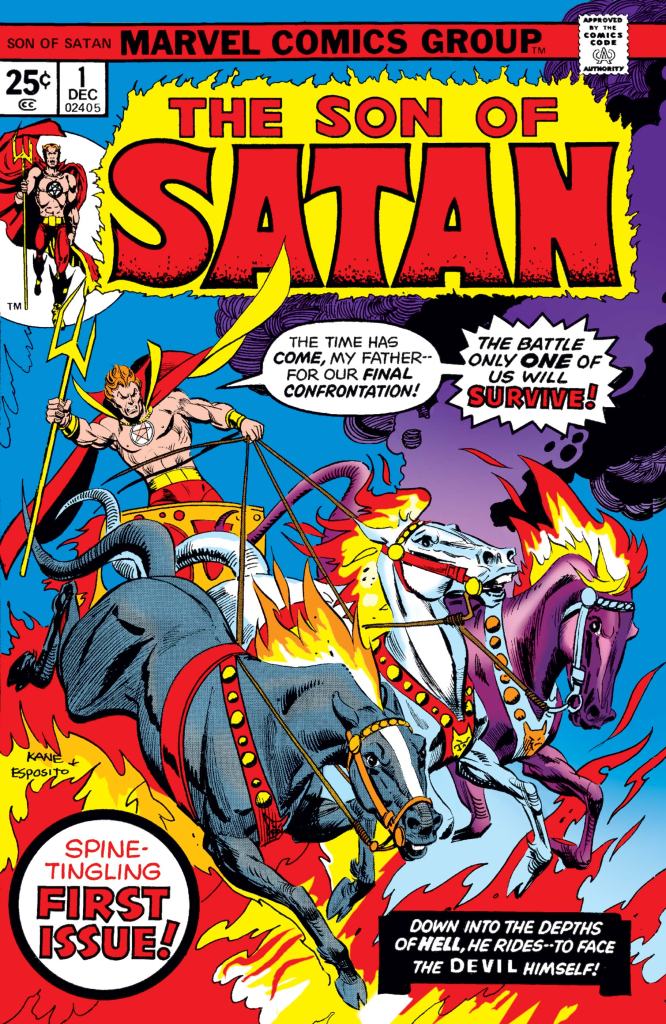
I’ve written before about my love for the weird stuff Marvel Comics put out in the early 1970s.  Perhaps one of their strangest gambles was a series that could only have risen from the grave in the age of The Exorcist and The Omen. Let’s give it up for … The Son Of Satan!

After years of comics being constrained by the Comics Code Authority, the reins were loosened a bit early in the 1970s, allowing previously taboo subjects. Marvel Comics went BIG on the horror in the early ‘70s, and as a result dug up some of its best work. Dracula, Frankenstein’s monster, a living mummy, a Man-Wolf, a werewolf, a zombie, hell, even a golem and a Manphibian … They’d throw anything at the wall of the horror superheroes boom to see if it stuck. 

So why not the Son of the Dark Lord himself? Hilariously, according to a feature in Back Issue magazine #21, Stan Lee actually proposed Marvel do a comic book starring Satan himself – in other words, DC/Vertigo’s Lucifer decades ahead of its time. Cooler heads prevailed and instead a feature called Son of Satan debuted in a 1973 issue of Marvel Spotlight, starring Damien Hellstrom – also confusingly sometimes called “Hellstorm” – the son of the devil and a mortal woman torn between two worlds. 

You’ve got to admire the chutzpah of calling a comic book Son of SatanFredric Wertham surely would be turning in his grave. I love the title, even when the book itself was rather schizophrenic – during his 20 or so issue solo run in Marvel Spotlight and then his own short-lived comic, Damien Hellstrom’s adventures fighting both evil and his own evil side ran all over the place and went through many creators (the best being the late writer Steve Gerber). At one point, he even got into a fight with Adam – yes, that Adam. Like many Marvel books of the era, Son of Satan constantly changed course to try and win readers. He was clad in circus-devil yellow and red and carried a pitchfork, teamed up with Human Torch and Ghost Rider and kept on with all his daddy issues. 

He did get flak – at least one letter writer accused the creators of being “tools” of Satan. Artist Herb Trimpe told Back Issue he was “uncomfortable” with “evil being the star of the book.” Years later, ol’ Son Of was even retconned so he wasn’t actually the son of that Satan, but of a more generic demon who sometimes called himself Satan. Son Of Someone Who Might Be Satan really isn’t as catchy.  

The original ‘70s run was all nicely collected in the Son of Satan Classic paperback. Later, Damien popped up in Marvel’s clearing-house non-team book The Defenders for some fun stories, and kept bopping around ever since. You can’t keep a good devil down. 

Hellstorm got grim and gritty in the 1990s, really leaned into the whole Satanic thing and started looking like Rob Zombie and gave up the superhero spandex in a 1990s well-received gory reboot by Warren Ellis. He’s often been an outright villain in more recent appearances. He’s even finally getting some kind of adaptation in a TV series (with a fairly underwhelming first trailer, and this time he’s spelled Helstrom!).

Admittedly, the entire concept is better geared towards dark horror than heroics, but I still kind of dig the era when a guy calling himself the Son of Satan ran around in a superhero cape. “Hellstrom” or “Hellstorm” or whatever is a decent enough name, but to be honest, if you’re the son of the devil, you need to own that. 

Son Of Satan is an intriguing little throwback to an era when such a character could be featured in what were ostensibly kid’s comics without major protests. So you know, hail Satan — he might just have cleared the way for much darker and grimmer comics yet to come. 

That one time Bela Lugosi got to be the hero

Poor Bela. 

Bela Lugosi has been cast as a kind of cinematic cautionary tale over the years, with Martin Landau’s indelible Oscar-winning portrait of him in his decline in Ed Wood forever painting the Dracula star as a drug-addicted has-been stuck in terrible no-budget movies. Hell, even Bauhaus sang mournfully for him in “Bela Lugosi’s Dead.” 

While Lugosi certainly had his problems, his career at its peak was fiery, and his presence on screen had a brooding Gothic grandeur that’s been imitated by every Lestat and Twilight sparkle-vampire wanna-be ever since. 

The sad thing is that Bela Lugosi very rarely got to play the hero. His iconic performance in Dracula defined him, for better or worse, and the ensuing typecasting meant that he rarely played non-villainous roles. He was also hobbled by the thick Hungarian accent he never quite shed. 

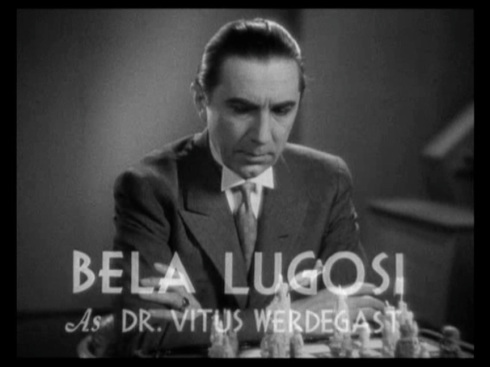
But in one of his best roles, 1934’s The Black Cat, he got to play a daring kind of anti-hero, teamed with Boris Karloff for the first time in one twisted piece of pre-Code horror. Lugosi is Dr Vitus Werdegast, a former prisoner of war who returns to exact vengeance upon his traitorous commander, Hjalmar Poelzig (Karloff). Dr Vitus’ mission gets tangled up with two fresh-faced newlyweds who become pawns in a showdown between him and Poelzig. 

At a brisk 69 minutes, The Black Cat is Universal Horror near its peak – all razor-sharp shadows and crackling thunder, but with a creepy, real-life edge that foresees the horrors of the Nazi party. The monsters here are all very human. Poelzig, who’s not just a war criminal but a bona fide Satanic cult leader, is one of the more unnerving villains Karloff ever played, all sallow, black-eyed stare and unrepentant malice. 

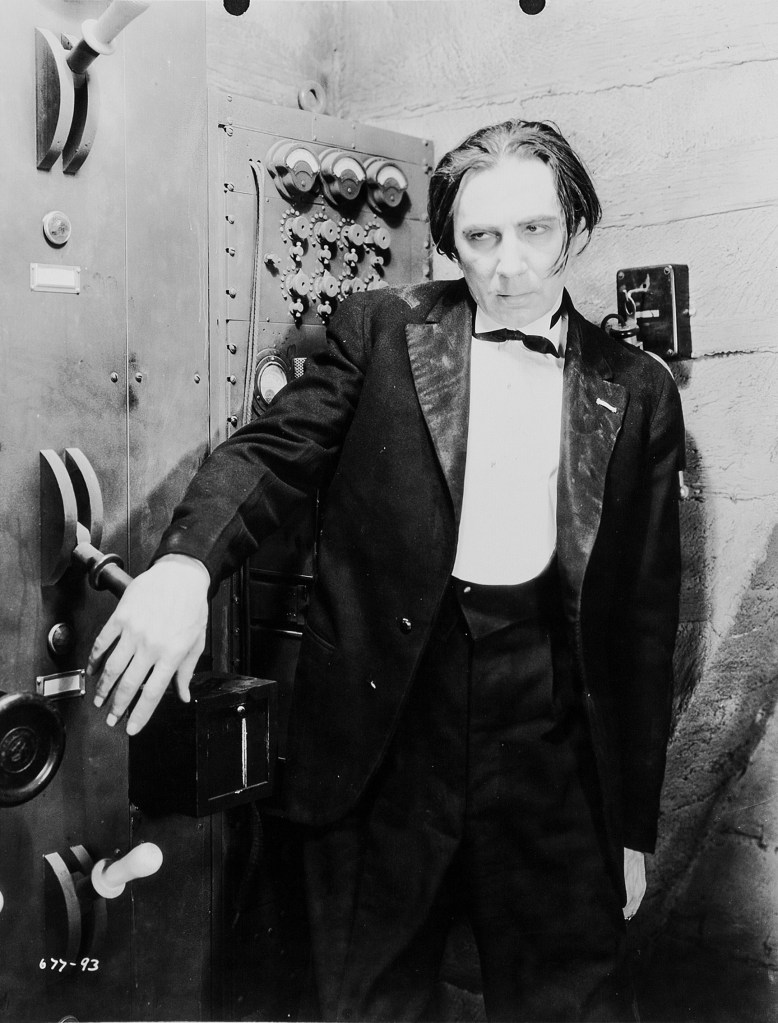
But it’s Lugosi who steals The Black Cat, looking impossibly handsome and dapper as Dr Vitus, vigorous and strong. (It’s interesting to realise that Lugosi was actually a bit taller than Karloff, who played the towering Frankenstein’s Monster.) He’s a haunted man, but one who wants to do the right thing. The tragedy of The Black Cat is that in doing so, he is seen as a villain too.

There is a scene where Dr Vitus discovers the preserved corpse of his wife, kept in a glass case by the madman Polezig (I told you this was a twisted bit of pre-Code horror!). The agony and shock that plays over Lugosi’s face in this moment is a masterpiece of horror acting. 

Of course, The Black Cat is hokey – the newlyweds are a plot device, Lugosi’s character’s inexplicable hatred of cats is kind of hilarious today (at one point, he straight up murders a cat!). But there’s a primal fear to it too that movies from Texas Chainsaw Massacre to Saw have mined ever since, about good people ending up in a web of unspeakable random cruelty. 

I love the brief image we get of Lugosi as the doomed hero, a good man shattered by wartime cruelties and the sadistic tortures of Poelzig. In the end Dr Vitus gives himself entirely to revenge and cruelty, mutilating Poelzig, and flicking the switch to blow up everything and almost peacefully, intoning, “It has been a good game.” 

In another world, maybe Lugosi would’ve played the hero more often. But when he did, he was unforgettable. 

Movies I have Never Seen #5: The Texas Chainsaw Massacre (1974)

What is it: One of the most famous horror movies of all time, Tobe Hooper’s grim ’n gritty 1974 The Texas Chainsaw Massacre was a low-budget smash, changing the horror genre forever and inspiring Halloween, Friday The 13th, Evil Dead and a million other ‘slasher’ movies. It sets the template for countless gore-fests, with a small group of sexy young people running afoul of a house full of murderous redneck serial killers in rural Texas, notably the chainsaw-wielding maniac “Leatherface.” 

Why I never saw it: Look, I’m a big horror movie fan. Monster movies, Universal classics, John Carpenter, Evil Dead, Hammer horror, you name it… except I don’t really care for slasher movies. There have been some great “slasher” flicks I dig, like the original Halloween and the fantasy-tinged Nightmare on Elm Street series, but to be honest, I’ve never liked horror that leans too much into sadism (I know, a bit hypocritical). The whole “torture porn” genre of Saw and Hostel type movies that are direct descendants of Chainsaw Massacre are not my bag at all. So even though I’m keen to fill in the gaps in my movie watching ledger, there was something kind of offputting about Texas Chainsaw Massacre for me that took me a while to get to it. 

Does it measure up to its rep? Absolutely. Chainsaw sets up its mood of intense wrongness from the opening scenes. It’s a movie where death and evil seems to lurk behind every tree. It takes a little while to “get going,” and there’s a fair bit of rather bad acting by the amateur cast until the carnage starts, but when it does, Chainsaw turns into a white-knuckle ride of sheer horror until the very final moments. The last 30 minutes or so, as lone survivor Sally flees for her life and escapes by the thinnest of margins, is unrelenting in its intensity. It doesn’t let up, and the viewer echoes the shocked, dazed trauma of Sally (Marilyn Burns) by the end. You feel pummeled, haunted by glimpses into an abyss. Chainsaw doesn’t attempt to explain its killers, to give them any motivation beyond sheer madness, and that’s scarier than anything else. 

How it’s different than I thought: Well, despite the carnage left in its wake, the original Chainsaw Massacre isn’t a terribly gory movie. The horror mostly comes from suggestion – we don’t actually see that chainsaw carving up kids, but what we do see is in some ways more terrible. It is a very scary, haunting movie, without a doubt, but it’s not wall-to-wall blood. 

Worth seeing? Yes, for its place in film history, its intense sense of mood and place, and for plunging deep into the depths of depravity – but I don’t really feel the urge to see it again any time soon. Once was enough to look into this darkness. Your mileage may vary.

Complete succinct reviews of Stephen King, Part V

Many years ago, when the world was young and Twitter was what birds did and the idea of a President Trump was hilarious satire, on my old blog I started a deep dive through Stephen King’s formidable career, book by book. Here’s some links to the past:

Part 1: Carrie to The Stand

Part 2: The Dead Zone to The Bachman Books

Part 3: The Talisman to Insomnia

Part 4: Rose Madder to Under The Dome

Now, suddenly, it’s been 10 years since I did a look at King’s oeuvre, and it seems a good time to reappraise the master.

King’s now 72, and there’s a calmer maturity the work in his autumn years I’m enjoying –  and less of the unhinged horror he bashed through in classics like Pet Sematary and It. He remains one of our most compulsively readable storytellers, and there’s a lot to love about latter-day King. 

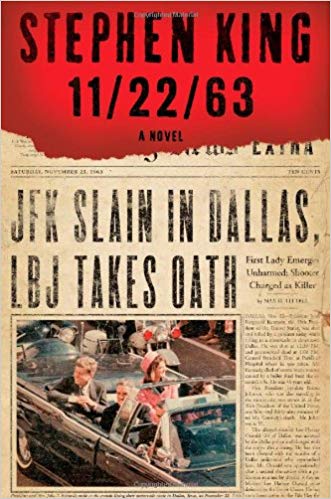
11/22/63: One of King’s best, a stunning epic about time travel and trying to change the past. “What if Kennedy hadn’t been assassinated” is a well-worn topic but this one goes in directions you didn’t really expect and delivers some surprises, as well as a detailed historical epic full of emotion and regret. It’s long, but rarely feels bloated like some other King doorstops. I’m a sucker for time travel stories and King clearly is having a ball evoking the early 1960s as his traveller tries to save the world – but as usual in these cases, there’s a heavy price. Grade: A+

The Dark Tower: The Wind Through The Keyhole: Did we REALLY need another Dark Tower book after the nearly 5000 pages, seven books of the main Dark Tower saga, King’s epic fantasy which spanned entire universes? Not really, but King clearly felt the urge to return for this “Dark Tower 4 1/2” untold tale that visits Roland the gunslinger and his band on their quest. There’s stories within stories told here, and the whole thing has the feeling of a gathering of lost chapters that King couldn’t quite fit into the main Dark Tower saga. It’s engaging, even if, like me, you got a wee bit tired of the Dark Tower despite its imposing majesty by the end of the long haul. But it’s kind of like the book version of deleted scenes on a DVD, so it’s hard for it to feel essential. Grade: B

Joyland: Short but sweet, a novella about lost loves and nostalgia, which also has a few murders because it’s King, after all. Set in an amusement park in the summer of 1973, it’s full of King’s keen eye for evoking a time and place, and a summer romance that ends with bittersweet resonance. It wouldn’t go amiss side-by-side with “The Body” (aka “Stand By Me”) as one of King’s better coming-of-age stories, and surprisingly gentle compared to much of his fare. It’s one of his more unknown works, but well worth seeking out. Grade: A- 

Doctor Sleep: A sequel to The Shining is a thing I never really asked for or wanted. That said, it’s an interesting idea to follow up on Danny Torrance as an adult, suffering from deep trauma over the whole dad-possessed-by-ghosts-tried-to-kill-us-all thing. King does a nice job showing us a grounded portrayal of present-day Danny struggling to carry on; that said, the story which expands to draw in a convoluted world of secret “Shining” cults and quasi-immortals just didn’t quite work for me. Much like The Black House sequel to The Talisman decades later, looking backwards for King is a mixed bag. Grade: C+

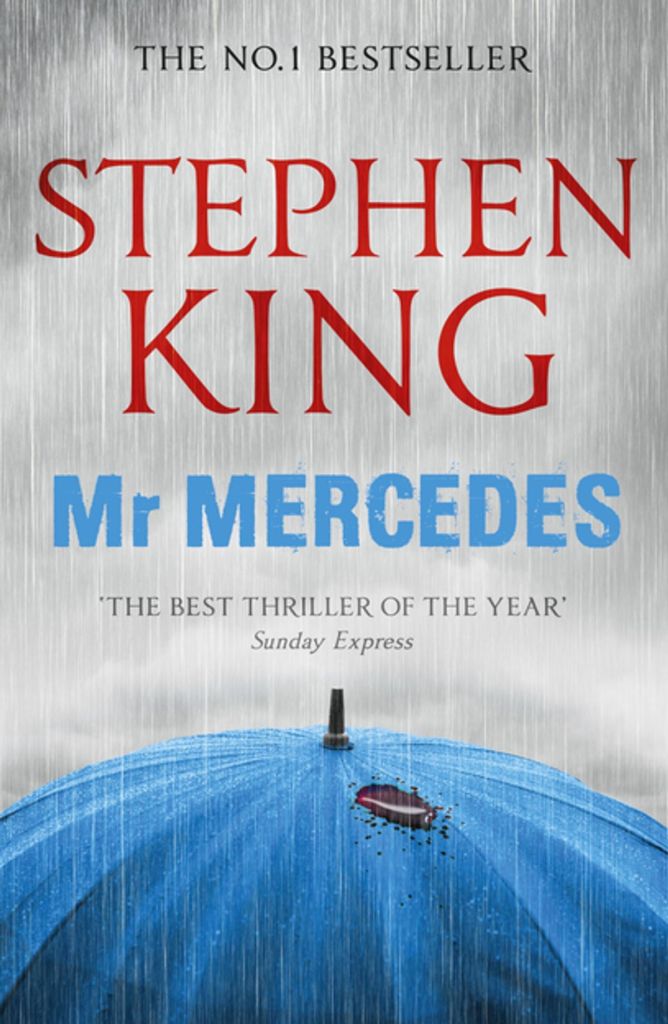
Mr Mercedes: The first of a trilogy of novels focusing on Bill Hodges, a suicidal, retired detective and one of King’s more engaging ‘everyman’ characters. Tight and suspenseful, this one deals with the hunt for a mysterious serial killer who’s already committed one mass slaying and plans more. Hodges, the killer Brady Hartsfield and troubled young woman Holly Gibney are all some of King’s best written characters in ages, and there’s no surprise that he went on to feature them in several more books. But Mr Mercedes, with its propulsive narrative and ripped-from-the-headlines mass terror threat, is still the best. It’s also one of King’s most grounded in the real world novels and all the better for it. Grade: A

Revival: Back to pure, Lovecraftian horror for King with this one, which is a chilling riff on the Frankenstein legend. A minister loses his religion and becomes a mysterious faith healer, using electricity to heal the sick, and probing away at even darker mysteries in the universe. The novel is a beast of two sides, a more realistic look at love and loss, and a dark, fantastic glimpse into the unknown terrors of the void. Unfortunately, there’s an awful lot of build-up to the main event here that will either engage you or bore you, and I came down a little bit on the side of finding Revival a promising premise that never quite leaps onto the top shelf with King’s other glimpses into the abyss. Grade: B- 

Finders Keepers: Book two in the “Bill Hodges Mysteries” (which really sounds like a mid-80s Matlock spinoff), a slight comedown from the streamlined thrills of Mr Mercedes. This time, John Rothstein, a famous reclusive novelist, is murdered and his unpublished books stolen, triggering a chain of events that draws Hodges into its web. King, as always, done a fine job of evoking a writer’s life in his portrait of Rothstein, and he also shows us the duelling sides of fandom – a kid whose love for literature is awakened and a creepy fan who takes it all so far. I’m not nuts about King’s portrayal of a witty black college student which comes across as a bit crass and dated, but it’s a small critique. Grade: B+

Next time I do this, I’ll take us from The Bazaar of Bad Dreams all the way to the present day and The Institute. Stay scared! 

Edit: Part 6 is now up going from The Bazaar of Bad Dreams to Later.

Into the plasma pool: Why ‘The Fly’ sticks with me

“You’re afraid to dive into the plasma pool, aren’t you? You’re afraid to be destroyed and recreated, aren’t you?” – Seth Brundle

It’s gory, grotesque and disturbing, yet in my personal time capsule of favourite movies of all time, Jeff Goldblum and David Cronenberg’s “The Fly” sticks with me. 

Despite having watched it more than a dozen times since 1986, I’d never seen it on the big screen until the other night, when I caught a gorgeous 35mm screening. There’s nothing quite like seeing “The Fly” on a big screen, with an audience screaming along in synchronicity. 

Like most of Cronenberg’s movies, “The Fly” hasn’t dated at its core, except for Goldblum and Geena Davis’ big ‘80s hair. The gore is still horrifying, the emotions still tight, and the movie’s fundamental core of a man grasping for knowledge and being burned by its power is as old as Icarus. 

It’s a horror movie, with some of the most intensely disturbing mutations and goop of Cronenberg’s visceral career, but it’s also a doomed love story, brought to life by Goldblum and Davis’ immense chemistry (they were a couple at the time). 

When I first saw “The Fly,” it was on a battered VHS dub tape someone made for me back in high school. I watched that tape so many times that whenever I see the movie now I expect to see the same tracking glitches the tape had. It was my first Cronenberg, which will screw you up for life. 

“I’m saying I’m an insect… who dreamt he was a man… and loved it. But now the insect is awake.” – Seth Brundle

There’s a speech Goldblum gives towards the end, covered in latex and deformed, about insect politics. It and the movie as a whole are Goldblum’s finest hour as an actor. 

Everybody loves Jeff Goldblum these days, and heck, I do too, but he’s become kind of a cartoony eccentric version of himself. “The Fly” shows what happens when Goldblum actually acts instead of quirks, and it’s still revelatory to watch Seth Brundle’s horrible transformation and mutations. 

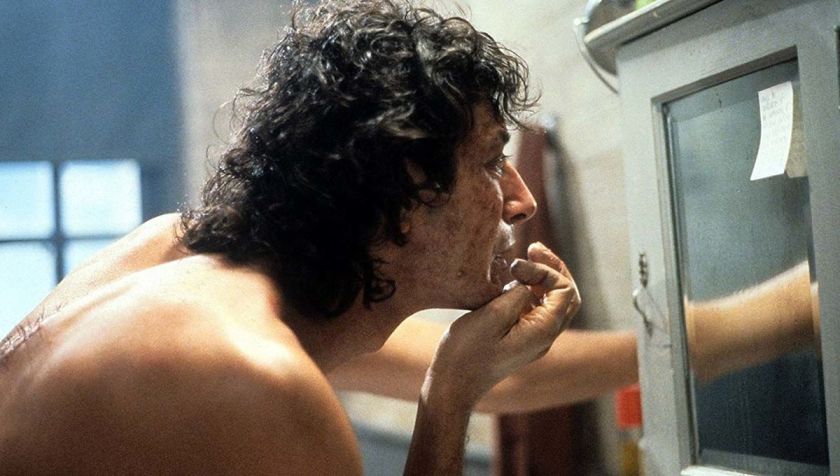
As a teenager, I saw a lot of myself in Seth Brundle’s horrific transformation into a human/fly hybrid. Golbum’s face breaks out, his body changes, he doesn’t recognise himself when he looks in the mirror. That’s every teenager in the world for you. 

I see it now, I see darker metaphors – as a middle-aged dude, your body continues changing, not always in great ways. At one point in the movie Goldblum worries that he’s developed some hideous form of cancer (spoiler: it’s way worse than that). Now I see “The Fly” as a parable about anyone who’s ever felt trapped in a body that’s a stranger to them. 

“I’ll bet you think that you woke me up about the flesh, don’t you? But you only know society’s straight line about the flesh. You can’t penetrate beyond society’s sick, gray, fear of the flesh.” – Seth Brundle

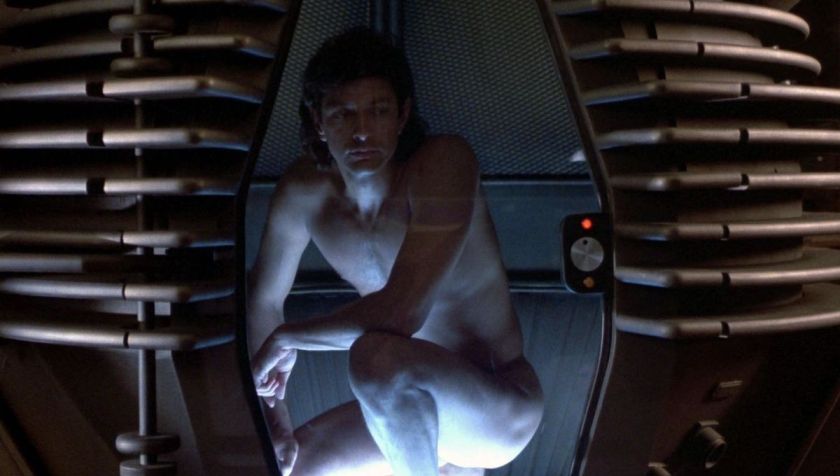
I’ve had my share of health woes the last few years and I have to admit that watching Goldblum go from a dazzling shirtless golden god to a deteriorating, disintegrating wreck of a man hits home hard. We are all transforming, every day, in ways big and small. Sometimes it’s wonderful. Sometimes it’s horrible. The question is how we endure it. 

“The Fly” is still a movie I return to every few years, and each time I see something a little different in it. It’s dark and down, sure, but yet I also feel a weird glimmer of optimism in parts of it too. We never stop wanting to better ourselves, no matter the cost. We are all swimming in the plasma pool. 

“It wants to… turn me into something else. That’s not too terrible is it? Most people would give anything to be turned into something else.” – Seth Brundle

Movies I’ve Never Seen #2: The Exorcist

the-exorcist-2What is it: The world’s most famous demonic possession story, the 1973 horror classic “The Exorcist” was a global smash, a taboo-breaking story that also ended up nominated for 10 Oscars, including Best Picture. 

Why I never saw it: I love horror movies, but I’m more of a monster-movie dude rather than slasher-horror or Satanic possessions kinda guy. I actually read the novel of “The Exorcist” yeaaarrrrrs ago (younger than I probably shoulda) and I think I built up in my head that the movie was far too creepy for a gentle fella like me. 

Does it measure up to its rep? Definitely. It’s hard watching ‘classics’ sometimes where they’ve been so influential on other movies that what were originally groundbreaking, influential moments can seem almost like a parody when you finally get around to seeing the original source. But “The Exorcist” is creepy and filled with a sense of pensive dread, highlighted by Linda Blair’s remarkable performance. The movie builds up slowly (like most older movies do when viewed from the vantage point of today), but it works because it convinces us of how normal the relationship between Regan and her mother is.

levitating-above-bed-740x400@2xIt makes what follows later that much more profane and shocking. And the movie’s most iconic moments – the possession of Regan and her gruesome actions – are still truly horrifying today. Every parent of a teenager has that moment of disconnection when your child suddenly seems like an alien to you, and “The Exorcist” dramatises that perfectly to terrible extremes. 
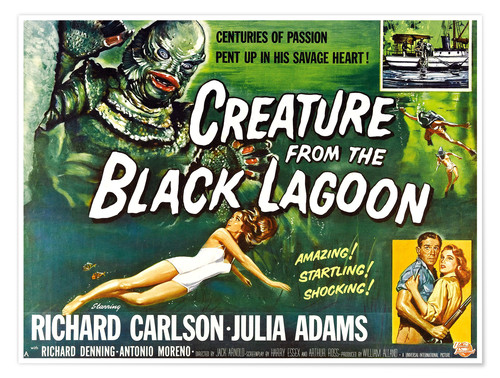
How was it different than I thought? Like I said, a bit slower to start, but that actually works to the picture’s benefit. I also expected Max von Sydow’s Father Merrin to be more of a main character and didn’t realise Father Karras would be more of a focus. It was definitely as gruesome and harrowing as I imagined, and unlike some horror movies viewed years later, you definitely didn’t want to laugh at the scary bits. 

Worth seeing? Absolutely. Just maybe leave the lights on. 

The woman behind the monster: ‘Lady From The Black Lagoon’

344445_poster_lI’ve written often before about my undying love for Creature From The Black Lagoon. It’s one of the best Universal monster movies of all time, a fantastic creepy love story with a fairy tale’s elegance and one of the most unforgettable monsters of all time. As a fanboy, I thought I knew almost all there was to know about it. 

Mallory O’Meara’s fascinating new biography “The Lady From The Black Lagoon: Hollywood Monsters And The Lost Legacy of Milicent Patrick” dredges the swamps of the past, unearthing the story of a forgotten pioneer for women in film in a witty, bittersweet and fierce look at Hollywood’s golden age. 

Milicent Patrick (1915-1998) was never quite a Hollywood superstar. She was a talented artist and designer, a model and a minor actress in a slew of b-movies. But she had a keen creative eye and before her career was derailed by depressingly familiar sexism, she worked for Walt Disney as one of very few women in animation (including on the classic “Fantasia”) and later on, she designed creatures for movies like “This Island Earth.” 

a15d5c39bb5d653cb6b184f45682ccbeBut her biggest claim to glory today is that she designed the epic look of the Creature From The Black Lagoon. The Creature is, I’d argue, the second-best monster design of all time (sorry, but Karloff’s Frankenstein’s monster has to take the top crown). It’s alien, yet human; terrifying, yet captivating. 

Unfortunately, the elegant, humble Patrick rarely got the credit she deserved for the work – a nasty piece of work named Bud Westmore who ran makeup for Universal Studios took all the credit, and later fired her entirely when Patrick actually started to get some acclaim for her designs (and ample publicity for what, at the time, was a novelty of an attractive young woman working in horror movies). That same sad story of a poor excuse for a man destroying a talented woman’s livelihood can be found a thousand times in Hollywood history. 

“Lagoon” is an often angry book – O’Meara’s conversational, amiably digressive style makes it very clear how personally she takes the tale of Patrick’s rise and fall. Women are often treated worst of all in traditionally male-dominated industries. You don’t have to look further than outraged fanboy reactions to “Captain Marvel” or “The Last Jedi” to see how cancerous the worst of fossilised blokes can be. Patrick went on to have a pretty decent life post-Hollywood, but you still wonder what could’ve been. I love the classic Hollywood films, but you just can’t ignore that they were a very male-dominated, non-diverse world, and think about how many Milicent Patricks were out there.  

01chapmanMonster.popIn “Lagoon,” O’Meara also shows the hard work that goes into the biography of a somewhat obscure person, hunting down leads and tracing dusty steps in the past. The story is as much about her and her experiences as a young woman in Hollywood as it is about Milicent Patrick. Some of the anecdotes O’Meara tells of her own treatment are truly dismaying, especially because they are all too common. The real monsters are still out there in Hollywood, hiding in broad daylight.

“Lady From the Black Lagoon” is well worth reading for any fan of classic film, and O’Meara deserves applause for shining a spotlight on the many unremembered women who played a part – and deserved to play a bigger one – in crafting the films and creatures that haunt our dreams. 

RIP Julie Adams, the Creature’s one true love

DyiRW9YV4AArB-y.jpg-largeJulie Adams wasn’t a household name, but she was legendary in her own way as one of the last surviving “scream queens” of the classic Universal Monster movies of the 1930s-1950s. Adams died at 92 this weekend, and horror geeks like me are mourning her today. 

She had a lengthy and impressive career, but it was as the damsel in distress in 1954’s “Creature From The Black Lagoon” that Adams swam through our dreams. 

She was probably one of the very first celebrities I ever got a crush on, when I saw “Creature” on TV sometime in the early ‘80s. On the page, Adams’ part is nothing too special – the standard “scientist’s girlfriend” seen in a hundred other movies of the era, who has a monster fall in love with her. Yet there’s something so iconic about Adams in the film, with her white swimsuit and wide-eyed charm. 

The scene where she swims idyllically in the lagoon while underneath, the misshapen Creature stalks and pines over her, is the blueprint for a thousand other sequences like it (you wouldn’t have the famous opening of Spielberg’s “Jaws” without this scene).

“Creature” itself will always be in my top 10 movies – elegant, simple and yet pulsing with unexplained mysteries and thanks to Adams’ unforgettable performance, a primal sensuality. Sixty-five years on, it still simmers and entertains.

I can take or leave the Oscars a lot of years, but when Guillermo Del Toro’s superb, dreamy “The Shape of Water” won Best Picture and Best Director last year, I cheered. More than anything Del Toro’s masterpiece is a loving homage to the mystery and magic of classic horror movies, “Creature” in particular, and I couldn’t help but feel it was almost as if the Gill-Man himself was getting a belated honour from the Academy. Del Toro himself wrote yesterday, “I mourn Julie Adams passing.  It hurts in a place deep in me, where monsters swim.”

Creature

The only remaining star of note from “Creature” left is none other than the Gill-Man himself, Ricou Browning, 88, who played the monster in the swimming scenes. When he’s gone, the final curtain will draw at last on the Universal Classic Monster series. But they’ll continue to haunt the dreams of movie-loving fans forever. 

Movies: ‘John Carpenter’s Prince of Darkness’ – Transmissions from the void

“I’ve got a message for you. And you’re not going to like it.” 

It’s the time of year to get scared, and few movies scare me more than John Carpenter’s 1987 apocalyptic fantasy, “Prince of Darkness.”

Mild spoilers ahead: “Darkness” is about a mysterious container that the Catholic church has been hiding for thousands of years, now kept in the basement of a Los Angeles church. Inside it might just be the devil. 

A priest (Carpenter mainstay Donald Pleasance) reaches out to a college professor (Victor Wong) and his students to analyse the container and dissect its mysteries. From there, things go horrifyingly wrong. 

The scariest horror movies, to me, are the ones that, HP Lovecraft-style, rip away the veil of reality as we know it to reveal unknowable things beneath. “Prince of Darkness” is not so much filled with jump scares as it is with a growing sense of unease, of the void, and the malign mysteries it may contain. 

“Darkness” is talky, and while there’s definitely some gory, horrifying moments in it, it’s a more thoughtful horror movie than some, with its debates between science and religion. But in its depiction of evil as an actual tangible substance bleeding its way into the world, and the terrifying way it corrupts the hapless college students studying it, it’s gripping. 

And man, while the plot has holes in it and the ‘80s fashion can be distracting (bonus points to leading man Jameson Parker’s moustache, which deserves a Best Supporting Actor honour), it’s packed with moments that haunt me every time I watch it again. 

John-Carpenter-Prince-of-Darkness-1987-Alice-Cooper-homeless-zombiesA dead man, delivering a horrifying message as his body crumbles away into the shadows. Zombie-like homeless (featuring a never-more-creepy Alice Cooper) converging upon the church menacingly. Static-filled transmissions from a bleak future beamed directly into dreams. Glimpses into a murky mirror world behind ours that culminate in one of the most disturbing images of any film. 
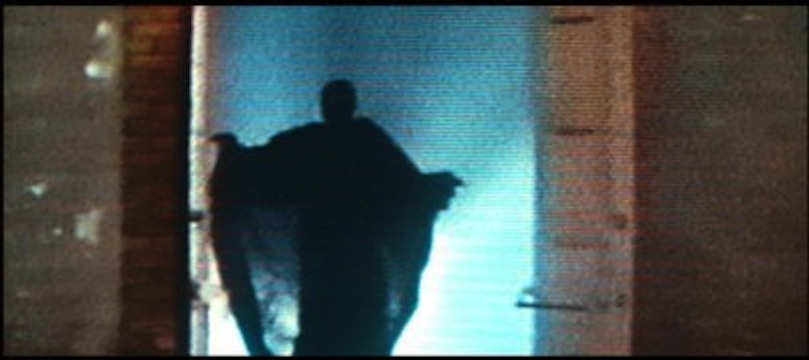
John Carpenter is having a moment right now, thanks to the latest remake of his seminal classic “Halloween.” And that’s because in his horror classics he has a knack for landing horror scares that linger. Carpenter relies on stillness more than many frenetic horror movies do – think Michael Myers, always vacantly lurking in the backgrounds, or the eerie silences that punctuate the frenzied body-horror of “The Thing”. 

This stillness, punctuated by his distinctive thrumming musical scores, animates the sheer dread of “Prince of Darkness” and makes it what might be my favourite of his movies. It doesn’t tie everything together neatly at the end, and the final 10 minutes or so are a rising crescendo of WRONGNESS, a feeling that the frames of the film themselves may fall apart into the void. In the best and worst sense, it’s haunting. 

“…We’ve discovered something very surprising: while order DOES exist in the universe, it is not at all what we had in mind!”

PrinceofD1