I try and stay away from stupid internet controversies, because they’re usually stupid internet controversies. This year’s king so far is the whole “Martin Scorsese vs. Marvel Movies” stoush.
I believe you can be a fan of both – and arguing about what’s “real” movies is kind of pointless. Scorsese is entitled to his view, and god only knows the internet will share its own views. The art stands by itself.
And while I adore the Marvel movies and will never stop being thrilled by seeing Thor or the Black Panther fly across the screen, I don’t think I’ve ever been left haunted by a Marvel movie in the same way that Scorsese’s best films affect me.
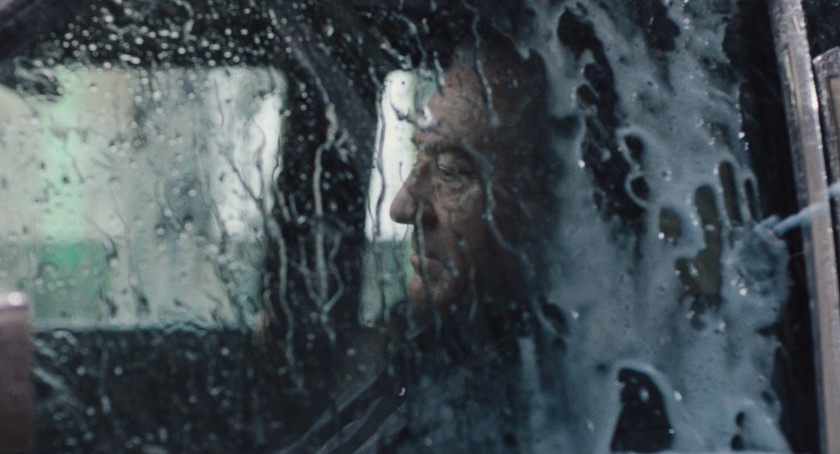
I’ve been on a big Scorsese binge the last few weeks, after watching his epic The Irishman unfold gloriously over 3 1/2 hours on a big screen (thanks Hollywood Cinema!), which is the only way to really appreciate a movie like this.
Watching The Irishman at home on a laptop between checking your Facebook feed and feeding the dog isn’t the same thing at all. It’s the antithesis of binge, binge, binge multitasking culture, a contemplative, mournful coda to Scorsese’s career of misguided men lashing out in their hunt for the American dream.
Returning to movies such as The Wolf Of Wall Street (a glorious monument to hedonistic excess that just gets better with each viewing), The King of Comedy or Goodfellas, we can see how Scorsese has been weaving this tapestry his entire career, all the way back to Taxi Driver and Raging Bull. Toxic masculinity, if you want to call it that, has always been his biggest theme. For those who superficially watched Goodfellas and thought, wow, the gangster life sure looks glamorous, The Irishman is Scorsese’s final damning rebuttal.
The haunting final half hour or so of The Irishman sticks with me, as a damning indictment of a life full of regrets and passive evildoing. While watching The Irishman requires a commitment, it’s worth it. Robert DeNiro hasn’t been so good in years, Al Pacino tones down his “hoo-ha” overplaying to good effect, and it’s a real treat to see Joe Pesci on screen again after far too long.
The true test for a movie’s greatness to me is how often I find myself turning it over and over in my head after seeing it, thinking about what it showed me. By that standard, The Irishman is one of the best films of the year.
I think you can have superhero movies and you can have what Scorsese calls “cinema,” and they’re all different yet related animals. But when it comes down to it, one is a roller-coaster ride and one is a lingering meal of fine dining. Scorsese’s entire argument was that films that aren’t big-budget franchises are in danger of disappearing from the table entirely, and that would be a shame.
The Irishman is Scorsese’s feast after a lifetime of serving up thoughtful dishes, and sprawling and deliberate as it is, it is a masterpiece.
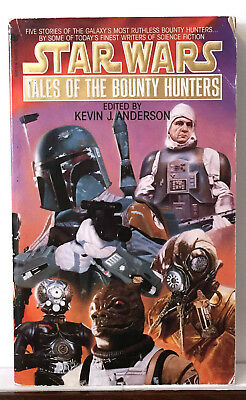
If I absolutely had a pick a favourite scene from all the Star Wars movies, it’s a mere 47 seconds in The Empire Strikes Back. We’re introduced to a disreputable mob of bounty hunters hired by Darth Vader to hunt down Han Solo.
There’s Boba Fett, of course, cult icon for the ages, and another five briefly glimpsed characters – spindly robot IG-88, reptilian Bossk, battered Dengar, Cronenbergian nightmares 4-LOM and Zuckuss. These characters are seen, don’t speak, and with the exception of Boba Fett, they’re never heard from again in the movies. (Although some harried crew member apparently threw the IG-88 model in the cluttered background of a Cloud City scene for extra set dressing, spawning endless fan theories.)
Those 47 seconds launched the imagination of a million dweeby kids and an entire subsidiary industry of books, comics and cartoons looking at just who or what those dirty bounty hunters were. That’s the best of Star Wars, to me – the lived-in sense, the countless possible back stories of background aliens and extras running around with ice cream containers.
I got kind of obsessed with those bounty hunters, even the goofy-but-fun novels exploring them. I can launch a detailed explanation of how 4-LOM and Zuckuss’ names apparently got messed up by Kenner when they made the action figures, so even though they’ve corrected the error, I still always think of Zuckuss as 4-LOM and vice-versa.
I liked the seamy, lived-in side of Star Wars. The opening hour or so of Star Wars: A New Hope, before it left Tatooine, is rich with worldbuilding for me. The strangeness of moisture farming. The inscrutable Jawas and their building/vehicle stacked with stolen droids. I liked the grimy Sandpeople, and the eternal mystery of what’s under all that wrapping. I liked the menagerie of aliens in Mos Eisley, and coming up with complicated back stories for each of them. My friends and I would imagine action figures for all of them. Most of them have actually been made in the ensuing 40 years of Star Wars fandom.
Yet at the same time, I don’t want everything explained in Star Wars. I didn’t want to know about the midichlorians, I’m still pretty sure I didn’t need to see Darth Vader as an 8-year-old boy, and I didn’t care that much about how Han Solo met Chewbacca, even. Everyone wanted just a little more Boba Fett, but nobody really wanted baby Boba Fett holding his father’s decapitated head, did they? I hate to admit it, but I even find the Jedi Knights kinda boring. To me, Star Wars eternally has to keep that balance between fan service and overdoing it, and lately, it usually does the latter.
But then along comes The Mandalorian, and in my complicated relationship with Star Wars I’m hooked again by mysterious characters, aliens in the desert and those bloody Jawas. Two episodes in, it’s a pleasure, Clint Eastwood’s Man With No Name in outer space and a streamlined, pulpy blast. To be honest, this playground is the one I wish they’d explored in all these years of Star Wars-sploitation, the grungy underbelly of Jabba’s palace and the Mos Eisley cantina.
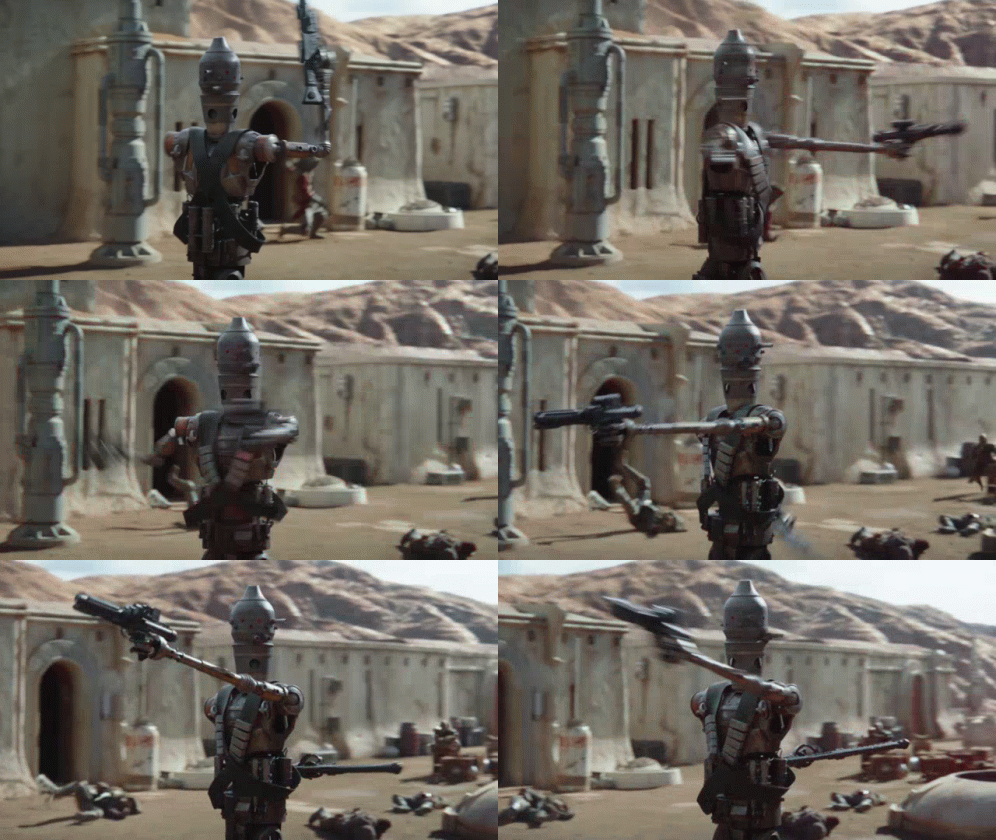
And there’s one scene that literally had me bursting with pent-up fan glee, as an IG droid (IG-11, not IG-88) goes into action against a bunch of mercenaries. FINALLY! I thought. After all these years, Star Wars is actually showing me one of those mysterious bounty hunters from Empire doing something, leaping into action.
IG-88 in the original film was entirely static, giving fanboys leave to imagine anything. But to see IG-11 spinning, talking, firing blasters, moving with a weirdly Frankensteinian zombie-like walk that is exactly how I imagined such an awkward droid might move…. well, some of us have weird dreams in life and are easily pleased. I dreamed of seeing IG-88 hunting down quarry, or of Bossk wrestling a wookie or 4-LOM/Zuckuss doing evil stuff. Instead I got midichlorians, too many Death Stars and someone who’s not Harrison Ford pretending to be Han Solo.
After 38 years, Star Wars finally gave one thing I really wanted from all its sequels, prequels and sidequels. And what a bounty it was.
What is it: Like most people who’ve found themselves somewhat against the grain in life, I dig The Rocky Horror Picture Show. It’s pretty much the definition of a cult classic, still playing in midnight shows around the world 44 years after its 1975 release. Seeing it in a vintage theatre in high school was one of my great cultural awakenings, and fittingly, I saw it again in a theatre just this past Halloween in a terrific benefit showing here in Auckland, complete with New Zealander creator, writer and co-star Richard “Riff Raff” O’Brien in attendance. I don’t do the costumes – nobody wants to see me in fishnets – but there’s something truly wonderful about a Rocky Horror screening, with everyone flying their own personal freak flag and screaming crazy stuff at the screen for a bizarre little film that somehow sticks with you.
And then there’s Shock Treatment.Shock Treatmentis the little-known 1981 quasi-sequel to Rocky Horror, again written by O’Brien and directed by Jim Sharman. It’s loosely the tale of Brad and Janet (recast, woefully) taking part in a surreal TV game show experience and being “reinvented” into superstars. But in execution, it’s kind of a mess.
Why I never saw it: Even today, Shock Treatment is pretty obscure. My main vague memory of it was the cool, eye-catching poster design (above). You can find it with a bit of searching on YouTube, though.
Does it measure up to its rep? Disappointingly, yes. Shock Treatment is a film that isn’t quite sure what it’s trying to say. You can’t really create a cult hit when you’re trying so hard to. Shock Treatment is a muddle of early ‘80s glam-pop, a satire of reality TV, and a tale of empowerment. Unfortunately, it’s a little too similar to Rocky Horror in that it’s again a tale of Brad and Janet finding their bliss. Unlike Rocky Horror’s smooth, straightforward plot, a mish-mash of horror movie cliches, Shock Treatment is maddeningly hard to follow.
A charismatic foil like Tim Curry is badly missed here, although O’Brien’s creepy Dr. Cosmo is one of the better things about the movie, but he’s not in it enough. Rocky Horror stars Patricia Quinn, Charles ‘No Neck’ Gray and Little Nell also show up in small roles. Recasting Brad and Janet was a bad idea (bizarrely, the events of Rocky Horror are never mentioned, leading you to wonder if it’s a reboot or a prequel or what). Jessica Harper is a very stiff Janet who only comes to life in the movie’s final act, while Cliff De Young’s Brad Majors is awful – his entire performance is lacking the wit and insight Barry Bostwick’s Brad brought to a single line in Rocky Horror: “It’s beyond me / Help me mommy.”
All in all, Shock Treatment feels too much like hard work. Many of the songs are pretty enjoyable, but like most of the movie, they’re overproduced and chaotic. Rocky Horror is a strange beast of a film too, but it’s consistent and genuinely warm at times. Shock Treatment never invites you in, and you never feel like you want to shout back at the screen.
How’s it different than I thought: While it’s wacky and strange, Shock Treatment is never as transgressive as Rocky Horror. It mocks lots of things, like Reagan’s America and TV game shows, but it never really bares its fangs.
Worth seeing? If you’re a die-hard Rocky Horror fan, it’s worth checking out. Once. But nobody’s going to be throwing rice at the screen for this one.
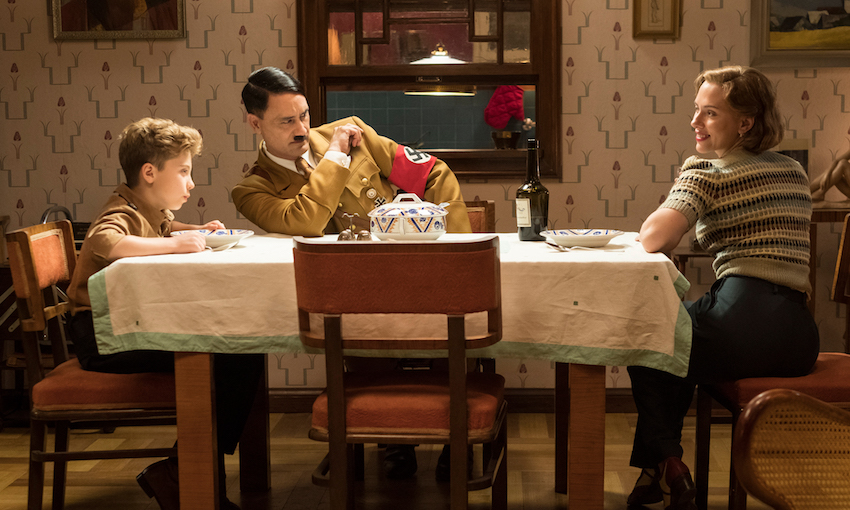
Can Nazis be funny? It’s not a question you expect to ask yourself when sitting down to watch a movie by New Zealand’s biggest name in Hollywood, but Taika Waititi’s Jojo Rabbit forces you to ask it.
Jojo Rabbit seemed a pretty oddball project for Waititi to take on after the hits of Boy, Thor: Ragnarok and Hunt For The Wilderpeople, but it’s part of a long lineage of stories that mock the Nazis to make a point. It took in nearly $1.2 million at the New Zealand box office over Labour Weekend. But is a movie that imagines Hitler as a kind of cuddly imaginary friend for a young German boy during World War II in good taste or bad?
It won the People’s Choice Award at the Toronto International Film Festival in September, but critics are more mixed on it – The Chicago Sun-Times called it “irreverent, edgy, provocative envelope-pushing satire,” but the Los Angeles Times thought that “its so-called audacity smacks of calculation and emotional cowardice.”
So, are we allowed to make Nazis funny or not? Here’s the case for and against:
1. Hitler was kind of funny. Most dictator/authoritarian types are. Look at Kim Jong-un, with his beady stare and tossed-salad haircut, or that guy in the White House. Waititi – who’s of both Māori and Jewish descent – plays Hitler himself in Jojo Rabbit. To modern eyes, the preening, sweating moustached dictator can seem like a living cartoon character.
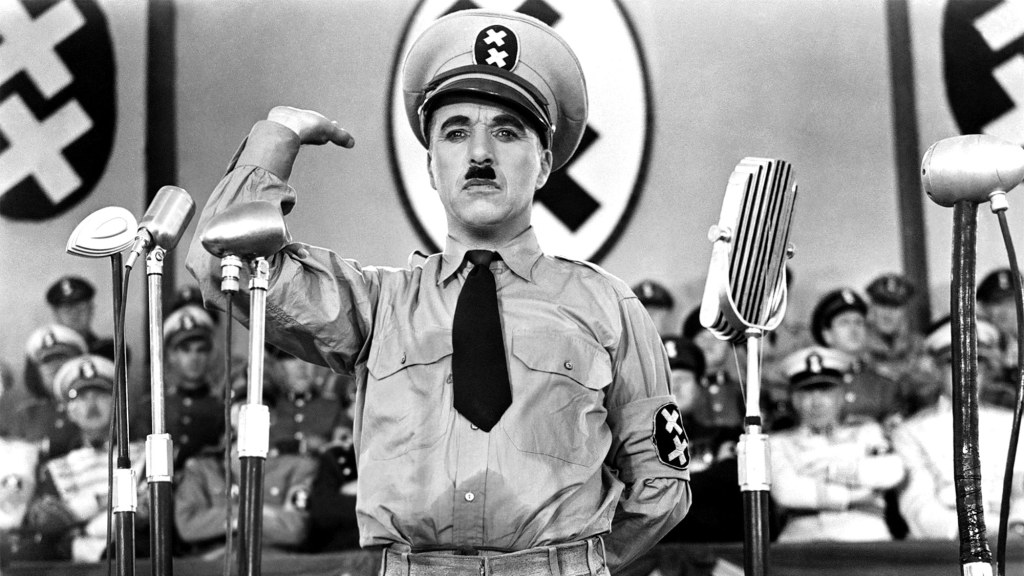
Mocking the Nazis goes all the way back to when Hitler was alive and ranting, with Charlie Chaplin’s send-up in The Great Dictator back in 1940 still one of the best attacks on the führer. Mel Brooks debuted The Producers more than 50 years ago, with its whole plot revolving around a tasteless satire of the Nazis that turns into an unexpected hit. Director Billy Wilder even made a POW camp funny in Stalag-17, which in turn inspired TV’s long-running Hogan’s Heroes.
The problem is that if you make Hitler too satirical, you run the risk of downplaying the very real carnage and horror committed in his name. Taika’s Hitler in Jojo Rabbit never feels truly authentic, peppering his talk with modern-day slang and gestures, but there’s a moment or two when he ramps up the ranting rage and you can see what people were afraid of.
Because he’s an imaginary friend in a broadly romantic fantasy of a movie, Jojo’s Hitler is kind of goofily cuddly, charming and supportive of Jojo’s ambitions – as long as Jojo sticks to the Nazi party line, of course. Jojo Rabbit ultimately portrays its title character’s interest in Nazis as a boy really just wanting to belong. “You’re a ten-year-old kid who likes dressing up in a funny uniform and wants to be part of a club,” Jojo is told at one point.
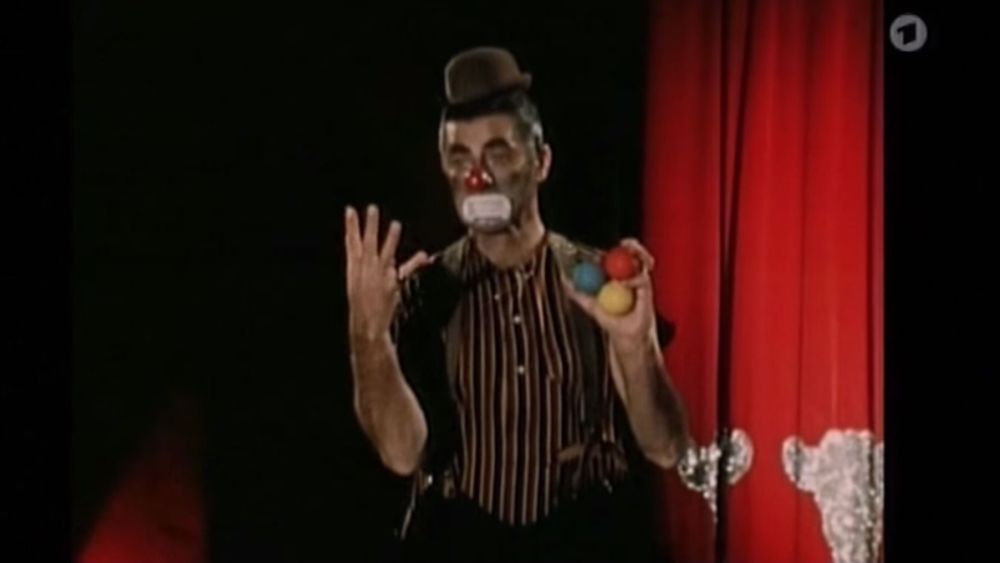
Jerry Lewis in the legendary lost movie “The Day The Clown Cried.”
2. However, the Holocaust really isn’t funny.Jojo Rabbit skirts around the edges of the Holocaust without going too deep. The movie doesn’t stint on showing the human cost of the Nazi regime to Jewish people, but it also doesn’t take us to Auschwitz.
There have been a few movies that have tried to find the funny in genocide. The late Jerry Lewis directed a movie in 1972 called The Day The Clown Cried about a clown entertaining children in the death camps which was so legendarily misconceived that it was never released, locked away in a vault somewhere and only seen by a few hardy souls.
That didn’t stop others with similar stories, like Robin Williams at his most mawkish in 2002’s flop Jakob the Liar, or Roberto Benigni inexplicably winning an Oscar for best actor for 1997’s Life Is Beautiful, one of those films which just gets more cloying and baffling with time. Holocaust movies can start off with black humour, but they always have to end with tragedy.
An entire documentary, The Last Laugh, was made a few years back about whether the Holocaust could ever be funny. In it, director/actor Rob Reiner notes, “The Holocaust itself is not funny. There’s nothing funny about it. But, survival, and what it takes to survive – there can be humour in that.”
3. Then again, New Zealanders are pretty funny. There’s something that just works about dropping the deadpan, laconic kiwi sense of humour into unusual situations. Whether it’s Jemaine and Bret struggling in New York City in Flight of the Conchords or Taika himself as a laid-back giant rock dude in Thor: Ragnarok, it’s funny as when that chur, bro accent pops up in an unusual place.
A lot of kiwi humour is about subtly undermining expectations, and taking a look at the world from unexpected angles. Combining that sensibility with a satire of Nazism is a gamble, and whether or not it works in Jojo Rabbit comes down a lot to personal preference. Archie Yates as Jojo’s bumbling childhood mate Yorki is that vaguely absurdist kiwi voice in Jojo Rabbit, with lines like “It’s definitely not a good time to be a Nazi.”
Can we make fun of the Nazis? Sure, but you’re not guaranteed that everybody will laugh at it. You can make fun of the Nazis, but for many people even doing so undercuts their very real evil. You laugh at Waititi’s intentionally broad Hitler, but you might feel a bit cringe doing so. That might just be the point.
You don’t have to go far on the internet to find outrage boiling away these days. Satire can defuse outrage, but in a world where the far right is on the rise, it doesn’t always feel like hip internet memes are doing much to dispel their allure for some people.
Yet the alternative to satire is either rage or silence. Satire can’t always knock down walls. But it can knock a few holes in them. Jojo Rabbit is a movie you’re meant to wrestle over. A quote by the poet Rilke appears at a pivotal moment in Jojo Rabbit, perhaps guiding us on how to navigate humour and evil – “Just keep going. No feeling is final.”
I’ve been busy lately writing a few pieces for publication elsewhere in the media biosphere. Here’s a few:
This was a difficult one to write, and more personal than I typically get, but it’s an important topic. About 18 months ago I got waylaid by a shock health diagnosis and it sent me on pretty intense personal journey. Both Radio New Zealand and NZ’s biggest news website Stuff have kindly published this one:
It’s World Thrombosis Day on Sunday, and I wrote this to tie in to that important awareness day. There’s been some great commentary and feedback about my piece by people on these sites’ Facebook pages sharing their own stories, which really gratifies me and makes the effort of writing this one worthwhile.
In less dramatic writing, I also had a very fun feature printed in the New Zealand Herald‘s weekend Canvas magazine the other week about a boom in Auckland cinemas showing revivals of classic films. It’s part of their paywalled content but if you’re a Herald member it’s worth a read!
Lastly, this one was actually published a little while back over at Radio New Zealand but I might as well link to it as well here, because the issue of America and guns certainly hasn’t changed much since I wrote it. I wrote about it from the perspective of an American who’s lived abroad for more than a decade. I often get asked about America’s mass shootings. Wish I had an answer, but for now this is what I had to say:
It’s not easy being a legend in their autumn. Billy Wilder was easily one of the best film directors of all time, a storyteller without peer who managed to balance comedy and drama perfectly in all-time classics like Sunset Boulevard, Some Like It Hot, The Apartment, Double Indemnity, Stalag 17 and many more.
But by the time the 1970s rolled around, Billy Wilder had been making pictures for nearly 50 years. He wasn’t “hip” anymore. He made several films before his final movie, Buddy Buddy in 1981, but few of them are remembered well today. He died at 95 in 2002, but his peak was decades before.
Wilder’s final four films aren’t quite up there with the classics that made his name, but there’s something interesting in all of them.
1972’s Avanti! is the underrated gem of Wilder’s later period, with a terrific Jack Lemmon performance. A harried businessmen learns his father has died in Italy, and has to retrieve his body. He learns his father had been having an affair when he meets the daughter (Juliet Mills) of his late mistress. The best of Wilder’s late work tackles ageing and death head-on, and Avanti! is a solid example of that “successful men having a mid-life spiritual crisis” genre that’s been done to death over the years. The charming, free-spirited Mills is a nice foil to Lemmon’s bitter cynicism. It’s not a perfect movie – it’s way too long at nearly 2 1/2 hours, and there’s a bit of a crime plot thread that doesn’t work, but there’s something resonant in Lemmon trying to make peace with his father’s memory and his bittersweet midlife tryst. Wilder’s ‘70s films up the swearing and nudity content, with mixed success (Buddy Buddy, below, just seems foulmouthed), but Avanti! is a mature, witty work.
The Front Page (1974) is a team-up of Walter Matthau and Lemmon, in one of many remakes of the screwball ‘30s comedy about feuding journalists. The material’s good, but you can’t really top the perfection of Cary Grant in His Girl Friday (another adaptation), and there’s something about watching a screwball comedy remade in the ‘70s that feels forced and inauthentic. While Matthau and Lemmon are always worth watching, a miscast Carol Burnett throws the whole thing off kilter and The Front Page is a trifle for Wilder that never feels essential or particularly bold.
Fedora (1978), on the other hand, is Wilder’s last grand creative statement, and even if it’s an imperfect film, it’s not quite like anything else he did. A spiritual sequel to Sunset Boulevard, it also stars the great William Holden seeking the truth about a revered reclusive Hollywood actress, the great diva Fedora. Placed in a sun-basked European setting, much like Avanti!, it’s got an autumnal, valedictory feel. Holden was only in his late 50s at the time of filming, but seems at least 10 years older (he’d sadly die at just 63 a few years later after a fall). There’s a mystery wrapped at the heart of Fedora, which is a bit far-fetched but still proves to be a fascinating rumination on the cost of fame, ageing, and celebrity, and the cost people are willing to pay. It’s unfortunate that Fedora isn’t quite as good as it could’ve been. Some of the acting is rather suspect (the lead two actresses were dubbed, which was a bad call), and Holden, who’s always captivating, basically vanishes for much of the second half. But Fedora is a movie by a man who still had something to say, and it wouldn’t have been a half-bad last work by Wilder. As it is, it’s a rough gem.
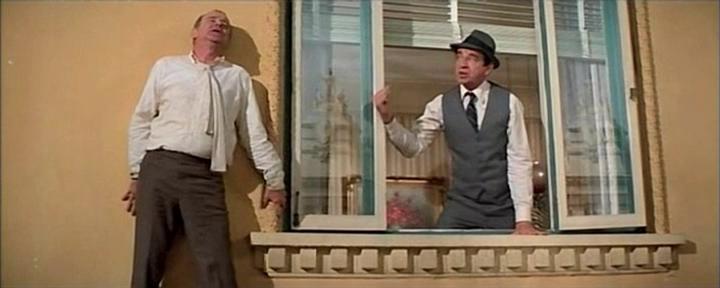
1981’sBuddy Buddy, unfortunately, is a bit of a stinker to go out on. Wilder was 75 when it came out, and it’s clearly the product of an old man running on empty. The traditional Wilder cynicism is there but shoehorned in an overwrought “wacky” comedy – it’s the story of a hitman (Walter Matthau) whose work keeps getting interrupted by a suicidal loser (Jack Lemmon, in full “Gil” from The Simpsons mode). There’s a few funny morbid moments – Lemmon pauses in the act of hanging himself in a bathroom to use the toilet to take a leak, for example. But the plot is all over the place, incorporating Lemmon’s battle to win back his wife (a deeply unpleasant character played by Paula Prentiss), some groan-worthy hippie satire, and topping the list in sheer weirdness, a sex clinic run by a bizarre Klaus Kinski (!) who seems to have wandered in from a different movie altogether. Lemmon’s too broad in his role and the suicide jokes seem a bit icky in 2019, but Matthau is admittedly pretty great as a cynical hitman. It’s a shame he’s not in a better movie. You’d barely recognise Wilder’s distinctive touch in it.
The great unrealised ambition of Wilder in his later years was to direct Schindler’s List. Of course, Spielberg’s Schindler’s List was a great film as well, but as a Jewish man who lost much of his family in the Holocaust, including his mother, Wilder’s take could’ve been remarkable.
Then again, Billy Wilder’s entire career was a pretty remarkable thing. There’s been few storytellers who showed us more about human nature in Hollywood’s history.
“You’re afraid to dive into the plasma pool, aren’t you? You’re afraid to be destroyed and recreated, aren’t you?” – Seth Brundle
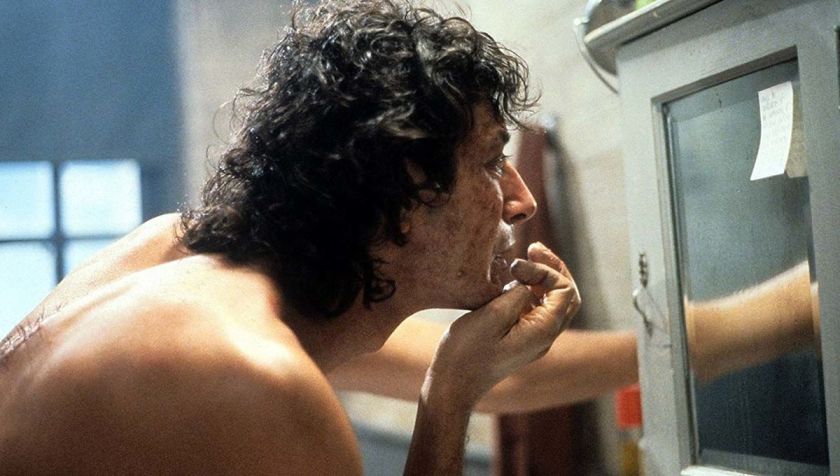
It’s gory, grotesque and disturbing, yet in my personal time capsule of favourite movies of all time, Jeff Goldblum and David Cronenberg’s “The Fly” sticks with me.
Despite having watched it more than a dozen times since 1986, I’d never seen it on the big screen until the other night, when I caught a gorgeous 35mm screening. There’s nothing quite like seeing “The Fly” on a big screen, with an audience screaming along in synchronicity.
Like most of Cronenberg’s movies, “The Fly” hasn’t dated at its core, except for Goldblum and Geena Davis’ big ‘80s hair. The gore is still horrifying, the emotions still tight, and the movie’s fundamental core of a man grasping for knowledge and being burned by its power is as old as Icarus.
It’s a horror movie, with some of the most intensely disturbing mutations and goop of Cronenberg’s visceral career, but it’s also a doomed love story, brought to life by Goldblum and Davis’ immense chemistry (they were a couple at the time).
When I first saw “The Fly,” it was on a battered VHS dub tape someone made for me back in high school. I watched that tape so many times that whenever I see the movie now I expect to see the same tracking glitches the tape had. It was my first Cronenberg, which will screw you up for life.
“I’m saying I’m an insect… who dreamt he was a man… and loved it. But now the insect is awake.” – Seth Brundle
There’s a speech Goldblum gives towards the end, covered in latex and deformed, about insect politics. It and the movie as a whole are Goldblum’s finest hour as an actor.
Everybody loves Jeff Goldblum these days, and heck, I do too, but he’s become kind of a cartoony eccentric version of himself. “The Fly” shows what happens when Goldblum actually acts instead of quirks, and it’s still revelatory to watch Seth Brundle’s horrible transformation and mutations.
As a teenager, I saw a lot of myself in Seth Brundle’s horrific transformation into a human/fly hybrid. Golbum’s face breaks out, his body changes, he doesn’t recognise himself when he looks in the mirror. That’s every teenager in the world for you.
I see it now, I see darker metaphors – as a middle-aged dude, your body continues changing, not always in great ways. At one point in the movie Goldblum worries that he’s developed some hideous form of cancer (spoiler: it’s way worse than that). Now I see “The Fly” as a parable about anyone who’s ever felt trapped in a body that’s a stranger to them.
“I’ll bet you think that you woke me up about the flesh, don’t you? But you only know society’s straight line about the flesh. You can’t penetrate beyond society’s sick, gray, fear of the flesh.” – Seth Brundle
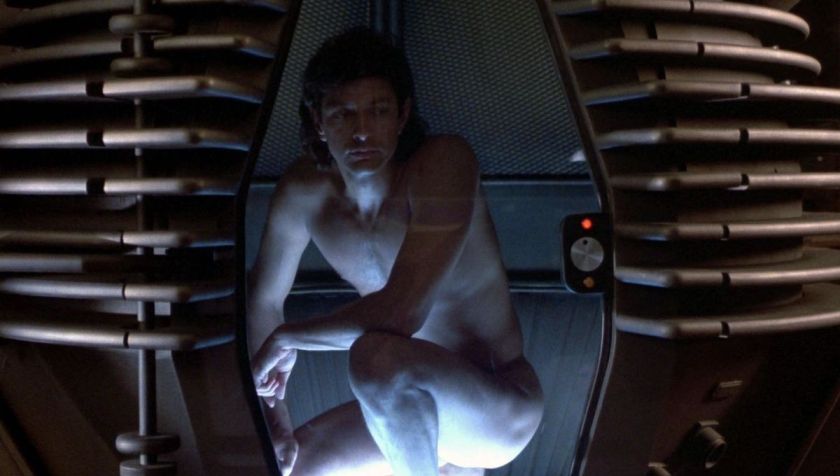
I’ve had my share of health woes the last few years and I have to admit that watching Goldblum go from a dazzling shirtless golden god to a deteriorating, disintegrating wreck of a man hits home hard. We are all transforming, every day, in ways big and small. Sometimes it’s wonderful. Sometimes it’s horrible. The question is how we endure it.
“The Fly” is still a movie I return to every few years, and each time I see something a little different in it. It’s dark and down, sure, but yet I also feel a weird glimmer of optimism in parts of it too. We never stop wanting to better ourselves, no matter the cost. We are all swimming in the plasma pool.
“It wants to… turn me into something else. That’s not too terrible is it? Most people would give anything to be turned into something else.” – Seth Brundle
I’m a fan of a lot of things. But “Star Wars” is complicated for me.
Like pretty much everyone born in the 1970s, I grew up with “Star Wars,” surrounded by Kenner action figures and C-3PO Underoos and painstakingly assembling the entire 107-issue run of Marvel comics. I never thought I’d still be seeing new “Star Wars” movies 40 years later.
But these days, the more toxic elements of “Star Wars” fandom have seeped into my appreciation of the Jedi mythos, already diluted by middling prequels and a never-ending tsunami of content-expanding product – some good, some unnecessary. They’re a tiny keyboard warrior minority, but seeing the misogynists and trolls outraged at gerrrrrls and non-white characters brought into their little biosphere in “Star Wars: The Last Jedi” had a contaminating effect for me. I’ll always love “Star Wars,” but I’m uneasy lumping myself into the fandom scene.
Jake Lloyd and Ahmed Best of 1999’s “The Phantom Menace” have faced years of harassment and bullying for simply appearing in a movie. It’s hard for me to square up my own childhood Jedi fandom with an invisible online world of real-life Sith lords throwing bombs from their keyboards. If fandom is hounding an Asian-American actress off the internet for being in a “Star Wars” movie, I don’t want any part of it.
So it’s complicated watching “Star Wars” movies in your late 40s, with a lifetime of your own memory baggage tossed into a cultural Tower of Babel of hot takes and trolling that never ends.
I watched “The Last Jedi” again recently, and it’s the rare post-1983 “Star Wars” movie that actually gets better on each viewing. It goes in hard, unexpected places and objectively speaking is the most beautiful movie of the entire series to date, with director Rian Johnson composing painterly, stunning vistas that remind me of why I fell in love with the alien skies of Tatooine and Bespin in the first place. The cast is great (sorry, keyboard warriors) and it’s honestly the most surprising “Star Wars” movie since “Empire Strikes Back.” While I dug “The Force Awakens,” it’s hard not to see its plot as a ramped-up remake of “Star Wars”. “The Last Jedi” goes against what fans expected, and it suffered a backlash in some quarters as a result.
And yet, “The Last Jedi” is also a cruel movie, where betrayal and despair is everywhere. Watching the last remnants of the Rebellion slowly being picked off and almost every character suffering incredible losses is a downer, much like the ending of “Empire Strikes Back” was in 1981.
It’s likely that December’s Episode IX will live up to the title “The Rise of Skywalker” and deliver some kind of feel-good catharsis, but I don’t know. These are bleaker times than 1983. Cheesy as it may seem, the original trilogy had the standard-issue happy ending, with Ewoks singing wub-wub and everybody smiling at the force ghosts.
Perhaps it’s a more brutal world now or a less blinkered one, but “The Force Awakens” and “The Last Jedi” are here to tell us there are no happy endings. (MAJOR SPOILERS ahead if you have yet to see either of these movies.) Han Solo has an apparently failed marriage to Leia and dies alone on a bridge, killed by his own son. Luke Skywalker sees his every ambition fail and spends his final years bitter and alone on a rocky island. General Leia Organa’s entire life is filled with failure and loss, the Rebellion crumbling around her, and whatever her final fate in “The Rise of Skywalker” is likely to be, it’s coming at the end of a hard life. I’m only hoping Lando has had some happiness in his final years.
In the brief interregnum from 1984-1997 or so when “Star Wars” fandom went underground, where there were tons of comic book sequels and novels and the like, an entirely new ending was imagined for Han, Luke and Leia, one filled with ups and downs but definitely less fatalistic than the bleak realities of Episodes VII and VIII. I feel sad to see the characters I followed so obsessively as a kid not getting their happy endings. Then again, you can call back to Ben Kenobi’s lonely Tatooine exile or the brutal deaths of Uncle Owen and Aunt Beru and say that “Star Wars” has always had harsh endings.
Yet I can’t fault its reality – war rarely ends cleanly or easily in real life, and it was always a stretch to imagine a bunch of Ewoks in a forest singlehandedly brought down a galactic empire. But I liked the fantasy. I liked the happy ending in 1983, and not having to read hot takes on it all the next day online. One of the biggest problems with the 42-year history of “Star Wars” now is that everyone has their own expectations of how things will go, and their own disappointment when it doesn’t measure up. Like most things, “Star Wars” is an imperfect creation, and part of being a fan of it all after decades is coming to grips with it.
In the end nothing will be as pure a love as the kind you had when you were a starry-eyed kid. I’ll always be a “Star Wars” fan, despite my misgivings. But it’s complicated.
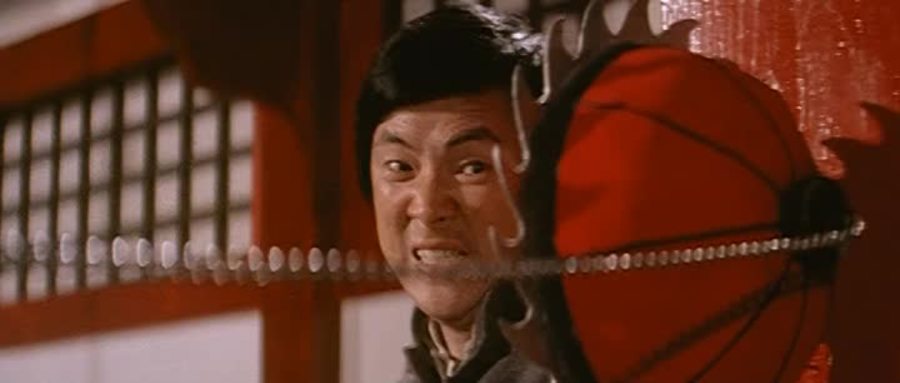
What is it: It’s not exactly a household name, but in certain circles, it’s the holy bible of cheesy kung-fu schlock. Master of the Flying Guillotineis a 1976 Taiwanese film written by, directed by and starring Jimmy Wang Yu, a sequel to his One-Armed Boxer (about… you guessed it). It’s one of the wackiest kung fu movies of the ‘70s, featuring an insane blind assassin and his fearsome “flying guillotine” (a bizarre weapon which resembles a bladed cap attached to a chain. You throw it and boom, instant haircut). The guillotine master has a mad-on for the famed one-armed boxer who killed his students, and the entire movie is basically an excuse for inventive, crazed kung fu revenge ultraviolence, leading to a fantastic showdown between a one-armed fighter and a blind guillotine wielder.
Why I never saw it: Hell, I’d never even heard of it until recently, when I’ve been going on an extended martial arts movie binge, from the classic moves of Bruce Lee to the slapstick antics of Jackie Chan to the cool charms of Donnie Yen.
Does it measure up to its rep? This is one of Quentin Tarantino’s favourite movies and a clear influence on his “Kill Bill” series. It’s not slick, but its clunky moves (the ‘one-armed boxer’ moves about as smooth as I do on a Saturday morning), crazy krautrock-influenced soundtrack and bizarre characters make it unforgettable in a genre filled with wacky kung-fu killers. While Wang Yu is a kinda stiff leading man, Lung Kun Lee as the guillotine killer is fascinatingly over-the-top – with facial hair that makes him resemble a rabid woodchuck, a snarling theme song that announces his entrance, and a penchant for throwing explosives around every building he enters, he’s amazing. The entire movie stops dead at one point for a half-hour of so of a bloody, murder-filled martial arts tournament featuring crazily baroque fighters, which basically plays like “Mortal Kombat” invented 20 years earlier. There’s sheer energy to the way this revenge tale is framed that gives it a kick. Perhaps the best way to watch is it like I did, on a low-rent dubbed video which inexplicably switches back to Chinese 5-6 times during the middle of the movie for a few lines here and there. It’s like I was there in the grindhouse drive-in movie theatre parking lot of 1976 this movie was made for.
How’s it different than I thought: Unlike the other “flying guillotine” movies out there in this sub-sub genre, this is pretty bloodless. In fact, a couple of the marquee decapitations in this flick are like watching an abandoned puppet go down, made funnier because in one scene you can clearly see the “headless man” is a man with his still-attached head stuffed into an extra-large shirt. And we won’t even talk about how the “one-armed boxer” is clearly hiding his arm in his tunic in almost every scene.
Worth seeing? Absolutely. It’s the kind of kung-fu insanity I dreamed about as a lad, and a hidden gem if you haven’t discovered its sloppy charms yet.
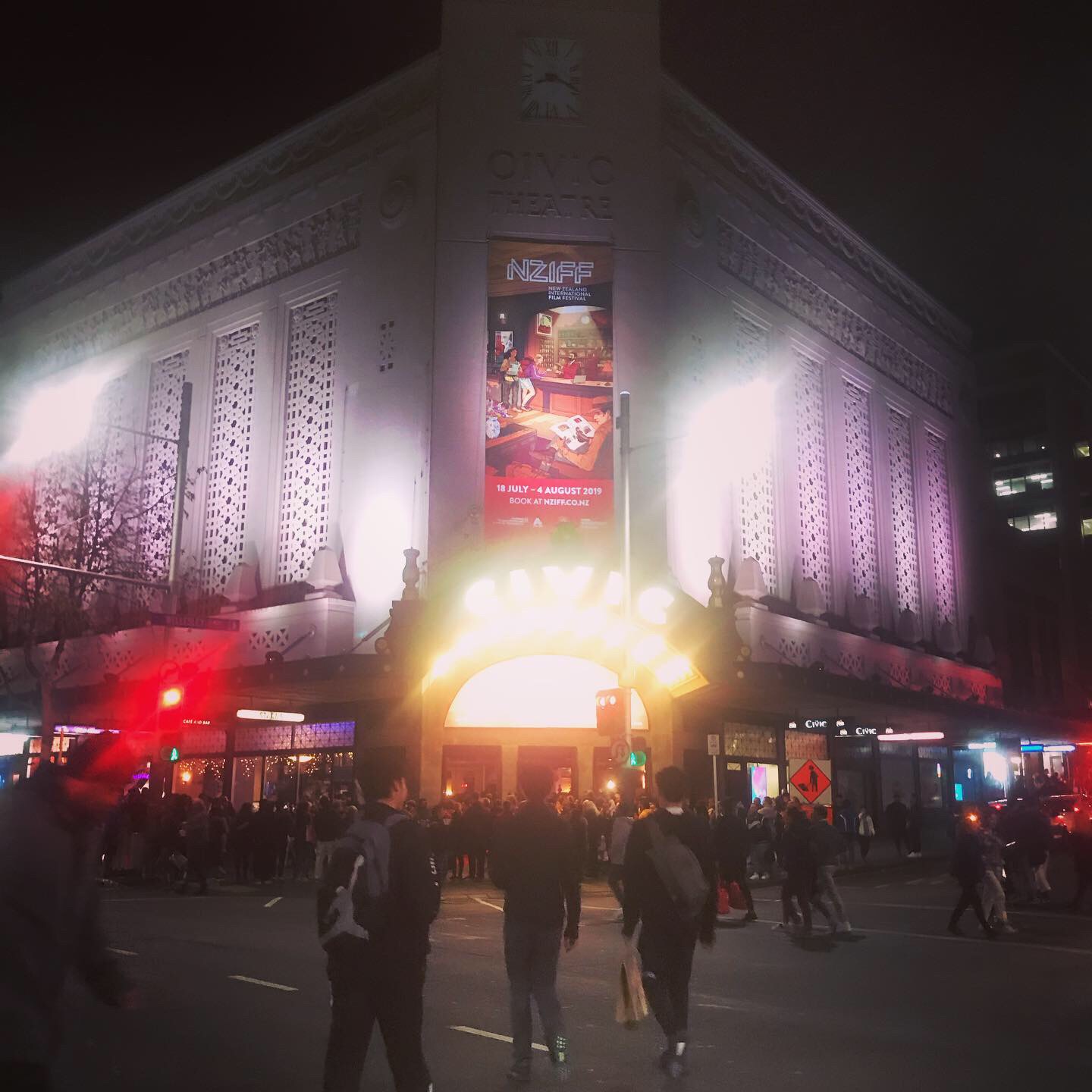
A good film festival is like a church for its acolytes – a place to find solace and enlightenment, to forget your troubles and to imagine exciting new possibilities in life.
I’ve been going to the New Zealand International Film Festival every late July and August for more than a decade now, and every year, it’s a highlight of our rainy grey winters. I’m a mere amateur compared to some of the festivalgoers who manage 12, 15, 25 or 30 of the nearly 150 movies that unspool over two weeks or so. This year I’m managing eight, and it’s a spectrum of images and ideas, enough to make me close my eyes at night and dream of red curtains parting to see white screens.
On a Tuesday I attend a splendorous red-carpet premiere for a documentary about a Tongan family in New Zealand, which also featured brass bands, Tongan dancers, members of the Tongan royal family and grand and colourful frocks in adazzling, warm-hearted celebration of New Zealand’s rich Pacific culture. On a Thursday I see Aretha Franklin’s last bow and on a Friday I close it all up with a bizarre-sounding French movie about a man who falls in love with his new jacket.
No wonder I can’t stop thinking about movies. It’s a kaleidoscope of cinema every year – in past years I’ve seen grand revivals of Sergio Leone movies, silent classics like “Nosferatu” and Andrei Tarkovsky’s epic, enigmatic Russian epics which demand to be seen on a gaping big screen.
And always something new or novel. Always something that just sounds like it might be interesting, whether it’s a documentary on tea in China or about the band Bikini Kill or a sprawling sci-fi epic or a thriller about zombies taking over a small New Zealand town.
Festivals like this remind me of why I’m so ambivalent about streaming. There’s great things about it, but I hate how it’s slowly eclipsing all other forms of cinema with what feels like an endless flood of cookie-cutter corporate “content.” Try finding more than a few token movies made before 1980 on Netflix. It’s much easier to sit and binge your brain on 12 episodes of some forgettable new show than it is to hunt down and figure out how to watch the greatest hits of a Billy Wilder or Robert Altman.
And while I’m down with the superheroes and the blockbusters there’s something special about gathering in the dark with a film festival crowd, whether it’s a bunch of twisted gorehounds cackling at gruesomely hilarious violence in one movie or an audience full of Tongans roaring at the quirks and jokes of their own closeknit culture.
Film festivals are the bestivals, every year a window into dozens of different worlds all flickering to life on the vast white screen.









 I’m a fan of a lot of things. But “Star Wars” is complicated for me.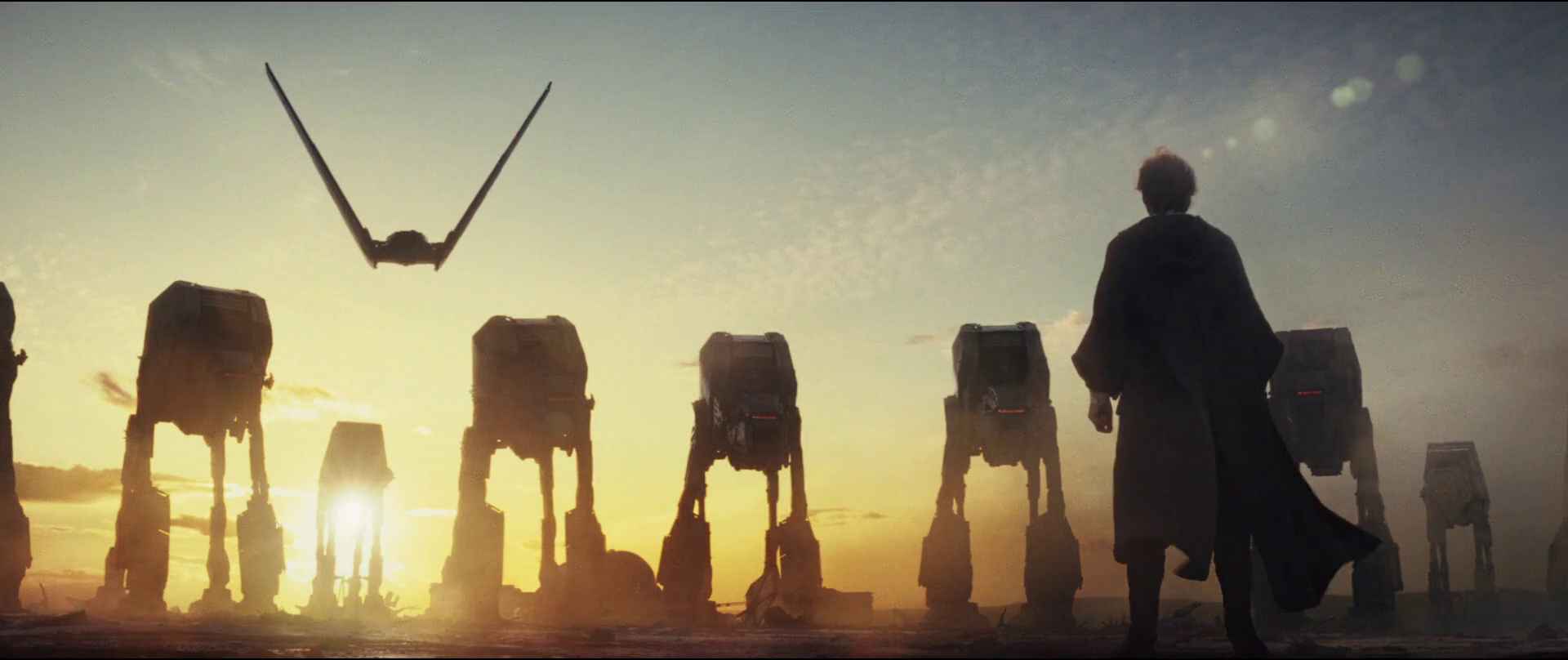
 I watched “The Last Jedi” again recently, and it’s the rare post-1983 “Star Wars” movie that actually gets better on each viewing. It goes in hard, unexpected places and objectively speaking is the most beautiful movie of the entire series to date, with director Rian Johnson composing painterly, stunning vistas that remind me of why I fell in love with the alien skies of Tatooine and Bespin in the first place. The cast is great (sorry, keyboard warriors) and it’s honestly the most surprising “Star Wars” movie since “Empire Strikes Back.”

 What is it: It’s not exactly a household name, but in certain circles, it’s the holy bible of cheesy kung-fu schlock.
  Does it measure up to its rep? This is
  How’s it different than I thought: Unlike the
  A good film festival is like a church for its acolytes – a place to find solace and enlightenment, to forget your troubles and to imagine exciting new possibilities in life.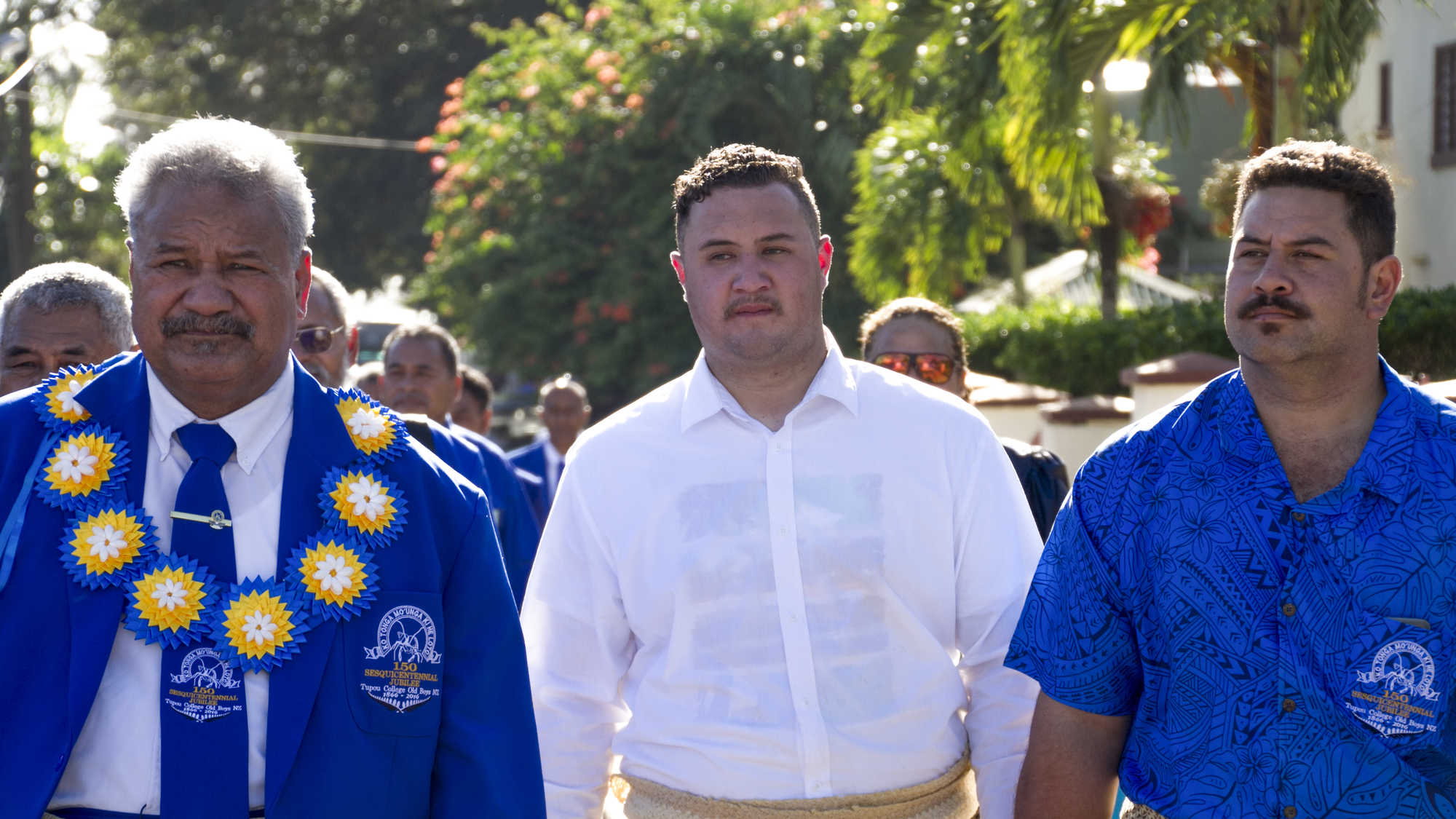
 No wonder I can’t stop thinking about movies. It’s a kaleidoscope of cinema every year – in past years I’ve seen grand revivals of Sergio Leone movies, silent classics like “Nosferatu” and Andrei Tarkovsky’s epic, enigmatic Russian epics which demand to be seen on a gaping big screen.
 Nik Dirga