 A good film festival is like a church for its acolytes – a place to find solace and enlightenment, to forget your troubles and to imagine exciting new possibilities in life.
I’ve been going to the New Zealand International Film Festival every late July and August for more than a decade now, and every year, it’s a highlight of our rainy grey winters. I’m a mere amateur compared to some of the festivalgoers who manage 12, 15, 25 or 30 of the nearly 150 movies that unspool over two weeks or so. This year I’m managing eight, and it’s a spectrum of images and ideas, enough to make me close my eyes at night and dream of red curtains parting to see white screens.
On a Thursday I see documentaries about legendary film critic Pauline Kael and about the Satanic Temple, on a Friday I see a kiwi director’s gory delight, on a Saturday I see a documentary about a meth-addicted magician and on a Sunday I see a pulpy delight of a Korean gangster movie.
 On a Tuesday I attend a splendorous red-carpet premiere for a documentary about a Tongan family in New Zealand, which also featured brass bands, Tongan dancers, members of the Tongan royal family and grand and colourful frocks in a dazzling, warm-hearted celebration of New Zealand’s rich Pacific culture. On a Thursday I see Aretha Franklin’s last bow and on a Friday I close it all up with a bizarre-sounding French movie about a man who falls in love with his new jacket.
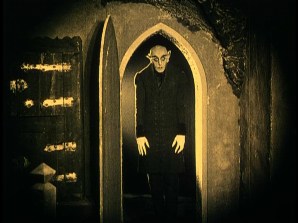 No wonder I can’t stop thinking about movies. It’s a kaleidoscope of cinema every year – in past years I’ve seen grand revivals of Sergio Leone movies, silent classics like “Nosferatu” and Andrei Tarkovsky’s epic, enigmatic Russian epics which demand to be seen on a gaping big screen.
And always something new or novel. Always something that just sounds like it might be interesting, whether it’s a documentary on tea in China or about the band Bikini Kill or a sprawling sci-fi epic or a thriller about zombies taking over a small New Zealand town.
Festivals like this remind me of why I’m so ambivalent about streaming. There’s great things about it, but I hate how it’s slowly eclipsing all other forms of cinema with what feels like an endless flood of cookie-cutter corporate “content.” Try finding more than a few token movies made before 1980 on Netflix. It’s much easier to sit and binge your brain on 12 episodes of some forgettable new show than it is to hunt down and figure out how to watch the greatest hits of a Billy Wilder or Robert Altman.
And while I’m down with the superheroes and the blockbusters there’s something special about gathering in the dark with a film festival crowd, whether it’s a bunch of twisted gorehounds cackling at gruesomely hilarious violence in one movie or an audience full of Tongans roaring at the quirks and jokes of their own closeknit culture.
Film festivals are the bestivals, every year a window into dozens of different worlds all flickering to life on the vast white screen.
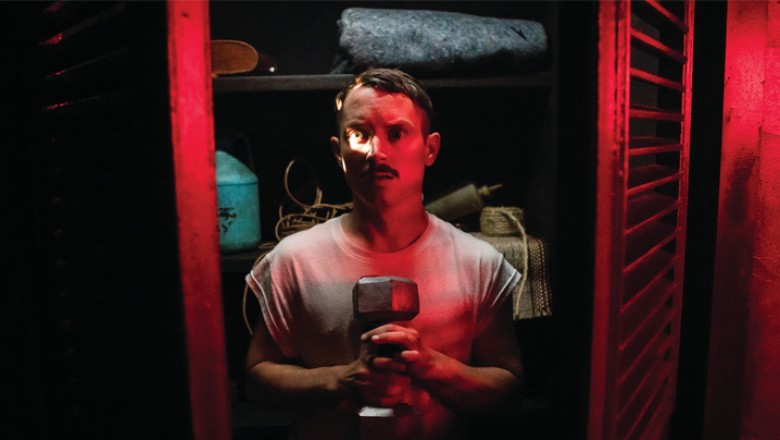 I joined a crowd of hundreds to cringe, scream and laugh last night at the premiere of NZ filmmaker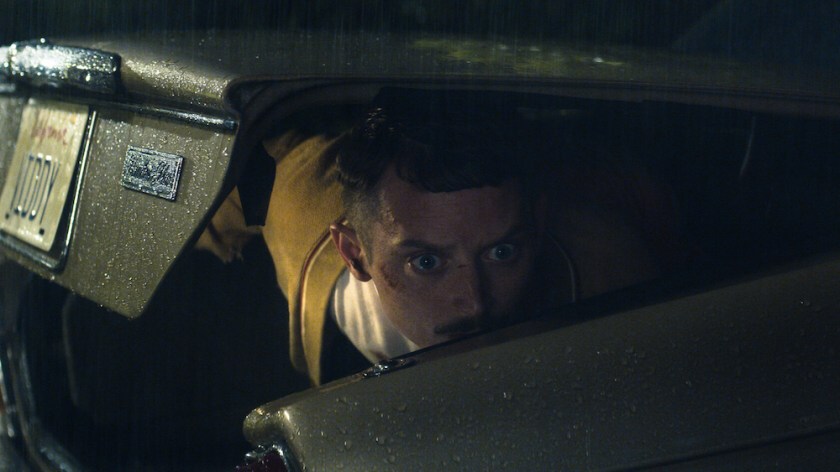
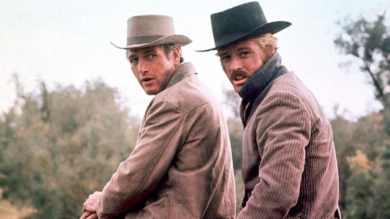
 The movie begins and ends with sepia tones, homaging an imagined western past that America has fetishised for decades. But in between “Butch Cassidy” is a determinedly modern movie, with Joss Whedon-worthy jokes being cracked left and right by Cassidy and the Sundance Kid. Rather than the stoic masculine glares of an Eastwood or John Wayne, you’ve got Paul Newman’s motormouth Butch, whose first act of violence in the film isn’t a grim showdown – it’s kicking someone in the nuts. Meanwhile, Robert Redford’s Sundance Kid is the more traditional hero of the two, but he still shows cracks in his western hero facade.
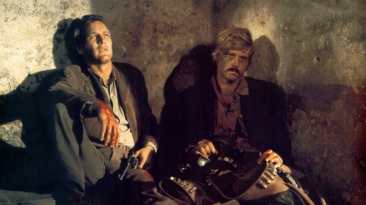 “Butch Cassidy” is one of those pivotal movies of the ‘60s and ‘70s that forever cracked the old of the traditional heroic figure. The reason it still seems so relaxed today is that we’ve been surrounded by Butch and his offspring for years. Long may they ride.
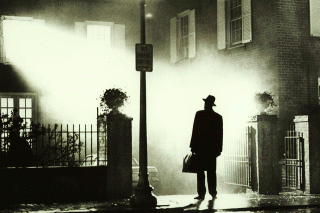 What is it: The world’s most famous demonic possession story, the 1973 horror classic
 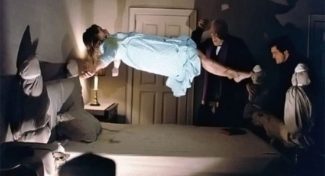 It makes what follows later that much more profane and shocking. And the movie’s most iconic moments – the possession of Regan and her gruesome actions – are still truly horrifying today. Every parent of a teenager has that moment of disconnection when your child suddenly seems like an alien to you, and “The Exorcist” dramatises that perfectly to terrible extremes.
 Thirty years ago today, I was standing in a line. A bunch of us were all queued up for what was then the biggest comic book movie of all time, Tim Burton’s Batman.
 It’s hard to explain to fans of today’s slick, streamlined and gorgeous Marvel Universe movies that seeing a comic book movie in the ‘80s and ‘90s was mostly a matter of lowering expectations, of accepting flaws and looking for the bits that worked.
 But Keaton’s Batman has only grown in strength over the years. He never quite has the classic physical profile – seen in a tuxedo in an early scene, his Bruce Wayne’s shoulders would barely fill half the Bat-suit – but acting is often concentrated in the eyes, and Keaton’s eyes hold a balance of resolve and regret. His Bruce Wayne seems closer to the edge than some – look at the scene where he takes on the Joker in his civilian clothes: “You want nuts? Let’s get nuts!” In contrast, his Batman is more of a blank, grim slate, a mask that wipes out Wayne’s humanity and focuses his mission.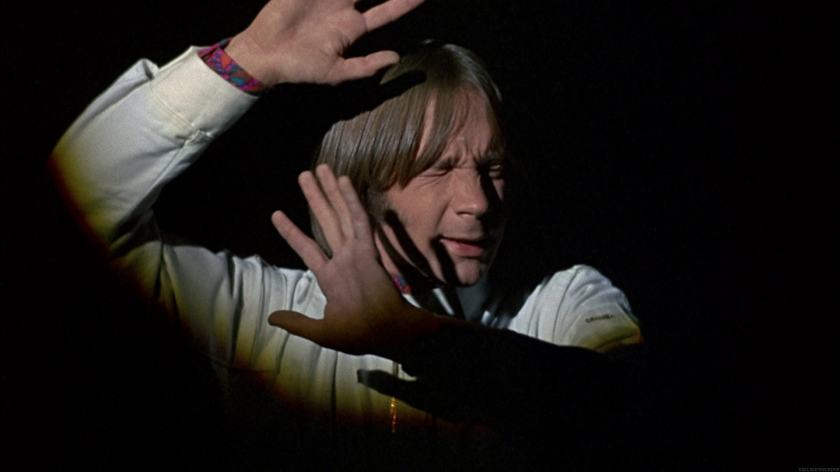
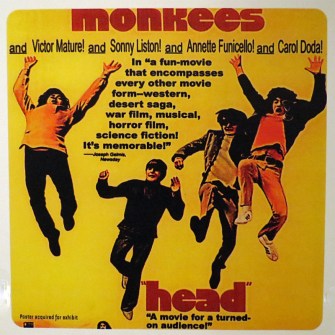 I’ve seen three of the Monkees live now, and I’m happy to have done so. But there was one last Monkee fan hurdle for me to cross: Their mysterious, controversial 1968 movie “Head,” which is either their finest moment or their nadir, depending on who you ask.
 Hey, hey, we are The Monkees / You know we love to please / A manufactured image / With no philosophies.
 I have a bizarre fascination with the bad movies of
  I’ve been making my way as a kind of punishing completist chore through the most obscure of Sellers’ oeuvre, movies that are barely remembered today. Sellers was a difficult, demon-haunted man, whose talent was crippled by bad health and serious psychological issues (there’s the famous quote “There is no me. I do not exist. There used to be a me, but I had it surgically removed,” which more than anything sums up the man).
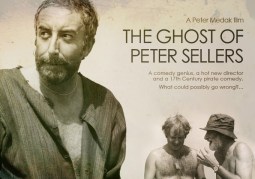 And I am absolutely dying to see the new documentary
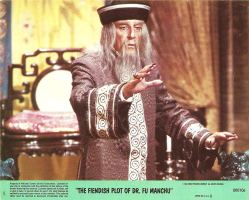 There’s a kernel of something golden in even his worst movies. His Fu Manchu is objectively a racist joke played far too long, but there’s a strange sadness Sellers summons up between the lame puns in his portrayal of an immortal villain.
 I love Godzilla, because when I’m in the mood, you just want to watch a giant lizard smash the hell out of everything around you. Another big-budget Godzilla movie opened this weekend, and it’s gotten the usual mixed reviews from people who don’t really get the point of a Godzilla movie.
 My first Godzilla movie was a battered VHS tape of 1963’s “King Kong Vs. Godzilla”, and to this day it’s one of my desert island flicks. It’s absurd – this Kong looks more like a squashed and mangy grizzly bear than a gorilla, really – but so much damned fun as this duo wrestle and tumble around Japan.
 For those who think the current Godzilla: King of the Monsters is wacky, check out 1991’s utterly unhinged “Godzilla Vs. King Ghidorah,” which features time-travel, a ridiculous “Terminator” riff and the spectacle of Mecha-Ghidorah. For those who want something a little deeper, 2016’s “Shin Godzilla” is a strange satire of Japanese bureaucracy mixed up with some of the most awe-inspiring Godzilla scenes ever. For those who just remember Godzilla wrestling other rubber-suited goofballs on sound stages, 1972’s “Godzilla Vs Gigan” is the kaiju-fest you’ve been hunting for, and Gigan, with his chicken beak, massive talons and inexplicable buzzsaw blade sticking out of the middle of his chest, is peak kaiju craziness.
 I’ve written
  But her biggest claim to glory today is that she designed the epic look of the Creature From The Black Lagoon. The Creature is, I’d argue, the second-best monster design of all time (sorry, but Karloff’s Frankenstein’s monster has to take the top crown). It’s alien, yet human; terrifying, yet captivating.
 In “Lagoon,” O’Meara also shows the hard work that goes into the biography of a somewhat obscure person, hunting down leads and tracing dusty steps in the past. The story is as much about her and her experiences as a young woman in Hollywood as it is about Milicent Patrick. Some of the anecdotes O’Meara tells of her own treatment are truly dismaying, especially because they are all too common. The real monsters are still out there in Hollywood, hiding in broad daylight.
 Nik Dirga