Year In Review: 3 disappointments of 2018

I love a good year-in-review post, and here’s the first of two looking at the highs and lows in the year in pop-culture for me.

I’ll start with the negative, with a look at three pop-culture moments of 2018 that let me down. Let the bummers begin!

doctor-who-s11_entertainment-weekly-3_new-episodic_wide-28f404cb12e08e88cb071a2b942bd5d23107103e-s800-c85Doctor Who: First off, I love the idea of a female Doctor. I think Jodie Whittaker was an excellent casting choice and did a fine job this season. But she was let down by trite and sloppy writing and a general lack of invention and passion in a pretty disappointing first season. I actually would’ve liked to have seen more done with the ramifications of the Doctor’s first reincarnation as a woman after 12 men and 1000 or so years, but the show barely dealt with it. The show stepped too far away from acknowledging the Doctor’s vast lifespan and history, and too often the Doctor came off as an uncertain novice. I was getting sick of the Daleks, too, but few of this year’s antagonists were memorable and the self-contained episodes often lacked real drama. Three companions is far too many, and the stories generally were bland sci-fi 101. The best of the episodes were ones like the Rosa Parks episode or the Indian partition story which felt like they had something to say. The worst were generic “monster of the week” tales like “Arachnids in the UK” with a completely unsubtle Trump stand-in. With the usual keyboard warrior suspects ranting and raving how a woman Doctor might give everybody cooties, I was hoping the show would shut them up with an utterly amazing year, instead of one that was just sort of OK. Let’s hope the next season brings back some of the mystery, invention and drama the best of the David Tennant years had. 

13OctfilmThe First Man: I really wanted to like this Neil Armstrong biopic starring Ryan Gosling, but I walked out massively disappointed by its turgid tone, seasick-inducing attempts to realistically replicate the experience of space flying, and disappointed by Gosling’s stone-faced portrayal of a man who admittedly was kind of boring. It had its moments – Claire Foy does a lot with the token doting wife role, and in the moments when Armstrong actually lands on the moon the claustrophobic aura of the movie actually lifts into something actually resembling poetry. But I think I’d rather watch more soaring, less interior space pics like “The Right Stuff” or “Apollo 13” again rather than sit through “The First Man” twice. 

ellisonDeath, devourer of all: This year was pretty rough on my cultural heroes. I know, a lot of them were in their 80s and 90s, but it still sucks. Stan Lee and Steve Ditko, creators of millions of comic-book dreams. Harlan Ellison, writer with a voice like lightning and a creator who shaped my worldview more than most. Philip Roth, the last of a generation of great American writers like Updike and Vonnegut. Mark E. Smith, tattered, debauched voice of the clattering UK band The Fall. Legendary voice Aretha Franklin. Endlessly curious mind Anthony Bourdain. “Frasier’s” grand, underrated John Mahoney. The Lois Lane of my childhood dreams, Margot Kidder. Way too many others. Time is cruel, ain’t it?

Up next: Get positive, with my top ten pop-culture moments of 2018!

What’s probably my last time in a video store

VARIOUSI visited what’s probably just about the last surviving video store in Auckland the other day. It won’t be there for long, as it’s shutting its doors December 31 and was having a massive clearing-house sale.

The internet and digital media have knocked around book stores and music stores relentlessly, but some are still hanging in there. But the humble video store has been systematically annihilated in the last decade or so. I’ve lost track of how many ‘closing down’ video stores I’ve seen in Auckland in the relatively short time since Netflix finally launched streaming in New Zealand in March 2015. We were a few years behind the US, but the doom came calling here. 

Hey, I get it. I stream, too, but there’s an awful, awful lot of film history you can only find on home video. Also, I own it, and don’t have to suffer the whims of some corporation that decides to drop titles from their catalog at random. 

lsThe groovy Videon in Mount Eden, Auckland was never my regular video store – I lived too far away from it – but it was a part of my family’s lives, and it was the kind of classic, curated and smart video store that film nuts loved – carefully organised by directors, countries and detailed sub-sections, with an extensive selection that blows away anything on streaming when it comes to film history. 
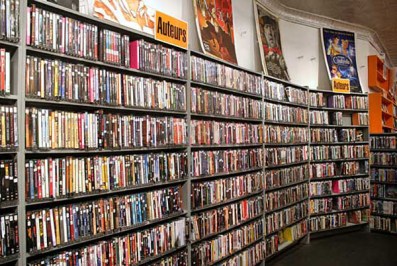
I scooped up rare treasures like Tod Browning’s creepy classic 1932 “Freaks,” rare Robert Altman movies from the 1970s, and more, and I thought once again about how while streaming has its up side, its big down side is that movies from before 1990 or so barely exist. Little NZ doesn’t even have the smaller niche streaming services that the US does, so for us it’s Netflix and a few other competitors, and that’s it. 

I worked at a video store part-time in California almost 20 years ago now, in that brief era when they felt like the centre of the entertainment universe. DVDs were barely a thing yet and battered VHS tapes ruled the land. This store even had a back room full of obsolete Beta tapes. Even now any time I see movies of that time like “Blade,” “A Bug’s Life,” “Pleasantville” and “Ronin” I can picture their cardboard boxes lining a shelf, the greasy plastic cases holding the tapes piled up high at the rental return counter each morning. 

kimsVideo stores, while they lasted, provided a sense of community that staring at your laptop while scrolling through likes on your phone really doesn’t. Going out to ‘rent a video’ meant interacting a bit more than pushing a button. Sure, they could often be understocked or over-corporate or full of trash and porn, but still, the very best of the video stores, when they flickered through their brief life span, were a wonder. 

I kind of feel like this weekend’s big DVD clearance sale might well be the last video store I ever go into in my lifetime. I filled my arms with zombie horror and ‘40s melodrama and Orson Welles and Werner Herzog and bid one last farewell to an era.

Roll credits. 

Robert Altman’s “Nashville” 43 years on

fullwidth.98a99c88I’ve been on a Robert Altman kick these last few months, working through the late director’s diverse body of work. I watched what many consider his masterpiece, 1975’s Nashville, for the first time in years, and it’s surprising how relevant a 43-year-old movie about life in America still feels today.

OK, sure, it’s steeped in ‘70s fashion and style (Shelley Duvall’s barely-there groupie wardrobe deserves its own biopic), but underneath Altman’s sprawling loose-limbed tale of a diverse group of country musicians and politicians over a few days in Nashville is a keen eye for the eternal conflict in America – between messy reality and the urge to mythologise itself. 

Altman clearly saw the two Americas back in 1975 that we still have today, where one man’s entertainment is another man’s outrage, where one man’s favourite song is another man’s cheese. There’s multiple perspectives to be had on almost every moment in the film, depending on where you view it from. 

nashville_altman

A waitress believes she’s a great country singer despite the evidence. A smug BBC reporter constantly holds forth yet is quietly despised by everyone she interviews. One star country singer is an emotionally fragile wreck, another is a fading star worried about his own coming irrelevance. A black country singer who performs at the Grand Ole Opry is terrific, but reaction shots of the all-white audience show a lot of staring, silent faces. 

nashville-2

Take a scene where Keith Carradine sings his Academy Award-winning love song, “I’m Easy,” to Lily Tomlin in a crowded bar. It’s a heart-tugging, gorgeous romantic moment, but the sentiment it’s filled with is undercut almost instantly because we know Carradine’s character is hopping from bed to bed, casual enough about it to call his next hookup while his current one is still getting dressed in his hotel room. That song is just a song. 

A maverick, outsider presidential campaign is a running thread throughout Nashville. The fatuous bromides and slogans coming from presidential candidate Walker’s truck that echo throughout the film could be Trumpisms, Bushisms, Clintonisms from any era. 

“It Don’t Worry Me,” the theme song that pops up again and again in Nashville, plays darkly into the climax, as a plucky singer sings it to raise the spirits of a crowd at a political rally following a tragedy. It’s a rousing anthem yet it’s also a defeatist one, a song where the singer shrugs repeatedly at life’s problems because, what else can you do? 

I can’t help but think it feels like a better American national anthem these days than any other:

“You may say that I ain’t free

but it don’t worry me…”

Movies: ‘John Carpenter’s Prince of Darkness’ – Transmissions from the void

“I’ve got a message for you. And you’re not going to like it.” 

It’s the time of year to get scared, and few movies scare me more than John Carpenter’s 1987 apocalyptic fantasy, “Prince of Darkness.”

Mild spoilers ahead: “Darkness” is about a mysterious container that the Catholic church has been hiding for thousands of years, now kept in the basement of a Los Angeles church. Inside it might just be the devil. 

A priest (Carpenter mainstay Donald Pleasance) reaches out to a college professor (Victor Wong) and his students to analyse the container and dissect its mysteries. From there, things go horrifyingly wrong. 

The scariest horror movies, to me, are the ones that, HP Lovecraft-style, rip away the veil of reality as we know it to reveal unknowable things beneath. “Prince of Darkness” is not so much filled with jump scares as it is with a growing sense of unease, of the void, and the malign mysteries it may contain. 

“Darkness” is talky, and while there’s definitely some gory, horrifying moments in it, it’s a more thoughtful horror movie than some, with its debates between science and religion. But in its depiction of evil as an actual tangible substance bleeding its way into the world, and the terrifying way it corrupts the hapless college students studying it, it’s gripping. 

And man, while the plot has holes in it and the ‘80s fashion can be distracting (bonus points to leading man Jameson Parker’s moustache, which deserves a Best Supporting Actor honour), it’s packed with moments that haunt me every time I watch it again. 

John-Carpenter-Prince-of-Darkness-1987-Alice-Cooper-homeless-zombiesA dead man, delivering a horrifying message as his body crumbles away into the shadows. Zombie-like homeless (featuring a never-more-creepy Alice Cooper) converging upon the church menacingly. Static-filled transmissions from a bleak future beamed directly into dreams. Glimpses into a murky mirror world behind ours that culminate in one of the most disturbing images of any film. 

John Carpenter is having a moment right now, thanks to the latest remake of his seminal classic “Halloween.” And that’s because in his horror classics he has a knack for landing horror scares that linger. Carpenter relies on stillness more than many frenetic horror movies do – think Michael Myers, always vacantly lurking in the backgrounds, or the eerie silences that punctuate the frenzied body-horror of “The Thing”. 

This stillness, punctuated by his distinctive thrumming musical scores, animates the sheer dread of “Prince of Darkness” and makes it what might be my favourite of his movies. It doesn’t tie everything together neatly at the end, and the final 10 minutes or so are a rising crescendo of WRONGNESS, a feeling that the frames of the film themselves may fall apart into the void. In the best and worst sense, it’s haunting. 

“…We’ve discovered something very surprising: while order DOES exist in the universe, it is not at all what we had in mind!”

PrinceofD1

Review: William Shatner, Auckland, Oct. 13

William Shatner is 87 years old. 

I kept telling myself this over and over because watching him live in Auckland for his Shatner’s World one-man show, this seemed a man 20-30 years younger than that. He laughed, he danced, he even sang in his patented Shat-scat fashion a bit. Shatner still has a volcanic energy that is a force of nature. 

What a life Shatner has lived – over nearly two hours he took the audience on a meandering journey from his Canadian stage beginnings to his early TV days on through his ‘Star Trek’ success and later works like ‘Boston Legal.’ He could be hilarious one moment, but then touchingly human and self-aware the next, musing on his parents, family, beloved horses, and death, the final frontier itself. It was refreshingly intimate for a show by an actor known for his bombastic swagger, but a man who’s also engagingly self-aware. 

For a while, it was fashionable for snobbier Trek fans to bash Shatner – he was seen as too egotistical, dominating the room and overshadowing great talents like Nimoy, DeForest Kelley and the rest of the crew. But Shatner is the spice that made classic Trek soar. 

Would Star Trek truly have endured these past 50 years if you’d subtracted Shatner’s distinctive hammy charm as Kirk from the equation? Watch the original ‘The Cage’ pilot with the amiable but bland Jeffrey Hunter as Captain Pike to see what a Kirk-less Trek would be like. 

Is he larger than life? Sure. I wouldn’t have him any other way. I took Mr 14 – a huge Star Trek fan who was born years after all the original TV series ended – and he had a blast. 

Shatner is a showman – one of the great showmen of our time – and as he tours Australia and New Zealand and the rest of the world at an age when a lot of blokes would be happy to give it a rest, he’s kind of inspirational. Live long and prosper, indeed.