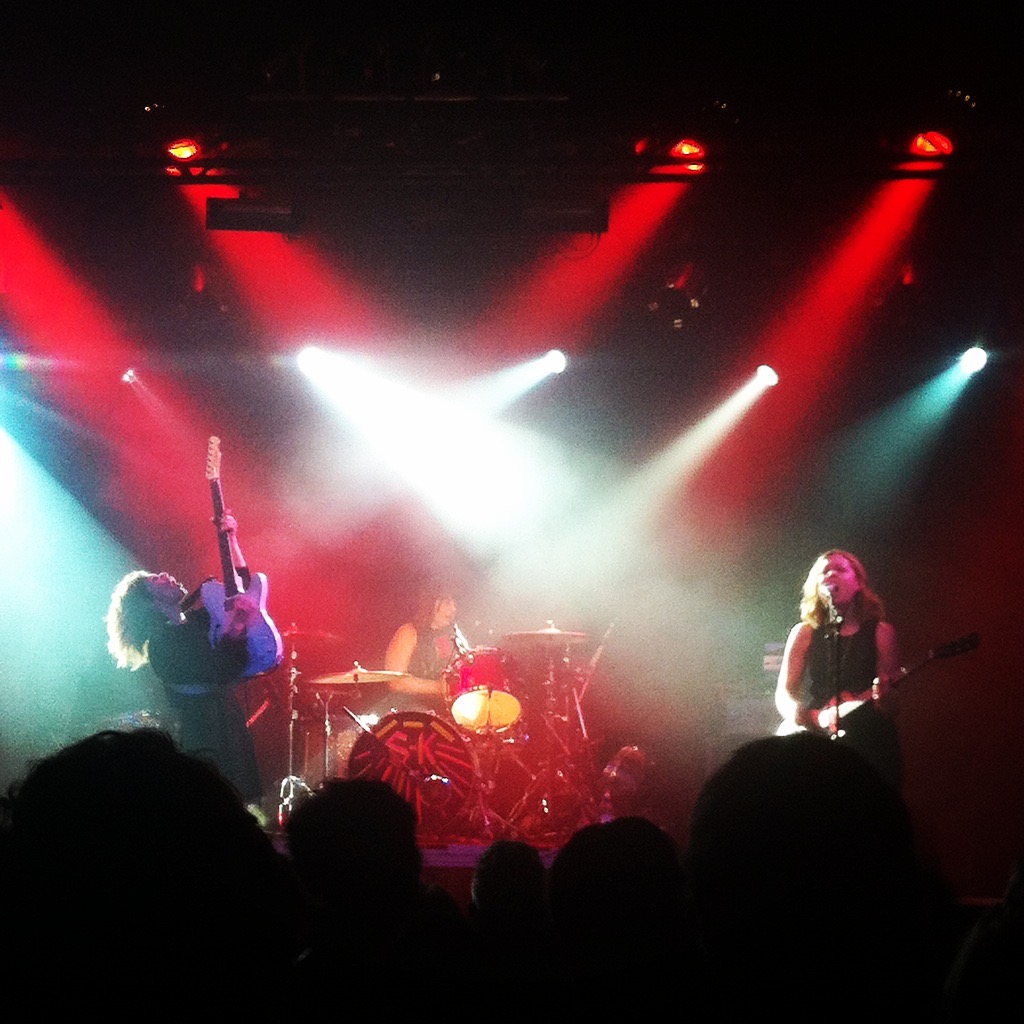
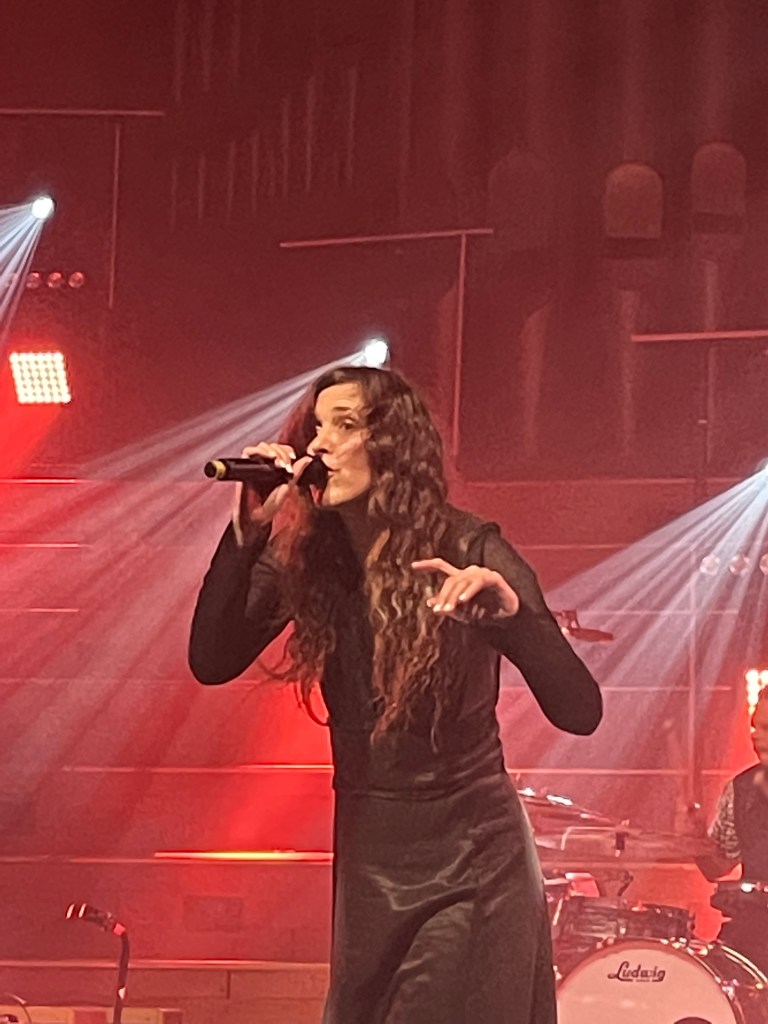
Mark Lanegan, grunge, and the gone generation

Photo Steve Gullick

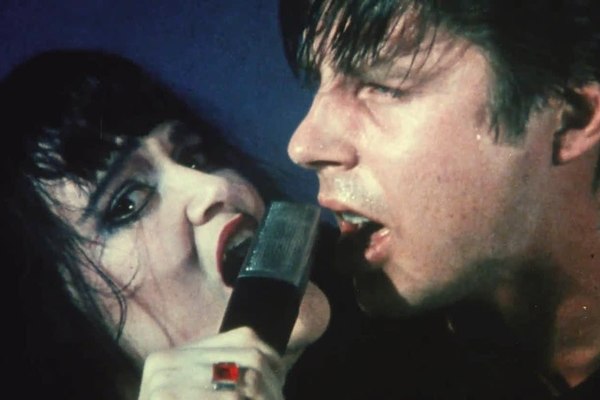
Mark Lanegan was not a household name. But when I think of grunge – that Seattle sound, that briefly hip ‘90s trend – I often think first of Lanegan’s husky baritone with the Screaming Trees, and all the ache and strength it conveyed.

Lanegan died suddenly at 57 this week, and for a certain brand of music lover, it was a painful blow to lose this troubled, damaged yet powerful figure.

Lanegan showed a way out of just being a grunge star. The bands that are left intact are mostly ones like Pearl Jam or Mudhoney, who’ve settled into amiable patterns where their music isn’t a heck of a lot different in 2022 than it was in 1992.

When Kurt Cobain died, half my lifetime ago, the thing that struck me hardest was that we’d never know what he might have done next, never follow up on the intriguing directions things like In Utero and MTV Unplugged hinted at. Lanegan, more than any other musician in the grunge era, picked up his longtime friend Cobain’s challenge and continued exploring and innovating until the day he died. 

I loved Screaming Trees, who bubbled under the superstar level of bands like Nirvana. Their single “Nearly Lost You” was their biggest popular hit, but the band – all towering, lumberjack like characters who seemed as ominious as their cartoony threat of a name – were a powerful machine that were driven by Lanegan’s urge to be more than just a screamer. Like TAD, another band a bit too raw to make it big, they felt like whispers and ghosts of the Northwest backwoods, sasquatch with guitars. 

The Trees combusted, and Lanegan was different when he branched out into underrated, heavily diverse solo work. Always a looming, dangerous figure, haunted by addictions and violence he wrote compellingly about in recent memoirs, Lanegan’s very voice let you know he had seen the darkness and stared deep. Many obituaries focused on how with the punishment he inflicted on himself, Lanegan should’ve been dead years ago.

As he aged, he became a kind of Seattle fusion of Nick Cave and Johnny Cash, charged with Old Testament authority and willing to experiment, collaborate and cast his sound far outside a narrow grunge template. He swerved from the dusty country-fried songwriting of Whiskey For The Holy Ghost to the sweet-and-sour collaborations with Isobel Campbell, the ‘70s hard rock stomp of his work with Queens Of The Stone Age, to dabbling in dark synth-pop in Blues Funeral. His final album, Straight Songs of Sorrow, seemed to amalgamate all of his interests to craft a dark, autobiographical mini-masterpiece. 

It was also reminded me of how so many of the great voices of his peers have left far too early, turning grunge – a term many couldn’t stand, but it’s stuck like glue – into kind of a lost generation. There will be no big the-whole-band-gets-back-together reunion tours for Soundgarden, Nirvana, Alice in Chains or Screaming Trees. 

The list is long – Kurt Cobain, of course (suicide, 27), Stone Temple Pilots’ Scott Weiland (drugs, 48), Chris Cornell (suicide, 52), pre-grunge/glam act Mother Love Bone’s singer Andrew Patrick Wood (heroin, just 24), Gits singer Mia Zapata (murdered, 27); Alice in Chains’ Layne Staley (heroin/cocaine, 34) and Mike Starr (prescription overdose, 44), Hole’s Kristin Pfaff (overdose, 27); poppier act Blind Melon’s lead singer Shannon Hoon (cocaine, 28). 

Music and young death are no strangers, of course, and there’s been “lost generations” before, from the deaths of Janis, Jimi and Jim (you don’t even need to say their last names, do you?) to the rap slayings of Tupac Shakur and the Notorious B.I.G. to the present, in the deaths of those like XXXTentacion and Lil Peep. 

But grunge was my soundtrack to an age where you listen to music more obsessively than other, and nobody wants to watch their own generation slowly be washed away.

I lived a boring, drama-free 1990s compared to the antics of Lanegan, Cobain and their peers – rare binges of tequila and vodka were my peak indulgence – but the appeal of grunge to me was that the yearning of singers like Lanegan felt universal. We all ache in different ways. We all have addictions. I realised a long time ago that I’d easily get hooked on some of the temptations of the world given half a chance. I was an amateur at addiction, but something in me responded to Lanegan’s deep, groaning voice. 

Friend Bob got to see him in his elemental power a few years back, and I’m very jealous. Lanegan overcame his demons and was clean for years, but a bout with COVID-19 last year nearly killed him and I wouldn’t surprised if it led directly to his early death. 

Once upon a time, I would’ve said that making it to 57 was a decent run. But it doesn’t seem that way when you get close to it. Mark Lanegan was a guide through some of the darkness of life, wrapped heavily in all its shadows himself. He might have been the last lingering reminder of the power of grunge behind the hype and sadness, and that generation is gone and never coming back. 

Book Review: Chuck Klosterman and figuring out The Nineties

It’s weird to see your past become mythology. Part of me is certain the 1990s were just a few years back, instead of more than three decades ago. Surely it’s too early to start talking about what it all meant? 

But in Chuck Klosterman’s engaging new collection of pop-culture writing, The Nineties, he attempts to use the controversies and celebrities of the past to explain how we became whatever us mixed-up humans are today. 

Klosterman himself is a very ‘90s kind of voice who made it big starting in the 2000s with essays that went down like a surprisingly smart, funny stranger holding forth at the bar – slightly overbearing, but worth the listen. 

His essay collections like Sex, Drugs and Cocoa Puffs sparkle with off-kilter insights and a respect for even the most disdained of pop culture like Guns N’ Roses tribute bands, while earlier works like Fargo Rock City, about loving hair metal while living in rural America, have a sincerity that can’t be hidden by all the snarky wit. 

Known for writing lengthy pieces on things like the relative merits of KISS members’ solo albums, in more recent years Klosterman has tried to branch out into broader cultural criticism. But to be honest, excavating the contradictions and curiousities of pop culture is where his voice is strongest. 

I like Klosterman quite a lot, but The Nineties doesn’t quite manage to be a defining statement despite his best efforts. “It was, in retrospect, a remarkably easy time to be alive,” he writes. Which is only really true if you came, like Klosterman and I, from pretty comfortable white middle class American existences. 

The Nineties is a strong essay collection burdened with the expectation of defining a decade. The central thesis of The Nineties is that it was a time when everything was about to make a huge paradigm shift, with the looming shadows of the internet, 9/11 and extreme partisanship spawned by the Clinton years and Bush/Gore election that came to dominate US politics.  

Klosterman is chatty, digressive, trivia-filled and open-minded, which means The Nineties is an easy read, but sprawling and inconclusive about whatever the 1990s even meant other than that things were about to change. And that’s pretty much his point. “It was a period of ambivalence, defined by an overwhelming assumption that life, and particularly American life, was underwhelming.”

Generation X was perched in a weird spot in space-time, before the internet fully emerged and yet smothered in a mass-media bubble of celebrity culture in old-school magazines and TV shows that foreshadowed many of today’s influencer obsessions. 

The monoculture that once was splintered into pieces with the advent of social media. As much as we like to imagine it was all flannel, riot grrls and grunge from Sub Pop and people reading Chuck Palahniuk’s “Fight Club,” the ‘90s was also an awful lot of people watching Friends and Titanic and listening to Garth Brooks, by far the decade’s biggest musical star. 

Wrestling with an entire decade is difficult work – Klosterman rightly points out decades are only about “cultural perception,” when you get down to it. He hits all the expected high points – Nirvana’s Nevermind, the rise of AOL, Bill Clinton, Pulp Fiction and Clarence Thomas. He mostly avoids tiresome “remember this?” type nostalgia and instead focuses on giving broader context.

Klosterman likes to equivocate, rarely coming down firmly on an issue and sometimes passing off some pretty dire zen cliches as insight. “Things changed, but not really,” the nineties were “a good time that happened long ago, although not nearly as long ago as it seems,” and “The future can’t exist until the present is the past.” These vague sentences clunk awkwardly against his better observations. 

What’s best about The Nineties is where Klosterman pinpoints precisely how the culture has changed. The very way we tend to think has mutated an awful lot in 30 years. A culture based on ‘likes’ and never having to go further than your pocket to look information up is really as futuristic as rocket ships and hoverboards would have been. 

“Selling out,” for example, is a concept that seemed to consume much of the decade, with the agonised fears of stars like Kurt Cobain and River Phoenix about what it might mean and entire movies like Reality Bites based around it. “Selling out” barely even exists as the same concept anymore in a world filled with TikToks, YouTubers and influencers all selling themselves as hard as possible. 

The OJ Simpson case has been written about ad infinitum, but Klosterman paints a convincing through line to the mindset that dominates today’s fractured, everyone-has-a-hot-take internet. Watching the crowds cheer on OJ on his bizarre slow-motion car chase through LA, waving signs, Klosterman sees “what would eventually drive the mechanism of social media – the desire of uninformed people to be involved with the news … because it was exhilarating to participate in an experience all of society was experiencing at once.” 

The Nineties is best enjoyed less as a final, definitive statement and more as a frequently amusing and thought-provoking addition to the ongoing conversation. I kind of think that Klosterman, who I’ll always picture as the guy holding forth at the bar, would prefer it that way anyway. 

Movies I Have Never Seen #14/15: What’s Up, Doc? (1972) and Paper Moon (1973)

What they are: We’ve lost quite a few silver screen legends lately, but behind the camera, one of the biggest curators and creators of cinema history also left us last month – director Peter Bogdanovich. His death may have been overlooked a bit in the never-ending 24-hour news cycle, but for a certain breed of movie hound, at a certain period of time, Bogdanovich was the great hope for the Future of Cinema. His breakthrough movie, 1971’s ode to a vanished idea of small town Texas life, The Last Picture Show, was nominated for eight Oscars and won several. Bogdanovich followed that drama up with two big genre swerves – the goofy comedy What’s Up, Doc? with Barbra Streisand and con-man comedy/drama Paper Moon, which saw Tatum O’Neal become the still-youngest competitive Oscar winner by nabbing Best Supporting Actress at just 10 years old. When Bogdanovich died last month, I realised I needed to finally get around to watching Doc and Moon and fill in some big gaps in my film knowledge. 

Why I never saw them. The theme of many of his obituaries was that Bogdanovich came into movies like a comet, burning brightly and then flaming out. He loved classic Hollywood, and his best movies are all homages to the 1930s and 1940s. His debut, 1968’s Targets, is a fond love letter to horror icon Boris Karloff combined with a still-shocking look at a mass shooting. The Last Picture Show is one of my favourites, a monochrome gem of nostalgia and bittersweet romance that manages to both romanticise and demonise the American dream, with an utterly luminous young Cybill Shepherd and Jeff Bridges. Next, What’s Up, Doc? and Paper Moon were both popular and critical hits.

But then Bogdanovich steered Shepherd into two notorious flops, Daisy Miller and At Long Last Love, and his career for the rest of his life alternated between moderate successes and mild failure, as well as grim personal tragedy. A keeper of the flame for cinema history, he wrote some excellent books on the many classic Hollywood stars and directors he befriended over the years (he was notably close to the great Orson Welles, and his final film was a documentary on Buster Keaton), but when he died, many of the Bogdanovich obituaries cast him as a kind of example of lost potential. I don’t quite think that’s a fair way to measure a life. 

Do they measure up to their rep: Let’s take each film separately. What’s Up, Doc? is essentially a colourful homage to screwball comedies of the 1930s, with Streisand and Ryan O’Neal filling the Katherine Hepburn and Cary Gran-type roles. Streisand is someone I’ve never always warmed to, but she’s a fiery, wisecracking delight here, a predecessor of the oft-maligned “manic pixie dream girl” archetype. She splashes into O’Neal’s stiff academic’s life almost at random and upsets the dull order of his world. In one light, her character’s stalking of O’Neal and his intense fiancee (a great Madeline Kahn) may be annoying, but if you ride with Doc’s giddy vibe, you’ll get caught up in Barbra’s freewheeling spirit. While I don’t think it quite beats the heights of Grant and Hepburn in Bringing Up Baby, Bogdanovich’s homage is a light and hilarious ride. 

Paper Moon isn’t quite so loose and frivolous, although it’s also very funny. Bogdanovich went back to a gorgeous black-and-white for this caper starring real-life father and daughter Ryan and Tatum O’Neal. Ryan is a con man who shows up at the funeral of 9-year-old Addie’s mother. He might be Addie’s father, or he might not. O’Neal agrees to take Addie on a road trip to the rest of her family, but along the way also drags her into his complicated cons, scheming his way across Depression America. Bogdanovich expertly balances Paper Moon between comic and tugging the heartstrings, but is just cynical enough not to make this feel like a Disney movie. He’s helped by Tatum O’Neal, who’s utterly amazing as Addie – her character develops and expands throughout the movie and manages the almost impossible task of feeling like a real, chaotic and somewhat unpredictable child instead of just an actor.  

Ryan O’Neal anchors both these movies, although he’s upstaged by his female co-stars. He’s an interesting case of an actor who was a big star but also tends to blend into the scenery, I find. As a slippery con man in Paper Moon and a stuttering geek in Doc, he never entirely convinces, but he’s also oddly enjoyable to watch playing off the stunning Streisand and the remarkable Tatum. But both of these movies are far more about the women than they are the ostensible main character. Bogdanovich was a spectacular director for women – Cloris Leachman’s Oscar-winning turn in The Last Picture Show is a perfect example – and whatever the ups and downs of his career, he created some of the most indelible roles for women of the 1970s. 

Worth seeing? Viewed 50 years on, Bogdanovich’s great trilogy of films is about his love for the history and form of cinema itself, and that great American theme of the desire to better oneself, whether in money, love or location. The Last Picture Show is stark and sharp as a knife, while What’s Up, Doc? is a silly blast nearly as manic as the Bugs Bunny cartoons it got its name from, and Paper Moon combines elements of both of them to create a satirical yet heartfelt tale of a con man’s mild redemption.

Bogdanovich might have been a comet in that he never really bettered these three films in his career, but he certainly left a lot of great work behind and was one of the last men who knew and worked with the golden stars of Hollywood’s peak years, and worked to keep their names alive. That’s not a bad legacy to have at all. 

RIP to Entertainment Weekly, my pop-culture guide to the 1990s and beyond

I knew the patient was in critical condition for some time, but it’s still hard to say goodbye. The patient wasn’t a person, but a cultural moment, a blip of journalistic history – a magazine that has finally breathed its last.

Entertainment Weekly, a magazine that I read from its very first issue 32 years ago, is folding its print edition, it was announced this week in another one of those ice-cold corporate downsizing memos so familiar to journalism.

The world is too big and fractured now for a general-interest entertainment magazine now I guess, but I’ll still miss it. (It will continue as digital only, but honestly, that’s not the same at all.)

It’s a death among many in the media world and one I knew was coming ever since a couple of years ago when the magazine switched from weekly to monthly publication (and yet bizarrely, kept the name Entertainment Weekly). In a world of digital bits and unending social media outrages and whines, I miss the fading humble magazine. I still subscribe to some of the best – The New Yorker, The Atlantic, NZ’s Listener and North & South – but it’s a battle for eyeballs in a world filled with scrolling distractions.

I guess I’m a bit sad about Entertainment Weekly because I was there from the very, very start in 1990, and carried on my subscription for a good 20 years or so until moving to New Zealand made the cost unfeasible. I was a “charter subscriber” because I saw an advert somewhere and got the first few issues free. I bought my final issue on my trip back to the US just a few weeks ago of the now “Monthly Weekly,” their year-end issue with a seemingly immortal Keanu Reeves on the cover flogging the latest Matrix movie. 

In between, I read thousands of the damn things. Back in the 1990s, as a twenty-something in the pre-internet world, magazines like EW were my guide to the wider shared universe. It was never too fringe or counter-cultural, but for much of its time EW was still pretty egalitarian in its coverage. I learned about movies, books, music and more I’d never heard of, some I came to love. In a pre-Google world, magazines like EW, Spin, Rolling Stone and Premiere were my pop culture tutors. I held on to many of the 1990s issues forever – Brad and Jen forever! – but eventually, they went off to the recycler.  

But I’ve still got a decent pile of old ones in our musty basement decades on – I kept pretty much every “Year In Review” issue with its top ten lists of bests and worsts from 1990 through the mid-2010s or so. I’ve still got their encyclopaedic issues devoted to “Seinfeld” and “Star Trek: The Next Generation” and they’re still pretty cool. As glossy time capsules do, you could do worse.

I’ve still got the somewhat battered very first issue of Entertainment Weekly, somehow, decades on – dated almost exactly 32 years ago, February 16, 1990, with k.d. lang and Neneh Cherry on the cover (hello, 1990s!). It’s a marvellous little time capsule of that vanished world, with cigarette advertisements galore and an offer to get the ENTIRE James Bond series on shiny VHS tapes from Time-Life Video. (Pay a mere $1 for the first tape and others will follow about one every month.) 

In his opening-issue editorial, Jeff Jarvis sets out a manifesto – entertaining, but honest, no “long, pompous articles,” but also “a voice for quality in a business that needs one.” I wouldn’t argue that EW was high culture, but it introduced me to an awful lot of it along the way.

That first issue touches all the early 1990s icons – Murphy Brown, Fox’s Married With Children, how to install a newfangled car CD changer, or the latest album by some colourful rapper named M.C. Hammer (which gets an “A-,” and “tells important truths,” according to the review).

But it’s also got a lot of strong, in-depth coverage – several pages devoted to thoughtful book reviews, or a look at how the then-recent fall of the Berlin Wall was helped along by repressed artists. EW always balanced on the wire between fluff and substance, but it was a hell of a smarter read than things like People or Us magazine were. There were frequent long, deep reads into pop culture history that made up for the gossipy stuff. 

Like many things, it declined, though, pivoting an awful lot to try and figure out how to beat the internet. In 1990, a weekly magazine was fresh and current. In 2022, a now-monthly magazine was endlessly behind the pop culture beat. 

Yet even in that final January 2022 issue I picked up, there was still plenty worth reading in Entertainment ‘Weekly.’ A solid oral history of Francis Ford Coppola’s The Outsiders sits next to an interview with a Booker Prize-winning author and lists of the year’s best movies (Licorice Pizza and Power of The Dog, yes please). It was struggling, but there were still glimpses of its glory days. 

We’re in a world now where a magazine like Entertainment Weekly, with a name that no longer even fit, couldn’t help but seem dated within days of its release. I find that kind of sad, and while I’m still a nut for pop culture and always looking for good books to read, movies to see and music to hear, I tip my cap to the magazine that guided me through so much of the 1990s. We won’t see anything like it again. 

How January 1982 changed everything

We can’t always pinpoint the dates that change our lives. Not the big moments, but the little ones, like a hobby that you just can’t shake.

But there’s one date I’m pretty sure about: The date I became hooked for life on comic books.

I grew up reading comic books bought by my parents, but the true pathway to addiction was when I started spending my own money on them. The spinner rack at the long-gone Lucky’s supermarket was where I became hypnotised forevermore.

The comic book that hooked me for life was Marvel’s Star Wars #58, beckoning to me from the spinner rack with an amazing Walt Simonson cover featuring C3PO and R2-D2 floating ominiously in a scarlet sky.

Thanks to beauty of the resources at Mike’s Amazing World of Comics website, I can now pinpoint the exact date that issue of Star Wars went on sale – January 19, 1982. Exactly forty years ago now, ye gods.

Forty years, and I’m still hooked on comics. My library of comics and graphic novels is kind of embarrassing in its scope, but it’s also a big old cape-wearing part of my whole identity now, as a grown man teetering into late middle age.

Comics expanded the world to me, made me want to be a journalist like Clark Kent or Peter Parker, led to me working on my own comics through the years, and introduced me to a kind of secret society of like-minded dreamers and loners.

Forty years on, and comic characters that were obscure in 1982 are the basis of billion-dollar movie blockbusters and TV shows. I love a lot of those gaudy pop-culture successes, but it’s still those musty smelling, ad-festooned and humble physical comic books themselves I love the most, especially the ones I grew up with in the early 1980s.

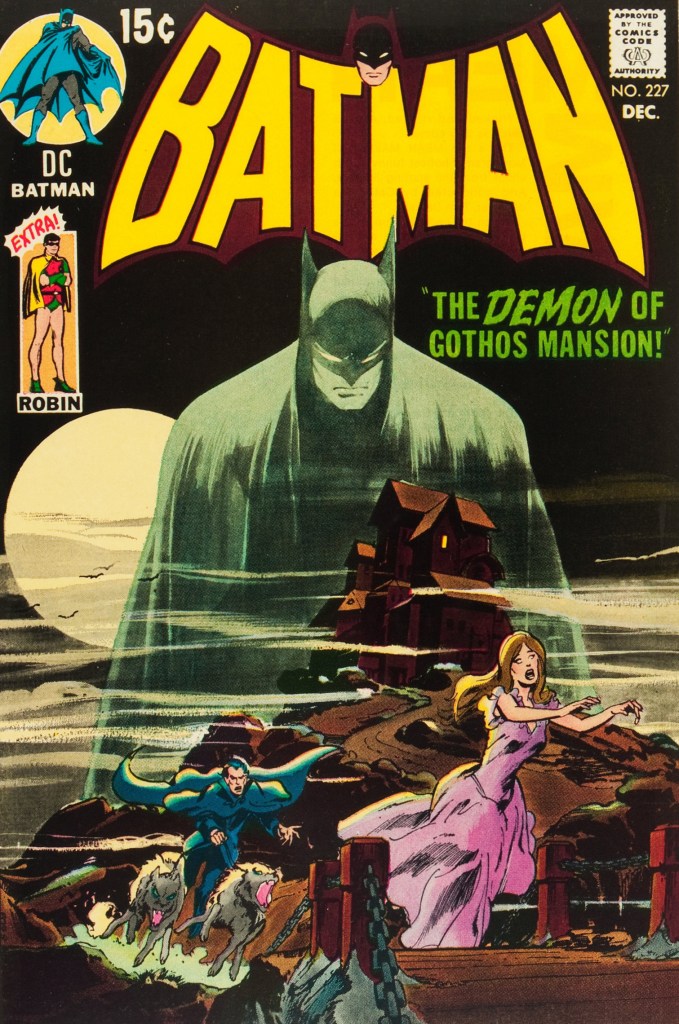
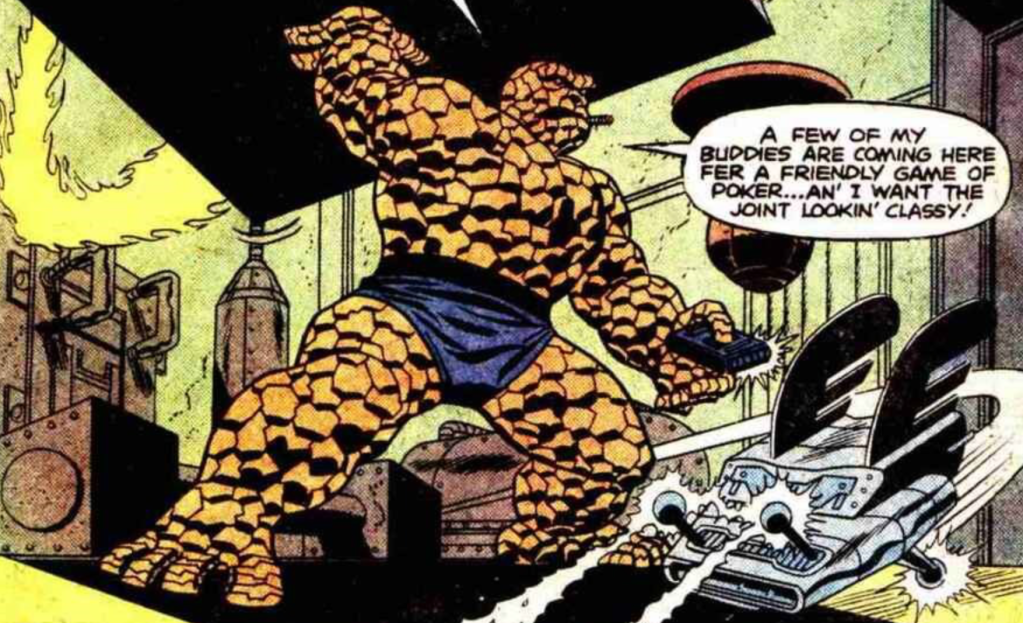
Thanks to Mike’s website, I can see the issues that I bought back then and that imprinted themselves on me in those early months of 1982 – Spider-Man battling his way against the impossibly powerful Juggernaut in Amazing Spider-Man #230 (part two of a story that took me ages to find the beginning of!); the creepy photo cover of Saga Of The Swamp Thing #2, calculated to scare and entice readers; the Thing grumbling and arguing his way through teaming up with Ant-Man in Marvel Two-In-One #87; Batman facing off against the deliciously divided Two-Face in Batman #346…

Marvel’s irreverent Hercules, a figure out of myth having merry madcap adventures in outer space in Hercules #1; John Byrne’s operatic and epic clash between the Fantastic Four and Galactus in Fantastic Four #242-244, which seemed as grand as three Star Wars movies put together; the funky disco-esque costume of Firestorm, a hero I’d never even heard of, exploding off the cover of Fury of Firestorm #1; the Justice League of America apparently defeated, near death, at the hands of the Royal Flush Gang in JLA #205… I could go on.

Many of these comics I’ve still got today, a bit well-read and hardly near-mint, but they always carry me back to the winter and spring of 1982. I soon discovered comic book stores (as I’ve written about previously) and well, there’s no going back from that.

Through thick and thin, comings and goings in life and great adventures and sad setbacks, those comics bought starting in January 1982 were friends and inspirations in all their weird, wonderful ways, shaping the person I ended up becoming.

The 10-year-old me of 1982 would never have guessed, turning that rack full of comics in all their gaudy colours, that that spinning rack would change everything. Life can be like that.

The rack spins, and your fortune is forever changed by one simple gesture.

Year In Review List Week: 10 Great Books From 2021

…Continuing year in review list week before this newfangled 2022 gets too darned far along for everyone, here’s my favourite books I read in 2021, restricted to just those books published in 2021 (and maybe just one or two that came out at the very end of 2020 but maybe came out in paperback this year).

Once again my reading tends to be heavier on the nonfiction than the fiction, although I’m hoping to be more egalitarian in 2022.

In alphabetical order:

Fiction

Klara and the Sun, by Kazuo Ishiguro

No One Is Talking About This, by Patricia Lockwood

Nonfiction

A Swim In A Pond in the Rain: In Which Four Russians Give A Master Class on Writing, Reading, And Life, by George Saunders

Boy On Fire: The Young Nick Cave, by Mark Mordue

His Very Best: Jimmy Carter, A Life, by Jonathan Alter

I Alone Can Fix It: Donald J. Trump’s Catastrophic Final Year, by Carol Leonning and Philip Rucker

Mike Nichols: A Life, by Mark Harris

Pulp Empire: The Secret History of Comic Book Imperialism, by Paul S. Hirsch

Times Like These: On Grief, Hope and Remarkable Love, by Michelle Langstone

Wildland: The Making of America’s Fury, by Evan Osnos

Also in series: My Top Ten Pop Culture Moments of 2021 / My Favourite Movies of 2021

Year In Review List Week: My 10 favourite movies of 2021

It’s year in review list week before this new year gets a little too old, and here’s my 10 favourite movies of 2021 in alphabetical order, ranging from critical favourites like Jane Campion’s sublime Power Of The Dog to movies that might not be on a lot of other critical lists like Godzilla Vs Kong, because, again, monkey punching lizard!

Annette


The Beatles: Get Back

The French Dispatch

Godzilla Vs Kong

Licorice Pizza

Pig

The Power of the Dog


The Sparks Brothers

Spider-Man: No Way Home

Summer of Soul

Very much tied up for No. 11: Dune, The Green Knight, Nobody, No Time To Die, The Velvet Underground

Remembering Anne Rice, who brought death to life

If you could live forever, would you want to? And what would it be like?

That question is at the heart of the legacy of Anne Rice, who died at 80 last month. I grew up reading many of her Vampire Chronicles, and — a bit belatedly due to Christmas and weather chaos — I wanted to think about why her work meant so much to young Nik.

Nobody was more influential in vampire fiction since Bram Stoker dragged Dracula out of the coffin back in the 1890s. Rice’s vision of blood-suckers can be seen in the DNA of everything from The Vampire Diaries to True Blood to Buffy to Twilight — some good, some not.

When we think of vampires today, you’re likely thinking of them less as Bela Lugosi and more as passionate, creepy and eternally conflicted lovers, a template Anne Rice built up more than anyone.

Anne Rice’s Interview With A Vampire and The Vampire Lestat were passed-around, beloved talismans of my wayward youth. The glittering paperbacks with their gothic lettering were read, and re-read.

It was The Vampire Lestat that particularly grabbed me, with Lestat narrating the centuries of his life in first person. He was bratty, impetuous, cruel and, sometimes, kind. He may have been hundreds of years old, but Lestat kind of felt like a teenager.

Evocative and passionate, gothy as any Cure song, filled with blood and lust and long lonely meditations on what it’s all about, they were perfect reading for confused teenagers trying to figure out the world. She quietly was a progressive voice for gay equality in the ’80s, and later depicted trans characters and gender fluidity in a way that seemed groundbreaking and yet completely unforced. In her world, love is love.

Rice created a sprawling narrative filled with rich characters, many of whom went on to star in their own books after debuting in the original trilogy, and she was deft at bringing her historic settings to life. Her strength was not so much in plot or her almost Victorian prose, but in character. She made you feel the weight of immortality and what that might actually be like. Her vampires – dour Louis, insecure Armand, bold Marius or terrifying Akasha – were far more complex than the spooky boogeymen of Stoker’s Dracula. Dead, they still carried with them all the baggage of their living lives. Her vampires talked, and talked, and talked, sometimes to the point of self-parody, but in their lengthy soliloquies were all about digging into what makes us human – or inhuman.

The Vampire Chronicles did become a case of diminishing returns as it sprawled on to more than a dozen books, and Rice’s later work never quite surpassed the original books, but I’d argue everything up until Memnoch the Devil is pretty golden. As the series goes along, Lestat becomes a bit too powerful and loses some of the charming rogue vibe he has in the earlier books, and the constant adoration other characters always seem to have for him gets a bit much.

Yet there’s still a lot to like in later volumes if you’re not turned off by Rice’s endless expansion of her shared universe to include witches, Atlantis, demons and more. But in the end, the stories always circle back to Lestat, her greatest character and always, always the centre of attention.

In Lestat, Rice created a monster who constantly tries not to be one, often failing. Rice wrote other books, of course – erotic fiction, meditations on the life of Christ and more – but ultimately, it’s the vampires that make her immortal.

My top pop-culture moments of 2021

And so, the curtain drops on 2021, a sequel that somehow managed to perform even worse than the blockbuster year 2020 did. Still, despite the grimness on personal fronts and the continuing stupidity of life in general, there were a few halfway decent moments. So, in the spirit of looking on the bright side, here’s my top pop-culture moments of 2021, with links back to some of the original posts about them.

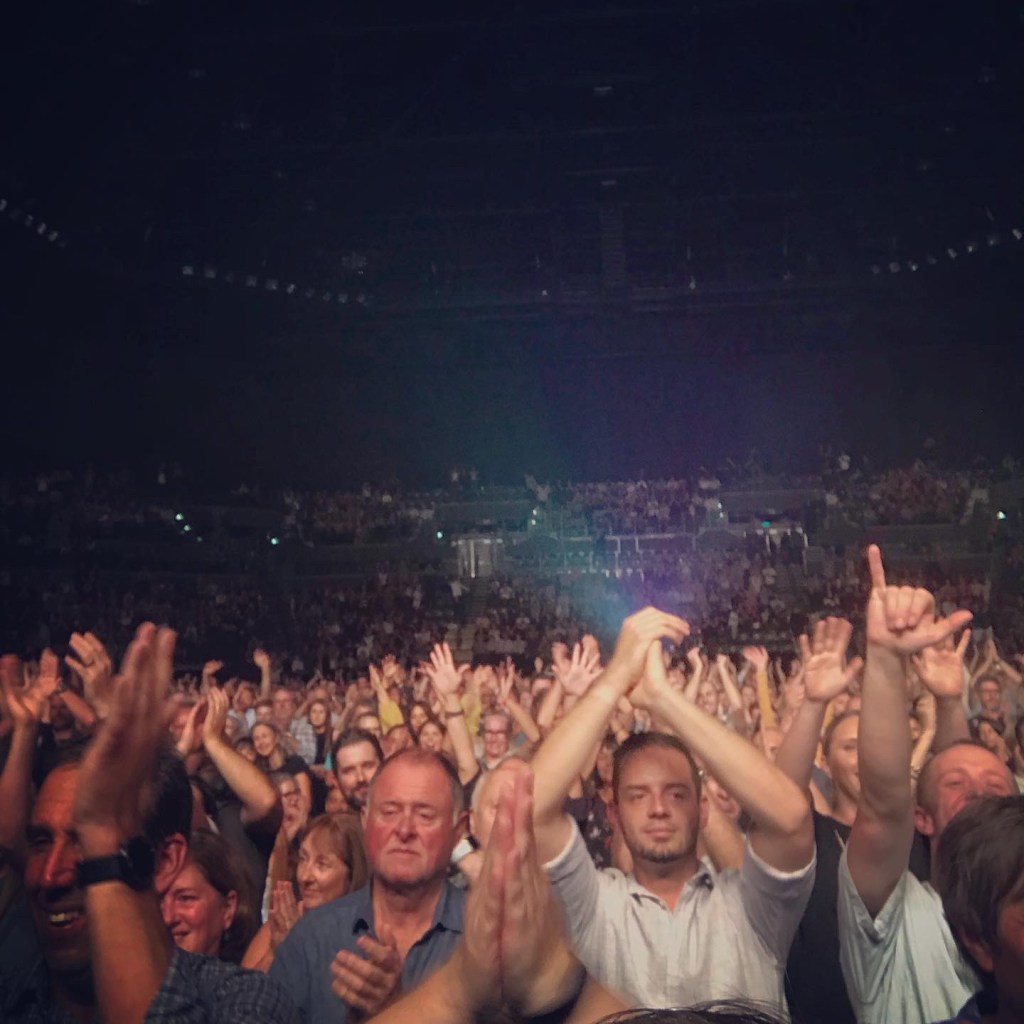
Filling a Crowded House, in a brief pandemic oasisMy experience seeing Crowded House playing a packed Auckland arena back in March happened in New Zealand’s several blissful months of Covid-free life, before the Delta outbreak in August. It also was a life-affirming blast of a show, with Neil Finn and company delivering a celebratory concert of hits and new songs that just made you feel glad to still be here, alive and appreciative of all the things we took for granted pre-2020. There’s been a lot of times I’ve lost faith in humans the past two years, but at that one concert, a big crowd of us all singing and smiling felt kinda sorta all right. Here’s hoping going to big concerts again becomes normal soon.

The open-throated passion of John Cassavetes – A ‘discovery’ for me this year was the work of the late filmmaker John Cassavetes, who I’ve long been meaning to delve into. His work dating back from the late 1950s sparked much of independent film, and Cassavetes was determined to present life in its messy, often unexplainable complexity. In movies like Faces, A Woman Under The Influence and Husbands, people behave madly, inconsistently, and irrationally – like they often do in real life. His movies are a challenge, to be sure – the loose-limbed Husbands at times feels like a drunken TikTok video starring Peter Falk might – but even while they push and prod you, you find yourself thinking of them constantly the next day.

When big franchises take a few chances – I’m a fanboy, but I’ve admittedly burned out a bit on the assembly line of superhero movies and childhood classics being regurgitated over and over (did anyone really want another Ghostbusters?). So I was pleasantly surprised by two venerable franchises that didn’t play it entirely safe – James Bond in the long-delayed No Time To Die, and Spider-Man: No Way Home. Without spoiling either, they took risks – ones that might not have satisfied every fan. James Bond faces challenges he never had before in No Time To Die and the ending was a disturbing but effective shocker. And the idea of a multiverse-straddling take on Spider-Man could easily have gotten overstuffed and absurd (I’ve ranted about the overuse of multiverses before), but instead, we got a story that embraces the idea of the shared cinematic history of franchises and characters who just keep coming back in a heartfelt, dignified way. There’s a reason it’s smashing box office records.

The Magicians by Lev Grossman – I had been meaning to read this series of books by Grossman for a while now, which could be broadly described as “Narnia/Harry Potter, but for grownups.” They tell a somewhat familiar story of a young magician, Quentin Coldwater, and his ups and downs learning magic and having brilliant, frightening adventures in fantastic lands. The Magicians books were perfect escapist reading during the dregs of Auckland’s lengthy lockdown, brisk and darkly enjoyable, with the imaginative flair of C.S. Lewis’ Narnia and the solid characters of Harry Potter, but aimed at a slightly older audience who might like a bit of drinking and sex to spice things up. I read better books objectively this year, but these ones were among the most fun.

Superman, still the best superhero – It’s been a good time to be a fan of the man of steel. One of the best decisions the corporate overlords made a few years back is to let Superman finally marry Lois Lane, and to let them have a kid together. It’s allowed Superman to mature as a character into everybody’s ideal dad, and unlike some big changes to the status quo for comics characters, for now, this one seems to stick. On TV, I praised the superbly entertaining Superman and Lois, which combines spot-on casting with great Super-action and a show that’s not afraid to get emotional. In the comics, writer Brian Bendis finished up a suprisingly cool run that felt modern and daring yet true to the character, while the anthology series Superman: Red And Blue was an ideal summation of the character’s appeal with a variety of mostly excellent short stories starring Kal-El. Superman’s son, Jonathan Kent, who’s now a young adult, got his own title and it’s turned out to be one of the best new superhero comics of the year – a young, progressive and caring superhero (who’s also bisexual, which has gotten the usual suspects outraged). All in all, from the perspective of a rather troubled real world, Superman and his son seem more relevant than ever.

Lighting a Sparks – I admit I’m losing my touch with current pop culture as I settle into extreme middle age, but part of that is because there’s so darned much OLD pop culture to still enjoy. I was aware of Sparks and liked some of their work, but Edgar Wright‘s excellent documentary The Sparks Brothers triggered one of my famed full-fledged obsessive binges, as it spurred me to dig into the art-pop band’s hefty 50-year discography. It’s a delight to find a band you like and then find out that they’ve got literal mountains of material for you to enjoy.

Meeting Neil Gaiman, in strange days – I’ve always loved the Auckland Writers Festival, and like many things I loved it’s had rocky days during the Covid era. Fortunately, this year’s festival went off just fine in May, and a big highlight was getting a chance to meet one of the world’s biggest writers, Neil Gaiman, who’s been a bit of a New Zealand resident himself with his wife Amanda Palmer during the pandemic. I waited an hour or so to briefly meet Neil and have him sign a few of my favourite books after listening to some excellent talks he gave, but that was nothing compared to some who waited up to six hours. Neil was apparently as much a gentleman with the last person in line as he was with the first. They say never meet your idols, but getting a chance to tell them how much their work means to you is sometimes worth the wait.

Godzilla smashes up King Kong – Look, I know, it’s a big dumb old monster movie. But Godzilla Vs. Kong was, in my deep critical analysis, very, very good at being a big dumb old monster movie. Maybe it’s because I grew up with a well-played VHS tape of the 1962 King Kong Vs Godzilla that I unironically love. Maybe it’s because I saw it on a booming IMAX screen, just at the start of NZ’s pandemic-free idyll mentioned above, and because I could watch King Kong and Godzilla wrestle on aircraft carriers nearly life-size. I’m not saying it will win any Oscars. I’m not saying that it always makes sense or that most of the human characters are memorable. But you know, most of the classic Toho Godzilla movies are pretty wacky, too. With magnificent modern special effects and plenty of monster action, this heavyweight bout was worth the wait. Sometimes, you just want to see Godzilla punch through a building. Indeed, after a year like this one, who doesn’t want to do that themselves sometimes?