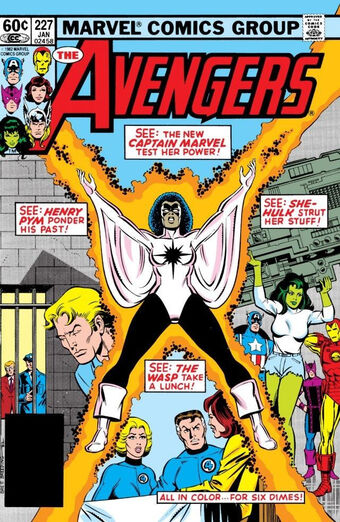
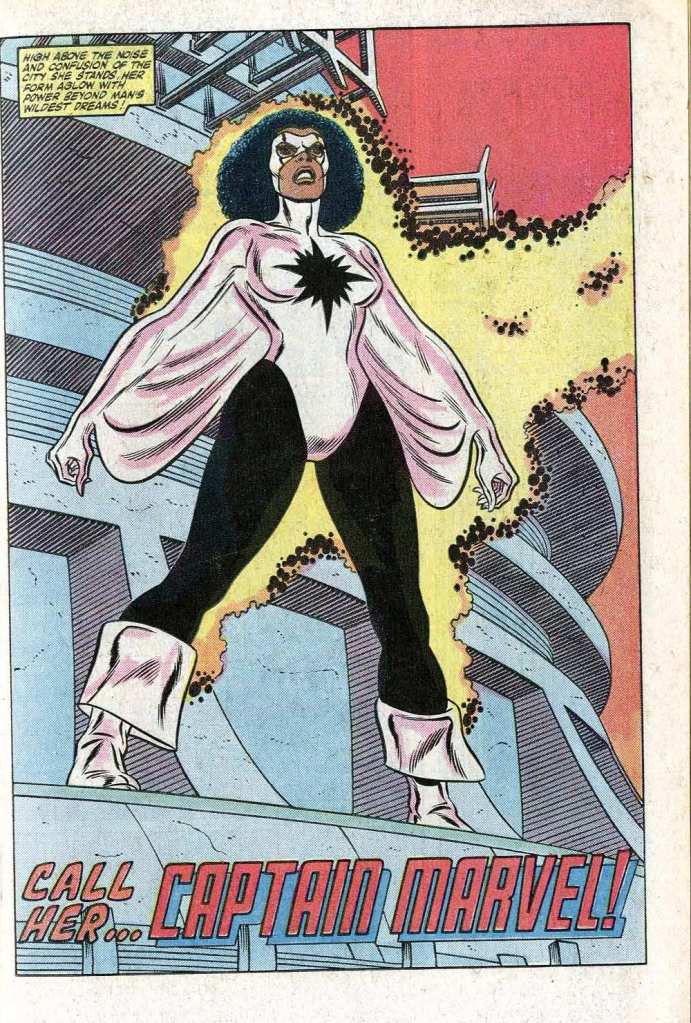
There’s a lot more diversity in the comics field today than there once was. It really took until the 1980s and 1990s for things to open up some – for instance, despite comics as we know them debuting in the 1930s, it wasn’t until the 1970s that Black superheroes really came into their own. The first Black superhero was of course, The Black Panther, but the first to get his own book was Luke Cage, Hero For Hire in 1972.
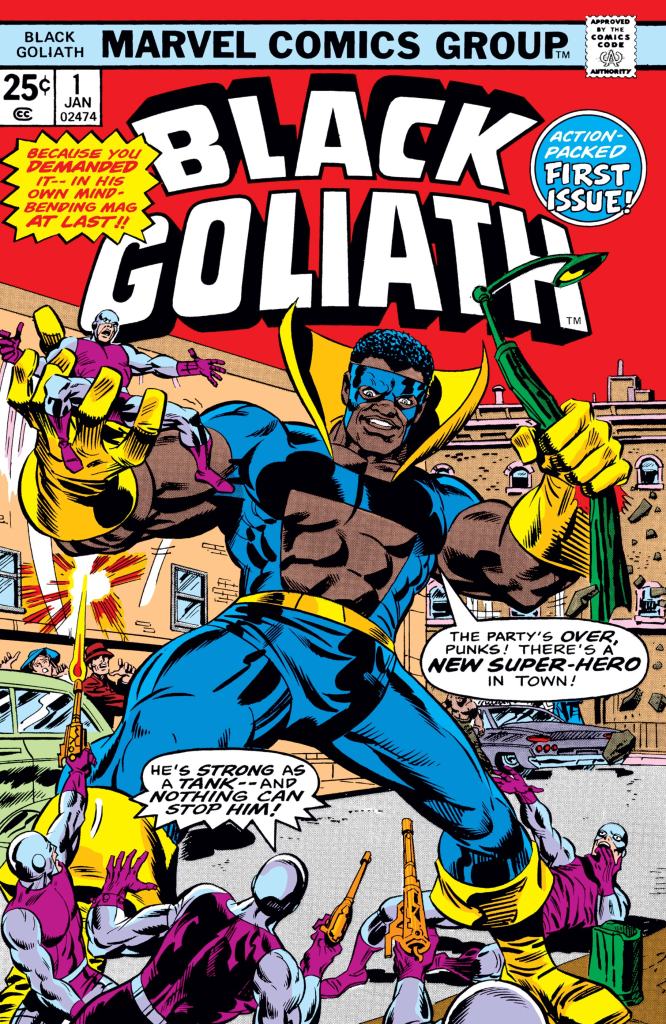
There was a mini-boom in Black heroes in the ‘70s (pretty much every one of which got the word “Black” in their superhero name). I was always fascinated by the 1970s adventures of Luke Cage, the short-lived Black Goliath, The Falcon, DC’s Green Lantern John Stewart, Tony Isabella’s street-level hero Black Lightning, and of course, the Black Panther.
Reflecting the industry at the time, the ‘70s Black hero adventures were pretty much always written by white men, although the late Black artist Billy Graham played a pivotal part in Luke Cage and Black Panther adventures. And sure, these comics overplay the “angry Black man” trope a bit, but they’re also very much a product of their protest-filled era.
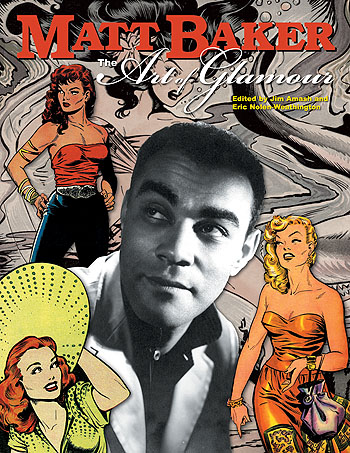
Here you’ll find the life stories of a dozen Black men who blazed trails in comics, often discriminated against, sadly too often forgotten (women of any colour were exceedingly rare in Golden Age comics). You’ll meet Elmer Cecil Stoner, Owen Charles Middleton, Elton Clay Fax, Matt Baker and many more.
Other Black artists edged their way into comics working on mainstream characters like Blue Beetle or Spy Smasher, while others attempted to tell stories about Black history or were pigeonholed into the “jungle comics” genre. Some of these artists only dabbled in comics and went on to far greater success in illustration, painting or other art endeavours, such as Alvin Carl Hollingsworth.
Invisible Men includes an essay on and excerpts from the Black-created All-Negro Comics #1 – a title which admittedly is pretty problematic in 2021 – but in 1947, this short-lived title attempted to be a landmark showcase for Black cartoonists with characters like “Ace Harlem” and “Lion Man.”
Quattro’s done an excellent job of excavating the obscurest of historical details to fill in the lives of creators who in another era, might’ve been the next Christopher Priest or Denys Cowan.
The history of Black comics artists in the Golden Age isn’t always uplifting – for every Matt Baker there were dozens of frustrated artists locked out of the medium – but Invisible Men is essential reading. The creators here paved the path for things like black-controlled Milestone Comics, for the Black Panther to star in one of the biggest movies of all time … and for a world where far more people are able to be visible instead of invisible.
It’s summer here, and it’s Alice Cooper season. The reigning godfather of horror-rock turned 73 this week, and hot weather always puts me in the mood to spin his gloriously overwrought anthems.
Years ago, I got to spend 20 minutes or so on the phone with Alice Cooper as he got ready to play a local gig back in Oregon, and it’s still one of the highlights of my so-called journalism career. Although he’s probably given a million interviews just like that one in the more than 50 years of rocking out, I still loved hearing stories direct from the man himself, who was really thoughtful and interesting. (I wish the interview was still online, but the paper I worked for then has changed owners and apparently erased all its past history including my beautiful words.)
In a week of all things Alice, I’ve also been reading a breezy tell-all by his former bandmate Dennis Dunaway, the wonderfully titled Snakes! Guillotines! Electric Chairs!: My Adventures In the Alice Cooper Group.It’s a great view from in the arena as the Alice Cooper band paved the way for goth, metal, glam and an awful lot else in the late ‘60s and early ‘70s.
Sometimes, you just want to blast “School’s Out” or “No More Mr. Nice Guy” at the sun bakes down on you.
I still have some of the notes from my interview with Alice way back in 2005:
That interview, from way back in 2005.
“I never went out of my way to say OK, I can’t wait to shock the audience. I was much more interested in entertaining the audience, doing something they’ve never seen before. People called it glam rock, people called it theatrical rock and we were at the head of all of that.”
“…I looked at the Who, The Yardbirds, all of these great, great bands, but nobody’s going to do anything with that stage. Why would you leave that stage just bare? Why not light it up, why not decorate it, why not make it come to life? If you say, ‘Welcome to my Nightmare,’ don’t just say it – give it to them.”
Another thing I fondly remember about that show was the absurd hysterical reaction from some of the townsfolk in rural, conservative Oregon at the time, who were freakin’ out about Alice like it was 1956 and Elvis was coming to shake his pelvis at them. Apparently he was a “known Satanist” according to the letters to the editor, written by people who I assume today are presumably posting hourly on QAnon Facebook groups.
Alice was in his mid-50s then and still put on a hell of a fun show which featured him being “killed” on stage at least twice and surely made the Satan-haters run for cover. But it was all in good fun, with Oregonians turning out in full Alice makeup (and a few more confused quasi-fans made up as KISS members). For one raised on Generation X’s ‘”eh, whatever” ethos, the dizzily over-the-top pageantry of an Alice Cooper show was a revelation.
One of the big appeals of Alice Cooper over the decades for me has been his unabashed showmanship – unlike some of the darker metal acts since, he’s not there to make you believe his schlock. He’s there to make the darkness rock out. Even at 73, he’s still making music, including a pretty decent new single released just this week.
For all his talents, though, Alice Cooper isn’t always the best fortune teller, regarding this quote from my 2005 interview:
“I’m having more fun with the show now and I’m making better records now. I think I’ll end when I get out there and there’s nobody there to play to. I will not end up on a Carnival Cruise – you won’t see me playing a cruise ship with Ozzy Ozborne.”
…In a nifty little coda to the piece on Peter Gabriel I wrote late last year, I was invited on Radio New Zealand yesterday for their Afternoons Music Feature to talk all things Gabriel with host Jesse Mulligan and play a selection of his grooviest tunes. Listen to my occasionally coherent babbling! Hear some good songs!
So I’m a massive Presidential history nerd, a hobby which has felt more than a little shameful the last four years under President Asterisk*, he-who-shall-not-be-named. Fortunately, it feels OK to admit this in public again now.
I love a good presidential history book, and I’m fascinated by the lives and times of most of the men (so far, all men and happily, now one female vice-president) who’ve held the office, even if I loathed their politics at times. February is when the US celebrates Presidents Day – hopefully a little less bleakly this year – and it’s the month during which the birthdays of George Washington (1732) and Abraham Lincoln (1809) fell. It’s a great month to look back at the presidency over nearly 250 years and remember that despite the current troubles, there’s still a lot to learn from history.
Of the dozens of Presidential books I’ve read over the years, here’s some highlights:
Most interesting president to read about: Theodore Roosevelt was a cowboy, a policeman, a rancher, a war hero, naturalist, historian and still, at 42, the youngest President in American history. You pretty much have to work to make his life story boring, and there’s many fascinating books about ol’ Teddy’s life and presidency. The king of these is the late Edmund Morris’ three-book trilogy, with the first volume, The Rise of Theodore Roosevelt, probably the best book about a President’s early life I’ve ever read. Teddy built himself up from an asthmatic child into a swaggering pile of masculine, determined ego, and while he was frequently overbearing, he also was surprisingly progressive in many areas. You can’t go wrong with Morris’ trilogy, or for a great side story, Candice Millard’s The River Of Doubt is a terrific manly travel tale about TR’s near-fatal trip deep into the Amazon after his presidency. And Teddy himself also wrote some great books about his adventures. Runners-up: Abraham Lincoln, Barack Obama, Thomas Jefferson
Greatest writing about a President: Robert A. Caro’s epic multi-volume look at the life and times of President Lyndon Johnson is held up as the gold standard of biographies, having won the Pulitzer Prize twice. I won’t be contrarian. It’s an absolutely stunning, authoritative piece of work that shows the countless hours of research and shoe-leather reporting Caro has put into his masterpiece over the decades, from evocative portrayals of the dirt-poor Texas hill country where LBJ came from to untangling the ins and outs of the US Senate works without boring the pants off readers. It now sprawls for thousands of pages, but every word of The Years of Lyndon Johnson is essential. The fifth and final volume is in progress now and like many other readers I am hoping Caro, now 85, sees it all through to the end. It’s a blueprint for how to tell the full story of a life and the times they lived in. Runners-up: The Rise of Theodore Roosevelt; Grant by Ron Chernow; Team of Rivals by Doris Goodwin; Truman by David McCullough; the excellentNixonland series by Ron Perlstein which I’ve written about before.
President you wouldn’t think would be interesting: Grover Cleveland is mostly remembered as being the only President to serve two non-consecutive terms, so he’s technically the 22nd and 24th President. But he also had one of the greatest cover-ups in Presidential history, a top-secret cancer surgery held in the middle of the night on a boat at sea. Matthew Algeo’s fast-paced The President is A Sick Manis a great concise history of the somewhat forgotten Cleveland and one of the bigger medical scandals in US history. It reads like a thriller. And Presidents have certainly never stopped being cagey about their health, from Woodrow Wilson’s crippling stroke to Tr**p’s still mysterious COVID hospitalisation.
Best books not quite about the Presidents: Doug Wead is a conservative activist and Tr*mp booster, which I’m not wild about, but I do rather like the two books he’s written about the children and parents of Presidents, All The Presidents’ Children and The Raising of a President. They dig into what makes a leader and what a leader’s legacy is and are chock-full of interesting trivia about the Presidential families. Not surprisingly, there’s a lot of awful tragedy in the families of many Presidents, perhaps it comes with the job. Runner-Up:Alice by Stacy Cordery, a biography of Teddy Roosevelt’s outspoken daughter, who lived a remarkable life in the middle of the Washington scene that spanned from the presidency of Cleveland to Jimmy Carter.
Goofiest book about Presidents:How To Fight Presidents: Defending Yourself Against the Badasses Who Ran This Country by Daniel O’Brien. If you want offbeat, here’s a book that looks at presidents through the filter of how good they might be at kicking your ass. It’s very silly but amusing stuff, and the only book I own that features the phrase “Ulysses S. Grant is the drunken, angry John McClane of Presidents.” The joke gets a bit old, but it’s still a pretty funny breezy, fisticuff-filled march through history. I’d still put my money on Teddy Roosevelt to smack them all down, though.
Best overall look at the Presidents: When it comes to overall presidential trivia, nothing compares to William DeGregorio’s massive Complete Book of U.S. Presidents. How tall was Calvin Coolidge? What nasty health ailments did Chester A. Arthur have? Who, for the love of God, was Millard Fillmore’s Postmaster General? It’s a great done-in-one resource for history nerds. Unfortunately, since DeGregorio died a while back, later editions have been notably lacking in detail and accuracy regarding the more recent presidents, which is a shame, but from Washington to Clinton or so, it’s a great guide.
Most morbid book about Presidents: Dead Presidents by Brady Carlson. What happens to Presidents after they die is sometimes more interesting than their administrations. Take Zachary Taylor, first president to die in office, who was famously exhumed in the 1990s to prove he wasn’t poisoned. Dead Presidents is a great tour of presidential demises, resting places and of their legacies, looking at things like Thomas Jefferson’s children with his slaves or the long strange journey of Abraham Lincoln’s corpse. Runner-up: Assassination Vacation by Sarah Vowell.
Best presidential memoirs: People talk about how great the Personal Memoirs of Ulysses S. Grant are, but I’m afraid I haven’t made it around to them quite yet. Most of the memoirs are famously stiff and reveal little about the men themselves. They tend to start strong and fizzle out, such as Bill Clinton’s My Life, which is nicely evocative about his Arkansas boyhood and difficult family life, but turns into a blur of names and places when he becomes President. Even Barack Obama’s recent A Promised Land, although eloquent and featuring great moments of detailed insight, succumbs somewhat to this problem, although I’d still probably rank it as the best memoir that I’ve read so far in a flawed genre. (But his wife’s is even better.) To me the best presidential books are the ones not written by the subjects themselves, but by talented historians.
Sorry, but you can’t make these guys interesting: I’ve read a few books about some of the lesser-known presidents and it can be hard going. Some near-forgotten ones are surprisingly captivating to me – I’ve always had a thing for the hapless Franklin Pierce, for James Buchanan, usually considered the worst President until quite recently, or the overwhelmed Warren Harding. However, I don’t want to name-and-shame authors as it’s not always their fault if a subject isn’t Teddy Roosevelt, but let’s just say it’s pretty darned hard to make Calvin Coolidge interesting, and despite James K. Polk presiding at a pretty fascinating time in American history as the nation expanded, as a person, he seems as dull as dishwater to read about. And don’t even get me started about Benjamin Harrison.
These are just a few of the veritable mountain range of presidential literature out there to dig into around Presidents Day. Happy reading!
I first saw an issue of Omega The Unknown back in the early 1980s when trading comics with another kid. I was a nascent comics geek even then but I’d never heard of this Omega character, who was battling the familiar Spider-Man villain Electro on the cover. Who was he? And why was he unknown?
Debuting in 1976 for what turned out to be a brief run, Omega was one strange comic – I felt like I’d been dropped into the middle of the movie, with a story featuring a mute superhero’s tentative adventures over portentous, philosophical narration tangled up with the story of a peculiar brainy but emotionally very stiff young orphan boy, James-Michael Starling. The two characters – the hero “Omega” and the boy – were linked somehow, but how?
Over its 10 issues before cancellation, Omega The Unknown hinted at a lot, but told us very little. “Something is different now in his universe,” the omnipotent narrator told us at the end of that first issue of Omega I read, #3, “Burn While You Learn.” It was different. This wasn’t Spider-Man or the Fantastic Four. The title character barely even spoke.
Steve Gerber, who cowrote the series with Mary Skrenes, was one of comics’ true originals, with his iconoclastic writing in Howard The Duck, Man-Thing, Son of Satan and other comics feeling like something that could only have come out of the let’s-try-anything 1970s at Marvel Comics.
Re-reading Omega today more than 40 years on, it’s still a mind-trip. Omega is Unknown, and unknowable. The titular character doesn’t speak a word until #4, and even then it’s only to ask “why?” Gerber and Skrenes cast a haunting spell over those early issues, mixing rambling, borderline pretentious narration with a cruel realism about life in Hell’s Kitchen. Multiple innocent people are victims of crimes, unsaved. You get brief glimpses of the wider Marvel Universe like Electro or a quick Hulk guest appearance, but more often there are barely capable villains like “The Wrench” and “El Gato.” The mystery is the real villain here. Threads come and go without being resolved. It’s almost like a Charlie Kaufman version of a superhero comic.
It wasn’t a hugely successful comic even at the time. The letters pages carried some highly critical views – “OMEGA is a sick comic book,” wrote one.
Writers Gerber and Skrenes vanished for a couple of issues, which is particularly notable in a series that only ran for 10. When they returned, the series had lost a bit of momentum, but the final issue, #10, is particularly bleak and unsparing in its view of the world even by Omega’s standards. We jarringly have jumped through time and are at the funeral of a school friend of James-Michael who was beaten badly many issues ago and never recovered. This is a series where a bright young student, who could easily pass for much of the target audience, is beaten to death by other kids just for being who he is, with no Omega or other hero to save him. And that 10th issue itself ends with a big cliffhanger, with Omega himself shot to death by police while attempting to get his money back from a con artist. A wan “to be continued elsewhere” box running next to the hero’s dead body seals the story of Omega’s brief solo run.
Unfortunately, Gerber never got to resolve his creation, which was finished off rather inelegantly by another writer in a few issues of The Defenders, Marvels’ catch-all superhero team comic. The enigmatic narration is gone, the mysteries all tidied up in a bland, confusing and unsatisfying fashion (aliens, robots, et cetera) and the theme of duality and identity that Omega The Unknown so carefully crafted in its 10 issues just sort of melts away. Who were James-Michael and Omega, really? We never really get to know. An overview of the series back in the Amazing Heroes fan magazine put it nicely: “What began as a noble experiment in graphic fiction ended as nothing more than a poorly executed comic book story.”
Gerber’s gone now – he died at just 60 in 2008 – but he left behind an awful lot of classic, questing comics. Omega is perhaps the apex of his style.
There was a kind of reboot/retelling by the author JonathanLethem back in the early 2000s of Omega, which spun off in new surreal directions. It’s an interesting take in that whole indie style-meets-superhero vein, but it somehow feels like a cover band version of the gaudy original.
Perhaps it’s its very nature as an unfinished experiment that makes Omega so captivating to me. No ending by Gerber would’ve lived up to the atmosphere of bitter enigmas the first few issues crafted. Omega The Unknown took superhero comics and spun them around until the colours blurred and the unknown leached into every panel. It’s imperfect by design, yet unforgettable in its weird, bluntly fatalistic view of the Marvel Universe.
I remember the exact moment Star Wars: A New Hope cast its spell on me for good. It was a dark and dusty bar in Mos Eisley, a wretched hive of scum and villainy, and it was filled with aliens.
So many aliens! Despite endless franchising ever since and a big diluting of Star Wars mania for me, I’ll always love that cantina scene. This couple of minutes of film is crammed with babbling extras and inventive aliens and it opened up that Star Wars galaxy wide, to be far more than just that farmboy Luke Skywalker and few chirpy droids. The cantina was everyone and everything. It was a universe, filled with mysterious critters and their stories.
Literally every single character that gets a second or two of screentime in this sequence has since gotten a name and their own complicated story in the “expanded universe” – sometimes a few versions of it. There’s the fun 1995 paperback Tales from the Mos Eisley Cantina which delves into dozens of backstories and sidestories for everyone from Momaw Nadon (Hammerhead) to Muftak (the multi-eyed bear thing). The more recent From A Certain Point Of View collection imagines several more side stories from the cantina and the rest of the 1977 movie, and a listing of the gazillions of other Star Wars retellings over the years is far beyond the scope of one mere blog entry.
I have trouble imagining a single work that has had quite so much backstory and interpretation for every single mask-wearing extra later added into it. You’d probably have to look at the Bible or Shakespeare for something that’s been examined and reimagined quite so much.
There were just four cantina alien action figures released by Kenner in their original wave back in the day – “Snaggletooth,” “Hammerhead,” “Walrus Man” and Greedo. Poor doomed Greedo is the only one who actually got a name, and later on the others like Walrus Man got less, um, kinda racist names (he’s actually Ponda Baba, and he’ll kill you just for looking at him funny).
Back in elementary school, I remember friends and I trading our Star Wars figures and daydreaming about other ones they might make – we all wanted the cantina band, but they didn’t get action figures until the late 1990s. By now pretty much everyone who appeared in that cantina scene has an action figure. There is a part of middle-aged me that craves them all.
Because there were less of them, these OG Star Wars figures were played with within an inch of their lives. When there were just 20 or so of them, old Walrus Man (sorry, Ponda Baba) got pulled out a lot. And don’t even get me started on the mysteries of Red Snaggletooth and Blue Snaggletooth. (A friend had a Blue Snaggletooth once, and to us Kenner geeks it was like a comics fan pulling out an Action Comics #1 or a Beatles fan pulling out the butcher cover.)
That was the appeal of old school Star Wars – there was so much hinted at in it that you could fill in the gaps yourself forever. There was a great Marvel comic book and the action figures; no internet, no expanded universe yet. You expanded your own universe.
I still feel the cantina scene is what made Star Wars for me – lifting it from a cool Flash Gordon homage about daring heroes and princesses in peril to a passageway to a galaxy vast, strange … and full of an unimaginable bounty of stories.
Well, one thing you can say about 2020 is that there was a lot of time to catch up on one’s reading. The ones below are among the best I read, and are all “recent-ish” books, released in the last 2-3 years or so – and very much worth your time. Here’s eight I loved in 2020:
The Absolute Book, by Elizabeth Knox– This sprawling fantasy epic by New Zealand’s own Knox is a dense, glittering exploration into the very meaning of stories themselves. A writer’s sister dies and it launches her on a journey between the world we know and one of demons and magic. With lots of Tolkien and Gaiman in its its DNA but distinctively in Knox’s own voice and grounded in a tense realism, it’s full of fascinating ideas – almost overstuffed – but holds together to be one of the best imaginative reads I had in a year where reality literally felt as strange as fiction.
Antkind, by Charlie Kaufman. This first novel by the screenwriter behind Being John Malkovich is a marvel, like one of his twisting films unspooled into print. Loosely the tale of an unbelievably creative “lost film” and one man’s quest for it, it’s sprawling, chaotic and surreal, and often hilariously funny, like Thomas Pynchon meets David Foster Wallace. It may be a tad overlong and I’m still not entirely sure I understand all of it, but it it took me on a wild ride more than any other novel I read this year.
Becoming, by Michelle Obama. I read President Obama’s memoir A Promised Land and it’s very good, but it suffers the syndrome that affects most political biographies – turning into an endless cascade of names and meetings. There’s some dazzlingly good prose in it, and it’s well worth reading, but I have to admit, Michelle Obama’s memoir moved me even more with its candour and ease. She tells her story with heartfelt emotion but also a sense of wonder, as a young Black girl in Chicago grows up to become First Lady of the United States. Twelve years on after Obama’s inauguration day, it’s still pretty cool to type those words. Sometimes, history works out OK.
Beowulf: A New Translation by Maria Dahvana Headley. I’m fascinated by the oldest of stories, the Beowulfs and the Gilgameshes. I’ve got two other translations of Beowulf, the 1000-year-old-epic, and the idea of a “modern”, more feminist translation at first sounds like a very very bad idea. But Headley’s edgy reimagining is faithful to the misty ancient past of the poem, while giving it a death-metal spin of passion that makes the story feel more alive. Her version starts out: “Bro! Tell me we still know how to talk about kings!” Modern slang and ancient protocols wrestle in the text, giving it a heaving urgency. Now, that may sound silly, but once you get into her rhythms, Headley’s Beowulf rocks and boasts like a hair-metal epic, while never losing sight of what it is. It’s pretty hardcore, bro.
Demagogue: The Life And Long Shadow of Senator Joe McCarthy, by Larry Tye. We all know what “McCarthyism” means, but I only knew about the Wisconsin Senator and his grim legacy in broad strokes. This biography does an excellent job of filling in the story and bringing the Senator to life with all his flaws, hubris and arrogance, and putting his frightening anti-communist crusade in a broader context in American history. There’s so many echoes in the current US political scene that it’s almost disorienting to see the same things happening again. As Faulkner put it, “the past isn’t dead. It isn’t even past.” Imagine what might have happened if someone like McCarthy became President. Oh, wait…
Entangled Life: How Fungi Make Our Worlds, Change Our Minds & Shape Our Futures, by Merlin Sheldrake.Who doesn’t love a mushroom? The kingdom of fungi is a vast, strange place, stretching its tendrils into almost every part of our lives and yet mostly unknown. Sheldrake’s excellent guide takes a tour through the world of fungi, filled with fascinating facts and discoveries explained in clear, evocative prose. The future might very well be in fungi, and this is one of those cool books that leaves you looking at the natural world around you with different eyes.
Killing Commendatore, by Haruki Murakami. I know not everyone is a fan of Murakami’s very mannered, particular storytelling, but I quite enjoyed his latest, a long, meditative read about a painter whose lonely exile on top of a mountain is interrupted by mystery and obsession. I read this during the heart of NZ’s first and longest lockdown this year, and somehow its isolation spoke to me clearly in that suspended moment in time. Killing Commendatore is a meandering journey with few firm conclusions – kind of like 2020 itself often felt – but sometimes the journey itself is the point.
Shakespeare in a Divided America, by James Shapiro. Shapiro has written a host of really fascinating Shakespeare scholarship books, but this one seems particularly relevant in 2020, looking at the complex relationship the Bard’s plays have had with American history. Did you know that 22 people died in a riot in New York in 1849 that was sparked by a performance of “MacBeth”? Shapiro draws history and literature together to create a fascinating read, culminating in the controversy of a Trump look-a-like being assassinated on stage in New York in 2017 – no fatal riots then, but it shows that the play’s still the thing, 150+ years on.
Also worth noting: “Oscar: A Life”, Matthew Sturgis; “The Overstory,” Richard Powers; “The Nickel Boys,” Colson Whitehead; “All Who Live On Islands,” Rose Lu; “It’s Garry Shandling’s Book,” Judd Apatow; “2000ft Above Worry Level,” Eamonn Marra.
What is it: “What’s it all about, Alfie?” A time capsule of swinging ‘60s London, it’s the movie that made Michael Caine a superstar and broke many longstanding movie taboos in its frank depiction of a bed-hopping Lothario and the damage he leaves in his wake. Caine’s Alfie is an unapologetic cad juggling multiple women with a casual sexism that’s pretty savage more than 50 years later, yet despite his character’s nastiness Caine also charms – it’s the birth of one of the cinema’s greatest stars.
Why I never saw it: First things first – I’ve always liked Sir Michael Caine, who brings authority and intelligence to pretty much everything he does, even A Muppet Christmas Carol. However, my exposure to him began with middle-aged Caine – the first movie I remember seeing him in was Blame It On Rio (1984), nominally a very ‘80s teen sex comedy about a man having a mid-life crisis affair with his best friend’s daughter. It’s highly creepy stuff in hindsight, yet what sticks out (besides the plentiful nudity that first caught teenage me’s eye) is Caine’s nuanced, frazzled performance, far better than the movie itself merits. I later grew to dig Caine in such ‘80s flicks as his hilarious turn in Dirty Rotten Scoundrels and particularly his Oscar-winning role in Woody Allen’s Hannah and Her Sisters. Yet it’s taken me years to really dig into the great run of 1960s/70s movies that made Caine’s career – the astonishingly gritty Get Carter, the classic heist flick The Italian Job, the marvellously intricate duel of wits that is Sleuth. And there’s 1966’s Alfie, his first enormous hit, which in some ways feels as ancient as Victorian times to today, but still has plenty of bite.
Does it measure up to its rep? Alfie is a product of its time – post-war London, men who don’t bother with birth control, country clinics for tuberculosis patients and women who come second to men in almost every arena. It’s got a bit of a reputation as a light-hearted swingers’ comedy romp, but it’s really more of a drama – like Saturday Night Fever, another movie that is far darker and more cynical than its frothy reputation. Alfie dumps women at a moment’s notice, refers to them as “it”, and fathers two children that we know of with little consideration for his lovers. Frequently breaking the fourth wall to laddishly address the audience, Alfie at first seems a charming jerk, but we soon see the damage he leaves behind. The emotional heart of the movie is a harrowing abortion sequence involving the wife of one of Alfie’s friends (a terrific Oscar-nominated performance by Vivien Merchant). What makes Alfie linger is Caine’s performance, which balances swaggering arrogance and snarky wit with just the faintest glimmers of self-analysis. He’s a confident Cockney bastard, and you often hate him, but Caine gives him more depth than say, Robert Redford or Peter O’Toole might have. There’s something a bit reptilian about Alfie, a sense that something is always held back. Alfie gets his comeuppance, in a way, but you’re still left with the impression he hasn’t really changed enough, or paid for the pain he dealt out. By 2020 standards, the world of Alfie is a time capsule, but there’s still a lot of Alfies out there today breaking hearts on Tinder and treating women with the same casual disdain Alfie did half a century ago.
Worth seeing? Absolutely. Go in expecting a reflection of the world of 1966 which is pretty rough’n’tumble compared to today’s expectations of relationships, but underneath it all, a lot of how men and women interact today is still as cruel and callous as Alfie himself. It’s also the birth of a charismatic, unforgettable movie star, whose long career has always married Cockney confidence and charm with a hint of something darker, self-contained and possibly unknowable.
However, due to the troubling times we live in, I only saw maybe six of these movies in the actual cinema. So it goes.
We all wanted distractions this year from doomscrolling and darkthinking. And social media rarely made me feel anything but anxious or mad, so to the movies it was. With new films in short supply this year, it gave me time to dig back into cinema history and either fill in some gaps or revisit old favourites.
I started using the nifty website Letterboxd this year to keep track of my viewing habits. Turns out it’s actually a New Zealand creation which I didn’t realise at first, and it’s pretty swell – I don’t review the movies I watch on there, because then I’d spend the entire time watching a film trying to decide if it’s three or four stars … and besides, I spent years writing video and movie reviews for newspapers back in the day, so I’ve done my rankings time.
As of Dec. 23, I’d clocked 237 films on Letterboxd since Jan. 1. The oldest movie I watched was 1922’s Nosferatu. The newest the superb Ma Rainey’s Black Bottom, which came out just last week.
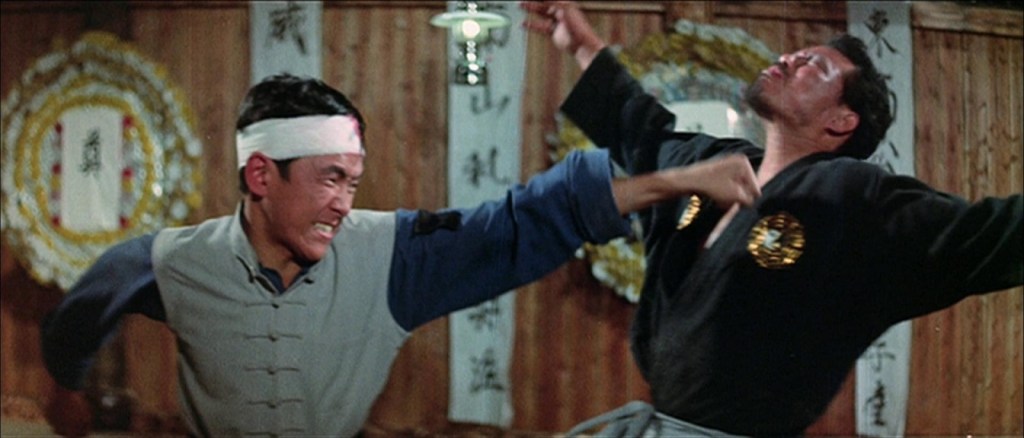
I’m fairly egalitarian in my habits. I watched a lot of the wonderful works of Akira Kurosawa and Robert Altman, but also trashy fun like Blacula, The Toxic Avenger and Flash Gordon. Sometimes you want an escape, like revisiting all three Karate Kid movies, and sometimes you want to be deeply moved by a film like Ozu’s Tokyo Story.
During the depths of New Zealand’s long initial lockdown, I watched all six of William Powell and Myrna Loy’s effervescent Thin Man comedies and dreamed of martinis and solving crimes. During the heart of the Black Lives Matter protests I watched Do The Right Thing again, with my son. Around American election night I re-watched Warren Beatty’s Bulworth, about a politician who loses his mind.
There were great movies I’d never seen before – Michael Caine’s Get Carter, Brian De Palma’s Blow Out, Dario Argento’s Suspiria, western Rio Bravo and fantastic more recent films like Midsommar, Portrait of a Lady on Fire and The Last Black Man in San Francisco. There was a dive into revisiting the always welcoming works of Chaplin, Keaton and Harold Lloyd. I got very into digging into the careers of Hal Ashby, Angie Dickinson, Michael Caine and Warren Beatty. The movies are an endless maze, with many exits.
I don’t mind watching movies at home, but the cinema experience is the real deal. As the curtain falls on 2020 and rises on 2021, I hope the big changes in how we view movies don’t take away their magic, and that I can still find ways to sit in a big room with strangers, popcorn in hand, and enter another world.
“We live in a box of space and time. Movies are windows in its walls.” – Roger Ebert