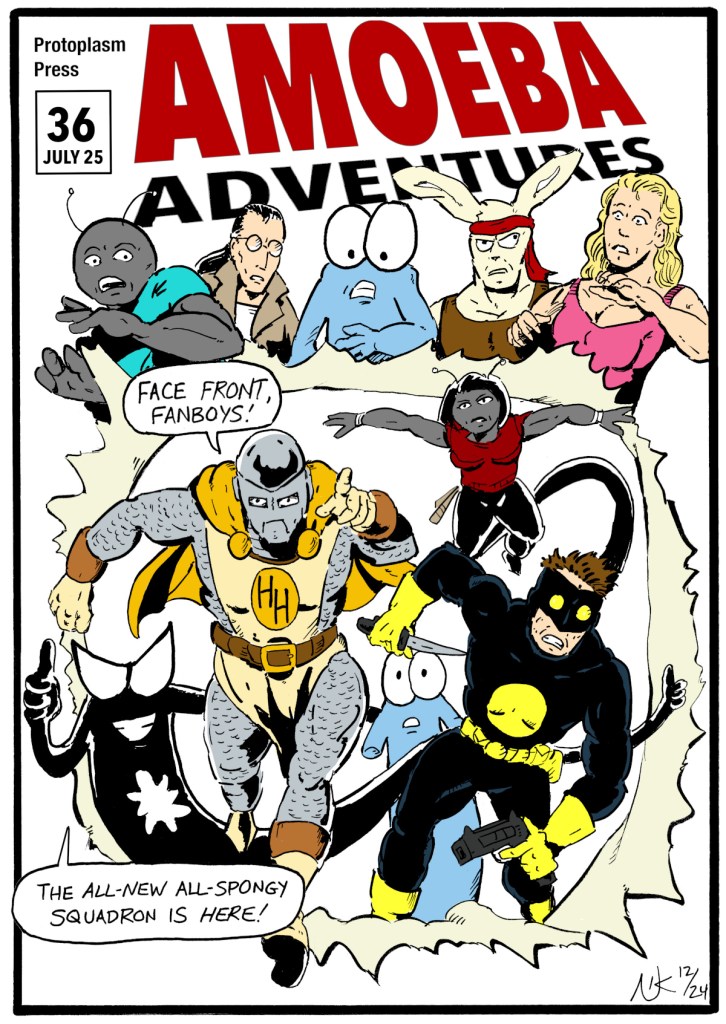
Hello, friends! The brand new issue of Amoeba Adventures is now here as a FREE PDF download just for you! Amoeba Adventures #36: ‘Evolution’ is the second part of “The Crane Flies High” three-part story that promises to change everything for Prometheus and pals.
It’s just the latest chapter in this small-press comic I’ve somehow been putting out on and off for 35 years!
You can download it completely free right here at the link below!
Want the limited print edition? They’re a mere US$7.50 to ship anywhere in the world from New Zealand by sending cash to me via PayPal at dirgas@gmail.com. Print copies of Amoeba Adventures #27 and 31-33 are available for $5 each and if you missed an issue, #34 and #35 are $5 each if you order the new issue as well!
CLIPPINGS: COLLECTED JOURNALISM 1994-2024 is a heaping compendium of the best of my essays, reporting, criticism and memoirs from my so-called career, gathering up material from Mississippi to Oregon to New York to New Zealand. It’s as close to an autobiography as I’ll probably ever write and is all yours as a thick paperback or a groovy e-book!
THE BEST OF AMOEBA ADVENTURES gathers up the best of long out-of-print 1990s Amoeba stories by me with additional art by Max Ink are collected along with bonus rarities and more, including guest pin-ups by Dave Sim, Sergio Aragones, Matt Feazell and Stan Sakai! Collecting material from Amoeba Adventures #1, 4, 5, 8, 9, 11-13, 16, 17, 21, 22, 27, Prometheus The Protoplasm #4, Prometheus: Silent Storm; Prometheus Saves The Earth and Amoeba Adventures Fifth Anniversary Special, in a hefty 350-page book available in paperback or hardcover!
AMOEBA ADVENTURES: THE WARMTH OF THE SUN gathers up the first six all-new issues of Amoeba Adventures beginning in 2020! We pick up Prometheus and friends in their first new tales in years to find them dealing with detective mysteries, deadly former foes, impending parenthood and occasional nights at the disco. Oh, and coffee. There’s always coffee. Collecting Amoeba Adventures #28-33.
And if you haven’t please like the Amoeba Adventures by Nik Dirga page on Facebook where, if the algorithm permits, I’ll put updates on future comics, links to my non-comics journalism work and more!
Once upon a time, when I was a young card-carrying Official Handbook Of The Marvel Universe-reading fanboy, I could’ve told you every single superhero who had been a member of the Avengers.
These days, pretty much every Marvel character other than Aunt May has been an Avenger (and she might’ve been, for all I know) and there’s been regular Avengers, Secret Avengers, Space Avengers, Young Avengers, X-Men Avengers and oh, so many more.
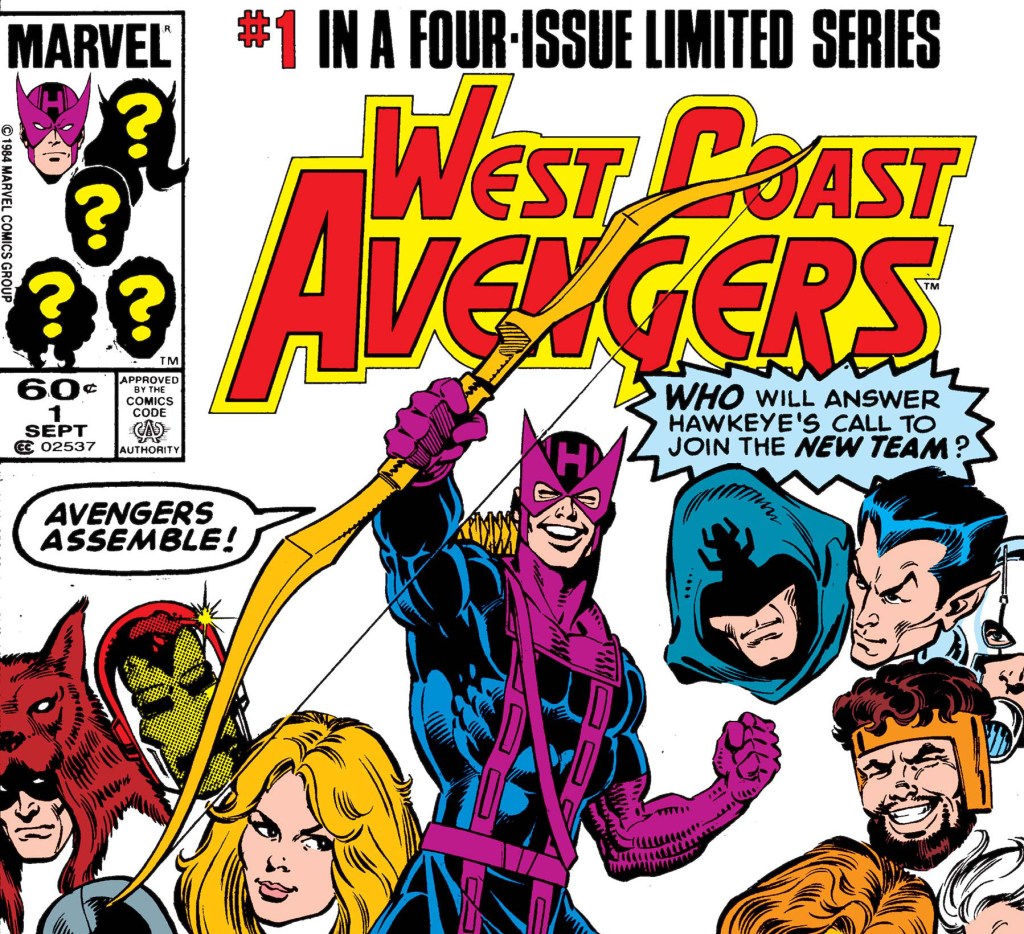
But 40 years ago, the very first Avengers spin-off team took off in their own ongoing title. The West Coast Avengers debuted in 1984 in a miniseries, and in mid-1985 their own 102-issue run began.
And man, I was a West Coast Avengers fanboy from the start. The idea of spin-offs of a superhero team was a novelty then, and best of all, these Avengers lived in California. Hey, I lived in California, too! It’s a common complaint that 95% of DC and Marvel superheroes seem to live in New York or elsewhere on America’s East Coast. West Coast Avengers was a rarity – a reminder that the rest of the country existed. Sure, it was set in a laid-back Hollywood version of the Marvel Universe, but it still was somewhere I’d actually been.
There’s something about the West Coast Avengers that has lured a cultish fandom ever since – and I like to think it’s because it was almost always a team of underdogs, of B-listers and troubled superfolk who had something to prove. It’s a lot harder to be underdogs when Captain America and Thor are running around like on the main Avengers team.
The team was originally led by charming mook Hawkeye and his new bride Mockingbird, self-doubting hero Wonder Man, twitchy cat-woman Tigra and Iron Man at his most disheveled. Later on, more flawed heroes joined up – former Ant-Man Hank Pym, desperately needing redemption; arrogant Captain America substitute the USAgent, and the poster child for superhero mental issues, Moon Knight.
Hawkeye, to me, is one of the main disappointments of the Marvel Cinematic Universe. The comics character has always been a bit of a ratbag, arguing with Captain America, getting into punch-ups with teammates and always pushing back against authority. Nothing against Jeremy Renner, who did what he could, but reimagining him as a kind of stoic secret agent married with children took away Hawkeye’s bratty appeal. Part of the novelty of West Coast Avengers was finding this character – who literally spent years telling others how to run the Avengers – put in a position of power for the first time. Hawkeye was a loveable jerk, and his struggles in the top job gave West Coast Avengers an edge the more polished main Avengers team lacked.
Superheroes had been arguing and had their issues for a while – that was Marvel’s whole point of difference, really – but the struggles of the West Coast Avengers still stood out. You had Tigra battling with her feline side, Iron Man being filled in for by future War Machine James Rhodes due to Tony Stark’s alcoholism, or Wonder Man’s endless fear of death. (Don’t worry – Wonder Man’s been killed several times since. It’s really the main thing he’s remembered for.)
WCA was written in the early years by Steve Engelhart, a veteran Avengers writer who could sometimes be workmanlike, but had a nice eye for character and soap opera melodrama. Dialogue was sometimes cringe, but that kind of fit in with this team of second-chancers. And for ‘80s mainstream comics, Englehart pushed at boundaries, tackling Hank Pym’s attempted suicide, or in a particularly raw storyline, Mockingbird being sexually assaulted. The execution could be awkward, viewed 40 years on, but the heart was there.
The two best eras of West Coast Avengers were #17-24’s “Lost In Space-Time,” a sprawling classic time-travel epic that split the team all through Marvel history and had an unpredictable novelty to it all, and John Byrne’s shortened stint as writer/artist from #42-57.
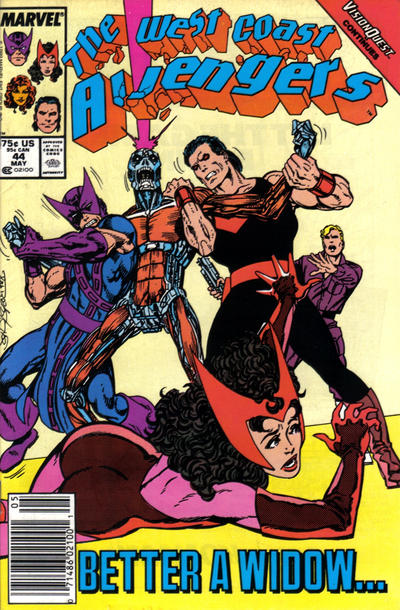
After the time-travel epic, the title began to fall into aimlessness, and then superstar Byrne suddenly came along and amped up the excitement. Byrne was a bulldozer – he tore apart the Vision and Scarlet Witch’s amiable marriage and it’s never actually been the same since, and he abruptly left the book in the middle of a storyline (also one of Byrne’s bulldozer skills). But for a year or so there he made West Coast Avengers stylishly cool and energetic, with his dynamic, chunky art the best the series ever had.
After Byrne left with #57, it was a long slow slide down for West Coast Avengers. Changing the title around #50 to the more generic Avengers West Coast was a sign. There were some terrible fill-in issues, including one issue which killed off several characters only to go with the hokey “it was all a dream” ending, which I still remember as one of the worst comics I ever read. Journeyman Roy Thomas took over writing and there were a few good moments, but bores like Spider-Woman (the second, painfully bland one) and Living Lightning added little to the team, all those 1990s endless crossovers started seeping in, and some diabolical 1990s Image-style artwork erased any attempt for the book to actually look like it was set in California.
West Coast Avengers died at #102, long after I stopped reading it regularly, and there was a brief oh-so-‘90s “extreme” attempt to keep some of the group going called Force Works that is just plain awful. There’s been a couple of brief revivals of the book in years since that never understand its fundamental appeal or are too gimmicky.
But for a while there, the West Coast Avengers were good comics fun. I’d never say it was another Watchmen or anything, but it took the age-old dream of going to California to reinvent yourself and gave us a bunch of second-tier superheroes grooving away under that endless sunshine.
They may not have been the best Avengers, but they were my Avengers.
There’s an impending natural disaster. There’s two countries going to war. There’s a rich, arrogant billionaire tech bro who wants to rule the world. This sounds like a job for Superman!
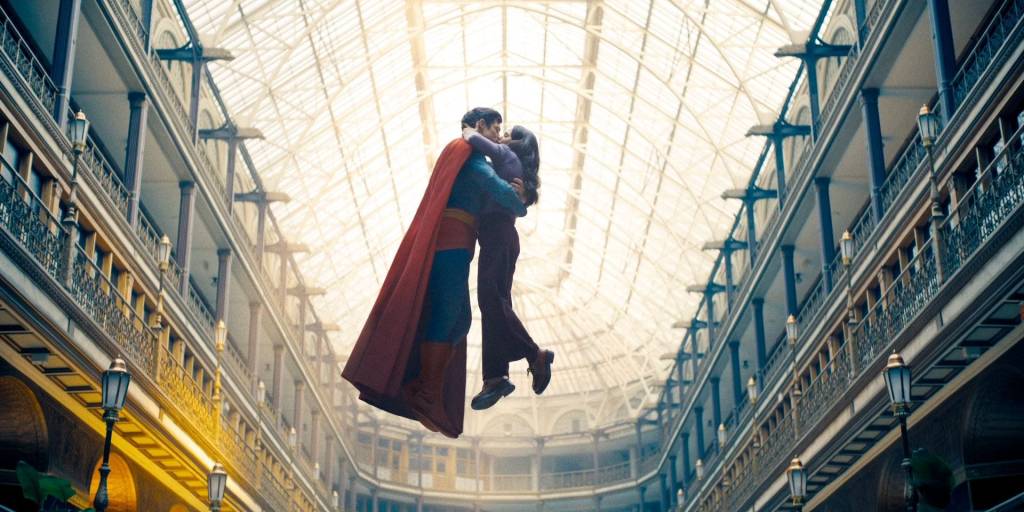
Director James Gunn’s new reboot of Superman brings some much-needed compassion and good humour back to the Kryptonian superhero after director Zach Snyder’s overly grim approach to the character in The Man Of Steel and Batman V Superman.
Forget the same Super-origins we’ve all already seen before – baby rocketed away from dying planet, growing up on a farm in the Kansas wheat fields, yadda yadda – Gunn drops us immediately into the middle of the action with a story that starts at full tilt and rarely lets up for two hours. This colourful, pleasantly weird epic is just unpredictable and refreshing enough to stand out from the sea of superhero content.
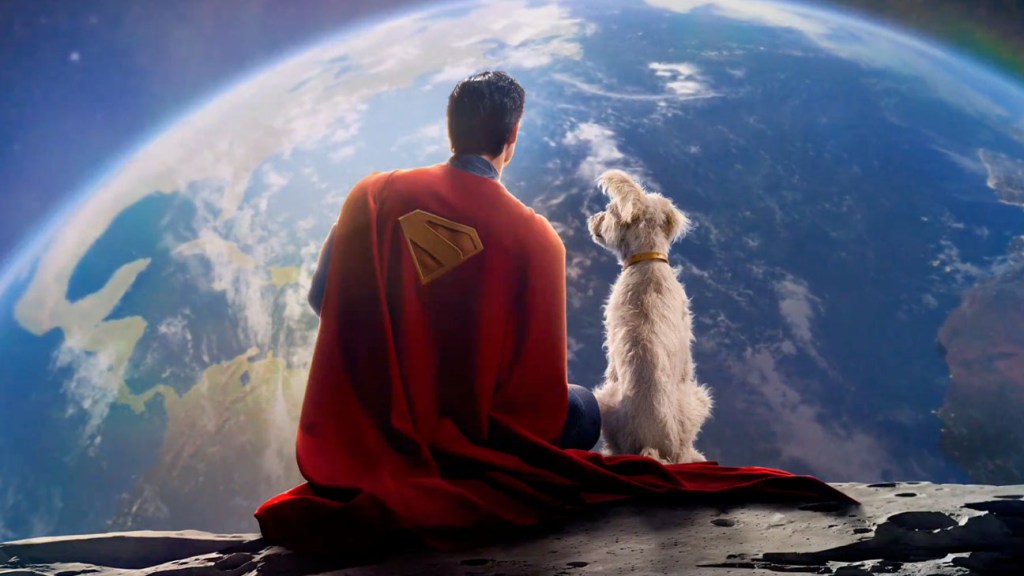
Oh, and there’s a dog – a very good boy by the name of Krypto who very nearly steals the movie right from under Superman’s cape.
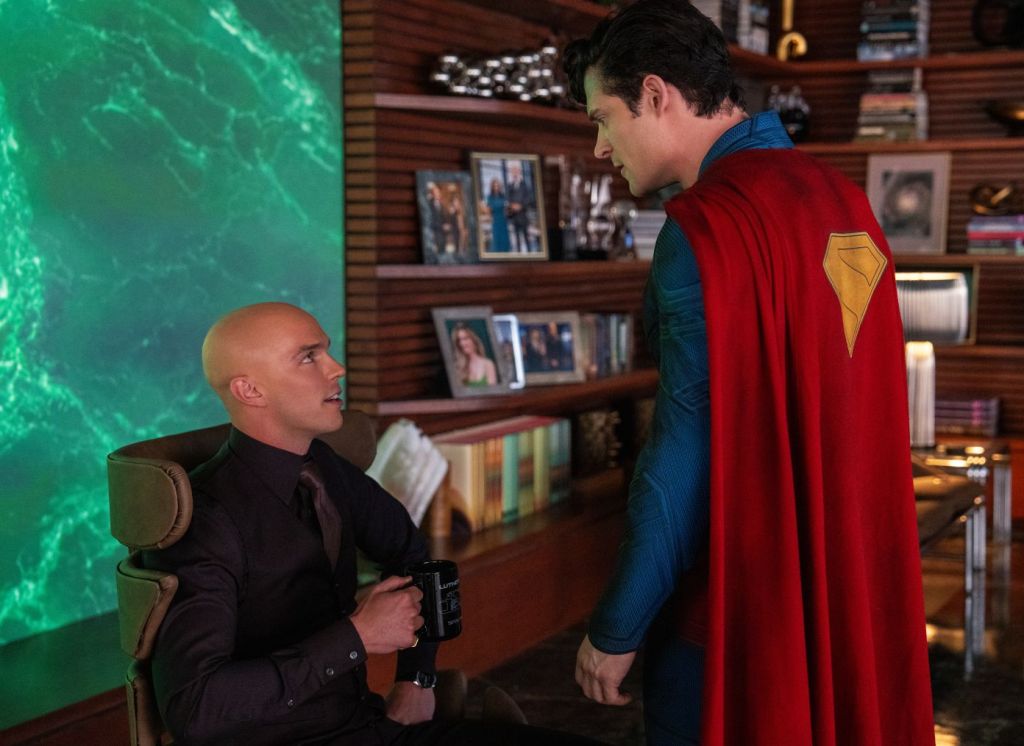
It’s a tangled plot that starts out with the aftermath of Superman (David Corenswet) attempting to stop a war and spins into a broader tale of whether this alien immigrant from another world can truly be trusted. On-and-off girlfriend Lois Lane (a fierce and funny Rachel Brosnahan) is trying to figure out their relationship, while scheming Lex Luthor (a terrific scowling Nicholas Hoult) has gathered some bad guys and sets in motion a plan that aims to defeat Superman once and for all.
Gunn had already made a splash on the comics movie scene with his quirky Guardians Of The Galaxy trilogy for Marvel and his giddily gory and over-the-top The Suicide Squad. He impressed DC Comics so much they hired him to shepherd their whole rebooted universe of screen projects, in a course correction after movies like Justice League and The Flash underperformed.
The 2025 Superman is a comic book movie that embraces a fundamentally goodhearted view of the world, no matter how many terrible things happen, and understands what makes Superman work. Corenswet makes a sturdy, likeable Superman, whose fundamental guiding principle is helping others. He’s all about the art of being kind, while Luthor’s preening ego only cares about envy, power and control.
Gunn channels some of the charming energy of Christopher Reeve’s seminal 1970s and ‘80s Superman films, especially with repeated riffs on that iconic John Williams theme music – still the best superhero movie score of all time. He’s not afraid to get goofy, and embrace the colourful eccentricity of the original comic books.
Fans who think comic movies should always be super-serious and “realistic” may be turned off by Superman, but a plot that features robot sidekicks, shapeshifting element men and shimmering cosmic scenery feels truer to the wild world of the original Superman comics. A few years ago having that super-dog Krypto in a movie would’ve been seen as campy. These days, it feels like a welcome relief. Why can’t a dog be a superhero, anyway?
Superman sets up yet another cinematic universe, but there’s a deft touch to the way Gunn introduces a pile of other characters from ratbag Green Lantern Guy Gardner (a hilarious Nathan Fillion) to steely Mr Terrific. By avoiding the well-worn origin stories here this universe feels a bit more lived in. Comics fanboys will be delighted to see even characters like reporter Jimmy Olsen (a fun Skyler Gisondo) get a moment to shine.
Still, Superman is, intentionally, rather overstuffed. Sometimes Gunn threatens to lose control of the narrative, and a few characters get short shrift – I would’ve loved to see a little more depth to Corenswet’s Clark Kent or some of his Daily Planet co-workers. Yet most of the dangling pieces come together nicely in an action-packed conclusion that features plenty of city-smashing chaos without the nihilistic undertones to it all that 2013’s Man Of Steel had.
Most importantly, the “man” in Superman is key here. Too many Superman movies starting with 2006’s misfire Superman Returns have focused on the melancholy godlike figure soaring above it all, forever apart from the rest of us. Corenswet’s relaxed, genial Superman bleeds a lot and makes mistakes, while never losing his cheery optimism for long.
This is the first Superman movie since 1981’s Superman II I haven’t felt a vague sense of disappointment with over compromises or inept plot decisions.
Of course, the usual outrage merchants online are already banging on about how Superman has apparently gone “woke,” as if he hasn’t been fighting bullies and haters for the past 80-plus years. Sincerity is a much better superpower than cynicism, isn’t it?
For a while, Superman’s reputation has suffered in comparison to edgy heroes like Wolverine, Deadpool or Batman. Is Superman still cool? Sure, he may be a little corny, a little idealistic, but he also refuses to back down and hangs out with an awesome dog.
I know which hero I’d rather have in the real world any day of the week.
*This review appears in a slightly different form over at my day job at Radio New Zealand!
Golly, but I’ve been busy writing everywhere but this blog lately.
I’ve been doing a lot more assorted fact-checking and explaining work for cash money so it’s time for another roundup of stuff what I wrote:
Just in time for the hopefully good new movie opening this week, I did a recap for Radio New Zealand on Superman’s best (and not so best) moments on screen to date and some comics recommendations!
Over at AAP FactCheck, I did a deep dive into the disturbing and increasingly surreal world of bizarre AI slop infesting your social media feeds. The “conjoined twins celebrity scam” posts are the ones that finally broke my brain for good, I reckon:
And finally pivoting back again to the murky world of AI and how it’s slowly eroding all that is fair and decent on social media, here’s another explainer:
Once upon a time in small-town California, the old Shop N Save down the street from my parents’ house carried comic book digests, tucked in a corner of the magazine rack. Those cozy little 14 cm × 21 cm books full of reprints were quite in vogue in the early 1980s, and packed 100 pages or so of vintage reading for typically less than a buck.
You’d see superhero reprints from DC and Archie stories, but the best of these digests, for me, were Dennis The Menace Pocket Full of Fun books, gathering up classic comics featuring the adventures of Hank Ketcham’s good-hearted but hyperactive perpetually 5-year-old kid hero Dennis the Menace (no, not that Dennis).
Dennis debuted in comic strips, but soon moved on to his own comic book adventures, overseen by Ketcham but usually drawn by others.
As a budding comics geek, I loved the digest format, although my increasingly aged eyes have found the poorly-printed DC Digests are now almost illegible without heavy magnification – those superhero comics weren’t meant to be shrunk down to pocket size, really. But Dennis, well, his pockets full of fun still hold up pretty well with the less cluttered, more open artwork and lettering, and are still easy to read.
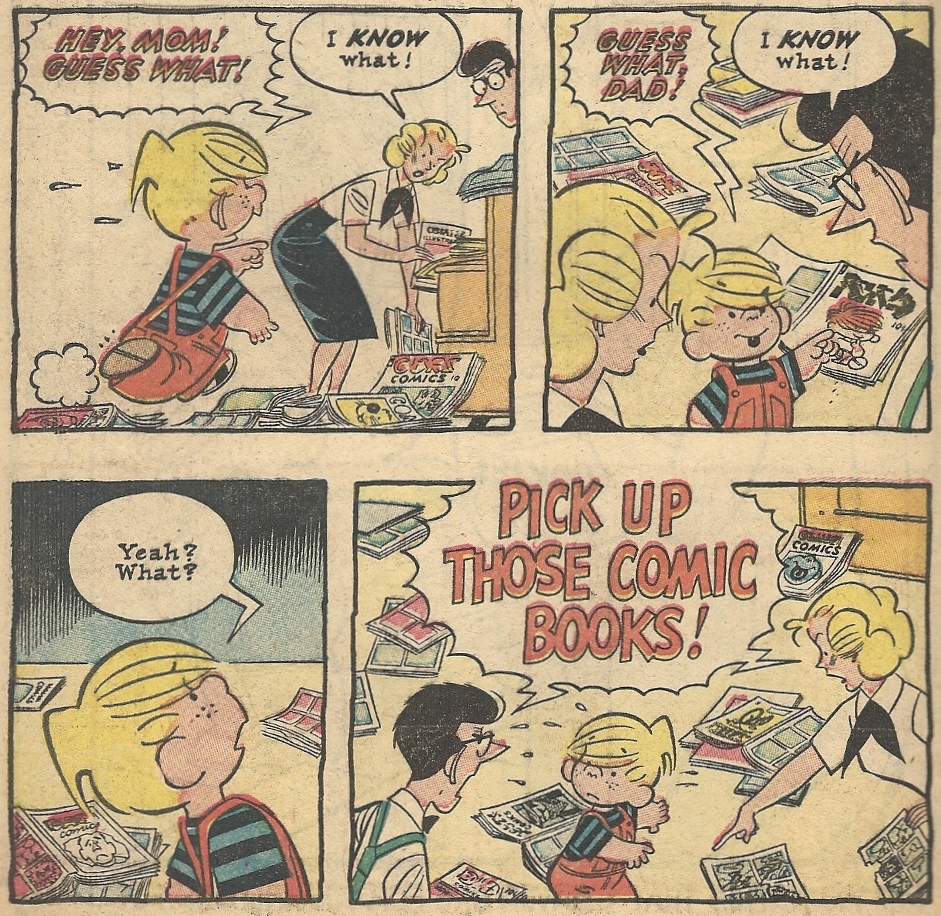
The funny thing is, I never really was a huge fan of the Dennis The Menace comic strip, or Hank Ketchum’s rather too loose and scratchy art. In my humble opinion, a single panel isn’t really the best comics format unless you’re The Far Side or something. The longer Dennis comics stories worked a lot better for me, letting the pint-size characters have actual adventures and giving Dennis a chance to bounce off his uptight parents in funnier settings.
When I read those Dennis Digests, I quickly figured out there was a “good Dennis” artist tucked in amongst the diligent anonymous imitators of that Ketcham style. There was one particular artist whose stories were packed with crisp, detailed artwork, hilarious slapstick and cartooning and a dynamic wit and energy that many of the other Dennis stories lacked.
It took me years to figure out who that “good Dennis” artist was. Al Wiseman (1919-1988) was the Dennis “ghost” artist for many years. Working with writer Fred Toole he cracked out dozens of great Dennis comics stories in the ‘50s and ‘60s I discovered reprinted in those Pocket Full of Fun digests.
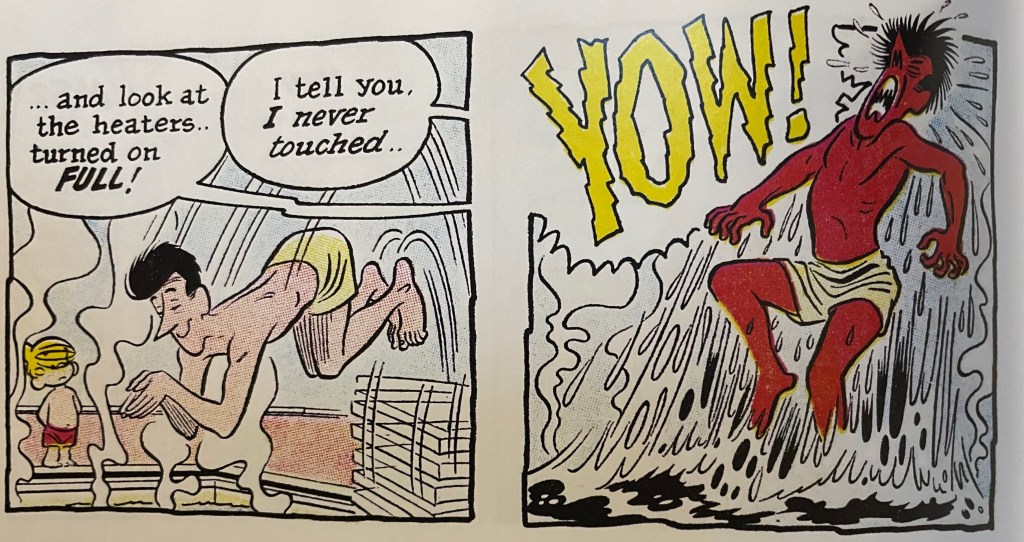
There’s something about Wiseman’s style I loved and still love. His cartoony characters are drawn slicker, with more style, his artwork lusher and more detailed – dig those fine ’50s style architectural backgrounds! And the lettering in Wiseman comics sparkles with personality, from the mellow “typewriter” conversational wording to the sharp, angular “shock” script he uses for yelling and screaming (and there’s always a lot of those in Dennis the Menace comics).
These comic adventures were based in realism – Dennis a precocious but recognisable kid, his parents frazzled Henry and soothing Alice, his gang of neighbourhood friends. The grounded adventures tended to revolve around things like Christmas, family vacations, playing with your best pals – and as chaotic as they got, rarely moved into total fantasy, suiting Wiseman’s exquisitely researched art well.
The stories became tailored to Wiseman’s strengths and particularly in a series of dazzling “holiday” specials – Dennis The Menace Goes To Hawaii, Washington DC, Mexico, Hollywood, etc – where all his skill at detailed renderings really came together. Goes To Hawaii is reportedly one of the best-selling comics of ALL TIME, with 4.5 million copies sold over several printings.
Ketcham continued drawing the daily Dennis strip till his death but somehow Wiseman and Toole’s work never quite got the appreciation or credit it deserved. Some of their work (along with the also very good Owen Fitzgerald, who had a looser style) was reprinted in some fine hardcover books a few years back, a series which sadly only ended up three volumes long.
At their best those Dennis digests packed with Wiseman goodness hit that “comics for kids and adults” sweet spot that geniuses like Carl Barks’ Donald Duck and John Stanley’s Little Lulu did.
I long ago lost my childhood Dennis digests but have slowly rebuilt the collection over the years. Any time I see those Dennis digests pop up these days on the open market, I grab them, and any other vintage Dennis comics collecting that sweet Wiseman art.
First, a disclaimer: Neal Adams is one of the all-time great comic book artists, and a favourite of mine ever since I picked up some tattered ‘70s Batman reprints and discovered that dynamic, bold style that truly changed comic art.
Adams exploded on the scene with his Batman and other work in the late ‘60s and was a loud revolutionary – he broke comics out of their staid grids and made the comics camera move, and gave Batman, Deadman, Green Arrow, Superman and many more a radically realistic upgrade. His characters heaved with emotion and muscle. Adams, who died in 2022, was truly a trailblazer for comics.
But man, I wish he could have stopped tinkering with his comics.
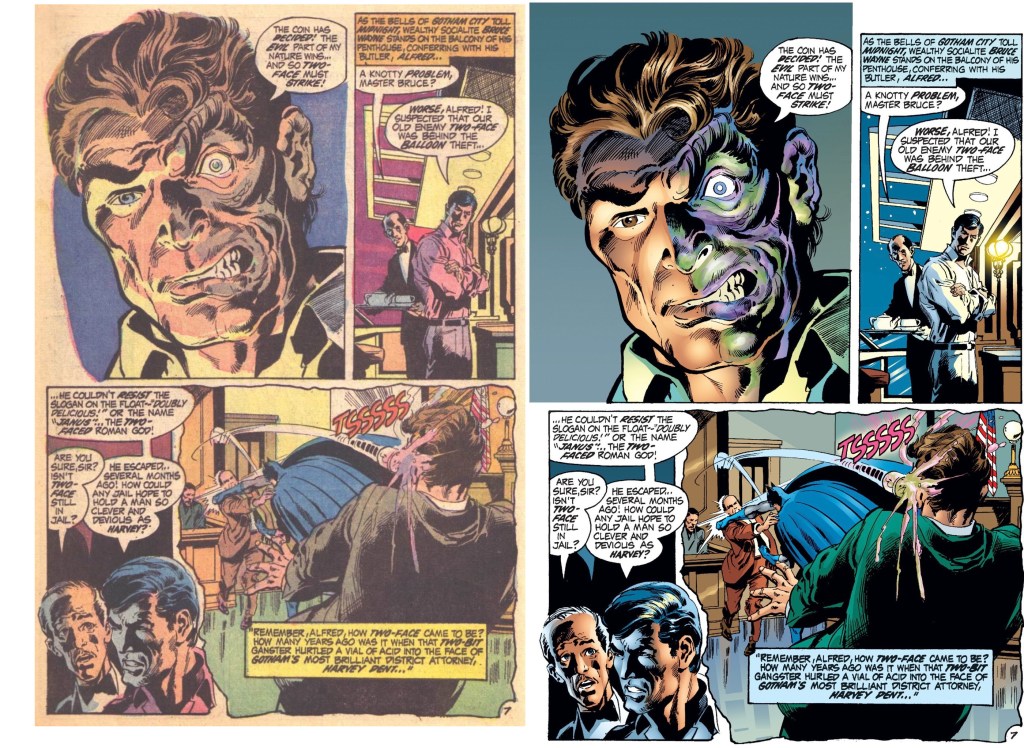
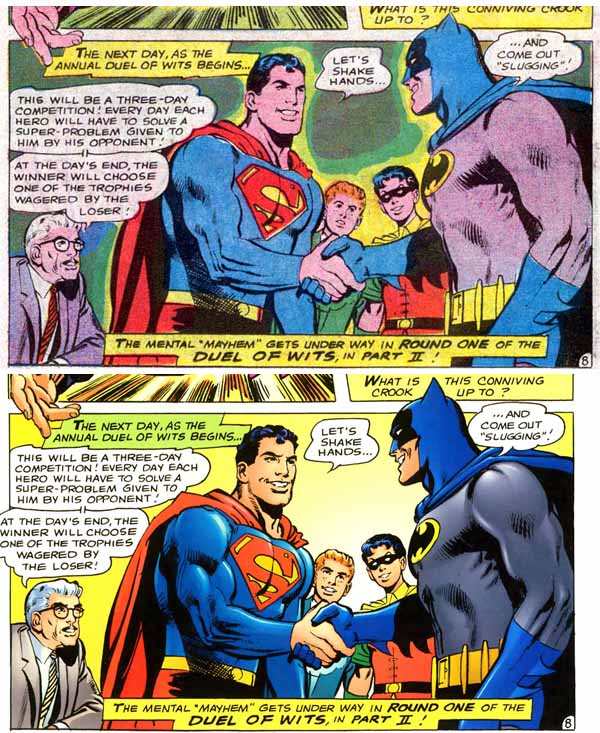
Adams was notorious for recolouring, relettering and even redrawing entirely his vintage ’60s and ’70s work when it was reprinted in fancy collections in later years. It almost never improved the art. It often made it a lot worse.
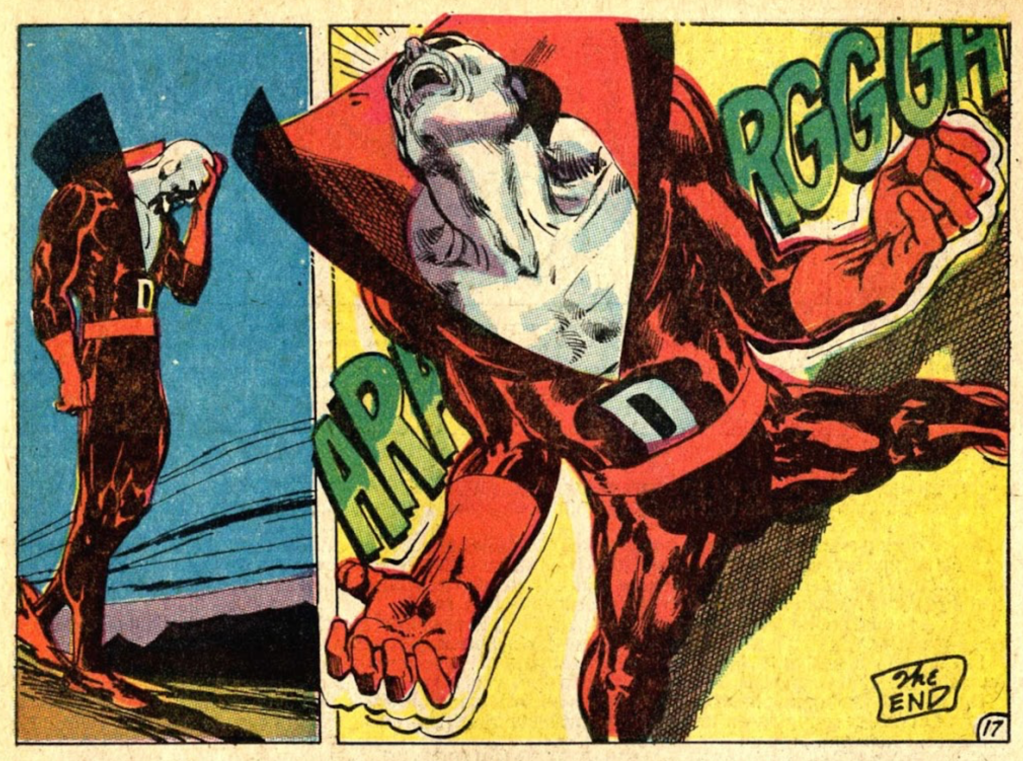
It was highly noticeable in a Deadman collection I was just re-reading, where Adams’ art is tarted up in garish colours that instantly look dated, re-lettered with bland computer lettering and woozy airbrushed looking highlights and backgrounds. The one on the left is the original. The one on the right in Deadman Book One is almost an entirely redrawn and reworked page.
A few pages later in this same collection, other Adams stories of the era are reprinted as they were – the same dynamic art is given a calmer, more fitting look with the original colours. The styles – old-school Adams and tinkering Adams – clash mercilessly when jammed together into one book.
Even worse, in collections of his utterly iconic Batman comics of the era, too often they’re served up with gaudy new colors, hideous gradient backgrounds and art tweaking. Give me yellowing newsprint and the work that came from the pen at the time any day.
Does it look more “modern” when Adams reworked colours and art? Sure, I suppose. But the point of old things is that they are old, and not intrinsically worse because of how they were done at the time.
I’m a developing cranky curmudgeon, I know, but the flatter colouring of vintage comics was just right for the time, and recolouring old comics in modern styles feels to me just as much of a creative violation as colorising old black and white movies is.
Like Adams, I believe in creators’ rights, and it’s a knotty question that if Adams wanted to “update” his work like George Lucas has bowlderised the 1977 Star Wars, isn’t that his right? I’m still working that one out. But I believe the work should be reprinted faithfully to how it was first produced. If you want to make a new “updated” version, too, knock yourself out, but don’t suppress the original.
Adams kept working all the way up to his death at age 80, although few fans would say later work like Batman: Odyssey and Fantastic Four: Antithesis lived up to the classics. Adams’ art also took a turn for the grotesque in his final years – all the dynamicism of his early work ‘roided up somehow to look more than a little weird. And let’s not talk about his writing, which was never his strong point:
All artists change their style as they go and so hey, Adams changed, that’s cool. But going back and reworking the work that put him on the map and making it difficult to even find the originally coloured and drawn versions in modern reprintings — well, I love Neal Adams, but I do wish sometimes he would have stopped tinkering and just appreciate his accomplishments as they stood.
He truly was one of the greats – and he was from the moment he first exploded onto the comics scene more than half a century ago.
Peter David perhaps wasn’t quite a household name, but any comics fan from the late 1980s onward knew who he was. The acclaimed comics and novel writer died overnight at age 68.
David’s remarkable 12-year-run on the Incredible Hulk changed the character forever from the “Hulk smash” days, while his work on everything from Spectacular Spider-Man to Aquaman to X-Factor to Star Trek was always entertaining, full of humour and sharp dialogue. He wrote many novels and was also an excellent, underrated essayist with his long-running “But I Digress” columns in the late, great Comics Buyers’ Guide.
Simply put, he was a writer who knew the assignment, and delivered almost every time.
Unfortunately, his sadly early death wasn’t a shock, as he’d been in terrible health for ages. David suffered a stroke in 2012 and spent most of the last few years in hospital or rehab care due to kidney disease, diabetes, heart attacks and more strokes. As a fan, it was hard to hear news of his slow decline. Remarkably, he kept writing through most of it all.
Being funny is harder than it looks, but David often made it look easy. His relaxed, friendly style and deft hand with a one-liner stood out from the crowd when he began writing professionally after a long stint in sales for Marvel Comics.
Reading David’s early Hulk and Spider-Man comics back when I was in high school, his voice was an important influence for me in developing my own goofy comics writing style with Amoeba Adventures.
I’ve always been drawn to the sour and sweet combination of mixing dramatic moments with silly one-liners and slapstick, and David was a master at that balance. He knew when to go for the gag and to go for the gut. Not every joke landed or has dated well, but there was a lightness of spirit to Peter David’s best work that holds up well.
He was never an Alan Moore/Grant Morrison type writer who deconstructed the comics medium, but instead a steady journeyman like Kurt Busiek or Roger Stern who could be counted on for providing usually excellent comics soaked in that hilarious wit.
His death may not have been preventable, but the one thing that makes me truly angry today is how Peter David and his family spent so much of the last few years fighting to fund his health care. It was great to see so much support for crowdfunding his care when the call came – I donated a couple times myself – but with his death today, I wonder why it came down to GoFundMe to support a dying man and his family.
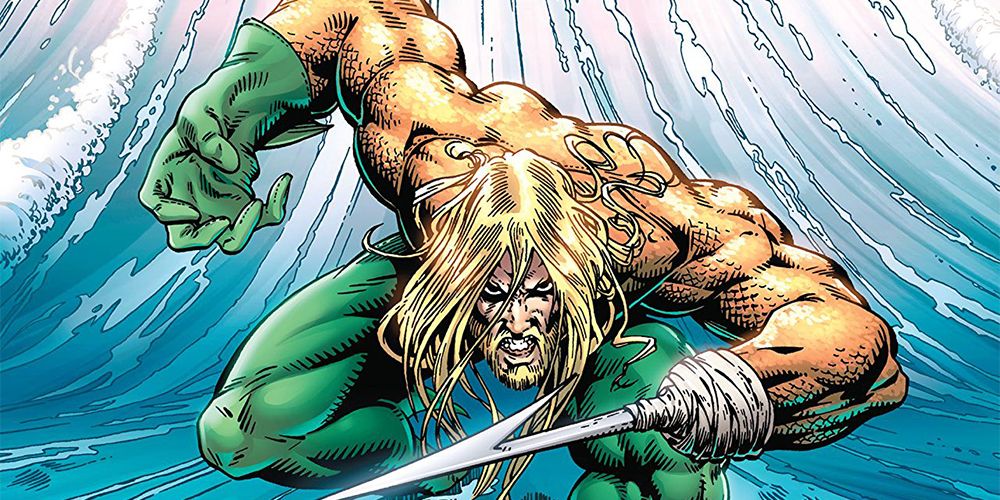
Disney, DC Comics and Sony made millions and millions from Peter David creations like Spider-Man 2099 in the Spider-Verse movies, the “smart” Professor Hulk as seen by Mark Ruffalo in Avengers: Endgame, the revamp of the dull fishy Aquaman into the sexy long-haired, bearded warrior that Jason Momoa turned into a worldwide movie hit, the Young Justice team of tween sidekick heroes who headlined a hit animated series – just for starters.
And yet twice, his family had to turn to GoFundMe for help as David’s condition worsened, as Medicaid cut off funding and his widow Kathleen spent an unfathomable amount of time wrestling with the unfair labyrinth of American health “care”. I’m not saying corporations owe it to creators to fund every moment of their lives, but David suffered for a long, long time in hospitals and rehab, and a million dollars jointly donated by Marvel, DC and Sony could have gone a long way and been a drop in the bucket for companies like Disney and Sony that earn billions every year.
Comics will break your heart, the Jack Kirby saying popularised by NZ cartoonist Dylan Horrocks goes, but Peter David’s last years could have been a bit easier with a little bit of corporate kindness. His life’s work amused and entertained millions. It would be nice to think his death might make a difference somehow, too.
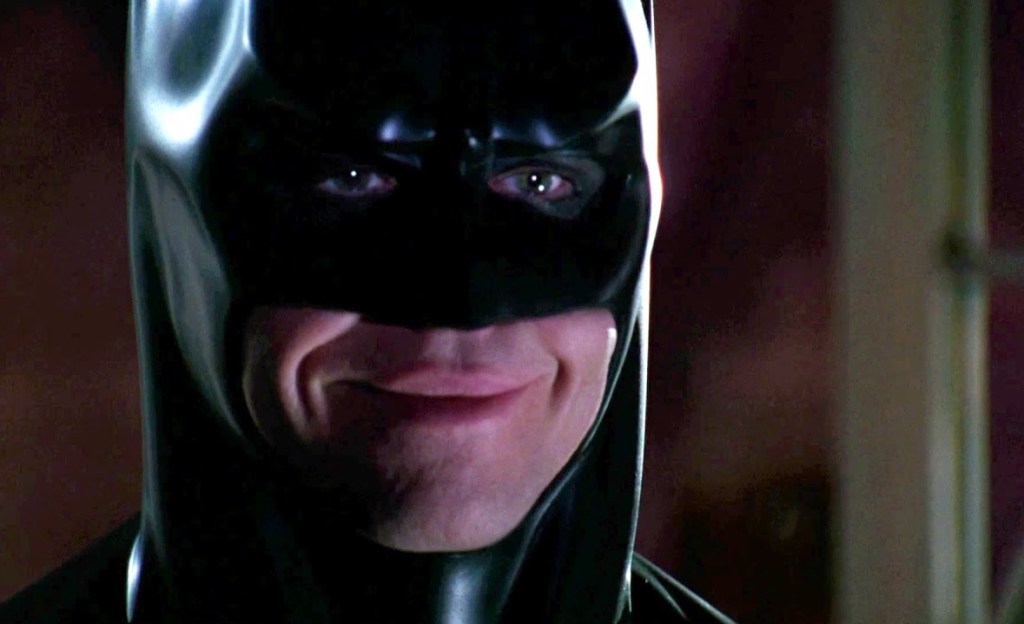
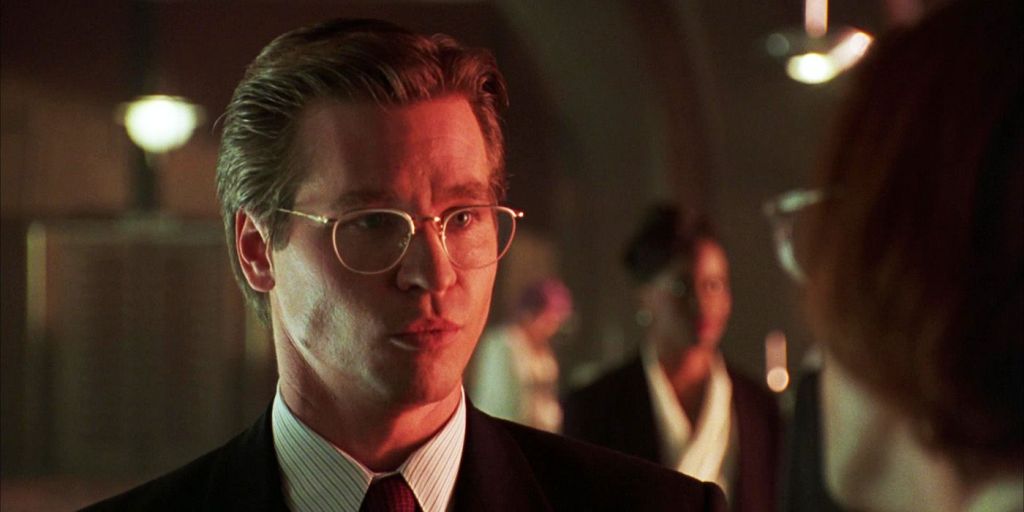
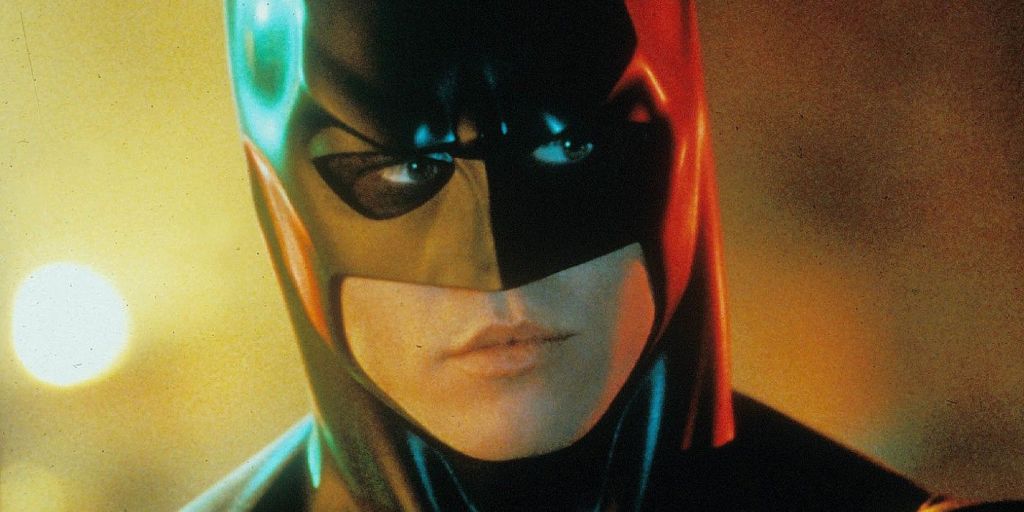
Val Kilmer was a complicated guy, but he left behind a lot of indelible movie performances. Nobody would ever call Batman Forevera good movie, really, but despite all the missteps and terribly 1990s trappings of it all, there are moments when I do think Kilmer’s Batman is one of my favourite takes on the caped crusader.
Kilmer, I think, was the funniest Batman other than ’60s icon Adam West. That’s not exactly something that fans of none-more-dark Dark Knight takes might appreciate.
As a Bat-fan, I’ve always liked the Batman who was a little more human, the one we’d see running around in Brave and Bold comics in the 1970s tossing quips about with Green Arrow and Kamandi. A Batman who is so utterly bleak gets a bit old.
Director Joel Schumacher took all the gothic weirdness and carnival humour of Tim Burton’s first two Bat-movies and exploded it into full-on camp and neon garishness. Batman Forever, turning 30 in 2025, was a huge hit, lest we forget, the #1 movie of the year. But it all came crashing down with 1997’s flop Batman and Robin, this time starring a far too-glib George Clooney as Bats and ramping up the colourful kitsch about 500% more. Few people look back at Schumacher’s Batman as a peak for the character now.
And Batman Foreverisa mess, don’t get me wrong. It might just boast the two most annoying comic book movie villains of all time in Jim Carrey’s insufferably twitchy Riddler and Tommy Lee Jones’ frantic and undignified Two-Face, who spends most of the movie cackling, grunting and wahoo-ing. The movie shoehorns in an origin for Chris O’Donnell‘s totally ’90s Robin, an incredibly sexed-up Nicole Kidman as a love interest and a kind of incoherent plot about brain-stealing technology. Whenever I watch it I have to fight the urge to slap Carrey so I can focus on the bits that do work.
It starts off clearly stating it isn’t going to be Keaton/Burton’s Batman, with fetishistic shots of Kilmer donning the Bat-gear and the first lines of dialogue being a lame joke about Batman getting drive-through for dinner. (Cue that McDonald’s ad, of course.)
And yet, I like Kilmer as a blonde Bruce Wayne/Batman. There is a sly wit to Kilmer’s performance, which gives us a Batman with a sense of humour without being quite as lightweight as Clooney ended up. Little tics linger like his Bruce Wayne constantly fooling about with glasses (does Batman wear contacts?). His Batman smiles broadly in one memorable scene, which could be cheesy but Kilmer makes it a little, well, charming and sincere. Why can’t Batman smile, occasionally? It ain’t always dark.
His Bruce Wayne is courageous and not just a playboy – brawling with villains without a costume in several scenes, focused with a whiff of arrogance, and smart but also a little scared.
Michael Keaton was a tense and wiry surprise as Batman (it’s easy now to forget his casting was hated by pre-internet fandom once upon a time) and Bale, Pattinson and Affleck have all given us variations on a very serious, stern Bruce Wayne/Batman. But I still think Kilmer’s Batman is the only one who seems kind of like a Batman you’d want to hang out with, really.
Kilmer navigates Batman’s dual nature fairly well in Batman Forever – haunted by his past, but wanting to have a life of his own outside Batman. The rickety script doesn’t really serve him well – at one point Batman quits, only to unquit about 30 seconds later – but Kilmer sells story beats like his mentorship of the angry young Robin and his attraction to Kidman’s ridiculously horny psychologist character.
He cracks a few jokes, but he never makes Batman the joke. Kilmer’s movies like Tombstone and Top Secret and Kiss Kiss Bang Bang were great, but his underrated Batman manages the trick of making a mediocre movie almost worth liking.
Greetings! I wrote a book. Well, I’ve actually been writing it for about 30 years, believe it or not. Introducing Clippings: Collected Journalism 1994-2024, a hefty compendium of my columns, essays, feature profiles and much more over the course of my so-called career!
I’ve written an awful lot of words over the years, but I wanted to put together something that was a little more permanent than a bunch of yellowing newspapers and broken website links. Clippings is, much like many journalism careers, an eclectic mix, from long features to blog posts to deeply personal essays to in-depth pop culture criticism, spanning from Mississippi to California to New York City to New Zealand.
From interviewing governors and rock stars to climbing active volcanos and adjusting to life on the other side of the world, this book is me saying, “Hey, I was here, and this is some of what I did along the way.” Doesn’t everyone want to say that at some point about their life’s work, whatever it is? Throw it all together, and it’s probably as close to a sort of autobiography as I’ll ever get.
It’s got many of my works from long-ago newspapers and magazines, websites and even some fine pieces from this very website in a handsome curated form sure to be adored by your family for generations.
I hope you’ll consider grabbing a copy, now available on Amazon as a paperback for a mere US$14.99, or as an e-book download for just US$2.99!
When I was a kid I always thought Captain America was a bit dorky. Batman and Spider-Man and Wolverine were hip, man.
It took me a long while to discover the uncomplicated charms of Cap. He’s a good man in a world full of troubles, which for some peculiar reason I can’t quite put my finger on, seems really appropriate as a role model in this battered year of 2025.
Captain America has been slinging his shield since 1939 in comics, and was probably punching Nazis before your grandparents were even born. Brought back in the 1960s as a keystone for the Avengers, he’s been the moral centre of the Marvel comics universe for decades.
Yet I really didn’t read an awful lot of Captain America solo comics until the last few years – I never disliked the character, who soared in a lot of great Avengers comics, but he just seemed rather, well, white bread.
But as usual, I was wrong, and slowly working my way through lots of great Cap stories from the 1960s to 2020s has shown me that you can still make a patriotic American superhero interesting. Like any character, there’s ups and downs to be had, but creators like Lee and Kirby, Steve Englehart, Ed Brubaker, the late Mark Gruenwald and Roger Stern have all done terrific stories over the years.
The challenge for writers has been in making Cap a believer in a higher cause without being a mindless follower to it. An element of doubt is key to making Captain America great.
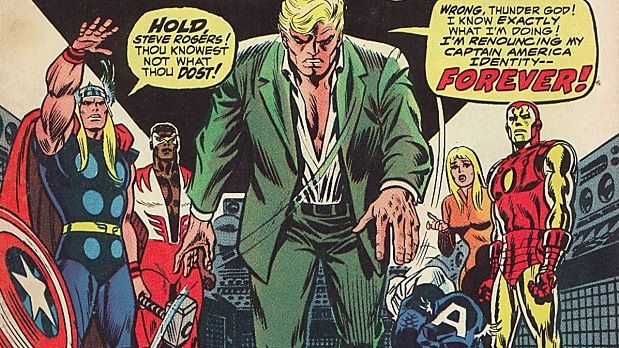
Evil Captain America has been done far too many times and isn’t that interesting, but Doubtful Captain America is a constant of the character, a man who believes in his country but is fairly often willing to question it, up to engaging in a civil war over his beliefs or even quitting the job several times.
As an example of bad Captain America, Mark Millar’s post-9/11 edgelord Captain America in The Ultimates hasn’t aged well at all, channeling Bush-era belligerence and arrogance into a character who’s the opposite of what Cap should be. And being good isn’t being weak.
There’s a fine line between making Cap frequently question his patriotism and making him a whining bore, of course. Yet I admire the writers who’ve made us realise that uncertainty and kindness isn’t a bad thing, all while telling us stories of a man dressed up in red, white and blue.
There’s nothing worse than a fanatic who thinks he can do no wrong. For some reason I’ve been thinking about that a lot lately.
The marvellous performance by Chris Evans as Steve Rogers in the MCU helped seal my Cap fondness, making square-jawed decency seem kinda hot. And of course, there can be more than one Captain America – Anthony Mackie is stepping up as the main man’s successor in a new movie being released this week. Whether or not the movie itself is great, Mackie has done a fine job in his MCU appearances tapping into that fundamental charm and battered optimism Cap needs.
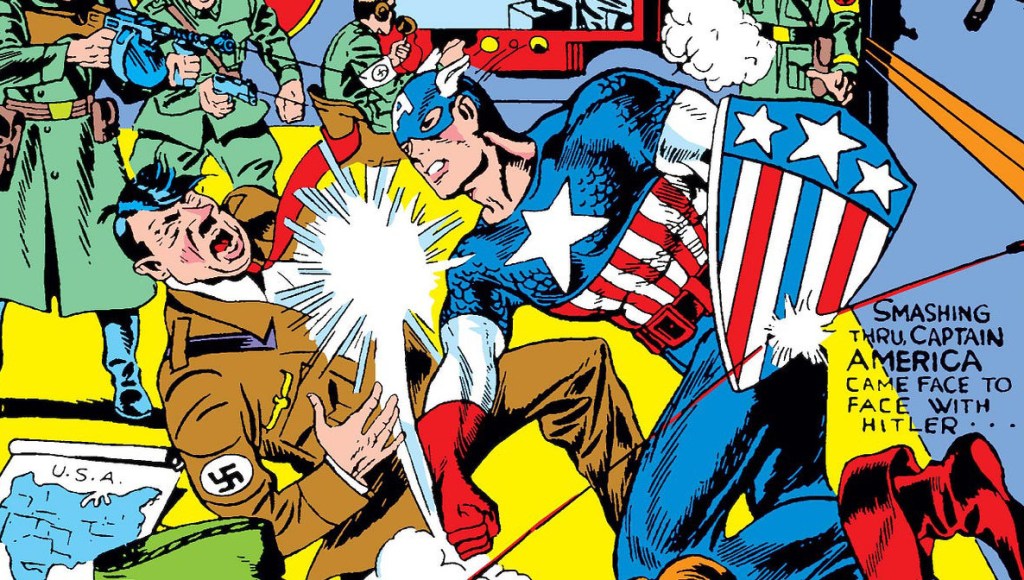
I imagine if Cap was real these days he’d be aghast at a lot of what’s going on under the colours of his flag, but then again he’d probably find it pretty familiar. He punched Hitler, after all.
Again, maybe it’s the tenor of the times. There ain’t a lot of heroes in the real world at the moment. I’ll just keep reading my Captain America comics and hoping for better days ahead.


















 Nik Dirga