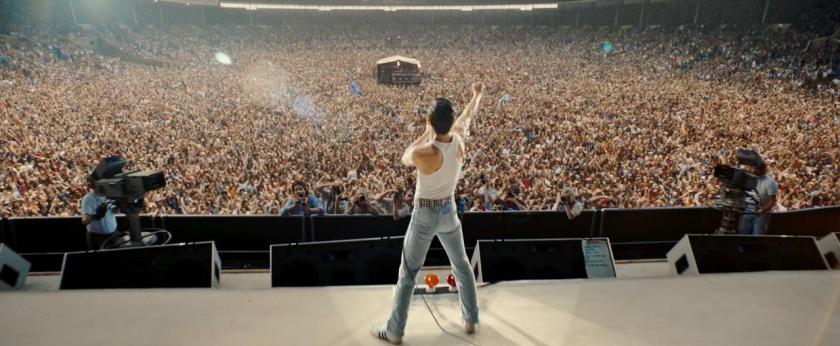
 Real talk: I liked Bohemian Rhapsody quite a lot.
Is is the Best Picture of 2018? Hardly – I’d pick BlackKklansman or possibly The Favourite over it any day.
But in this era where there’s often no shades of grey in debate, Rhapsody sure has come under an awful lot of fire by the critical class – who are probably spitting bullets that it won four Academy Awards (more than any other movie this year) and has grossed US$214 million, becoming the biggest biopic of all time.
“Rhapsody” isn’t a perfect movie, but it’s a rousing entertainment that superbly speaks to the American Dream, circa 2019 – which is, simply, getting famous. Every other person wants to be a star, whether it’s on Instagram or YouTube, and Freddie Mercury’s story hits a chord with them. Farrokh Bulsara, a native of Zanzibar, reinvented himself as a star.
I remember Freddie Mercury’s death, in 1991, which seems a million years ago now. I’d never have thought we’d still be talking about him quite so much in 2019, but when he died, there was an outpouring of Queen tributes and the songs were inescapable (thank you, Wayne’s World). Mercury’s AIDS-related death at just 45 is a key reason for the ongoing posthumous fame – there’s few more inescapable storylines that run through the annals of rock history than dying young.
 Queen are a band critics loved to hate. “Lyrically, Queen’s songs manage to be pretentious and irrelevant,” The New York Times wrote in 1978. Rolling Stone’s Dave Marsh actually called them “the first truly fascist rock band,” which, wow, is not a piece of criticism that’s aged well.
I wouldn’t call Queen my favourite band by any means, but I appreciate a lot of their work, their raucous anthems and their sprawling eclecticism. Queen didn’t take themselves that seriously – an awful lot of their songs sound like band in-jokes – but they hit on one of the key qualities for rock’n’roll success, the marriage of the sublime and the absurd. There’s few songs more ridiculous than “Bohemian Rhapsody,” but dammit if Mercury’s aching solo verses don’t get me every time.
Bohemian Rhapsody, penned by Kiwi screenwriter Anthony McCarten, has come under fire for historically fudging the facts. No, Mercury didn’t tell the band he had AIDS before Live Aid. No, the band didn’t break up before that concert. But I’d argue that the biopic as a genre has never been about 100% historical accuracy – look at Amadeus, another Oscar-winning musical which portrayed Mozart and Salieri as mortal enemies, which they weren’t in real life. The biopic tells a story, using history, but it isn’t history.
McCarten’s screenplay does what it can with Mercury’s complicated sexuality – Mary Austin was indeed the ‘love of his life,’ but Mercury was also gay. He also was extremely private and didn’t reveal his AIDS diagnosis until the day before he died, so the movie’s sometimes cagey take on his private life echoes Mercury’s own.
I wouldn’t argue that Bohemian Rhapsody is fundamentally flawed because it stretches facts, like most other biopics have. There’s a divide in watching it between the head and the heart. My head saw some pretty darned clunky lines and a lot of Rock Movie 101 cliches, but my gut was swayed by Queen’s absurdly catchy songs, Rami Malek’s outstanding performance and that go-for-broke Live Aid show climax which is every fame-chaser’s dream of acceptance.
 It’s a very simple story of a band that came from nothing and made it big, which has its DNA all over every single reality TV show millions watch every single week. Rhapsody works for many because it speaks to the weirdos and the oddballs, to that dream of getting famous. Everybody wants to be something. It’s no wonder it’s a global hit.
Look at me, who they once called the gay “Paki” boy with funny teeth, with thousands screaming my name.
Look at me. Aren’t I beautiful? Don’t you want to be me?
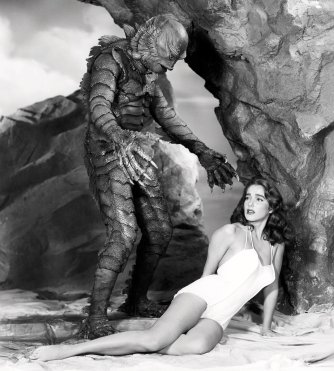 Julie Adams wasn’t a household name, but she was legendary in her own way as one of the last surviving “scream queens” of the classic Universal Monster movies of the 1930s-1950s.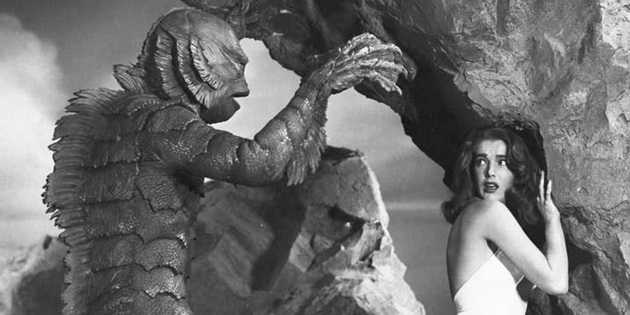
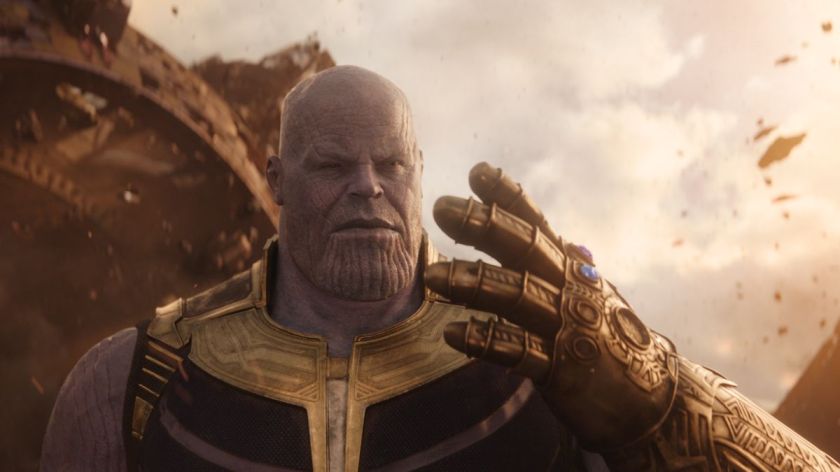 Superheroic golden age: Every once in a while I think how 13-year-old me would’ve reeled at the idea of a new big-budget superhero movie or TV show every few months. I pretty much dug them all in various ways and all the comic book moments they brought to life — Avengers: Infinity War somehow magically capturing Jim Starlin’s complicated villain Thanos without him seeming absurd; Black Panther’s Shakespearean grandeur, as the king returns to take his crown; the gleefully over-the-top Aquaman, with a pitch-perfect Black Manta/Aquaman battle that had me grinning like a loon; the fantastic third season of Daredevil bringing Matt Murdock and Wilson Fisk’s battle to a climax; Ant-Man and the Wasp turning San Francisco’s Fisherman’s Wharf into a size-changing playground. (And I’m still waiting for Into The Spider-Verse to open in New Zealand!)
 “Robin” by Dave Itzkoff: Robin Williams was a remarkable talent who battled addiction and tragedy much of his life. Schlock like Patch Adams made us forget how amazing he could be; this definitive biography brings him back to life and reminds us of what we lost.
 Black entertainment: They’ve all got ‘black’ in the name and they all provided strong, uplifting portrayals of the African-American experience – Black Panther, which broke a zillion box office records along the way; Black Lightning, which took a lesser-known DC superhero and gave us one of the realest portrayals of a strong black family on TV in ages; BlacKkKlansman, which was Spike Lee’s strongest movie in years, as feisty, creative and witty as “Do The Right Thing.”
  Doctor Who: First off, I love the idea of a female Doctor. I think Jodie Whittaker was an excellent casting choice and did a fine job this season. But she was let down by trite and sloppy writing and a general lack of invention and passion in a pretty disappointing first season. I actually would’ve liked to have seen more done with the ramifications of the Doctor’s first reincarnation as a woman after 12 men and 1000 or so years, but the show barely dealt with it. The show stepped too far away from acknowledging the Doctor’s vast lifespan and history, and too often the Doctor came off as an uncertain novice. I was getting sick of the Daleks, too, but few of this year’s antagonists were memorable and the self-contained episodes often lacked real drama. Three companions is far too many, and the stories generally were bland sci-fi 101. The best of the episodes were ones like the Rosa Parks episode or the Indian partition story which felt like they had something to say. The worst were generic “monster of the week” tales like “Arachnids in the UK” with a completely unsubtle Trump stand-in. With the usual keyboard warrior suspects ranting and raving how a woman Doctor might give everybody cooties, I was hoping the show would shut them up with an utterly amazing year, instead of one that was just sort of OK. Let’s hope the next season brings back some of the mystery, invention and drama the best of the David Tennant years had.
 The First Man: I really wanted to like this Neil Armstrong biopic starring Ryan Gosling, but I walked out massively disappointed by its turgid tone, seasick-inducing attempts to realistically replicate the experience of space flying, and disappointed by Gosling’s stone-faced portrayal of a man
  Death, devourer of all: This year was pretty rough on my cultural heroes. I know, a lot of them were in their 80s and 90s, but it still sucks. Stan Lee and Steve Ditko, creators of millions of comic-book dreams. Harlan Ellison, writer with a voice like lightning and a creator who shaped my worldview more than most. Philip Roth, the last of a generation of great American writers like Updike and Vonnegut. Mark E. Smith, tattered, debauched voice of the clattering UK band The Fall. Legendary voice Aretha Franklin. Endlessly curious mind Anthony Bourdain. “Frasier’s” grand, underrated John Mahoney. The Lois Lane of my childhood dreams, Margot Kidder. Way too many others. Time is cruel, ain’t it?
 I visited what’s probably just about the last surviving video store in Auckland the other day. It won’t be there for long, as it’s shutting its doors December 31 and was having a massive clearing-house sale.
 The groovy Videon in Mount Eden, Auckland was never my regular video store – I lived too far away from it – but it was a part of my family’s lives, and it was the kind of classic, curated and smart video store that film nuts loved – carefully organised by directors, countries and detailed sub-sections, with an extensive selection that blows away anything on streaming when it comes to film history.
 Video stores, while they lasted, provided a sense of community that staring at your laptop while scrolling through likes on your phone really doesn’t. Going out to ‘rent a video’ meant interacting a bit more than pushing a button. Sure, they could often be understocked or over-corporate or full of trash and porn, but still, the very best of the video stores, when they flickered through their brief life span, were a wonder.
 I’ve been on a Robert Altman kick these last few months, working through the late director’s diverse body of work. I watched what many consider his masterpiece, 1975’s Nashville, for the first time in years, and it’s surprising how relevant a 43-year-old movie about life in America still feels today.


 A dead man, delivering a horrifying message as his body crumbles away into the shadows. Zombie-like homeless (featuring a never-more-creepy Alice Cooper) converging upon the church menacingly. Static-filled transmissions from a bleak future beamed directly into dreams. Glimpses into a murky mirror world behind ours that culminate in one of the most disturbing images of any film.

 Nik Dirga