Breaking News: My Top 10 Journalism Movies

It’s been a week for movies and the media. I was part of the team live-blogging the Oscars over at RNZ this week which, um, took an interesting turn about 2/3 of the way into the show, you might have heard. 

I love it when one of my favourite things, the movies, intersects with my profession for many years now, journalism. And after the Oscars live-blogging marathon Monday night, I had to unwind with one of my favourite movies about journalism (which one? scroll to the end*, my friend). 

The art and craft of journalism has long fascinated filmmakers and resulted in some terrific movies – including that one many people regard as the best of all time, Citizen Kane. I sat down to write about 10 or so of my favourite journalism movies and ended with a sprawling list. I narrowed it down, and from the start I eliminated any documentaries (which are a form of journalism itself). Ever since I was a kid, the idea of journalism has appealed to me, even if in real life it’s not all glam and scoops. 

This list of my Top 10 Journalism Movies includes ones that idealise the profession like crazy, ones that just use it as a prop for a comedy or a romance, and a few that really delve into the gritty hard yards that make a truly great story. Some of them really capture what it’s like to be a journo, and some of them really capture what we all wish it was like to be a journo. 

In alphabetical order: 

Ace In The Hole (1951) – The late great Kirk Douglas in his finest role, as a cartoonishly conniving tabloid journalist exiled to the rural sticks who stumbles on the “story of the century” when a local man gets trapped in a cave. Billy Wilder’s cynical noir takes us deep inside the media circus that ensues, and we watch in real time as Kirk’s Chuck Tatum slowly loses what’s left of his soul. We’ve had countless “boy stuck in a well” type media sensations in the decades since, but nothing has ever captured the dark side of journalism better. 

All The President’s Men (1976) – There’s no way any list of journalism movies could ignore this one. Oh, for the days when Watergate was the biggest scandal a White House could imagine. There’s no movie that shows the painstaking, frustrating detective side of journalism better than this masterpiece, with Woodward and Bernstein’s investigations portrayed with stark realism despite glossy Robert Redford and Dustin Hoffman playing their parts. The click of typewriters and hours on the landline phone, the endless cigarettes, the newsroom almost entirely run by white men wearing ties – this is a vanished world now, and journalism is probably better for leaving a lot of that behind, but nothing quite captures what it was like “back in the day” better than this film. 

Almost Famous (2000) – The life that William Miller leads in Cameron Crowe’s gentle and bittersweet coming-of-age comedy is pretty much exactly the life I imagined I might have when I started scribbling as an entertainment journalist in the mid 1990s. Spoiler: I didn’t go on tour with Stillwater or fall in love with Penny Lane. Crowe’s movie is warmly sentimental, but in the best possible way. With the acerbic interjections of the much-missed Philip Seymour Hoffman’s Lester Bangs to balance things out, Almost Famous shows us a fairy-tale fantasy of journalism that I can’t help falling in love with every time I watch it. 

Anchorman (2004) – Absurdly goofy? Sure! The gem in Will Ferrell’s run of wacky comedies is a spoof of journalism, but it’s also subtly a very accurate satire of the alpha-male mentality that existed in newsrooms for decades, one that was still quite rampant just as I was entering the industry. It’s only in the last few decades that newsrooms have become a bit more diverse, and in between all the gags Anchorman accurately captures what it’s like when journalists start to believe their own hype and let their ego take over. (See also: Any number of the ‘outrage merchants’ who chatter and moan daily on American news networks today.)

Broadcast News (1987) – The great journalism romantic comedy, even beating out Cary Grant’s His Girl Friday. The late William Hurt, Holly Hunter and Albert Brooks are a perfect trio of striving TV journalists in the 1980s, capturing the mix of solid professionalism, glossy vapid good looks and gender battles that defined the era. James L. Brooks carefully keeps all his characters human despite their foibles, and it’s a movie that’s as much in love with journalism and it gently mocks it. And for my money, the “Albert Brooks sweating” scene is one of the funniest journalism fails ever portrayed on screen. 

Citizen Kane (1941) – The grandfather of all journalism movies, even if it’s perhaps more about the corruption of power than anything else. But Orson Welles captures the era when news publishers were almost kings in his very lightly fictionalised take on William Randolph Hearst, and how Kane uses the immense power of the press to build himself a perfect world – without ever really knowing what to do once he gets it. 

The French Dispatch (2021) – The newest movie on this list, Wes Anderson’s kaleidoscopic anthology imagines a series of articles in a New Yorker-type magazine in its final issue. Anderson’s unique aesthetic has never been more pronounced than it is in this incredibly dense, ornate movie, which I immediately wanted to see a second time so I could go back and catch all the jokes and references I missed the first time around.

Shattered Glass (2003) – For a while there in the pre-social media world, scandals about plagiarist journalists were all the rage. This tense and darkly funny under-seen gem looks at the curious Stephen Glass, who made up magazine scoops left and right until he was caught. Featuring a never-better performance by Hayden Christensen, who will wipe your memories entirely of his hammy Anakin Skywalker, and terrific work by Peter Sarsgaard as the editor who exposes him.

Spotlight (2015) – A solid companion to All The President’s Men, set at the twilight of a certain kind of journalism, before job cuts gutted newsrooms worldwide. This deserving Oscar winner showcases a Boston investigative journalists team and their stunning work uncovering sex abuse cover-ups within the Catholic Church. With an absolutely top-notch cast including Michael Keaton, Mark Ruffalo and Liev Schreiber, it’s another movie that patiently shows the hard, hard work that goes into breaking a massive story, and yet makes it exciting as any thriller. 

Zodiac (2007) – When journalism turns into obsession. David Fincher’s sprawling, sinister epic about the hunt for San Francisco’s Zodiac killer avoids tidy serial murder movie cliches or easy closure, and somehow that makes it even more disturbing than any blood-soaked horror might. Robert Downey Jr., Jake Gyllenhaal and Mark Ruffalo are terrific as journalists who slowly lose their minds trying to find a killer, and Fincher masterfully escalates a sense of dread, which is inextricably tied to the one single question that drives almost every journalist’s career: I want to know

Clustered together at #11: His Girl Friday, The Sweet Smell of Success, Fletch, The Paper, Good Night And Good Luck, The Philadelphia Story, Adaptation, Fear and Loathing in Las Vegas.

(*So what did I watch after Oscars live-blogging? Well, after a night that hit the peaks of drama and absurdity, what else could I watch but Anchorman for the 458th time? What can I say … sometimes journalism really is like being trapped in a glass case of emotion.)

Movies I Have Never Seen #16: The Decline of Western Civilization (1981)

What is it: Long before she directed Wayne’s World, Penelope Spheeris was known as a pioneering documentary filmmaker for her chronicling of the gritty reality of LA’s music scenes. Over three films from 1981 to 1998, she covered punk and metal stars and never-weres, fans and bands with an unsparing eye. The first of her movies, 1981’s Decline of Western Civilization, looked at bands like Black Flag, Germs, X, the Circle Jerks and Fear in squalid, sweaty detail, and it’s widely regarded as one of the best music documentaries ever made. 

Why I never saw it: Despite its cult status, Decline and its two sequels were barely released and almost impossible to watch for decades. Long ago, when I worked at video stores and paged through ink-stained fanzines, I’d hear about these movies a lot, but pre-YouTube or eBay, good luck ever actually watching them. Finally, a few years back, the entire series was released on DVD with a bunch of cool bonuses, and I finally sat down recently to watch them. Can punk still shock more than four decades on?

Does it measure up to its rep? Music documentaries are one of my favourite genres, whether they’re behind the scenes concert footage, making-of histories, birth-to-death storytelling or day-in-the-life voyeurism. Decline  is a little bit of all of the above. These aren’t superstars – X and Black Flag are probably the best known of the bands here, and this is a pre-Henry Rollins Black Flag at that. Even by 1979 and 1980, punk was a bit past its first wave, and so you’ve got a variety of fiery young bands trying to figure out who they are – whether it’s the bludgeoning rage of Circle Jerks and Fear, the angst of Germs and Black Flag or the more arty, performative work of almost-forgotten bands like Catholic Discipline, this is a snapshot of a moment in time but an anger that’s still understandable today. We see heaps of roiling, brutal men in mosh pits, slamming against each other in an intimate way that seems even more invasive in a pandemic world. Spheeris has a knack for capturing the propulsive motion of punk, with a visceral touch that makes you feel like you’re back in these crowded, grotty rooms decades ago. We see the bands off stage – Black Flag in an insanely over-graffitied squalid crash pad, The Germs’ doomed, mumbly lead singer Darby Crash cooking eggs and playing with his pet tarantula. (Crash would be dead at 22 of a drug overdose suicide before this movie even came out.) There’s a tinge of hopelessness to Decline, especially when Spheeris talks to the fans like nihilistic skinhead Eugene, but that’s balanced out by some incredibly passionate performances, like young Black Flag singer Ron Reyes screaming out “Depression’s gonna kill me.” It’s strange to think that now, 40+ years on, most of these angry young men and women are either nearly senior citizens – or gone. Unlike slick, polished reality TV versions of life, the squalor and power of Decline never feels fake. 

Worth seeing? Decline of Western Civilization isn’t for those with gentler musical tastes – while some of the bands like X are excellent musicians whose snappy tunes still hold up well today, all of them are loud and confrontational. The Germs are barely holding a tune, with the chaotic power of their only album turned into a muddy, jagged roar. Spheeris closes Decline with a terrifying, mesmerising set by Fear, whose lead singer is shown as a bare-chested, swaggering Johnny Rotten on steroids spitting out homophobic and sexist taunts as the kids in the mosh pit smash into each other. It’s like a vision of Dante’s inferno, and it’s awful, yet at the same time, it’s amazing – the power of punk at its most primal, with a chorus screaming “I don’t care about you / F— you!” Fear’s thundering, cruel set seems to sum up everything that’s come before it. Punk could be awesome and it could be ugly and it could often be both at the same time, and Spheeris’ magnificent documentary captures it in all its complicated sprawl. I’m definitely moving on next to check out 1988’s equally cult but slightly more absurd hair-metal saga Decline of Western Civilization II and the reportedly even darker street kids-focused Part III, but the first Decline movie still packs the punch of a brawl in a mosh pit. It isn’t meant to make you feel good, but like punk itself, it’s meant to make you feel something. 

Photographic pandemic memories of concerts past

Like a lot of people, I miss concerts. Heaving groups of strangers locked in communion with a singer and a song, losing themselves. I’m hoping that we might finally get to a point soon where thanks to vaccination I might be able to go to a show again; I’ve got tickets to see one of my favourite bands in May I’m really hoping doesn’t fall through.

In the meantime I’ve found myself looking back at concerts past. In the hazy pre-iPhone era, you couldn’t really easily take photos at a show, and until recently, my phones were crap enough that I couldn’t take a good photo even then. So many of the great gigs I’ve seen over the years only exist in my memories – Elvis Costello triumphing for more than three hours one night in Oregon; The Pixies shredding on their first reunion tour; blues legend RL Burnside stunning a packed Missisippi bar; LCD Soundsystem commanding a sweaty packed tent; Gang Of Four showing post-punk’s power never died, and many more.

I’ve taken a lot of terrible, blurry pictures at concerts, and a few good ones. I look at them a lot now, remembering the murmur and buzz of the crowd and the glare of the lights and the distinctive sound of one perfect song, and an audience united in singing along…

Lorde, 2017
Nick Cave, 2017
Peter Murphy of Bauhaus, 2018
The D4, Auckland City Limits, 2018
Elvis Costello, 2013
Amanda Palmer, 2020
A crowded house at Crowded House, 2021
Sleater-Kinney, 2016
The Rolling Stones, from a distance, 2014
Midnight Oil, 2017
Reb Fountain, 2021
Kamasi Washington, 2019
Neil Young and Crazy Horse, 2013

The Marx Brothers, Duck Soup, and three perfect scenes

War, pestilence, disease, death and really annoying people on social media. Times like these call for the Marx Brothers.

It’s been nearly a century since Groucho, Chico, Harpo and sometimes Zeppo stormed cinema screens, and their surreal, multi-faceted anarchy is still very much the cure for what ails the spirit. 

I got away from it all with a double-feature of Marx classics at one of our awesome local revival cinemas last weekend, and found that no matter how many times I’ve seen stuff like Duck Soup and Animal Crackers, they still lighten my mental load. 

Of the classic early comedy teams I adore, from Chaplin to Keaton to Laurel and Hardy to Abbott and Costello, the Marx Brothers stand out because they’re pure id … and just a little bit dangerous. Most comedy teams had a kind of smart one and a kind of dumb one, but in this trio, they’re all a little bit of both.

The Marxes weren’t quite as well served by the movies as Chaplin or Keaton – they didn’t creatively mastermind their own films, which were never as groundbreaking and perfectly sculpted as something like City Lights or The General. Their early movies are hilarious but also bogged down by cheesy romantic sidebars and interminable songs; their later movies often felt strained and tired as the brothers themselves entered their 50s and 60s and bowed to the whims of studio heads. 

But for that sweet spot of four or five movies that hit the screens 90 years ago now, they were a whirling dervish of Groucho’s wit, Chico’s wordplay, Harpo’s pantomime acrobatics and Zeppo… well, Zeppo was there, too. There’s no filler in perhaps their greatest moment, 1933’s Duck Soup, a fast-moving war satire with no romantic subplots and even poor Harpo refused a chance to play his harp. While there’s funnier gags scattered throughout all their movies, there’s nothing quite as unrelenting. Duck Soup barely runs over an hour, but you can distill it even further by boiling it down to a mere three scenes that show the Marx Brothers at their very best. 

The Marxes were unpredictable and a wee bit unhinged, breaking furniture, grabbing women (in rather un-#Metoo ways, I’ll admit), wrestling strangers, pushing the limits of social propriety. The Three Stooges were violent and chaotic, too, but very childlike. The Marx trio always felt vaguely adult, dada and surrealism given form in flesh, and I’d always picture them whipping out cards, dice and booze between scenes. This scene with Harpo and Chico is one of the Marxes’ intricately building symphonies of insanity, escalating from a shouting match with a lemonade vendor to beautifully choreographed, maddening brutal psych-warfare against the poor befuddled vendor: 

…Meanwhile, while Groucho and Chico were masters at verbal japes and insults and malapropisms, one of the most beloved Marx routines is this elegantly simple, but endlessly comic “mirror gag.” All you need to know is that Harpo and Chico have both ended up disguised as Groucho, running around a wealthy lady’s house in a grand farce until they all end up combining in this one glorious scene: 

But when it comes down to it, the number one thing I think of when I think of the Marx Brothers remains Groucho’s sardonic wit and raised eyebrows, able to cut to the chase and knock any windbag down to size. This astounding little monologue towards the climax of Duck Soup is particularly funny because it’s the rare case where Groucho, as the beleaguered President Rufus T. Firefly, manages to make himself the butt of the joke, and talk himself into going to war in the space of a few sentences. In a world where we’re still seeing madmen go to war for stupid reasons, there’s something vaguely comforting to me in this scene watching Groucho show how pointless and ego-feeding it all is, 89 years ago now. 

The Marx Brothers have been gone for decades, but they’re still making me laugh nearly a century past their peak. Now when you think about it, that’s pretty funny.

Superman and Batman and the adventures of trying to be a dad

The illusion of change is one of the big things that keeps comic books going for 800, 900 issues, decades after they started. Pretty much every character in comics has died and come back at least three or four times, so excuse me if I yawn when they say Spider-Man/Batman/Wolverine is going to die, again. Show me something new. Like a superhero being a parent.  

They might die a lot, but one thing superheroes never did for the longest time was grow up, get married and have children of their own. 

That started to change in the 1990s, when they let Spider-Man get married for a while (since wiped away in one of those cosmic hand-wavings) and Superman get hitched to Lois Lane (surprisingly, still going strong years later). With wedding bells ringing, surely children aren’t far behind?

For a while there, when most superheroes had a kid, it meant they would die horribly or be revealed as imaginary or what-if stories or something. Most egregiously, Spider-Man actually had a daughter who vanished mysteriously years ago because Marvel didn’t like the idea of Spider-Man actually having a kid. 

Yet that’s changed. One of the most popular – and genuinely enjoyable – comics of 2021 turned out to be Superman: Son Of Kal-El, starring Jon Kent, the teenage son of Clark Kent, a hip, bisexual millennial who could’ve been an awful “woke” cartoon but has turned out to be a refreshing and empathetic take on the Man of Steel. A slightly different version of this story with Superman and Lois having two sons has become one of my favourite superhero TV shows in recent years. 

And a while back, Batman had a son, Damian Wayne, with his enemy’s daughter Talia al Ghul. This kid was a brutal, dark mirror to Batman, raised by his criminal foes, trained as an assassin and grown into a grim and efficient new Robin. Damian has endured since his introduction in 2006, maturing to become less violent and conceited and an actual hero of sorts. The new Superman and Robin have been an enjoyable double-act in comics too, Jon Kent’s sincerity playing well off Damian’s cynicism. 

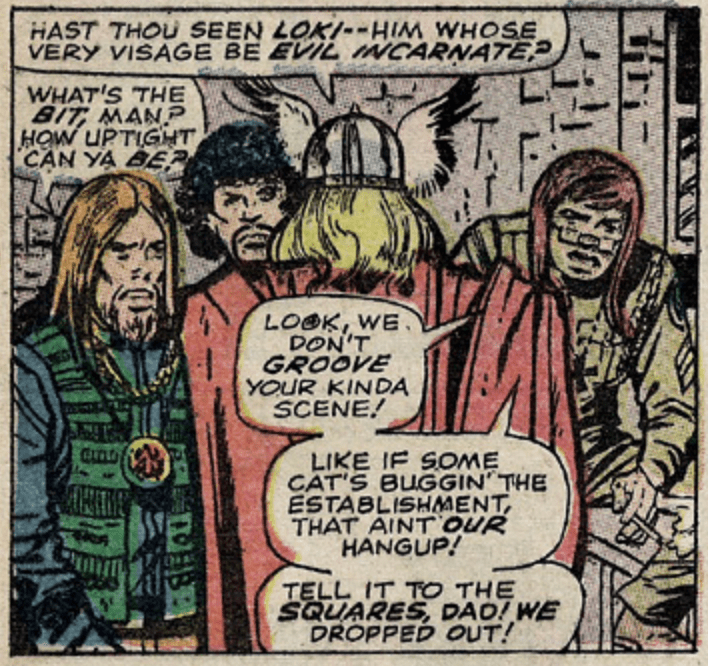
The idea of Batman and Superman having sons was a bit of a fantastic what-if for years when they were imagined as rebellious 1970s hipsters, so it’s been surprising to see the idea emerge and stick around in canon. Jon Kent’s been around for 7 years, Damian pushing 16 years. It gives these 80-year-old superheroes a fresh direction to move in, and yet the original Batman and Superman are still allowed to exist too, mentoring and off having their own adventures. I actually find Superman more enjoyable as a character now that he’s a father.

I’m not saying they won’t decide to up and kill Jon Kent sometime soon, but comics creators seem generally content to let a hero’s kids live for now. Some, like Wolverine or Hulk, have ‘evil’ estranged children, or some like the Flash and Green Arrow have children they end up separated from for years. (Being a good parent is far less common than just being a parent in comics.) The Fantastic Four were one of the few characters allowed to have a child back in the old days, although little Franklin Richards was always under threat of death or cosmic disintegration or something. But the FF has a second kid now too, and a whole little blended “family” of assorted young folk that they’re mentoring – a sensible evolution for a comic that’s always been about the idea of family. 

As the print comics fan base ages up and more and more young people are TikTokking or whatever, comics readers maybe are a little less turned off by the idea of Batman having a Bat-spawn. They identify with a Bat-Dad a bit more than they once might have.

One thing you’ll rarely see in comics, though, are superheroes parenting babies or toddlers, or doing the boring hard yards of diapers, late nights and play-dates. In a surprisingly common comics trope, both Jon Kent and Damian Wayne were “accelerated in age” in various oddball comic-book ways so they could run around with their dads, because honestly, super-teenagers are far more interesting than super-babies would be. 

Which is probably the right call. I mean, nobody is really clamouring for the return of Super-Baby, are they? 

Mark Lanegan, grunge, and the gone generation

Photo Steve Gullick

Mark Lanegan was not a household name. But when I think of grunge – that Seattle sound, that briefly hip ‘90s trend – I often think first of Lanegan’s husky baritone with the Screaming Trees, and all the ache and strength it conveyed.

Lanegan died suddenly at 57 this week, and for a certain brand of music lover, it was a painful blow to lose this troubled, damaged yet powerful figure.

Lanegan showed a way out of just being a grunge star. The bands that are left intact are mostly ones like Pearl Jam or Mudhoney, who’ve settled into amiable patterns where their music isn’t a heck of a lot different in 2022 than it was in 1992.

When Kurt Cobain died, half my lifetime ago, the thing that struck me hardest was that we’d never know what he might have done next, never follow up on the intriguing directions things like In Utero and MTV Unplugged hinted at. Lanegan, more than any other musician in the grunge era, picked up his longtime friend Cobain’s challenge and continued exploring and innovating until the day he died. 

I loved Screaming Trees, who bubbled under the superstar level of bands like Nirvana. Their single “Nearly Lost You” was their biggest popular hit, but the band – all towering, lumberjack like characters who seemed as ominious as their cartoony threat of a name – were a powerful machine that were driven by Lanegan’s urge to be more than just a screamer. Like TAD, another band a bit too raw to make it big, they felt like whispers and ghosts of the Northwest backwoods, sasquatch with guitars. 

The Trees combusted, and Lanegan was different when he branched out into underrated, heavily diverse solo work. Always a looming, dangerous figure, haunted by addictions and violence he wrote compellingly about in recent memoirs, Lanegan’s very voice let you know he had seen the darkness and stared deep. Many obituaries focused on how with the punishment he inflicted on himself, Lanegan should’ve been dead years ago.

As he aged, he became a kind of Seattle fusion of Nick Cave and Johnny Cash, charged with Old Testament authority and willing to experiment, collaborate and cast his sound far outside a narrow grunge template. He swerved from the dusty country-fried songwriting of Whiskey For The Holy Ghost to the sweet-and-sour collaborations with Isobel Campbell, the ‘70s hard rock stomp of his work with Queens Of The Stone Age, to dabbling in dark synth-pop in Blues Funeral. His final album, Straight Songs of Sorrow, seemed to amalgamate all of his interests to craft a dark, autobiographical mini-masterpiece. 

It was also reminded me of how so many of the great voices of his peers have left far too early, turning grunge – a term many couldn’t stand, but it’s stuck like glue – into kind of a lost generation. There will be no big the-whole-band-gets-back-together reunion tours for Soundgarden, Nirvana, Alice in Chains or Screaming Trees. 

The list is long – Kurt Cobain, of course (suicide, 27), Stone Temple Pilots’ Scott Weiland (drugs, 48), Chris Cornell (suicide, 52), pre-grunge/glam act Mother Love Bone’s singer Andrew Patrick Wood (heroin, just 24), Gits singer Mia Zapata (murdered, 27); Alice in Chains’ Layne Staley (heroin/cocaine, 34) and Mike Starr (prescription overdose, 44), Hole’s Kristin Pfaff (overdose, 27); poppier act Blind Melon’s lead singer Shannon Hoon (cocaine, 28). 

Music and young death are no strangers, of course, and there’s been “lost generations” before, from the deaths of Janis, Jimi and Jim (you don’t even need to say their last names, do you?) to the rap slayings of Tupac Shakur and the Notorious B.I.G. to the present, in the deaths of those like XXXTentacion and Lil Peep. 

But grunge was my soundtrack to an age where you listen to music more obsessively than other, and nobody wants to watch their own generation slowly be washed away.

I lived a boring, drama-free 1990s compared to the antics of Lanegan, Cobain and their peers – rare binges of tequila and vodka were my peak indulgence – but the appeal of grunge to me was that the yearning of singers like Lanegan felt universal. We all ache in different ways. We all have addictions. I realised a long time ago that I’d easily get hooked on some of the temptations of the world given half a chance. I was an amateur at addiction, but something in me responded to Lanegan’s deep, groaning voice. 

Friend Bob got to see him in his elemental power a few years back, and I’m very jealous. Lanegan overcame his demons and was clean for years, but a bout with COVID-19 last year nearly killed him and I wouldn’t surprised if it led directly to his early death. 

Once upon a time, I would’ve said that making it to 57 was a decent run. But it doesn’t seem that way when you get close to it. Mark Lanegan was a guide through some of the darkness of life, wrapped heavily in all its shadows himself. He might have been the last lingering reminder of the power of grunge behind the hype and sadness, and that generation is gone and never coming back. 

Book Review: Chuck Klosterman and figuring out The Nineties

It’s weird to see your past become mythology. Part of me is certain the 1990s were just a few years back, instead of more than three decades ago. Surely it’s too early to start talking about what it all meant? 

But in Chuck Klosterman’s engaging new collection of pop-culture writing, The Nineties, he attempts to use the controversies and celebrities of the past to explain how we became whatever us mixed-up humans are today. 

Klosterman himself is a very ‘90s kind of voice who made it big starting in the 2000s with essays that went down like a surprisingly smart, funny stranger holding forth at the bar – slightly overbearing, but worth the listen. 

His essay collections like Sex, Drugs and Cocoa Puffs sparkle with off-kilter insights and a respect for even the most disdained of pop culture like Guns N’ Roses tribute bands, while earlier works like Fargo Rock City, about loving hair metal while living in rural America, have a sincerity that can’t be hidden by all the snarky wit. 

Known for writing lengthy pieces on things like the relative merits of KISS members’ solo albums, in more recent years Klosterman has tried to branch out into broader cultural criticism. But to be honest, excavating the contradictions and curiousities of pop culture is where his voice is strongest. 

I like Klosterman quite a lot, but The Nineties doesn’t quite manage to be a defining statement despite his best efforts. “It was, in retrospect, a remarkably easy time to be alive,” he writes. Which is only really true if you came, like Klosterman and I, from pretty comfortable white middle class American existences. 

The Nineties is a strong essay collection burdened with the expectation of defining a decade. The central thesis of The Nineties is that it was a time when everything was about to make a huge paradigm shift, with the looming shadows of the internet, 9/11 and extreme partisanship spawned by the Clinton years and Bush/Gore election that came to dominate US politics.  

Klosterman is chatty, digressive, trivia-filled and open-minded, which means The Nineties is an easy read, but sprawling and inconclusive about whatever the 1990s even meant other than that things were about to change. And that’s pretty much his point. “It was a period of ambivalence, defined by an overwhelming assumption that life, and particularly American life, was underwhelming.”

Generation X was perched in a weird spot in space-time, before the internet fully emerged and yet smothered in a mass-media bubble of celebrity culture in old-school magazines and TV shows that foreshadowed many of today’s influencer obsessions. 

The monoculture that once was splintered into pieces with the advent of social media. As much as we like to imagine it was all flannel, riot grrls and grunge from Sub Pop and people reading Chuck Palahniuk’s “Fight Club,” the ‘90s was also an awful lot of people watching Friends and Titanic and listening to Garth Brooks, by far the decade’s biggest musical star. 

Wrestling with an entire decade is difficult work – Klosterman rightly points out decades are only about “cultural perception,” when you get down to it. He hits all the expected high points – Nirvana’s Nevermind, the rise of AOL, Bill Clinton, Pulp Fiction and Clarence Thomas. He mostly avoids tiresome “remember this?” type nostalgia and instead focuses on giving broader context.

Klosterman likes to equivocate, rarely coming down firmly on an issue and sometimes passing off some pretty dire zen cliches as insight. “Things changed, but not really,” the nineties were “a good time that happened long ago, although not nearly as long ago as it seems,” and “The future can’t exist until the present is the past.” These vague sentences clunk awkwardly against his better observations. 

What’s best about The Nineties is where Klosterman pinpoints precisely how the culture has changed. The very way we tend to think has mutated an awful lot in 30 years. A culture based on ‘likes’ and never having to go further than your pocket to look information up is really as futuristic as rocket ships and hoverboards would have been. 

“Selling out,” for example, is a concept that seemed to consume much of the decade, with the agonised fears of stars like Kurt Cobain and River Phoenix about what it might mean and entire movies like Reality Bites based around it. “Selling out” barely even exists as the same concept anymore in a world filled with TikToks, YouTubers and influencers all selling themselves as hard as possible. 

The OJ Simpson case has been written about ad infinitum, but Klosterman paints a convincing through line to the mindset that dominates today’s fractured, everyone-has-a-hot-take internet. Watching the crowds cheer on OJ on his bizarre slow-motion car chase through LA, waving signs, Klosterman sees “what would eventually drive the mechanism of social media – the desire of uninformed people to be involved with the news … because it was exhilarating to participate in an experience all of society was experiencing at once.” 

The Nineties is best enjoyed less as a final, definitive statement and more as a frequently amusing and thought-provoking addition to the ongoing conversation. I kind of think that Klosterman, who I’ll always picture as the guy holding forth at the bar, would prefer it that way anyway. 

Movies I Have Never Seen #14/15: What’s Up, Doc? (1972) and Paper Moon (1973)

What they are: We’ve lost quite a few silver screen legends lately, but behind the camera, one of the biggest curators and creators of cinema history also left us last month – director Peter Bogdanovich. His death may have been overlooked a bit in the never-ending 24-hour news cycle, but for a certain breed of movie hound, at a certain period of time, Bogdanovich was the great hope for the Future of Cinema. His breakthrough movie, 1971’s ode to a vanished idea of small town Texas life, The Last Picture Show, was nominated for eight Oscars and won several. Bogdanovich followed that drama up with two big genre swerves – the goofy comedy What’s Up, Doc? with Barbra Streisand and con-man comedy/drama Paper Moon, which saw Tatum O’Neal become the still-youngest competitive Oscar winner by nabbing Best Supporting Actress at just 10 years old. When Bogdanovich died last month, I realised I needed to finally get around to watching Doc and Moon and fill in some big gaps in my film knowledge. 

Why I never saw them. The theme of many of his obituaries was that Bogdanovich came into movies like a comet, burning brightly and then flaming out. He loved classic Hollywood, and his best movies are all homages to the 1930s and 1940s. His debut, 1968’s Targets, is a fond love letter to horror icon Boris Karloff combined with a still-shocking look at a mass shooting. The Last Picture Show is one of my favourites, a monochrome gem of nostalgia and bittersweet romance that manages to both romanticise and demonise the American dream, with an utterly luminous young Cybill Shepherd and Jeff Bridges. Next, What’s Up, Doc? and Paper Moon were both popular and critical hits.

But then Bogdanovich steered Shepherd into two notorious flops, Daisy Miller and At Long Last Love, and his career for the rest of his life alternated between moderate successes and mild failure, as well as grim personal tragedy. A keeper of the flame for cinema history, he wrote some excellent books on the many classic Hollywood stars and directors he befriended over the years (he was notably close to the great Orson Welles, and his final film was a documentary on Buster Keaton), but when he died, many of the Bogdanovich obituaries cast him as a kind of example of lost potential. I don’t quite think that’s a fair way to measure a life. 

Do they measure up to their rep: Let’s take each film separately. What’s Up, Doc? is essentially a colourful homage to screwball comedies of the 1930s, with Streisand and Ryan O’Neal filling the Katherine Hepburn and Cary Gran-type roles. Streisand is someone I’ve never always warmed to, but she’s a fiery, wisecracking delight here, a predecessor of the oft-maligned “manic pixie dream girl” archetype. She splashes into O’Neal’s stiff academic’s life almost at random and upsets the dull order of his world. In one light, her character’s stalking of O’Neal and his intense fiancee (a great Madeline Kahn) may be annoying, but if you ride with Doc’s giddy vibe, you’ll get caught up in Barbra’s freewheeling spirit. While I don’t think it quite beats the heights of Grant and Hepburn in Bringing Up Baby, Bogdanovich’s homage is a light and hilarious ride. 

Paper Moon isn’t quite so loose and frivolous, although it’s also very funny. Bogdanovich went back to a gorgeous black-and-white for this caper starring real-life father and daughter Ryan and Tatum O’Neal. Ryan is a con man who shows up at the funeral of 9-year-old Addie’s mother. He might be Addie’s father, or he might not. O’Neal agrees to take Addie on a road trip to the rest of her family, but along the way also drags her into his complicated cons, scheming his way across Depression America. Bogdanovich expertly balances Paper Moon between comic and tugging the heartstrings, but is just cynical enough not to make this feel like a Disney movie. He’s helped by Tatum O’Neal, who’s utterly amazing as Addie – her character develops and expands throughout the movie and manages the almost impossible task of feeling like a real, chaotic and somewhat unpredictable child instead of just an actor.  

Ryan O’Neal anchors both these movies, although he’s upstaged by his female co-stars. He’s an interesting case of an actor who was a big star but also tends to blend into the scenery, I find. As a slippery con man in Paper Moon and a stuttering geek in Doc, he never entirely convinces, but he’s also oddly enjoyable to watch playing off the stunning Streisand and the remarkable Tatum. But both of these movies are far more about the women than they are the ostensible main character. Bogdanovich was a spectacular director for women – Cloris Leachman’s Oscar-winning turn in The Last Picture Show is a perfect example – and whatever the ups and downs of his career, he created some of the most indelible roles for women of the 1970s. 

Worth seeing? Viewed 50 years on, Bogdanovich’s great trilogy of films is about his love for the history and form of cinema itself, and that great American theme of the desire to better oneself, whether in money, love or location. The Last Picture Show is stark and sharp as a knife, while What’s Up, Doc? is a silly blast nearly as manic as the Bugs Bunny cartoons it got its name from, and Paper Moon combines elements of both of them to create a satirical yet heartfelt tale of a con man’s mild redemption.

Bogdanovich might have been a comet in that he never really bettered these three films in his career, but he certainly left a lot of great work behind and was one of the last men who knew and worked with the golden stars of Hollywood’s peak years, and worked to keep their names alive. That’s not a bad legacy to have at all. 

RIP to Entertainment Weekly, my pop-culture guide to the 1990s and beyond

I knew the patient was in critical condition for some time, but it’s still hard to say goodbye. The patient wasn’t a person, but a cultural moment, a blip of journalistic history – a magazine that has finally breathed its last.

Entertainment Weekly, a magazine that I read from its very first issue 32 years ago, is folding its print edition, it was announced this week in another one of those ice-cold corporate downsizing memos so familiar to journalism.

The world is too big and fractured now for a general-interest entertainment magazine now I guess, but I’ll still miss it. (It will continue as digital only, but honestly, that’s not the same at all.)

It’s a death among many in the media world and one I knew was coming ever since a couple of years ago when the magazine switched from weekly to monthly publication (and yet bizarrely, kept the name Entertainment Weekly). In a world of digital bits and unending social media outrages and whines, I miss the fading humble magazine. I still subscribe to some of the best – The New Yorker, The Atlantic, NZ’s Listener and North & South – but it’s a battle for eyeballs in a world filled with scrolling distractions.

I guess I’m a bit sad about Entertainment Weekly because I was there from the very, very start in 1990, and carried on my subscription for a good 20 years or so until moving to New Zealand made the cost unfeasible. I was a “charter subscriber” because I saw an advert somewhere and got the first few issues free. I bought my final issue on my trip back to the US just a few weeks ago of the now “Monthly Weekly,” their year-end issue with a seemingly immortal Keanu Reeves on the cover flogging the latest Matrix movie. 

In between, I read thousands of the damn things. Back in the 1990s, as a twenty-something in the pre-internet world, magazines like EW were my guide to the wider shared universe. It was never too fringe or counter-cultural, but for much of its time EW was still pretty egalitarian in its coverage. I learned about movies, books, music and more I’d never heard of, some I came to love. In a pre-Google world, magazines like EW, Spin, Rolling Stone and Premiere were my pop culture tutors. I held on to many of the 1990s issues forever – Brad and Jen forever! – but eventually, they went off to the recycler.  

But I’ve still got a decent pile of old ones in our musty basement decades on – I kept pretty much every “Year In Review” issue with its top ten lists of bests and worsts from 1990 through the mid-2010s or so. I’ve still got their encyclopaedic issues devoted to “Seinfeld” and “Star Trek: The Next Generation” and they’re still pretty cool. As glossy time capsules do, you could do worse.

I’ve still got the somewhat battered very first issue of Entertainment Weekly, somehow, decades on – dated almost exactly 32 years ago, February 16, 1990, with k.d. lang and Neneh Cherry on the cover (hello, 1990s!). It’s a marvellous little time capsule of that vanished world, with cigarette advertisements galore and an offer to get the ENTIRE James Bond series on shiny VHS tapes from Time-Life Video. (Pay a mere $1 for the first tape and others will follow about one every month.) 

In his opening-issue editorial, Jeff Jarvis sets out a manifesto – entertaining, but honest, no “long, pompous articles,” but also “a voice for quality in a business that needs one.” I wouldn’t argue that EW was high culture, but it introduced me to an awful lot of it along the way.

That first issue touches all the early 1990s icons – Murphy Brown, Fox’s Married With Children, how to install a newfangled car CD changer, or the latest album by some colourful rapper named M.C. Hammer (which gets an “A-,” and “tells important truths,” according to the review).

But it’s also got a lot of strong, in-depth coverage – several pages devoted to thoughtful book reviews, or a look at how the then-recent fall of the Berlin Wall was helped along by repressed artists. EW always balanced on the wire between fluff and substance, but it was a hell of a smarter read than things like People or Us magazine were. There were frequent long, deep reads into pop culture history that made up for the gossipy stuff. 

Like many things, it declined, though, pivoting an awful lot to try and figure out how to beat the internet. In 1990, a weekly magazine was fresh and current. In 2022, a now-monthly magazine was endlessly behind the pop culture beat. 

Yet even in that final January 2022 issue I picked up, there was still plenty worth reading in Entertainment ‘Weekly.’ A solid oral history of Francis Ford Coppola’s The Outsiders sits next to an interview with a Booker Prize-winning author and lists of the year’s best movies (Licorice Pizza and Power of The Dog, yes please). It was struggling, but there were still glimpses of its glory days. 

We’re in a world now where a magazine like Entertainment Weekly, with a name that no longer even fit, couldn’t help but seem dated within days of its release. I find that kind of sad, and while I’m still a nut for pop culture and always looking for good books to read, movies to see and music to hear, I tip my cap to the magazine that guided me through so much of the 1990s. We won’t see anything like it again.