
For That’s So ‘90s Week, I’m taking a look back at some of the pop culture epherma of the ‘90s that sticks with this ageing Gen-Xer. Today, let’s head to Seattle… but not for the grunge.
There’s a lot of TV from the 1990s that people get nostalgic over. I don’t get the “Friends”-obsessed myself – it’s an amusing show, I watched it at the time, but I barely ever think about it now. “Seinfeld” is a masterpiece of dry, surreal comedy, but it’s also a comedy that refuses warmth (“no hugging, no learning”). “The Simpsons” is eternal, like rain or air, beyond mere human judgments. And I’ve never, ever understood people who claim to be huge fans of “Home Improvement” or “Full House.”
 But “Frasier.” Ah, “Frasier.” For me, “Frasier” is the warm witty blanket of ‘90s TV, perfectly constructed one-act farces that I can watch over and over again without tiring. If asked, I’d have to say that I think “Frasier” is the peak of the traditional sit-com form – one that’s been deconstructed and reconstructed often since, but rarely bettered. At its essence, it’s another man in the workplace, man with wacky family comedy like a thousand others, but in its execution, it’s sublime.
The show often makes fun of Frasier’s pompousness, but I never feel like the show says “being smart is dumb.” The genius of “Frasier” is combining Frasier Crane’s lofty, intellectual lifestyle with his hubris, ego and fallibility. We see in Frasier the eternal struggle between ambition and reality, between what we’d like to be seen as and the ways we keep falling short. More importantly, “Frasier” makes that battle funny. As a coughcough 40-something balding male in midlife looking back and looking forward and trying to make sense of it all, I identify with Frasier now a lot more than I do Ross Geller or Kramer.
There’s more whip-crack smart, literary lines in an episode of “Frasier” than in an entire season of other shows.

Was it perfect? Well, some of Frasier’s hound-dog horniness and Roz’s man-chasing does seem rather problematic these days (although Frasier is no Sam Malone or Hawkeye Pierce, to be honest), and the Crane family’s Seattle is about as white and monocultural as it comes. And at 11 (!) seasons, the show lingered on a little too long into the 2000s, ending in May 2004.
Yet the show maintained a high level of quality almost its entire run – I have yet to run across a terrible episode of “Frasier” as I rewatch the series, and a huge pile of classics. Not a bad legacy at all for a ‘90s sitcom.
 All right, it’s time to post again and stop hanging out at the beach and such. It’s 2019, oh man oh man, and that means 1999 was 20 years ago, which means the ‘90s ended 20 years ago, which means my 20s ended 20 years ago and I am officially old.
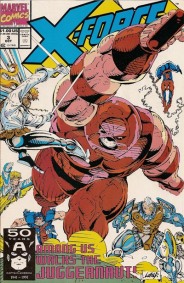
 I’ve been collecting comics for (gulp) nearly 40 years now, but the 1990s was the closest I ever came to abandoning my monthly fix. Marvel and DC’s mainstream comics hit their gaudy nadir, and I was dead broke a lot of the time anyway. But there was an awful lot of brilliance to be found in the spirit of independent comics – Hate, Eightball, Cerebus, Yummy Fur, Naughty Bits, Dirty Plotte, DC/Vertigo’s Sandman – and that kept me going.
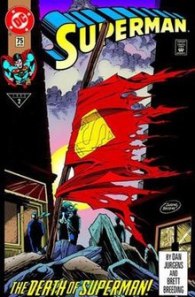 Throughout ACBC, we see the twin poles of creative independence and corporate greed battle, greed usually winning. Marvel sells 8 million comics and goes bankrupt a few years later. DC kills Superman, breaks Batman’s back, makes Green Lantern a mass murderer, chops off Aquaman’s hand (spoiler: they all get better). Image Comics is formed in 1992, and despite beginning with some pretty awful clenched-teeth superheroic angst, it’s still here in 2019 and publishing a diverse and intelligent line of books. Former Marvel editor-in-chief Jim Shooter, on the other hand, keeps popping up throughout the book starting up new companies that quickly fade away.
 I’ve always considered myself a pretty adequate comics history nerd, but there were entire publishing companies unearthed in this book I’d never heard of. Sacks and Dallas keep the constant flow of information moving in an entertaining way, and there’s tons of juicy comics-biz gossip peppered throughout.
 I’m in my 12th year as a New Zealander now, a statistic which kind of stuns me. That’s about a quarter of my life now, and I’ve been a dual citizen of two nations for several years. And I’m finally starting to think of January as summer.
 I’ve finally noticed these last few years that my mind has shifting toward accepting January as the summertime, toward seeing Christmas as summer holidays. The heat and sun seems normal. In a way, it makes a lot more sense to roll everything together – the bustle of Christmas, the optimism of a
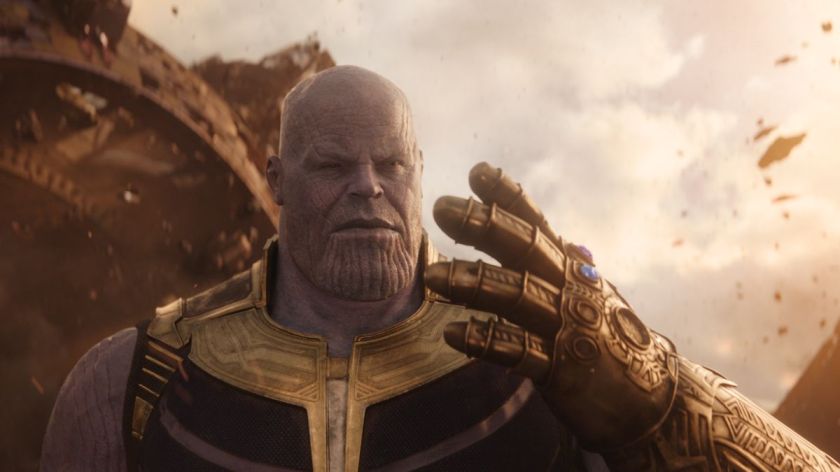 Superheroic golden age: Every once in a while I think how 13-year-old me would’ve reeled at the idea of a new big-budget superhero movie or TV show every few months. I pretty much dug them all in various ways and all the comic book moments they brought to life — Avengers: Infinity War somehow magically capturing Jim Starlin’s complicated villain Thanos without him seeming absurd; Black Panther’s Shakespearean grandeur, as the king returns to take his crown; the gleefully over-the-top Aquaman, with a pitch-perfect Black Manta/Aquaman battle that had me grinning like a loon; the fantastic third season of Daredevil bringing Matt Murdock and Wilson Fisk’s battle to a climax; Ant-Man and the Wasp turning San Francisco’s Fisherman’s Wharf into a size-changing playground. (And I’m still waiting for Into The Spider-Verse to open in New Zealand!)
 “Robin” by Dave Itzkoff: Robin Williams was a remarkable talent who battled addiction and tragedy much of his life. Schlock like Patch Adams made us forget how amazing he could be; this definitive biography brings him back to life and reminds us of what we lost.
 Black entertainment: They’ve all got ‘black’ in the name and they all provided strong, uplifting portrayals of the African-American experience – Black Panther, which broke a zillion box office records along the way; Black Lightning, which took a lesser-known DC superhero and gave us one of the realest portrayals of a strong black family on TV in ages; BlacKkKlansman, which was Spike Lee’s strongest movie in years, as feisty, creative and witty as “Do The Right Thing.”
  Doctor Who: First off, I love the idea of a female Doctor. I think Jodie Whittaker was an excellent casting choice and did a fine job this season. But she was let down by trite and sloppy writing and a general lack of invention and passion in a pretty disappointing first season. I actually would’ve liked to have seen more done with the ramifications of the Doctor’s first reincarnation as a woman after 12 men and 1000 or so years, but the show barely dealt with it. The show stepped too far away from acknowledging the Doctor’s vast lifespan and history, and too often the Doctor came off as an uncertain novice. I was getting sick of the Daleks, too, but few of this year’s antagonists were memorable and the self-contained episodes often lacked real drama. Three companions is far too many, and the stories generally were bland sci-fi 101. The best of the episodes were ones like the Rosa Parks episode or the Indian partition story which felt like they had something to say. The worst were generic “monster of the week” tales like “Arachnids in the UK” with a completely unsubtle Trump stand-in. With the usual keyboard warrior suspects ranting and raving how a woman Doctor might give everybody cooties, I was hoping the show would shut them up with an utterly amazing year, instead of one that was just sort of OK. Let’s hope the next season brings back some of the mystery, invention and drama the best of the David Tennant years had.
 The First Man: I really wanted to like this Neil Armstrong biopic starring Ryan Gosling, but I walked out massively disappointed by its turgid tone, seasick-inducing attempts to realistically replicate the experience of space flying, and disappointed by Gosling’s stone-faced portrayal of a man
  Death, devourer of all: This year was pretty rough on my cultural heroes. I know, a lot of them were in their 80s and 90s, but it still sucks. Stan Lee and Steve Ditko, creators of millions of comic-book dreams. Harlan Ellison, writer with a voice like lightning and a creator who shaped my worldview more than most. Philip Roth, the last of a generation of great American writers like Updike and Vonnegut. Mark E. Smith, tattered, debauched voice of the clattering UK band The Fall. Legendary voice Aretha Franklin. Endlessly curious mind Anthony Bourdain. “Frasier’s” grand, underrated John Mahoney. The Lois Lane of my childhood dreams, Margot Kidder. Way too many others. Time is cruel, ain’t it?
 I’ve been on an unabashed ‘80s music nostalgia kick lately, seeing
 I visited what’s probably just about the last surviving video store in Auckland the other day. It won’t be there for long, as it’s shutting its doors December 31 and was having a massive clearing-house sale.
 The groovy Videon in Mount Eden, Auckland was never my regular video store – I lived too far away from it – but it was a part of my family’s lives, and it was the kind of classic, curated and smart video store that film nuts loved – carefully organised by directors, countries and detailed sub-sections, with an extensive selection that blows away anything on streaming when it comes to film history.
 Video stores, while they lasted, provided a sense of community that staring at your laptop while scrolling through likes on your phone really doesn’t. Going out to ‘rent a video’ meant interacting a bit more than pushing a button. Sure, they could often be understocked or over-corporate or full of trash and porn, but still, the very best of the video stores, when they flickered through their brief life span, were a wonder.
 I’ve been on a Robert Altman kick these last few months, working through the late director’s diverse body of work. I watched what many consider his masterpiece, 1975’s Nashville, for the first time in years, and it’s surprising how relevant a 43-year-old movie about life in America still feels today.



 These days, it feels like there’s nothing more revolutionary than being sincere, than just being a man, alone, on stage with a guitar and a message.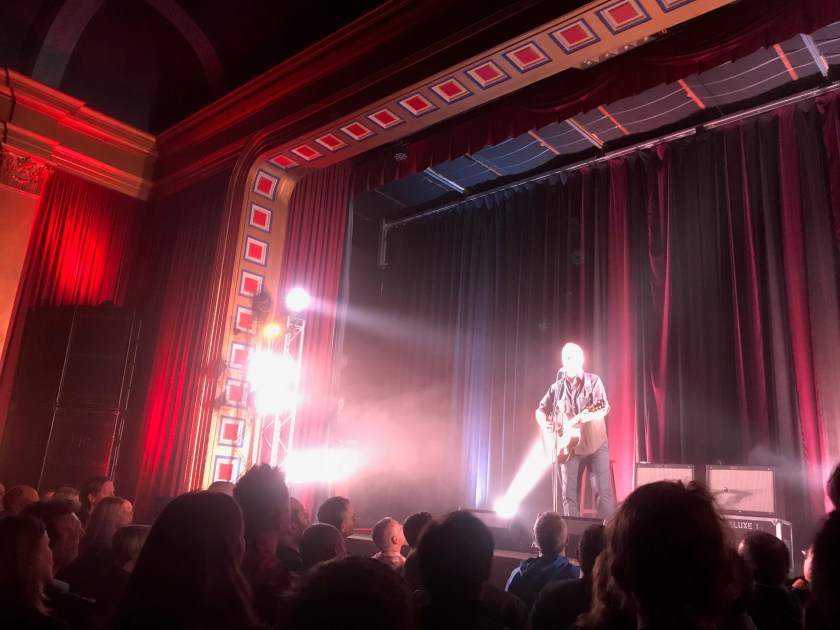
 Nik Dirga